Downloaded 303 times
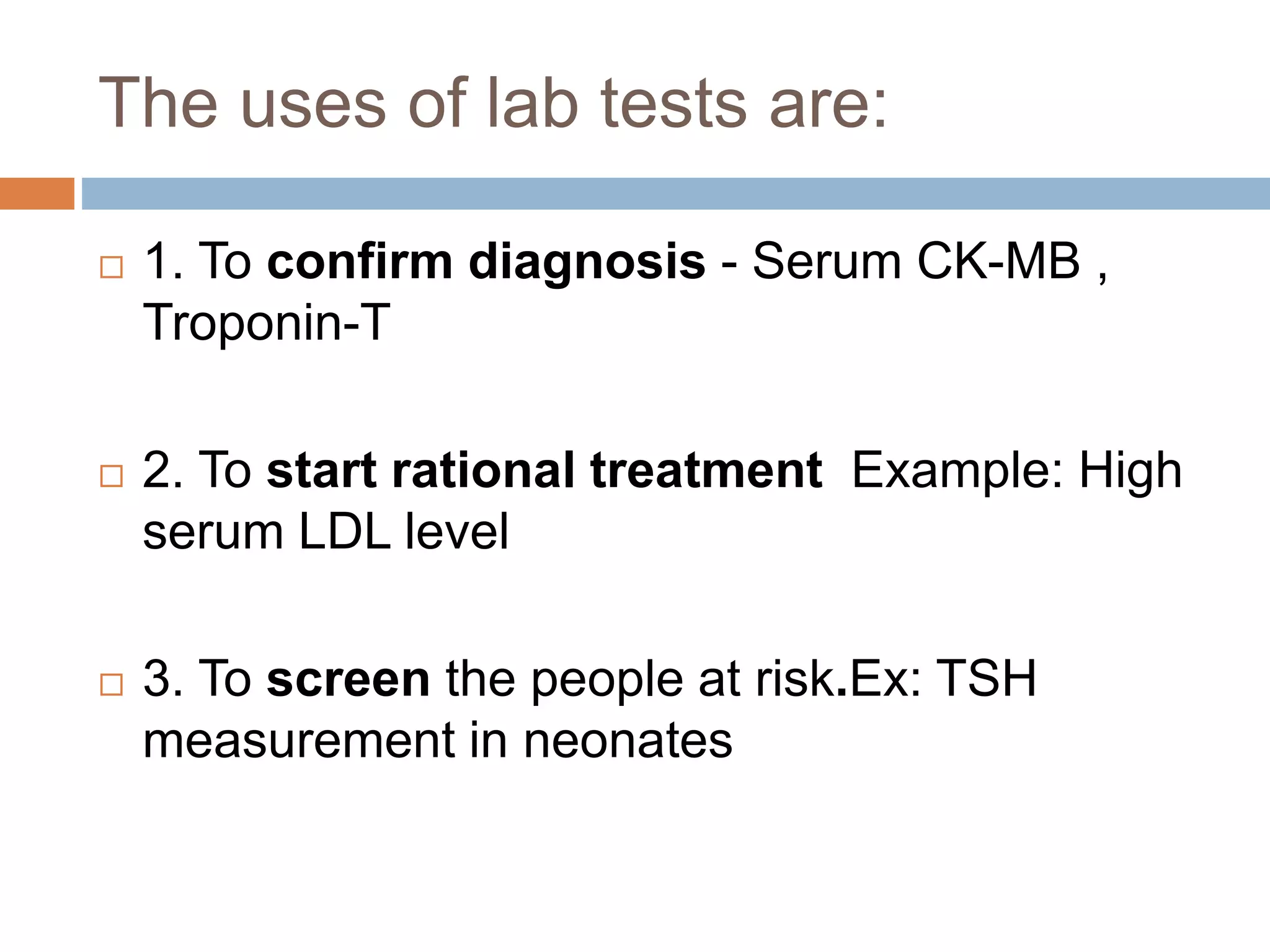

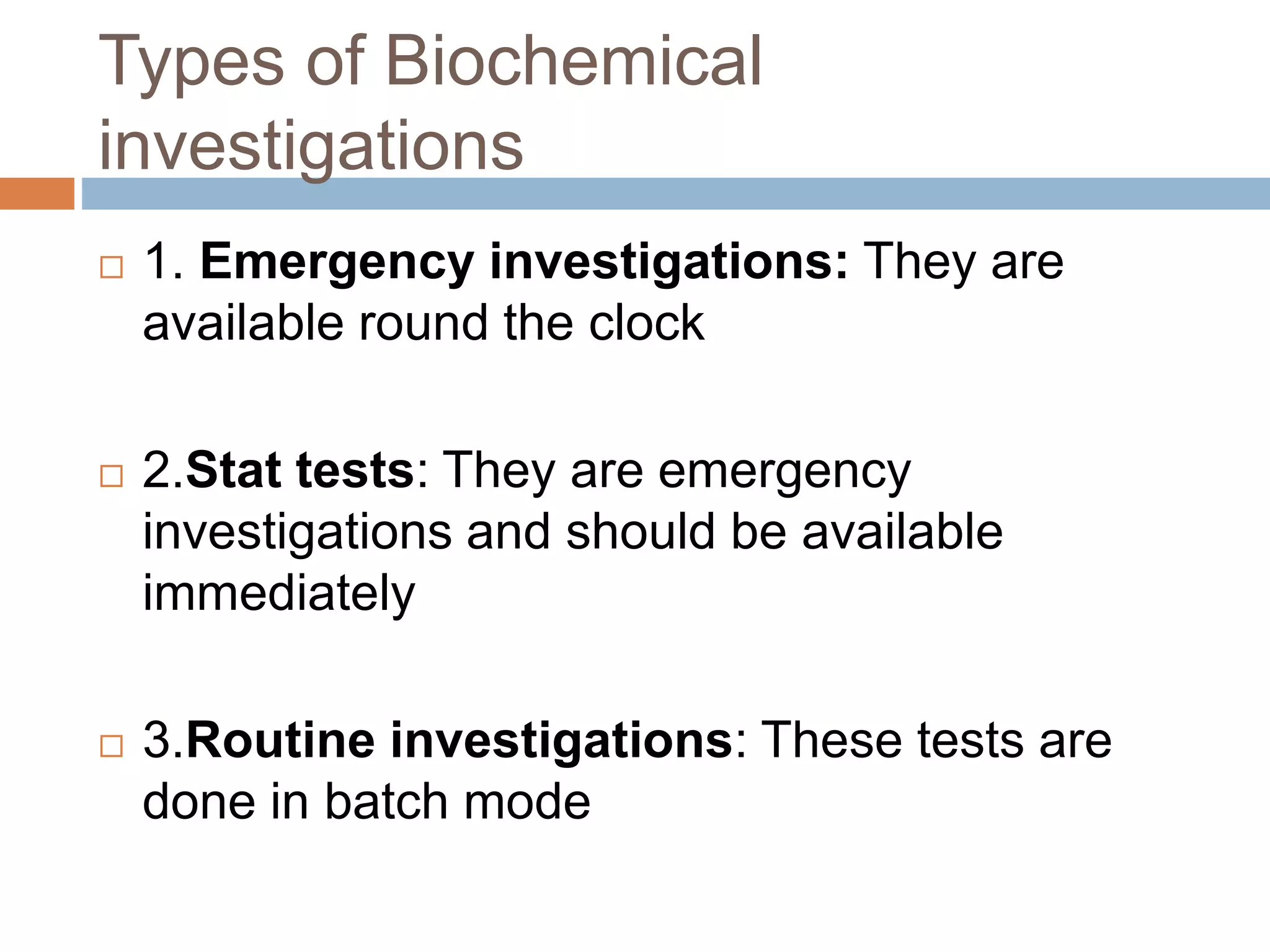




This document discusses the uses and types of clinical biochemistry investigations as well as quality control procedures. It notes that lab tests are used to confirm diagnoses, start treatment, screen for risk, monitor disease progression and response to therapy. Tests can be emergency, routine, special, or panels focusing on specific organs or metabolic processes. Quality control ensures accuracy, precision and error-free reporting through procedures like internal controls, reference ranges, and external quality assessments. Factors like specimen collection, transport, drugs, and physiology can influence test results.


