
RAINWATER HARVESTING
Dr. N. Sai BhaskarReddy, saibhaskarnakka@gmail.com, 9246352018
An area with plants can recharge 90 to 95% of rainwater. Instead of creating “desert” like rainwater
harvesting pits with sand and gravel, we need to encourage rainwater harvesting gardens at every
house. The drought resistant plants are suggestedas they require least water and maintenance and
can survive with rain water.
Greeneryimproves the environment - through oxygen,createscool micro-climate, improves
aesthetics and also provides flowers, fruits, etc. The roots of the plants, earthworms and other life
makes the soil porous and permeable for recharging groundwater. The water is also clean and less
polluted.
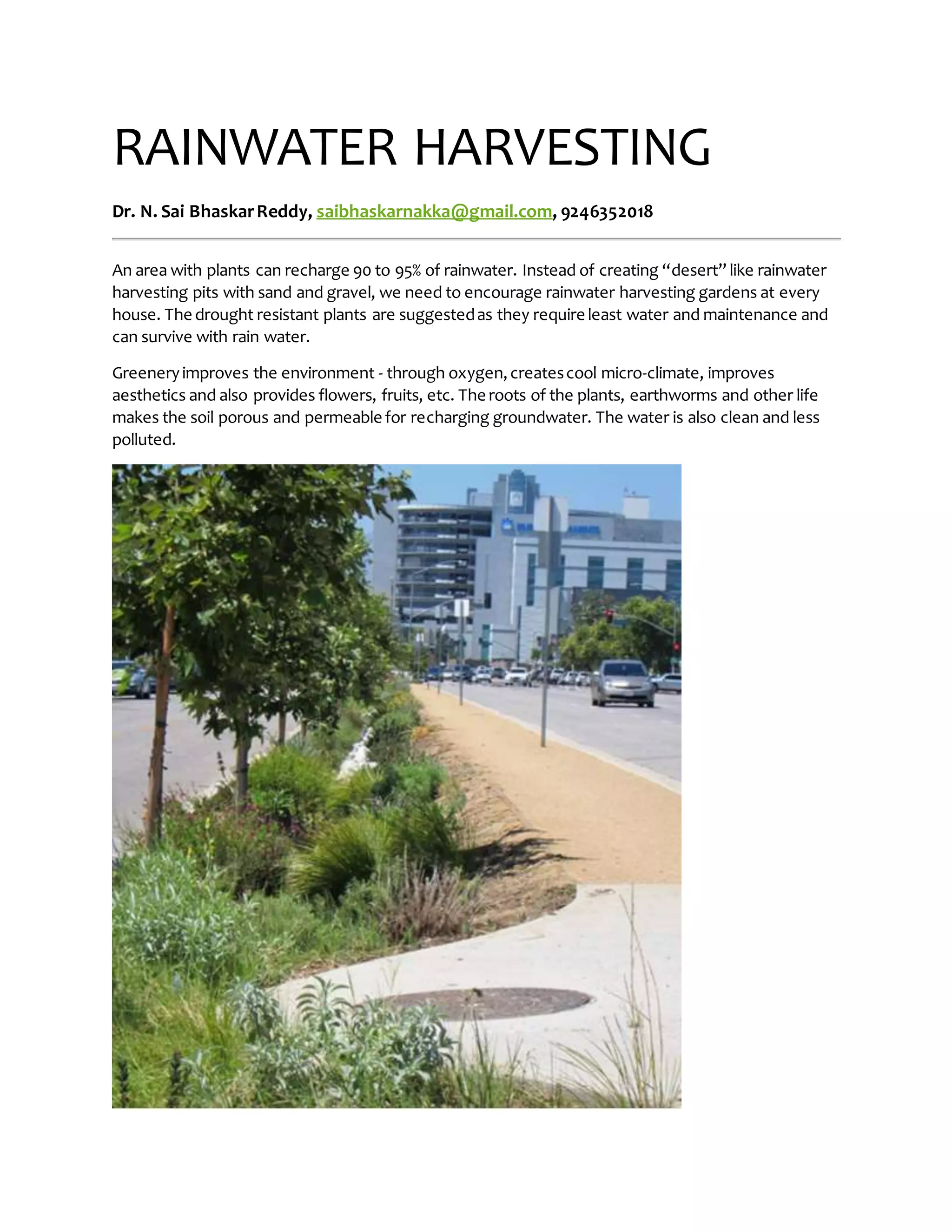
Road runoff needto be harvested through the drought resistant plants planted.
The pavements neednot be completely concrete,let us give space for plants too. Where they
harvest the rainwater.
1. Rainwater harvesting for storage and use directly 2. Rain water to recharge the aquifer and
recoveryare two aspects which needto be consideredin designing the technology.
In the existing models the silt and dust accumulation in the top layer making them ineffective after
few rains in recharging the ground water. The pollution in the form of silt and dust also pollutes the
rainwater. Theyare costly too.
The existing rainwater harvesting pit designs are not popular among the citizens to adopt for various
reasons. People don’t want to have them when they already have constraint of space.The number
of effective rainy days are very few especially in Telangana, say 20 days in a year,rest of the year they
have least value to the people owning it. People or community don’t maintain them before the
monsoon everyyear. The valuable sand and metal required for many other purposes is being used in
large quantities. The cost of coarse sand and gravel is high. Byfilling the pit with them the total
water holding capacity of the pit is also very limited. In appearance they are no less than “deserts”
and has least aestheticvalue. Where there is bed rock or heavy soil theyare least effective.People
are not generousin the common interest to recharge the groundwater as the water rechargedmight
benefit anyone,even those neighbors have not made any effort to recharge.
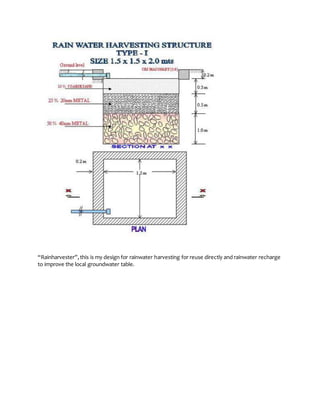
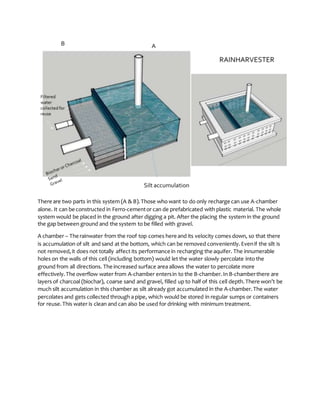
“Rainharvester”,this is my design for rainwater harvesting for reuse directly and rainwater recharge
to improve the local groundwater table.
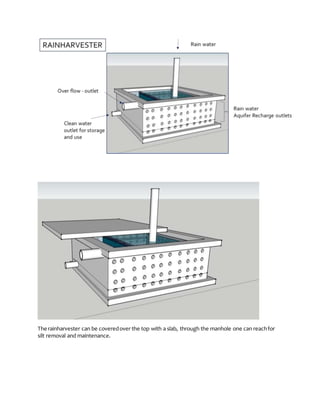
The rainharvester can be coveredover the top with a slab, through the manhole one can reachfor
silt removal and maintenance.
There are two parts in this system (A & B).Those who want to do only recharge can use A-chamber
alone. It can be constructed in Ferro-cementor can de prefabricated with plastic material. The whole
system would be placed in the ground after digging a pit. After the placing the system in the ground
the gap between ground and the system to be filled with gravel.
A chamber – The rainwater from the roof top comes here and its velocity comes down, so that there
is accumulation of silt and sand at the bottom, which can be removed conveniently.Evenif the silt is
not removed,it does not totally affect its performance in recharging the aquifer. The innumerable
holes on the walls of this cell (including bottom) would let the water slowly percolate into the
ground from all directions. The increased surface area allows the water to percolate more
effectively. The overflow water from A-chamber entersin to the B-chamber.In B-chamberthere are
layers of charcoal (biochar), coarse sand and gravel, filled up to half of this cell depth.There won’t be
much silt accumulation in this chamber as silt already got accumulated in the A-chamber.The water
percolates and gets collected through a pipe, which would be stored in regular sumps or containers
for reuse.This water is clean and can also be used for drinking with minimum treatment.
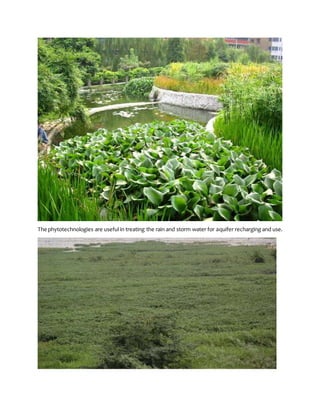
The phytotechnologies are useful in treating the rain and storm water for aquifer recharging and use.
Constructed wetlands are required for everyarea, village, town, colony, etc., for local aquifer
recharge.The existing water tanks can be effectivelyused in this regard.
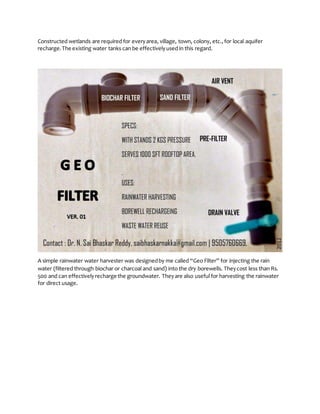
A simple rainwater water harvester was designedby me called “Geo Filter” for injecting the rain
water (filtered through biochar or charcoal and sand) into the dry borewells. Theycost less than Rs.
500 and can effectivelyrecharge the groundwater. Theyare also useful for harvesting the rainwater
for direct usage.
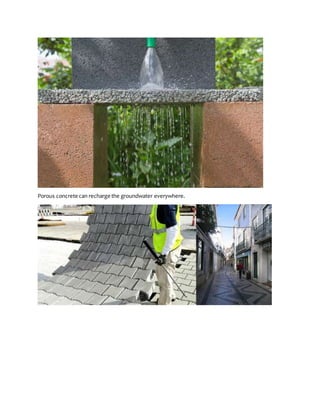
Porous concrete can recharge the groundwater everywhere.
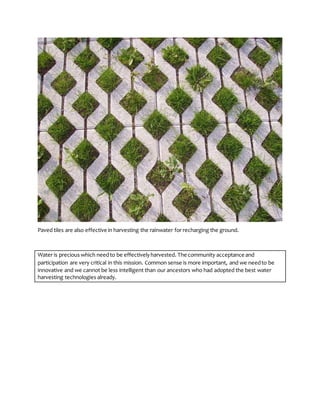
Paved tiles are also effective in harvesting the rainwater for recharging the ground.
Water is precious which needto be effectivelyharvested. The community acceptance and
participation are very critical in this mission. Common sense is more important, and we needto be
innovative and we cannot be less intelligent than our ancestors who had adopted the best water
harvesting technologies already.

Rainwater harvesting

  • 1.
    RAINWATER HARVESTING Dr. N.Sai BhaskarReddy, saibhaskarnakka@gmail.com, 9246352018 An area with plants can recharge 90 to 95% of rainwater. Instead of creating “desert” like rainwater harvesting pits with sand and gravel, we need to encourage rainwater harvesting gardens at every house. The drought resistant plants are suggestedas they require least water and maintenance and can survive with rain water. Greeneryimproves the environment - through oxygen,createscool micro-climate, improves aesthetics and also provides flowers, fruits, etc. The roots of the plants, earthworms and other life makes the soil porous and permeable for recharging groundwater. The water is also clean and less polluted.
  • 2.
    Road runoff needtobe harvested through the drought resistant plants planted. The pavements neednot be completely concrete,let us give space for plants too. Where they harvest the rainwater. 1. Rainwater harvesting for storage and use directly 2. Rain water to recharge the aquifer and recoveryare two aspects which needto be consideredin designing the technology. In the existing models the silt and dust accumulation in the top layer making them ineffective after few rains in recharging the ground water. The pollution in the form of silt and dust also pollutes the rainwater. Theyare costly too. The existing rainwater harvesting pit designs are not popular among the citizens to adopt for various reasons. People don’t want to have them when they already have constraint of space.The number of effective rainy days are very few especially in Telangana, say 20 days in a year,rest of the year they have least value to the people owning it. People or community don’t maintain them before the monsoon everyyear. The valuable sand and metal required for many other purposes is being used in large quantities. The cost of coarse sand and gravel is high. Byfilling the pit with them the total water holding capacity of the pit is also very limited. In appearance they are no less than “deserts” and has least aestheticvalue. Where there is bed rock or heavy soil theyare least effective.People are not generousin the common interest to recharge the groundwater as the water rechargedmight benefit anyone,even those neighbors have not made any effort to recharge.
  • 3.
    “Rainharvester”,this is mydesign for rainwater harvesting for reuse directly and rainwater recharge to improve the local groundwater table.
  • 4.
    The rainharvester canbe coveredover the top with a slab, through the manhole one can reachfor silt removal and maintenance.
  • 5.
    There are twoparts in this system (A & B).Those who want to do only recharge can use A-chamber alone. It can be constructed in Ferro-cementor can de prefabricated with plastic material. The whole system would be placed in the ground after digging a pit. After the placing the system in the ground the gap between ground and the system to be filled with gravel. A chamber – The rainwater from the roof top comes here and its velocity comes down, so that there is accumulation of silt and sand at the bottom, which can be removed conveniently.Evenif the silt is not removed,it does not totally affect its performance in recharging the aquifer. The innumerable holes on the walls of this cell (including bottom) would let the water slowly percolate into the ground from all directions. The increased surface area allows the water to percolate more effectively. The overflow water from A-chamber entersin to the B-chamber.In B-chamberthere are layers of charcoal (biochar), coarse sand and gravel, filled up to half of this cell depth.There won’t be much silt accumulation in this chamber as silt already got accumulated in the A-chamber.The water percolates and gets collected through a pipe, which would be stored in regular sumps or containers for reuse.This water is clean and can also be used for drinking with minimum treatment.
  • 6.
    The phytotechnologies areuseful in treating the rain and storm water for aquifer recharging and use.
  • 7.
    Constructed wetlands arerequired for everyarea, village, town, colony, etc., for local aquifer recharge.The existing water tanks can be effectivelyused in this regard. A simple rainwater water harvester was designedby me called “Geo Filter” for injecting the rain water (filtered through biochar or charcoal and sand) into the dry borewells. Theycost less than Rs. 500 and can effectivelyrecharge the groundwater. Theyare also useful for harvesting the rainwater for direct usage.
  • 8.
    Porous concrete canrecharge the groundwater everywhere.
  • 9.
    Paved tiles arealso effective in harvesting the rainwater for recharging the ground. Water is precious which needto be effectivelyharvested. The community acceptance and participation are very critical in this mission. Common sense is more important, and we needto be innovative and we cannot be less intelligent than our ancestors who had adopted the best water harvesting technologies already.