David Jukes-Hughes MA
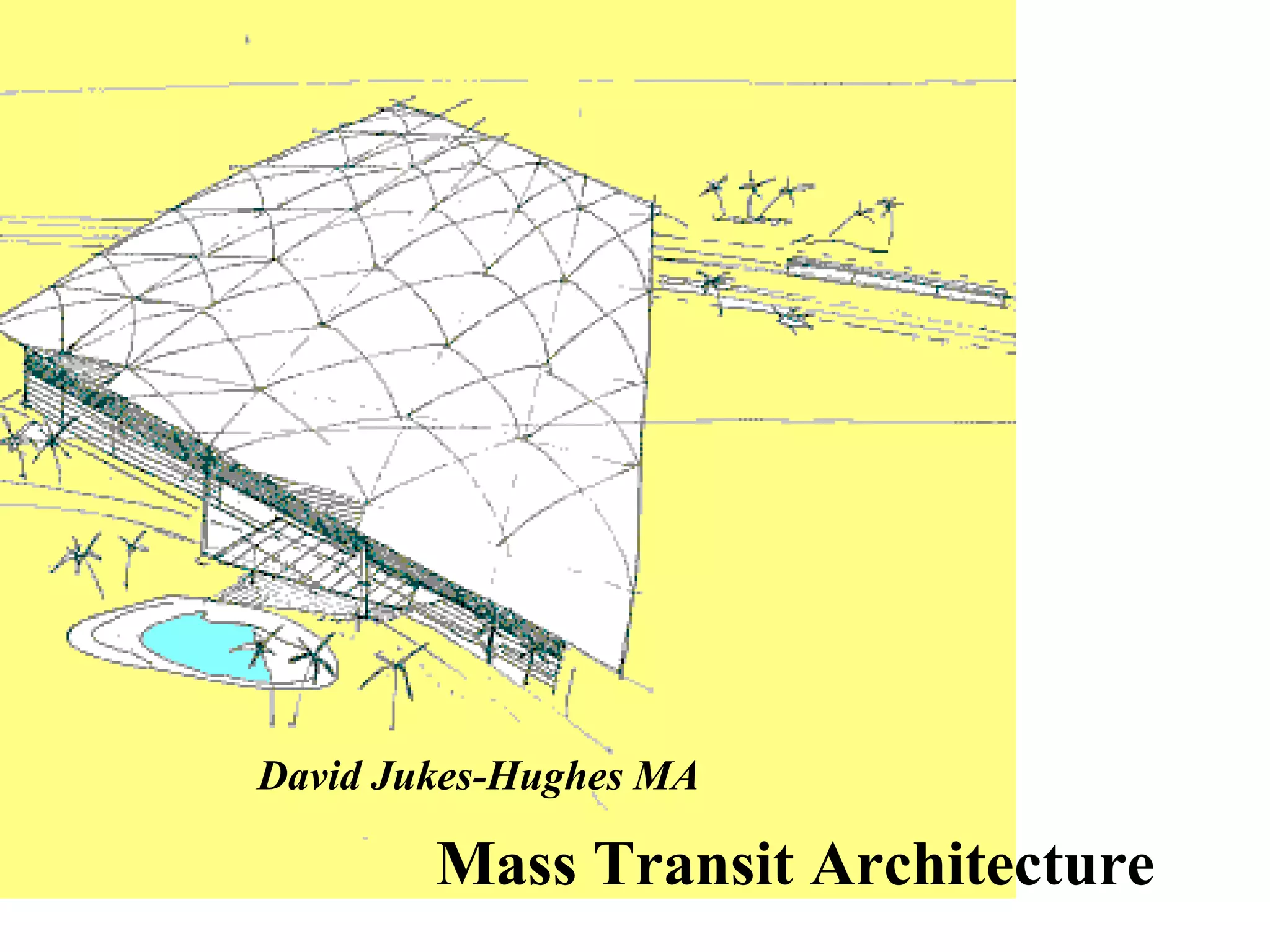
Mass Transit Architecture
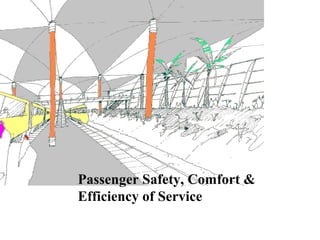
Passenger Safety, Comfort &
Efficiency of Service
•Stage coaches / Horse drawn trams / Subways
•Early Trains: The Rocket / Train sheds & hotels:
St. Pancras, Kings Cross, Paddington, Victoria,
Waterloo, Old Ottawa station / Chateau Laurier
•Subways: The London Underground / NYC cut &
cover & viaducts / electrification / the first deep bored
tunnels (WCL) / postal delivery / war time shelters /
King Cross fire / terrorism (7/7/2005)
•Inter-modal transport interchanges
History
Rail Systems: Trams / Light Rail / Heavy Rail (Metros)
Station Types: At Grade / Cut & Cover Tunnel / Deep
Bored Tunnel / Viaduct Structures
Rail Systems & Stations
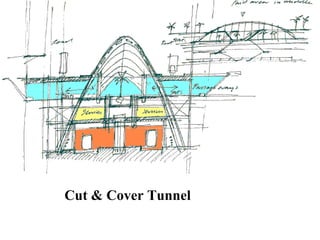
Cut & Cover Tunnel
•Track alignment & track levels / grid coordinates
•Inter-modal transport connections:vehicle access,
private drop-offs / pick-ups, taxis, buses, parking,
disabled access, park & ride
•Services: refuse collection, cash collection,
fireman’s access
•Government: adjacent property developments, land
acquisition, & considerations of democratic rights
(St. Pancras / visual impacts / Feng Shui.)
Site Planning
:
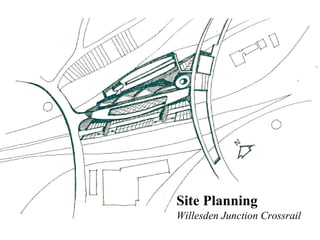
Site Planning
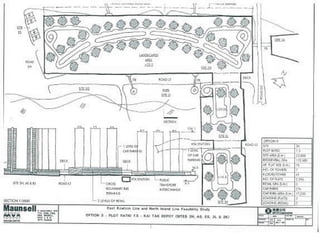
Willesden Junction Crossrail
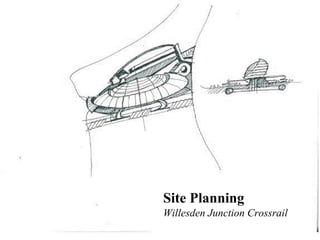
Site Planning
Willesden Junction Crossrail
•The Main Elements: Drop-offs & Pick-ups /
Concourses / Platforms / Vertical circulation / M/E
rooms / Head rooms / Ceiling voids (Footbridges /
Escalators / Lifts / Stairs)
•Systems approach to management of rail
passengers, train operations, hazards & security,
cleaning & maintenance
•Reliance on technology (esp: PA systems, cctv, good
lighting, planning-blind spots, fire detection),
procedures & trained staff
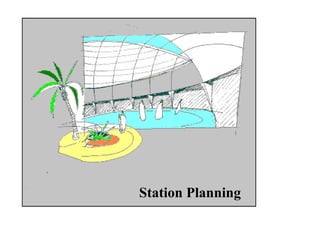
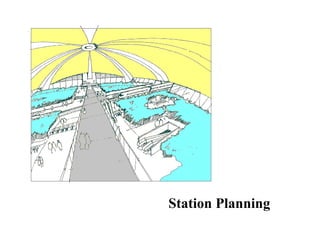
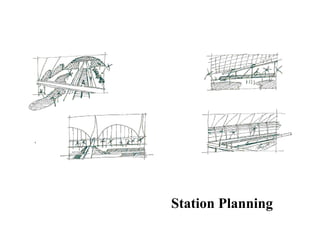
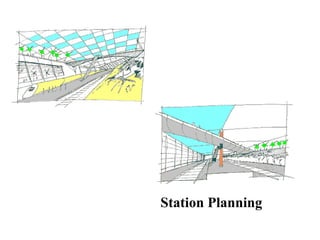
Station Planning
Station Planning
Station Planning
Station Planning
Station Planning
•Calculating the numbers: train capacity, train head-
ways, missed head-ways, station areas, exit /
entrance widths, platform & concourse widths, ticket
gates, floor area for ticket machines, lift sizes,
escalator numbers & stairways widths.
Planning for Passenger Flow
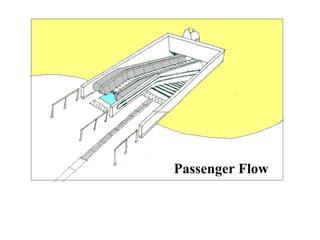
Passenger Flow
•Source of fire, staged escape, minimum escape
times & travel distances, locating exits at the
platform & concourses, escape by train, and safe
waiting areas (for staged escape.)
•Different methods of calculation: Government
standards (HMRI) / individual companies (LUL,
MTRC & British Rail) / fire codes (NFPA 130)
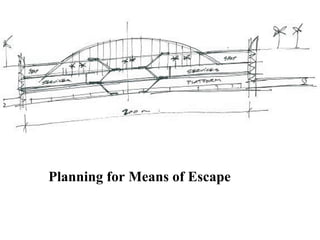
Planning for Means of Escape
•The demarcation between public concourses &
platforms (unpaid & paid areas)
• Waiting areas, public display systems, PA systems,
cctv, ticketing, selling & checking, ticket gates,
disabled access, lifts, escalators & run-off, retail,
toilets, offices, station / fire control room, staff areas
Concourses
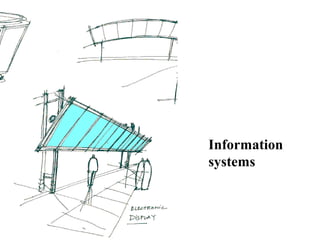
Information
systems
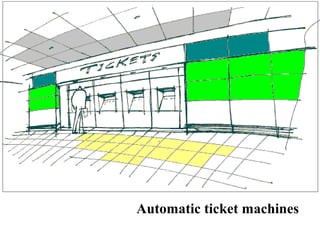
Automatic ticket machines
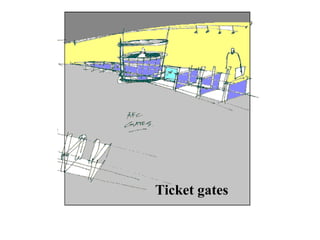
Ticket gates
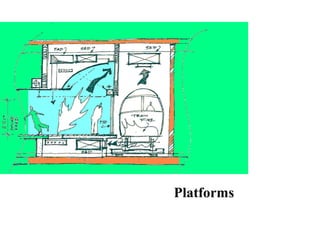
•Kinematic envelope, minimum widths & head-
rooms, track-side clearances, suicide pits, warning
strips, non-slip materials, electrical discharge &
earthing, platform screen doors,exits
•Planning for future expansion.
Platforms
Platforms
•Track-side services: OHL, 3rd
Rail, maintenance
access, cables, lighting, drainage, hydrants
•Track-side design (tunnels): passenger escape,
fireman’s access, fire fighting (hydrants), smoke
control, twin track compartmentation. (Seoul,
Korea?)
Track-side Design
•Bins, seats, signage, display systems, PA systems
advertizing, platform screen doors, platform control
booths, shelters, canopies, fire equipment,
telephones, vending machines, public toilets,
station / fire control room.
•Disability access: big letters, blind paths, wheel
chair access
Station Details
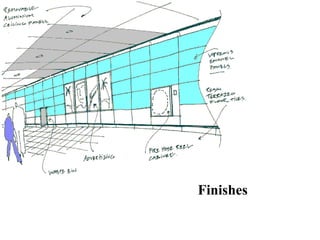
Finishes
•Deep-bored tunnels: pre-cast rc panels using tbm’s
•Cut & cover tunnels: in-situ rc diaphragm walls
•At grade systems: embankments, cuttings, in-situ rc
retaining walls, train sheds (light-weight structures),
bridge structures.
•Viaduct systems: pre-cast rc segmental
construction.
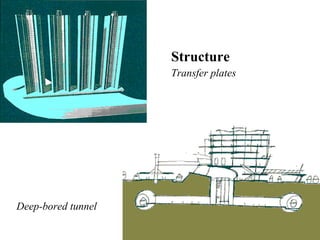
•Topside development: post & beam / shear walls /
transfer plates.
Structures
Structure
Transfer plates
Deep-bored tunnel
• Lighting, air-con, plumbing, drainage, toilets, lifts,
escalators, room areas & maintenance access.
•PA systems, cctv
•Acoustics / noise: trains, machinery, people:
finishes, noise attenuation (raised track slabs /
PSD’s, material treatment.)
•Emergency stop train buttons - platforms
Building Services
•Fire detection: smoke / heat detectors / fire alarms /
cctv / staff
•Fire control: fireman’s access / stairs / control
room / lifts, sprinklers, gas suppression, hydrants,
hose reels, hand held extinguishers.
•Fire spread: compartmentation of rooms, fire
shutters, smoke / heat control zones.
•Smoke control: track, platform, concourses, exits,
stairs, lifts (air pressured) .
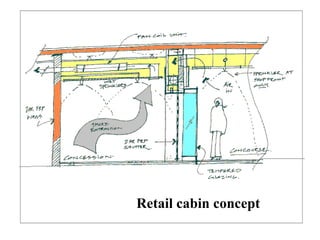
• Retail cabin concept.
Fire Hazards
Retail cabin concept
•Colour: lighting, dust & dirt
• Acoustics
•Durability: crowd loading / slip free floors
•Fire: surface spread of flame, toxicity, smoke
generation, fire load
•Cleaning: cycles, high pressure hoses, equipment,
storage
•Maintenance: cycles, supply of spares
•Access: equipment, storage
•Operations & Maintenance Manuals
Materials & Finishes
•Operations control centres / signal boxes.
•Track sub-stations.
•Train depots & maintenance yards.
•Property development.
•Offices, residential, retail.
•Methods: topside / adjacent; access & construction
requirements (phased development?)
Other Buildings
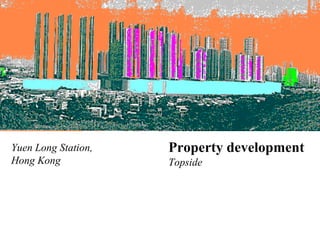
Property development
Topside
Yuen Long Station,
Hong Kong
•Site access /delivery (by train?)
•Storage: area / just-time delivery
•Hoarding: visual impact / advertizing / access
•Impact on existing train services: lost revenue
•Staged / phased construction: phased costs
•Site safety: railway related hazards & training
Construction
• Reasons: new legislation (disability access,
transport & environmental), new hazards (terrorism
& rail disasters), new technologies (new rolling
stock, double-deck trains, new speeds / kinematic
envelopes, electrification), new population demands.
•Methods: longer platforms, new exits, lifts,
escalators, footbridges, canopies & disability access,
new procedures / training
Upgrades 1
•Design challenges: site restraints, maintaining
operations, site access
•Phased construction (temporary hoarding / exits /
ticketing / traffic arrangements etc...)
•Building heritage & planning (key stakeholders).
•Designing for expansion: space & future equipment
Upgrades 2
•Facilities management
•Staff salaries, pensions & benefits, uniforms
•Staff training
•Staff insurances
•Cleaning (station & track (hair))
•Maintenance (station & track)
•After service hours: limited hours / unsociable
•Power generation etc...
Running Costs
•Ottawa Station by J. Parkin
•Moscow Underground
•Montreal Underground
•Hong Kong Airport Express & MTRC
•Bangkok Rapid Transit
•Singapore MRT
Classic Designs
The EndDavid Jukes-Hughes
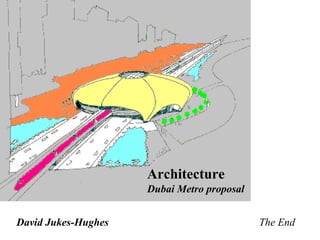
Architecture
Dubai Metro proposal

Railway Station Design 251115

  • 1.
    David Jukes-Hughes MA MassTransit Architecture
  • 2.
    Passenger Safety, Comfort& Efficiency of Service
  • 3.
    •Stage coaches /Horse drawn trams / Subways •Early Trains: The Rocket / Train sheds & hotels: St. Pancras, Kings Cross, Paddington, Victoria, Waterloo, Old Ottawa station / Chateau Laurier •Subways: The London Underground / NYC cut & cover & viaducts / electrification / the first deep bored tunnels (WCL) / postal delivery / war time shelters / King Cross fire / terrorism (7/7/2005) •Inter-modal transport interchanges History
  • 4.
    Rail Systems: Trams/ Light Rail / Heavy Rail (Metros) Station Types: At Grade / Cut & Cover Tunnel / Deep Bored Tunnel / Viaduct Structures Rail Systems & Stations
  • 5.
  • 6.
    •Track alignment &track levels / grid coordinates •Inter-modal transport connections:vehicle access, private drop-offs / pick-ups, taxis, buses, parking, disabled access, park & ride •Services: refuse collection, cash collection, fireman’s access •Government: adjacent property developments, land acquisition, & considerations of democratic rights (St. Pancras / visual impacts / Feng Shui.) Site Planning :
  • 7.
  • 8.
  • 9.
    •The Main Elements:Drop-offs & Pick-ups / Concourses / Platforms / Vertical circulation / M/E rooms / Head rooms / Ceiling voids (Footbridges / Escalators / Lifts / Stairs) •Systems approach to management of rail passengers, train operations, hazards & security, cleaning & maintenance •Reliance on technology (esp: PA systems, cctv, good lighting, planning-blind spots, fire detection), procedures & trained staff Station Planning
  • 10.
  • 11.
  • 12.
  • 13.
  • 14.
    •Calculating the numbers:train capacity, train head- ways, missed head-ways, station areas, exit / entrance widths, platform & concourse widths, ticket gates, floor area for ticket machines, lift sizes, escalator numbers & stairways widths. Planning for Passenger Flow
  • 15.
  • 16.
    •Source of fire,staged escape, minimum escape times & travel distances, locating exits at the platform & concourses, escape by train, and safe waiting areas (for staged escape.) •Different methods of calculation: Government standards (HMRI) / individual companies (LUL, MTRC & British Rail) / fire codes (NFPA 130) Planning for Means of Escape
  • 17.
  • 18.
    •The demarcation betweenpublic concourses & platforms (unpaid & paid areas) • Waiting areas, public display systems, PA systems, cctv, ticketing, selling & checking, ticket gates, disabled access, lifts, escalators & run-off, retail, toilets, offices, station / fire control room, staff areas Concourses
  • 19.
  • 20.
  • 21.
  • 22.
    •Kinematic envelope, minimumwidths & head- rooms, track-side clearances, suicide pits, warning strips, non-slip materials, electrical discharge & earthing, platform screen doors,exits •Planning for future expansion. Platforms
  • 23.
  • 24.
    •Track-side services: OHL,3rd Rail, maintenance access, cables, lighting, drainage, hydrants •Track-side design (tunnels): passenger escape, fireman’s access, fire fighting (hydrants), smoke control, twin track compartmentation. (Seoul, Korea?) Track-side Design
  • 25.
    •Bins, seats, signage,display systems, PA systems advertizing, platform screen doors, platform control booths, shelters, canopies, fire equipment, telephones, vending machines, public toilets, station / fire control room. •Disability access: big letters, blind paths, wheel chair access Station Details
  • 26.
  • 27.
    •Deep-bored tunnels: pre-castrc panels using tbm’s •Cut & cover tunnels: in-situ rc diaphragm walls •At grade systems: embankments, cuttings, in-situ rc retaining walls, train sheds (light-weight structures), bridge structures. •Viaduct systems: pre-cast rc segmental construction. •Topside development: post & beam / shear walls / transfer plates. Structures
  • 28.
  • 29.
    • Lighting, air-con,plumbing, drainage, toilets, lifts, escalators, room areas & maintenance access. •PA systems, cctv •Acoustics / noise: trains, machinery, people: finishes, noise attenuation (raised track slabs / PSD’s, material treatment.) •Emergency stop train buttons - platforms Building Services
  • 30.
    •Fire detection: smoke/ heat detectors / fire alarms / cctv / staff •Fire control: fireman’s access / stairs / control room / lifts, sprinklers, gas suppression, hydrants, hose reels, hand held extinguishers. •Fire spread: compartmentation of rooms, fire shutters, smoke / heat control zones. •Smoke control: track, platform, concourses, exits, stairs, lifts (air pressured) . • Retail cabin concept. Fire Hazards
  • 31.
  • 32.
    •Colour: lighting, dust& dirt • Acoustics •Durability: crowd loading / slip free floors •Fire: surface spread of flame, toxicity, smoke generation, fire load •Cleaning: cycles, high pressure hoses, equipment, storage •Maintenance: cycles, supply of spares •Access: equipment, storage •Operations & Maintenance Manuals Materials & Finishes
  • 33.
    •Operations control centres/ signal boxes. •Track sub-stations. •Train depots & maintenance yards. •Property development. •Offices, residential, retail. •Methods: topside / adjacent; access & construction requirements (phased development?) Other Buildings
  • 35.
  • 36.
    •Site access /delivery(by train?) •Storage: area / just-time delivery •Hoarding: visual impact / advertizing / access •Impact on existing train services: lost revenue •Staged / phased construction: phased costs •Site safety: railway related hazards & training Construction
  • 37.
    • Reasons: newlegislation (disability access, transport & environmental), new hazards (terrorism & rail disasters), new technologies (new rolling stock, double-deck trains, new speeds / kinematic envelopes, electrification), new population demands. •Methods: longer platforms, new exits, lifts, escalators, footbridges, canopies & disability access, new procedures / training Upgrades 1
  • 38.
    •Design challenges: siterestraints, maintaining operations, site access •Phased construction (temporary hoarding / exits / ticketing / traffic arrangements etc...) •Building heritage & planning (key stakeholders). •Designing for expansion: space & future equipment Upgrades 2
  • 39.
    •Facilities management •Staff salaries,pensions & benefits, uniforms •Staff training •Staff insurances •Cleaning (station & track (hair)) •Maintenance (station & track) •After service hours: limited hours / unsociable •Power generation etc... Running Costs
  • 40.
    •Ottawa Station byJ. Parkin •Moscow Underground •Montreal Underground •Hong Kong Airport Express & MTRC •Bangkok Rapid Transit •Singapore MRT Classic Designs
  • 41.