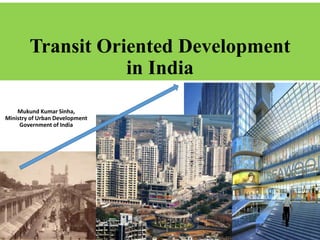
Transit Oriented Development
in India
Mukund Kumar Sinha,
Ministry of Urban Development
Government of India
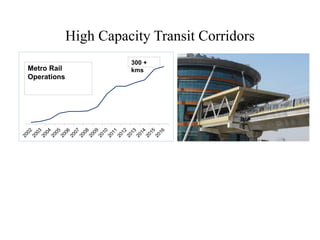
High Capacity Transit Corridors
Metro Rail
Operations
300 +
kms
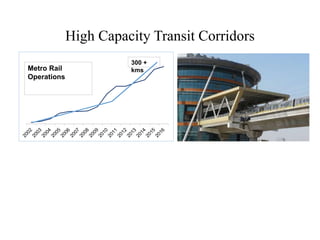
High Capacity Transit Corridors
Metro Rail
Operations
300 +
kms
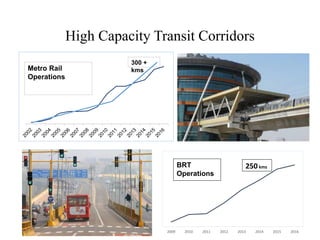
High Capacity Transit Corridors
Metro Rail
Operations
300 +
kms
2009 2010 2011 2012 2013 2014 2015 2016
BRT
Operations
250kms
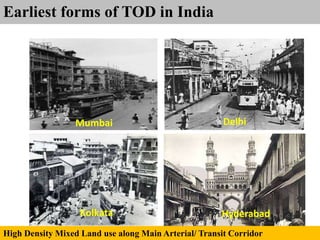
Earliest forms of TOD in India
Delhi
Hyderabad
High Density Mixed Land use along Main Arterial/ Transit Corridor
Mumbai
Kolkata
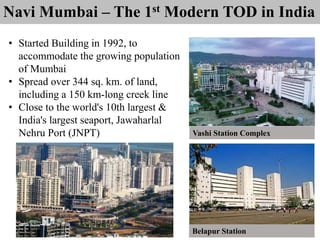
Navi Mumbai – The 1st Modern TOD in India
• Started Building in 1992, to
accommodate the growing population
of Mumbai
• Spread over 344 sq. km. of land,
including a 150 km-long creek line
• Close to the world's 10th largest &
India's largest seaport, Jawaharlal
Nehru Port (JNPT) Vashi Station Complex
Belapur Station
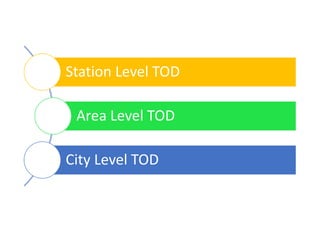
Station Level TOD
Area Level TOD
City Level TOD
TOD in India
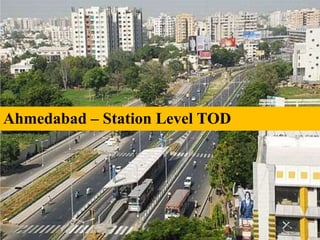
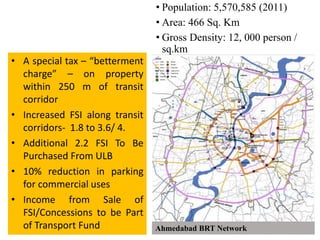
Ahmedabad – Station Level TOD
• Population: 5,570,585 (2011)
• Area: 466 Sq. Km
• Gross Density: 12, 000 person /
sq.km
Ahmedabad BRT Network
• A special tax – “betterment
charge” – on property
within 250 m of transit
corridor
• Increased FSI along transit
corridors- 1.8 to 3.6/ 4.
• Additional 2.2 FSI To Be
Purchased From ULB
• 10% reduction in parking
for commercial uses
• Income from Sale of
FSI/Concessions to be Part
of Transport Fund
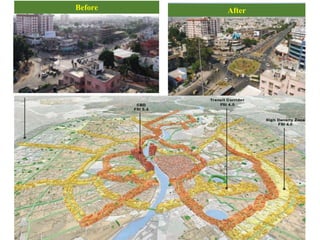
AfterBefore
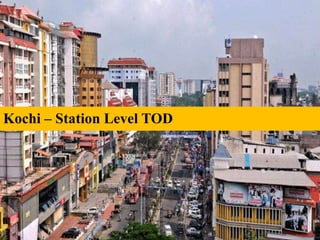
Kochi – Station Level TOD
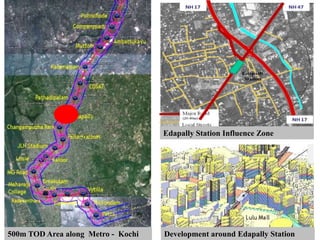
500m TOD Area along Metro - Kochi
Edapally Station Influence Zone
Development around Edapally Station
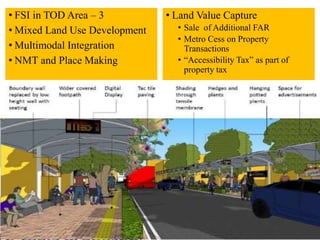
• FSI in TOD Area – 3
• Mixed Land Use Development
• Multimodal Integration
• NMT and Place Making
• Land Value Capture
• Sale of Additional FAR
• Metro Cess on Property
Transactions
• “Accessibility Tax” as part of
property tax
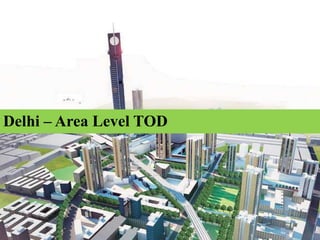
Delhi – Area Level TOD
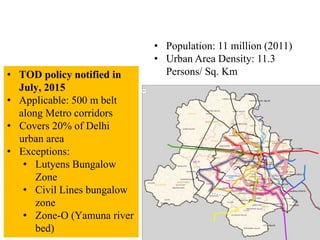
• Population: 11 million (2011)
• Urban Area Density: 11.3
Persons/ Sq. Km• TOD policy notified in
July, 2015
• Applicable: 500 m belt
along Metro corridors
• Covers 20% of Delhi
urban area
• Exceptions:
• Lutyens Bungalow
Zone
• Civil Lines bungalow
zone
• Zone-O (Yamuna river
bed)
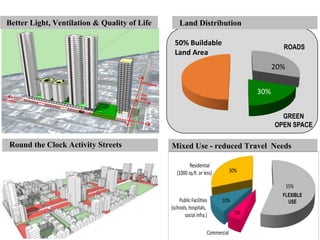
Round the Clock Activity Streets
20%
30%
ROADS
50% Buildable
Land Area
GREEN
OPEN SPACE
Land Distribution
Mixed Use - reduced Travel Needs
55%
10%
5%
30%
FLEXIBLE
USE
Residential
(1000 sq.ft. or less)
Public Facilities
(schools, hospitals,
social infra.)
Commercial
Better Light, Ventilation & Quality of Life
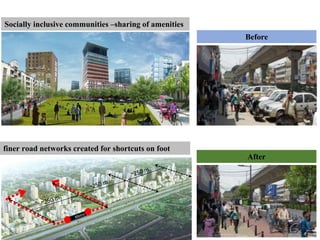
Before
After
Socially inclusive communities –sharing of amenities
finer road networks created for shortcuts on foot
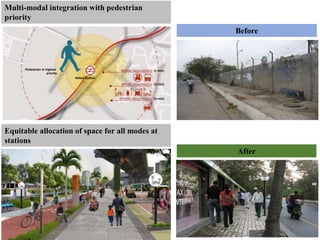
Pedestrian is highest
priority
Metro Station
(1 min)
(2 min)
(3 min)
Multi-modal integration with pedestrian
priority
Equitable allocation of space for all modes at
stations
Before
After
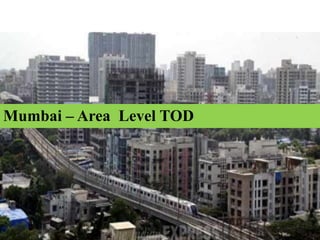
Mumbai – Area Level TOD
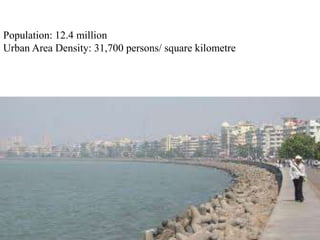
Population: 12.4 million
Urban Area Density: 31,700 persons/ square kilometre
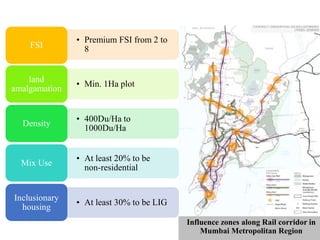
Influence zones along Rail corridor in
Mumbai Metropolitan Region
• Premium FSI from 2 to
8FSI
• Min. 1Ha plot
land
amalgamation
• 400Du/Ha to
1000Du/Ha
Density
• At least 20% to be
non-residential
Mix Use
• At least 30% to be LIG
Inclusionary
housing
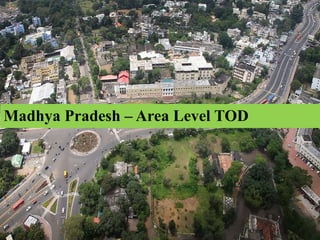
Madhya Pradesh – Area Level TOD
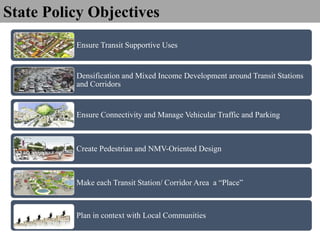
Ensure Transit Supportive Uses
Densification and Mixed Income Development around Transit Stations
and Corridors
Ensure Connectivity and Manage Vehicular Traffic and Parking
Create Pedestrian and NMV-Oriented Design
Make each Transit Station/ Corridor Area a “Place”
Plan in context with Local Communities
State Policy Objectives
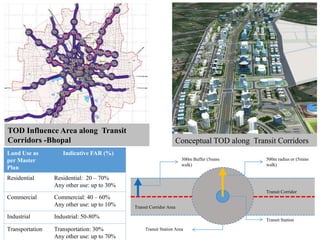
Transit Corridor
Transit Station
Transit Station Area
500m radius or (5mins
walk)
300m Buffer (5mins
walk)
Transit Corridor Area
TOD Influence Area along Transit
Corridors -Bhopal Conceptual TOD along Transit Corridors
Land Use as
per Master
Plan
Indicative FAR (%)
Residential Residential: 20 – 70%
Any other use: up to 30%
Commercial Commercial: 40 – 60%
Any other use: up to 10%
Industrial Industrial: 50-80%
Transportation Transportation: 30%
Any other use: up to 70%
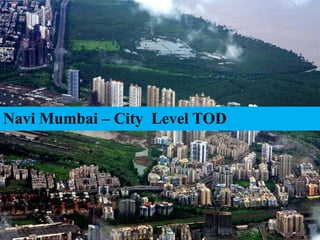
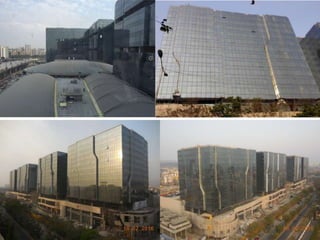
Navi Mumbai – City Level TOD
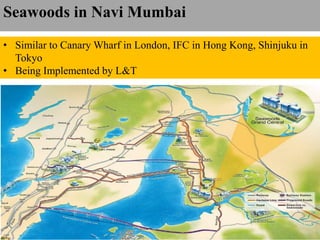
Seawoods in Navi Mumbai
• Similar to Canary Wharf in London, IFC in Hong Kong, Shinjuku in
Tokyo
• Being Implemented by L&T
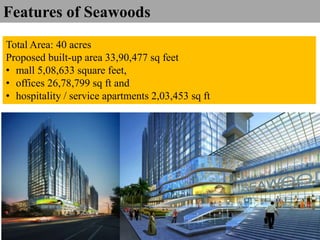
Total Area: 40 acres
Proposed built-up area 33,90,477 sq feet
• mall 5,08,633 square feet,
• offices 26,78,799 sq ft and
• hospitality / service apartments 2,03,453 sq ft
Features of Seawoods
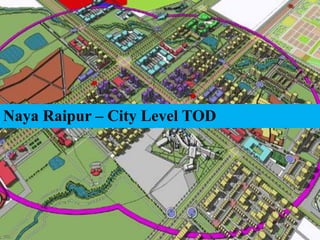
Naya Raipur – City Level TOD
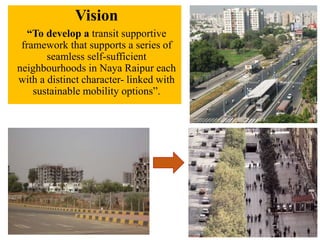
Vision
“To develop a transit supportive
framework that supports a series of
seamless self-sufficient
neighbourhoods in Naya Raipur each
with a distinct character- linked with
sustainable mobility options”.
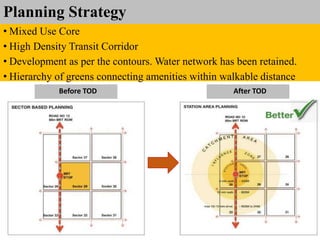
Planning Strategy
Before TOD After TOD
• Mixed Use Core
• High Density Transit Corridor
• Development as per the contours. Water network has been retained.
• Hierarchy of greens connecting amenities within walkable distance
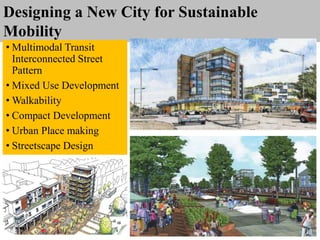
Designing a New City for Sustainable
Mobility
• Multimodal Transit
Interconnected Street
Pattern
• Mixed Use Development
• Walkability
• Compact Development
• Urban Place making
• Streetscape Design
TOD Guiding Principles in India
Thank you!

TOD in India

  • 1.
    Transit Oriented Development inIndia Mukund Kumar Sinha, Ministry of Urban Development Government of India
  • 2.
    High Capacity TransitCorridors Metro Rail Operations 300 + kms
  • 3.
    High Capacity TransitCorridors Metro Rail Operations 300 + kms
  • 4.
    High Capacity TransitCorridors Metro Rail Operations 300 + kms 2009 2010 2011 2012 2013 2014 2015 2016 BRT Operations 250kms
  • 5.
    Earliest forms ofTOD in India Delhi Hyderabad High Density Mixed Land use along Main Arterial/ Transit Corridor Mumbai Kolkata
  • 6.
    Navi Mumbai –The 1st Modern TOD in India • Started Building in 1992, to accommodate the growing population of Mumbai • Spread over 344 sq. km. of land, including a 150 km-long creek line • Close to the world's 10th largest & India's largest seaport, Jawaharlal Nehru Port (JNPT) Vashi Station Complex Belapur Station
  • 7.
    Station Level TOD AreaLevel TOD City Level TOD
  • 8.
  • 9.
  • 10.
    • Population: 5,570,585(2011) • Area: 466 Sq. Km • Gross Density: 12, 000 person / sq.km Ahmedabad BRT Network • A special tax – “betterment charge” – on property within 250 m of transit corridor • Increased FSI along transit corridors- 1.8 to 3.6/ 4. • Additional 2.2 FSI To Be Purchased From ULB • 10% reduction in parking for commercial uses • Income from Sale of FSI/Concessions to be Part of Transport Fund
  • 11.
  • 12.
  • 13.
    500m TOD Areaalong Metro - Kochi Edapally Station Influence Zone Development around Edapally Station
  • 14.
    • FSI inTOD Area – 3 • Mixed Land Use Development • Multimodal Integration • NMT and Place Making • Land Value Capture • Sale of Additional FAR • Metro Cess on Property Transactions • “Accessibility Tax” as part of property tax
  • 15.
    Delhi – AreaLevel TOD
  • 16.
    • Population: 11million (2011) • Urban Area Density: 11.3 Persons/ Sq. Km• TOD policy notified in July, 2015 • Applicable: 500 m belt along Metro corridors • Covers 20% of Delhi urban area • Exceptions: • Lutyens Bungalow Zone • Civil Lines bungalow zone • Zone-O (Yamuna river bed)
  • 17.
    Round the ClockActivity Streets 20% 30% ROADS 50% Buildable Land Area GREEN OPEN SPACE Land Distribution Mixed Use - reduced Travel Needs 55% 10% 5% 30% FLEXIBLE USE Residential (1000 sq.ft. or less) Public Facilities (schools, hospitals, social infra.) Commercial Better Light, Ventilation & Quality of Life
  • 18.
    Before After Socially inclusive communities–sharing of amenities finer road networks created for shortcuts on foot
  • 19.
    Pedestrian is highest priority MetroStation (1 min) (2 min) (3 min) Multi-modal integration with pedestrian priority Equitable allocation of space for all modes at stations Before After
  • 20.
    Mumbai – AreaLevel TOD
  • 21.
    Population: 12.4 million UrbanArea Density: 31,700 persons/ square kilometre
  • 22.
    Influence zones alongRail corridor in Mumbai Metropolitan Region • Premium FSI from 2 to 8FSI • Min. 1Ha plot land amalgamation • 400Du/Ha to 1000Du/Ha Density • At least 20% to be non-residential Mix Use • At least 30% to be LIG Inclusionary housing
  • 23.
    Madhya Pradesh –Area Level TOD
  • 24.
    Ensure Transit SupportiveUses Densification and Mixed Income Development around Transit Stations and Corridors Ensure Connectivity and Manage Vehicular Traffic and Parking Create Pedestrian and NMV-Oriented Design Make each Transit Station/ Corridor Area a “Place” Plan in context with Local Communities State Policy Objectives
  • 25.
    Transit Corridor Transit Station TransitStation Area 500m radius or (5mins walk) 300m Buffer (5mins walk) Transit Corridor Area TOD Influence Area along Transit Corridors -Bhopal Conceptual TOD along Transit Corridors Land Use as per Master Plan Indicative FAR (%) Residential Residential: 20 – 70% Any other use: up to 30% Commercial Commercial: 40 – 60% Any other use: up to 10% Industrial Industrial: 50-80% Transportation Transportation: 30% Any other use: up to 70%
  • 26.
    Navi Mumbai –City Level TOD
  • 27.
    Seawoods in NaviMumbai • Similar to Canary Wharf in London, IFC in Hong Kong, Shinjuku in Tokyo • Being Implemented by L&T
  • 28.
    Total Area: 40acres Proposed built-up area 33,90,477 sq feet • mall 5,08,633 square feet, • offices 26,78,799 sq ft and • hospitality / service apartments 2,03,453 sq ft Features of Seawoods
  • 30.
    Naya Raipur –City Level TOD
  • 31.
    Vision “To develop atransit supportive framework that supports a series of seamless self-sufficient neighbourhoods in Naya Raipur each with a distinct character- linked with sustainable mobility options”.
  • 32.
    Planning Strategy Before TODAfter TOD • Mixed Use Core • High Density Transit Corridor • Development as per the contours. Water network has been retained. • Hierarchy of greens connecting amenities within walkable distance
  • 33.
    Designing a NewCity for Sustainable Mobility • Multimodal Transit Interconnected Street Pattern • Mixed Use Development • Walkability • Compact Development • Urban Place making • Streetscape Design
  • 34.
  • 37.