Vinay Bidarimath 07B405 Mayur Desai 07B407 Snehal Mohite 07B429 Urvi Sethia 07B445 Likitha Thatikonda 07B453
INTRODUCTION SWOT ANALYSIS MUMBAI SUBURBAN RAILWAYS MARKETING MIX DEMAND AND CAPACITY CONSTRAINTS SURVEY CONCLUSION
 
First in India in 1853 from Bombay to Thana. 1853 First railway train journeyed distance of 22 miles between Bombay and Thana. Originally, operated by private companies Englishmen. 1925-1950 GOI took over the all the private railway companies.
 
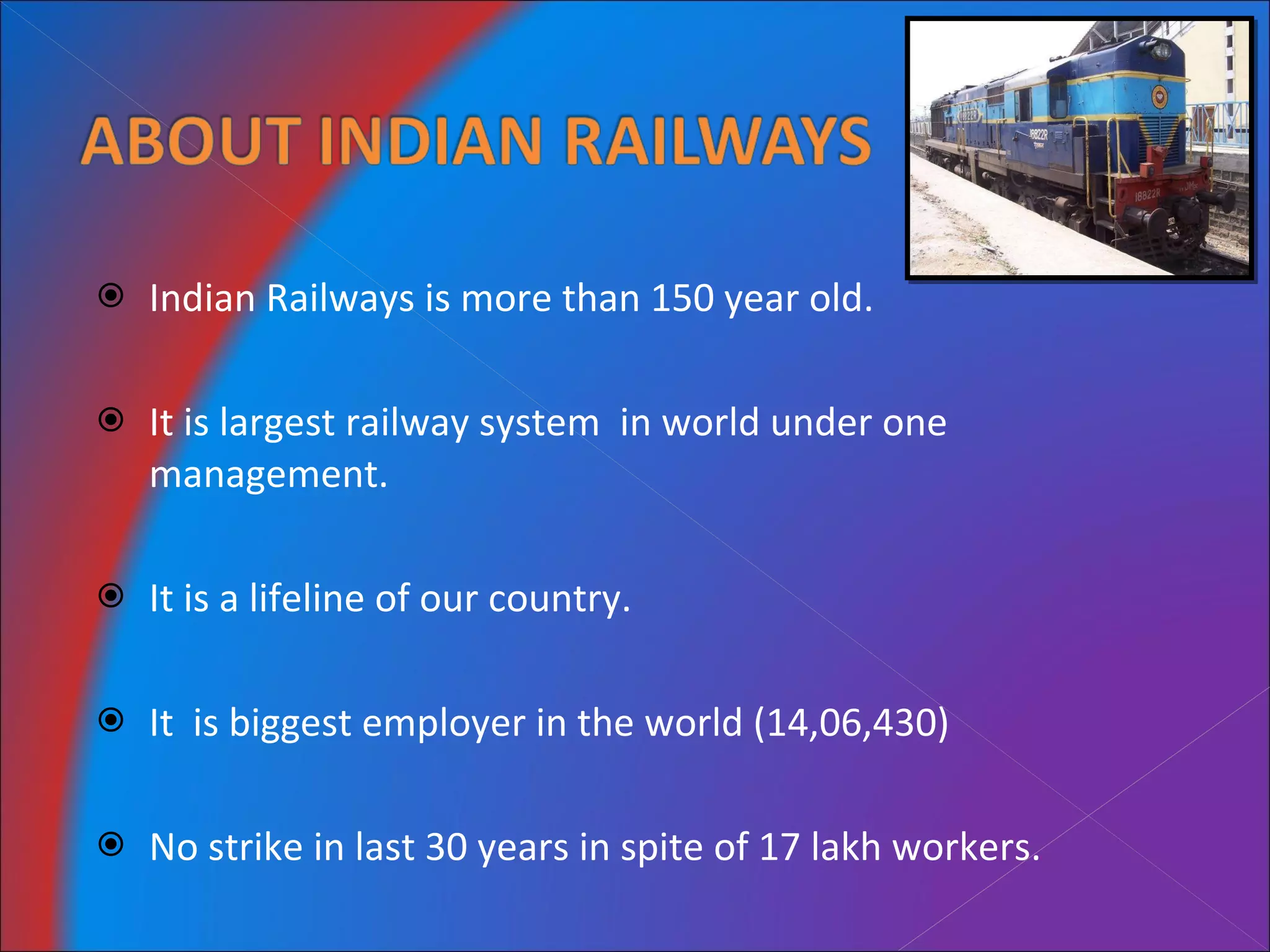
Indian Railways is more than 150 year old. It is largest railway system  in world under one management. It is a lifeline of our country. It  is biggest employer in the world (14,06,430)  No strike in last 30 years in spite of 17 lakh workers.
 
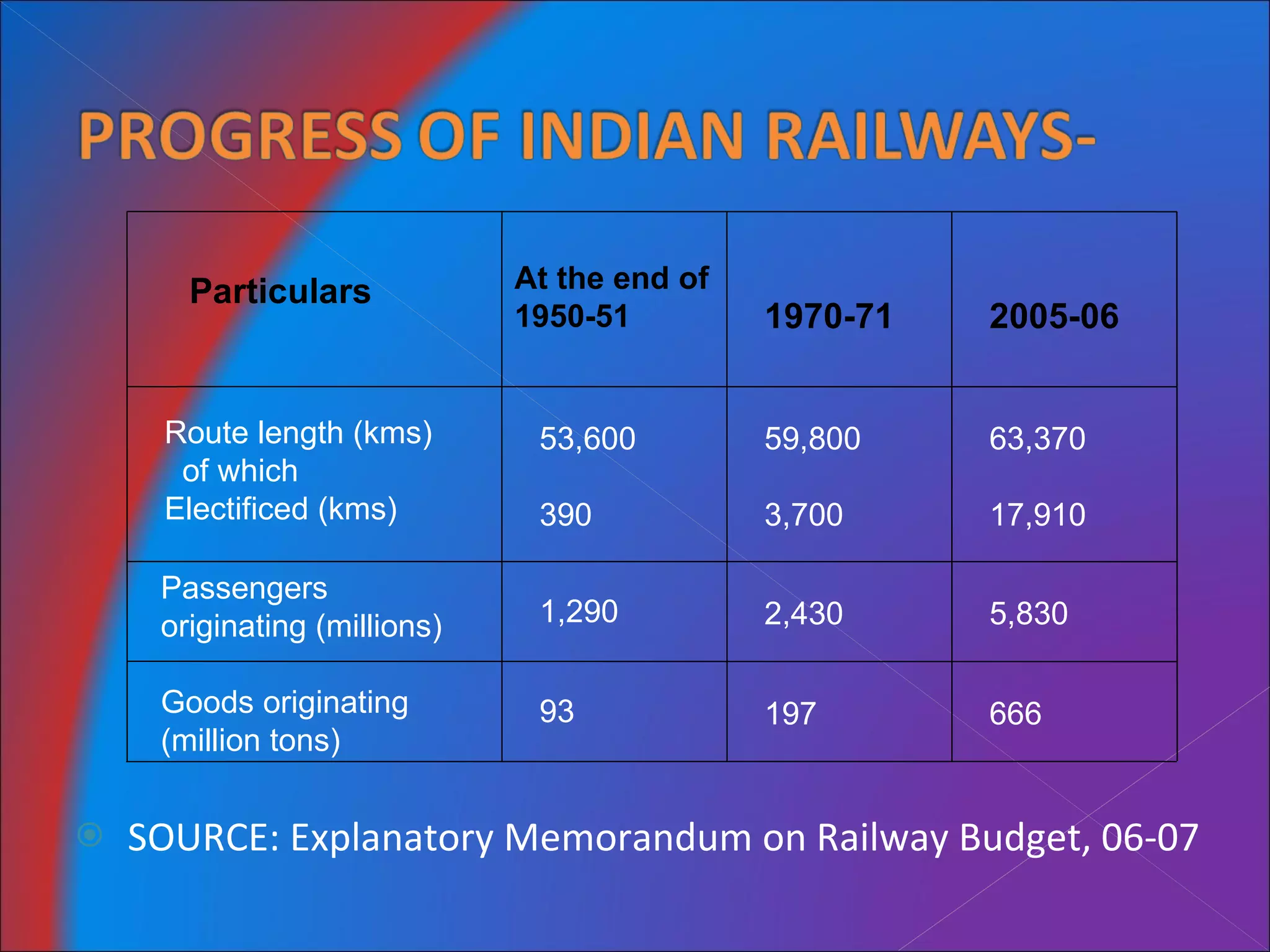
SOURCE: Explanatory Memorandum on Railway Budget, 06-07 Particulars At the end of 1950-51 1970-71 2005-06 Route length (kms)‏ of which  Electificed (kms)‏ 53,600 390 59,800 3,700 63,370 17,910 Passengers  originating (millions)‏ Goods originating (million tons)‏ 1,290 2,430 5,830 93 197 666
 
 
S- Strength. W- Weakness. O- Opportunity. T- Threats.
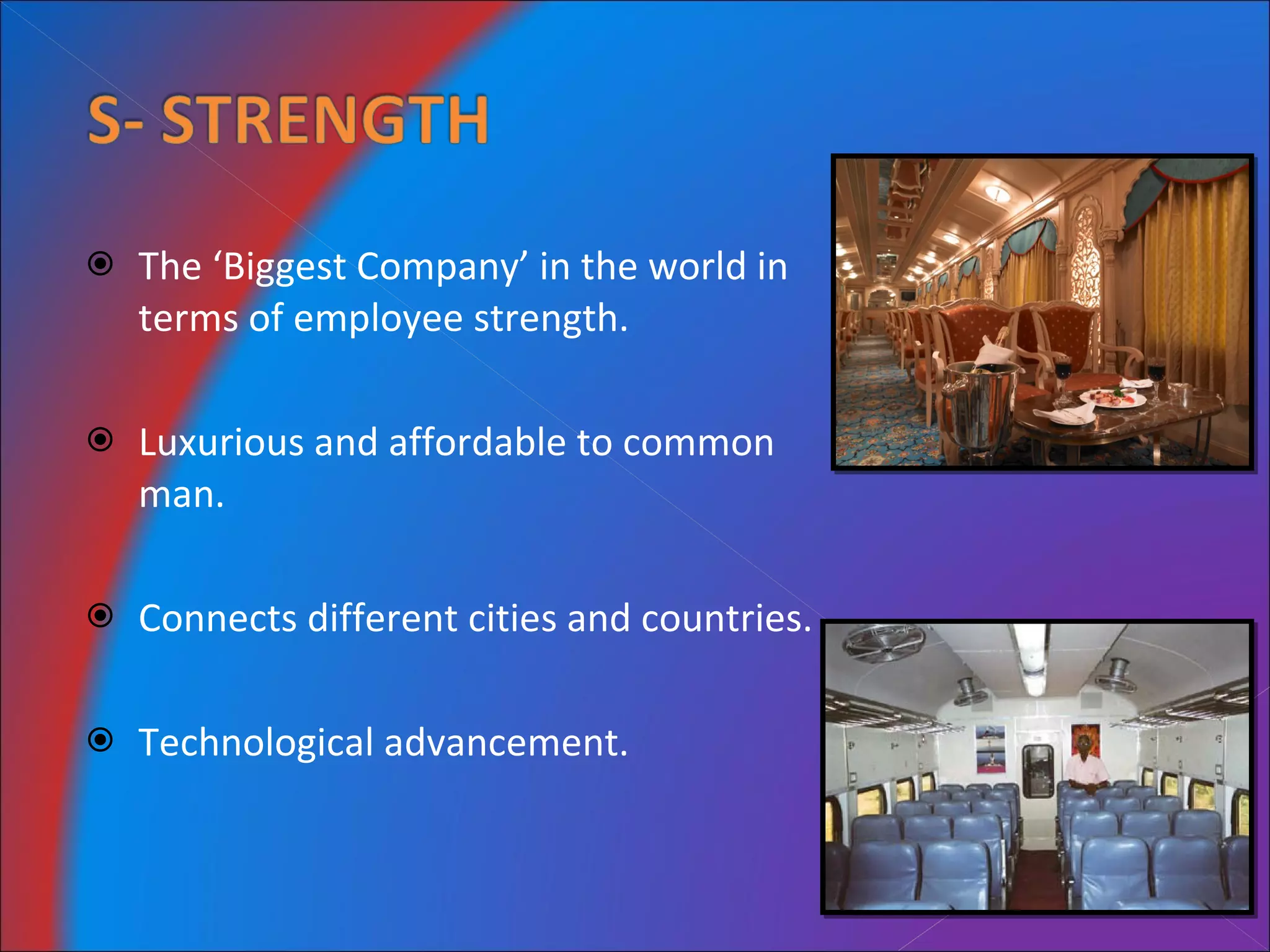
The ‘Biggest Company’ in the world in terms of employee strength. Luxurious and affordable to common man. Connects different cities and countries. Technological advancement.
Corruption  within the department. Lack  of accident proof magnetic wheels in all trains. Lack of safety. Poor infrastructure. Delayed trains. Non pro-active  employees.
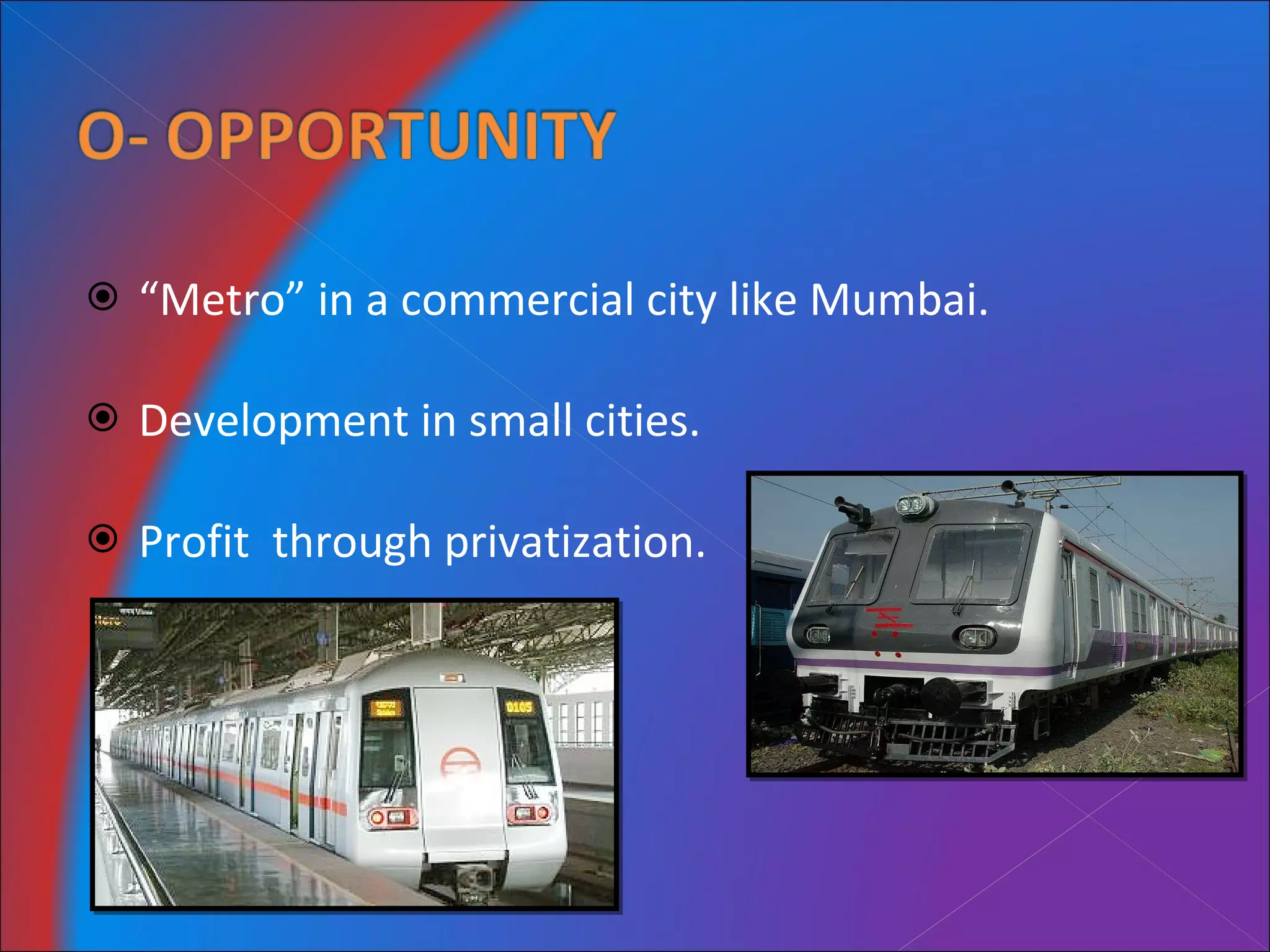
“ Metro” in a commercial city like Mumbai. Development in small cities. Profit  through privatization.
Low  cost airlines. Improvement of other infrastructure like roadways. Could be taken over by airlines .
IN-BOUND TRAINS - LOCAL TRAINS OUT-BOUND TRAINS - TRAINS CONNECTING TO STATES & OTHER CITIES.
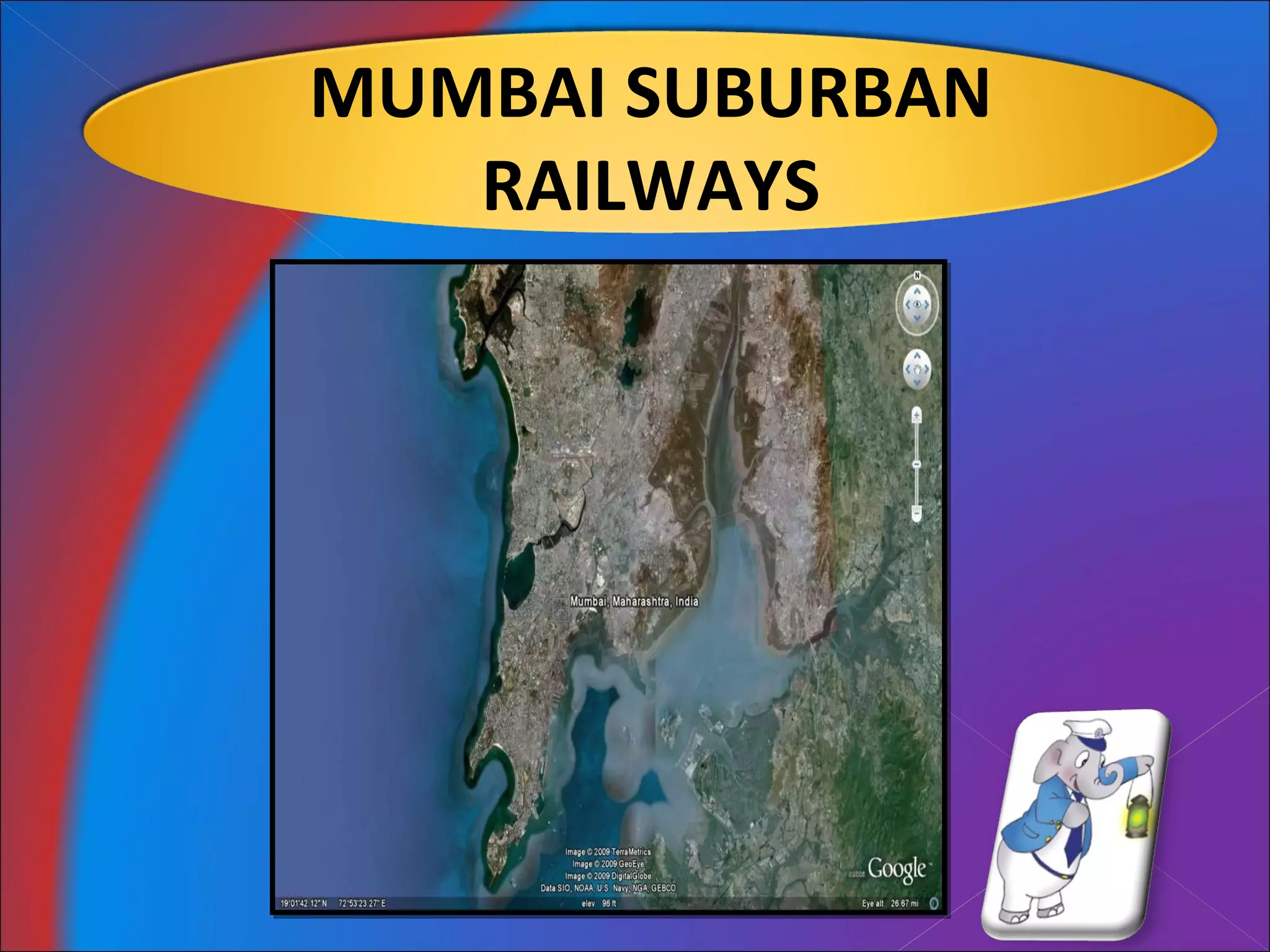
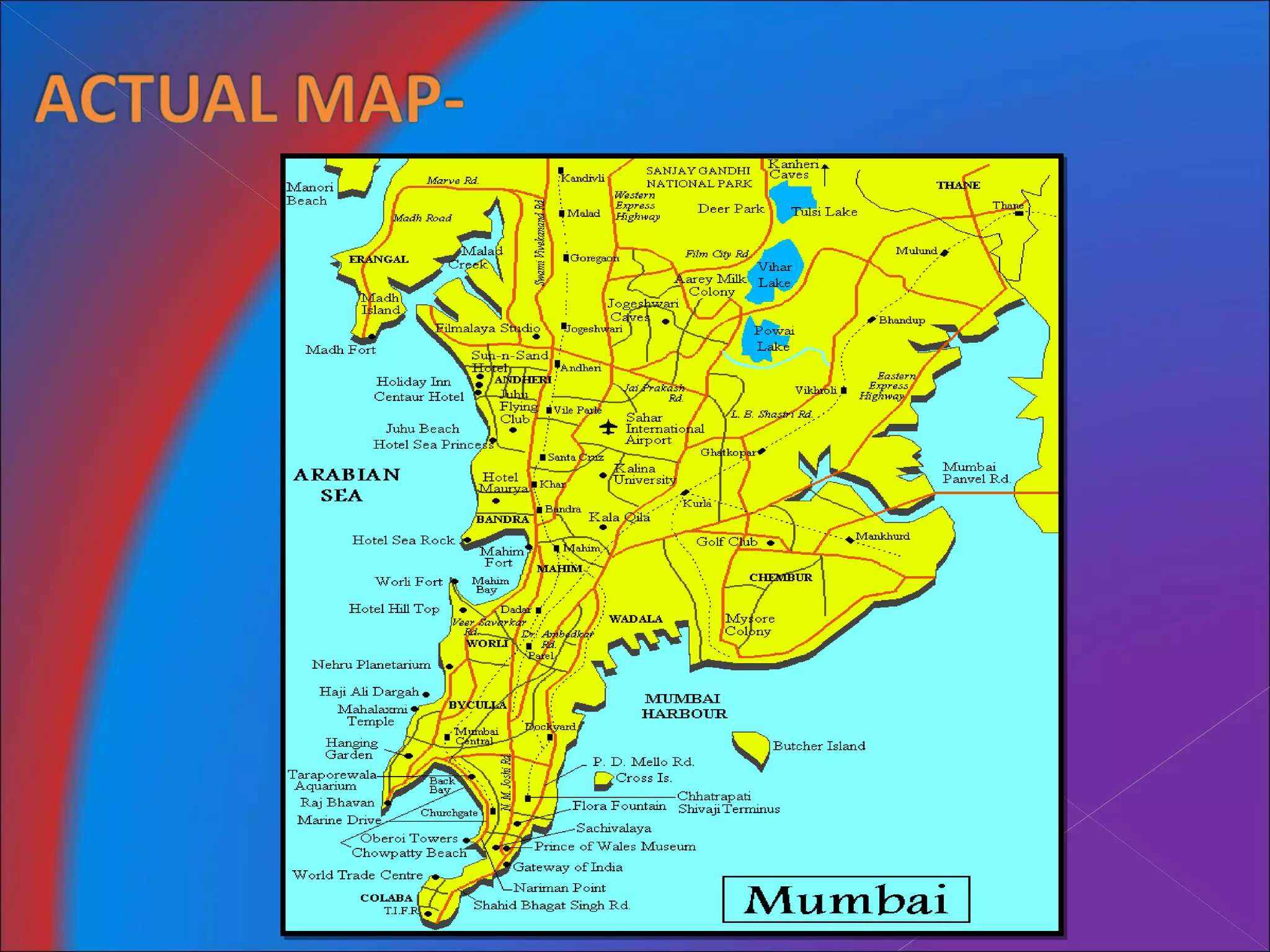
MUMBAI SUBURBAN RAILWAYS
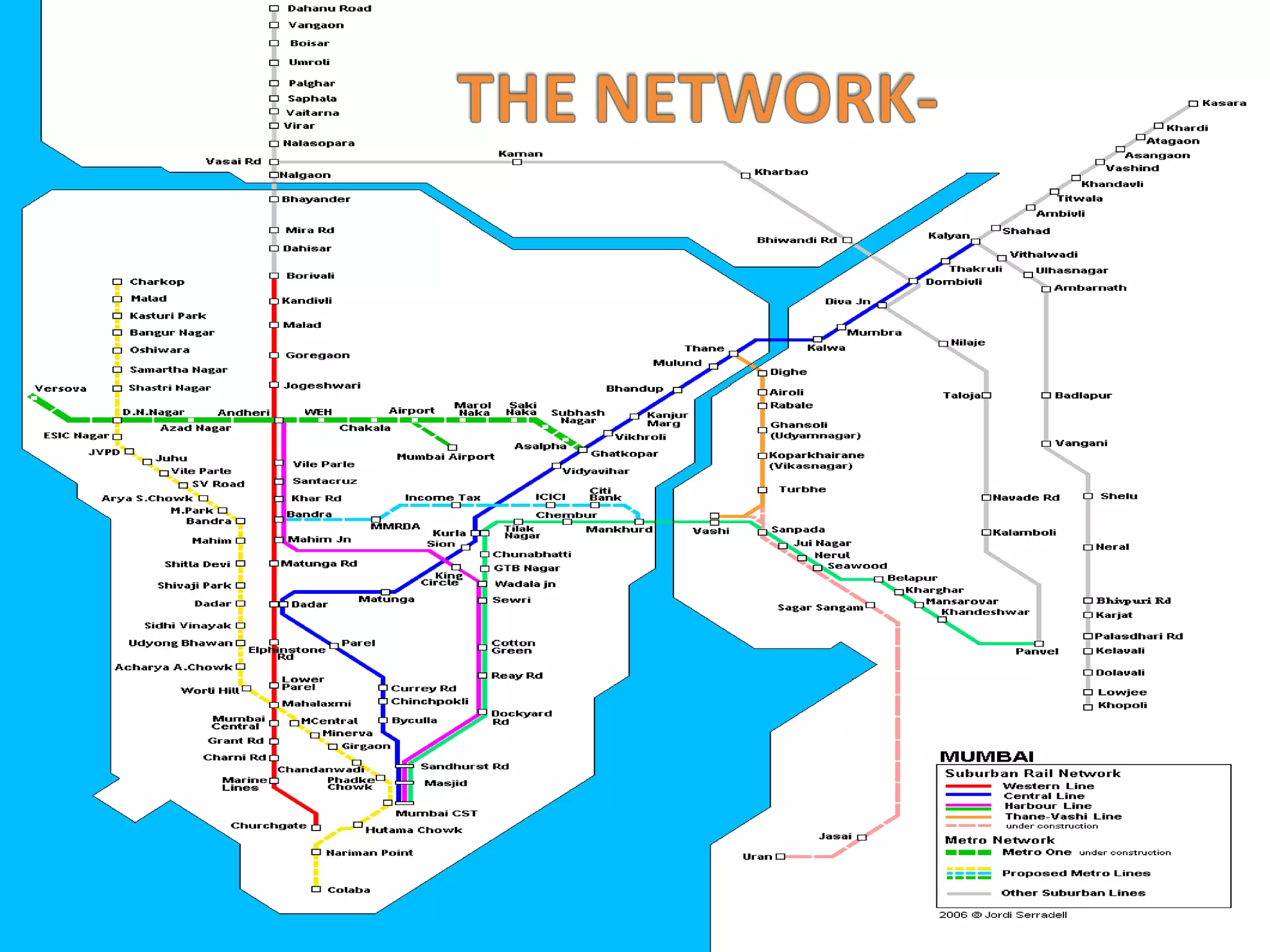
Central Line Western Line Harbour Line
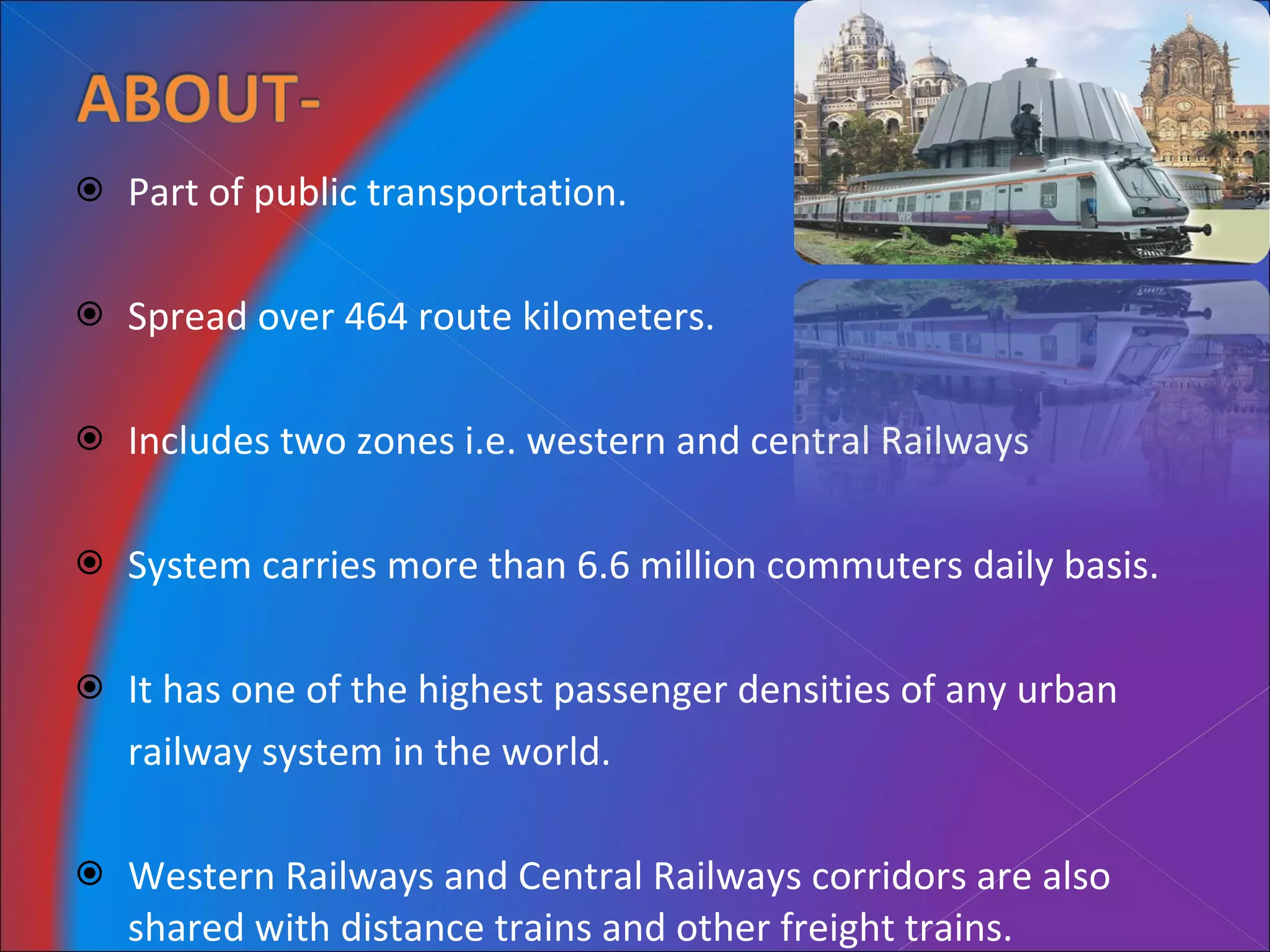
Part of public transportation. Spread over 464 route kilometers. Includes two zones i.e. western and central Railways System carries more than 6.6 million commuters daily basis. It has one of the highest passenger densities of any urban  railway system in the world. Western Railways and Central Railways corridors are also shared with distance trains and other freight trains.


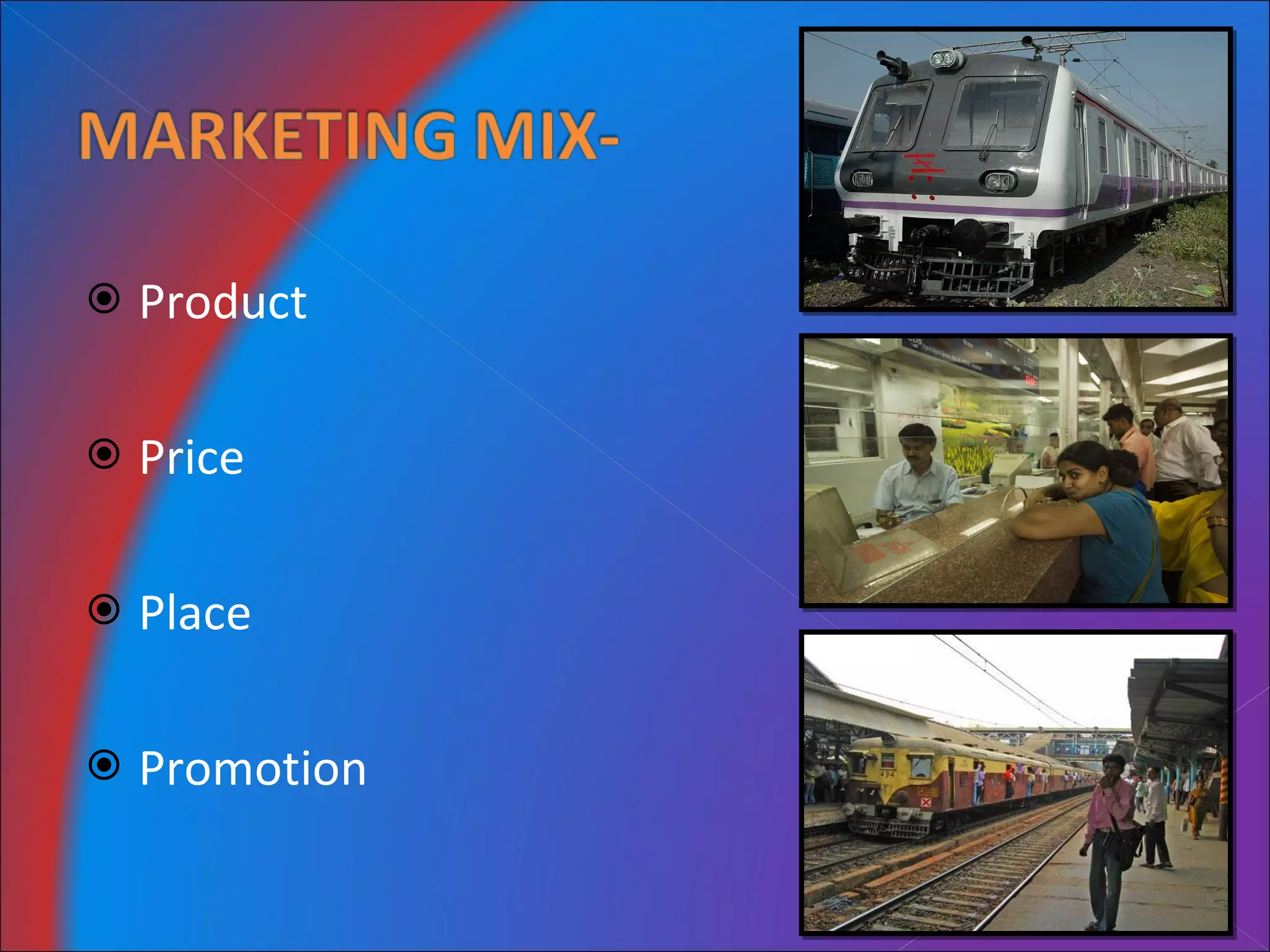
Product Price Place Promotion
Passenger Service Product. Local trains.
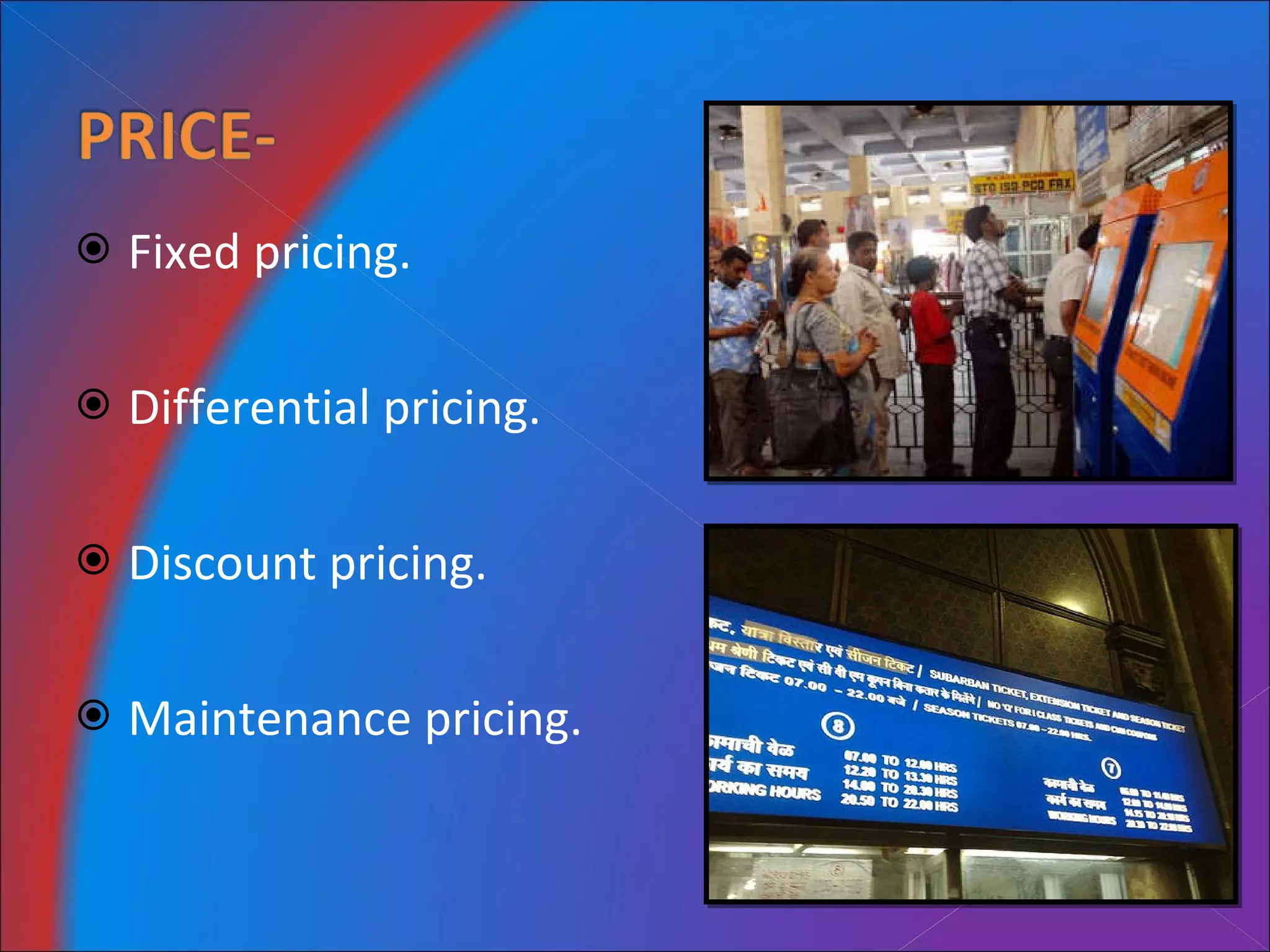
Fixed pricing. Differential pricing. Discount pricing. Maintenance pricing.
Service delivery point. Place should be customer-friendly. Places should be well maintained.
Mainly newspapers. Electronic media.
 
Upgradation of harbour line. Provide more shuttle services. Increase the frequency of trains. Give extra capacity. Cleanliness. Increase in capacity of passenger. coaches
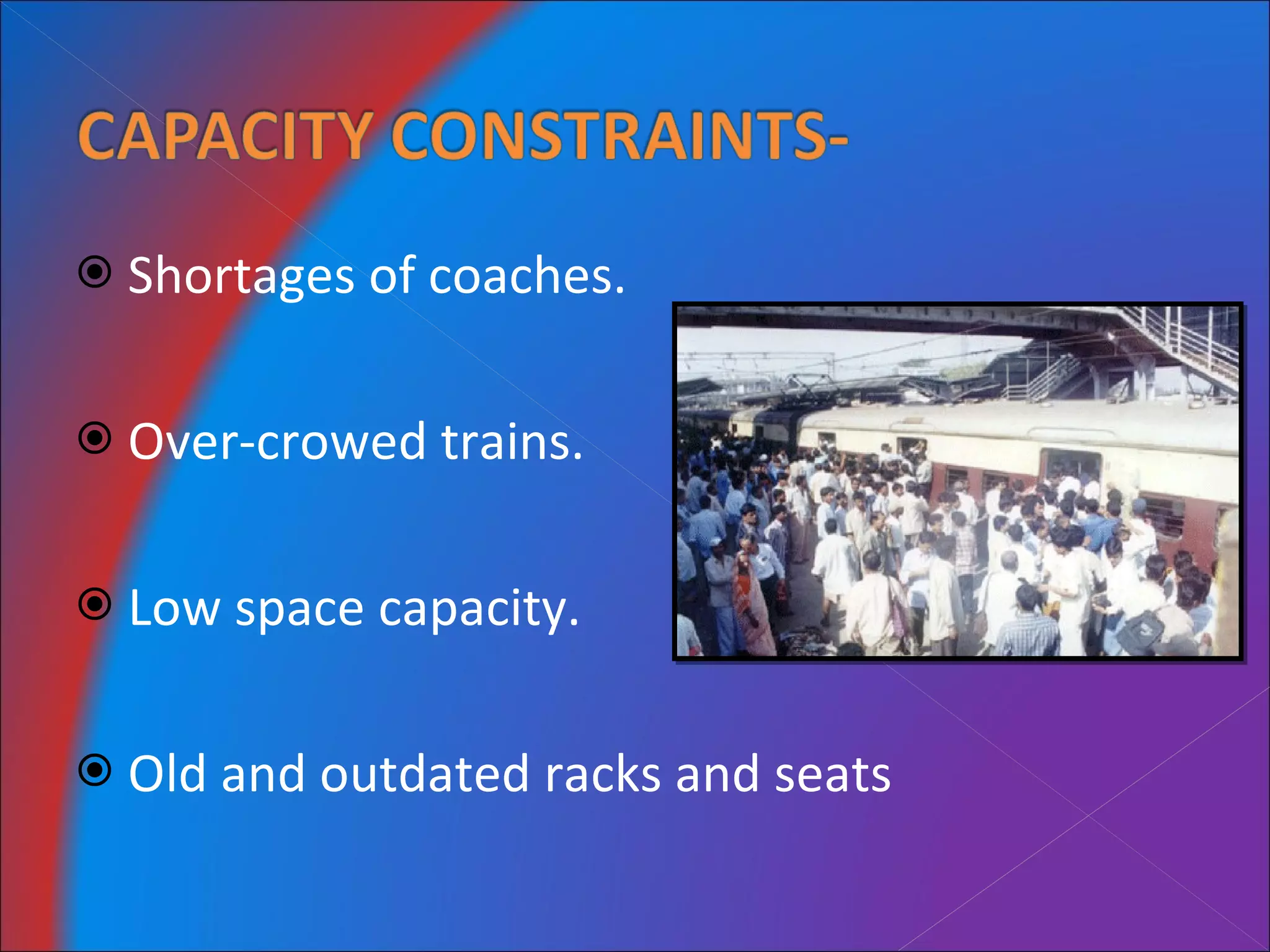
Shortages of coaches. Over-crowed trains. Low space capacity. Old and outdated racks and seats
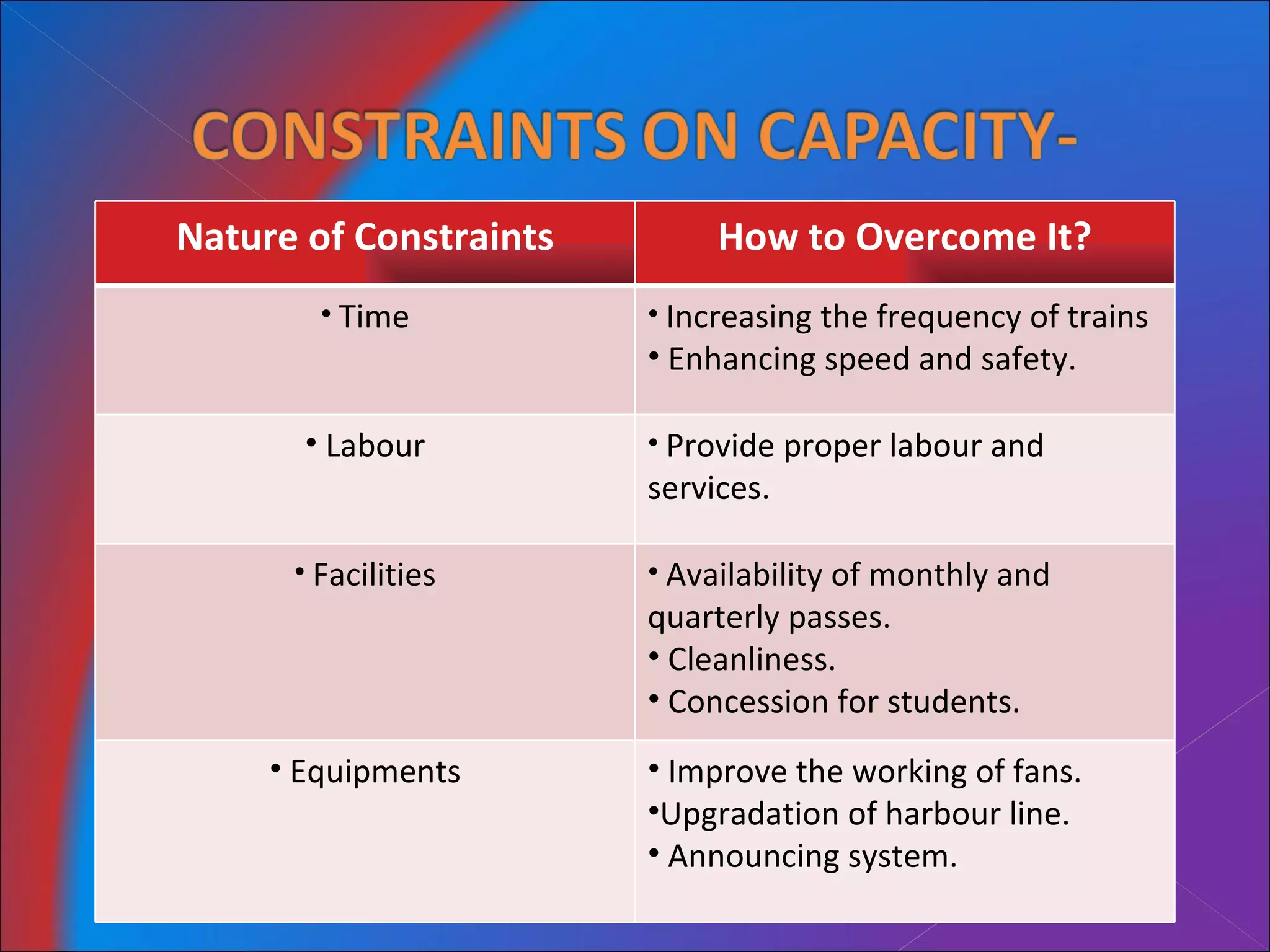
Capacity Constraints Demand Patterns Time Charting demand patterns. Labour Predictable cycles. Facilities Random demand fluctuation . Equipments Demand patterns by market segment.
Nature of Constraints How to Overcome It? Time Increasing the frequency of trains Enhancing speed and safety. Labour Provide proper labour and services. Facilities Availability of monthly and quarterly passes. Cleanliness. Concession for students. Equipments Improve the working of fans. Upgradation of harbour line. Announcing system.
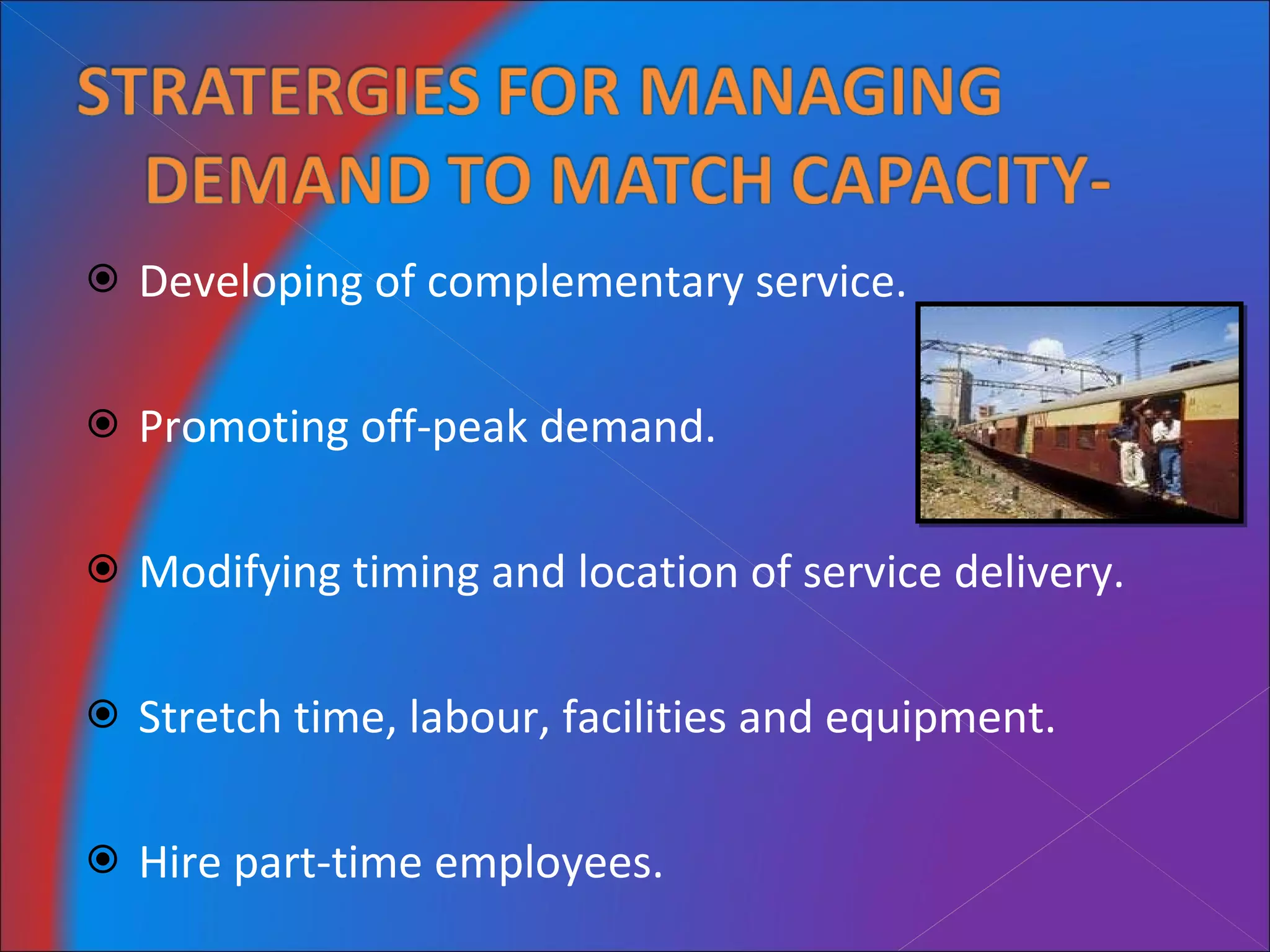
Developing of complementary service. Promoting off-peak demand. Modifying timing and location of service delivery. Stretch time, labour, facilities and equipment. Hire part-time employees.
 
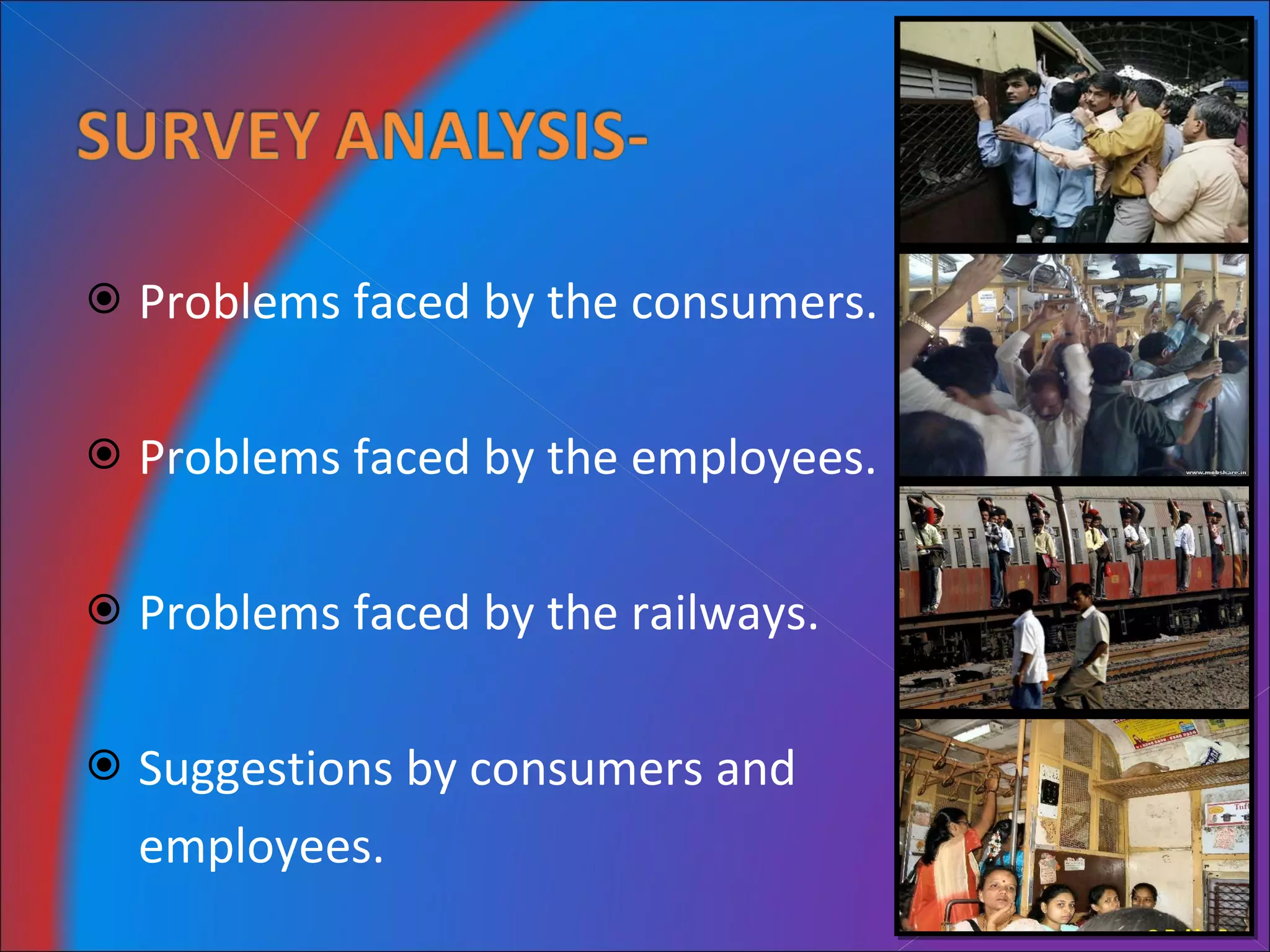
Problems faced by the consumers. Problems faced by the employees. Problems faced by the railways. Suggestions by consumers and  employees.
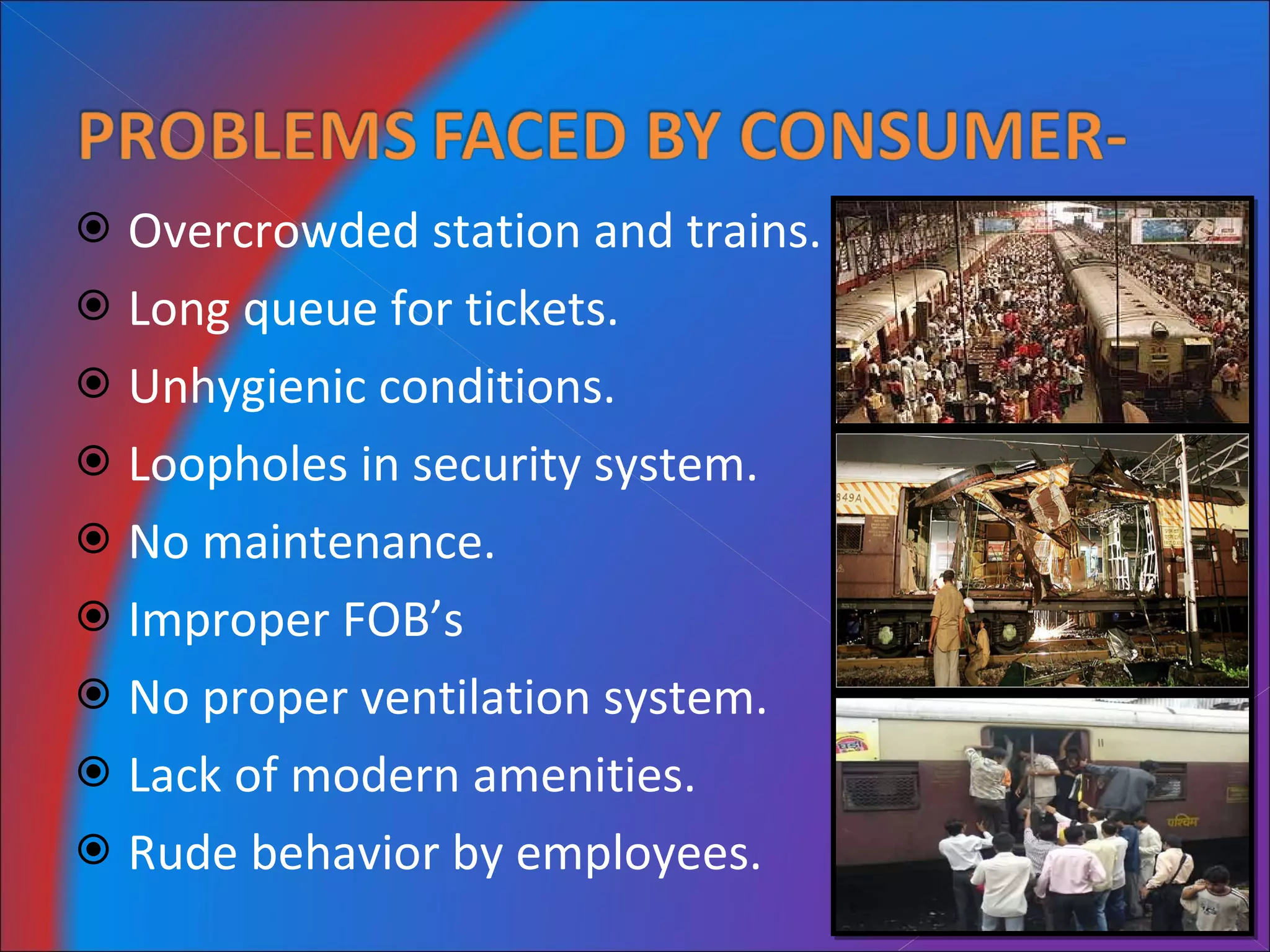
Overcrowded station and trains. Long queue for tickets. Unhygienic conditions. Loopholes in security system. No maintenance. Improper FOB’s No proper ventilation system. Lack of modern amenities. Rude behavior by employees.
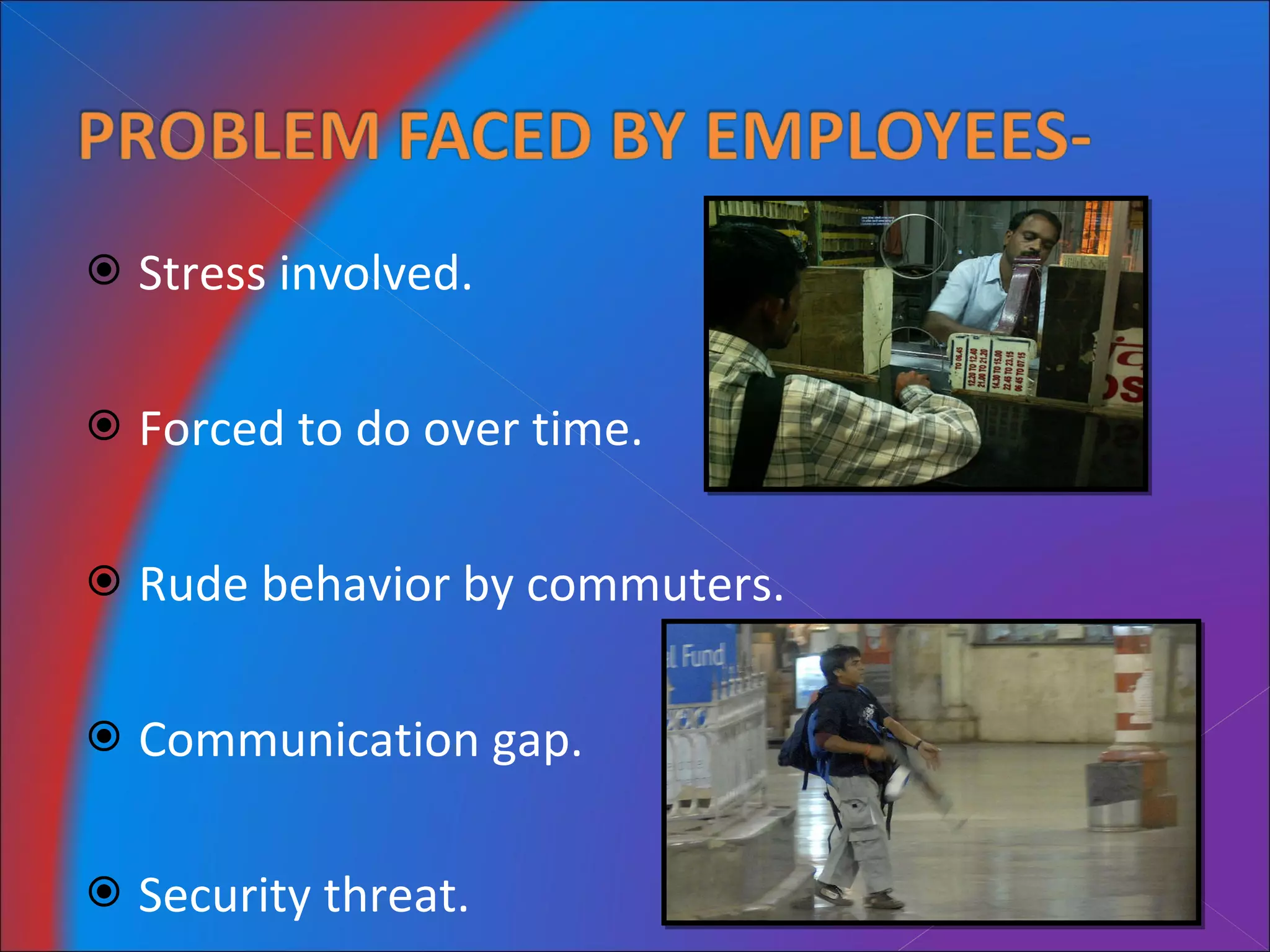
Stress involved. Forced to do over time. Rude behavior by commuters. Communication gap. Security threat.
Competition. Ticketless travelling. Theft. Commuters crossing the track. Spitting and throwing waste anywhere.
Various ticketing service to reduce the time. Coupons Tourist ticket. AVTM card machine. Trains having improved ventilation system. The quality of seats and equipments used.
SMS Alerts (RPF). CR- 09004411111. WR- 09004477777.
Introducing 12 car rakes. Adding corridors. Improving ticketing service. Modernisation in track maintenance.
Admit & Apologise. Rectify. Compensate.
SMS Ticket Service- There are over 300 Million mobile phones in India. 11 Million passenger travelling by local trains. On an average each person spends Rs.10/ day on tickets. Total spending- 11Million X 10 = 110 Million/ day on tickets. 110 Million X 365 = Rs. 40,150 Million (Suppose a rough estimate of 10% of total passenger volume carrying a mobile phone and spending Rs.10/ day on tickets.) Then,  40,150 Millions X 10% = Rs. 4,015 Million.
Introducing full A/C Locals. Fine on spiting and throwing waste at the platform area. Sentencing 3-4 days in jail for crossing railway tracks. Providing more ladies special trains. Improving the infrastructure of the stations.


THANK YOU

Indian Railways ppt.

  • 1.
  • 2.
    Vinay Bidarimath 07B405Mayur Desai 07B407 Snehal Mohite 07B429 Urvi Sethia 07B445 Likitha Thatikonda 07B453
  • 3.
    INTRODUCTION SWOT ANALYSISMUMBAI SUBURBAN RAILWAYS MARKETING MIX DEMAND AND CAPACITY CONSTRAINTS SURVEY CONCLUSION
  • 4.
  • 5.
    First in Indiain 1853 from Bombay to Thana. 1853 First railway train journeyed distance of 22 miles between Bombay and Thana. Originally, operated by private companies Englishmen. 1925-1950 GOI took over the all the private railway companies.
  • 6.
  • 7.
    Indian Railways ismore than 150 year old. It is largest railway system in world under one management. It is a lifeline of our country. It is biggest employer in the world (14,06,430) No strike in last 30 years in spite of 17 lakh workers.
  • 8.
  • 9.
    SOURCE: Explanatory Memorandumon Railway Budget, 06-07 Particulars At the end of 1950-51 1970-71 2005-06 Route length (kms)‏ of which Electificed (kms)‏ 53,600 390 59,800 3,700 63,370 17,910 Passengers originating (millions)‏ Goods originating (million tons)‏ 1,290 2,430 5,830 93 197 666
  • 10.
  • 11.
  • 12.
    S- Strength. W-Weakness. O- Opportunity. T- Threats.
  • 13.
    The ‘Biggest Company’in the world in terms of employee strength. Luxurious and affordable to common man. Connects different cities and countries. Technological advancement.
  • 14.
    Corruption withinthe department. Lack of accident proof magnetic wheels in all trains. Lack of safety. Poor infrastructure. Delayed trains. Non pro-active employees.
  • 15.
    “ Metro” ina commercial city like Mumbai. Development in small cities. Profit through privatization.
  • 16.
    Low costairlines. Improvement of other infrastructure like roadways. Could be taken over by airlines .
  • 17.
    IN-BOUND TRAINS -LOCAL TRAINS OUT-BOUND TRAINS - TRAINS CONNECTING TO STATES & OTHER CITIES.
  • 18.
  • 19.
    Central Line WesternLine Harbour Line
  • 20.
    Part of publictransportation. Spread over 464 route kilometers. Includes two zones i.e. western and central Railways System carries more than 6.6 million commuters daily basis. It has one of the highest passenger densities of any urban railway system in the world. Western Railways and Central Railways corridors are also shared with distance trains and other freight trains.
  • 21.
  • 22.
  • 23.
  • 24.
  • 25.
  • 26.
    Fixed pricing. Differentialpricing. Discount pricing. Maintenance pricing.
  • 27.
    Service delivery point.Place should be customer-friendly. Places should be well maintained.
  • 28.
  • 29.
  • 30.
    Upgradation of harbourline. Provide more shuttle services. Increase the frequency of trains. Give extra capacity. Cleanliness. Increase in capacity of passenger. coaches
  • 31.
    Shortages of coaches.Over-crowed trains. Low space capacity. Old and outdated racks and seats
  • 32.
    Capacity Constraints DemandPatterns Time Charting demand patterns. Labour Predictable cycles. Facilities Random demand fluctuation . Equipments Demand patterns by market segment.
  • 33.
    Nature of ConstraintsHow to Overcome It? Time Increasing the frequency of trains Enhancing speed and safety. Labour Provide proper labour and services. Facilities Availability of monthly and quarterly passes. Cleanliness. Concession for students. Equipments Improve the working of fans. Upgradation of harbour line. Announcing system.
  • 34.
    Developing of complementaryservice. Promoting off-peak demand. Modifying timing and location of service delivery. Stretch time, labour, facilities and equipment. Hire part-time employees.
  • 35.
  • 36.
    Problems faced bythe consumers. Problems faced by the employees. Problems faced by the railways. Suggestions by consumers and employees.
  • 37.
    Overcrowded station andtrains. Long queue for tickets. Unhygienic conditions. Loopholes in security system. No maintenance. Improper FOB’s No proper ventilation system. Lack of modern amenities. Rude behavior by employees.
  • 38.
    Stress involved. Forcedto do over time. Rude behavior by commuters. Communication gap. Security threat.
  • 39.
    Competition. Ticketless travelling.Theft. Commuters crossing the track. Spitting and throwing waste anywhere.
  • 40.
    Various ticketing serviceto reduce the time. Coupons Tourist ticket. AVTM card machine. Trains having improved ventilation system. The quality of seats and equipments used.
  • 41.
    SMS Alerts (RPF).CR- 09004411111. WR- 09004477777.
  • 42.
    Introducing 12 carrakes. Adding corridors. Improving ticketing service. Modernisation in track maintenance.
  • 43.
    Admit & Apologise.Rectify. Compensate.
  • 44.
    SMS Ticket Service-There are over 300 Million mobile phones in India. 11 Million passenger travelling by local trains. On an average each person spends Rs.10/ day on tickets. Total spending- 11Million X 10 = 110 Million/ day on tickets. 110 Million X 365 = Rs. 40,150 Million (Suppose a rough estimate of 10% of total passenger volume carrying a mobile phone and spending Rs.10/ day on tickets.) Then, 40,150 Millions X 10% = Rs. 4,015 Million.
  • 45.
    Introducing full A/CLocals. Fine on spiting and throwing waste at the platform area. Sentencing 3-4 days in jail for crossing railway tracks. Providing more ladies special trains. Improving the infrastructure of the stations.
  • 46.
  • 47.
  • 48.
  • 49.

Editor's Notes

  • #29 Articles
  • #38 FOB problem in in thane and kalyan Commuters opinion- Article- “Hum tho track cross karega…” ( Jogeshwari)
  • #39 Stress- Article- “OVERDRIVE” The minister also announced special award of Rs.1 million each to Vishnu Dattaram Jhande and Jullu Yadav, two railway employees who helped save many lives by their timely interventions. Jhande, an announcer at the CST, made timely announcements at the time of attack that helped the panicked people to escape from the scene, while Yadav, a head constable, helped passengers reach safe places.
  • #40 Railway accidents data Awareness- data of June 2009
  • #41 Automated Ticket Vending Machine Article- “WR commuters give seat modification a thumbs up”
  • #44 Article- “Central Railway Pulls a fast One”
  • #46 TOI article- Railway accidents…..