RABIES
Dr Pallavi Potdar
Associate Prof.,
Community Medicine
D.Y. Patil Medical College Kolhapur
Classification-
1) Anthropozoonosis –
2) Zooanthroponosis-
3) Amphixenosis-
ZOONOTIC DISEASES
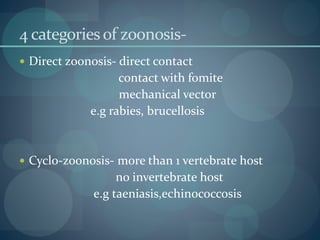
4 categoriesof zoonosis-
 Direct zoonosis- direct contact
contact with fomite
mechanical vector
e.g rabies, brucellosis
 Cyclo-zoonosis- more than 1 vertebrate host
no invertebrate host
e.g taeniasis,echinococcosis
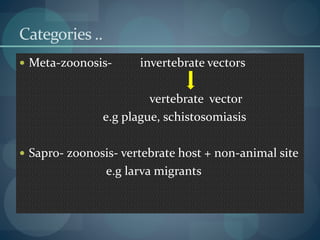
Categories ..
 Meta-zoonosis- invertebrate vectors
vertebrate vector
e.g plague, schistosomiasis
 Sapro- zoonosis- vertebrate host + non-animal site
e.g larva migrants
RABIES
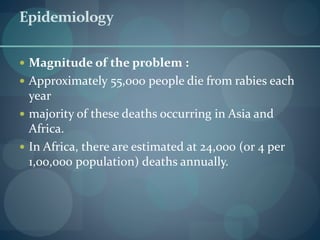
Epidemiology
 Magnitude of the problem :
 Approximately 55,000 people die from rabies each
year
 majority of these deaths occurring in Asia and
Africa.
 In Africa, there are estimated at 24,000 (or 4 per
1,00,000 population) deaths annually.
 In India alone, 20,000 deaths are estimated to
occur annually, i.e. 2 per 1,00,000 population
 Rabies free areas ?
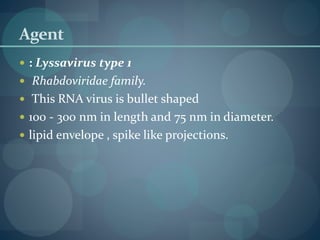
Agent
 : Lyssavirus type 1
 Rhabdoviridae family.
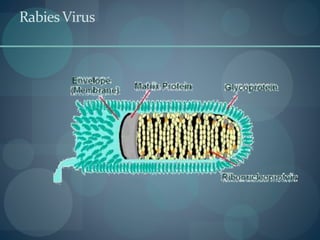
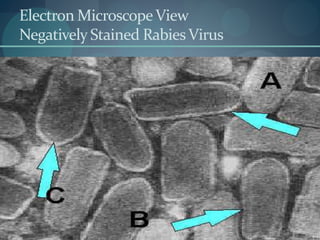
 This RNA virus is bullet shaped
 100 - 300 nm in length and 75 nm in diameter.
 lipid envelope , spike like projections.
RabiesVirus
Electron MicroscopeView
Negatively Stained RabiesVirus
Reservoirof infection
 Urban- dogs & cats
 Wild-life ( sylvatic)- jackal,fox
 Bat rabies- vampire bats
Sourceof infection
 Saliva of rabid animals
 4-6 days before onset of symptoms till death of
animal
 virus-Not in all rabid animals saliva
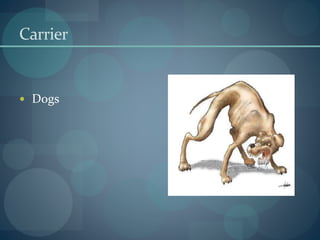
Carrier
 Dogs
Host
 all age groups are susceptible
 most common in children aged below 15 years
 High risk group-
Incubation period
 Man-
 four days to as long as 19 years.
 The usual duration is between 20 to 90 days.
 95% cases have incubation period less than one
year.
 Factors affecting -
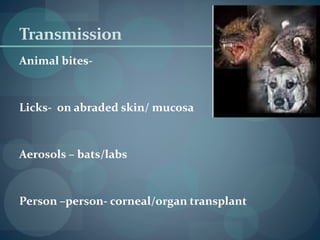
Transmission
Animal bites-
Licks- on abraded skin/ mucosa
Aerosols – bats/labs
Person –person- corneal/organ transplant
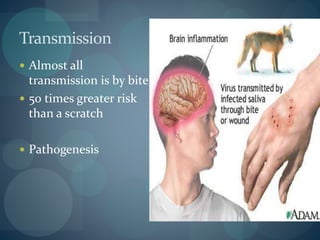
Transmission
 Almost all
transmission is by bite
 50 times greater risk
than a scratch
 Pathogenesis
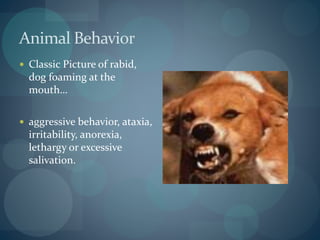
Animal Behavior
 Classic Picture of rabid,
dog foaming at the
mouth…
 aggressive behavior, ataxia,
irritability, anorexia,
lethargy or excessive
salivation.
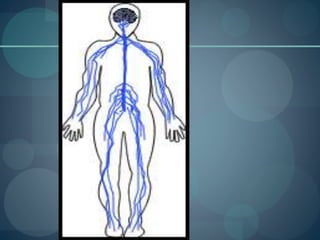
clinical features in man
 Prodromal stage -3-5 days
 Sensory-
 Motor- muscle spasms
 Sympathetic-salivation,perspiration
 Mental system-
 hydrophobia
Rabies in man
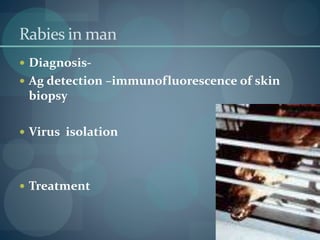
 Diagnosis-
 Ag detection –immunofluorescence of skin
biopsy
 Virus isolation
 Treatment
Preventionand Control
 Rabies Vaccines
1)Nerve Tissue Vaccine (NTV)
2) Duck embryo vaccine (DEV)
3)Cell culture vaccine
a) human diploid cell vaccine(HDC)
b)tissue culture –animal cell vaccine
 HDC- human diploid fibroblast cells
 Safe, highly potent
 Animal vaccines- chick embryo fibroblast, dog
kidney cells
Prevention of human rabies
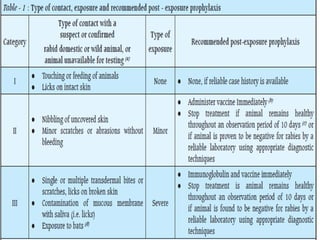
 Post-exposure prophylaxis
 Pre-
 Post-exposure Rx of patients previously
vaccinated.
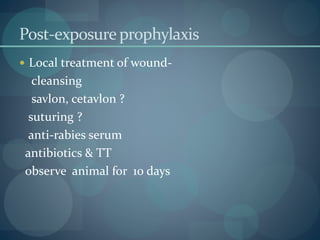
Post-exposureprophylaxis
 Local treatment of wound-
cleansing
savlon, cetavlon ?
suturing ?
anti-rabies serum
antibiotics & TT
observe animal for 10 days
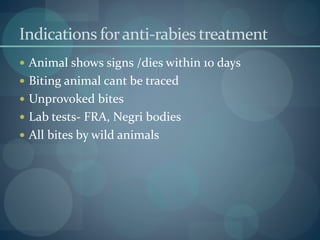
Indications foranti-rabies treatment
 Animal shows signs /dies within 10 days
 Biting animal cant be traced
 Unprovoked bites
 Lab tests- FRA, Negri bodies
 All bites by wild animals
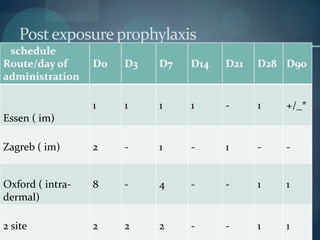
Postexposure prophylaxis
schedule
Route/day of
administration
D0 D3 D7 D14 D21 D28 D90
Essen ( im)
1 1 1 1 - 1 +/_*
Zagreb ( im) 2 - 1 - 1 - -
Oxford ( intra-
dermal)
8 - 4 - - 1 1
2 site 2 2 2 - - 1 1
Rabies Immunoglobulin (RIG)
 equine (ERIG) -40 IU/ kg
 human (HRIG) -20 IU/ kg
 all category III exposures and
 in category II exposures involving immunodeficient
individuals.
RIG..
 infiltrated into and around the wounds.
 The remainder should be administered by deep
intramuscular injection at an injection site distant
from the vaccine injection site.
 In case of multiple wounds, the RIG should be
diluted with normal saline to make sufficient
volume to ensure infiltration at all wound sites
Pre- exposure prophylaxis
 1 ml im/ 0.1 ml id
 O , 7 , 28
 Booster injections every 2 yrs
Postexposure Rx of previouslyvaccinated
 0, 3 ,7
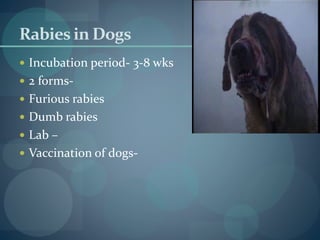
Rabies in Dogs
 Incubation period- 3-8 wks
 2 forms-
 Furious rabies
 Dumb rabies
 Lab –
 Vaccination of dogs-
Control of urban rabies
 Registration & licensing of all domestic dogs
 Immediate destruction of dogs bitten by rabid
animal
 Imported dogs- quarantine -6 mths
 Health education
 Oral vaccine?
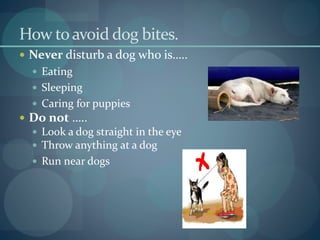
How toavoid dog bites.
 Never disturb a dog who is…..
 Eating
 Sleeping
 Caring for puppies
 Do not …..
 Look a dog straight in the eye
 Throw anything at a dog
 Run near dogs
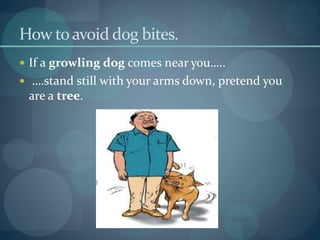
How toavoid dog bites.
 If a growling dog comes near you…..
 ….stand still with your arms down, pretend you
are a tree.
How toavoid dog bites.
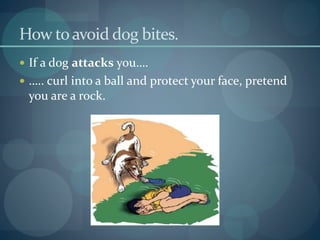
 If a dog attacks you….
 ….. curl into a ball and protect your face, pretend
you are a rock.
Rabies

Rabies

  • 1.
    RABIES Dr Pallavi Potdar AssociateProf., Community Medicine D.Y. Patil Medical College Kolhapur
  • 2.
    Classification- 1) Anthropozoonosis – 2)Zooanthroponosis- 3) Amphixenosis- ZOONOTIC DISEASES
  • 3.
    4 categoriesof zoonosis- Direct zoonosis- direct contact contact with fomite mechanical vector e.g rabies, brucellosis  Cyclo-zoonosis- more than 1 vertebrate host no invertebrate host e.g taeniasis,echinococcosis
  • 4.
    Categories ..  Meta-zoonosis-invertebrate vectors vertebrate vector e.g plague, schistosomiasis  Sapro- zoonosis- vertebrate host + non-animal site e.g larva migrants
  • 5.
  • 6.
    Epidemiology  Magnitude ofthe problem :  Approximately 55,000 people die from rabies each year  majority of these deaths occurring in Asia and Africa.  In Africa, there are estimated at 24,000 (or 4 per 1,00,000 population) deaths annually.
  • 7.
     In Indiaalone, 20,000 deaths are estimated to occur annually, i.e. 2 per 1,00,000 population  Rabies free areas ?
  • 8.
    Agent  : Lyssavirustype 1  Rhabdoviridae family.  This RNA virus is bullet shaped  100 - 300 nm in length and 75 nm in diameter.  lipid envelope , spike like projections.
  • 9.
  • 10.
  • 11.
    Reservoirof infection  Urban-dogs & cats  Wild-life ( sylvatic)- jackal,fox  Bat rabies- vampire bats
  • 12.
    Sourceof infection  Salivaof rabid animals  4-6 days before onset of symptoms till death of animal  virus-Not in all rabid animals saliva
  • 13.
  • 14.
    Host  all agegroups are susceptible  most common in children aged below 15 years  High risk group-
  • 15.
    Incubation period  Man- four days to as long as 19 years.  The usual duration is between 20 to 90 days.  95% cases have incubation period less than one year.  Factors affecting -
  • 16.
    Transmission Animal bites- Licks- onabraded skin/ mucosa Aerosols – bats/labs Person –person- corneal/organ transplant
  • 17.
    Transmission  Almost all transmissionis by bite  50 times greater risk than a scratch  Pathogenesis
  • 18.
    Animal Behavior  ClassicPicture of rabid, dog foaming at the mouth…  aggressive behavior, ataxia, irritability, anorexia, lethargy or excessive salivation.
  • 19.
    clinical features inman  Prodromal stage -3-5 days  Sensory-  Motor- muscle spasms  Sympathetic-salivation,perspiration  Mental system-  hydrophobia
  • 21.
    Rabies in man Diagnosis-  Ag detection –immunofluorescence of skin biopsy  Virus isolation  Treatment
  • 22.
    Preventionand Control  RabiesVaccines 1)Nerve Tissue Vaccine (NTV) 2) Duck embryo vaccine (DEV) 3)Cell culture vaccine a) human diploid cell vaccine(HDC) b)tissue culture –animal cell vaccine
  • 23.
     HDC- humandiploid fibroblast cells  Safe, highly potent  Animal vaccines- chick embryo fibroblast, dog kidney cells
  • 24.
    Prevention of humanrabies  Post-exposure prophylaxis  Pre-  Post-exposure Rx of patients previously vaccinated.
  • 26.
    Post-exposureprophylaxis  Local treatmentof wound- cleansing savlon, cetavlon ? suturing ? anti-rabies serum antibiotics & TT observe animal for 10 days
  • 27.
    Indications foranti-rabies treatment Animal shows signs /dies within 10 days  Biting animal cant be traced  Unprovoked bites  Lab tests- FRA, Negri bodies  All bites by wild animals
  • 28.
    Postexposure prophylaxis schedule Route/day of administration D0D3 D7 D14 D21 D28 D90 Essen ( im) 1 1 1 1 - 1 +/_* Zagreb ( im) 2 - 1 - 1 - - Oxford ( intra- dermal) 8 - 4 - - 1 1 2 site 2 2 2 - - 1 1
  • 29.
    Rabies Immunoglobulin (RIG) equine (ERIG) -40 IU/ kg  human (HRIG) -20 IU/ kg  all category III exposures and  in category II exposures involving immunodeficient individuals.
  • 30.
    RIG..  infiltrated intoand around the wounds.  The remainder should be administered by deep intramuscular injection at an injection site distant from the vaccine injection site.  In case of multiple wounds, the RIG should be diluted with normal saline to make sufficient volume to ensure infiltration at all wound sites
  • 31.
    Pre- exposure prophylaxis 1 ml im/ 0.1 ml id  O , 7 , 28  Booster injections every 2 yrs
  • 32.
    Postexposure Rx ofpreviouslyvaccinated  0, 3 ,7
  • 33.
    Rabies in Dogs Incubation period- 3-8 wks  2 forms-  Furious rabies  Dumb rabies  Lab –  Vaccination of dogs-
  • 34.
    Control of urbanrabies  Registration & licensing of all domestic dogs  Immediate destruction of dogs bitten by rabid animal  Imported dogs- quarantine -6 mths  Health education  Oral vaccine?
  • 35.
    How toavoid dogbites.  Never disturb a dog who is…..  Eating  Sleeping  Caring for puppies  Do not …..  Look a dog straight in the eye  Throw anything at a dog  Run near dogs
  • 36.
    How toavoid dogbites.  If a growling dog comes near you…..  ….stand still with your arms down, pretend you are a tree.
  • 37.
    How toavoid dogbites.  If a dog attacks you….  ….. curl into a ball and protect your face, pretend you are a rock.