Dr. T.A.More
Assistant professor,
Community Medicine Dept,
D. Y. Patil Medical College, Kolhapur
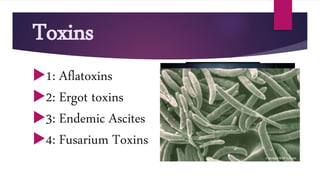
Toxins
1: Aflatoxins
2: Ergot toxins
3: Endemic Ascites
4: Fusarium Toxins
Aflatoxins
 Aflatoxins are the mycotoxins, which is produced by certain
species of Aspergillus (A. flavus and A. parasiticus), which
develop at high temperatures and humidity levels.
 Aflatoxins are carcinogenic substances and may be present in
a large number of foods. This toxin can cause cancer,
cirrhosis of the liver.
 The latest report shows that 400 cases of aflatoxin per day
including 100 deaths from some districts in Rajasthan and
Gujarat.
Cont.…
 The most common commodities contaminated are tree nuts,
peanuts, maize, corn and cottonseed oil.
 Aflatoxin B1 and G1 are the most potent hepatotoxins, in
addition to being carcinogenic.
 It has also been detected samples of breast milk and urine
collected from children suffering from infantile cirrhosis.
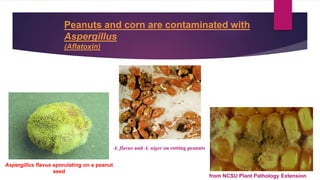
Aspergillus flavus sporulating on a peanut
seed
A. flavus and A. niger on rotting peanuts
Peanuts and corn are contaminated with
Aspergillus
(Aflatoxin)
from NCSU Plant Pathology Extension
Prevention and
control
 Proper storage after drying of food grains.
 Moisture content should be kept below 10%.
 Contaminated food should not be consumed.
 Educate the local population on health hazard and
consuming contaminated food grains.
ERGOT TOXINS
 Ergo toxin is obtain from ergot (Claviceps purpurea)
 Unlike Aflatoxin Ergot toxin is a field fungus and not storage
fungus
 Food grains such as bajra, rice and wheat have tendency to get
infested during flowering stage by this fungus
 It grows as a blackish mass and the seeds become black and
irregular
 Easily seen as black growth on the grain kernels when enough
fungal growth is present.
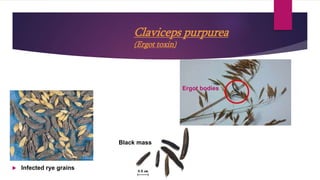
Claviceps purpurea
(Ergot toxin)
 Infected rye grains
Ergot bodies
Black mass
Cont.…
• Highly molecule stable also heat stable.
• withstands long storage, withstands brewing processes
and withstands boiling.
• Symptoms
Acute: Flu like symptoms, seizures, mental confusion and
hallucinations (24-48 hrs).
 Chronic: limb paralysis, dry gangrene due to vasoconstriction
and can lead to death.
Prevention and control
• Ergot infested grains can be easily removed by floating
them in 20% salt water.
• Most wheat seed planted in the U.S are genetically
engineered to be resistant to this mould.
• Use substances to prevent the growth of moulds
ammonia, propionic acid, chlorine vapours, sorbic acid.
Endemic Ascites
 It is caused by weed seeds of crotalaria(jhunjhunia).
 Panicum miliare(Gondhli) which gets contaminated with these seeds.
 Jhunjhunia seeds found to contain pyrrolizidine alkaloids which are
hepatotoxins.
Epidemiology
 The overall mortality is 40%.
 In 1973 and 1976 an outbreak of rapidly developing ascites and
jaundice was reported in Nagesia tribal.
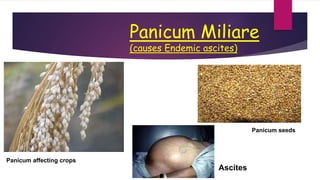
Panicum Miliare
(causes Endemic ascites)
Panicum affecting crops
Panicum seeds
Ascites
Prevention and control
 Educating people in affected area about the disease.
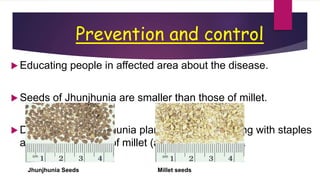
 Seeds of Jhunjhunia are smaller than those of millet.
 Deweeding of jhunjhunia plants which grow along with staples
and simple sieving of millet (at household level).
Jhunjhunia Seeds Millet seeds
Fusarium Toxins
 Fusarium species of field fungi are known to contaminate
food crops like wheat, maize, Rice, under high moisture
condition during harvest.
 Problem of fusarium contamination of sorghum is believed
to be on the increase.
 Symptoms: Abdominal pain, Diarrhea, Vomiting, fever,
chills, myalgia, bone marrow depression leading to
granulocytopenia.
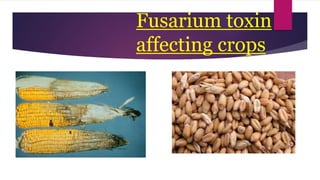
Fusarium toxin
affecting crops
Prevention And
Control
 Crop rotation and soil tillage are recommended to control
plant contamination with fusarium toxin.
 As the contamination by fusaria is most likely during the
crop flowering stage at the time of spore release, earlier
planting dates in temperate areas will often result in lower
contamination.
 Use of the crop varieties resistant to fusarium is another
strategy to control toxin production.
Food toxin

Food toxin

  • 1.
    Dr. T.A.More Assistant professor, CommunityMedicine Dept, D. Y. Patil Medical College, Kolhapur
  • 2.
    Toxins 1: Aflatoxins 2: Ergottoxins 3: Endemic Ascites 4: Fusarium Toxins
  • 3.
    Aflatoxins  Aflatoxins arethe mycotoxins, which is produced by certain species of Aspergillus (A. flavus and A. parasiticus), which develop at high temperatures and humidity levels.  Aflatoxins are carcinogenic substances and may be present in a large number of foods. This toxin can cause cancer, cirrhosis of the liver.  The latest report shows that 400 cases of aflatoxin per day including 100 deaths from some districts in Rajasthan and Gujarat.
  • 4.
    Cont.…  The mostcommon commodities contaminated are tree nuts, peanuts, maize, corn and cottonseed oil.  Aflatoxin B1 and G1 are the most potent hepatotoxins, in addition to being carcinogenic.  It has also been detected samples of breast milk and urine collected from children suffering from infantile cirrhosis.
  • 5.
    Aspergillus flavus sporulatingon a peanut seed A. flavus and A. niger on rotting peanuts Peanuts and corn are contaminated with Aspergillus (Aflatoxin) from NCSU Plant Pathology Extension
  • 6.
    Prevention and control  Properstorage after drying of food grains.  Moisture content should be kept below 10%.  Contaminated food should not be consumed.  Educate the local population on health hazard and consuming contaminated food grains.
  • 7.
    ERGOT TOXINS  Ergotoxin is obtain from ergot (Claviceps purpurea)  Unlike Aflatoxin Ergot toxin is a field fungus and not storage fungus  Food grains such as bajra, rice and wheat have tendency to get infested during flowering stage by this fungus  It grows as a blackish mass and the seeds become black and irregular  Easily seen as black growth on the grain kernels when enough fungal growth is present.
  • 8.
    Claviceps purpurea (Ergot toxin) Infected rye grains Ergot bodies Black mass
  • 9.
    Cont.… • Highly moleculestable also heat stable. • withstands long storage, withstands brewing processes and withstands boiling. • Symptoms Acute: Flu like symptoms, seizures, mental confusion and hallucinations (24-48 hrs).  Chronic: limb paralysis, dry gangrene due to vasoconstriction and can lead to death.
  • 10.
    Prevention and control •Ergot infested grains can be easily removed by floating them in 20% salt water. • Most wheat seed planted in the U.S are genetically engineered to be resistant to this mould. • Use substances to prevent the growth of moulds ammonia, propionic acid, chlorine vapours, sorbic acid.
  • 11.
    Endemic Ascites  Itis caused by weed seeds of crotalaria(jhunjhunia).  Panicum miliare(Gondhli) which gets contaminated with these seeds.  Jhunjhunia seeds found to contain pyrrolizidine alkaloids which are hepatotoxins. Epidemiology  The overall mortality is 40%.  In 1973 and 1976 an outbreak of rapidly developing ascites and jaundice was reported in Nagesia tribal.
  • 12.
    Panicum Miliare (causes Endemicascites) Panicum affecting crops Panicum seeds Ascites
  • 13.
    Prevention and control Educating people in affected area about the disease.  Seeds of Jhunjhunia are smaller than those of millet.  Deweeding of jhunjhunia plants which grow along with staples and simple sieving of millet (at household level). Jhunjhunia Seeds Millet seeds
  • 14.
    Fusarium Toxins  Fusariumspecies of field fungi are known to contaminate food crops like wheat, maize, Rice, under high moisture condition during harvest.  Problem of fusarium contamination of sorghum is believed to be on the increase.  Symptoms: Abdominal pain, Diarrhea, Vomiting, fever, chills, myalgia, bone marrow depression leading to granulocytopenia.
  • 15.
  • 16.
    Prevention And Control  Croprotation and soil tillage are recommended to control plant contamination with fusarium toxin.  As the contamination by fusaria is most likely during the crop flowering stage at the time of spore release, earlier planting dates in temperate areas will often result in lower contamination.  Use of the crop varieties resistant to fusarium is another strategy to control toxin production.