KIỂM TRA ĐÁNH GIÁ
NGOẠI NGỮ
LANGUAGE ASSESSMENT
FOR TEACHERS OF
ENGLISH
Giảng viên tập huấn: ThS Lê Nguyễn Như Anh
Trường Đại Học Sư Phạm TPHCM
Khoa Tiếng Anh
Tập huấn:
MODULE 1
LANGUAGE ASSESSMENT
PURPOSES AND PROCESS
After learning module 1, you can:
• Define and explain the meanings and
relationships of key terms
• Explain and distinguish among a wide
range of language assessment
purposes.
• Familiarize with key steps in the
language assessment process and
some options in each step.
LANGUAGE ASSESSMENT
PURPOSES
?
LANGUAGE ASSESSMENT
PROCESS
THAT’S ALL
Thank you for your attention

Assessment Module 1

Editor's Notes

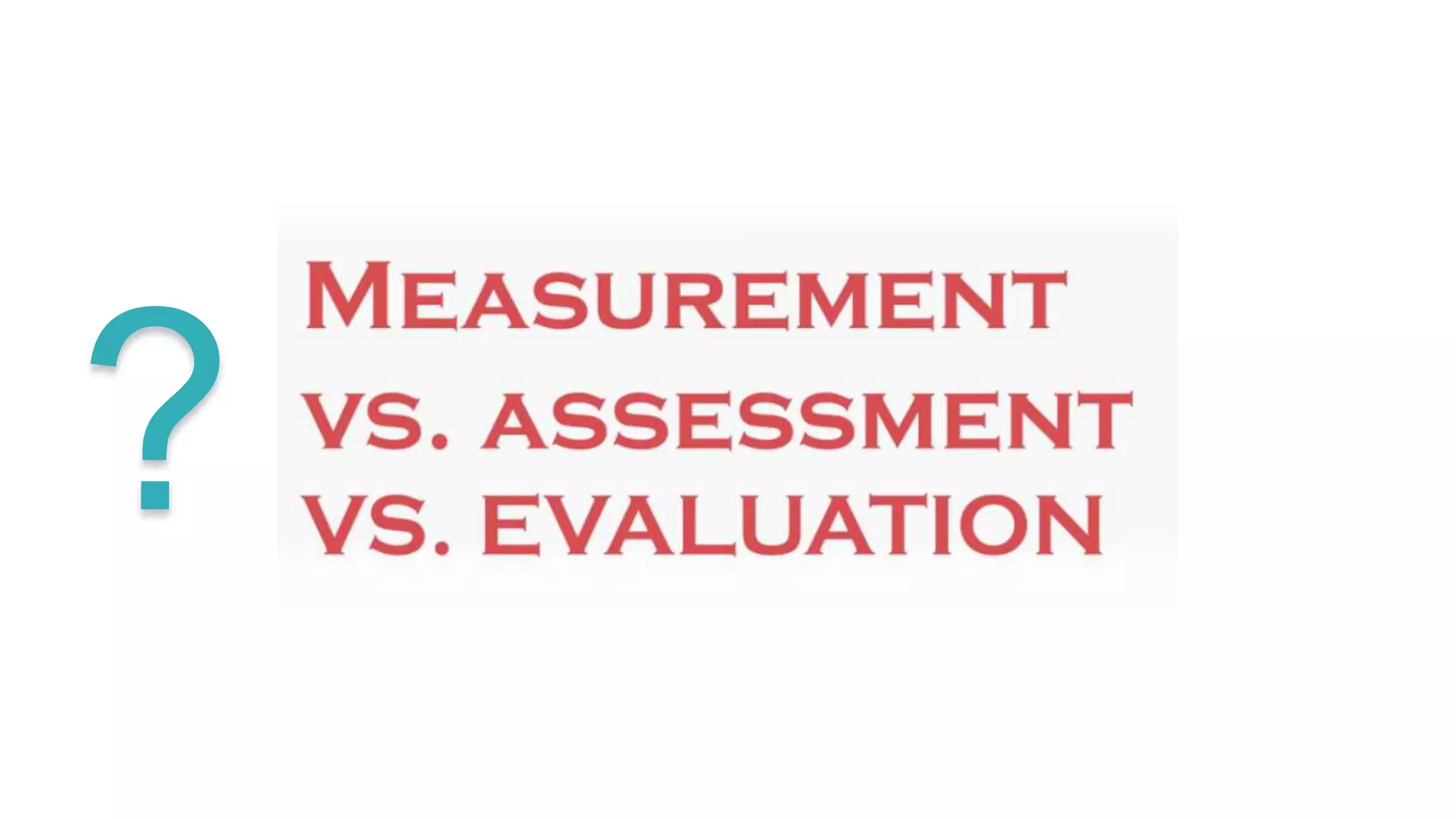
  • #7 The general public often uses the terms assessment, test, measurement, and evaluation interchangeably, but it is important to tell the differences among these terms (shown in Figure 1).
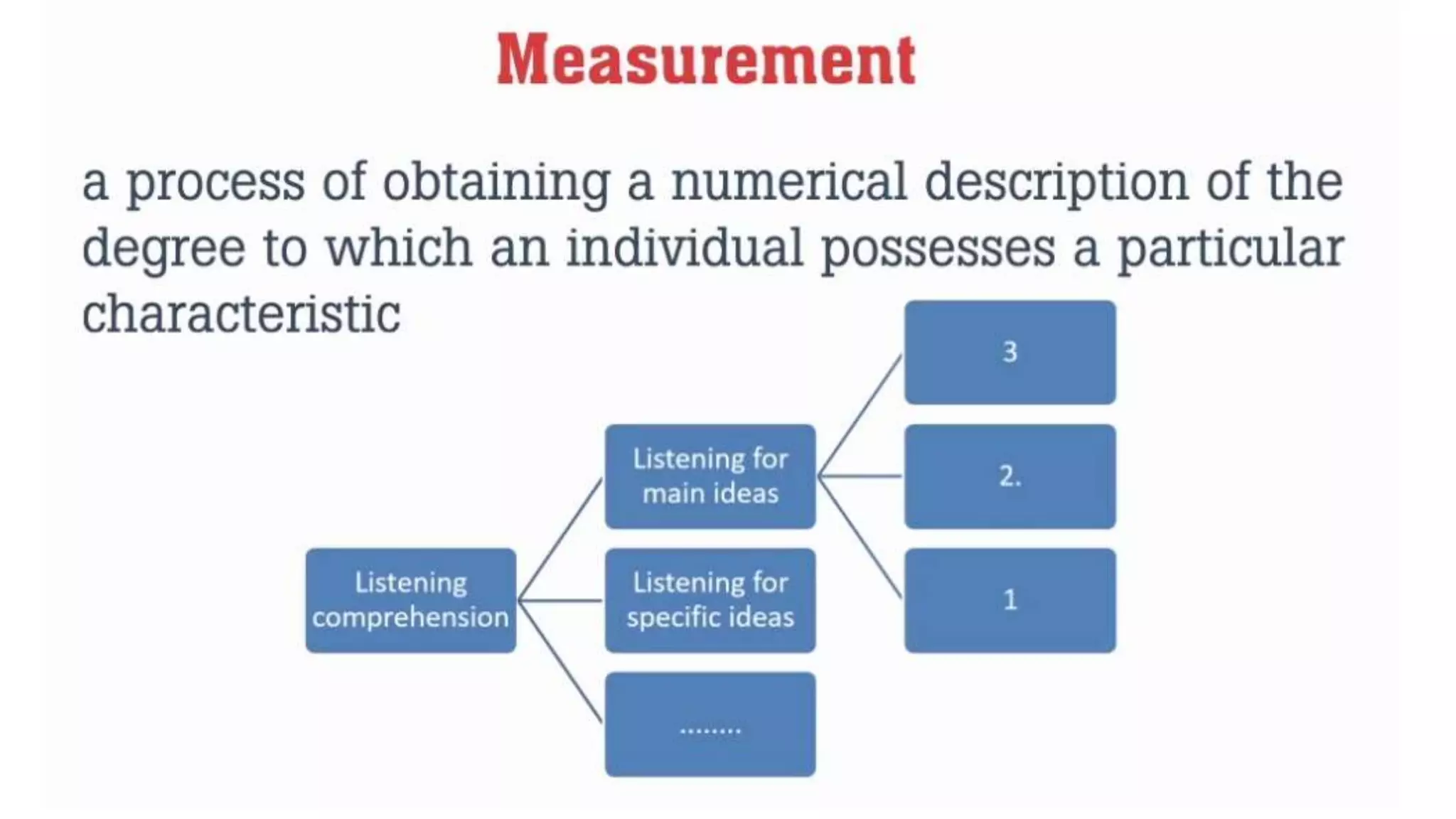
  • #8 Measurement is defined as a procedure for assigning numbers (usually called scores) to describe the degree to which the person has certain characteristics. Also, we may use a scale to rate the quality of a student’s product (for example, an essay) or performance (how well the student does a project).
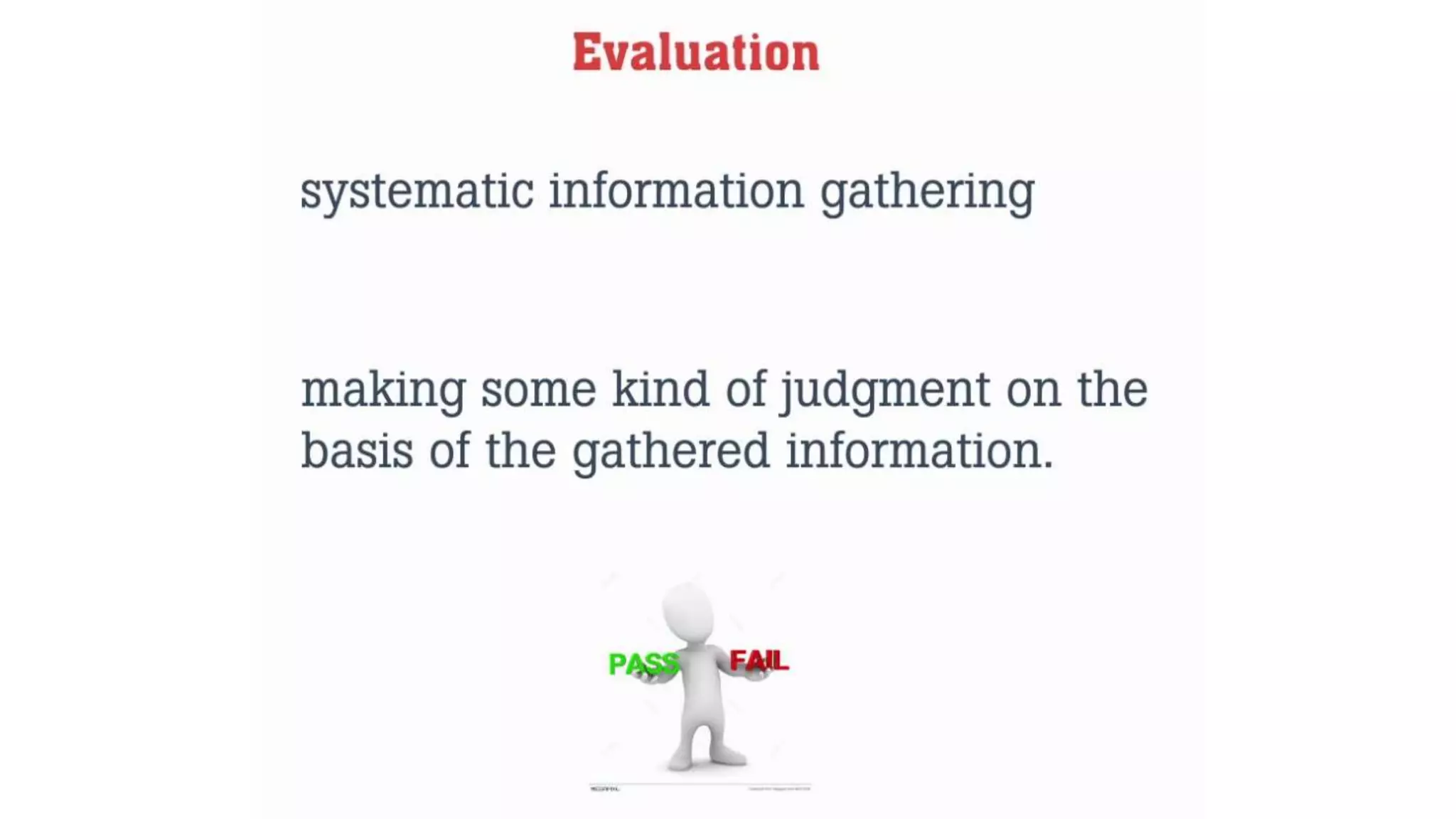
  • #9 Evaluation is defined as the process of making a value judgment about the worth of a student’s product or performance. Evaluations are the bases for decisions about what course of action to follow. Evaluation may or may not be based on measurements or test results.  You can evaluate students using assessments such as systematic observation and qualitative description, without measuring them. Not all evaluations are of individual students. You also can evaluate a textbook, a set of instructional materials, an instructional procedure, a curriculum, an educational program, or a school during development as well as after they are completely developed.
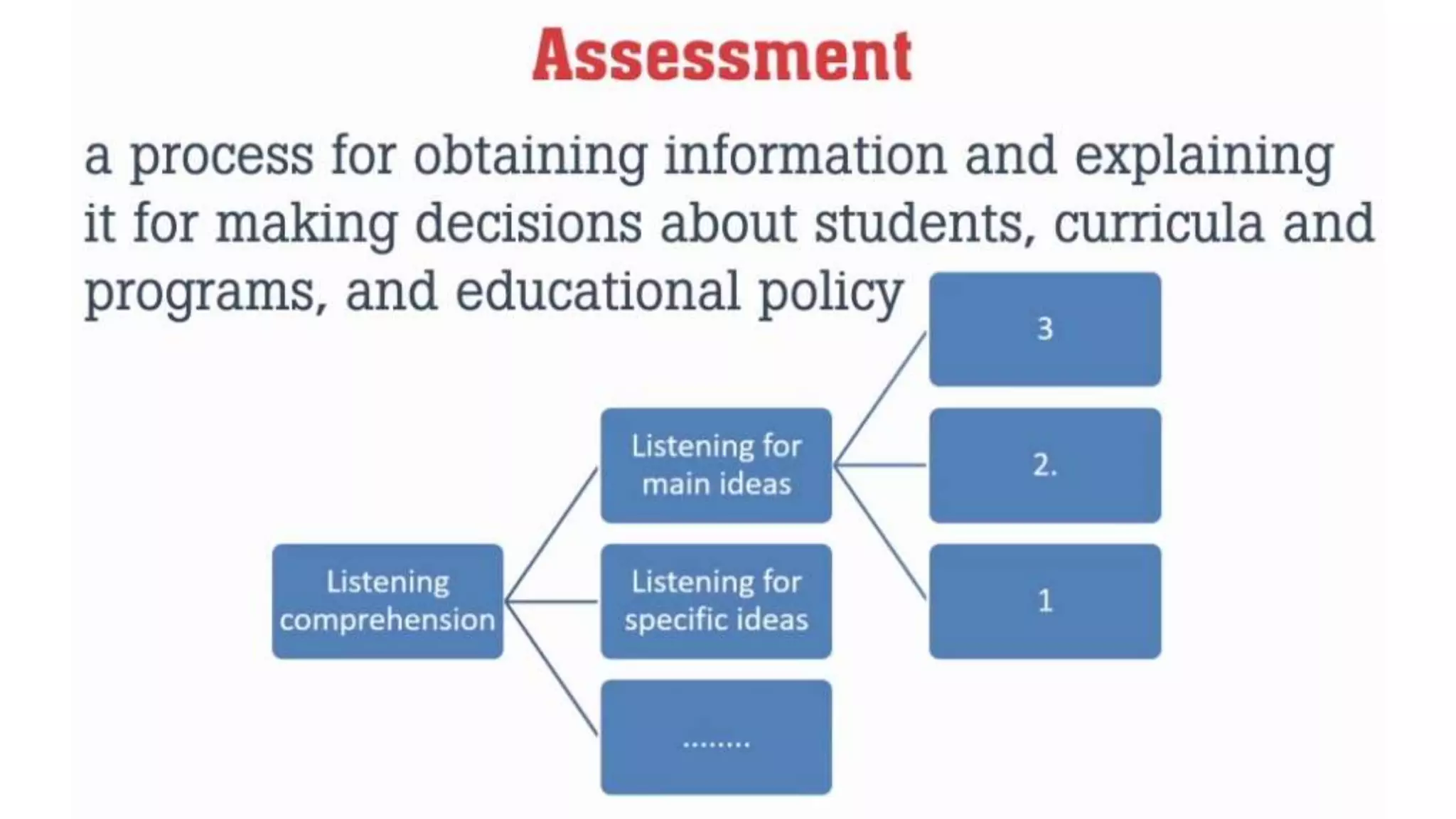
  • #10 Assessment is defined as a process for obtaining information for making decisions about students; curricula, programs, and schools; and educational policy. Many assessment techniques may be used to collect this information such as formal and informal observations of a student; paper-and-pencil tests; a student’s performance on homework, lab work, research papers, projects, and so on. Assessment is a broader term than test or measurement because not all types of assessments use measurements. 
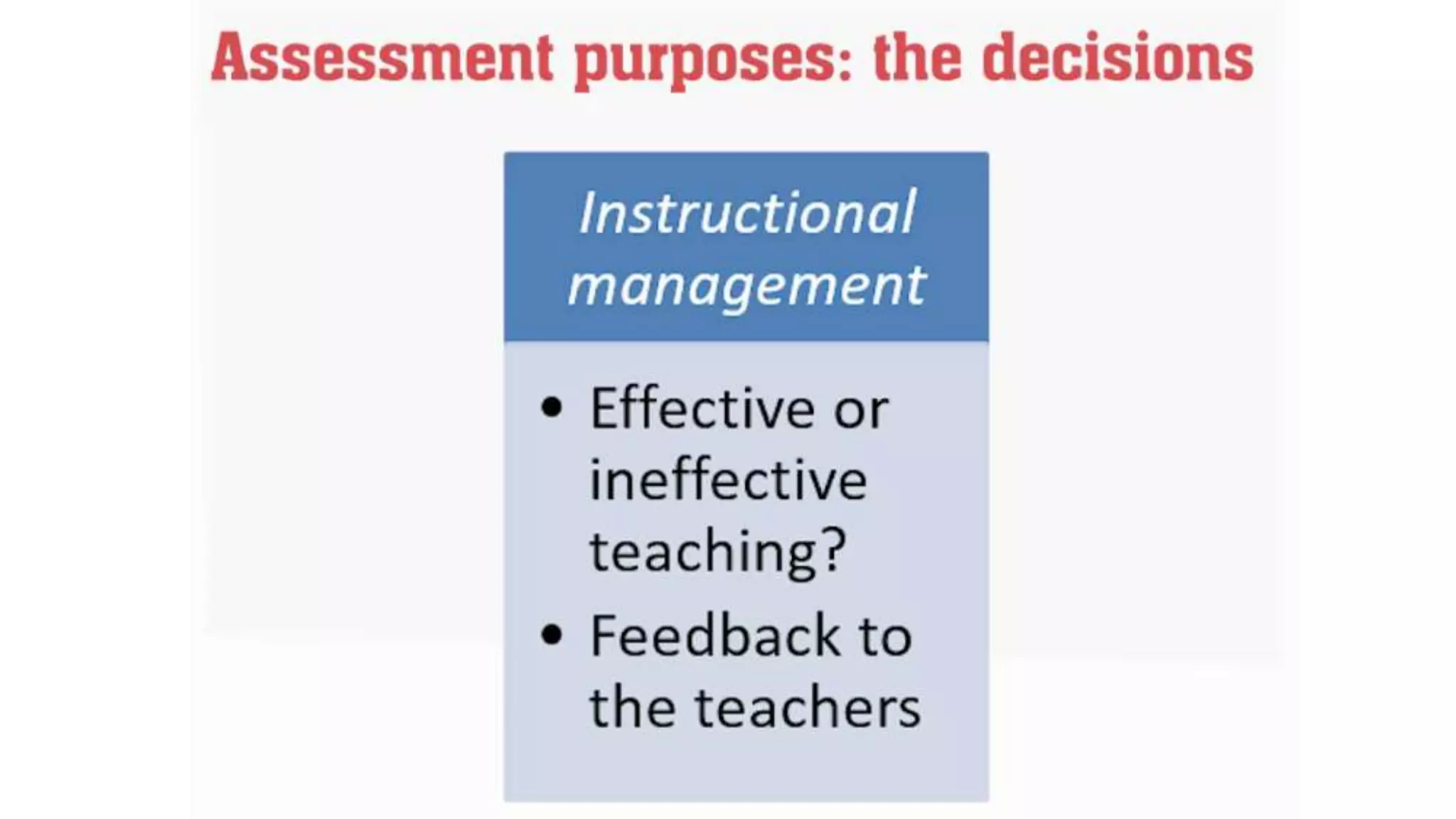
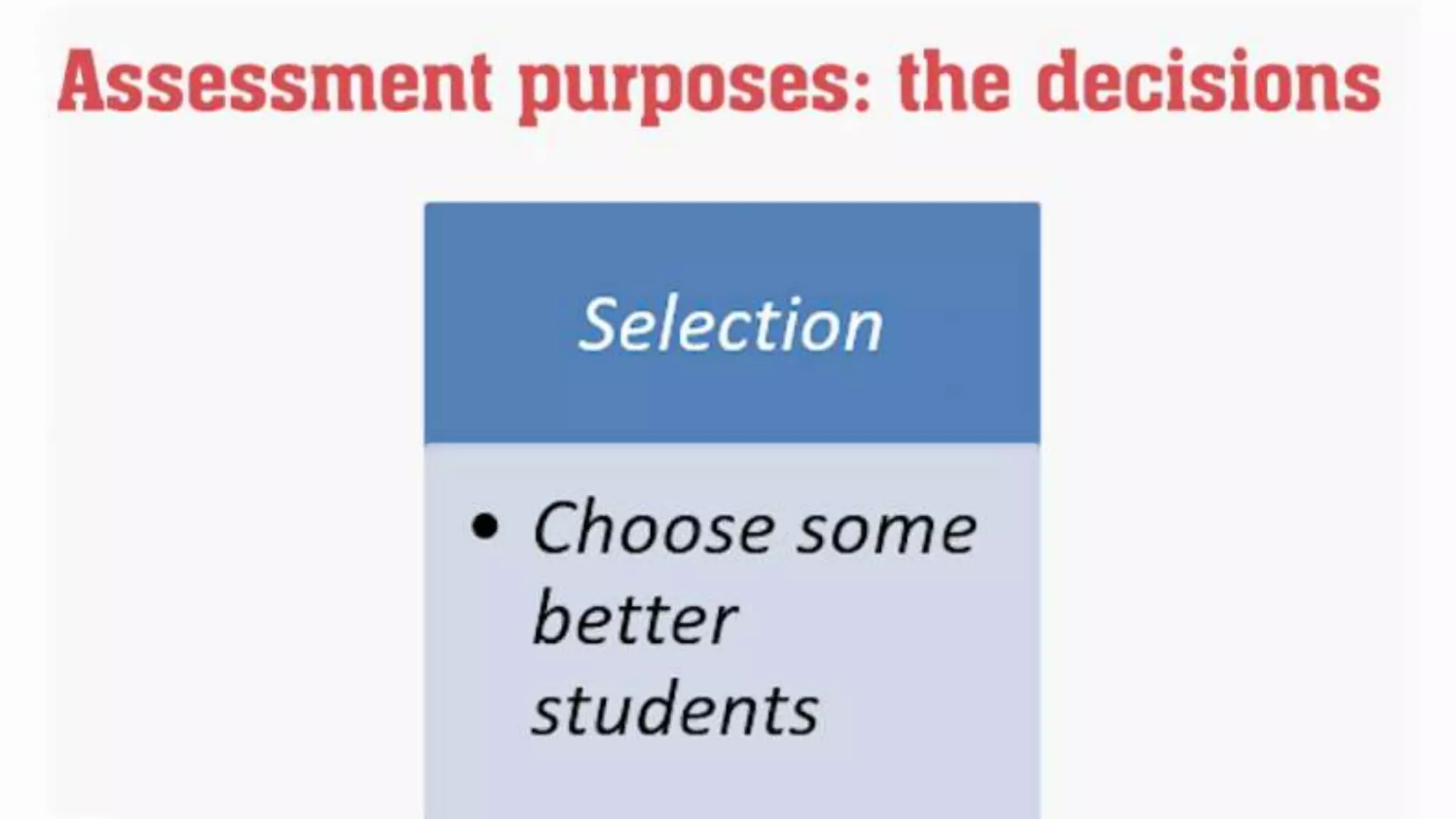
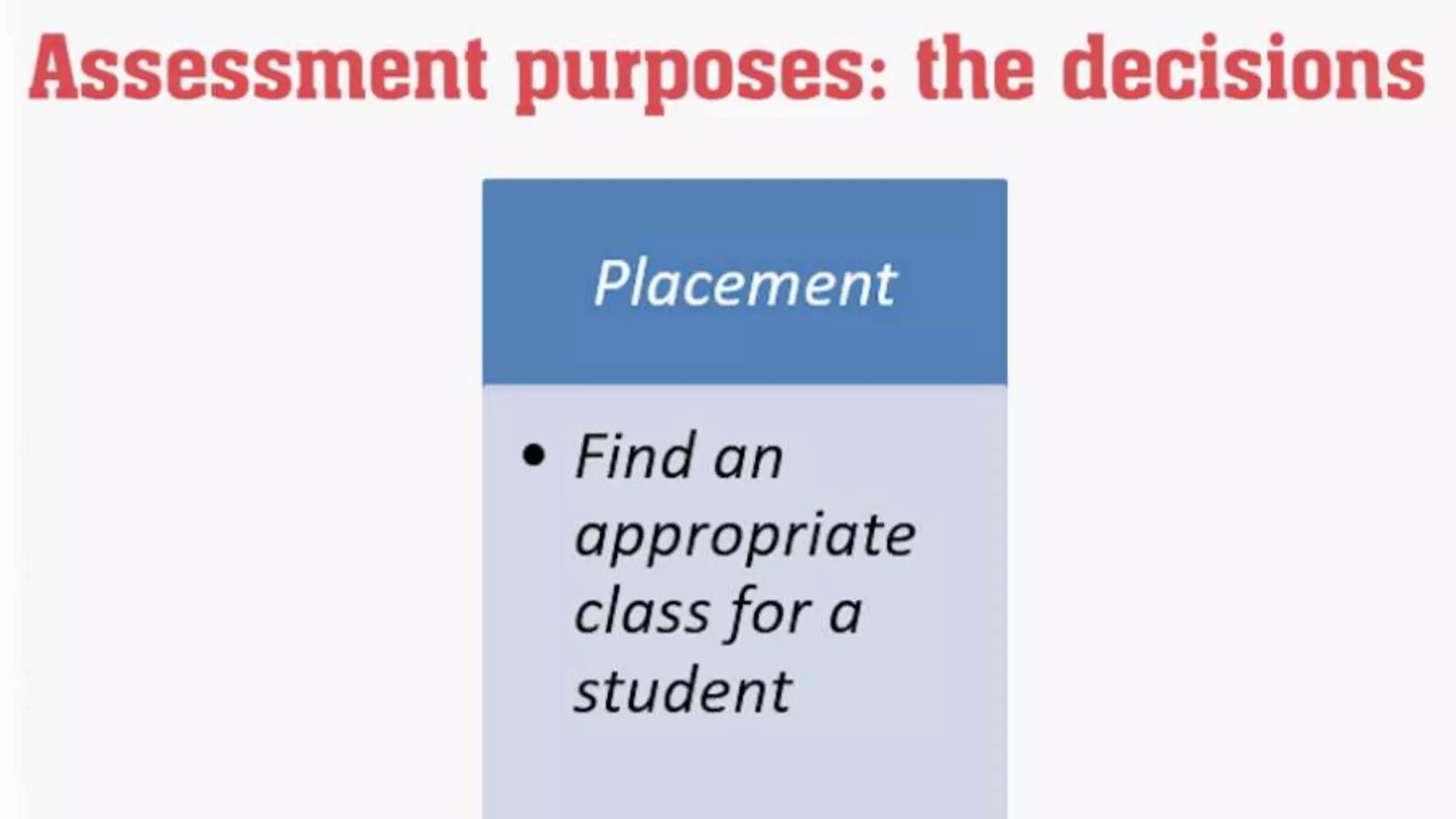
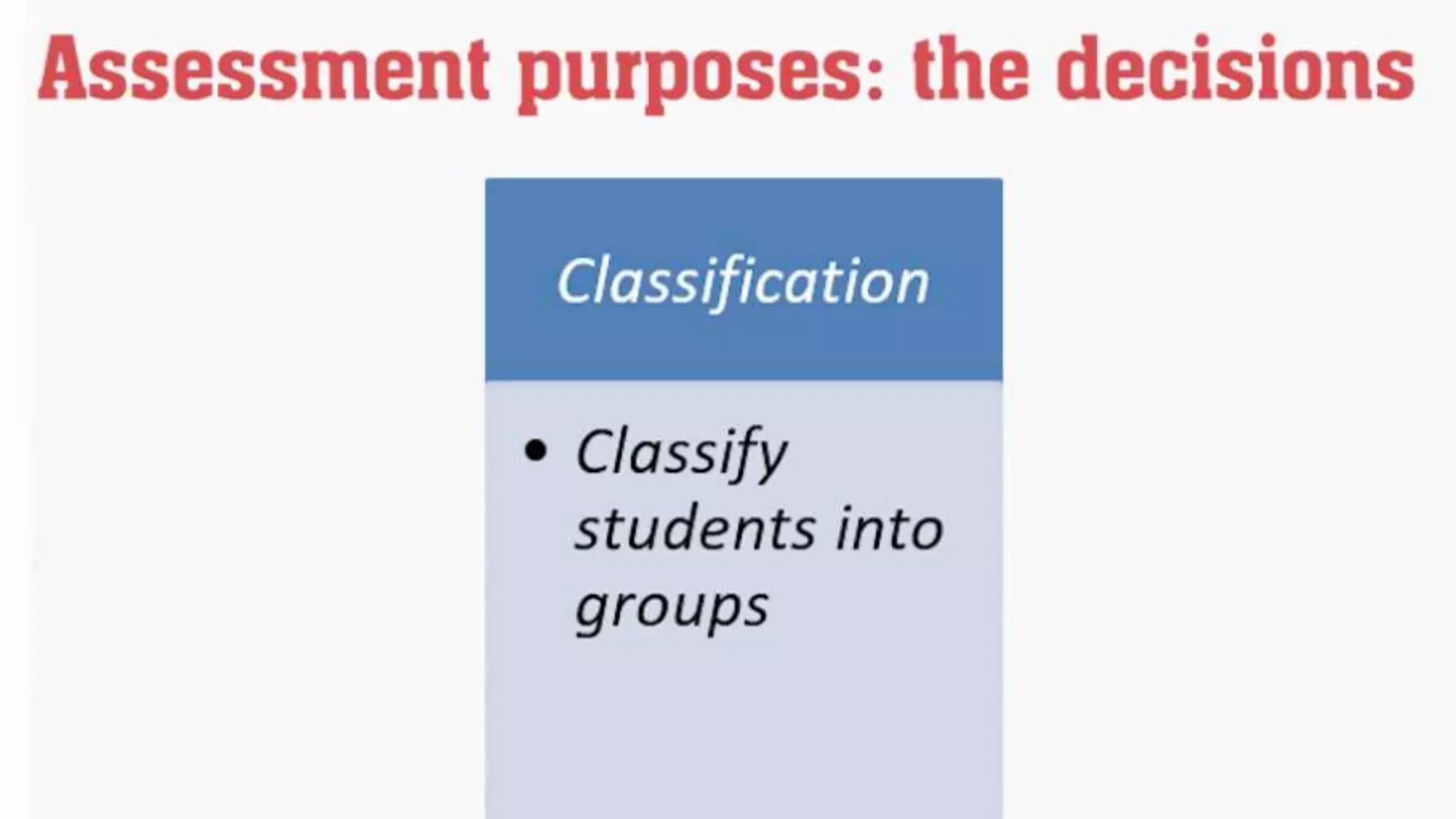
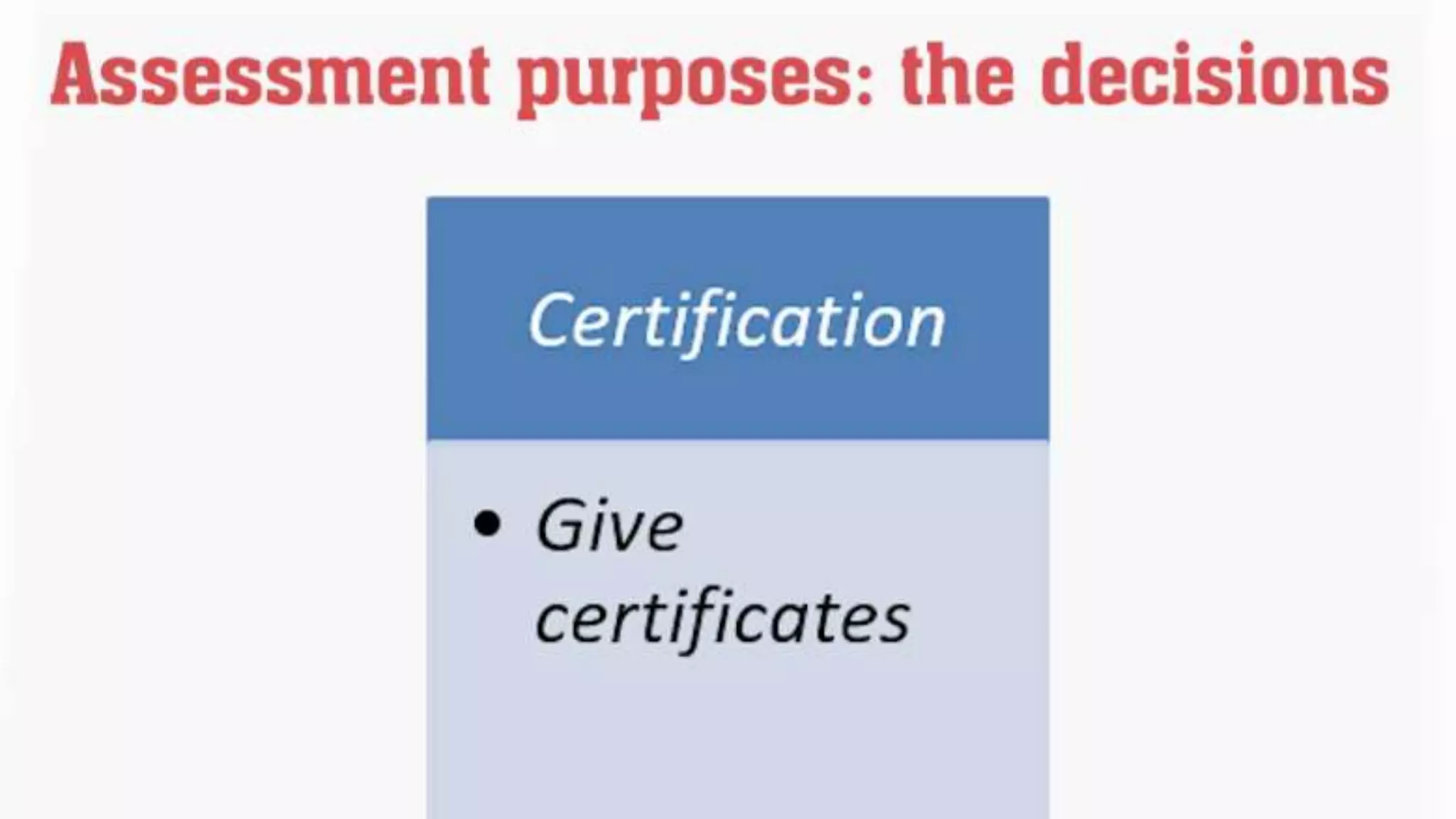
  • #11  Assessment purposes are actually the decisions based on assessment information.
  • #12 Teaching and learning The primary purpose of assessment is to improve students’ learning and teachers’ teaching as both respond to the information it provides. Assessment for learning is an ongoing process that arises out of the interaction between teaching and learning. What makes assessment for learning assessment effective is how well the information is used.
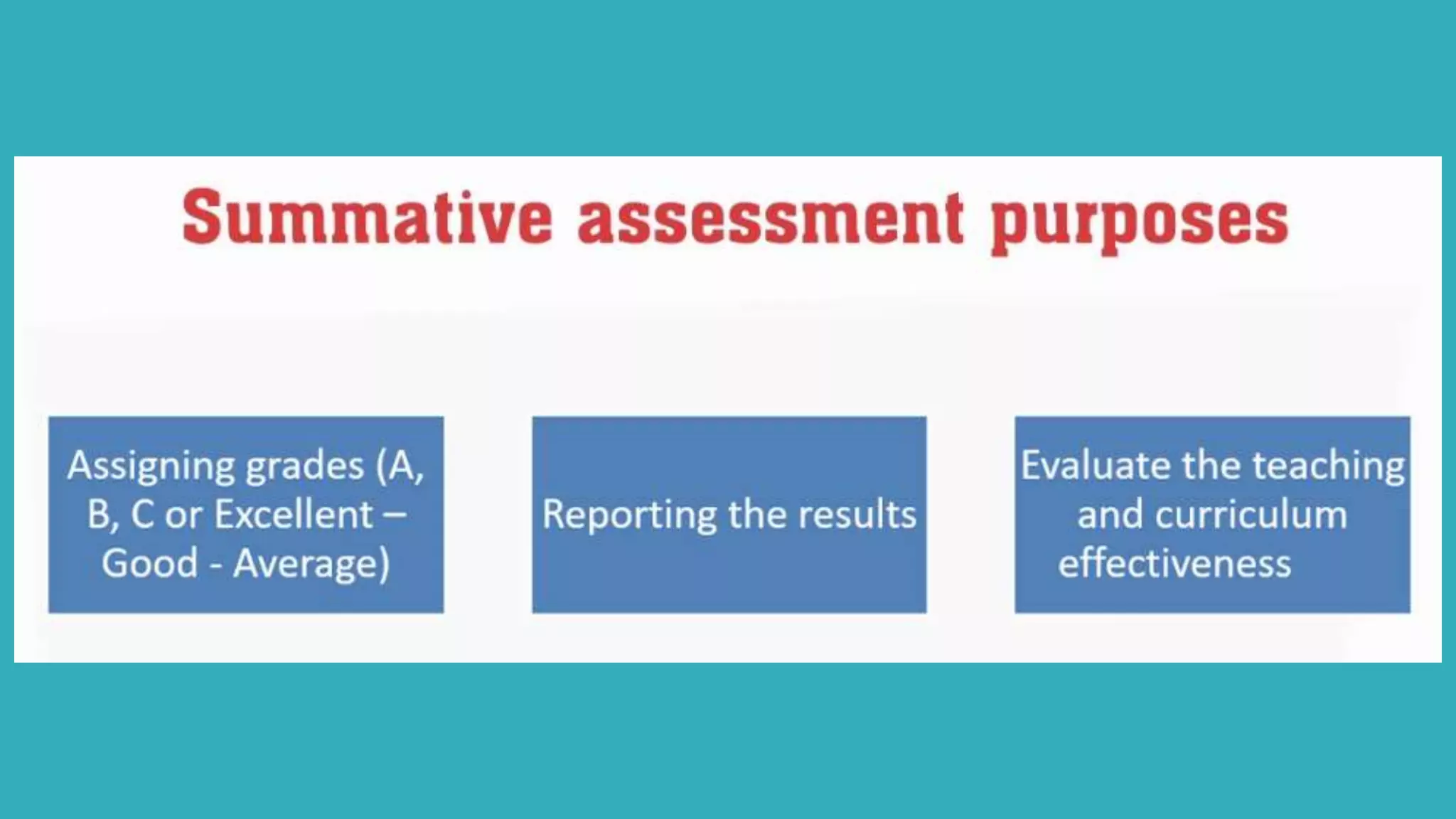
  • #17 Summative uses help a teacher evaluate student learning after teaching one or more units of a course of study.
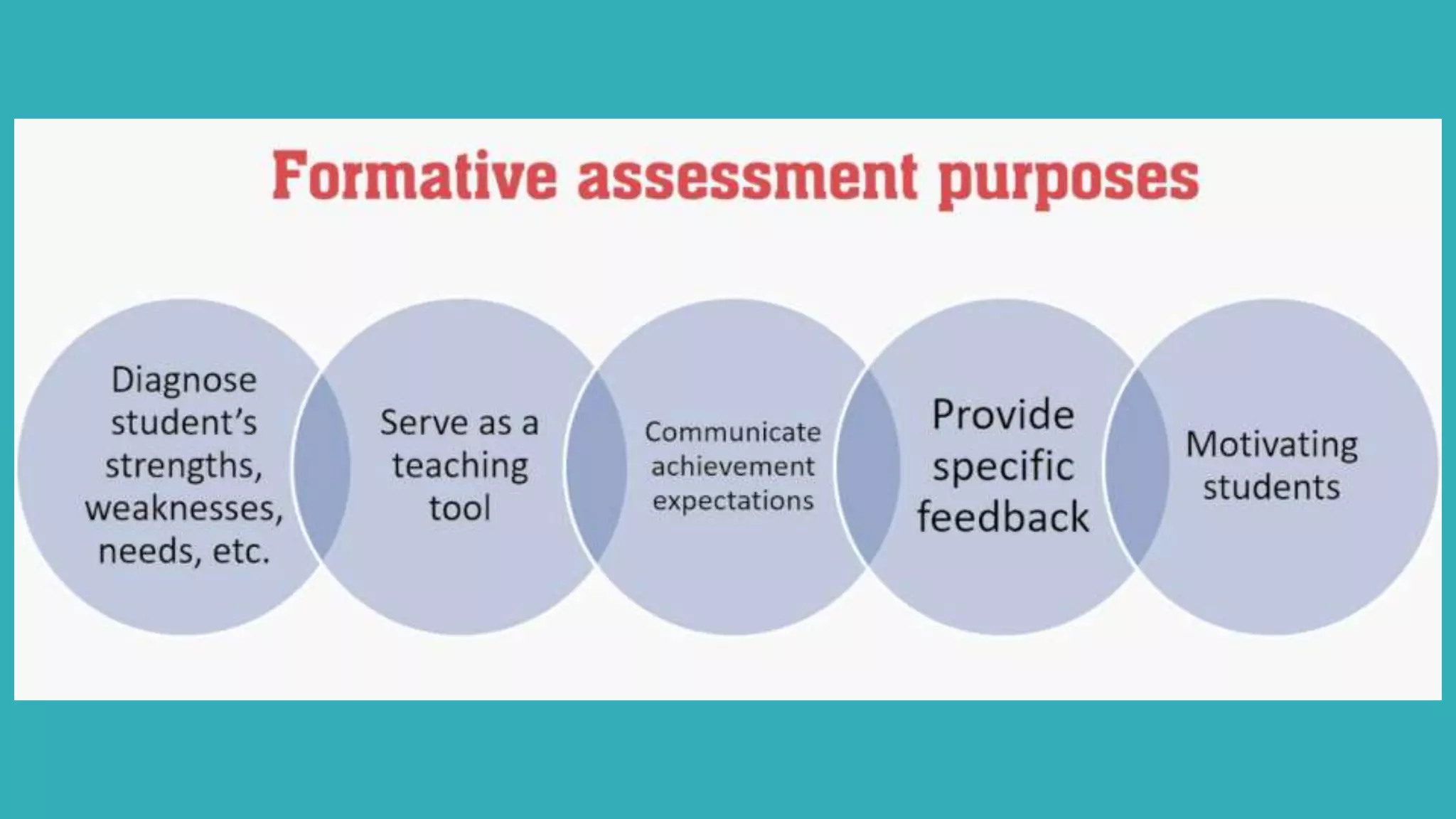
  • #18 Formative uses help teachers to monitor or guide student learning while it is still in progress.
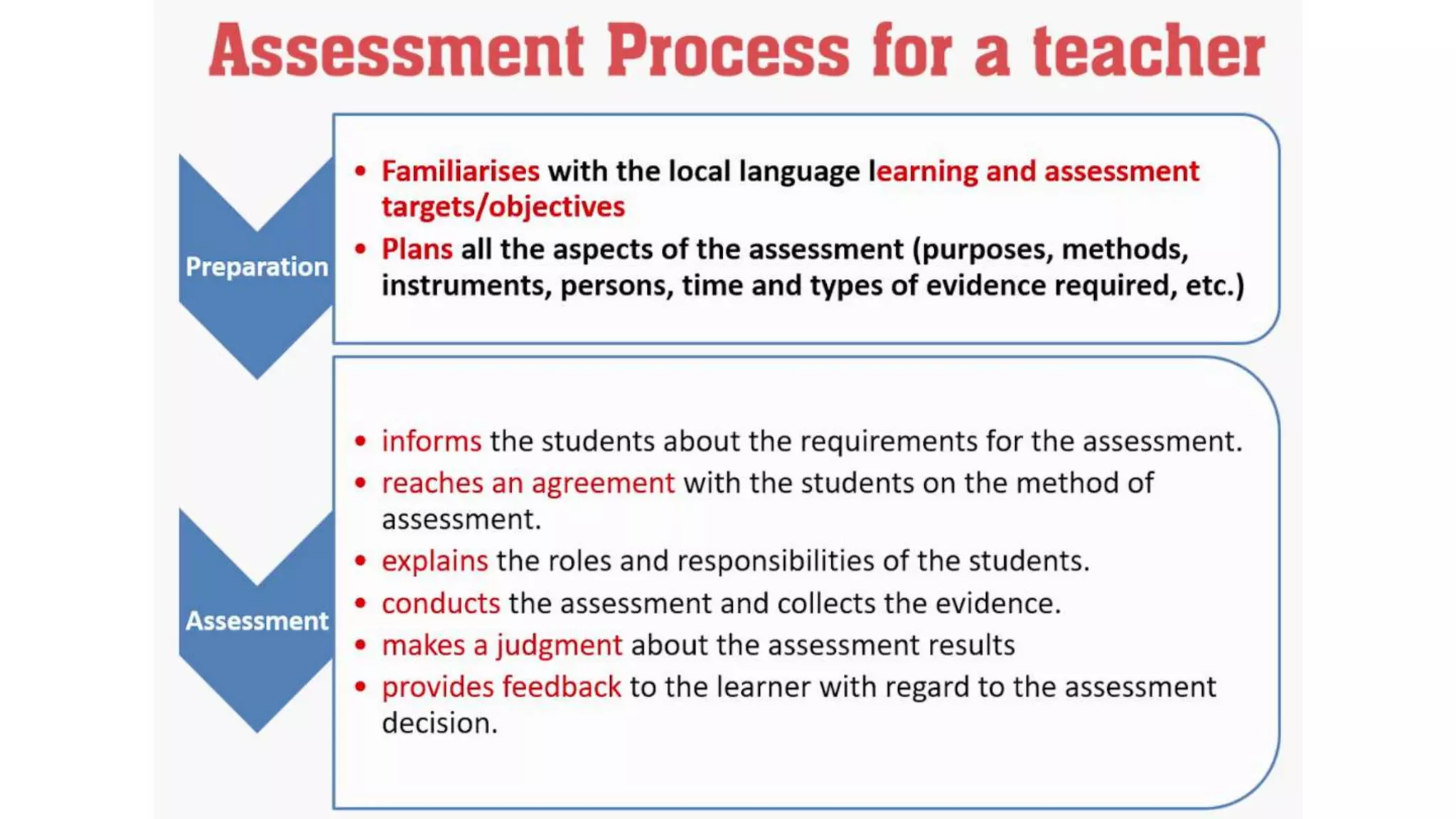
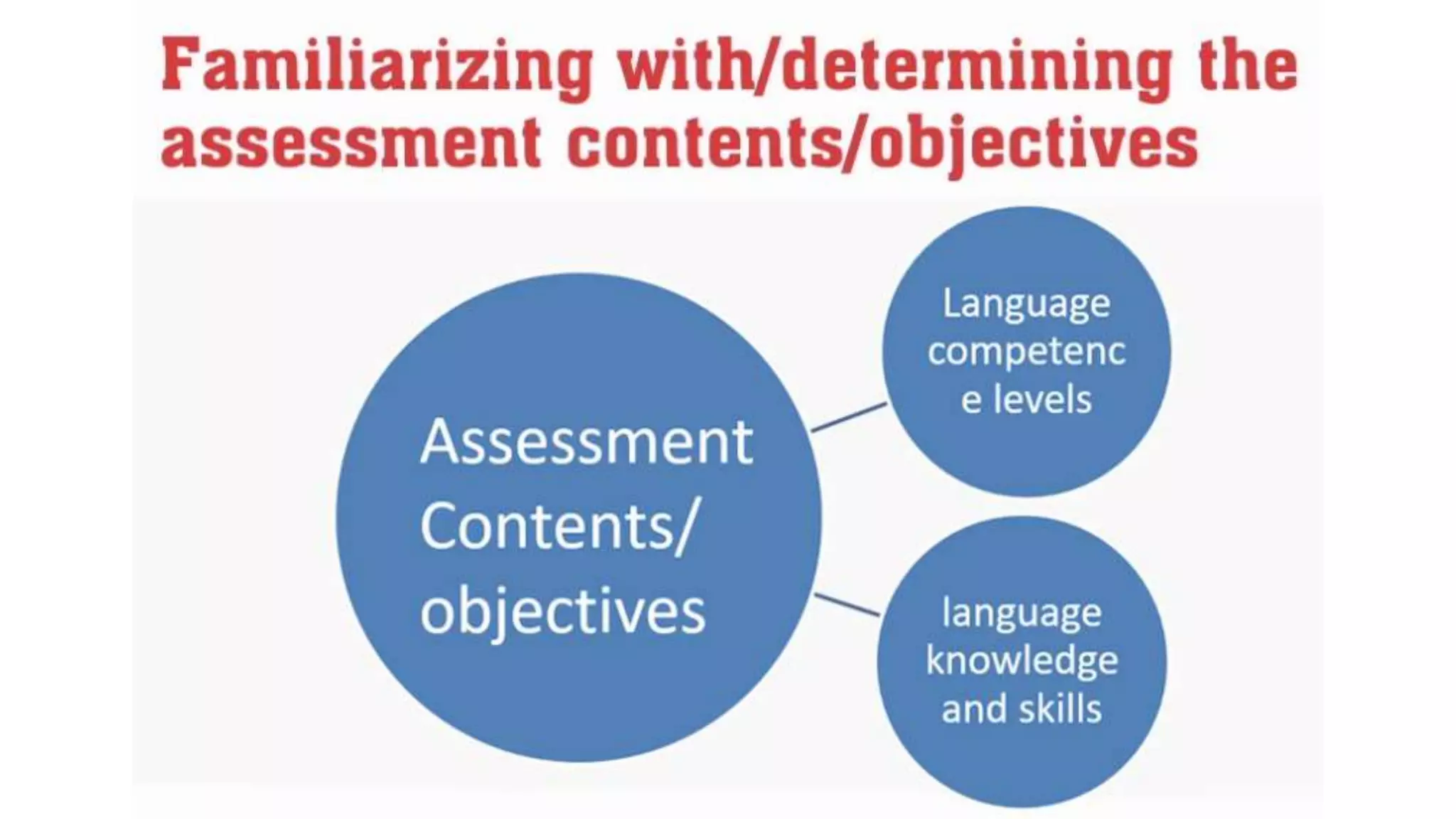
  • #21 a. The assessor becomes familiar with the unit standard and/or assessment outcome that he/she is going to assess. The assessor has to understand the requirements for each component of the unit standard. He/she has to be very clear on how the purpose, specific and critical outcomes, assessment criteria, the range, and any other relevant information, will impact on the design of the assessment.
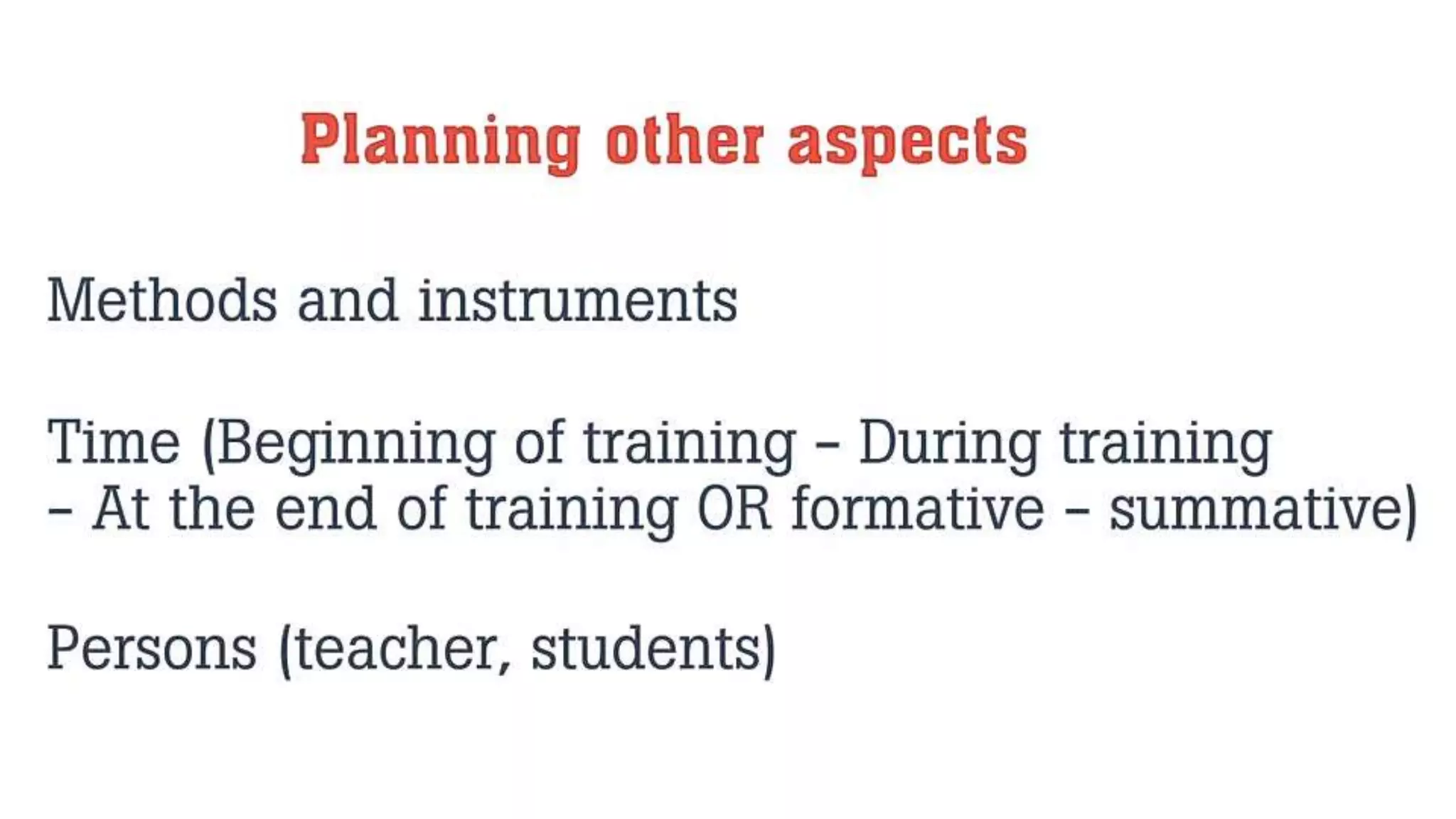
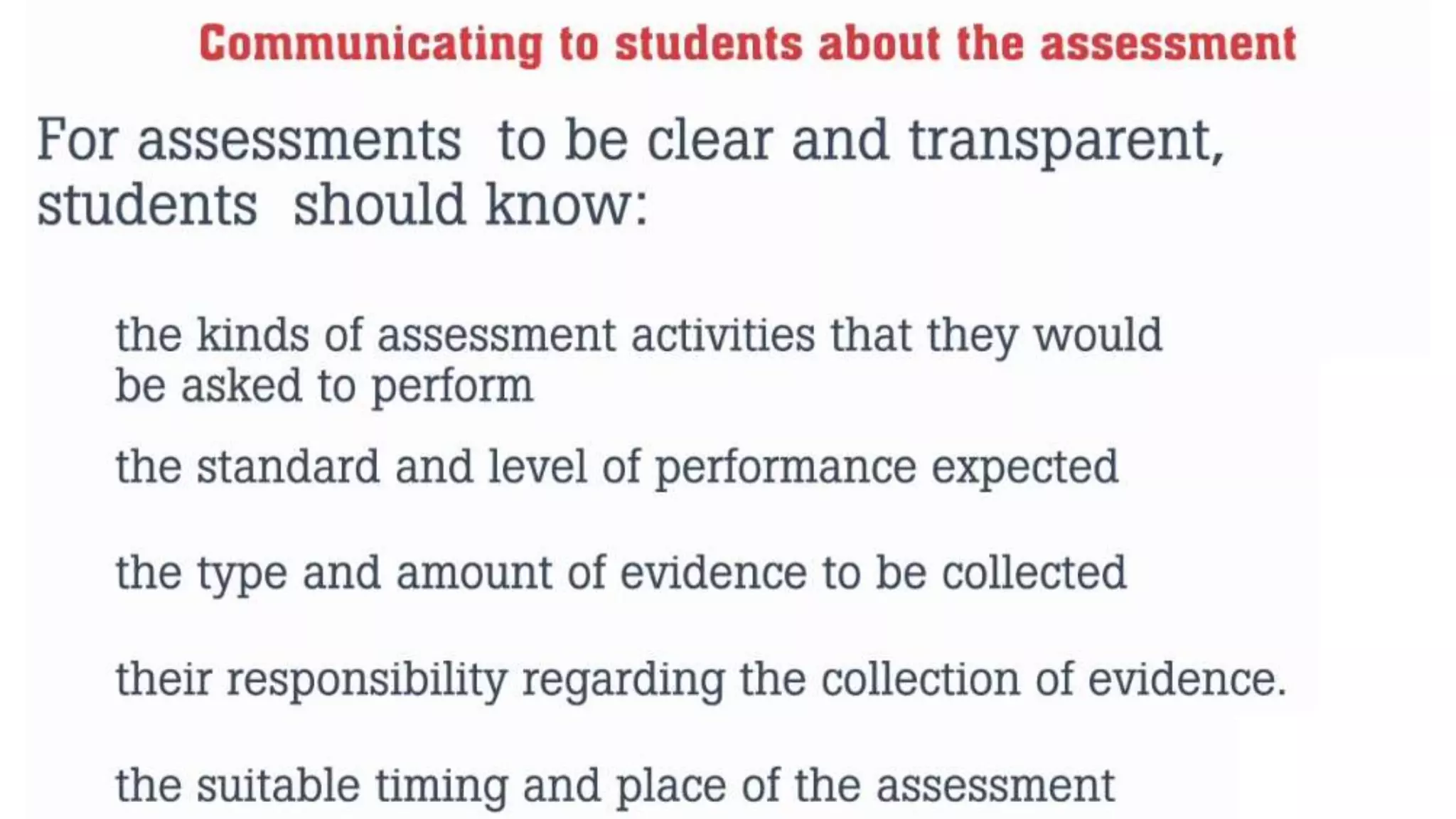
  • #22 b. The assessor plans the assessment, making decisions about the assessment methods, assessment instruments, activities, type and amount of evidence required, etc. At this stage, it will be helpful to link with other assessors in the same learning area and to agree on the interpretation of the unit standards, as well as on the type and amount of evidence needed. Also, the assessor has to keep in mind the credibility of the assessment, i.e. the principles of fairness, validity, reliability, and practicability, must be at the forefront during planning.
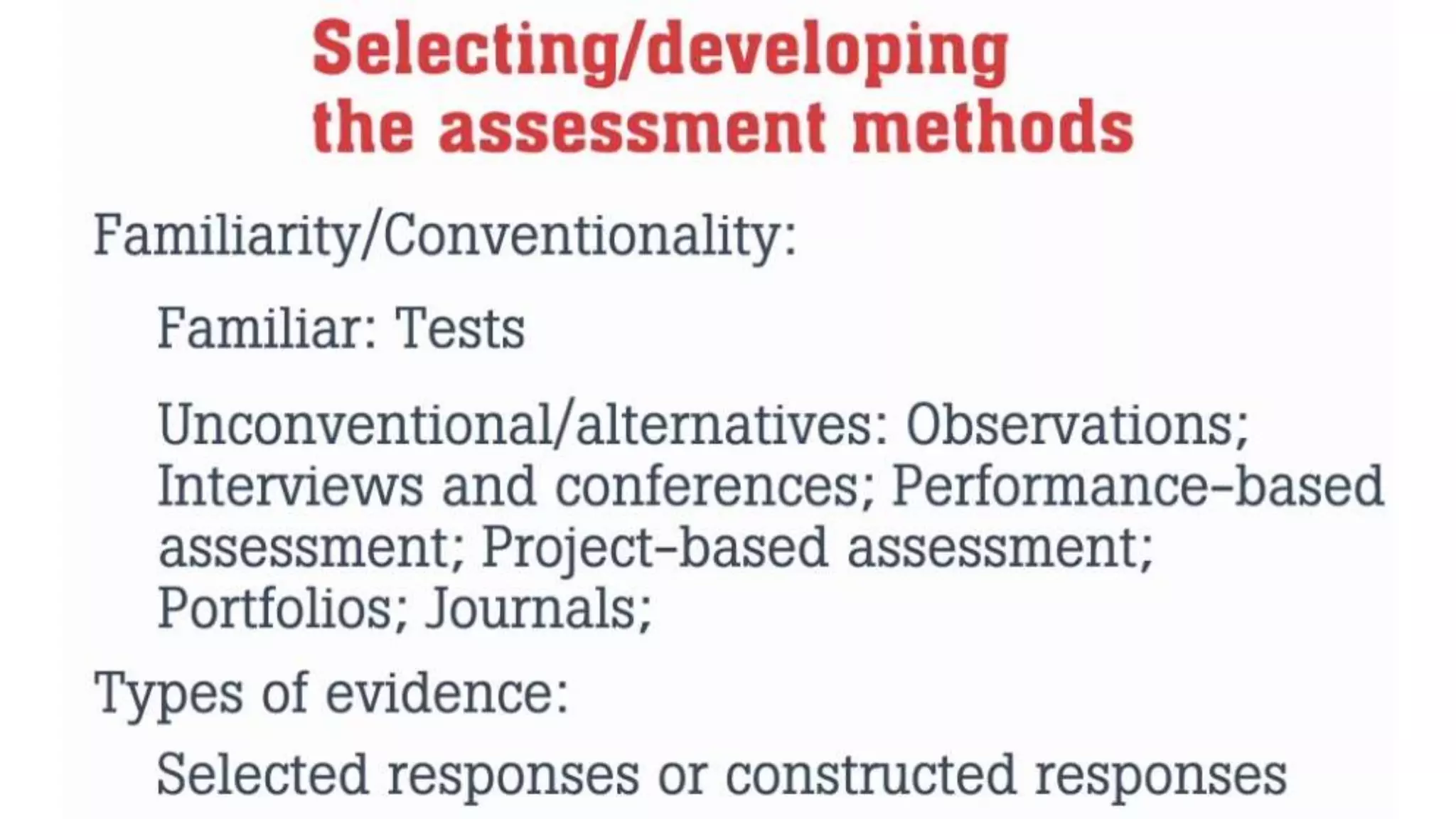
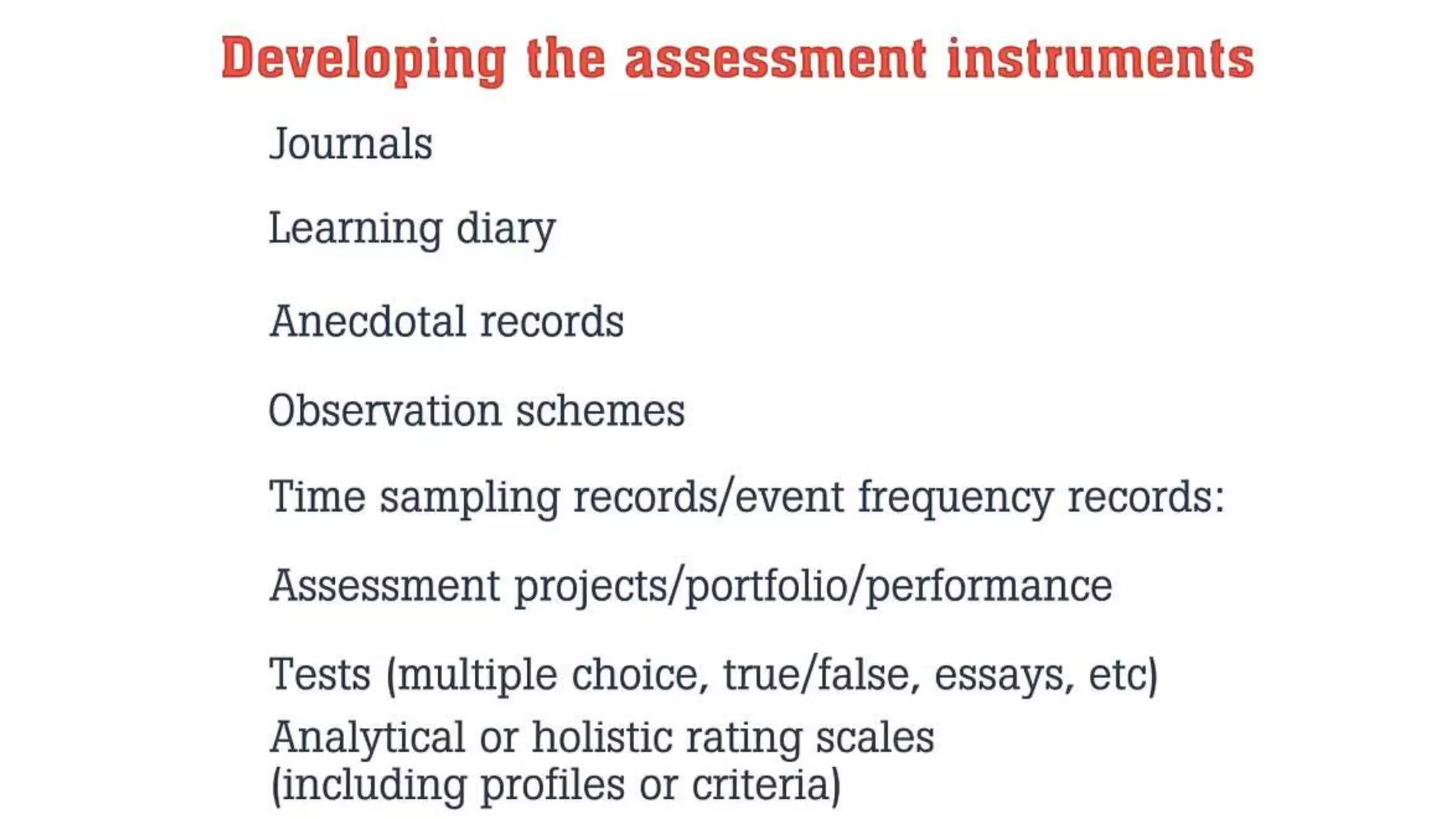
  • #23 c.The assessor designs the assessment by selecting the appropriate methods, instruments and designing the appropriate materials (e.g. a test paper).
  • #24 On the basis of the assessor’s knowledge and understanding of the unit standards/qualification, he/she decides whether to design tasks that require observation, evaluation of products or questioning (or a combination of methods). The situation or contexts for performance will also be clarified at this stage. Appropriate assessment instruments are decided upon and the assessment tools and materials, e.g. checklists, are designed.
  • #32 https://quizizz.com/admin/quiz/5db3d4dc2ee939001ddc8ab1