GUIDED BY:

Dr. M. R. PATEL

PRESENTEDE BY:
NITINKUMAR S. PARMAR
M. PHARM – I (2013-14)
ROLL NO. - 06
DEPARTMENT OF PHARMACEUTICS

SHRI B. M. SHAH COLLEGE OF PHARMACEUTICAL EDUCATION AND REASERCH, MODASA-2013
SHRI B.M.C.P.E.R, MODASA
Contents
Introduction
Advantages of semisolid dosage form
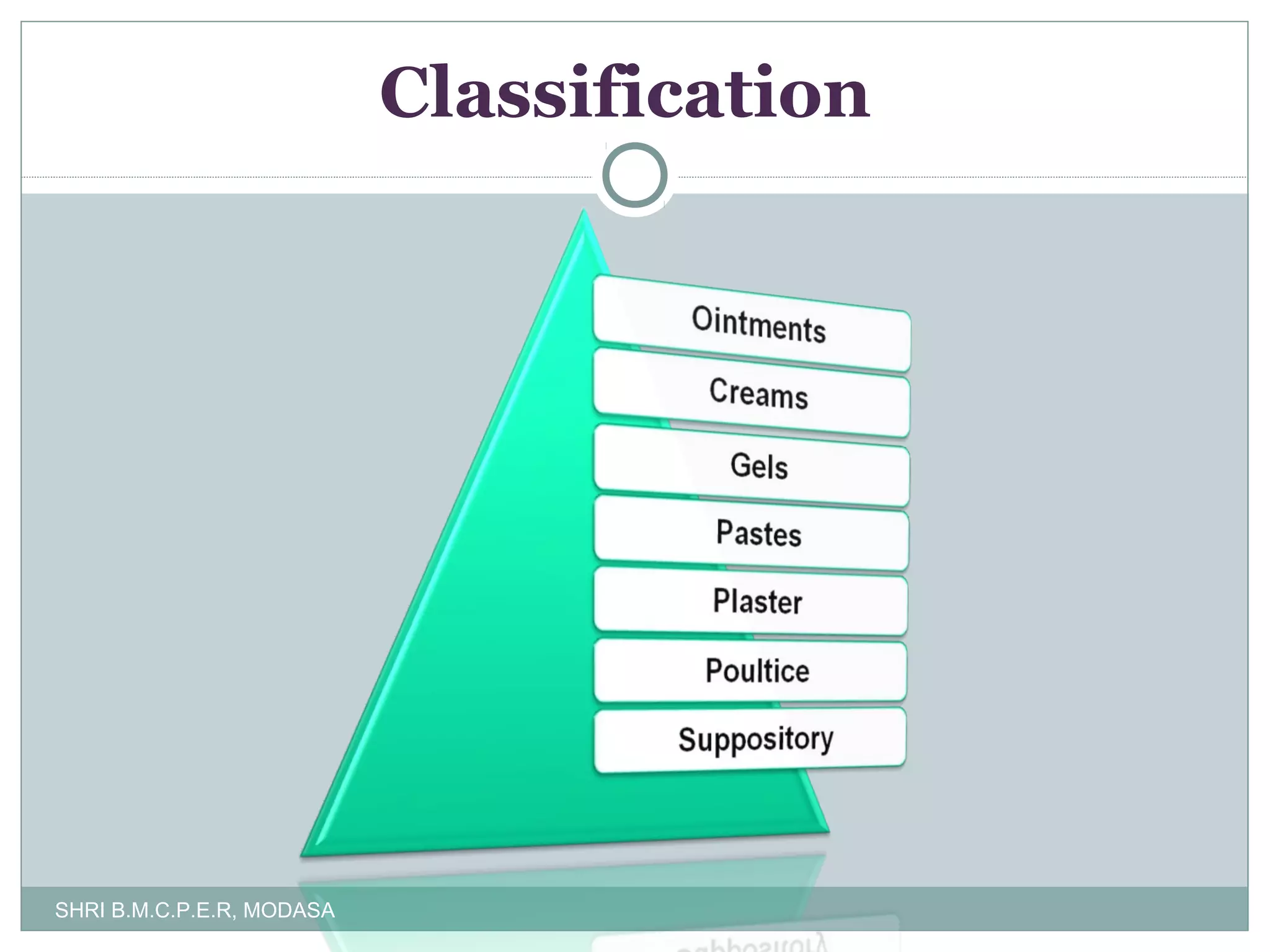
Classification
Plant layout

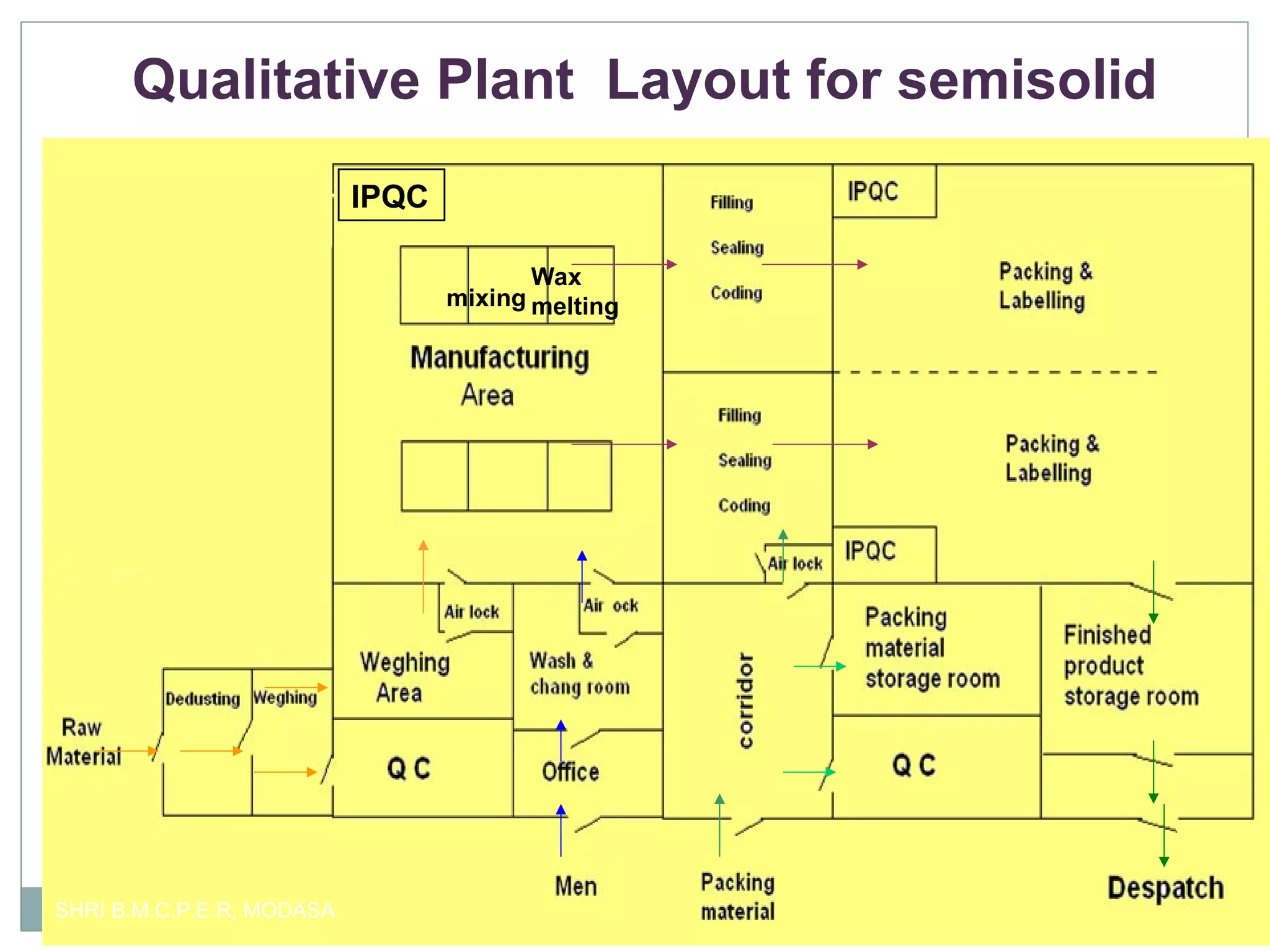
Qualitative Plant Layout for semisolid
 Quantitative Plant Layout for semisolid
Plant layout for manufacturing of suppository
References


SHRI B.M.C.P.E.R, MODASA
INTRODUCTION
 Semisolid pharmaceutical systems comprise a body of products, which

when applied to the skin or accessible mucous membranes tend to
alleviate or treat a pathological condition or offer protection against a
harmful environment.
 They have the property to cling to the skin or mucous membrane for a
protracted period of time to exert their therapeutic effect through
protection and occlusion. The adhesion is due to their plastic rheological
behavior which allows semisolid to retain their shape and cling as film
until acted upon by an outside force.
 Semisolid dosage forms usually are intended for localized drug delivery. In
the past few years, however, these forms also have been explored for the
systemic delivery of various drugs. Semisolids constitute a significant
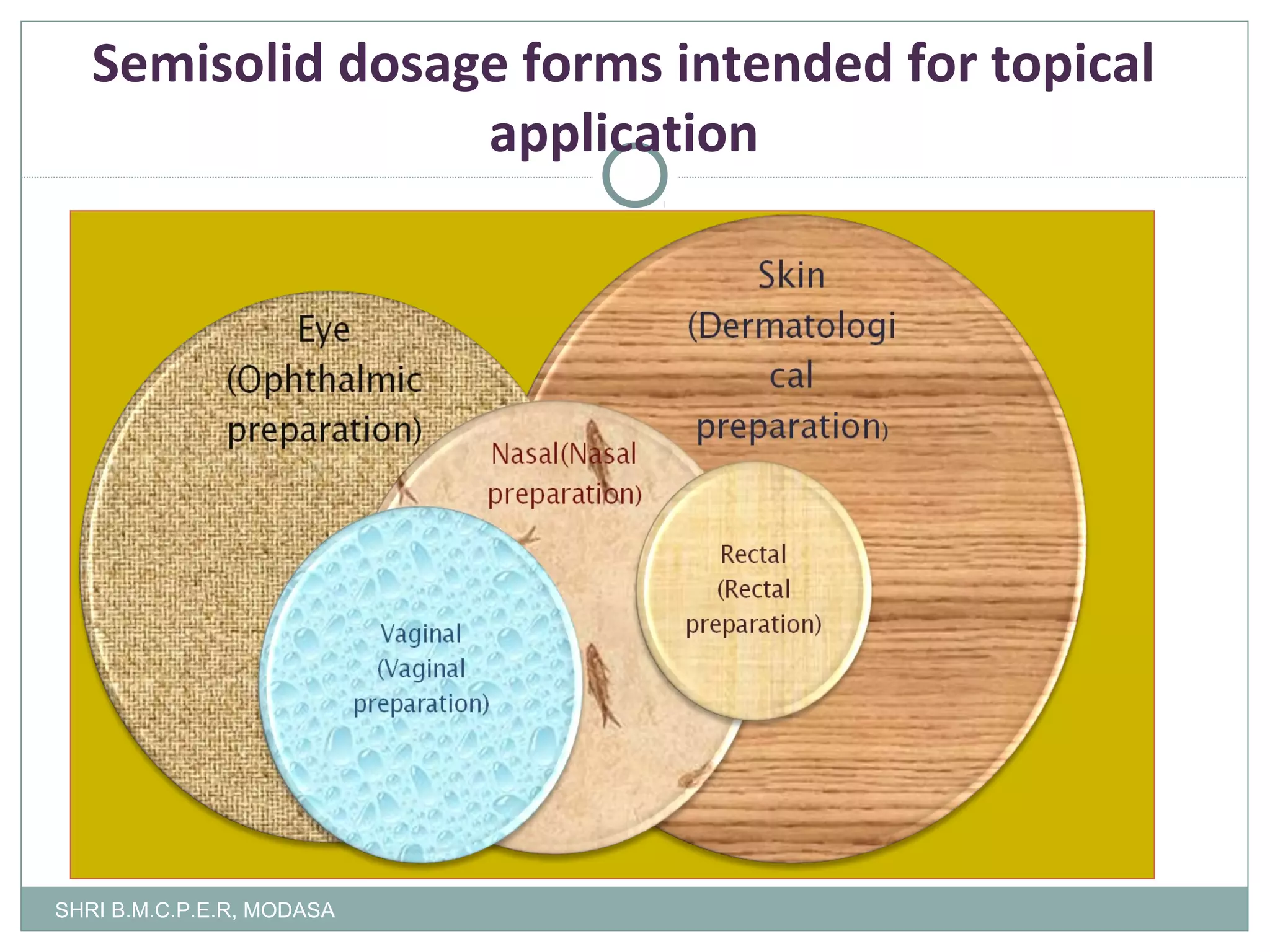
proportion of pharmaceutical dosage forms. They can be applied topically
to the skin, cornea, rectal tissue, nasal mucosa, vagina, buccaltissue,
urethral membrane, and external ear lining.
SHRI B.M.C.P.E.R, MODASA
DEFINITION
 Semisolid dosage forms are dermatological products of semisolid

consistency and applied to skin for therapeutic or protective
action or cosmetic function.

Advantages of semisolid dosage form
 Avoidance of first pass metabolism
 Avoidance of gastro intestinal incompatibility
 Predictable and extended duration of activity
 Delivery via the skin route is an interesting option because route is

convenient and safe
 Provide suitability for self administration
 Enhance therapeutic efficacy of drugs
 Avoiding the fluctuation in drug levels
 Inter and intra patient variations
 Maintain plasma concentration of potent drugs
 Termination of therapy is easy at any point of time
SHRI B.M.C.P.E.R, MODASA
Classification

SHRI B.M.C.P.E.R, MODASA
Semisolid dosage forms intended for topical
application

SHRI B.M.C.P.E.R, MODASA
Plant layout
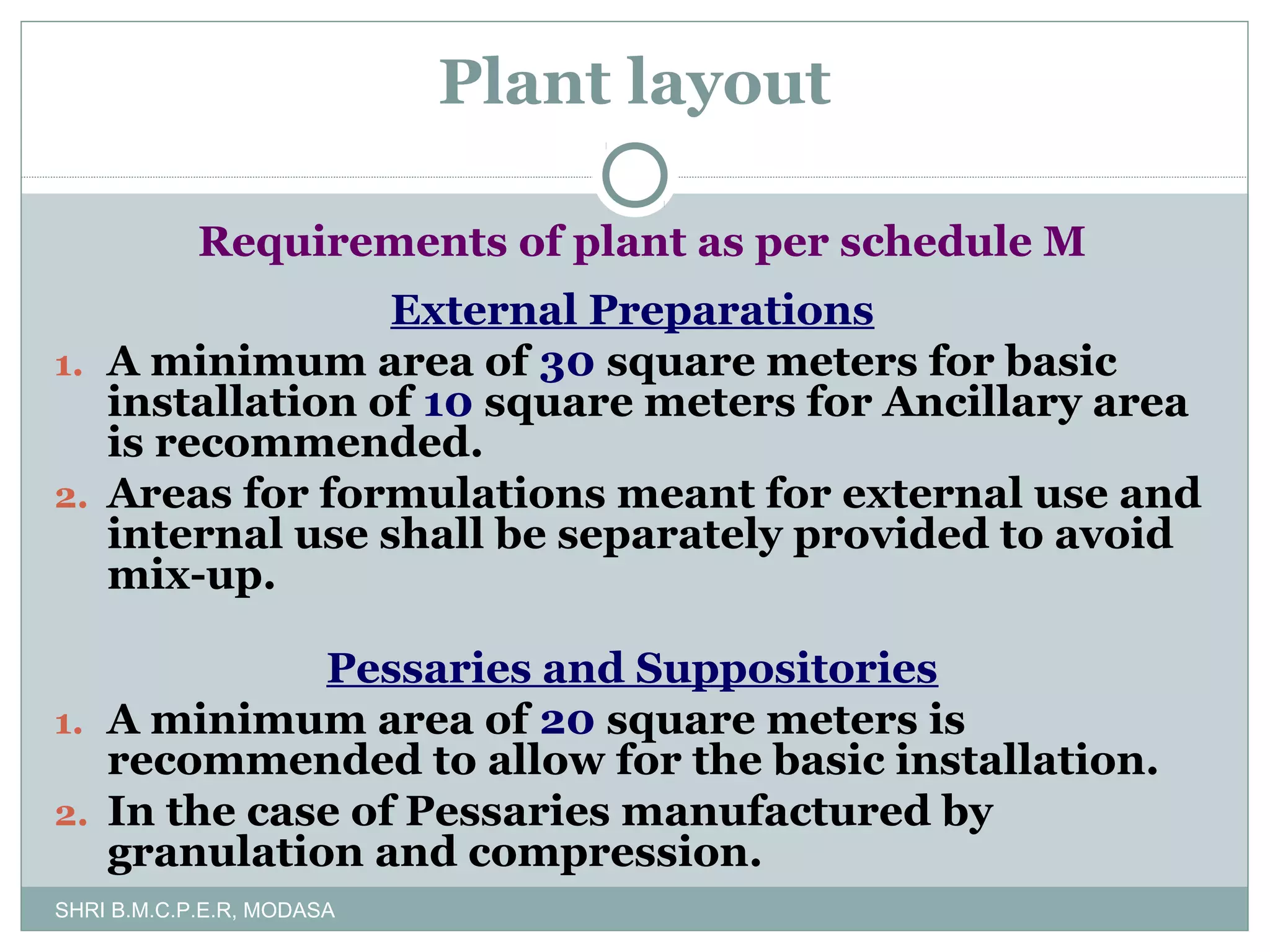
Requirements of plant as per schedule M
External Preparations
1. A minimum area of 30 square meters for basic
installation of 10 square meters for Ancillary area
is recommended.
2. Areas for formulations meant for external use and
internal use shall be separately provided to avoid
mix-up.
Pessaries and Suppositories
1. A minimum area of 20 square meters is
recommended to allow for the basic installation.
2. In the case of Pessaries manufactured by
granulation and compression.
SHRI B.M.C.P.E.R, MODASA
Qualitative Plant Layout for semisolid
IPQC
Wax
mixing melting

SHRI B.M.C.P.E.R, MODASA
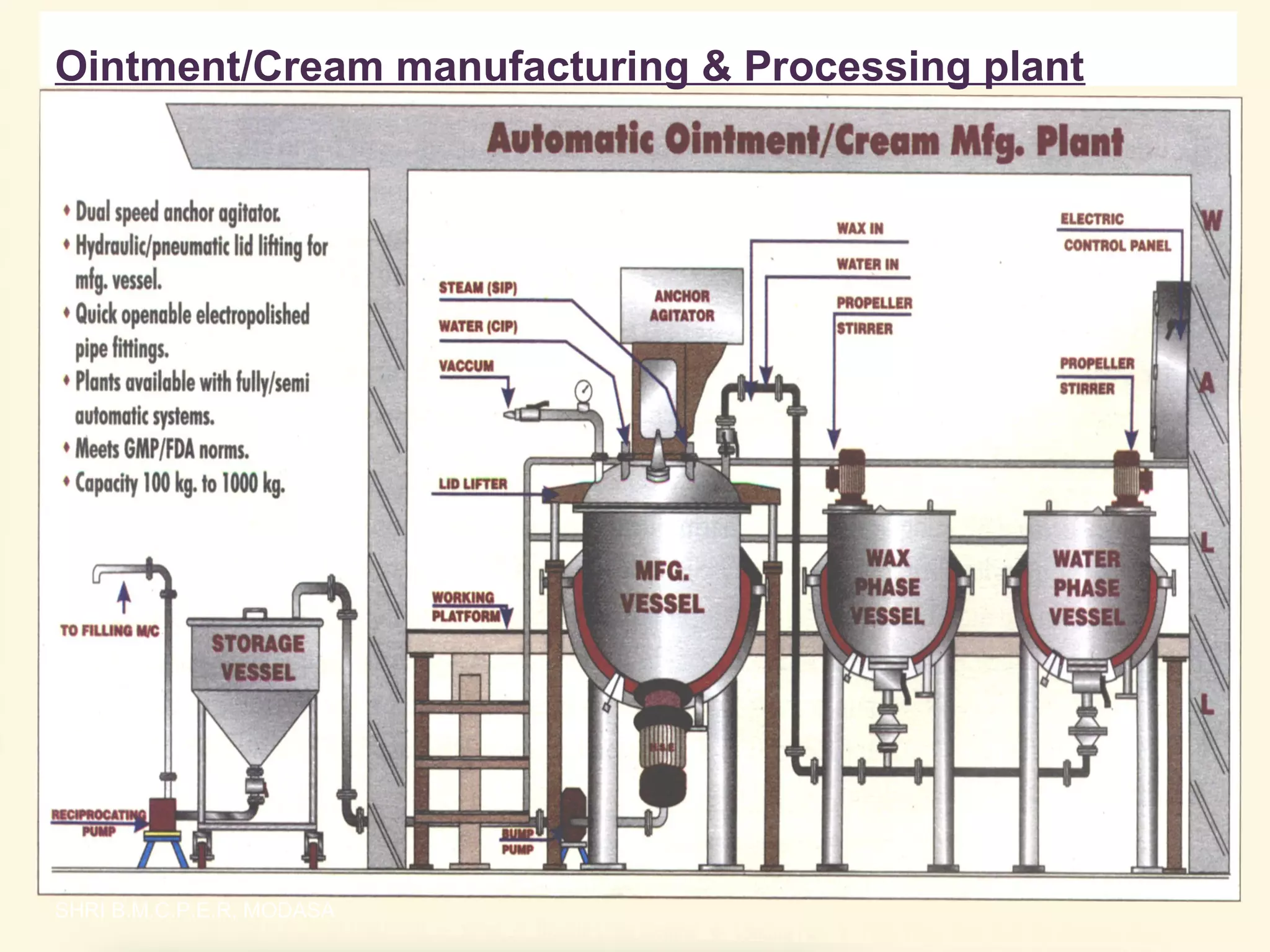
Ointment/Cream manufacturing & Processing plant

SHRI B.M.C.P.E.R, MODASA
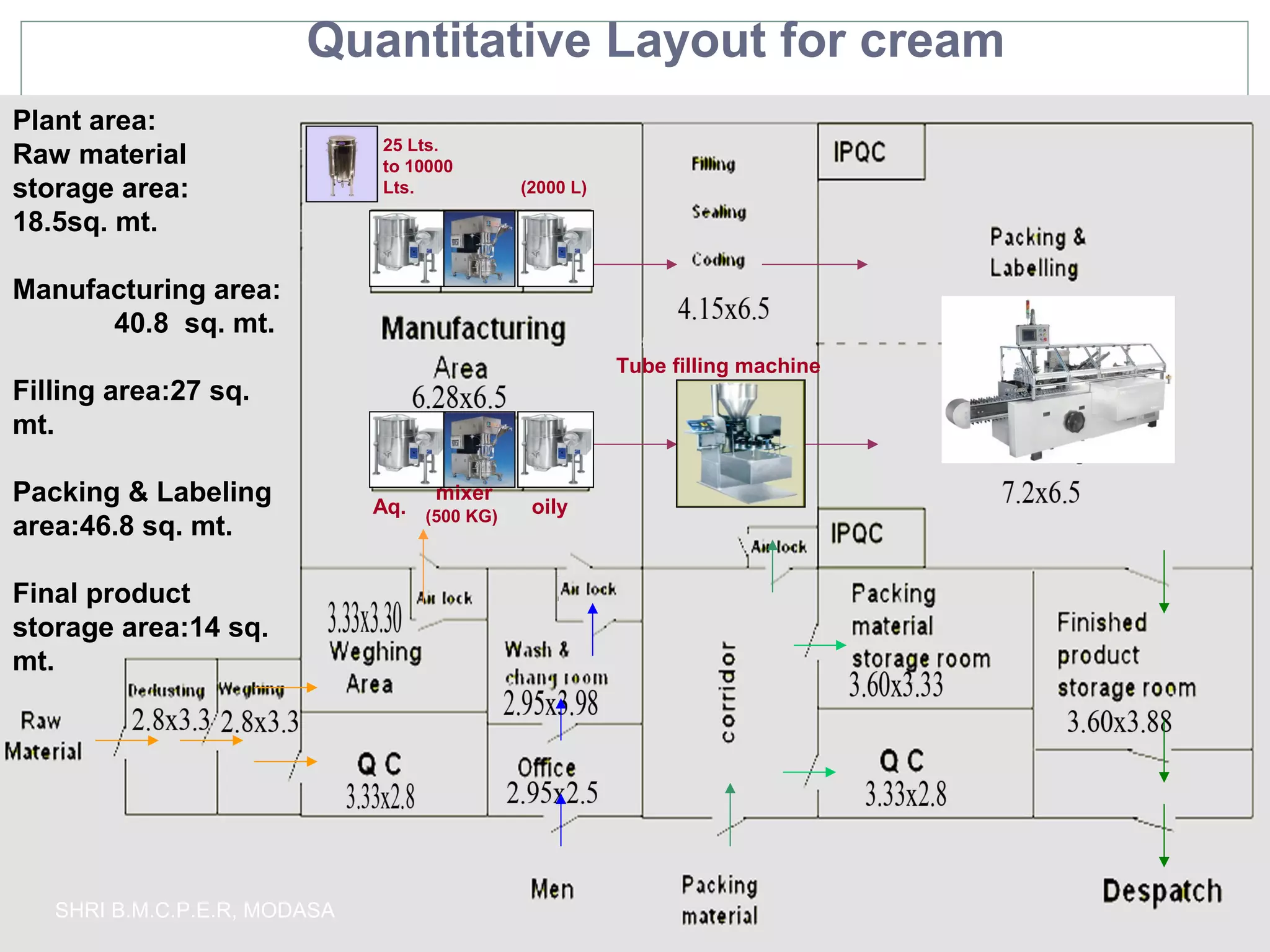
Quantitative Layout for cream
Plant area:
Raw material
storage area:
18.5sq. mt.

25 Lts.
to 10000
Lts.

(2000 L)

Manufacturing area:
40.8 sq. mt.
Tube filling machine

Filling area:27 sq.
mt.
Packing & Labeling
area:46.8 sq. mt.
Final product
storage area:14 sq.
mt.

SHRI B.M.C.P.E.R, MODASA

mixer
Aq. (500 KG)

oily
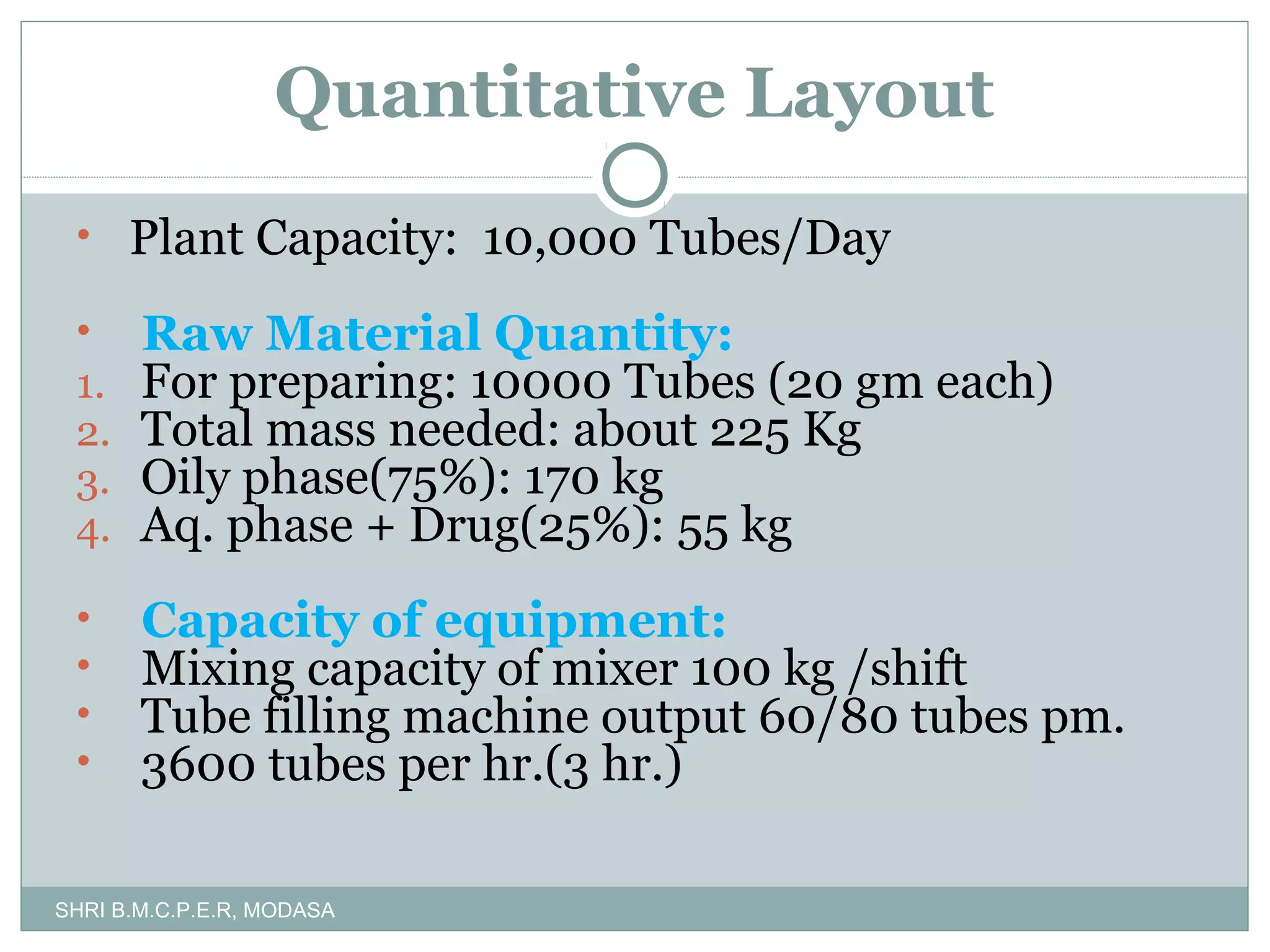
Quantitative Layout
• Plant Capacity: 10,000 Tubes/Day
•
1.
2.
3.
4.

Raw Material Quantity:
For preparing: 10000 Tubes (20 gm each)
Total mass needed: about 225 Kg
Oily phase(75%): 170 kg
Aq. phase + Drug(25%): 55 kg

•
•
•
•

Capacity of equipment:
Mixing capacity of mixer 100 kg /shift
Tube filling machine output 60/80 tubes pm.
3600 tubes per hr.(3 hr.)

SHRI B.M.C.P.E.R, MODASA
Melting area

IPQC

Suppositories
and pessaries
manufacturing
area

General Corridor
SHRI B.M.C.P.E.R, MODASA

Steam
generator
for
heating

Freezing
area

Storage
of
container
s

Quarantine area

machine

IPQC for packed
suppositories

QC

Weighing

Storage of various
moulds

Corridor
line packing in
corrugated box

Vessels
stores

Corrugated box packing

Corridor

Raw
material
storage

Storage of
product

despatch

Female
change
room

storage

Office

Male

e chang
n e room
t
r
y

API’s

Packing

Raw material
entry

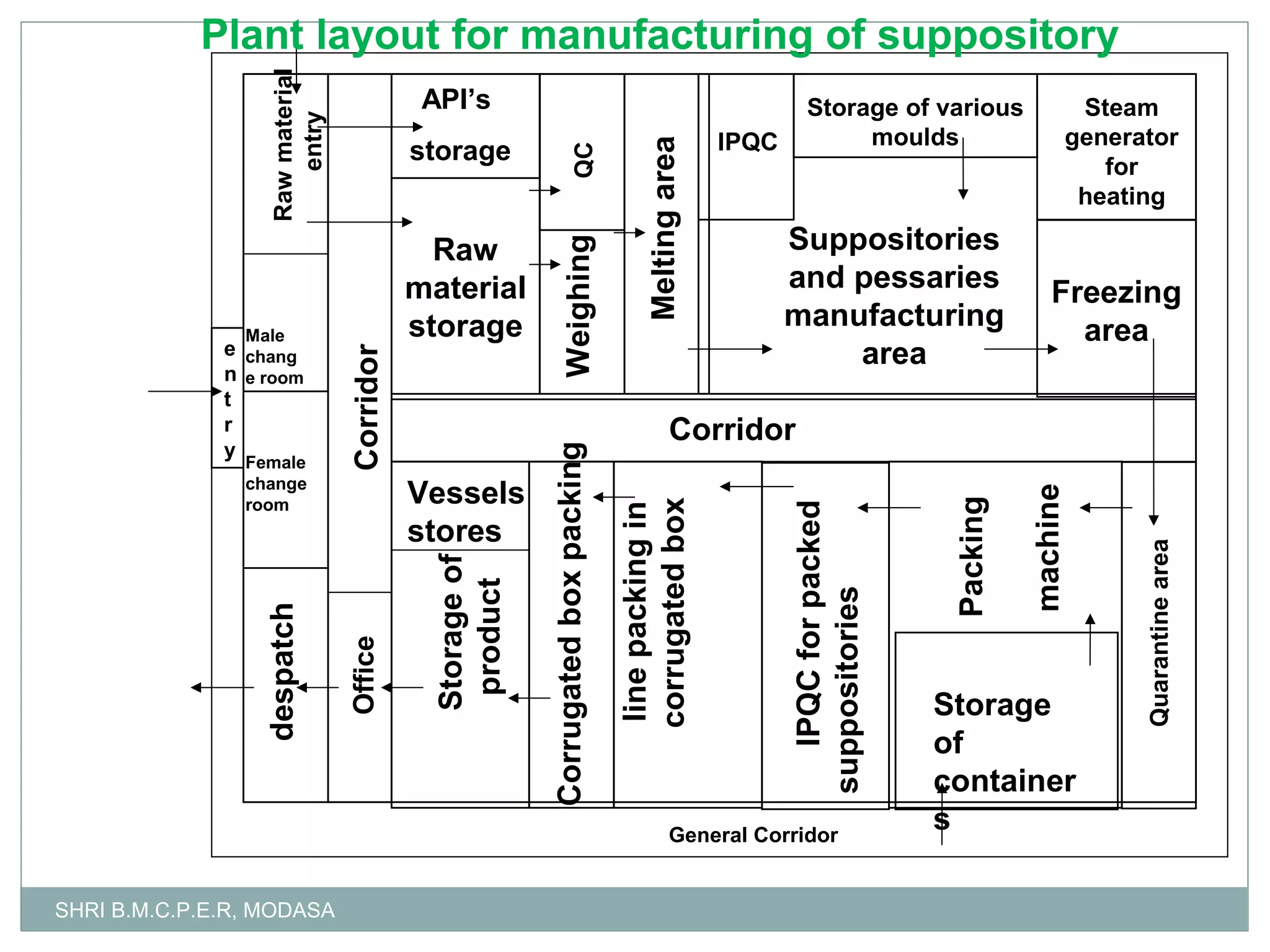
Plant layout for manufacturing of suppository
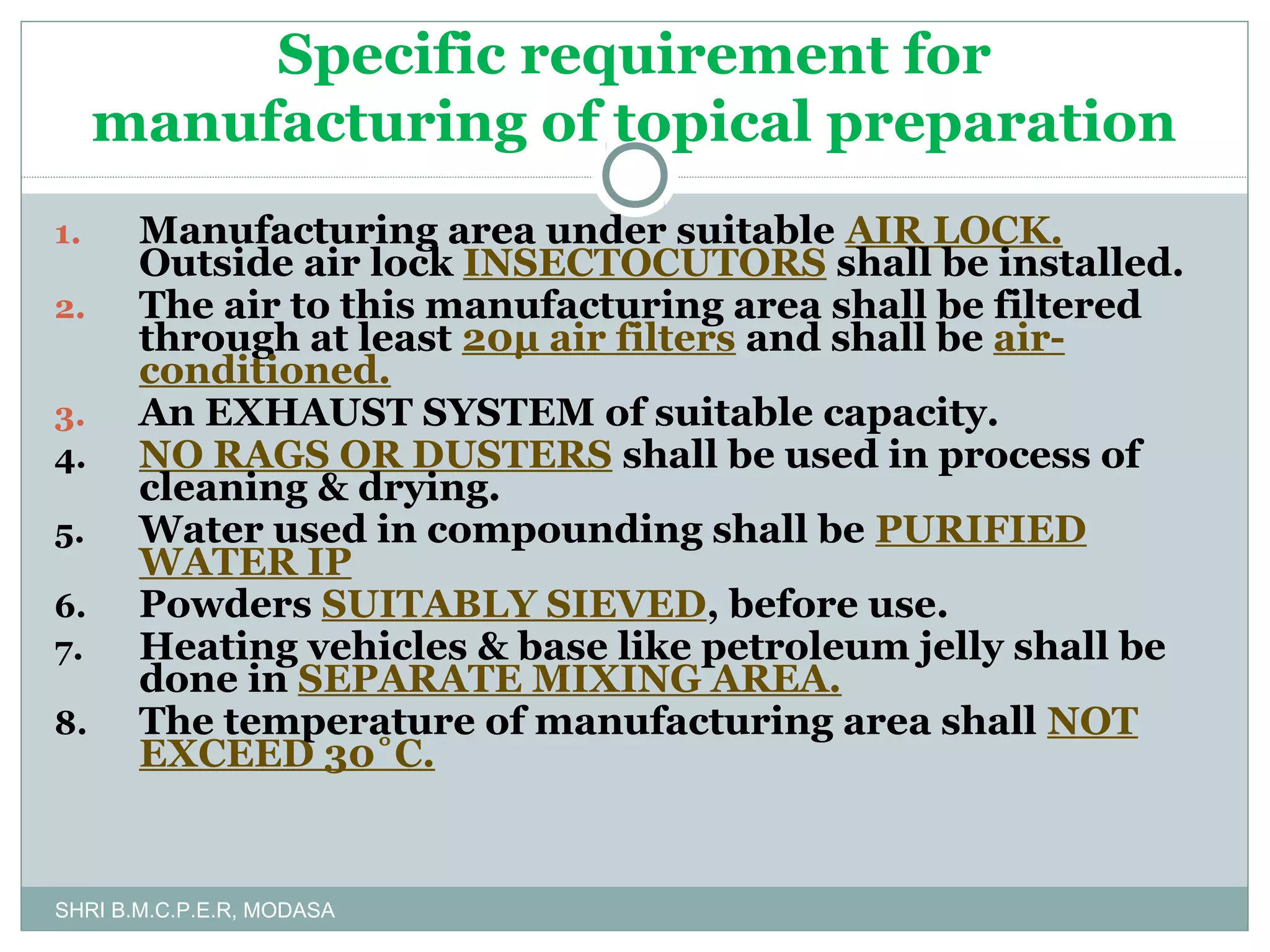
Specific requirement for
manufacturing of topical preparation
1.
2.
3.
4.
5.
6.
7.
8.

Manufacturing area under suitable AIR LOCK.
Outside air lock INSECTOCUTORS shall be installed.
The air to this manufacturing area shall be filtered
through at least 20μ air filters and shall be airconditioned.
An EXHAUST SYSTEM of suitable capacity.
NO RAGS OR DUSTERS shall be used in process of
cleaning & drying.
Water used in compounding shall be PURIFIED
WATER IP
Powders SUITABLY SIEVED, before use.
Heating vehicles & base like petroleum jelly shall be
done in SEPARATE MIXING AREA.
The temperature of manufacturing area shall NOT
EXCEED 30˚C.

SHRI B.M.C.P.E.R, MODASA
References
1. Drug and Cosmetic act, 1940 page no. 432 -434.
2. Pharmaceutical Dosage forms: Disperse System

Vol: 3 Edited
3. Herbert A. Lieberman, Martin M.Rieger, Gilbert
S. Banker
4. www.wintechpharmachem.com
5. www.kotharipharma.com
6. www.riddhipharma.com
7. www.keimachines.com
8. www.vabatrading.nl
9. www.packexpo.com
10. www.in-pharmatechnology.com
SHRI B.M.C.P.E.R, MODASA
Thank You

SHRI B.M.C.P.E.R, MODASA

Quali and quant layout nitin

  • 1.
    GUIDED BY: Dr. M.R. PATEL PRESENTEDE BY: NITINKUMAR S. PARMAR M. PHARM – I (2013-14) ROLL NO. - 06 DEPARTMENT OF PHARMACEUTICS SHRI B. M. SHAH COLLEGE OF PHARMACEUTICAL EDUCATION AND REASERCH, MODASA-2013 SHRI B.M.C.P.E.R, MODASA
  • 2.
    Contents Introduction Advantages of semisoliddosage form Classification Plant layout Qualitative Plant Layout for semisolid  Quantitative Plant Layout for semisolid Plant layout for manufacturing of suppository References  SHRI B.M.C.P.E.R, MODASA
  • 3.
    INTRODUCTION  Semisolid pharmaceuticalsystems comprise a body of products, which when applied to the skin or accessible mucous membranes tend to alleviate or treat a pathological condition or offer protection against a harmful environment.  They have the property to cling to the skin or mucous membrane for a protracted period of time to exert their therapeutic effect through protection and occlusion. The adhesion is due to their plastic rheological behavior which allows semisolid to retain their shape and cling as film until acted upon by an outside force.  Semisolid dosage forms usually are intended for localized drug delivery. In the past few years, however, these forms also have been explored for the systemic delivery of various drugs. Semisolids constitute a significant proportion of pharmaceutical dosage forms. They can be applied topically to the skin, cornea, rectal tissue, nasal mucosa, vagina, buccaltissue, urethral membrane, and external ear lining. SHRI B.M.C.P.E.R, MODASA
  • 4.
    DEFINITION  Semisolid dosageforms are dermatological products of semisolid consistency and applied to skin for therapeutic or protective action or cosmetic function. Advantages of semisolid dosage form  Avoidance of first pass metabolism  Avoidance of gastro intestinal incompatibility  Predictable and extended duration of activity  Delivery via the skin route is an interesting option because route is convenient and safe  Provide suitability for self administration  Enhance therapeutic efficacy of drugs  Avoiding the fluctuation in drug levels  Inter and intra patient variations  Maintain plasma concentration of potent drugs  Termination of therapy is easy at any point of time SHRI B.M.C.P.E.R, MODASA
  • 5.
  • 6.
    Semisolid dosage formsintended for topical application SHRI B.M.C.P.E.R, MODASA
  • 7.
    Plant layout Requirements ofplant as per schedule M External Preparations 1. A minimum area of 30 square meters for basic installation of 10 square meters for Ancillary area is recommended. 2. Areas for formulations meant for external use and internal use shall be separately provided to avoid mix-up. Pessaries and Suppositories 1. A minimum area of 20 square meters is recommended to allow for the basic installation. 2. In the case of Pessaries manufactured by granulation and compression. SHRI B.M.C.P.E.R, MODASA
  • 8.
    Qualitative Plant Layoutfor semisolid IPQC Wax mixing melting SHRI B.M.C.P.E.R, MODASA
  • 9.
    Ointment/Cream manufacturing &Processing plant SHRI B.M.C.P.E.R, MODASA
  • 10.
    Quantitative Layout forcream Plant area: Raw material storage area: 18.5sq. mt. 25 Lts. to 10000 Lts. (2000 L) Manufacturing area: 40.8 sq. mt. Tube filling machine Filling area:27 sq. mt. Packing & Labeling area:46.8 sq. mt. Final product storage area:14 sq. mt. SHRI B.M.C.P.E.R, MODASA mixer Aq. (500 KG) oily
  • 11.
    Quantitative Layout • PlantCapacity: 10,000 Tubes/Day • 1. 2. 3. 4. Raw Material Quantity: For preparing: 10000 Tubes (20 gm each) Total mass needed: about 225 Kg Oily phase(75%): 170 kg Aq. phase + Drug(25%): 55 kg • • • • Capacity of equipment: Mixing capacity of mixer 100 kg /shift Tube filling machine output 60/80 tubes pm. 3600 tubes per hr.(3 hr.) SHRI B.M.C.P.E.R, MODASA
  • 12.
    Melting area IPQC Suppositories and pessaries manufacturing area GeneralCorridor SHRI B.M.C.P.E.R, MODASA Steam generator for heating Freezing area Storage of container s Quarantine area machine IPQC for packed suppositories QC Weighing Storage of various moulds Corridor line packing in corrugated box Vessels stores Corrugated box packing Corridor Raw material storage Storage of product despatch Female change room storage Office Male e chang n e room t r y API’s Packing Raw material entry Plant layout for manufacturing of suppository
  • 13.
    Specific requirement for manufacturingof topical preparation 1. 2. 3. 4. 5. 6. 7. 8. Manufacturing area under suitable AIR LOCK. Outside air lock INSECTOCUTORS shall be installed. The air to this manufacturing area shall be filtered through at least 20μ air filters and shall be airconditioned. An EXHAUST SYSTEM of suitable capacity. NO RAGS OR DUSTERS shall be used in process of cleaning & drying. Water used in compounding shall be PURIFIED WATER IP Powders SUITABLY SIEVED, before use. Heating vehicles & base like petroleum jelly shall be done in SEPARATE MIXING AREA. The temperature of manufacturing area shall NOT EXCEED 30˚C. SHRI B.M.C.P.E.R, MODASA
  • 14.
    References 1. Drug andCosmetic act, 1940 page no. 432 -434. 2. Pharmaceutical Dosage forms: Disperse System Vol: 3 Edited 3. Herbert A. Lieberman, Martin M.Rieger, Gilbert S. Banker 4. www.wintechpharmachem.com 5. www.kotharipharma.com 6. www.riddhipharma.com 7. www.keimachines.com 8. www.vabatrading.nl 9. www.packexpo.com 10. www.in-pharmatechnology.com SHRI B.M.C.P.E.R, MODASA
  • 15.