Nucleotide metabolism
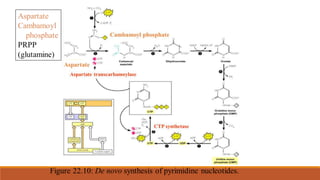
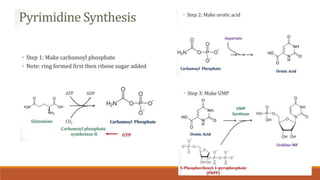
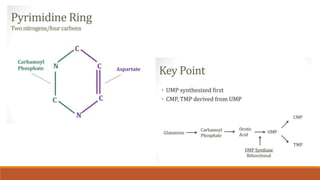
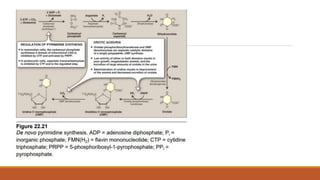
Pyrimidine synthesis begins with formation of carbamoyl phosphate. The first reaction
committed solely to pyrimidine synthesis is the formation of carbamoyl aspartate from
carbamoyl phosphate and aspartate, catalyzed by aspartate transcarbamoylase, or ATCase.
In enteric bacteria, this enzyme represents an example of feedback control. The enzyme is
inhibited by the end product CTP and activated by ATP.
Carbamoyl phosphate synthesis
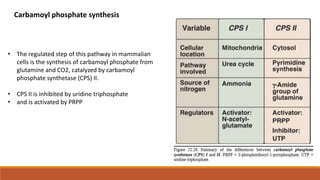
• The regulated step of this pathway in mammalian
cells is the synthesis of carbamoyl phosphate from
glutamine and CO2, catalyzed by carbamoyl
phosphate synthetase (CPS) II.
• CPS II is inhibited by uridine triphosphate
• and is activated by PRPP
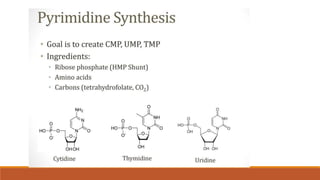
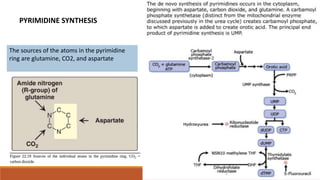
PYRIMIDINE SYNTHESIS
The sources of the atoms in the pyrimidine
ring are glutamine, CO2, and aspartate
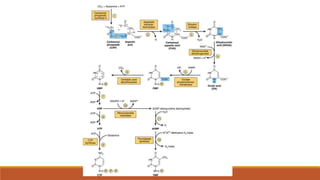
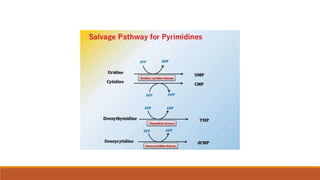
UMP  UTP and CTP
Nucleoside monophosphate kinase catalyzes transfer
of Pi to UMP to form UDP; nucleoside diphosphate
kinase catalyzes transfer of Pi from ATP to UDP to
form UTP
CTP formed from UTP via CTP Synthetase driven by
ATP hydrolysis
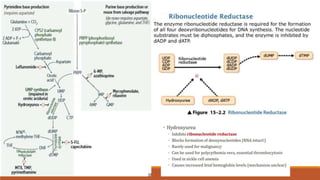
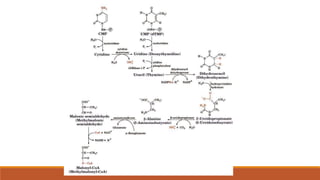
Cytidine triphosphate (CTP) is produced by amination of UTP by
CTP synthetase with glutamine providing the nitrogen. Some of
this CTP is dephosphorylated to CDP, which is a substrate for
ribonucleotide reductase. The dCDP product can be
phosphorylated to dCTP for DNA synthesis or dephosphorylated to
dCMP that is deaminated to dUMP.
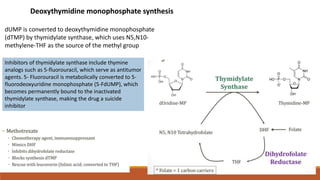
Deoxythymidine monophosphate synthesis
dUMP is converted to deoxythymidine monophosphate
(dTMP) by thymidylate synthase, which uses N5,N10-
methylene-THF as the source of the methyl group
Inhibitors of thymidylate synthase include thymine
analogs such as 5-fluorouracil, which serve as antitumor
agents. 5- Fluorouracil is metabolically converted to 5-
fluorodeoxyuridine monophosphate (5-FdUMP), which
becomes permanently bound to the inactivated
thymidylate synthase, making the drug a suicide
inhibitor
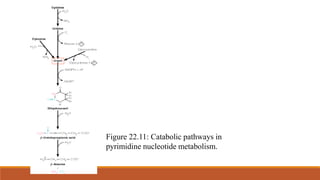
Figure 22.11: Catabolic pathways in
pyrimidine nucleotide metabolism.
მადლობა ყურადღებისთვის!

pyrimidine metabolism.pptx

  • 1.
  • 3.
    Pyrimidine synthesis beginswith formation of carbamoyl phosphate. The first reaction committed solely to pyrimidine synthesis is the formation of carbamoyl aspartate from carbamoyl phosphate and aspartate, catalyzed by aspartate transcarbamoylase, or ATCase. In enteric bacteria, this enzyme represents an example of feedback control. The enzyme is inhibited by the end product CTP and activated by ATP.
  • 7.
    Carbamoyl phosphate synthesis •The regulated step of this pathway in mammalian cells is the synthesis of carbamoyl phosphate from glutamine and CO2, catalyzed by carbamoyl phosphate synthetase (CPS) II. • CPS II is inhibited by uridine triphosphate • and is activated by PRPP
  • 9.
    PYRIMIDINE SYNTHESIS The sourcesof the atoms in the pyrimidine ring are glutamine, CO2, and aspartate
  • 10.
    UMP  UTPand CTP Nucleoside monophosphate kinase catalyzes transfer of Pi to UMP to form UDP; nucleoside diphosphate kinase catalyzes transfer of Pi from ATP to UDP to form UTP CTP formed from UTP via CTP Synthetase driven by ATP hydrolysis Cytidine triphosphate (CTP) is produced by amination of UTP by CTP synthetase with glutamine providing the nitrogen. Some of this CTP is dephosphorylated to CDP, which is a substrate for ribonucleotide reductase. The dCDP product can be phosphorylated to dCTP for DNA synthesis or dephosphorylated to dCMP that is deaminated to dUMP.
  • 12.
    Deoxythymidine monophosphate synthesis dUMPis converted to deoxythymidine monophosphate (dTMP) by thymidylate synthase, which uses N5,N10- methylene-THF as the source of the methyl group Inhibitors of thymidylate synthase include thymine analogs such as 5-fluorouracil, which serve as antitumor agents. 5- Fluorouracil is metabolically converted to 5- fluorodeoxyuridine monophosphate (5-FdUMP), which becomes permanently bound to the inactivated thymidylate synthase, making the drug a suicide inhibitor
  • 15.
    Figure 22.11: Catabolicpathways in pyrimidine nucleotide metabolism.
  • 18.