A Presentation By: ……….
                          Ajay Singh
                                   Electronics and Communication
                          Student of
                          Engineering
                          B. Tech.
Contents
Overview
History
Present Status of Protein Memory
RAM Types
Protein Memory
Data Write, Read & Erase Techniques
Practical Memory Cell
Applications
Conclusion
References
Overview
•Protein memory is an experimental means of storing
data.

•Using proteins, that respond to light from bacteria found
in salt water, a small cube can store large amounts of
data.

•By using lasers, the protein can be changed depending
on various wave lengths, allowing them to store and
recall data. As a result protein can be used to store
enormous amounts of data using lasers to read and write
binary code.
History of Protein Memory
Protein memory was discovered by Walther Stoeckenius and
 Dieter Oesterhelt at Rockefeller University in New York.

They discovered that a protein isolated from a salt marsh
 bacterium exhibited photosensitive properties. They called this
 protein bacteriorhodopsin, because it was very similar to the
 protein, rhodopsin that founds in the eyes of humans and
 animals.
Present Status
Not used for commercial applications.

Used for military and scientific applications..

Researches are going on for….

    High speed high capacity memory for commercial applications
    Ultimate machine intelligence with the aid of genetic engineering
     (A memory that mimics human brain).
    Carry a small encyclopedic cube containing all the information we
     need !!.
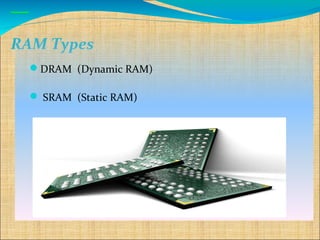
RAM Types
  DRAM (Dynamic RAM)

   SRAM (Static RAM)
DRAM (Dynamic RAM)
   Must be refreshed every few millisecond
   Cheaper and widely used
   Low power consumption


SRAM (Static RAM)
   Faster than DRAM

   Costly
Protein Memory

How Protein Memory compete with electronic memory?
 Speed
 Reliability
 Capability
 Cost

Basic unit of Protein Memory
  Bacterial protein molecule - Bacteriorhodopsin (bR)
Protein Memory (Cont.)
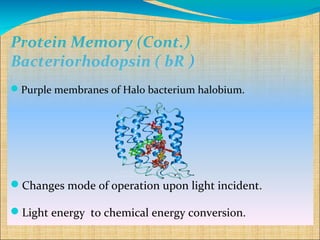
Bacteriorhodopsin ( bR )
Purple membranes of Halo bacterium halobium.


Changes mode of operation upon light incident.

Light energy to chemical energy conversion.
Protein Memory (Cont.)
Why bR?

 bR grows in salt marshals

 Where temp can exceed 150 degree Farad for extended
  time period

 Salt concentration in approx 6 times that of sea water

 Survival indicates its resistance to thermal and
  photochemical damages
 Excellent optical characteristics & Long term stability
Protein Memory (Cont.)
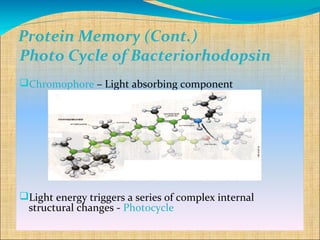
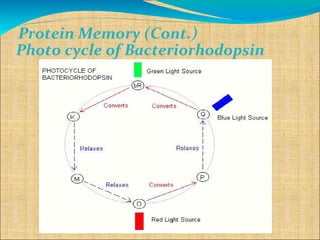
Photo Cycle of Bacteriorhodopsin
Chromophore – Light absorbing component


Light energy triggers a series of complex internal
 structural changes - Photocycle
Protein Memory (Cont.)
Photo cycle of Bacteriorhodopsin
Protein Memory (Cont.)
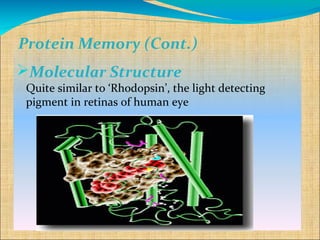
Molecular Structure
 Quite similar to ‘Rhodopsin’, the light detecting
 pigment in retinas of human eye
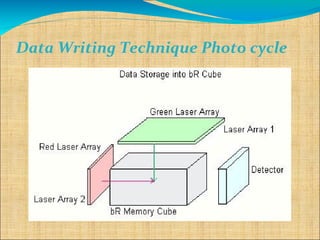
Data Writing Technique Photo cycle
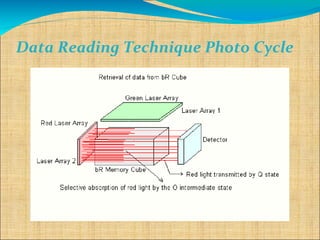
Data Reading Technique Photo Cycle
Data Erasing Technique

 Blue laser erases encoded data


 Q state absorb blue light and return to original bR state


 Individual data can be erased using blue laser
Birge’s Memory Cell

 Stores data with 10,000 molecules per bit

 Molecule switches in 500 femtoseconds

 Speed only limited by laser steering speed

 Estimated that Data stored live around 5 years without any
  refreshment
Applications of bR
Ultra fast RAM

Finger print processing

Optical switches

Neural Logic gates (genetic engineering)
Conclusion

 During the past decade, the speed of computer processors
 increased almost 1,000 times, where as data storage
 capacities increased only by a factor of 50. Also, the transfer
 of data within the computer remains the principal bottleneck
 that limits performance.
 Protein memories use laser beam, which improve their life
 with reduction in wear and tear.
References
      Protein Based Computers Birge, Robert R., Scientific   American
    March 1995

      Molecular and Biomolecular Electronics, Birge, Robert R.   Ed.,
    American Chemical Society

       Organic Chemistry Baker, A. David, Robert Engel.

       www.quantum.com

       www.che.syr.edu (Department of Chemistry, Syracuse
    University)
Q&A
THANK YOU
Backup Slides
Birge’s Memory Cell Vs.
Conventional Electronic RAM
Data access

  300 times faster than conventional RAM

Storage Capacity
 4096 x 4096 bits page
 16 Mb per page
 1000 such pages
 16 Gb total capacity
Birge’s Memory Cell Vs.
 Conventional Electronic RAM (Cont.)
`
Cost


 bR protein can be produced in large volumes at low
  price

 Birge’s memory cell costs 2 US $ and can store 7 Gb.
Birge’s Memory Cell Vs.
 Conventional Electronic RAM (Cont.)
`
Transportation


 Can remove small data cubes and ship gigabytes of data

 No moving parts – safer than small hard drives

 Can operate in wider range of temperatures

Protein memory

  • 1.
    A Presentation By:………. Ajay Singh Electronics and Communication Student of Engineering B. Tech.
  • 2.
    Contents Overview History Present Status ofProtein Memory RAM Types Protein Memory Data Write, Read & Erase Techniques Practical Memory Cell Applications Conclusion References
  • 3.
    Overview •Protein memory isan experimental means of storing data. •Using proteins, that respond to light from bacteria found in salt water, a small cube can store large amounts of data. •By using lasers, the protein can be changed depending on various wave lengths, allowing them to store and recall data. As a result protein can be used to store enormous amounts of data using lasers to read and write binary code.
  • 4.
    History of ProteinMemory Protein memory was discovered by Walther Stoeckenius and Dieter Oesterhelt at Rockefeller University in New York. They discovered that a protein isolated from a salt marsh bacterium exhibited photosensitive properties. They called this protein bacteriorhodopsin, because it was very similar to the protein, rhodopsin that founds in the eyes of humans and animals.
  • 5.
    Present Status Not usedfor commercial applications. Used for military and scientific applications.. Researches are going on for….  High speed high capacity memory for commercial applications  Ultimate machine intelligence with the aid of genetic engineering (A memory that mimics human brain).  Carry a small encyclopedic cube containing all the information we need !!.
  • 6.
    RAM Types DRAM (Dynamic RAM)  SRAM (Static RAM)
  • 7.
    DRAM (Dynamic RAM)  Must be refreshed every few millisecond  Cheaper and widely used  Low power consumption SRAM (Static RAM)  Faster than DRAM  Costly
  • 8.
    Protein Memory How ProteinMemory compete with electronic memory?  Speed  Reliability  Capability  Cost Basic unit of Protein Memory Bacterial protein molecule - Bacteriorhodopsin (bR)
  • 9.
    Protein Memory (Cont.) Bacteriorhodopsin( bR ) Purple membranes of Halo bacterium halobium. Changes mode of operation upon light incident. Light energy to chemical energy conversion.
  • 10.
    Protein Memory (Cont.) WhybR?  bR grows in salt marshals  Where temp can exceed 150 degree Farad for extended time period  Salt concentration in approx 6 times that of sea water  Survival indicates its resistance to thermal and photochemical damages  Excellent optical characteristics & Long term stability
  • 11.
    Protein Memory (Cont.) PhotoCycle of Bacteriorhodopsin Chromophore – Light absorbing component Light energy triggers a series of complex internal structural changes - Photocycle
  • 12.
    Protein Memory (Cont.) Photocycle of Bacteriorhodopsin
  • 13.
    Protein Memory (Cont.) MolecularStructure Quite similar to ‘Rhodopsin’, the light detecting pigment in retinas of human eye
  • 14.
  • 15.
  • 16.
    Data Erasing Technique Blue laser erases encoded data  Q state absorb blue light and return to original bR state  Individual data can be erased using blue laser
  • 17.
    Birge’s Memory Cell Stores data with 10,000 molecules per bit  Molecule switches in 500 femtoseconds  Speed only limited by laser steering speed  Estimated that Data stored live around 5 years without any refreshment
  • 18.
    Applications of bR Ultrafast RAM Finger print processing Optical switches Neural Logic gates (genetic engineering)
  • 19.
    Conclusion  During thepast decade, the speed of computer processors increased almost 1,000 times, where as data storage capacities increased only by a factor of 50. Also, the transfer of data within the computer remains the principal bottleneck that limits performance.  Protein memories use laser beam, which improve their life with reduction in wear and tear.
  • 20.
    References  Protein Based Computers Birge, Robert R., Scientific American March 1995  Molecular and Biomolecular Electronics, Birge, Robert R. Ed., American Chemical Society  Organic Chemistry Baker, A. David, Robert Engel.  www.quantum.com  www.che.syr.edu (Department of Chemistry, Syracuse University)
  • 21.
  • 22.
  • 23.
  • 24.
    Birge’s Memory CellVs. Conventional Electronic RAM Data access  300 times faster than conventional RAM Storage Capacity  4096 x 4096 bits page  16 Mb per page  1000 such pages  16 Gb total capacity
  • 25.
    Birge’s Memory CellVs. Conventional Electronic RAM (Cont.) ` Cost  bR protein can be produced in large volumes at low price  Birge’s memory cell costs 2 US $ and can store 7 Gb.
  • 26.
    Birge’s Memory CellVs. Conventional Electronic RAM (Cont.) ` Transportation  Can remove small data cubes and ship gigabytes of data  No moving parts – safer than small hard drives  Can operate in wider range of temperatures