PROTEIN AND PEPTIDE DRUG 
DELIVERY SYSTEM 
Presented By 
P.KEERTHI 
256213886023 
M..Pharm 1ST Yr 
Department of pharmaceutics 
Malla Reddy College Of Pharmacy 
UNDER THE GUIDENCE, 
OF 
Mrs.YASMIN BEGUM 
M.pharmacy,Ph.D
CONTENTS 
 Protein & Peptides 
 Structure of protein 
 Classification of protein 
 Stability problems 
 Drug delivery systems 
 Marketed formulations 
 Stability testing 
 Conclusion 
 References
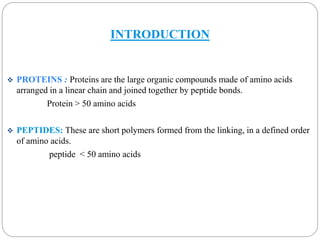
INTRODUCTION 
 PROTEINS : Proteins are the large organic compounds made of amino acids 
arranged in a linear chain and joined together by peptide bonds. 
Protein > 50 amino acids 
 PEPTIDES: These are short polymers formed from the linking, in a defined order 
of amino acids. 
peptide < 50 amino acids
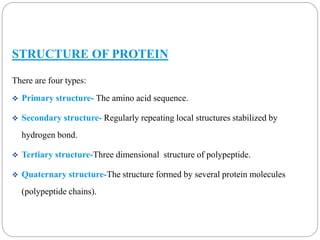
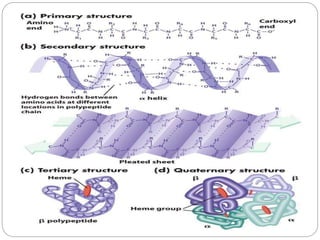
STRUCTURE OF PROTEIN 
There are four types: 
 Primary structure- The amino acid sequence. 
 Secondary structure- Regularly repeating local structures stabilized by 
hydrogen bond. 
 Tertiary structure-Three dimensional structure of polypeptide. 
 Quaternary structure-The structure formed by several protein molecules 
(polypeptide chains).
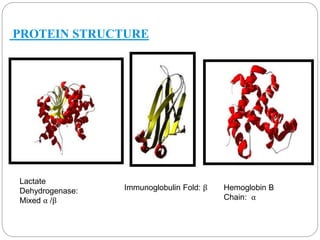
PROTEIN STRUCTURE 
Lactate 
Dehydrogenase: 
Mixed α /β 
Immunoglobulin Fold: β Hemoglobin B 
Chain: α
TYPES OF PROTEINS AND PEPTIDES 
Depending on the number of amino acids they are classified as follows: 
 Polypeptides 
 Oligo peptides 
 Fibrous proteins 
 Globular proteins 
 Oligomeric proteins
CLASSIFICATION OF PROTEINS 
According to their biological roles 
 Enzymes – Catalyses virtually all chemical reactions i.e. 6GDH 
 Transport proteins i.e. Haemoglobin of erythrocytes 
 Contractile or Motile proteins i.e. Actin and Myosin 
 Structural proteins i.e. Collagen in bones 
 Defense proteins i.e. Immuno globulins and Antibodies 
 Regulatory proteins i.e. insulin 
 Nutrient and storage proteins i.e. Ovalbumin
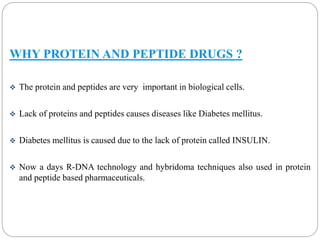
WHY PROTEIN AND PEPTIDE DRUGS ? 
 The protein and peptides are very important in biological cells. 
 Lack of proteins and peptides causes diseases like Diabetes mellitus. 
 Diabetes mellitus is caused due to the lack of protein called INSULIN. 
 Now a days R-DNA technology and hybridoma techniques also used in protein 
and peptide based pharmaceuticals.
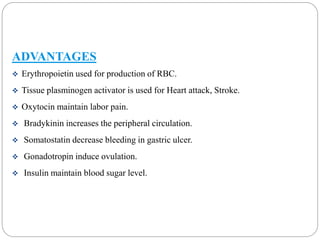
ADVANTAGES 
 Erythropoietin used for production of RBC. 
 Tissue plasminogen activator is used for Heart attack, Stroke. 
 Oxytocin maintain labor pain. 
 Bradykinin increases the peripheral circulation. 
 Somatostatin decrease bleeding in gastric ulcer. 
 Gonadotropin induce ovulation. 
 Insulin maintain blood sugar level.
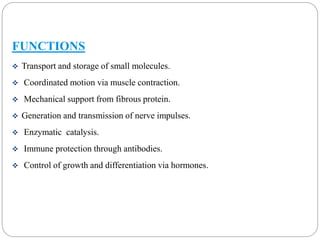
FUNCTIONS 
 Transport and storage of small molecules. 
 Coordinated motion via muscle contraction. 
 Mechanical support from fibrous protein. 
 Generation and transmission of nerve impulses. 
 Enzymatic catalysis. 
 Immune protection through antibodies. 
 Control of growth and differentiation via hormones.
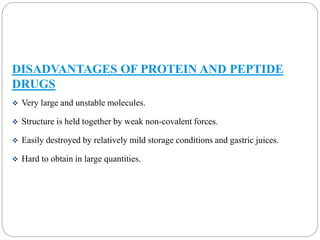
DISADVANTAGES OF PROTEIN AND PEPTIDE 
DRUGS 
 Very large and unstable molecules. 
 Structure is held together by weak non-covalent forces. 
 Easily destroyed by relatively mild storage conditions and gastric juices. 
 Hard to obtain in large quantities.
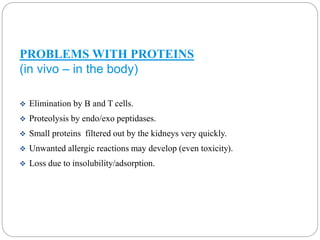
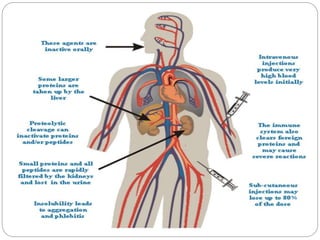
PROBLEMS WITH PROTEINS 
(in vivo – in the body) 
 Elimination by B and T cells. 
 Proteolysis by endo/exo peptidases. 
 Small proteins filtered out by the kidneys very quickly. 
 Unwanted allergic reactions may develop (even toxicity). 
 Loss due to insolubility/adsorption.
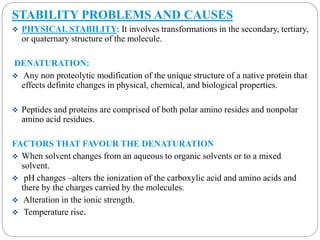
STABILITY PROBLEMS AND CAUSES 
 PHYSICAL STABILITY: It involves transformations in the secondary, tertiary, 
or quaternary structure of the molecule. 
DENATURATION: 
 Any non proteolytic modification of the unique structure of a native protein that 
effects definite changes in physical, chemical, and biological properties. 
 Peptides and proteins are comprised of both polar amino resides and nonpolar 
amino acid residues. 
FACTORS THAT FAVOUR THE DENATURATION 
 When solvent changes from an aqueous to organic solvents or to a mixed 
solvent. 
 pH changes –alters the ionization of the carboxylic acid and amino acids and 
there by the charges carried by the molecules. 
 Alteration in the ionic strength. 
 Temperature rise.
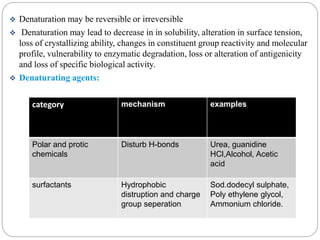
 Denaturation may be reversible or irreversible 
 Denaturation may lead to decrease in in solubility, alteration in surface tension, 
loss of crystallizing ability, changes in constituent group reactivity and molecular 
profile, vulnerability to enzymatic degradation, loss or alteration of antigenicity 
and loss of specific biological activity. 
 Denaturating agents: 
category mechanism examples 
Polar and protic 
chemicals 
Disturb H-bonds Urea, guanidine 
HCl,Alcohol, Acetic 
acid 
surfactants Hydrophobic 
distruption and charge 
group seperation 
Sod.dodecyl sulphate, 
Poly ethylene glycol, 
Ammonium chloride.
METHODS TO PREVENT DENATURATION 
 Denaturated protein is restored on removal of denaturants. Maintaining pH. 
Maintaining ionic strength. Maintaining Temperature . 
ADSORPTION 
 Peptides and proteins are amphiphilic in nature, hence they tend to adsorb at 
interfaces such as air-water and air- solid. 
Example-Insulin 
 Conformational rearrangement leading to denaturation can be induced by 
their interfacial adsorption. 
 After adsorption, they form some short-range bonds (van der Waals, 
hydrophobic, electrostatic, hydrogen, ion-pair bonds) with the surface 
resulting into further denaturation of polypeptide moieties.
ADSORPTION 
 Adsorption of peptides and proteins at the interfaces are rapid, but the rates of 
conformational changes are relatively slower. 
 On adsorption there may be a loss or change in biological activity as the 
molecular structure is rearranged. 
 If peptide and protein drug entities are adsorbed at interfaces there may be a 
reduction in the concentration of drug available to elicit its function. Such loss of 
proteinaceous drug(s) may occur during purification, formulation, storage and/or 
delivery. 
METHODS TO PREVENT ADSORPTION 
 Insulin adsorption may be minimized by the addition of 0.1% to 1% albumin. 
 Excess agitation should prevented during production. 
 The headspace within the confines of the container should be small. 
 Use of surfactants to reduce adsorption. 
 Smooth glass walls best to reduce adsorption or precipitation.
AGGREGATION & PRECIPITATION 
 The denatured, unfolded protein may rearrange in such a manner that hydrophobic 
amino acid residue of various molecules associate together to form the aggregates. 
 If the aggregation is on a macroscopic scale, precipitation occurs. Interfacial 
adsorption may be followed by aggregation and precipitation. The extent to which 
aggregation and precipitation occurs is defined by the relative hydrophilicity of 
the surfaces in contact with the polypeptide/protein solution. 
CAUSES 
 The presence of large air-water interface generally accelerates this process. 
 Presence of large headspace within the confines of the container also accelerates 
the course of precipitation. Insulin forms finely divided precipitates on the walls 
of the containers, referred to as frosting. The presence of large air-water interface 
generally accelerates this process.
 Increase in thermal motion of the molecules due to agitation. Solvent 
composition, solvent dielectric profile, ionic strength. 
TO PREVENT AGGREGATION AND PRECIPITATION 
 Organic solvent such as10-15% propylene glycol can suppress the formation of 
peptide liquid crystals. 
 Excess agitation should prevented during production. 
 The headspace within the confines of the container should be small. 
 The ionic strength, solvent composition, solvent dielectric profile and pH should 
be carefully controlled at every step in production. 
 Use of surfactants to reduce aggregation.
CHEMICAL INSTABILITY 
 Involves alteration in the molecular structure producing a new chemical entity, 
by bond formation or cleavage. 
 The stability of peptide and proteins against a chemical reagent is decided by 
temperature, length of exposure, and the amino acid composition, sequence and 
conformation of the peptide/protein. 
DEAMIDATION 
 This reaction involves the hydrolysis of the side chain amide linkage of an 
amino acid residue leading to the formation of a free carboxylic acid. 
 Asparagine glutamine leading to conversion of a neutral residue to a negatively 
charged residue and primary sequence isomerization. 
 In vivo deamidation is observed with human growth hormone, bovine growth 
hormone, prolactin, adreno- corticotropic hormone , insulin, lysozyme and 
secretin.
FACTORS 
 pH 
 Temperature 
 Ionic strength 
 The deamidation of Asn residues is accelerated at neutral and alkaline pH 
 The tertiary structure of the protein also affects its stability, as observed with 
trypsin in which the tertiary structure prevents deamidation. 
METHODS TO PREVENT DEAMIDATION 
 The use of genetic engineering and by recombinant DNA technology. 
 The Asparagine residues can be selectively eliminated and replaced by other 
residues, provided conformations and bioactivity of protein can be maintained.
OXIDATION & REDUCTION 
 Oxidation commonly occurs during isolation, synthesis and storage of proteins. 
FACTORS 
 The oxidative degradation reactions can even occur in atmospheric oxygen under 
mild conditions (autoxidation). 
 Temperature. 
 pH, trace amounts of metal ions and buffers influence these reactions. 
 Oxidation may take place involving side chains of histidine (His), lysine (Lys), 
tryptophan (Trp), and thyronine (Tye) residues in proteins. 
 The thioether group of methionine (Met) is particularly susceptible to oxidation. 
Under acidic conditions Met residues can be oxidized by atmospheric oxygen.
 Oxidizing agents like hydrogen peroxide, dimethylsulphoxide and iodine can 
oxidize Met-to-Met sulphoxides. 
 Thethiol group of cysteine can be oxidized to sulphonic acid; oxidation by 
iodine and hydrogen peroxide is catalyzed by metal ions and may occur 
spontaneously by atmospheric oxygen. Usually the oxidation of amino acid 
residues is followed by a significant loss of biological activity as observed after 
oxidation of Met residues in calcitonin, corticotrophin and gastrin. Glucagon is 
an exception as it retains biological activity even after oxidation. 
METHODS TO PREVENT OXIDATION AND REDUCTION 
 Oxidation scavengers may block these acid or base catalyzed oxidations. 
Example: phenolic compounds, propyl gallate. 
 Reducing agents – ascorbic acid, sodium sulphate, thioglycerol and thioglycolic 
acid. 
 Chelating agents –EDTA, Citric Acid Nitrogen flush, refrigeration, protection 
from light and adjustment of pH. 
 Avoiding vigorous stirring and exclusion of air by degassing solvents can 
prevent air initiated oxidation
PROTEOLYSIS 
The hydrolysis of peptide bonds within the polypeptide or protein destroys or at 
least reduces its activity. 
FACTORS THAT FAVOUR PROTEOLYSIS AND PREVENTION 
Exposing the proteins to harsh conditions,(extremes of pH or high temperature or 
proteolytic enzymes.) 
Bacterial contamination. 
Proteases may also gain access during the isolation, purification and recovery of 
recombinant proteins from cell extracts or culture fluid. 
This problem can be minimized by the manipulation of the solution conditions 
during the stage of purification and/or by addition of protease inhibitors. Some 
proteins even have autoproteolytic activity. This property aids in controlling the 
level or function of protein in vivo .
DISULPHIDE EXCHANGE 
 Thiol-disulfide exchange showing the linear intermediate in which the charge is 
shared among the three sulfur atoms. The thiolate group attacks a sulfur atom of 
the disulfide bond, displacing the other sulfur atom and forming a new disulfide 
bond. This results in an alteration in the three- dimensional structure followed by 
a resultant change in biological activity. 
 This reaction occurs in neutral or alkaline medium and accelerates by thiols 
which are generated by disulphide exchange. 
METHODS TO PREVENT DISULPHIDE EXCHANGE 
 By thiol scavengers such as p-mercuribenzoate, copper ions.
RACEMIZATION 
 It is the alteration of L-amino acids to D,L- mixtures. With the exception of 
Gly, all the mammalian amino acids are chiral at the carbon bearing chain and 
are susceptible to base-catalyzed racemization. 
 Racemization may form peptide bonds that are sensitive to proteolytic 
enzymes. This reaction can be catalyzed in neutral and alkaline media by thiols, 
which may arise as a result of hydrolytic cleavage of disulphides. 
METHODS TO PREVENT RACEMIZATION 
 The thiolated ions carry out nucleophilic attack on a sulphur atom of the 
disulphide. Addition of thiol scavengers such as p-mercuribenzoate, N-thylmaleimide 
and copper ions, may prevent susceptible sulphur and disulphide.
BETA-ELIMINATION 
 The mechanism involved in the beta-elimination is similar to the racemization, 
i.e. it proceeds through a carbanion intermediate. 
 Higher elimination rate prevails under alkaline conditions which ultimately lead 
to loss of biological activity. 
 Protein residues susceptible to beta-elimination under alkaline conditions 
include Cys, Lys, Ser.
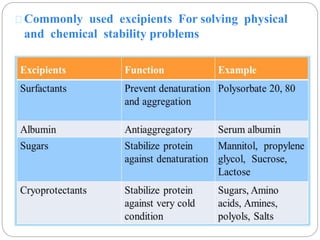
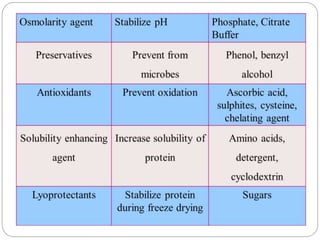
Commonly used excipients For solving physical 
and chemical stability problems
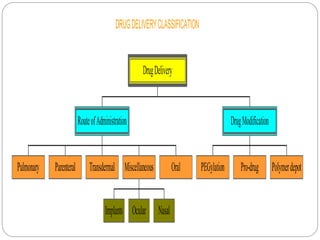
DRUG DELIVERY CLASSIFICATION 
Route of Administration 
Pulmonary Parenteral Transdermal 
Miscellaneous Oral 
Implants Ocular Nasal 
Drug Modification 
PEGylation Pro-drug Polymer depot 
Drug Delivery
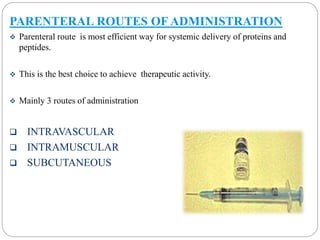
PARENTERAL ROUTES OF ADMINISTRATION 
 Parenteral route is most efficient way for systemic delivery of proteins and 
peptides. 
 This is the best choice to achieve therapeutic activity. 
 Mainly 3 routes of administration 
 INTRAVASCULAR 
 INTRAMUSCULAR 
 SUBCUTANEOUS
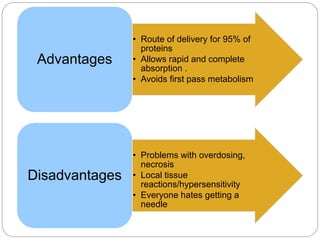
• Route of delivery for 95% of 
proteins 
• Allows rapid and complete 
absorption . 
• Avoids first pass metabolism 
Advantages 
• Problems with overdosing, 
necrosis 
• Local tissue 
reactions/hypersensitivity 
• Everyone hates getting a 
needle 
Disadvantages
INTRAVENEOUS ROUTE 
 Excessively metabolized and tissue drug bound at the site of IM can be 
administered by this route. 
EX: Insulin, Interferon. 
DISADVANTAGES: 
 Causes pain, tissue necrosis and thrombopenia. 
ADVANTAGES: 
 Antibiotics can be administered.
INTRAMUSCULAR ROUTE 
 Gamma globulins given by this route are proved to have long-term protection 
from hepatic infection. 
 some drugs given by this route include long acting insulin, GH. 
DISADVANTAGES: 
 Not used for all proteins and peptide drugs because of metabolism of drugs at the 
site of injection.
SUBCUTANEOUS ROUTE 
 Controlled release is obtained from implantable polymeric devices. 
 These are prepared from crossed linked polymers which are biocompatible 
and biodegradable. 
EX: polylactic acid 
 Release of Insulin, bovine serum albumin, LH was prolonged by this route.
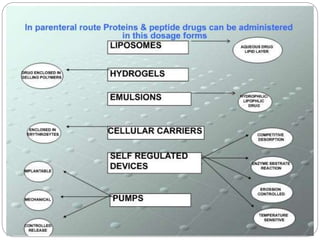
PARENTERAL DRUG DELIVERY SYSTEM 
 Polymer based drug delivery system. 
 Liposome based drug delivery system. 
 Hydro gel based drug delivery system. 
 Emulsion based drug delivery system. 
PUMPS: 
 Implantable infusion pumps 
 Mechanical pumps
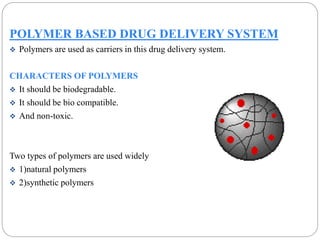
POLYMER BASED DRUG DELIVERY SYSTEM 
 Polymers are used as carriers in this drug delivery system. 
CHARACTERS OF POLYMERS 
 It should be biodegradable. 
 It should be bio compatible. 
 And non-toxic. 
Two types of polymers are used widely 
 1)natural polymers 
 2)synthetic polymers
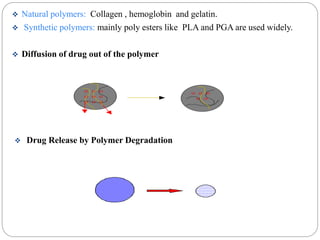
 Natural polymers: Collagen , hemoglobin and gelatin. 
 Synthetic polymers: mainly poly esters like PLA and PGA are used widely. 
 Diffusion of drug out of the polymer 
o o o 
o o o 
o o o 
o 
o o o 
o o 
 Drug Release by Polymer Degradation
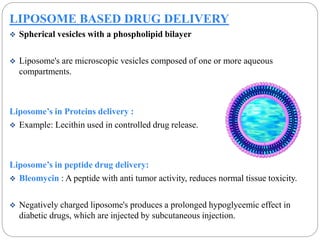
LIPOSOME BASED DRUG DELIVERY 
 Spherical vesicles with a phospholipid bilayer 
 Liposome's are microscopic vesicles composed of one or more aqueous 
compartments. 
Liposome’s in Proteins delivery : 
 Example: Lecithin used in controlled drug release. 
Liposome’s in peptide drug delivery: 
 Bleomycin : A peptide with anti tumor activity, reduces normal tissue toxicity. 
 Negatively charged liposome's produces a prolonged hypoglycemic effect in 
diabetic drugs, which are injected by subcutaneous injection.
ADVANTAGES OF LIPOSOME DRUG DELIVERY 
 Soluble in both organic and aqueous media. 
 Liposome’s are important for targeting drugs directly to the liver, and brain. 
Lipsosomes easily crosses blood brain barrier. 
EXAMPLE: Dopamine converted to L-Dopa. 
 Used as a vehicles for vaccines. 
 DISADVANTAGES 
 Less stable , easily susceptible to oxidation. 
 Hence liposome’s are replaced by noisome an alternate for liposome’s.
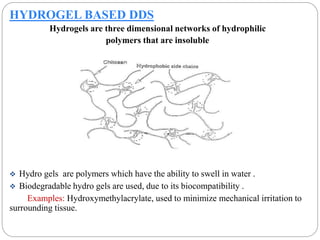
HYDROGEL BASED DDS 
Hydrogels are three dimensional networks of hydrophilic 
polymers that are insoluble 
 Hydro gels are polymers which have the ability to swell in water . 
 Biodegradable hydro gels are used, due to its biocompatibility . 
Examples: Hydroxymethylacrylate, used to minimize mechanical irritation to 
surrounding tissue.
EMULSION BASED DELIVERY 
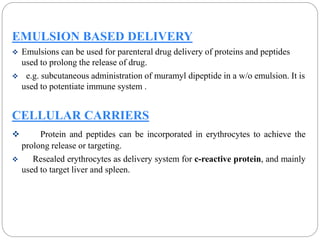
 Emulsions can be used for parenteral drug delivery of proteins and peptides 
used to prolong the release of drug. 
 e.g. subcutaneous administration of muramyl dipeptide in a w/o emulsion. It is 
used to potentiate immune system . 
CELLULAR CARRIERS 
 Protein and peptides can be incorporated in erythrocytes to achieve the 
prolong release or targeting. 
 Resealed erythrocytes as delivery system for c-reactive protein, and mainly 
used to target liver and spleen.
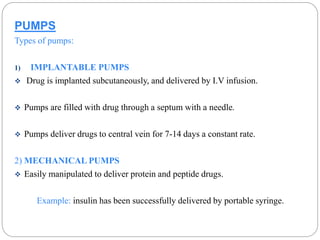
PUMPS 
Types of pumps: 
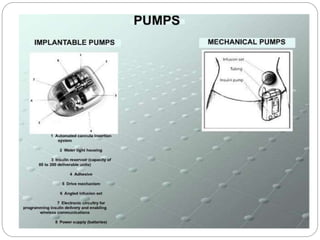
1) IMPLANTABLE PUMPS 
 Drug is implanted subcutaneously, and delivered by I.V infusion. 
 Pumps are filled with drug through a septum with a needle. 
 Pumps deliver drugs to central vein for 7-14 days a constant rate. 
2) MECHANICAL PUMPS 
 Easily manipulated to deliver protein and peptide drugs. 
Example: insulin has been successfully delivered by portable syringe.
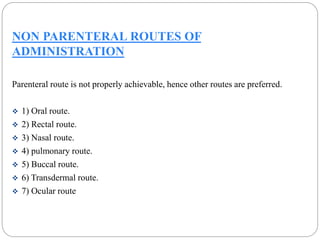
NON PARENTERAL ROUTES OF 
ADMINISTRATION 
Parenteral route is not properly achievable, hence other routes are preferred. 
 1) Oral route. 
 2) Rectal route. 
 3) Nasal route. 
 4) pulmonary route. 
 5) Buccal route. 
 6) Transdermal route. 
 7) Ocular route
ORAL ROUTE 
 Encapsulated peptides or proteins in amino acids with microsphere of 
approximately 10 micron in diameter , used for oral delivery. 
Example : Insulin and heparin. 
 Orally administered insulin produces hypoglycemic effect . 
DISADVANTAGES: 
Acid catalyzed degradation in stomach. 
 Proteolysis in GIT.
TRANSDERMAL ROUTE OF ADMINISTRATION 
 This is topical medication. 
 Drug is absorbed through the skin. 
EX: Insulin, vasopressin 
ADVANTAGES: 
 Controlled administration of drug is possible. 
 Improved patient compliance. 
 Drugs with short half lives can be administered. 
DISADVANTAGES: 
 High intra and inter patient variability. 
 Low permeation because of high molecular weight. 
 Hydrophilicity and lipophilicity of stratum corneum.
 Number of approaches are available for effective protein and peptide drug 
delivery. 
 They are 
 IONTOPHORESIS 
 PHONOPHORESIS 
 PENETRATION ENHANCERS 
 PRODRUG 
 Iontophoresis: Used for local and systemic delivery of proteins and peptides. In 
this an electric current is used to drive the molecules across the skin surface. 
Example: Transport of insulin using iontophoresis. 
 Phonophoresis: The absorption is enhanced by thermal effect of ultrasonic 
waves and subsequent alteration of physical structure of skin surface.
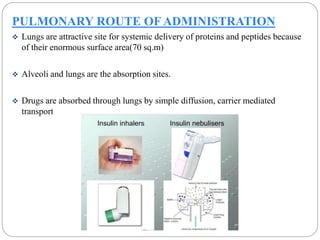
PULMONARY ROUTE OF ADMINISTRATION 
 Lungs are attractive site for systemic delivery of proteins and peptides because 
of their enormous surface area(70 sq.m) 
 Alveoli and lungs are the absorption sites. 
 Drugs are absorbed through lungs by simple diffusion, carrier mediated 
transport
ADVANTAGES: 
 Decrease in dose requirement. 
 Fast absorption 
 Increased patient compliance 
DISADVANTAGES: 
 Inflammation may be observed in lungs. 
 Degree of bioavailability was less due to hydrolytic enzymes present in 
lungs
RECTAL ROUTE OF ADMINISTRATION 
 Rectum is highly vascularised body cavity. 
 Rectal mucosa is devoid of villi. 
 Drugs are in form of suppositories, gel, dry powders. 
EX: Insulin, calcitonin 
ADVANTAGES: 
 Reduced proteolytic degradation. 
 Improved systemic bioavailability with co-administration of absorption 
enhancers. 
EX: surfactants 
 Large dose can be administered.
OCULAR ROUTE 
 In this route enkephalins , thyrotrophin releasing hormones ,luteinizing 
hormones ,glucagon and insulin are administered 
BUCCAL ROUTE 
 Mucoadhesive dosage forms can be used for buccal route. 
 Adsorption enhancers like salicylates or a surfactant is used for protein and 
peptide delivery through buccal route. 
Example: 
 Oxytocin , vasopressin , insulin, are reported to be absorbed through buccal 
mucosa . And adhesive gel, patches , tablets are used. 
 Insulin is absorbed through buccal mucosa in the presence of sodium 
glycolate.
 The drugs are absorbed through oral mucosa mainly through the non-keratinized 
regions. 
ADVANTAGES: 
 It can be attached or removed without any discomfort and pain. 
 Well acceptability by patients. 
 Drugs are absorbed rapidly. 
DISADVANTAGES: 
 Administration time is limited. 
 Drug loss by accidental swallowing.
NASAL ROUTE OF ADMINISTRATION 
 The nasal route has been employed for producing local action on the mucosa 
which is more permeable compared to oral mucosa. 
 Nasal absorption is through passive diffusion. 
EX: Insulin, human growth hormone. 
ADVANTAGES: 
 Rapid onset of action 
 First pass metabolism can be avoided 
 Better drug absorption 
DISADVANTAGES: 
 Long-term usage causes toxicity. 
 Size of proteins and peptide drugs reduces systemic bioavailability.
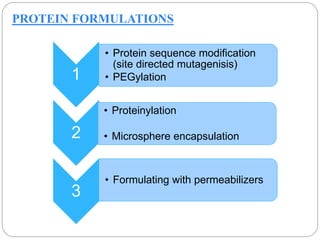
PROTEIN FORMULATIONS 
1 
• Protein sequence modification 
(site directed mutagenisis) 
• PEGylation 
2 
• Proteinylation 
• Microsphere encapsulation 
3 
• Formulating with permeabilizers
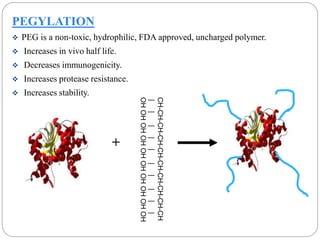
PEGYLATION 
 PEG is a non-toxic, hydrophilic, FDA approved, uncharged polymer. 
 Increases in vivo half life. 
 Decreases immunogenicity. 
 Increases protease resistance. 
CH-CH-CH-CH-CH-CH-CH-CH-CH-CH 
| | | | | | | | | | 
OH OH OH OH OH OH OH OH OH OH 
 Increases stability. 
+
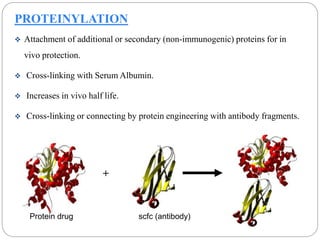
PROTEINYLATION 
 Attachment of additional or secondary (non-immunogenic) proteins for in 
vivo protection. 
 Cross-linking with Serum Albumin. 
 Increases in vivo half life. 
 Cross-linking or connecting by protein engineering with antibody fragments. 
+ 
Protein drug scfc (antibody)
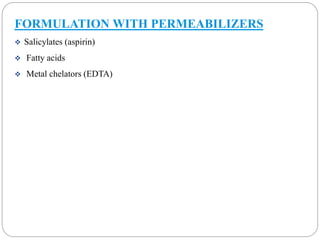
FORMULATION WITH PERMEABILIZERS 
 Salicylates (aspirin) 
 Fatty acids 
 Metal chelators (EDTA)
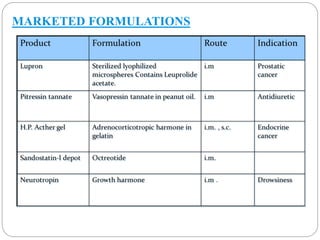
MARKETED FORMULATIONS
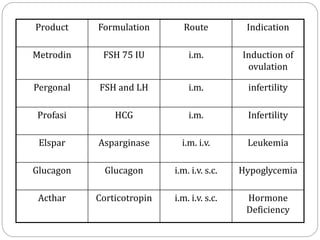
Product Formulation Route Indication 
Metrodin FSH 75 IU i.m. Induction of 
ovulation 
Pergonal FSH and LH i.m. infertility 
Profasi HCG i.m. Infertility 
Elspar Asparginase i.m. i.v. Leukemia 
Glucagon Glucagon i.m. i.v. s.c. Hypoglycemia 
Acthar Corticotropin i.m. i.v. s.c. Hormone 
Deficiency
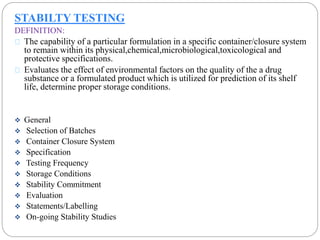
STABILTY TESTING 
DEFINITION: 
The capability of a particular formulation in a specific container/closure system 
to remain within its physical,chemical,microbiological,toxicological and 
protective specifications. 
Evaluates the effect of environmental factors on the quality of the a drug 
substance or a formulated product which is utilized for prediction of its shelf 
life, determine proper storage conditions. 
 General 
 Selection of Batches 
 Container Closure System 
 Specification 
 Testing Frequency 
 Storage Conditions 
 Stability Commitment 
 Evaluation 
 Statements/Labelling 
 On-going Stability Studies
CONCLUSION 
 Protein and peptide based pharmaceuticals are rapidly becoming a very 
important class of therapeutic agents and are likely to replace many existing 
organic based pharmaceuticals in the very near future. 
 Peptide and protein drugs will be produced on a large scale by biotechnology 
processes and will become commercially available for therapeutic use. 
 Their need in the clinical & therapeutic regions has intensified the 
investigation for their convenient & effective delivery through noninvasive 
system.
REFERENCES 
 Controlled drug delivery concepts and advances by S.P vyas & Roop k.khar 
Understanding the Fundamentals of Peptides and Proteins 
 By GARY HU (Bio processing journal -trends in development in bio process 
technology) 
 PEPTIDES AND PROTEINS IN PHARMACEUTICALS RATNAPARKHI 
M.P.,* CHAUDHARI S.P., PANDYAV.A. International Journal of Current 
Pharmaceutical Research
Protein and peptide d d s

Protein and peptide d d s

  • 1.
    PROTEIN AND PEPTIDEDRUG DELIVERY SYSTEM Presented By P.KEERTHI 256213886023 M..Pharm 1ST Yr Department of pharmaceutics Malla Reddy College Of Pharmacy UNDER THE GUIDENCE, OF Mrs.YASMIN BEGUM M.pharmacy,Ph.D
  • 2.
    CONTENTS  Protein& Peptides  Structure of protein  Classification of protein  Stability problems  Drug delivery systems  Marketed formulations  Stability testing  Conclusion  References
  • 3.
    INTRODUCTION  PROTEINS: Proteins are the large organic compounds made of amino acids arranged in a linear chain and joined together by peptide bonds. Protein > 50 amino acids  PEPTIDES: These are short polymers formed from the linking, in a defined order of amino acids. peptide < 50 amino acids
  • 4.
    STRUCTURE OF PROTEIN There are four types:  Primary structure- The amino acid sequence.  Secondary structure- Regularly repeating local structures stabilized by hydrogen bond.  Tertiary structure-Three dimensional structure of polypeptide.  Quaternary structure-The structure formed by several protein molecules (polypeptide chains).
  • 6.
    PROTEIN STRUCTURE Lactate Dehydrogenase: Mixed α /β Immunoglobulin Fold: β Hemoglobin B Chain: α
  • 7.
    TYPES OF PROTEINSAND PEPTIDES Depending on the number of amino acids they are classified as follows:  Polypeptides  Oligo peptides  Fibrous proteins  Globular proteins  Oligomeric proteins
  • 8.
    CLASSIFICATION OF PROTEINS According to their biological roles  Enzymes – Catalyses virtually all chemical reactions i.e. 6GDH  Transport proteins i.e. Haemoglobin of erythrocytes  Contractile or Motile proteins i.e. Actin and Myosin  Structural proteins i.e. Collagen in bones  Defense proteins i.e. Immuno globulins and Antibodies  Regulatory proteins i.e. insulin  Nutrient and storage proteins i.e. Ovalbumin
  • 9.
    WHY PROTEIN ANDPEPTIDE DRUGS ?  The protein and peptides are very important in biological cells.  Lack of proteins and peptides causes diseases like Diabetes mellitus.  Diabetes mellitus is caused due to the lack of protein called INSULIN.  Now a days R-DNA technology and hybridoma techniques also used in protein and peptide based pharmaceuticals.
  • 10.
    ADVANTAGES  Erythropoietinused for production of RBC.  Tissue plasminogen activator is used for Heart attack, Stroke.  Oxytocin maintain labor pain.  Bradykinin increases the peripheral circulation.  Somatostatin decrease bleeding in gastric ulcer.  Gonadotropin induce ovulation.  Insulin maintain blood sugar level.
  • 11.
    FUNCTIONS  Transportand storage of small molecules.  Coordinated motion via muscle contraction.  Mechanical support from fibrous protein.  Generation and transmission of nerve impulses.  Enzymatic catalysis.  Immune protection through antibodies.  Control of growth and differentiation via hormones.
  • 12.
    DISADVANTAGES OF PROTEINAND PEPTIDE DRUGS  Very large and unstable molecules.  Structure is held together by weak non-covalent forces.  Easily destroyed by relatively mild storage conditions and gastric juices.  Hard to obtain in large quantities.
  • 13.
    PROBLEMS WITH PROTEINS (in vivo – in the body)  Elimination by B and T cells.  Proteolysis by endo/exo peptidases.  Small proteins filtered out by the kidneys very quickly.  Unwanted allergic reactions may develop (even toxicity).  Loss due to insolubility/adsorption.
  • 15.
    STABILITY PROBLEMS ANDCAUSES  PHYSICAL STABILITY: It involves transformations in the secondary, tertiary, or quaternary structure of the molecule. DENATURATION:  Any non proteolytic modification of the unique structure of a native protein that effects definite changes in physical, chemical, and biological properties.  Peptides and proteins are comprised of both polar amino resides and nonpolar amino acid residues. FACTORS THAT FAVOUR THE DENATURATION  When solvent changes from an aqueous to organic solvents or to a mixed solvent.  pH changes –alters the ionization of the carboxylic acid and amino acids and there by the charges carried by the molecules.  Alteration in the ionic strength.  Temperature rise.
  • 16.
     Denaturation maybe reversible or irreversible  Denaturation may lead to decrease in in solubility, alteration in surface tension, loss of crystallizing ability, changes in constituent group reactivity and molecular profile, vulnerability to enzymatic degradation, loss or alteration of antigenicity and loss of specific biological activity.  Denaturating agents: category mechanism examples Polar and protic chemicals Disturb H-bonds Urea, guanidine HCl,Alcohol, Acetic acid surfactants Hydrophobic distruption and charge group seperation Sod.dodecyl sulphate, Poly ethylene glycol, Ammonium chloride.
  • 17.
    METHODS TO PREVENTDENATURATION  Denaturated protein is restored on removal of denaturants. Maintaining pH. Maintaining ionic strength. Maintaining Temperature . ADSORPTION  Peptides and proteins are amphiphilic in nature, hence they tend to adsorb at interfaces such as air-water and air- solid. Example-Insulin  Conformational rearrangement leading to denaturation can be induced by their interfacial adsorption.  After adsorption, they form some short-range bonds (van der Waals, hydrophobic, electrostatic, hydrogen, ion-pair bonds) with the surface resulting into further denaturation of polypeptide moieties.
  • 18.
    ADSORPTION  Adsorptionof peptides and proteins at the interfaces are rapid, but the rates of conformational changes are relatively slower.  On adsorption there may be a loss or change in biological activity as the molecular structure is rearranged.  If peptide and protein drug entities are adsorbed at interfaces there may be a reduction in the concentration of drug available to elicit its function. Such loss of proteinaceous drug(s) may occur during purification, formulation, storage and/or delivery. METHODS TO PREVENT ADSORPTION  Insulin adsorption may be minimized by the addition of 0.1% to 1% albumin.  Excess agitation should prevented during production.  The headspace within the confines of the container should be small.  Use of surfactants to reduce adsorption.  Smooth glass walls best to reduce adsorption or precipitation.
  • 19.
    AGGREGATION & PRECIPITATION  The denatured, unfolded protein may rearrange in such a manner that hydrophobic amino acid residue of various molecules associate together to form the aggregates.  If the aggregation is on a macroscopic scale, precipitation occurs. Interfacial adsorption may be followed by aggregation and precipitation. The extent to which aggregation and precipitation occurs is defined by the relative hydrophilicity of the surfaces in contact with the polypeptide/protein solution. CAUSES  The presence of large air-water interface generally accelerates this process.  Presence of large headspace within the confines of the container also accelerates the course of precipitation. Insulin forms finely divided precipitates on the walls of the containers, referred to as frosting. The presence of large air-water interface generally accelerates this process.
  • 20.
     Increase inthermal motion of the molecules due to agitation. Solvent composition, solvent dielectric profile, ionic strength. TO PREVENT AGGREGATION AND PRECIPITATION  Organic solvent such as10-15% propylene glycol can suppress the formation of peptide liquid crystals.  Excess agitation should prevented during production.  The headspace within the confines of the container should be small.  The ionic strength, solvent composition, solvent dielectric profile and pH should be carefully controlled at every step in production.  Use of surfactants to reduce aggregation.
  • 21.
    CHEMICAL INSTABILITY Involves alteration in the molecular structure producing a new chemical entity, by bond formation or cleavage.  The stability of peptide and proteins against a chemical reagent is decided by temperature, length of exposure, and the amino acid composition, sequence and conformation of the peptide/protein. DEAMIDATION  This reaction involves the hydrolysis of the side chain amide linkage of an amino acid residue leading to the formation of a free carboxylic acid.  Asparagine glutamine leading to conversion of a neutral residue to a negatively charged residue and primary sequence isomerization.  In vivo deamidation is observed with human growth hormone, bovine growth hormone, prolactin, adreno- corticotropic hormone , insulin, lysozyme and secretin.
  • 22.
    FACTORS  pH  Temperature  Ionic strength  The deamidation of Asn residues is accelerated at neutral and alkaline pH  The tertiary structure of the protein also affects its stability, as observed with trypsin in which the tertiary structure prevents deamidation. METHODS TO PREVENT DEAMIDATION  The use of genetic engineering and by recombinant DNA technology.  The Asparagine residues can be selectively eliminated and replaced by other residues, provided conformations and bioactivity of protein can be maintained.
  • 23.
    OXIDATION & REDUCTION  Oxidation commonly occurs during isolation, synthesis and storage of proteins. FACTORS  The oxidative degradation reactions can even occur in atmospheric oxygen under mild conditions (autoxidation).  Temperature.  pH, trace amounts of metal ions and buffers influence these reactions.  Oxidation may take place involving side chains of histidine (His), lysine (Lys), tryptophan (Trp), and thyronine (Tye) residues in proteins.  The thioether group of methionine (Met) is particularly susceptible to oxidation. Under acidic conditions Met residues can be oxidized by atmospheric oxygen.
  • 24.
     Oxidizing agentslike hydrogen peroxide, dimethylsulphoxide and iodine can oxidize Met-to-Met sulphoxides.  Thethiol group of cysteine can be oxidized to sulphonic acid; oxidation by iodine and hydrogen peroxide is catalyzed by metal ions and may occur spontaneously by atmospheric oxygen. Usually the oxidation of amino acid residues is followed by a significant loss of biological activity as observed after oxidation of Met residues in calcitonin, corticotrophin and gastrin. Glucagon is an exception as it retains biological activity even after oxidation. METHODS TO PREVENT OXIDATION AND REDUCTION  Oxidation scavengers may block these acid or base catalyzed oxidations. Example: phenolic compounds, propyl gallate.  Reducing agents – ascorbic acid, sodium sulphate, thioglycerol and thioglycolic acid.  Chelating agents –EDTA, Citric Acid Nitrogen flush, refrigeration, protection from light and adjustment of pH.  Avoiding vigorous stirring and exclusion of air by degassing solvents can prevent air initiated oxidation
  • 25.
    PROTEOLYSIS The hydrolysisof peptide bonds within the polypeptide or protein destroys or at least reduces its activity. FACTORS THAT FAVOUR PROTEOLYSIS AND PREVENTION Exposing the proteins to harsh conditions,(extremes of pH or high temperature or proteolytic enzymes.) Bacterial contamination. Proteases may also gain access during the isolation, purification and recovery of recombinant proteins from cell extracts or culture fluid. This problem can be minimized by the manipulation of the solution conditions during the stage of purification and/or by addition of protease inhibitors. Some proteins even have autoproteolytic activity. This property aids in controlling the level or function of protein in vivo .
  • 26.
    DISULPHIDE EXCHANGE Thiol-disulfide exchange showing the linear intermediate in which the charge is shared among the three sulfur atoms. The thiolate group attacks a sulfur atom of the disulfide bond, displacing the other sulfur atom and forming a new disulfide bond. This results in an alteration in the three- dimensional structure followed by a resultant change in biological activity.  This reaction occurs in neutral or alkaline medium and accelerates by thiols which are generated by disulphide exchange. METHODS TO PREVENT DISULPHIDE EXCHANGE  By thiol scavengers such as p-mercuribenzoate, copper ions.
  • 27.
    RACEMIZATION  Itis the alteration of L-amino acids to D,L- mixtures. With the exception of Gly, all the mammalian amino acids are chiral at the carbon bearing chain and are susceptible to base-catalyzed racemization.  Racemization may form peptide bonds that are sensitive to proteolytic enzymes. This reaction can be catalyzed in neutral and alkaline media by thiols, which may arise as a result of hydrolytic cleavage of disulphides. METHODS TO PREVENT RACEMIZATION  The thiolated ions carry out nucleophilic attack on a sulphur atom of the disulphide. Addition of thiol scavengers such as p-mercuribenzoate, N-thylmaleimide and copper ions, may prevent susceptible sulphur and disulphide.
  • 28.
    BETA-ELIMINATION  Themechanism involved in the beta-elimination is similar to the racemization, i.e. it proceeds through a carbanion intermediate.  Higher elimination rate prevails under alkaline conditions which ultimately lead to loss of biological activity.  Protein residues susceptible to beta-elimination under alkaline conditions include Cys, Lys, Ser.
  • 29.
    Commonly used excipientsFor solving physical and chemical stability problems
  • 31.
    DRUG DELIVERY CLASSIFICATION Route of Administration Pulmonary Parenteral Transdermal Miscellaneous Oral Implants Ocular Nasal Drug Modification PEGylation Pro-drug Polymer depot Drug Delivery
  • 32.
    PARENTERAL ROUTES OFADMINISTRATION  Parenteral route is most efficient way for systemic delivery of proteins and peptides.  This is the best choice to achieve therapeutic activity.  Mainly 3 routes of administration  INTRAVASCULAR  INTRAMUSCULAR  SUBCUTANEOUS
  • 33.
    • Route ofdelivery for 95% of proteins • Allows rapid and complete absorption . • Avoids first pass metabolism Advantages • Problems with overdosing, necrosis • Local tissue reactions/hypersensitivity • Everyone hates getting a needle Disadvantages
  • 34.
    INTRAVENEOUS ROUTE Excessively metabolized and tissue drug bound at the site of IM can be administered by this route. EX: Insulin, Interferon. DISADVANTAGES:  Causes pain, tissue necrosis and thrombopenia. ADVANTAGES:  Antibiotics can be administered.
  • 35.
    INTRAMUSCULAR ROUTE Gamma globulins given by this route are proved to have long-term protection from hepatic infection.  some drugs given by this route include long acting insulin, GH. DISADVANTAGES:  Not used for all proteins and peptide drugs because of metabolism of drugs at the site of injection.
  • 36.
    SUBCUTANEOUS ROUTE Controlled release is obtained from implantable polymeric devices.  These are prepared from crossed linked polymers which are biocompatible and biodegradable. EX: polylactic acid  Release of Insulin, bovine serum albumin, LH was prolonged by this route.
  • 37.
    PARENTERAL DRUG DELIVERYSYSTEM  Polymer based drug delivery system.  Liposome based drug delivery system.  Hydro gel based drug delivery system.  Emulsion based drug delivery system. PUMPS:  Implantable infusion pumps  Mechanical pumps
  • 39.
    POLYMER BASED DRUGDELIVERY SYSTEM  Polymers are used as carriers in this drug delivery system. CHARACTERS OF POLYMERS  It should be biodegradable.  It should be bio compatible.  And non-toxic. Two types of polymers are used widely  1)natural polymers  2)synthetic polymers
  • 40.
     Natural polymers:Collagen , hemoglobin and gelatin.  Synthetic polymers: mainly poly esters like PLA and PGA are used widely.  Diffusion of drug out of the polymer o o o o o o o o o o o o o o o  Drug Release by Polymer Degradation
  • 41.
    LIPOSOME BASED DRUGDELIVERY  Spherical vesicles with a phospholipid bilayer  Liposome's are microscopic vesicles composed of one or more aqueous compartments. Liposome’s in Proteins delivery :  Example: Lecithin used in controlled drug release. Liposome’s in peptide drug delivery:  Bleomycin : A peptide with anti tumor activity, reduces normal tissue toxicity.  Negatively charged liposome's produces a prolonged hypoglycemic effect in diabetic drugs, which are injected by subcutaneous injection.
  • 42.
    ADVANTAGES OF LIPOSOMEDRUG DELIVERY  Soluble in both organic and aqueous media.  Liposome’s are important for targeting drugs directly to the liver, and brain. Lipsosomes easily crosses blood brain barrier. EXAMPLE: Dopamine converted to L-Dopa.  Used as a vehicles for vaccines.  DISADVANTAGES  Less stable , easily susceptible to oxidation.  Hence liposome’s are replaced by noisome an alternate for liposome’s.
  • 43.
    HYDROGEL BASED DDS Hydrogels are three dimensional networks of hydrophilic polymers that are insoluble  Hydro gels are polymers which have the ability to swell in water .  Biodegradable hydro gels are used, due to its biocompatibility . Examples: Hydroxymethylacrylate, used to minimize mechanical irritation to surrounding tissue.
  • 44.
    EMULSION BASED DELIVERY  Emulsions can be used for parenteral drug delivery of proteins and peptides used to prolong the release of drug.  e.g. subcutaneous administration of muramyl dipeptide in a w/o emulsion. It is used to potentiate immune system . CELLULAR CARRIERS  Protein and peptides can be incorporated in erythrocytes to achieve the prolong release or targeting.  Resealed erythrocytes as delivery system for c-reactive protein, and mainly used to target liver and spleen.
  • 45.
    PUMPS Types ofpumps: 1) IMPLANTABLE PUMPS  Drug is implanted subcutaneously, and delivered by I.V infusion.  Pumps are filled with drug through a septum with a needle.  Pumps deliver drugs to central vein for 7-14 days a constant rate. 2) MECHANICAL PUMPS  Easily manipulated to deliver protein and peptide drugs. Example: insulin has been successfully delivered by portable syringe.
  • 47.
    NON PARENTERAL ROUTESOF ADMINISTRATION Parenteral route is not properly achievable, hence other routes are preferred.  1) Oral route.  2) Rectal route.  3) Nasal route.  4) pulmonary route.  5) Buccal route.  6) Transdermal route.  7) Ocular route
  • 48.
    ORAL ROUTE Encapsulated peptides or proteins in amino acids with microsphere of approximately 10 micron in diameter , used for oral delivery. Example : Insulin and heparin.  Orally administered insulin produces hypoglycemic effect . DISADVANTAGES: Acid catalyzed degradation in stomach.  Proteolysis in GIT.
  • 49.
    TRANSDERMAL ROUTE OFADMINISTRATION  This is topical medication.  Drug is absorbed through the skin. EX: Insulin, vasopressin ADVANTAGES:  Controlled administration of drug is possible.  Improved patient compliance.  Drugs with short half lives can be administered. DISADVANTAGES:  High intra and inter patient variability.  Low permeation because of high molecular weight.  Hydrophilicity and lipophilicity of stratum corneum.
  • 50.
     Number ofapproaches are available for effective protein and peptide drug delivery.  They are  IONTOPHORESIS  PHONOPHORESIS  PENETRATION ENHANCERS  PRODRUG  Iontophoresis: Used for local and systemic delivery of proteins and peptides. In this an electric current is used to drive the molecules across the skin surface. Example: Transport of insulin using iontophoresis.  Phonophoresis: The absorption is enhanced by thermal effect of ultrasonic waves and subsequent alteration of physical structure of skin surface.
  • 51.
    PULMONARY ROUTE OFADMINISTRATION  Lungs are attractive site for systemic delivery of proteins and peptides because of their enormous surface area(70 sq.m)  Alveoli and lungs are the absorption sites.  Drugs are absorbed through lungs by simple diffusion, carrier mediated transport
  • 52.
    ADVANTAGES:  Decreasein dose requirement.  Fast absorption  Increased patient compliance DISADVANTAGES:  Inflammation may be observed in lungs.  Degree of bioavailability was less due to hydrolytic enzymes present in lungs
  • 53.
    RECTAL ROUTE OFADMINISTRATION  Rectum is highly vascularised body cavity.  Rectal mucosa is devoid of villi.  Drugs are in form of suppositories, gel, dry powders. EX: Insulin, calcitonin ADVANTAGES:  Reduced proteolytic degradation.  Improved systemic bioavailability with co-administration of absorption enhancers. EX: surfactants  Large dose can be administered.
  • 54.
    OCULAR ROUTE In this route enkephalins , thyrotrophin releasing hormones ,luteinizing hormones ,glucagon and insulin are administered BUCCAL ROUTE  Mucoadhesive dosage forms can be used for buccal route.  Adsorption enhancers like salicylates or a surfactant is used for protein and peptide delivery through buccal route. Example:  Oxytocin , vasopressin , insulin, are reported to be absorbed through buccal mucosa . And adhesive gel, patches , tablets are used.  Insulin is absorbed through buccal mucosa in the presence of sodium glycolate.
  • 55.
     The drugsare absorbed through oral mucosa mainly through the non-keratinized regions. ADVANTAGES:  It can be attached or removed without any discomfort and pain.  Well acceptability by patients.  Drugs are absorbed rapidly. DISADVANTAGES:  Administration time is limited.  Drug loss by accidental swallowing.
  • 56.
    NASAL ROUTE OFADMINISTRATION  The nasal route has been employed for producing local action on the mucosa which is more permeable compared to oral mucosa.  Nasal absorption is through passive diffusion. EX: Insulin, human growth hormone. ADVANTAGES:  Rapid onset of action  First pass metabolism can be avoided  Better drug absorption DISADVANTAGES:  Long-term usage causes toxicity.  Size of proteins and peptide drugs reduces systemic bioavailability.
  • 57.
    PROTEIN FORMULATIONS 1 • Protein sequence modification (site directed mutagenisis) • PEGylation 2 • Proteinylation • Microsphere encapsulation 3 • Formulating with permeabilizers
  • 58.
    PEGYLATION  PEGis a non-toxic, hydrophilic, FDA approved, uncharged polymer.  Increases in vivo half life.  Decreases immunogenicity.  Increases protease resistance. CH-CH-CH-CH-CH-CH-CH-CH-CH-CH | | | | | | | | | | OH OH OH OH OH OH OH OH OH OH  Increases stability. +
  • 59.
    PROTEINYLATION  Attachmentof additional or secondary (non-immunogenic) proteins for in vivo protection.  Cross-linking with Serum Albumin.  Increases in vivo half life.  Cross-linking or connecting by protein engineering with antibody fragments. + Protein drug scfc (antibody)
  • 60.
    FORMULATION WITH PERMEABILIZERS  Salicylates (aspirin)  Fatty acids  Metal chelators (EDTA)
  • 61.
  • 62.
    Product Formulation RouteIndication Metrodin FSH 75 IU i.m. Induction of ovulation Pergonal FSH and LH i.m. infertility Profasi HCG i.m. Infertility Elspar Asparginase i.m. i.v. Leukemia Glucagon Glucagon i.m. i.v. s.c. Hypoglycemia Acthar Corticotropin i.m. i.v. s.c. Hormone Deficiency
  • 63.
    STABILTY TESTING DEFINITION: The capability of a particular formulation in a specific container/closure system to remain within its physical,chemical,microbiological,toxicological and protective specifications. Evaluates the effect of environmental factors on the quality of the a drug substance or a formulated product which is utilized for prediction of its shelf life, determine proper storage conditions.  General  Selection of Batches  Container Closure System  Specification  Testing Frequency  Storage Conditions  Stability Commitment  Evaluation  Statements/Labelling  On-going Stability Studies
  • 64.
    CONCLUSION  Proteinand peptide based pharmaceuticals are rapidly becoming a very important class of therapeutic agents and are likely to replace many existing organic based pharmaceuticals in the very near future.  Peptide and protein drugs will be produced on a large scale by biotechnology processes and will become commercially available for therapeutic use.  Their need in the clinical & therapeutic regions has intensified the investigation for their convenient & effective delivery through noninvasive system.
  • 65.
    REFERENCES  Controlleddrug delivery concepts and advances by S.P vyas & Roop k.khar Understanding the Fundamentals of Peptides and Proteins  By GARY HU (Bio processing journal -trends in development in bio process technology)  PEPTIDES AND PROTEINS IN PHARMACEUTICALS RATNAPARKHI M.P.,* CHAUDHARI S.P., PANDYAV.A. International Journal of Current Pharmaceutical Research