Proteins
BY
Dr. Jitendra Patel
Associate Professor
AIPS, Hyderabad, India.
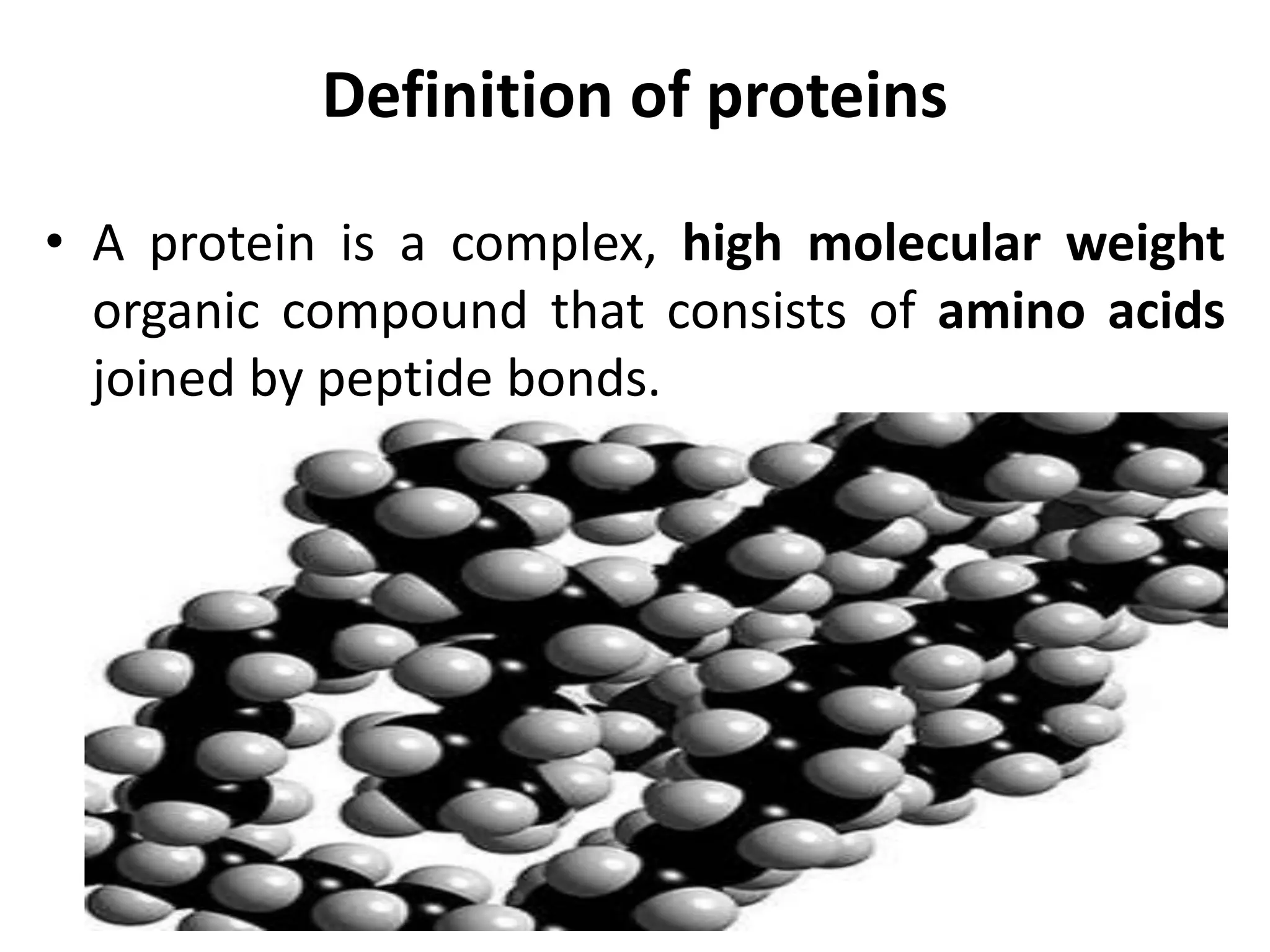
Definition of proteins
• A protein is a complex, high molecular weight
organic compound that consists of amino acids
joined by peptide bonds.
Word Meaning of Protein
• The word protein is derived from greek ‘protos’
meaning ‘of primary importance’.
• Proteins are essential to the structure and
function of all living cells.
• Many proteins are enzymes or subunits of
enzymes.
• Other proteins play structural or mechanical
roles, such as those that form the struts and
joints of the cytoskeleton, serving as biological
scaffolds for the mechanical integrity and tissue
signalling functions.
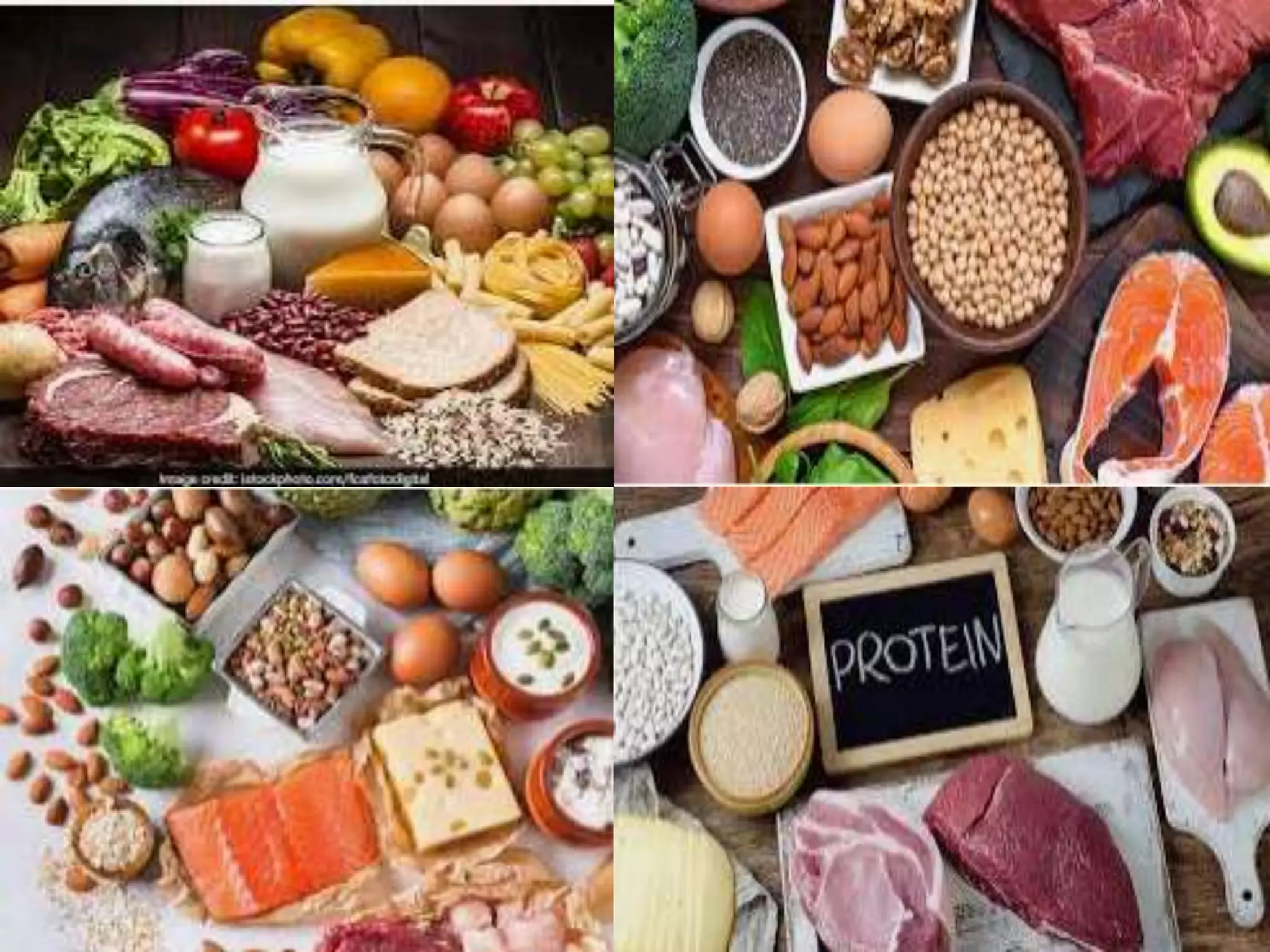
• They are obtained from both plant and animal sources.
• In plants they are stored in the form of aleurone grains.
• In animals they are present in structural material in the
form of collagen (connective tissue), keratin (hair, wool,
hairs, feathers, and horns), elastin (epithelial connective
tissue), casein (milk), and plasma proteins.
• Casein, gelatin, heparin, and hemoglobin are
pharmaceutically important proteins of animal origin.
Sources of Protein
• Proteins are generally large molecules, having
molecular masses of up to 3,000,000 (the
muscle protein titin has a single amino-acid
chain 27,000 subunits long).
• However, protein masses are generally
measured in kiloDaltons (kDa). Such long
chains of amino acids are almost universally
referred to as proteins, but shorter strings of
amino acids are referred to as ‘polypeptides’,
‘peptides’, or rarely, ‘oligopeptides’.
• The dividing line is undefined, though
‘polypeptide’ usually refers to an amino-acid
chain lacking tertiary structure which may be
more likely to act as a hormone (like insulin),
rather than as an enzyme (which depends on
its defined tertiary structure for functionality).
Configuration of Protein
• There are about 20 different amino acids, eight of which
must be present in the diet.
• The eight essential amino acids required by humans are:
leucine, isoleucine, valine, threonine, methionine,
phenylalanine, tryptophan, and lysine.
• For children, histidine is also considered to be an essential
amino acid.
• Unlike animal proteins, plant proteins may not contain all
the essential amino acids in the necessary proportions,
and so the proteins derived from plants are grouped as
incomplete and from animals are grouped as complete.
• However, a varied vegetarian diet means a mixture of
proteins are consumed, the amino acids in one protein
compensating for the deficiencies of another.
Essential Amino Acids
Structural details of Protein
The structure of protein could be differentiated into four
types:
• 1. Primary structure: the amino-acid sequence
• 2. Secondary structure: highly patterned substructures–
alpha helix and beta sheet–or segments of chain that
assume no stable shape. Secondary structures are locally
defined, meaning that there can be many different
secondary motifs present in one single protein molecule.
• 3. Tertiary structure: the overall shape of a single protein
molecule; the spatial relationship of the secondary
structural motifs to one another
• 4. Quaternary structure: the shape or structure that
results from the union of more than one protein molecule,
usually called protein subunits in this context, which
function as part of the larger assembly or protein complex.
Nature
• Proteins are sensitive to their environment. They
may only be active in their native state, over a
small pH range, and under solution conditions
with a minimum quantity of electrolytes.
• A protein in its native state is described as folded
and that is not in its native state is said to be
denatured.
• Denatured proteins generally have no well-
defined secondary structure.
• Many proteins denature and will not remain in
solution in distilled water also they are denatured
due to heat, changes in pH, treatment of organic
solvents or by ultra violet radiation.
• Proteins are essential for growth and repair.
• They play a crucial role in virtually all biological
processes in the body.
• All enzymes are proteins and are vital for the body’s
metabolism. Muscle contraction, immune protection
and the transmission of nerve impulses are all
dependent on proteins.
• Proteins in skin and bone provide structural support.
Many hormones are proteins.
• Protein can also provide a source of energy. Generally
the body uses carbohydrate and fat for energy but
when there is excess dietary protein or inadequate
dietary fat and carbohydrate, protein is used.
• Excess protein may also be converted to fat and stored.
The important proteins are given hereunder.
Role in body
Conclusion
• Protein is a macronutrient that is essential to
building muscle mass. It is having lot of
industrial applications. Since it is obtaining
from animal & plant sources it has to screen
properly. Protein is complex in nature and
difficult to analyse because of its complexity.
The proper method of analysis should be keep
on developing for specific analysis of protein
so that its quality and purity can be ensure.
Thank You

Protein- An Essential element

  • 1.
    Proteins BY Dr. Jitendra Patel AssociateProfessor AIPS, Hyderabad, India.
  • 3.
    Definition of proteins •A protein is a complex, high molecular weight organic compound that consists of amino acids joined by peptide bonds.
  • 4.
    Word Meaning ofProtein • The word protein is derived from greek ‘protos’ meaning ‘of primary importance’. • Proteins are essential to the structure and function of all living cells. • Many proteins are enzymes or subunits of enzymes. • Other proteins play structural or mechanical roles, such as those that form the struts and joints of the cytoskeleton, serving as biological scaffolds for the mechanical integrity and tissue signalling functions.
  • 5.
    • They areobtained from both plant and animal sources. • In plants they are stored in the form of aleurone grains. • In animals they are present in structural material in the form of collagen (connective tissue), keratin (hair, wool, hairs, feathers, and horns), elastin (epithelial connective tissue), casein (milk), and plasma proteins. • Casein, gelatin, heparin, and hemoglobin are pharmaceutically important proteins of animal origin. Sources of Protein
  • 6.
    • Proteins aregenerally large molecules, having molecular masses of up to 3,000,000 (the muscle protein titin has a single amino-acid chain 27,000 subunits long). • However, protein masses are generally measured in kiloDaltons (kDa). Such long chains of amino acids are almost universally referred to as proteins, but shorter strings of amino acids are referred to as ‘polypeptides’, ‘peptides’, or rarely, ‘oligopeptides’. • The dividing line is undefined, though ‘polypeptide’ usually refers to an amino-acid chain lacking tertiary structure which may be more likely to act as a hormone (like insulin), rather than as an enzyme (which depends on its defined tertiary structure for functionality). Configuration of Protein
  • 7.
    • There areabout 20 different amino acids, eight of which must be present in the diet. • The eight essential amino acids required by humans are: leucine, isoleucine, valine, threonine, methionine, phenylalanine, tryptophan, and lysine. • For children, histidine is also considered to be an essential amino acid. • Unlike animal proteins, plant proteins may not contain all the essential amino acids in the necessary proportions, and so the proteins derived from plants are grouped as incomplete and from animals are grouped as complete. • However, a varied vegetarian diet means a mixture of proteins are consumed, the amino acids in one protein compensating for the deficiencies of another. Essential Amino Acids
  • 8.
    Structural details ofProtein The structure of protein could be differentiated into four types: • 1. Primary structure: the amino-acid sequence • 2. Secondary structure: highly patterned substructures– alpha helix and beta sheet–or segments of chain that assume no stable shape. Secondary structures are locally defined, meaning that there can be many different secondary motifs present in one single protein molecule. • 3. Tertiary structure: the overall shape of a single protein molecule; the spatial relationship of the secondary structural motifs to one another • 4. Quaternary structure: the shape or structure that results from the union of more than one protein molecule, usually called protein subunits in this context, which function as part of the larger assembly or protein complex.
  • 9.
    Nature • Proteins aresensitive to their environment. They may only be active in their native state, over a small pH range, and under solution conditions with a minimum quantity of electrolytes. • A protein in its native state is described as folded and that is not in its native state is said to be denatured. • Denatured proteins generally have no well- defined secondary structure. • Many proteins denature and will not remain in solution in distilled water also they are denatured due to heat, changes in pH, treatment of organic solvents or by ultra violet radiation.
  • 10.
    • Proteins areessential for growth and repair. • They play a crucial role in virtually all biological processes in the body. • All enzymes are proteins and are vital for the body’s metabolism. Muscle contraction, immune protection and the transmission of nerve impulses are all dependent on proteins. • Proteins in skin and bone provide structural support. Many hormones are proteins. • Protein can also provide a source of energy. Generally the body uses carbohydrate and fat for energy but when there is excess dietary protein or inadequate dietary fat and carbohydrate, protein is used. • Excess protein may also be converted to fat and stored. The important proteins are given hereunder. Role in body
  • 11.
    Conclusion • Protein isa macronutrient that is essential to building muscle mass. It is having lot of industrial applications. Since it is obtaining from animal & plant sources it has to screen properly. Protein is complex in nature and difficult to analyse because of its complexity. The proper method of analysis should be keep on developing for specific analysis of protein so that its quality and purity can be ensure.
  • 12.