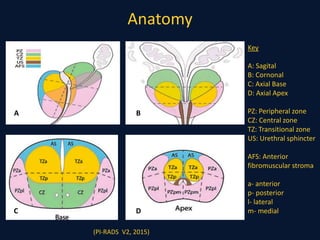
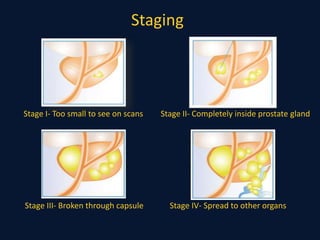
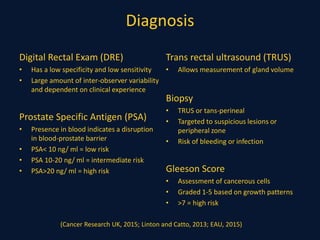
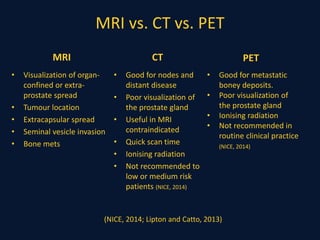
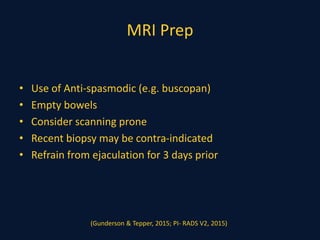
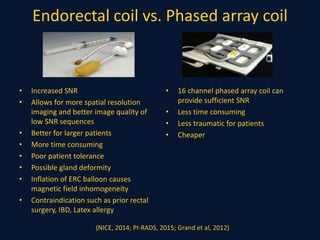
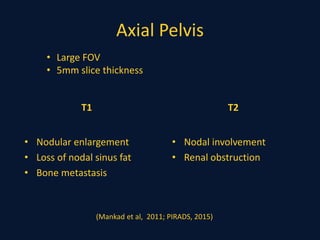
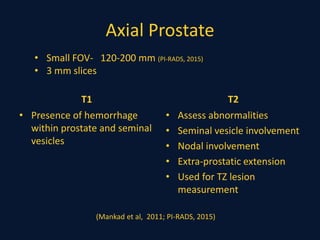
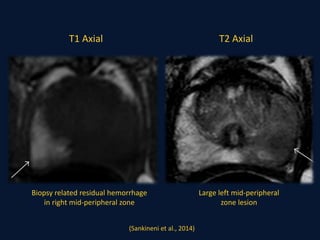
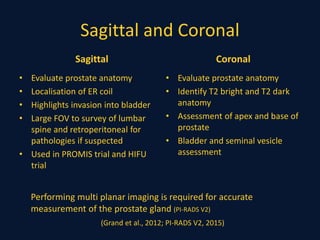
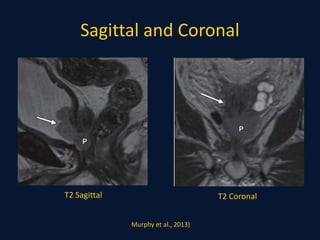
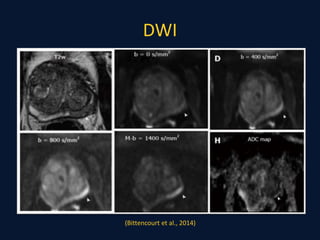
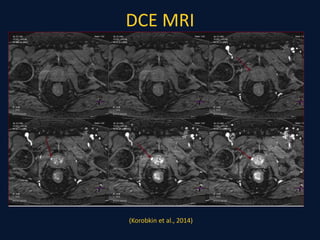
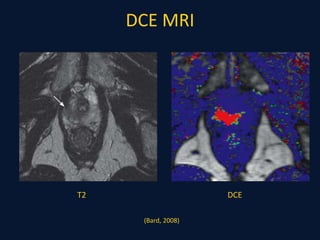
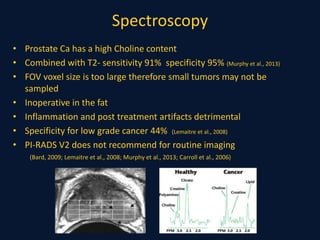
MRI is useful in the diagnosis, treatment, and follow-up of prostate cancer. It can visualize the prostate gland and detect tumors, assess extracapsular spread and seminal vesicle invasion, and detect bone metastases. The standard MRI protocol includes T2-weighted, diffusion-weighted, and dynamic contrast-enhanced sequences. Prostate cancer appears as a low T2 signal, exhibits restricted diffusion, and shows early contrast enhancement and washout. While other conditions like BPH, inflammation, and radiation effects can mimic cancer, MRI findings along with PSA, biopsy and clinical data are used to evaluate patients. MRI also helps plan and guide radiation therapy and assess treatment response or recurrence.