Downloaded 817 times




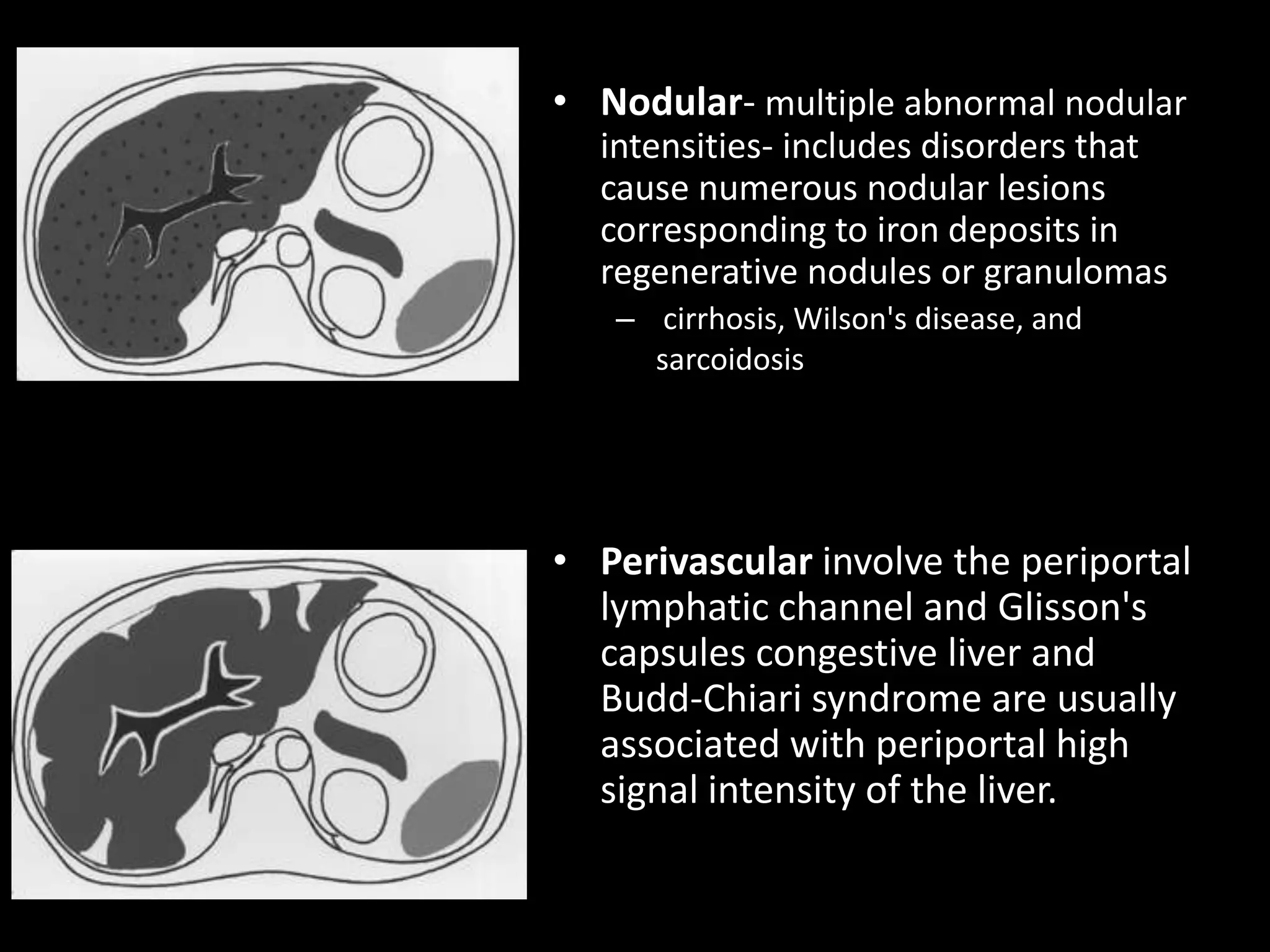


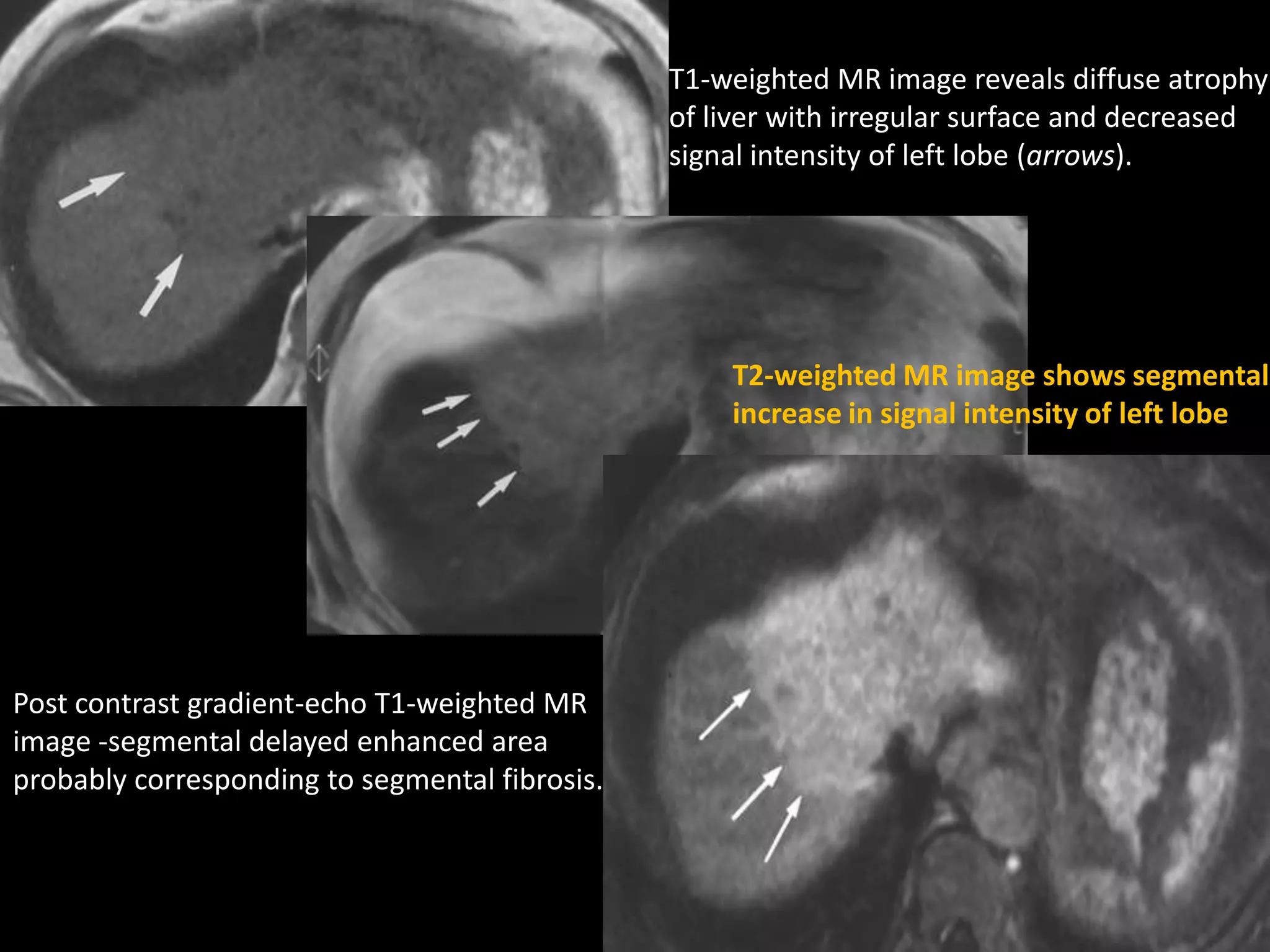

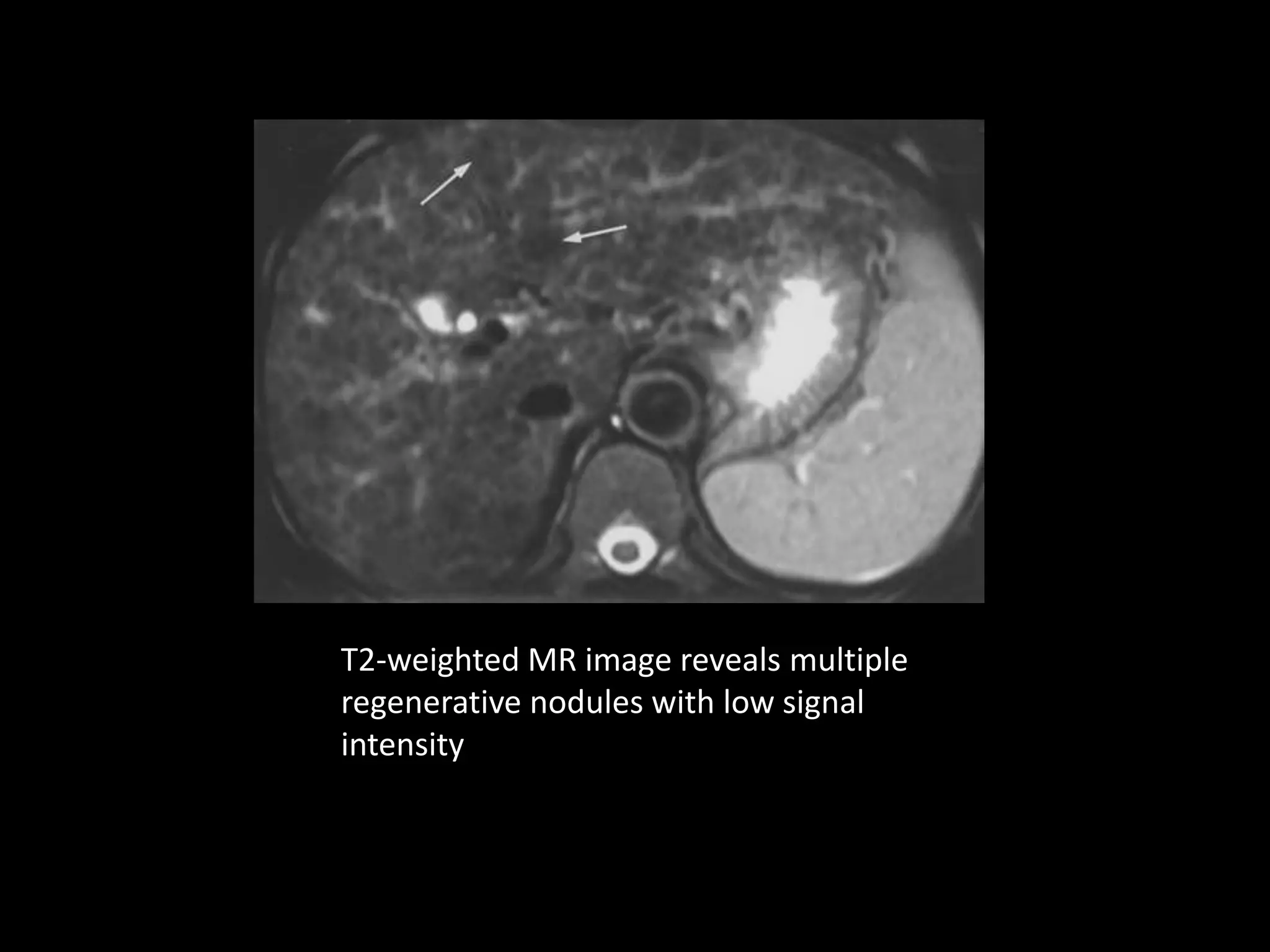

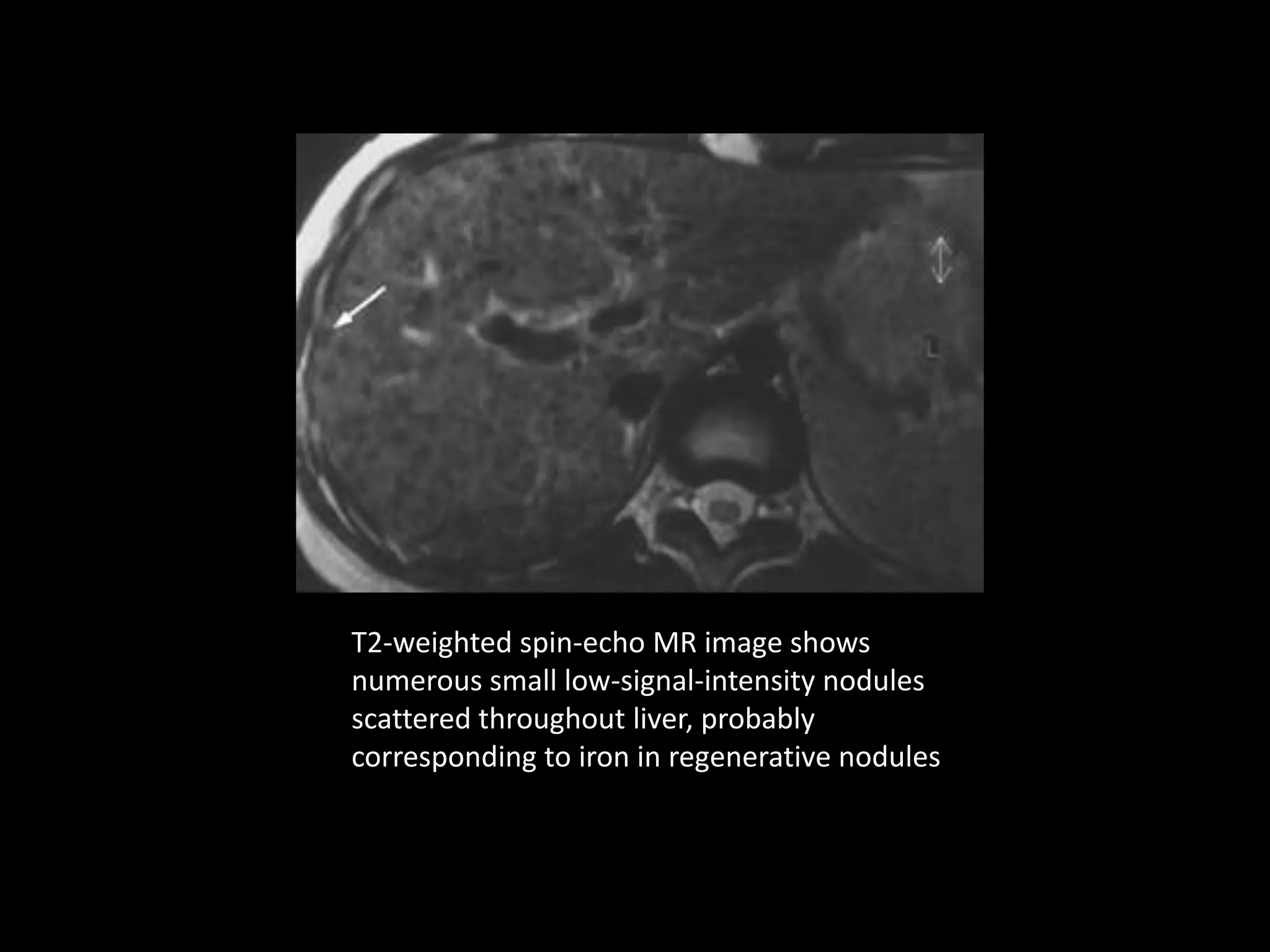


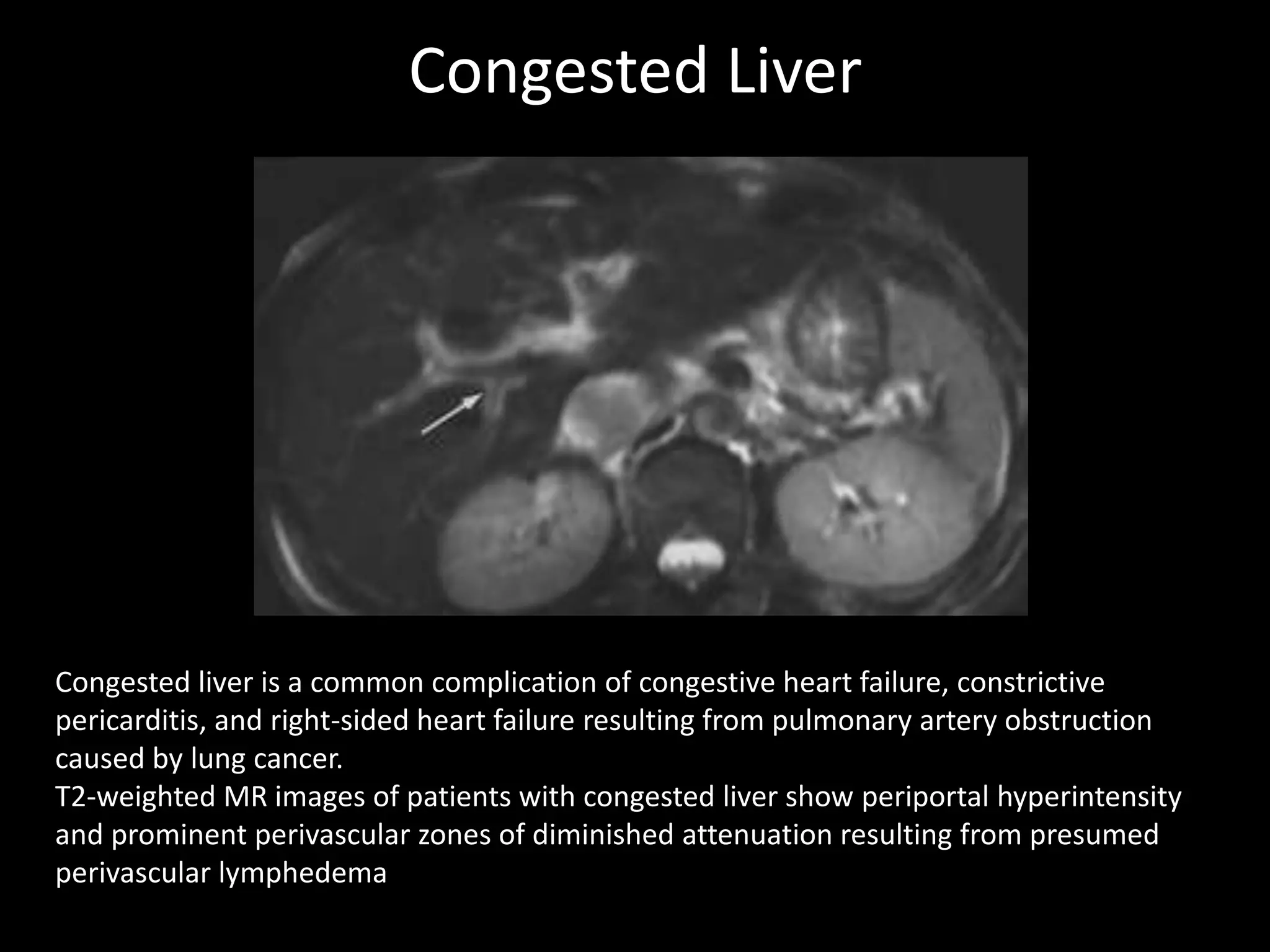

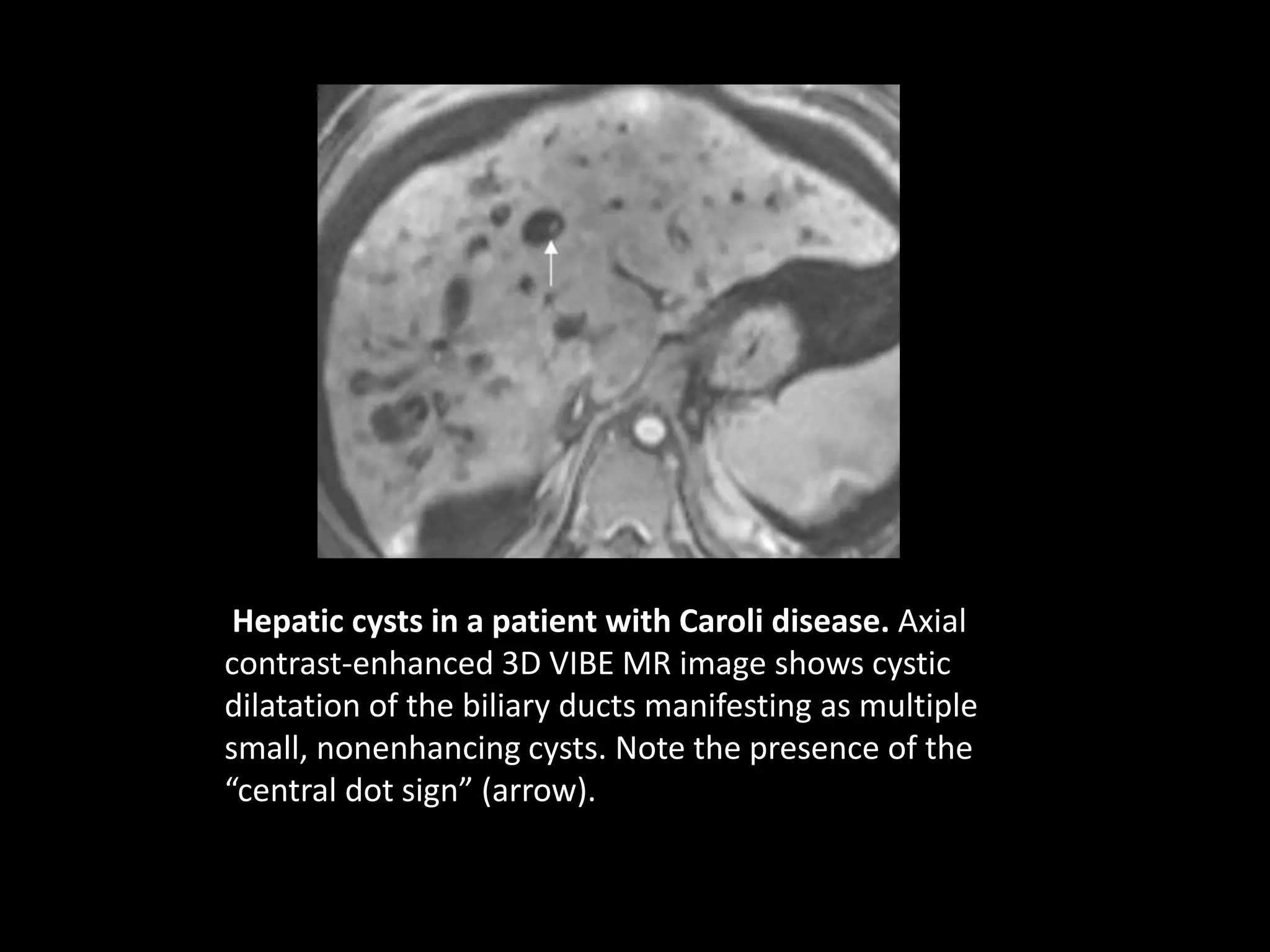


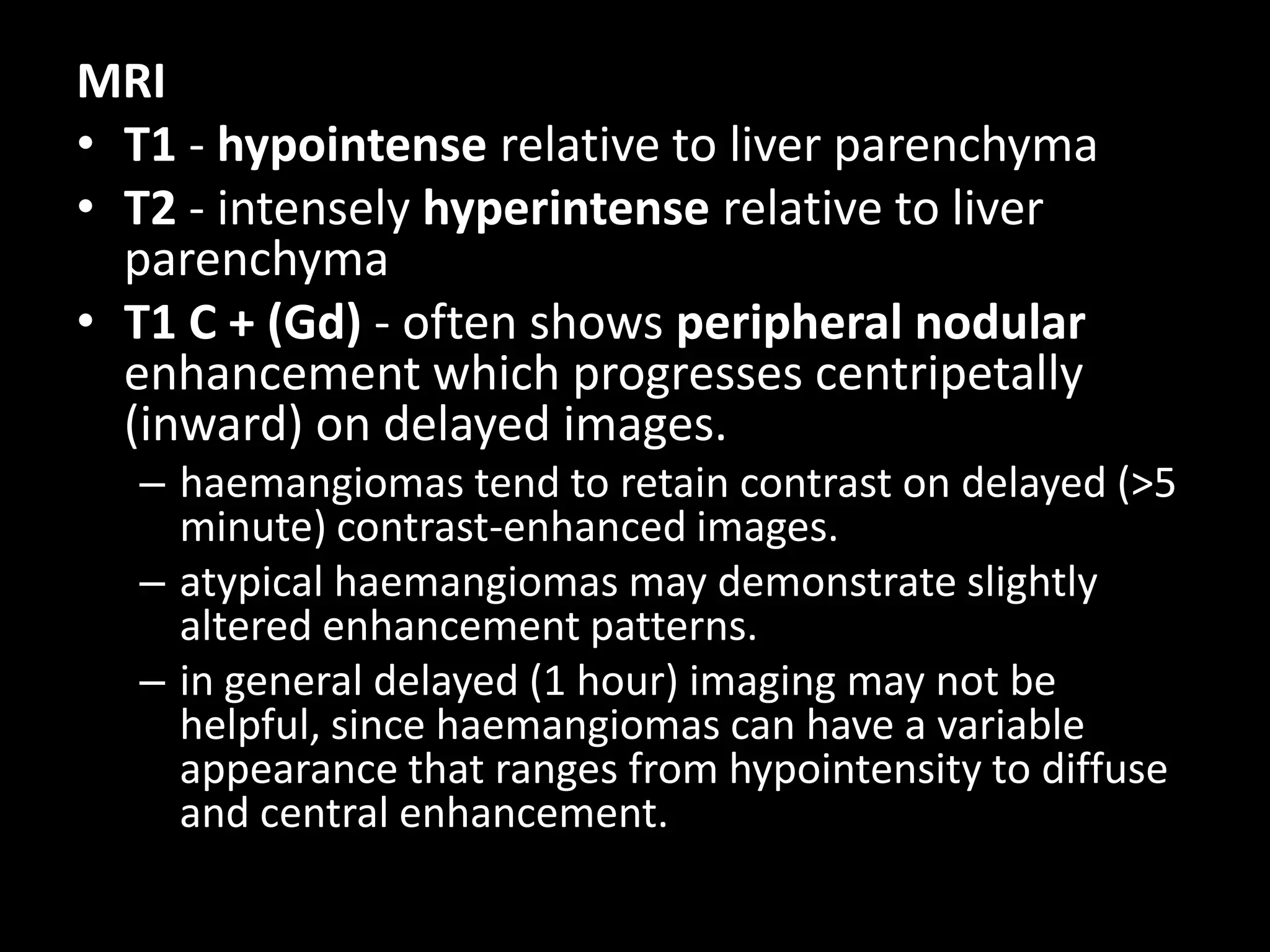


MRI is useful for evaluating various liver conditions. It is superior to CT for detecting small liver lesions and characterizing lesions. MRI can identify diffuse liver diseases affecting hepatocytes or reticuloendothelial cells, causing homogeneous or segmental changes. Cirrhosis appears as numerous low signal regenerative nodules on T2-weighted images. Hemangiomas are intensely hyperintense on T2-weighted images and enhance peripherally on contrast images. Dysplastic nodules are generally hypointense on T1-weighted images and do not enhance with contrast. MRI utilizes multiple sequences and techniques to comprehensively evaluate liver tumors, diffuse diseases, and incidental findings.


