Properties of Matter,
Elements, Compounds,
    and Bonding.
         9/14
Chemical Properties.
A chemical change pemanantly changes the conpound
into another.

Basic unit of matter is an atom

Subatomic particles- protons (+), neutrons, and electrons
(-)
Atoms
Protons neutrons in the nucleus

Electrons travel around the nucleus in orbits or clouds or
levels of energy.

Atom is neither positive or negative in charge - it is
neutral.

ION- An atom that has lost or gained an electron(s)
Identifying Elements
Atomic number- number of protons

The number of protons (atomic number) determines the
identity of an element

An element- only one type of atom

Represented by a chemical symbol such as O for oxygen
or Na for sodium

CHNOPS- Carbon, Hydrogen, Nitrogen, Oxygen,
Phosphorous, Sodium  main elements of human body
Isotopes
Atoms of the same element that have a different number
of neutrons

Many (not all) are unstable and break down, emitting
energy – radioactive isotopes

Used for determining the age of fossils, treatment of
diseases, and even to sterilize food.
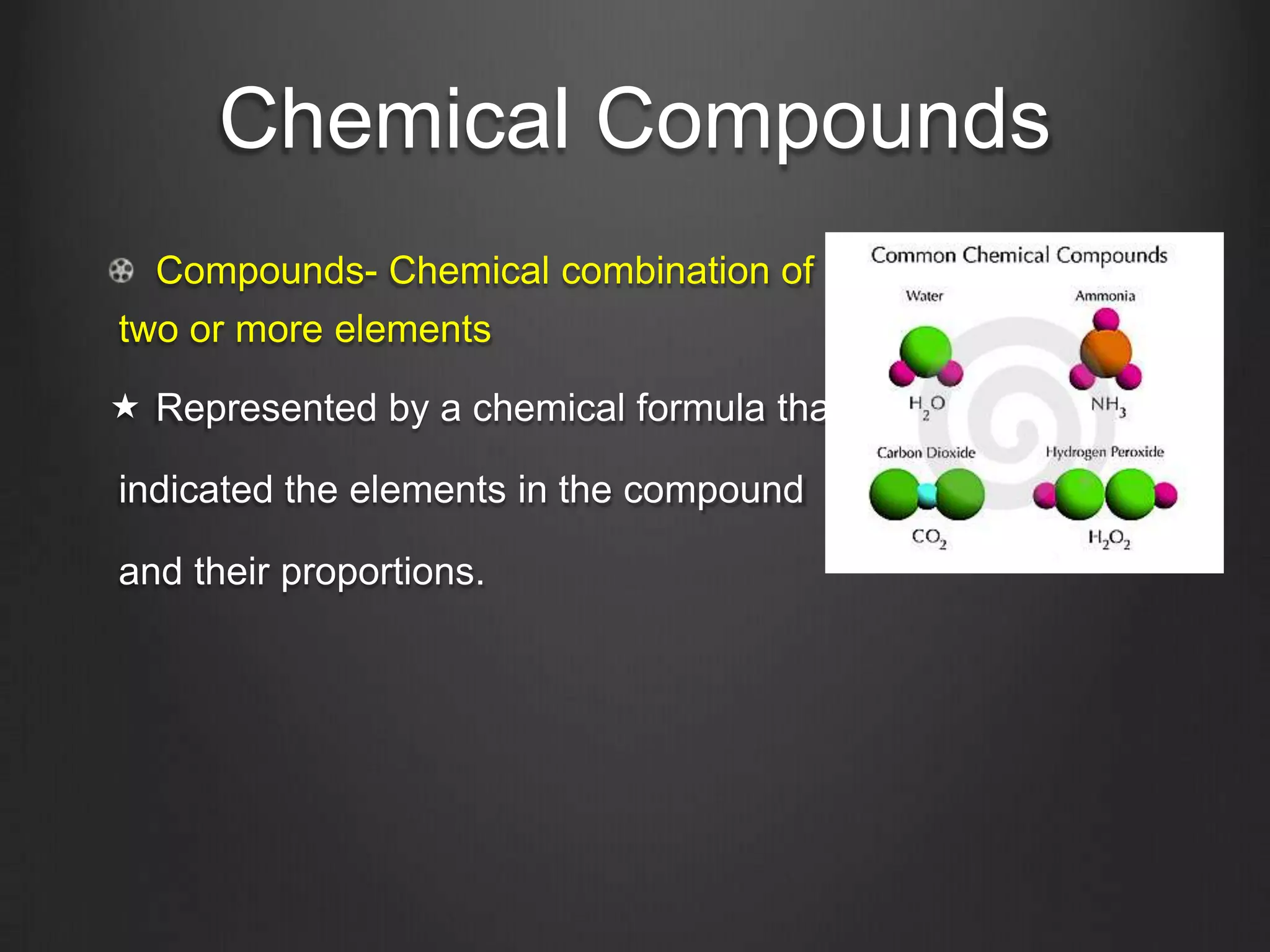
Chemical Compounds
  Compounds- Chemical combination of
two or more elements

 Represented by a chemical formula that

indicated the elements in the compound

and their proportions.
Chemical Bonding
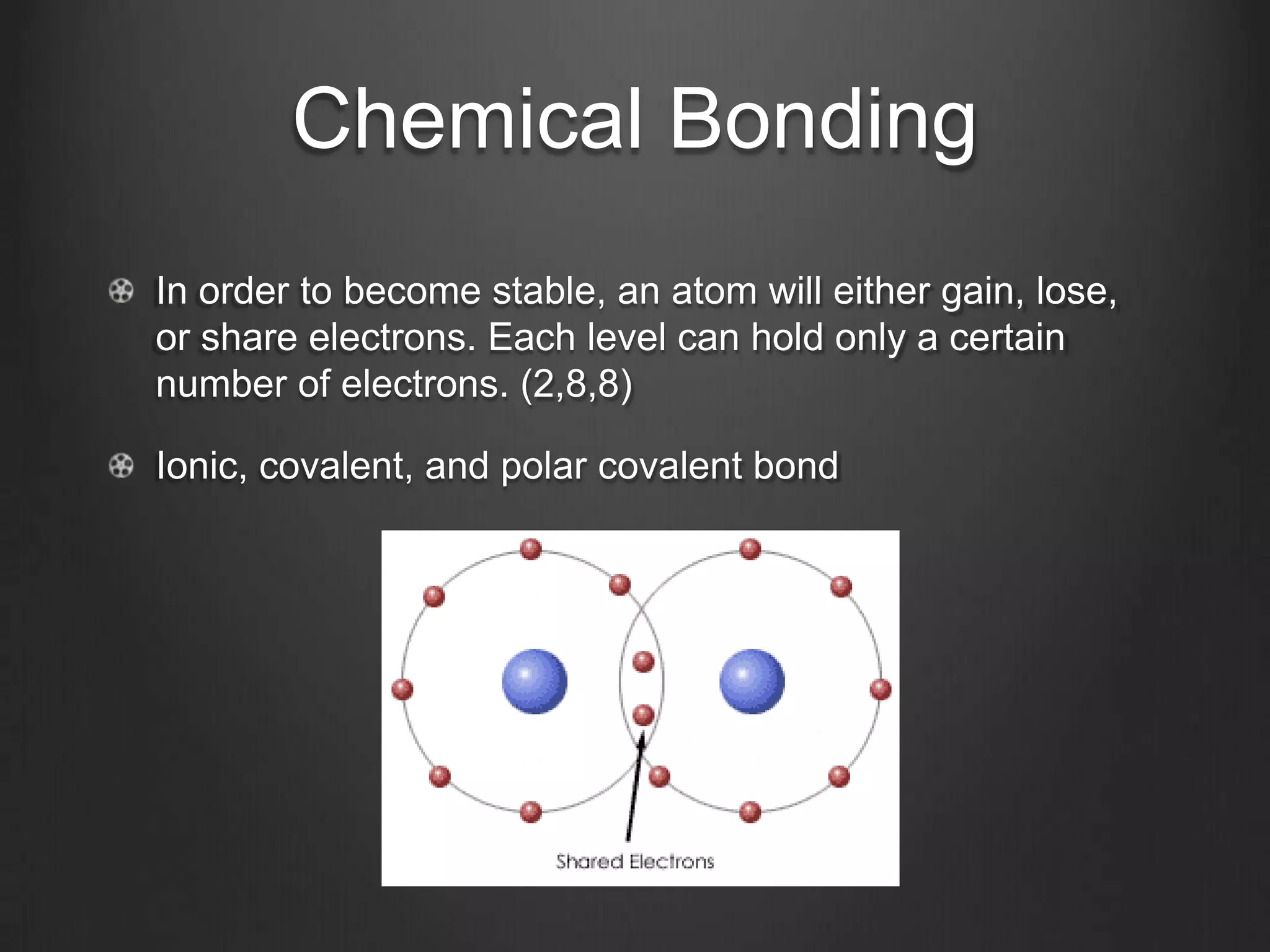
In order to become stable, an atom will either gain, lose,
or share electrons. Each level can hold only a certain
number of electrons. (2,8,8)

Ionic, covalent, and polar covalent bond
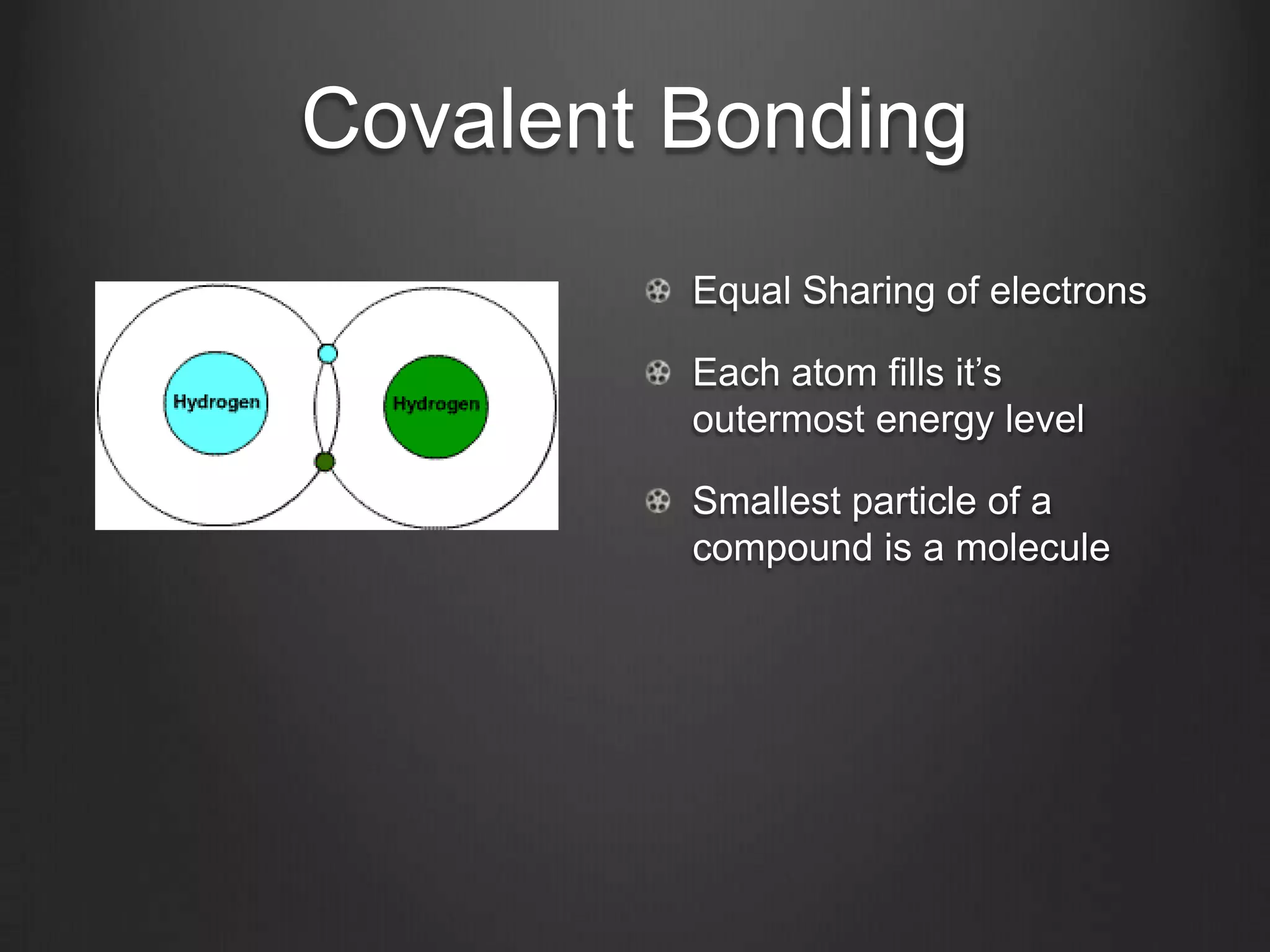
Covalent Bonding
         Equal Sharing of electrons

         Each atom fills it’s
         outermost energy level

         Smallest particle of a
         compound is a molecule
Ionic Bonding
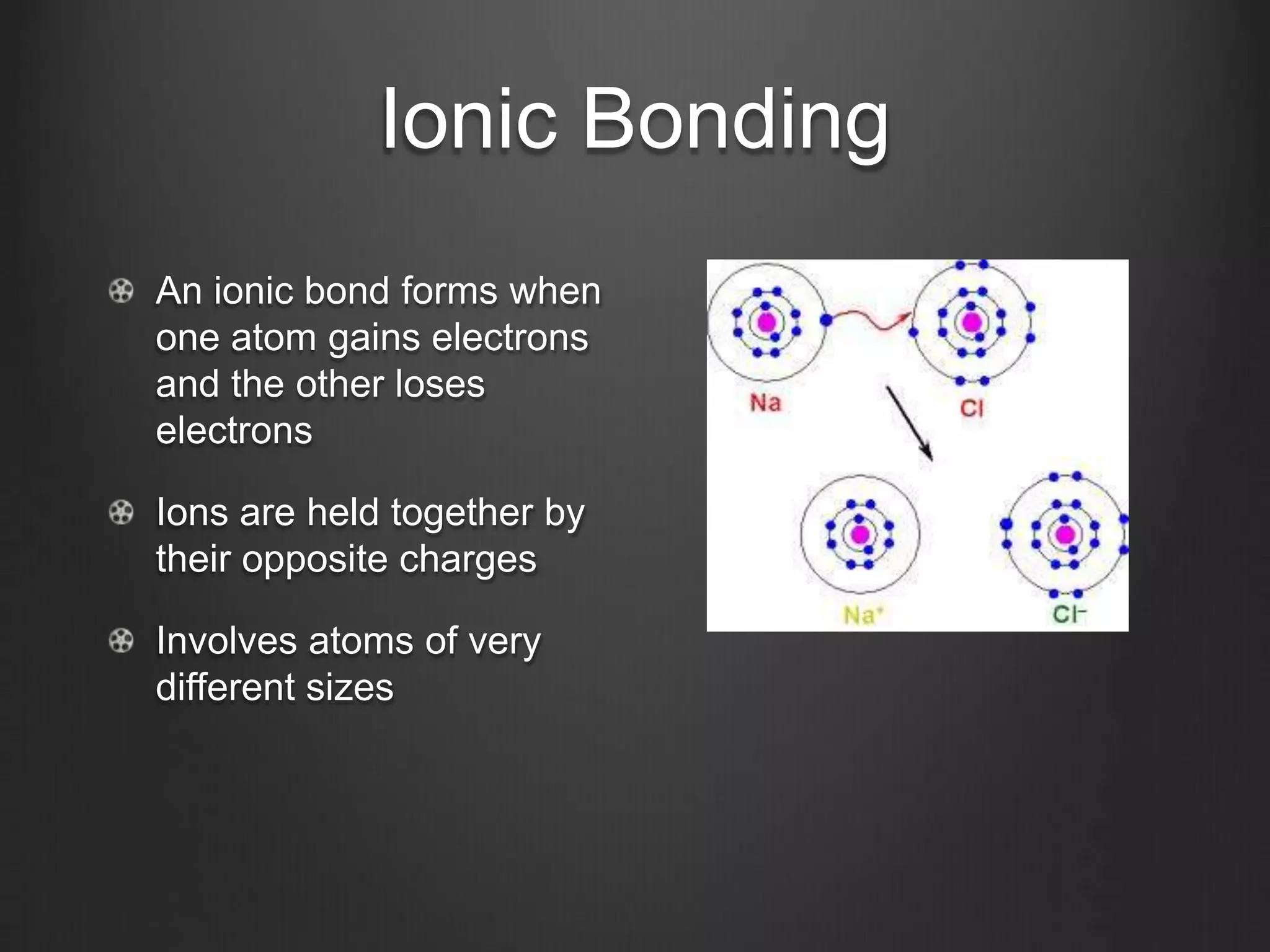
An ionic bond forms when
one atom gains electrons
and the other loses
electrons

Ions are held together by
their opposite charges

Involves atoms of very
different sizes
Chemical reactions
The making or breaking of bonds is called a chemical
reaction

Reactants (chemicals that enter a reaction) & products
(compounds that are produced)

A chemical reaction is indicated by a chemical equation.

Na (+) + Cl (-) ---> NaCl

O2 + 2H2  2H2O
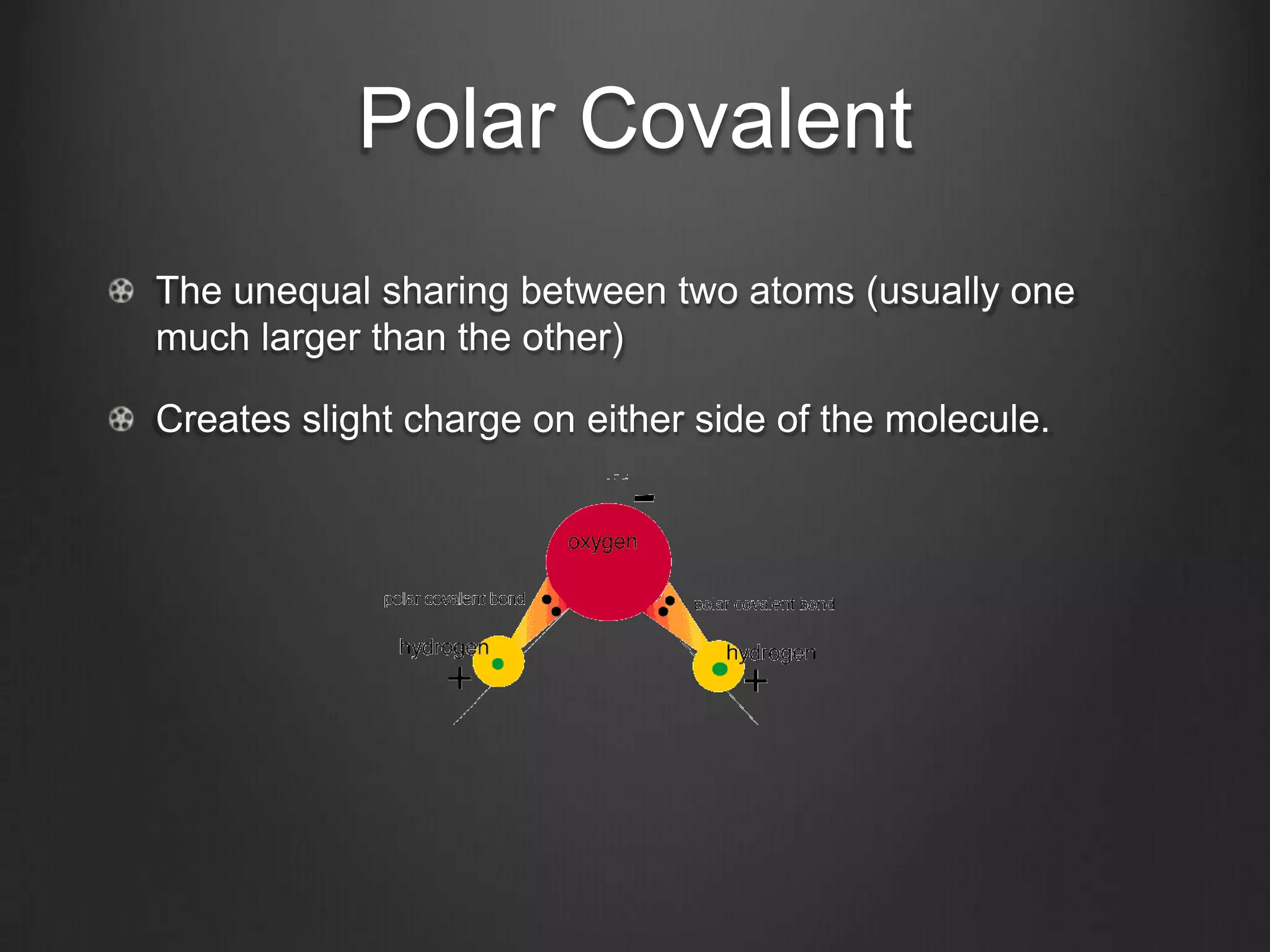
Polar Covalent
The unequal sharing between two atoms (usually one
much larger than the other)

Creates slight charge on either side of the molecule.
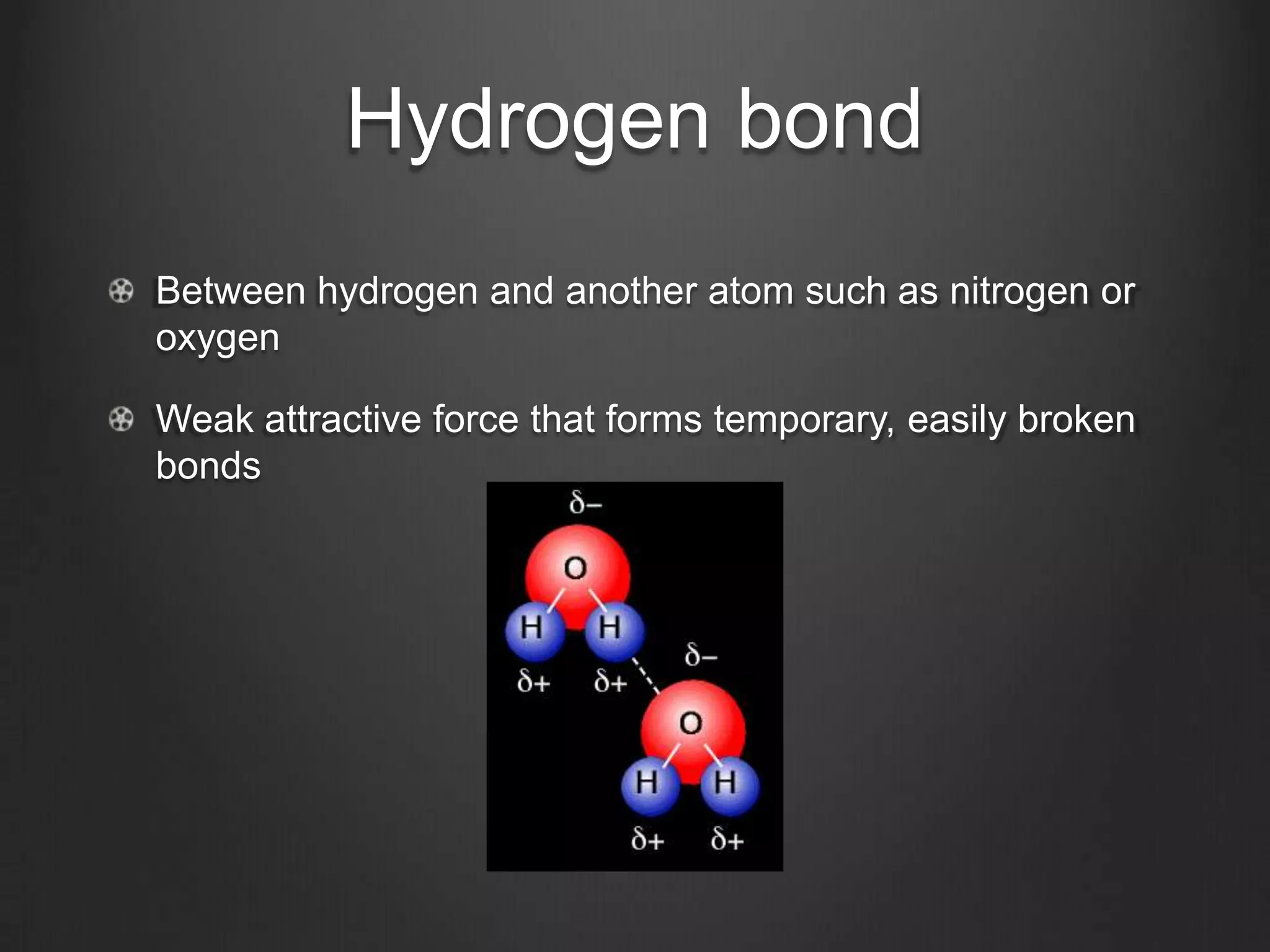
Hydrogen bond
Between hydrogen and another atom such as nitrogen or
oxygen

Weak attractive force that forms temporary, easily broken
bonds
Water
 importance for living things
Water has an unusual chemical structure

We are over 70% water
Properties of water
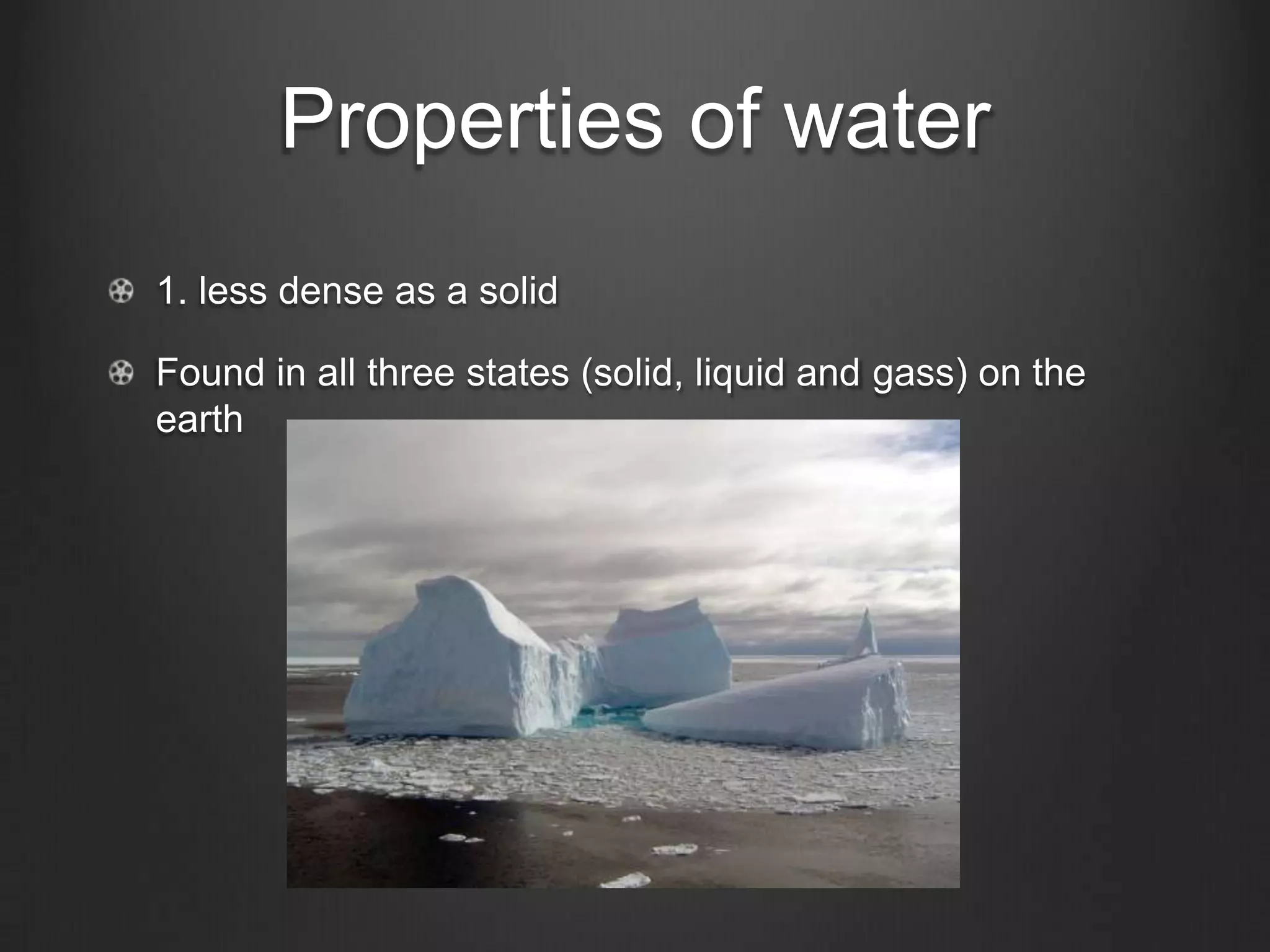
1. less dense as a solid

Found in all three states (solid, liquid and gass) on the
earth
2. Water is a good solvent. Many compounds dissolve in
water.

3. Water is slow to heat and slow to cool.

4. water is cohesive – water molecules will attract other
molecules

5. water is adhesive- water adheres to other molecules
Why?
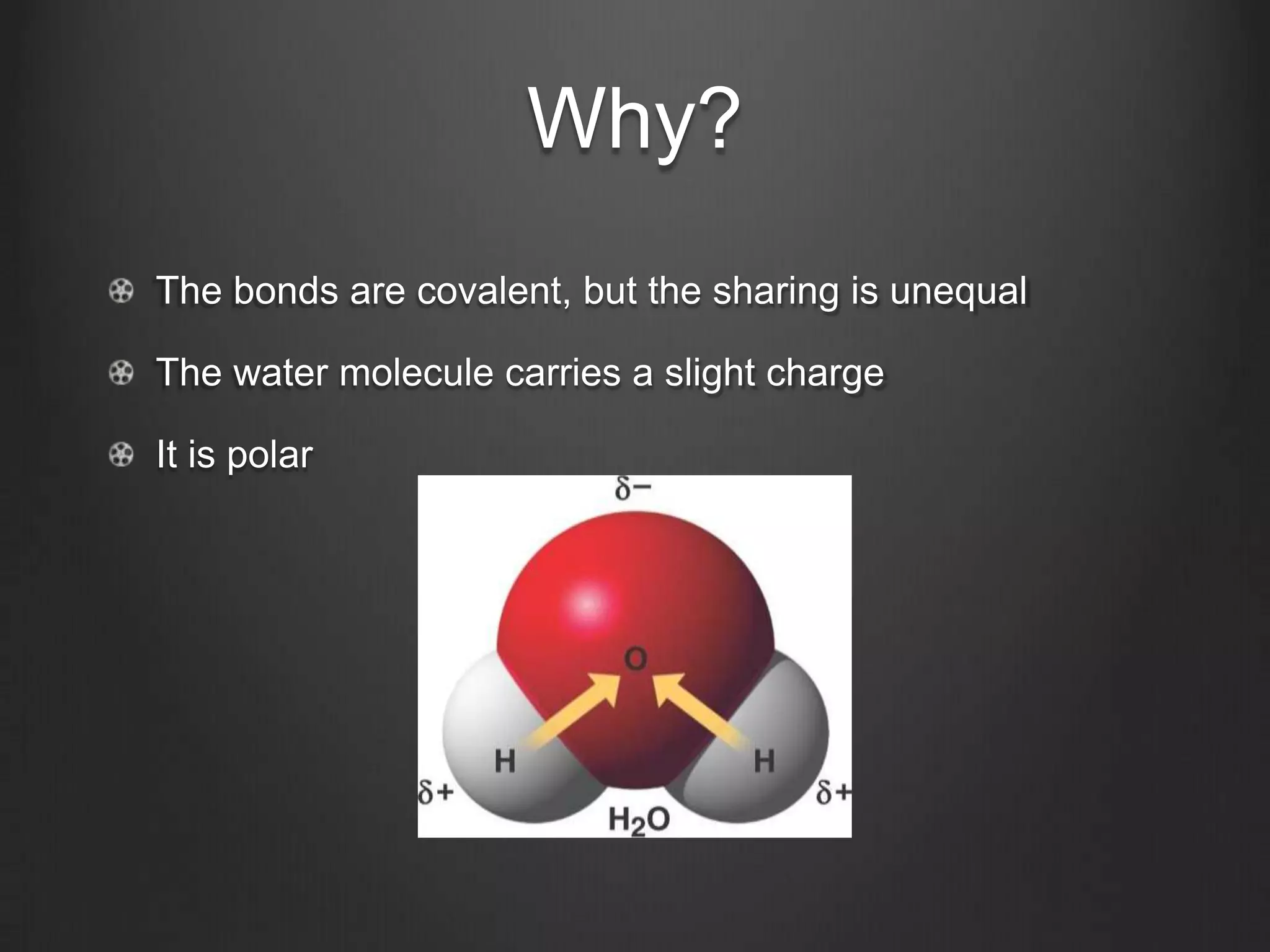
The bonds are covalent, but the sharing is unequal

The water molecule carries a slight charge

It is polar
Hydrogen Bonds
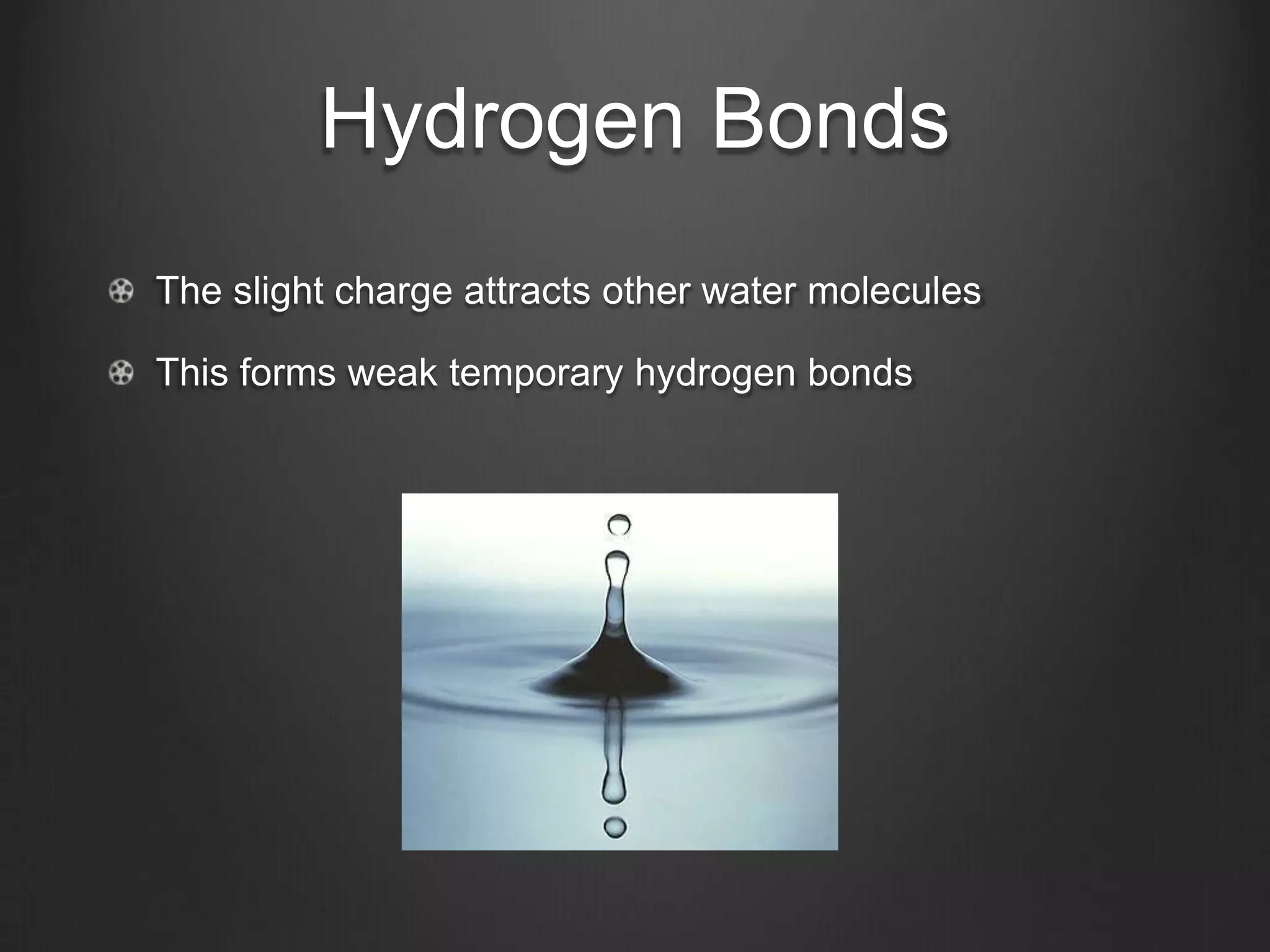
The slight charge attracts other water molecules

This forms weak temporary hydrogen bonds
As water changes state it adds or breaks apart hydrogen
bonds. This slows changes in temperature
solvent
Some hydogen bonds will pull strongly enough to break off
a hydrogen ion

H2O    H(+) + OH (-)

This will ionize a small portion of the water creating equal
numbers of hydrogen and hydroxide ions

solution (solute and solvent)

NaCl  Na+ Cl -
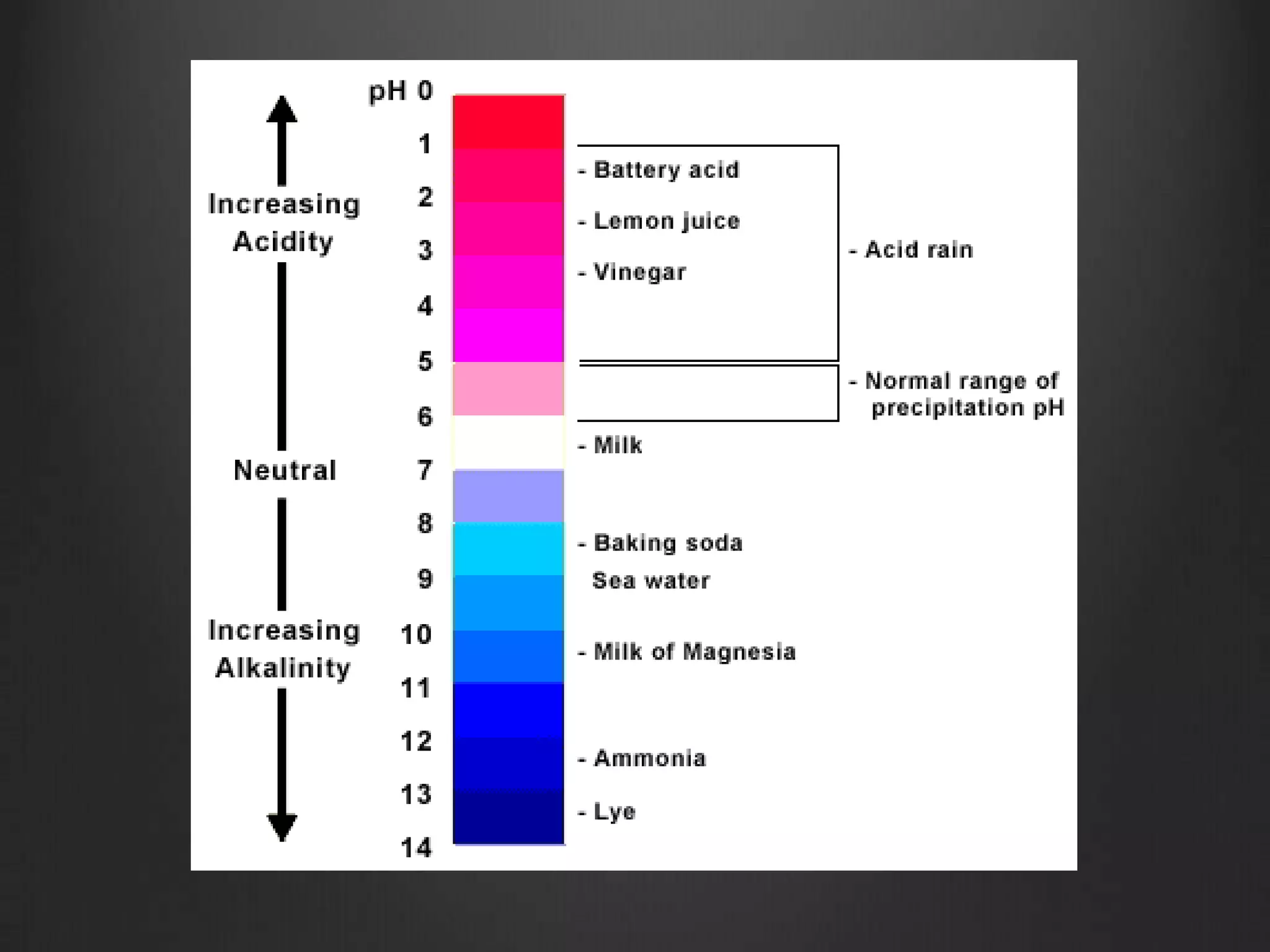
In a liter of water only        More hydrogen ions are
0.0000001 m/l of water has      added the ph will go down
ionized. (That’s 1x10 ^-7)      (example hcl)
(PH=7)
                                If more hydroxide ions (OH)
PH stands for the percent       are added then the PH wil
of hydrogen ions in solution    go up (example. NaOH)
in relation to hydroxide ions
Properties Of Matter Elements Compounds And Bonding

Properties Of Matter Elements Compounds And Bonding

  • 1.
    Properties of Matter, Elements,Compounds, and Bonding. 9/14
  • 2.
    Chemical Properties. A chemicalchange pemanantly changes the conpound into another. Basic unit of matter is an atom Subatomic particles- protons (+), neutrons, and electrons (-)
  • 3.
    Atoms Protons neutrons inthe nucleus Electrons travel around the nucleus in orbits or clouds or levels of energy. Atom is neither positive or negative in charge - it is neutral. ION- An atom that has lost or gained an electron(s)
  • 4.
    Identifying Elements Atomic number-number of protons The number of protons (atomic number) determines the identity of an element An element- only one type of atom Represented by a chemical symbol such as O for oxygen or Na for sodium CHNOPS- Carbon, Hydrogen, Nitrogen, Oxygen, Phosphorous, Sodium  main elements of human body
  • 5.
    Isotopes Atoms of thesame element that have a different number of neutrons Many (not all) are unstable and break down, emitting energy – radioactive isotopes Used for determining the age of fossils, treatment of diseases, and even to sterilize food.
  • 6.
    Chemical Compounds Compounds- Chemical combination of two or more elements  Represented by a chemical formula that indicated the elements in the compound and their proportions.
  • 7.
    Chemical Bonding In orderto become stable, an atom will either gain, lose, or share electrons. Each level can hold only a certain number of electrons. (2,8,8) Ionic, covalent, and polar covalent bond
  • 8.
    Covalent Bonding Equal Sharing of electrons Each atom fills it’s outermost energy level Smallest particle of a compound is a molecule
  • 9.
    Ionic Bonding An ionicbond forms when one atom gains electrons and the other loses electrons Ions are held together by their opposite charges Involves atoms of very different sizes
  • 10.
    Chemical reactions The makingor breaking of bonds is called a chemical reaction Reactants (chemicals that enter a reaction) & products (compounds that are produced) A chemical reaction is indicated by a chemical equation. Na (+) + Cl (-) ---> NaCl O2 + 2H2  2H2O
  • 11.
    Polar Covalent The unequalsharing between two atoms (usually one much larger than the other) Creates slight charge on either side of the molecule.
  • 12.
    Hydrogen bond Between hydrogenand another atom such as nitrogen or oxygen Weak attractive force that forms temporary, easily broken bonds
  • 13.
    Water importance forliving things Water has an unusual chemical structure We are over 70% water
  • 14.
    Properties of water 1.less dense as a solid Found in all three states (solid, liquid and gass) on the earth
  • 15.
    2. Water isa good solvent. Many compounds dissolve in water. 3. Water is slow to heat and slow to cool. 4. water is cohesive – water molecules will attract other molecules 5. water is adhesive- water adheres to other molecules
  • 16.
    Why? The bonds arecovalent, but the sharing is unequal The water molecule carries a slight charge It is polar
  • 17.
    Hydrogen Bonds The slightcharge attracts other water molecules This forms weak temporary hydrogen bonds
  • 18.
    As water changesstate it adds or breaks apart hydrogen bonds. This slows changes in temperature
  • 19.
    solvent Some hydogen bondswill pull strongly enough to break off a hydrogen ion H2O H(+) + OH (-) This will ionize a small portion of the water creating equal numbers of hydrogen and hydroxide ions solution (solute and solvent) NaCl  Na+ Cl -
  • 20.
    In a literof water only More hydrogen ions are 0.0000001 m/l of water has added the ph will go down ionized. (That’s 1x10 ^-7) (example hcl) (PH=7) If more hydroxide ions (OH) PH stands for the percent are added then the PH wil of hydrogen ions in solution go up (example. NaOH) in relation to hydroxide ions