AIRCRAFT STRUCTURE
FAILURE PROJECT
Members:
Amirul Iman B. Hasri AD110155
Jaswant Singh Bal A/L Hadip Singh AD110177
Amal Iqmal B. Adnan AD110189
FACULTY OF MECHANICAL &
MANUFACTURING
ENGINEERING
AIRCRAFT STRUCTURES
BDU20103
http://www.dnv.com/binaries/PULS-buckling_tcm4-284864.JPG
VIDEO (INTRO)
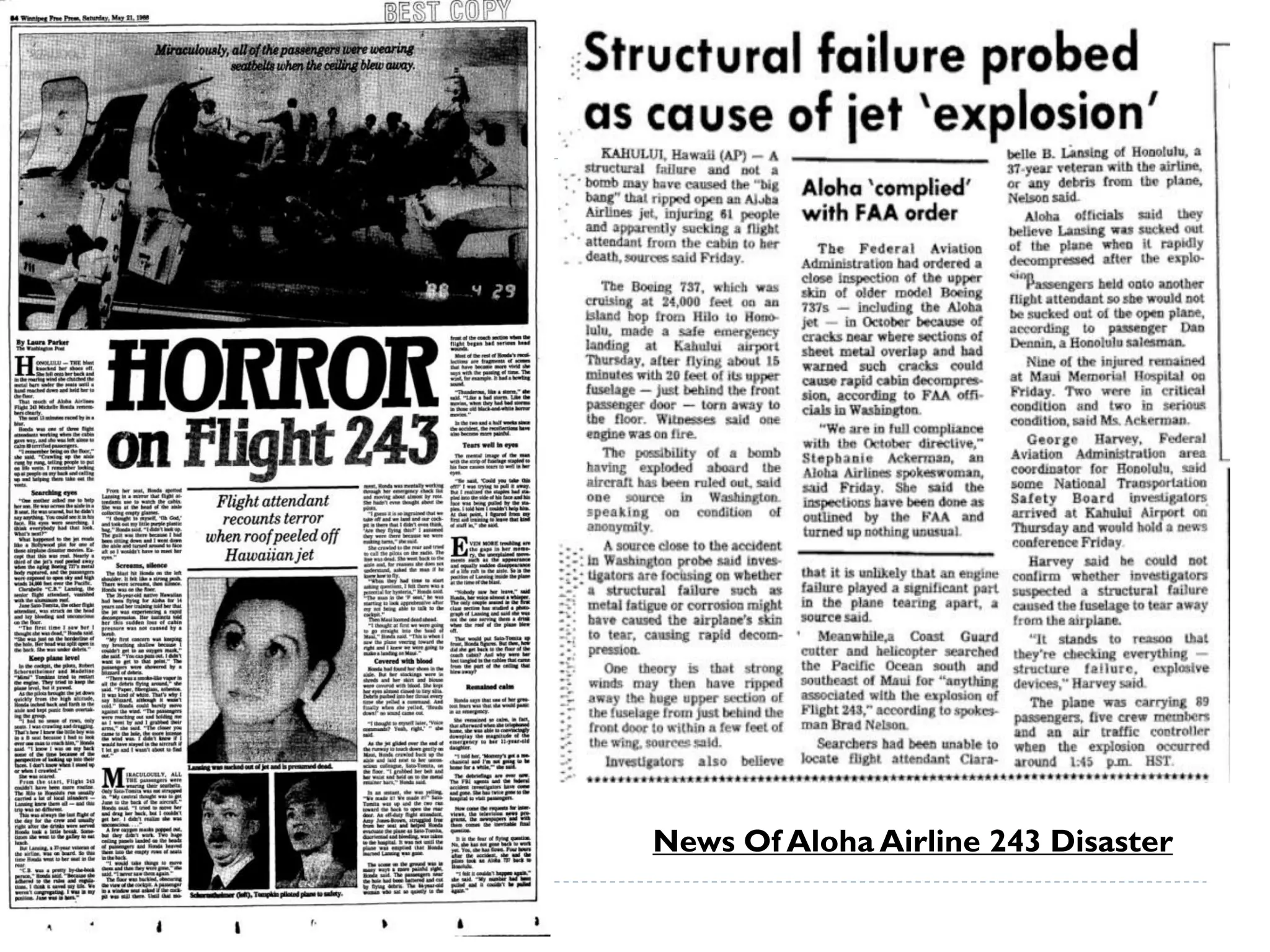
News Of Aloha Airline 243 Disaster
WHO?
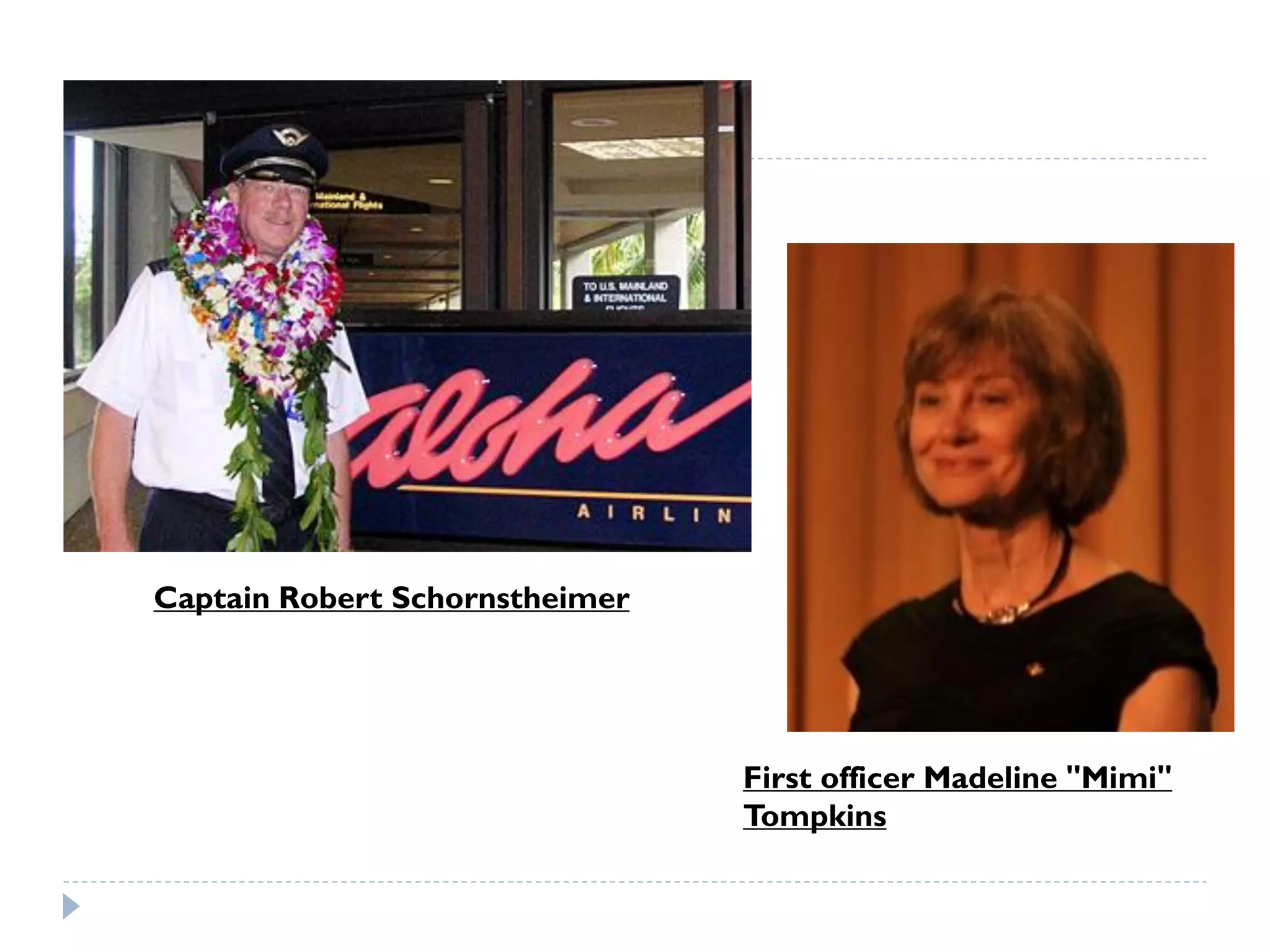
Captain Robert Schornstheimer
First officer Madeline "Mimi"
Tompkins
WHAT
HAPPENED?
APRIL 28, 1988
 At 13.25 P.M
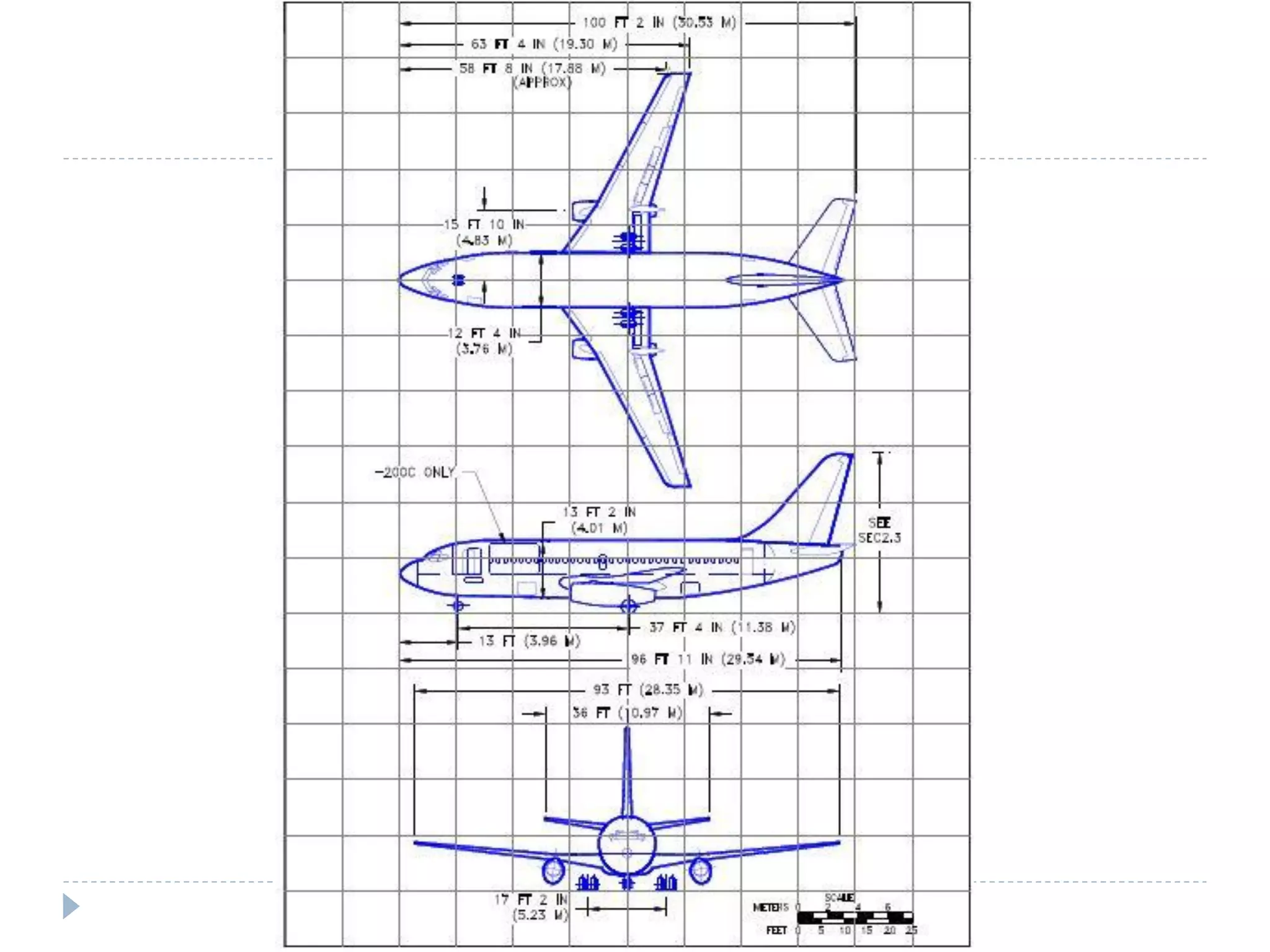
A Boeing 737-200 operated by Aloha Airlines as flight 243 take off from Hilo and
its destination was to Honolulu, Hawaii. The first officer flew the plane while the
captain handle the radio communications with the air traffic control (A.T.C).
 At 13.46 P.M
After just 21 minutes into the flight, , they experienced an explosive
decompression and structural failure at 24,000 feet. Part of the front of the
fuselage tare apart. First 5 rows were exposed completely to the sky.
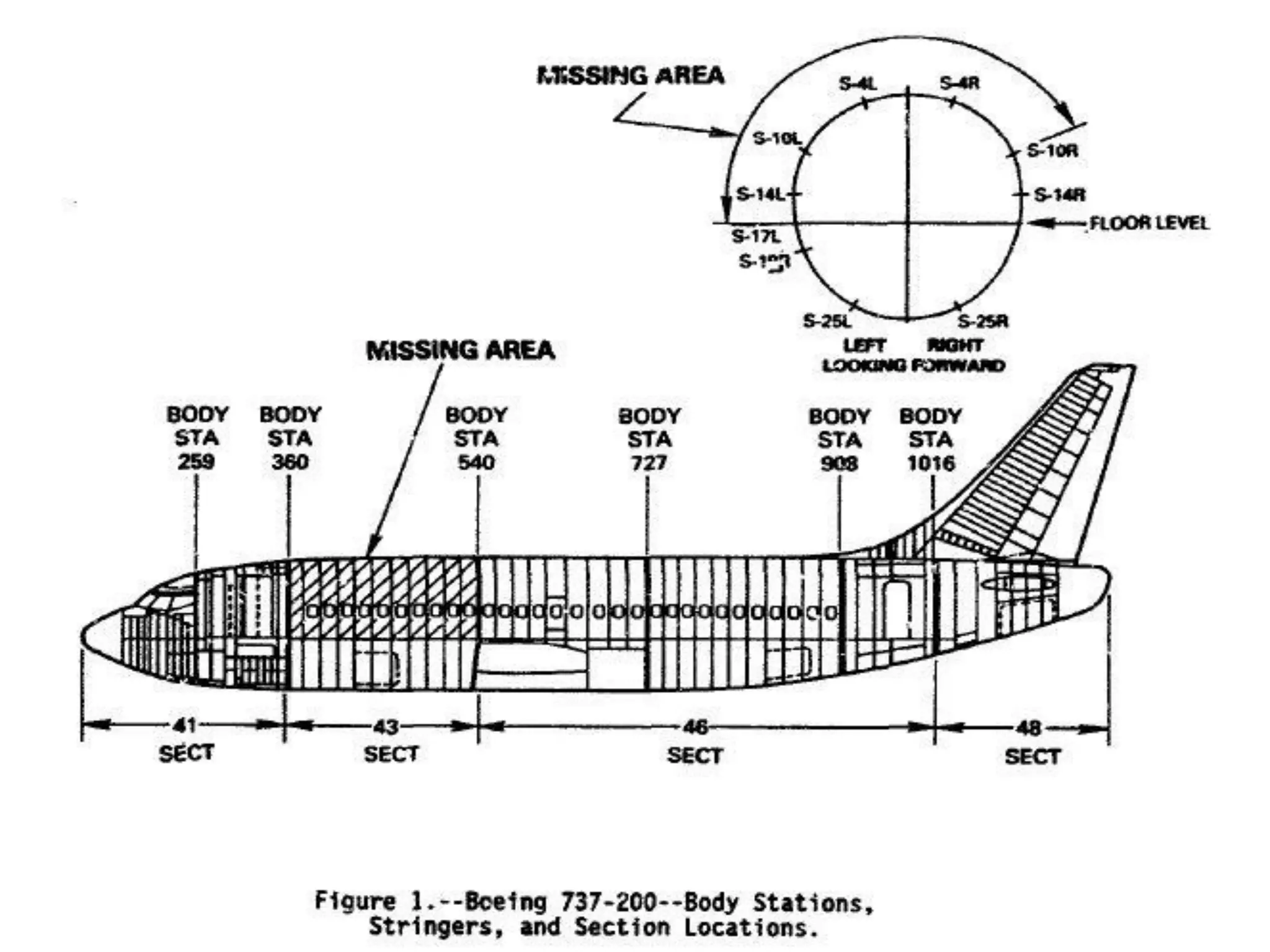
Approximately 18 feet of the cabin skin and structure of the cabin entrance door
and above the passenger floor line separated from the airplane during flight.
Both pilots immediately take action:
Captain- control the plane & First officer- contact traffic control at Maui cause it
was listed as the alternate landing airport.
Continue….
 At 13.50 P.M
The tower able to contact the pilots. So the pilots request an emergency
landing and equipment. They notice that the door at the fuselage is missing.
 At 13.55 P.M
Captain request ‘ flight control manual inversion ’ ( used when hydraulic
system and power steering malfunction) by using the controlling yolk.
He puts the landing gear down and changes flap from 15 to 5 ( constantly
change the flaps to get the precise speed landing).
They safely land the aircraft at Kahului Airport on the Island of Maui.
There were 89 passengers and 6 crewmembers on board. One flight
attendant was swept overboard during the decompression and is presumed
to have been fatally injured. 7 passengers and 1 flight attendant received
serious injuries.
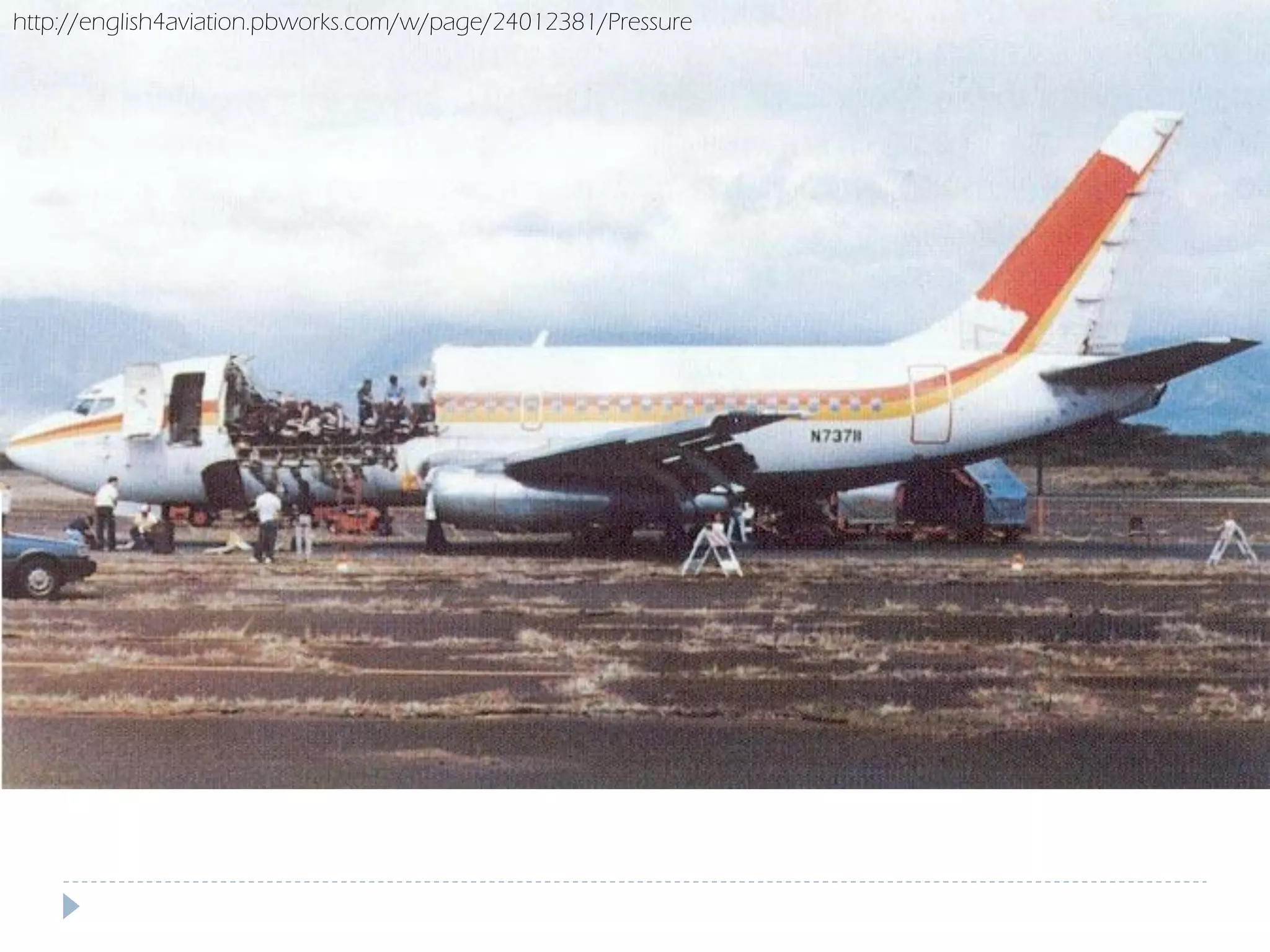
http://english4aviation.pbworks.com/w/page/24012381/Pressure
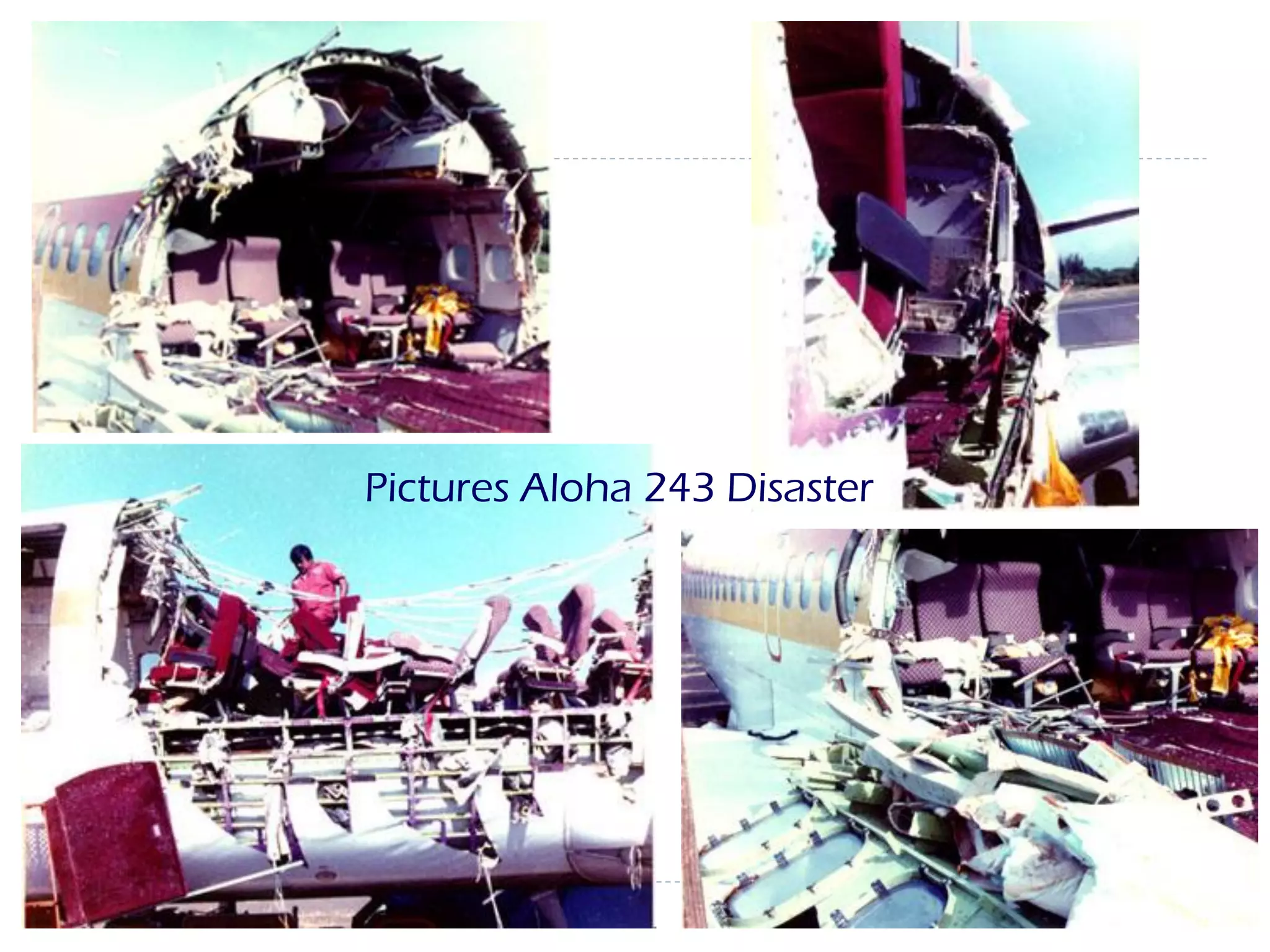
Pictures Aloha 243 Disaster
HOW?
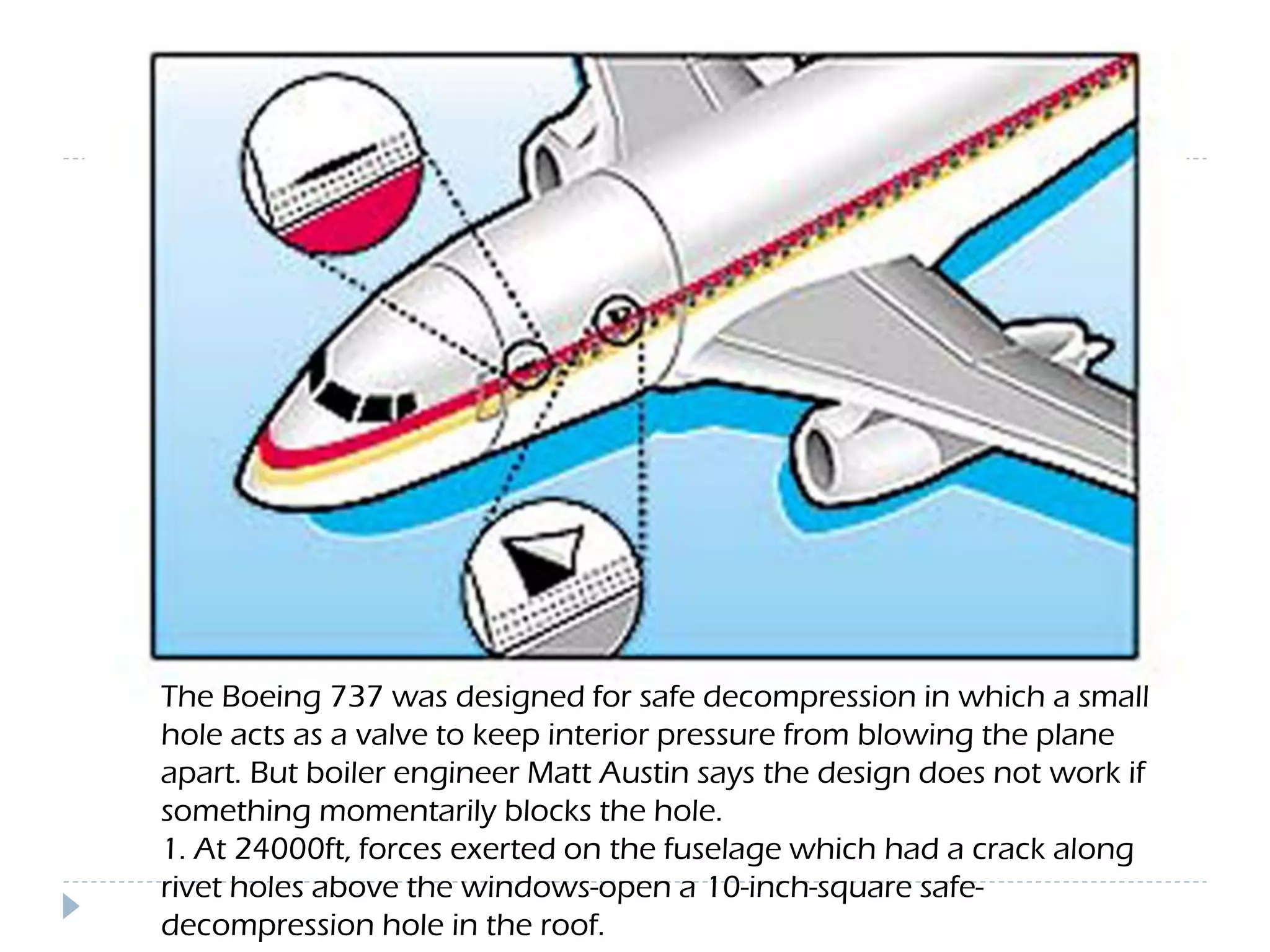
The Boeing 737 was designed for safe decompression in which a small
hole acts as a valve to keep interior pressure from blowing the plane
apart. But boiler engineer Matt Austin says the design does not work if
something momentarily blocks the hole.
1. At 24000ft, forces exerted on the fuselage which had a crack along
rivet holes above the windows-open a 10-inch-square safe-
decompression hole in the roof.
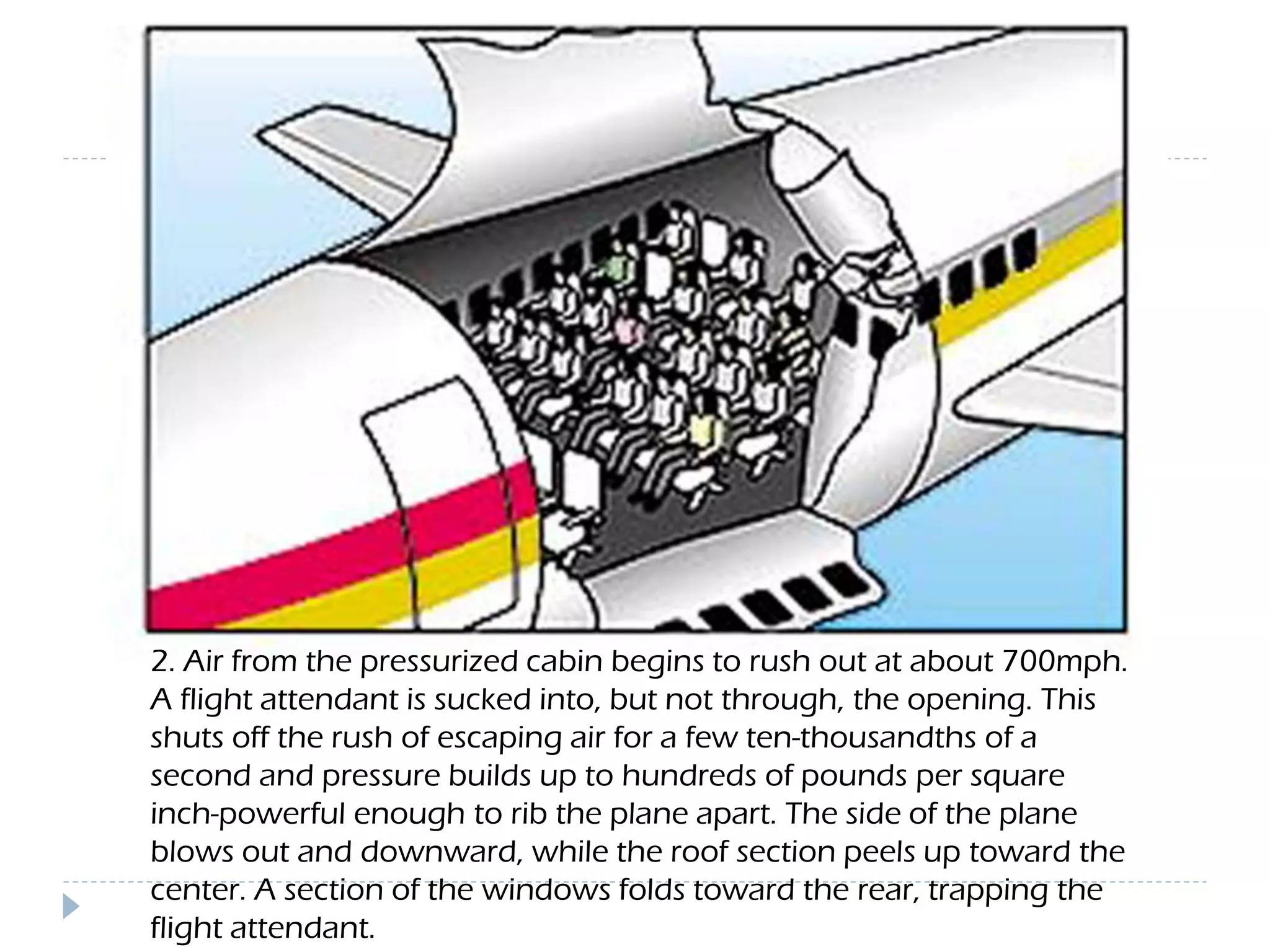
2. Air from the pressurized cabin begins to rush out at about 700mph.
A flight attendant is sucked into, but not through, the opening. This
shuts off the rush of escaping air for a few ten-thousandths of a
second and pressure builds up to hundreds of pounds per square
inch-powerful enough to rib the plane apart. The side of the plane
blows out and downward, while the roof section peels up toward the
center. A section of the windows folds toward the rear, trapping the
flight attendant.
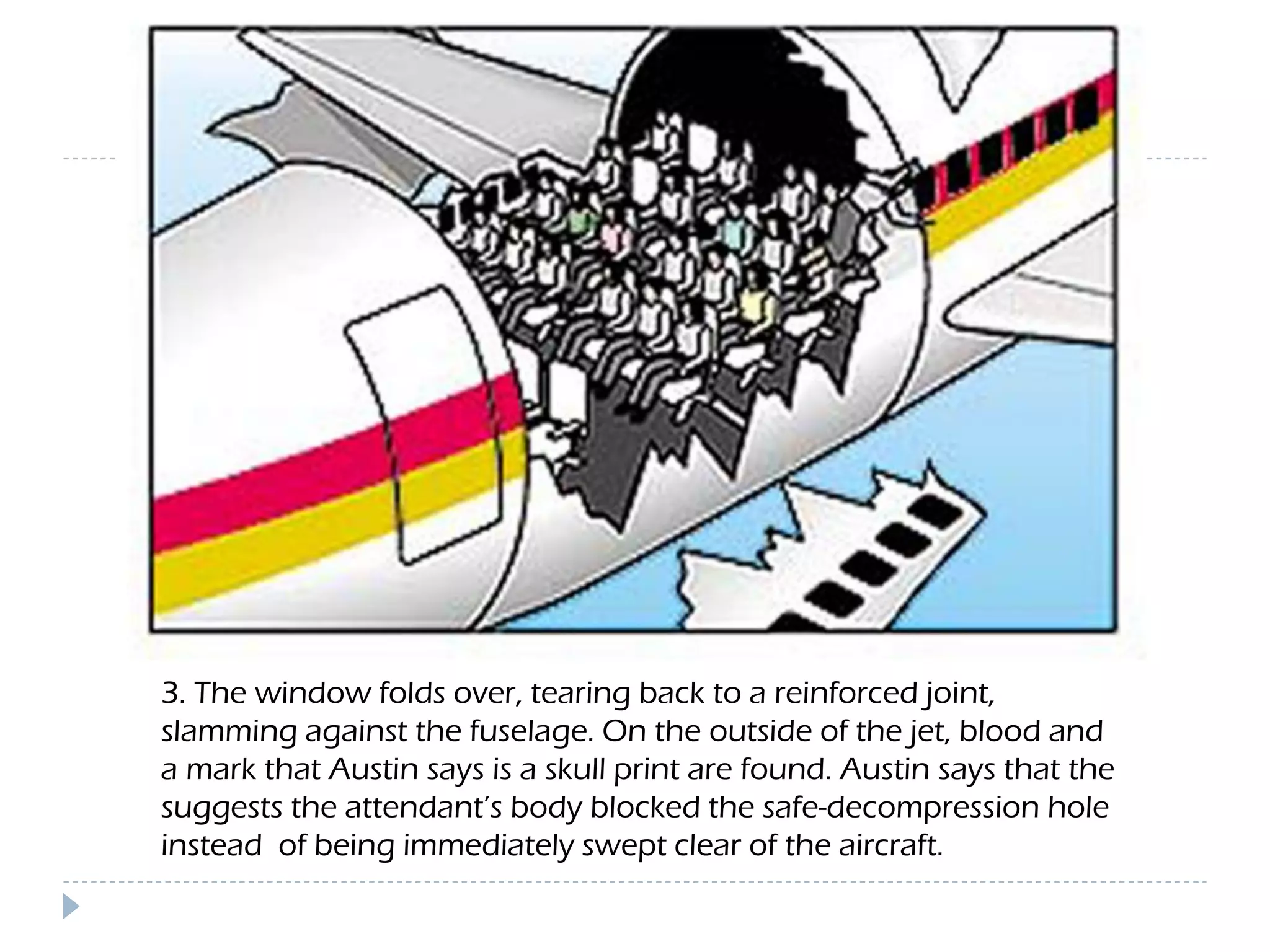
3. The window folds over, tearing back to a reinforced joint,
slamming against the fuselage. On the outside of the jet, blood and
a mark that Austin says is a skull print are found. Austin says that the
suggests the attendant’s body blocked the safe-decompression hole
instead of being immediately swept clear of the aircraft.
VIDEO (ACCIDENT)
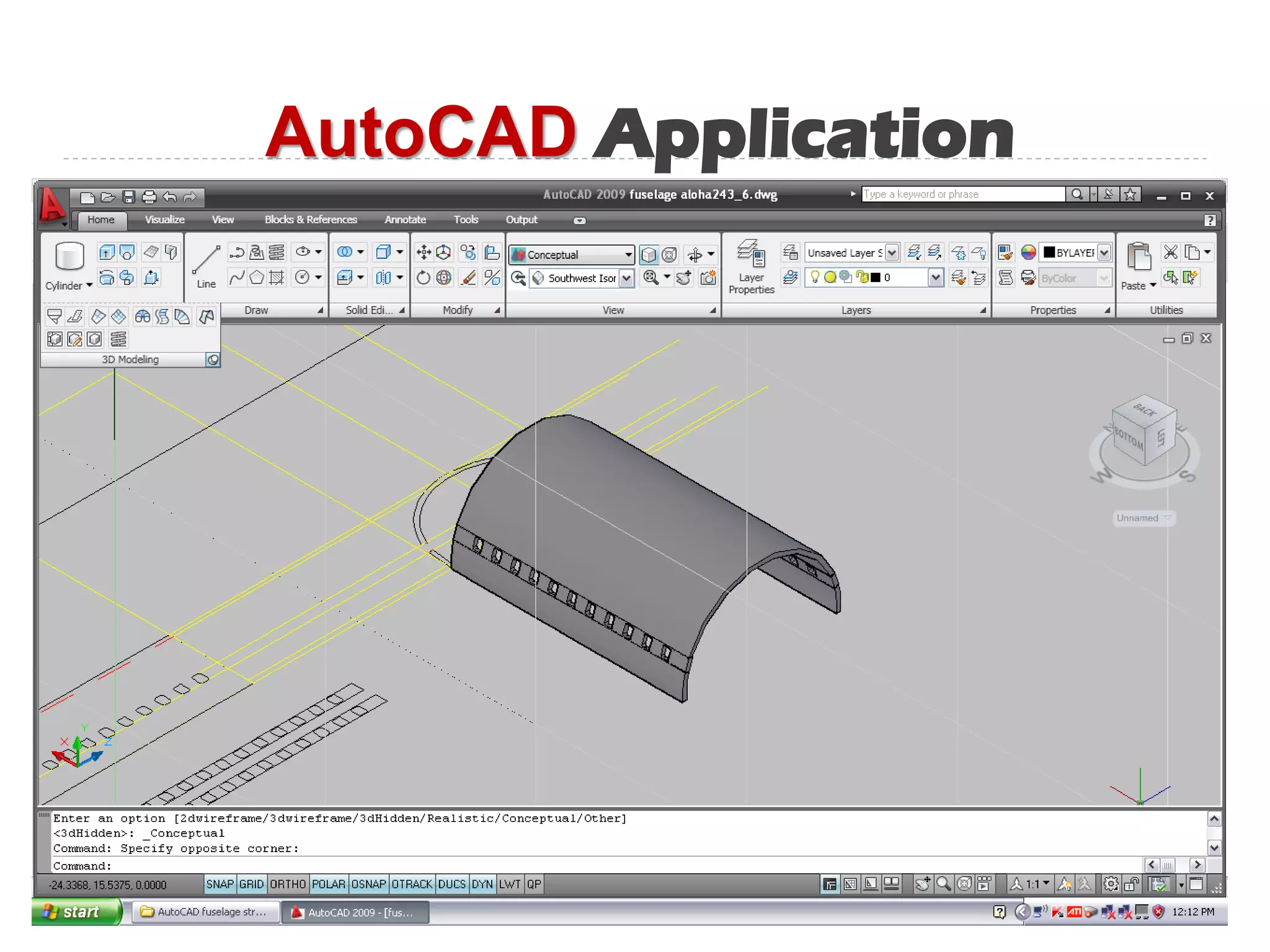
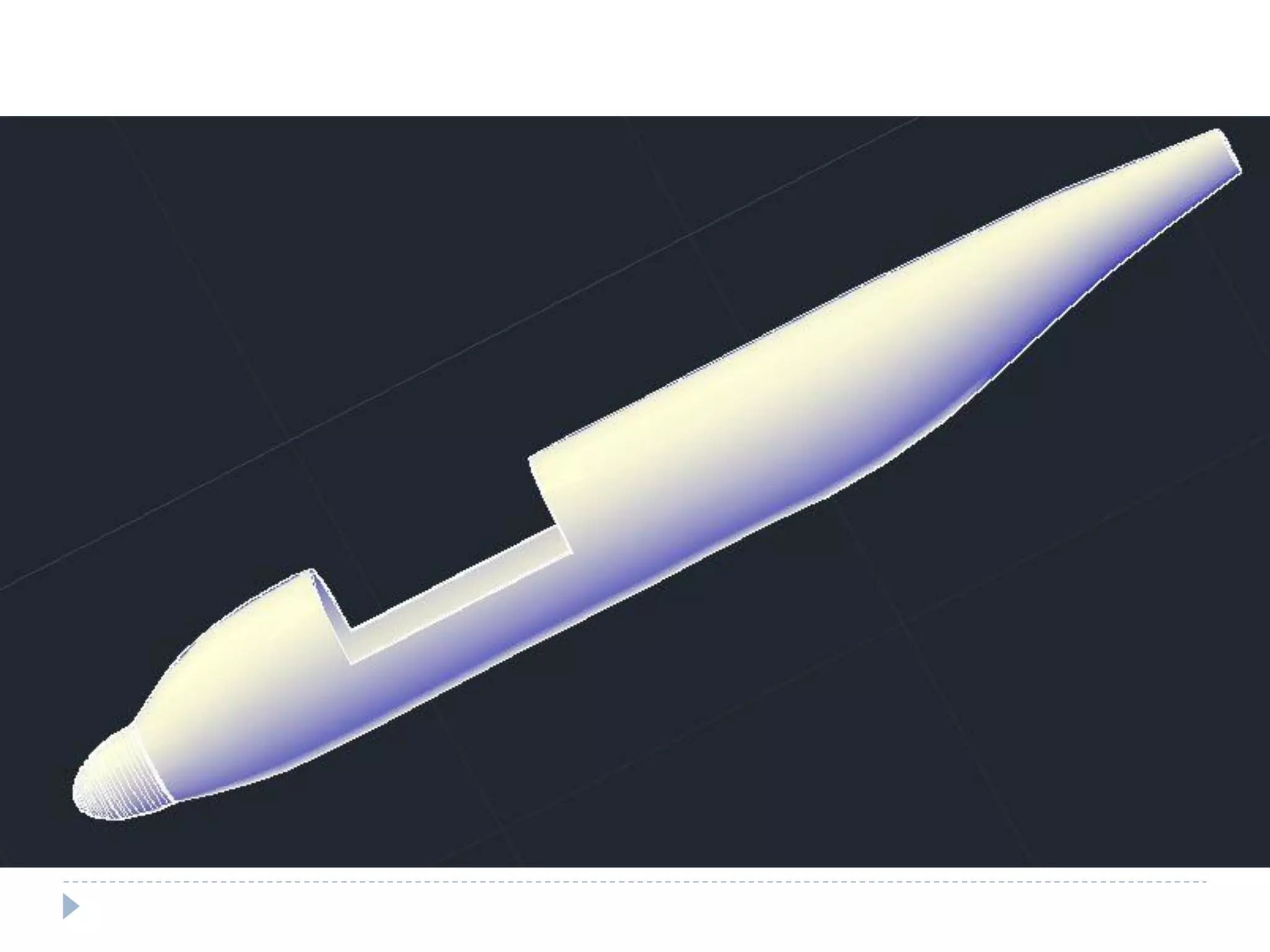
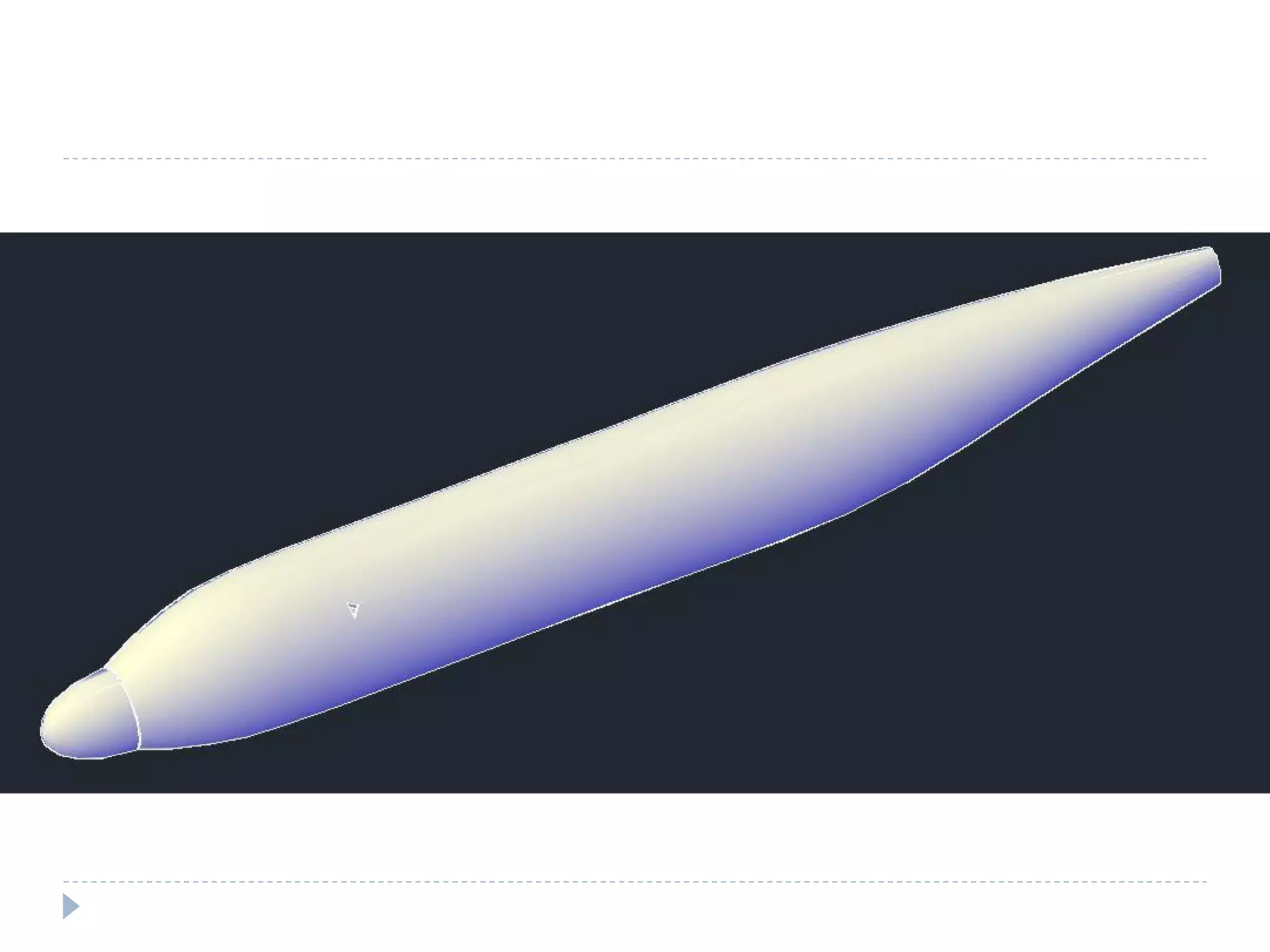
AutoCAD Application
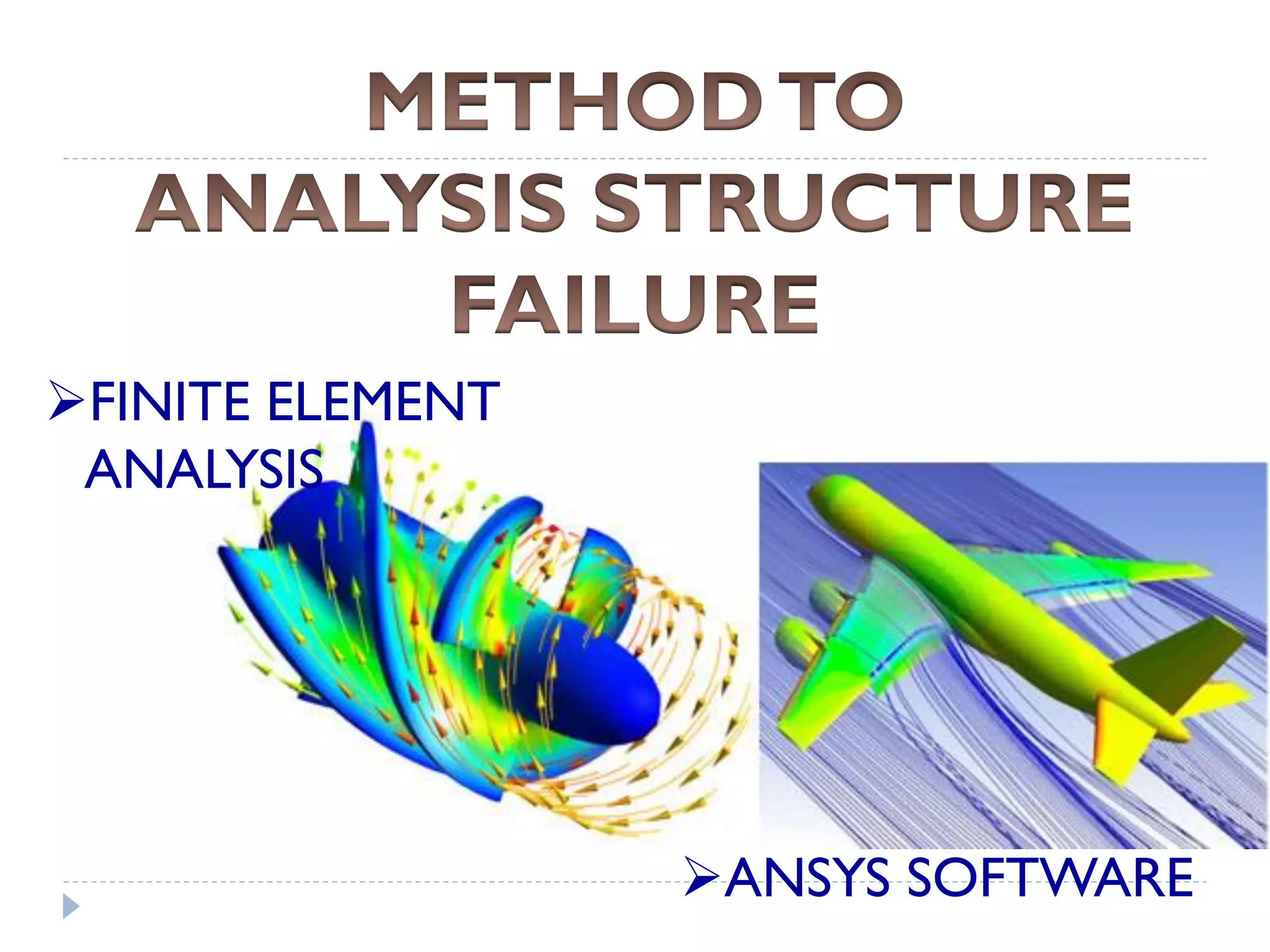
FINITE ELEMENT
ANALYSIS
ANSYS SOFTWARE
 The Finite Element Method(FEM) is based on the
idea of building a complicated object with simple
blocks, or, dividing a complicated object into
small and manageable pieces. Application of
these simple idea can be found everywhere in
everyday life, as well as in engineering.
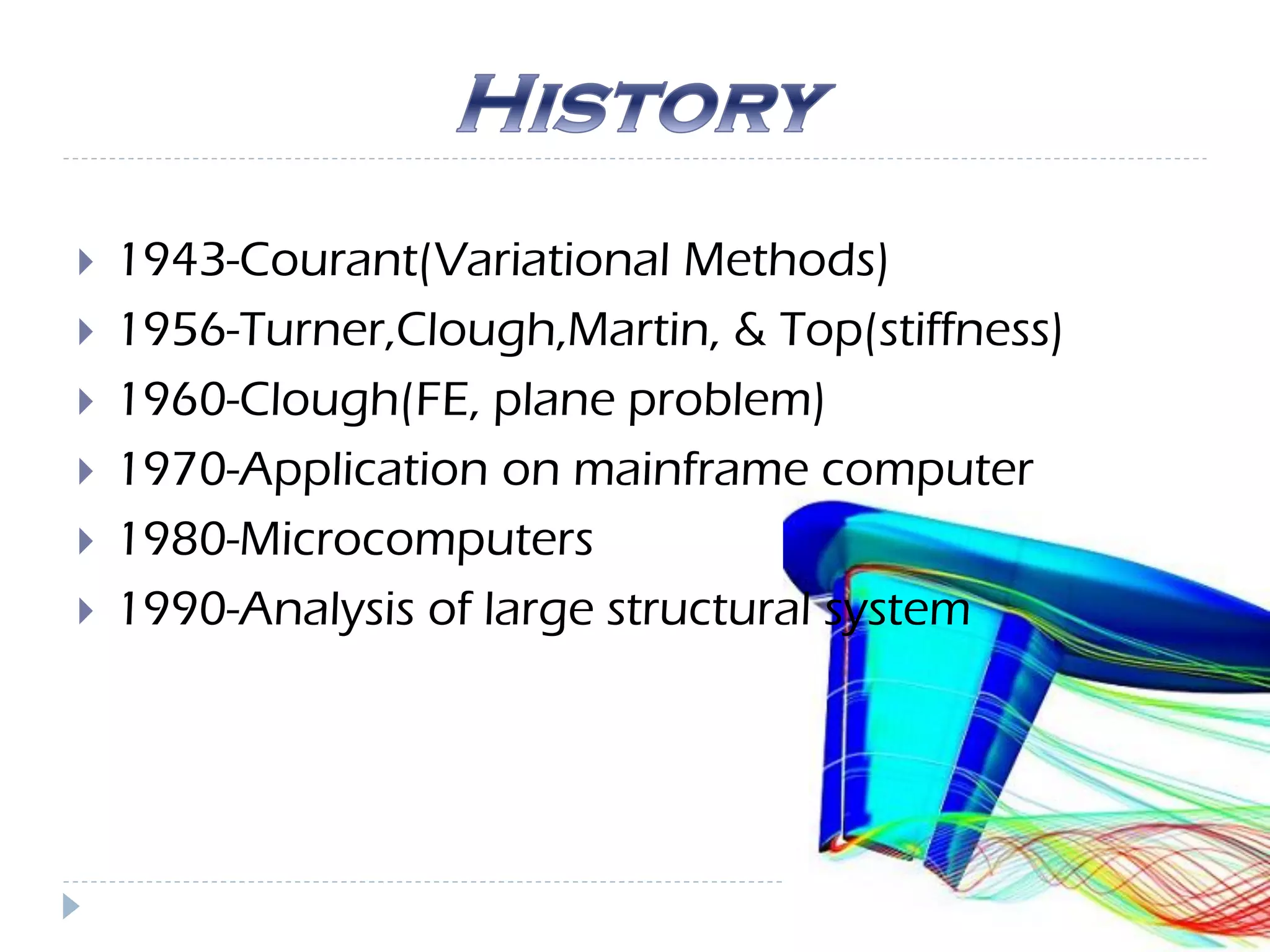
 1943-Courant(Variational Methods)
 1956-Turner,Clough,Martin, & Top(stiffness)
 1960-Clough(FE, plane problem)
 1970-Application on mainframe computer
 1980-Microcomputers
 1990-Analysis of large structural system
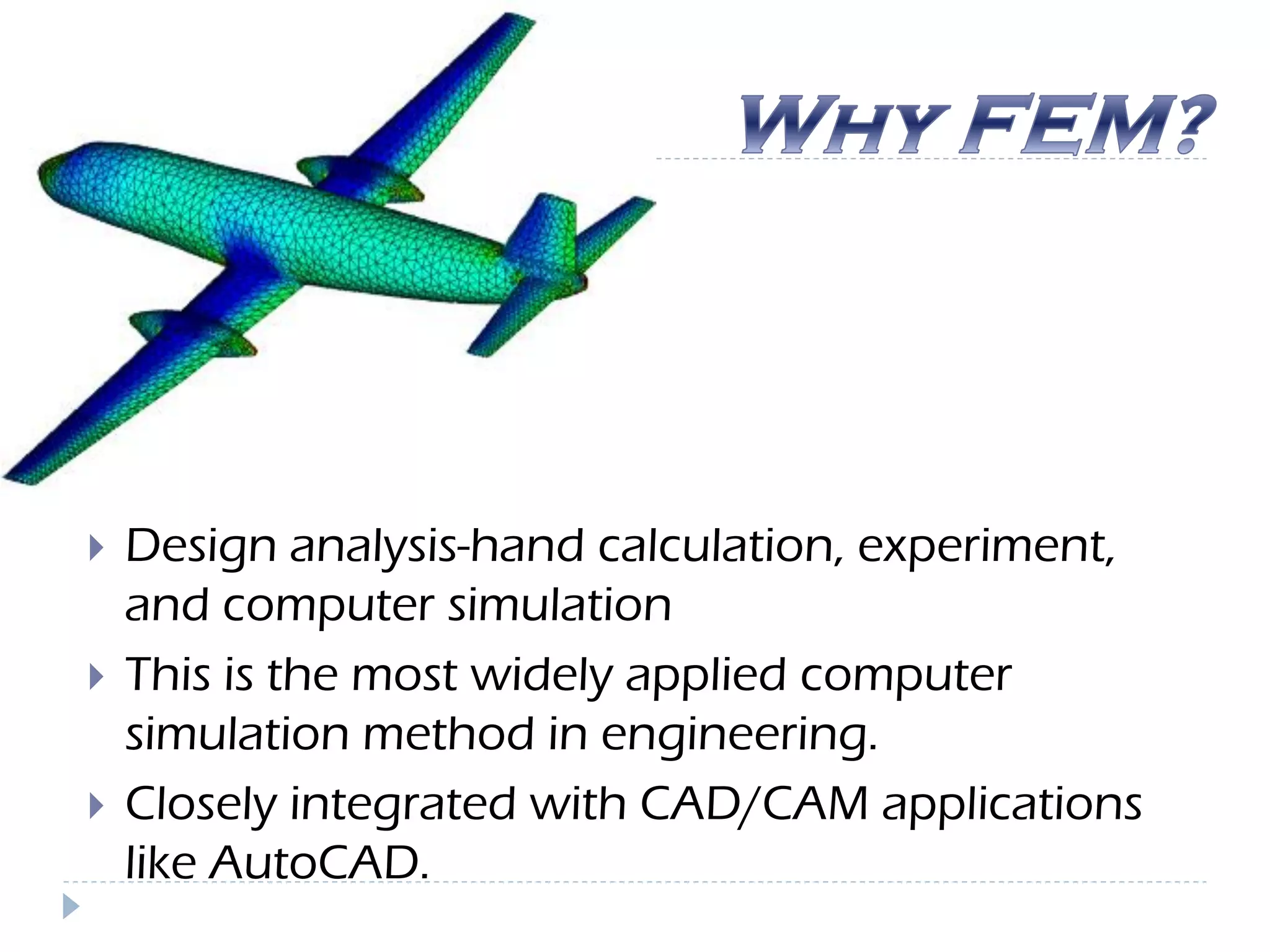
 Design analysis-hand calculation, experiment,
and computer simulation
 This is the most widely applied computer
simulation method in engineering.
 Closely integrated with CAD/CAM applications
like AutoCAD.
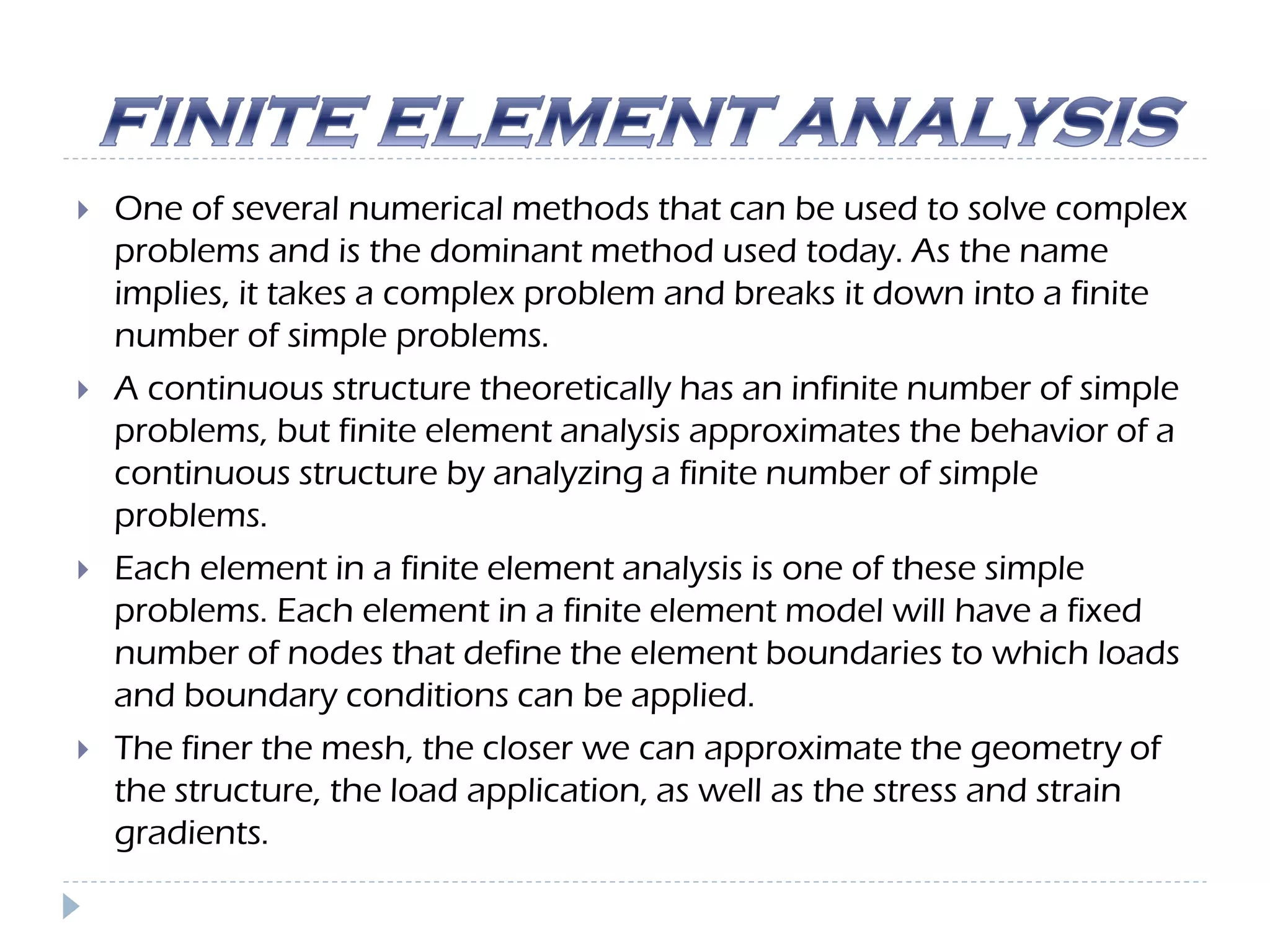
 One of several numerical methods that can be used to solve complex
problems and is the dominant method used today. As the name
implies, it takes a complex problem and breaks it down into a finite
number of simple problems.
 A continuous structure theoretically has an infinite number of simple
problems, but finite element analysis approximates the behavior of a
continuous structure by analyzing a finite number of simple
problems.
 Each element in a finite element analysis is one of these simple
problems. Each element in a finite element model will have a fixed
number of nodes that define the element boundaries to which loads
and boundary conditions can be applied.
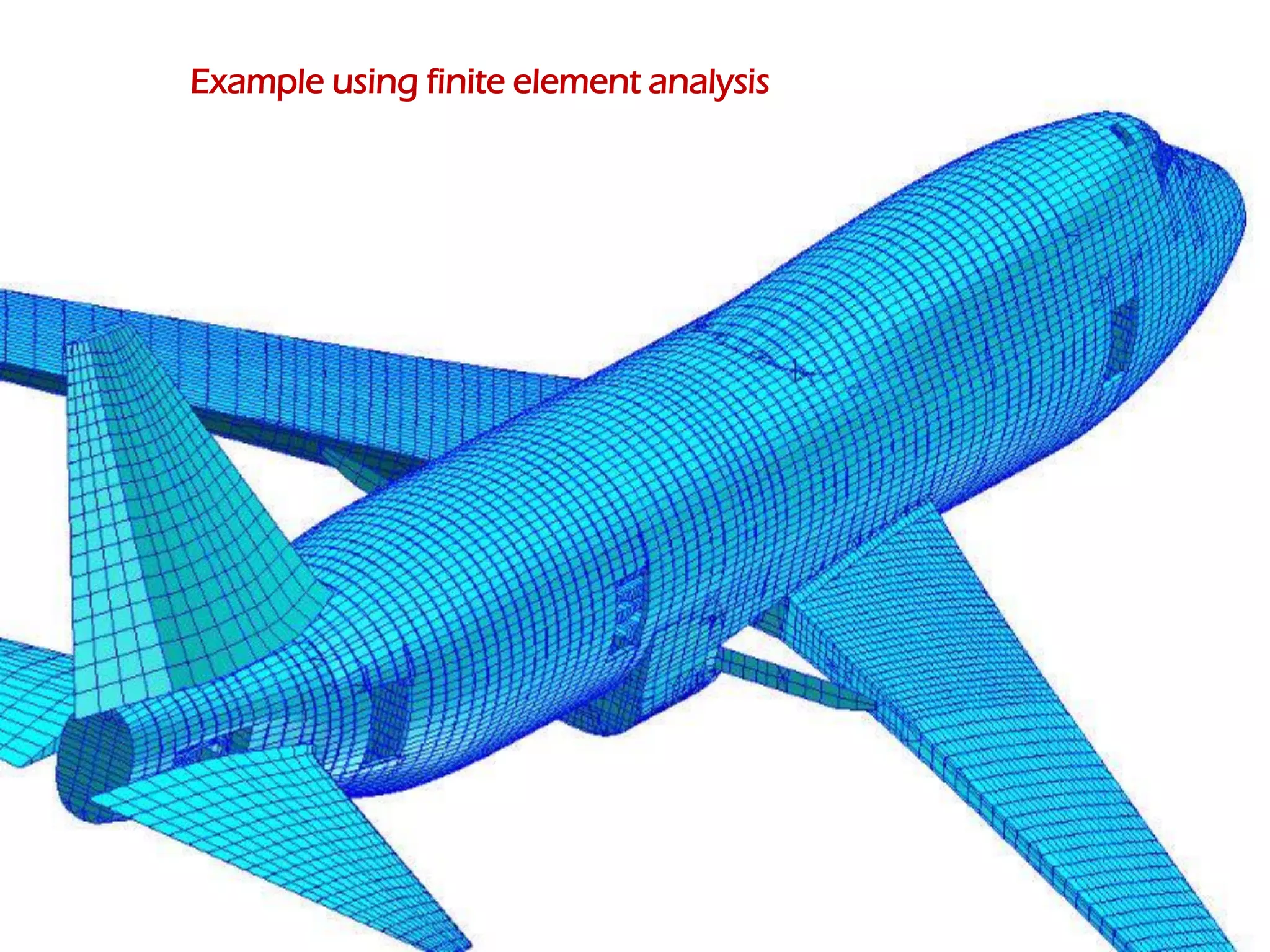
 The finer the mesh, the closer we can approximate the geometry of
the structure, the load application, as well as the stress and strain
gradients.
Example using finite element analysis
 ANSYS offers a comprehensive range of engineering simulation
solution sets providing access to virtually any field of engineering
simulation that a design process requires. Companies in a wide
variety of industries use ANSYS software.
 ANSYS is a finite element analysis (FEA) code widely used in the
computer-aided engineering (CAE) field.
 ANSYS software allows engineers to construct computer models of
structures, machine components or systems which apply operating
loads and other design criteria and study physical responses, such as
stress levels, temperature distributions, pressure and others.
 It permits an evaluation of a design without having to build and
destroy multiple prototypes in testing.
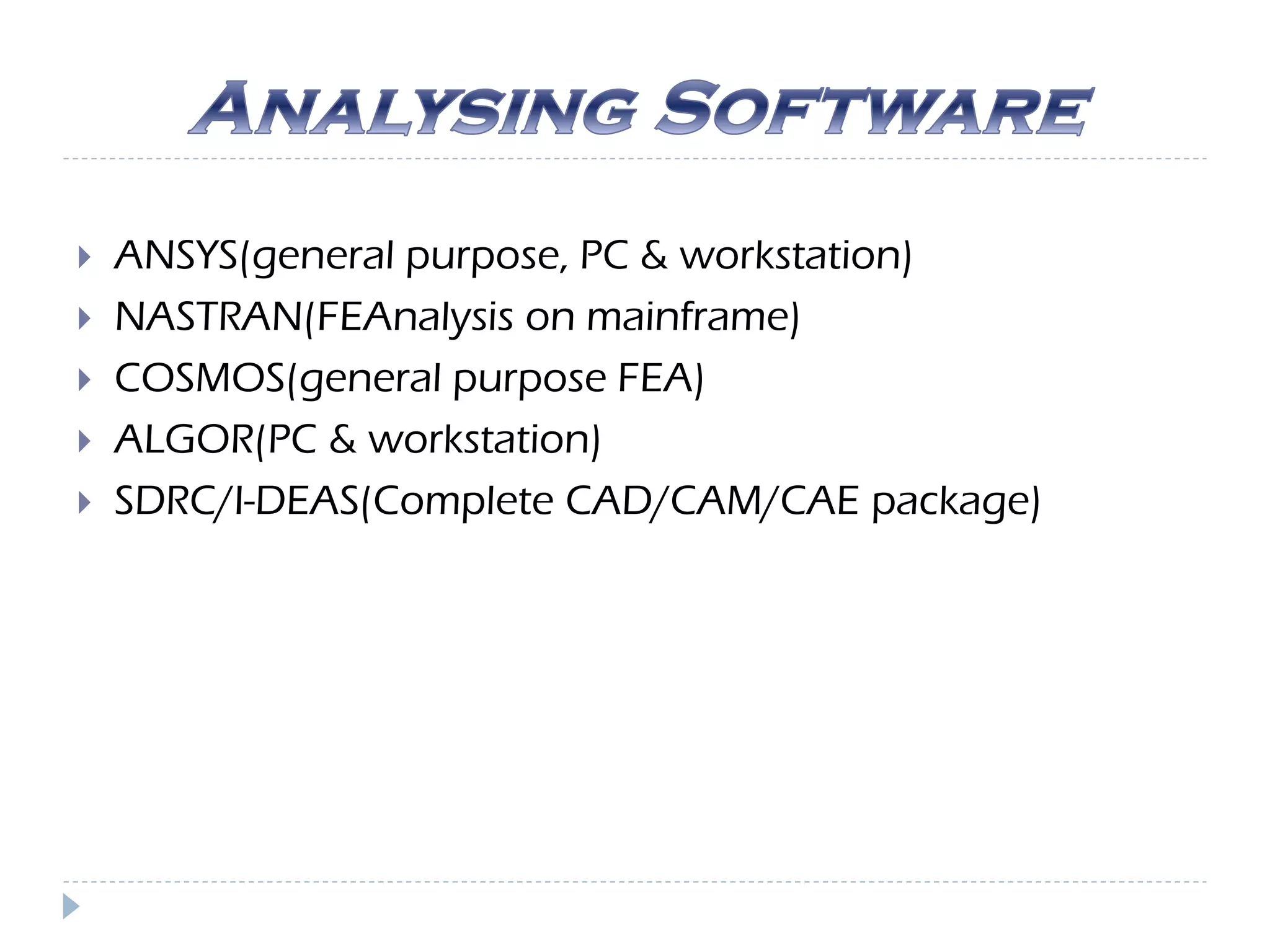
 ANSYS(general purpose, PC & workstation)
 NASTRAN(FEAnalysis on mainframe)
 COSMOS(general purpose FEA)
 ALGOR(PC & workstation)
 SDRC/I-DEAS(Complete CAD/CAM/CAE package)
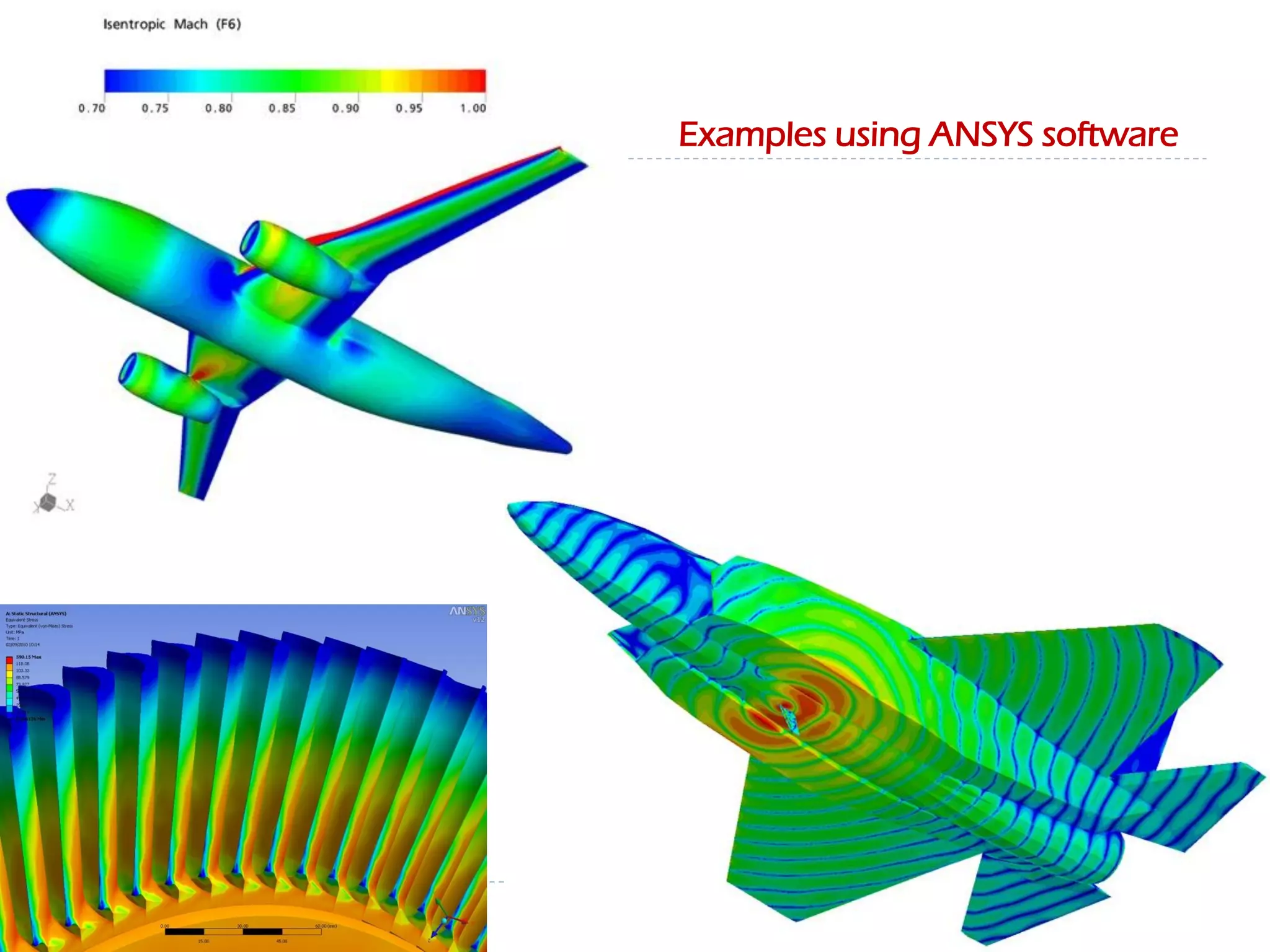
Examples using ANSYS software
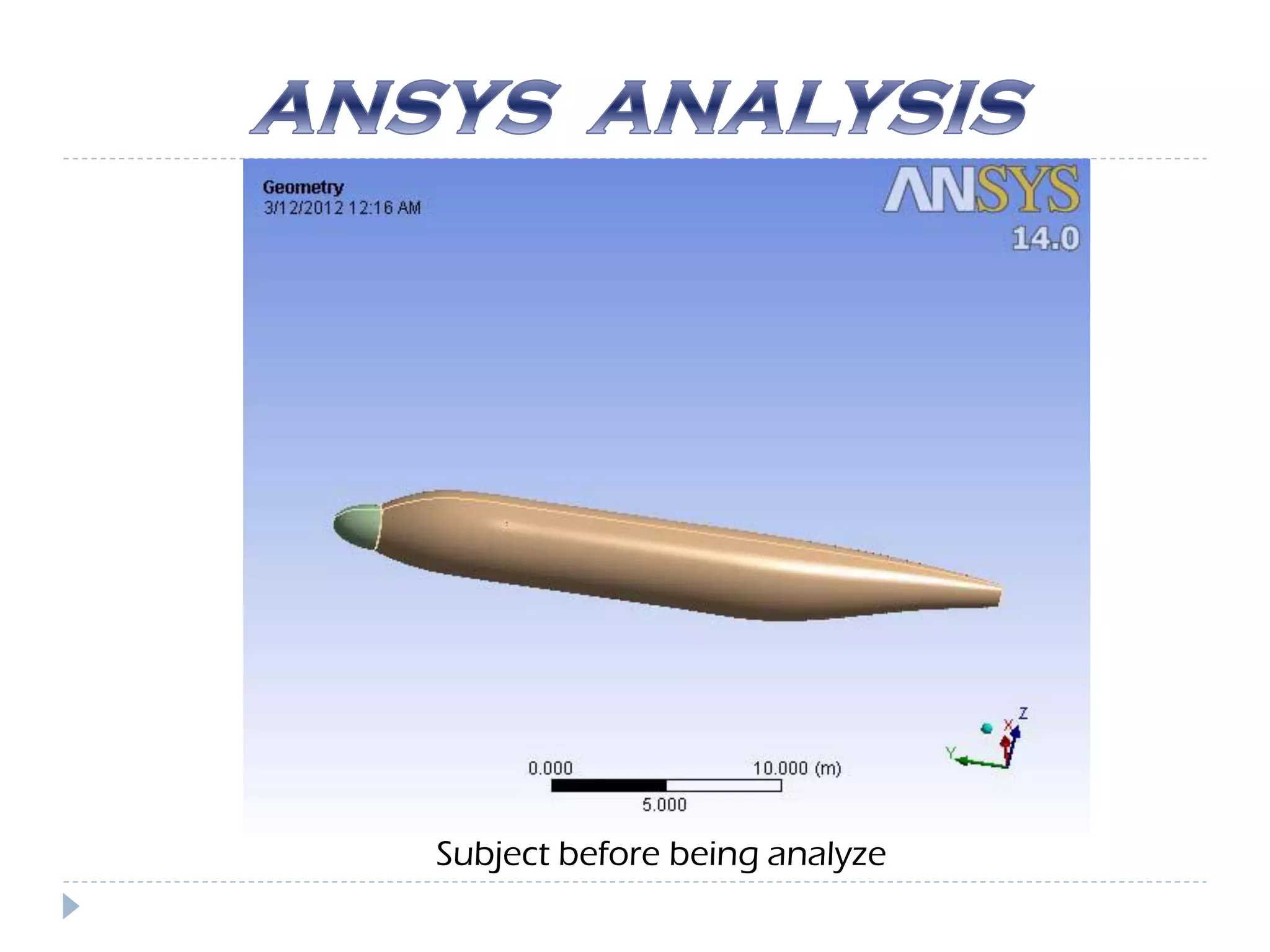
Subject before being analyze
VIDEO (ANSYS)
Continue…
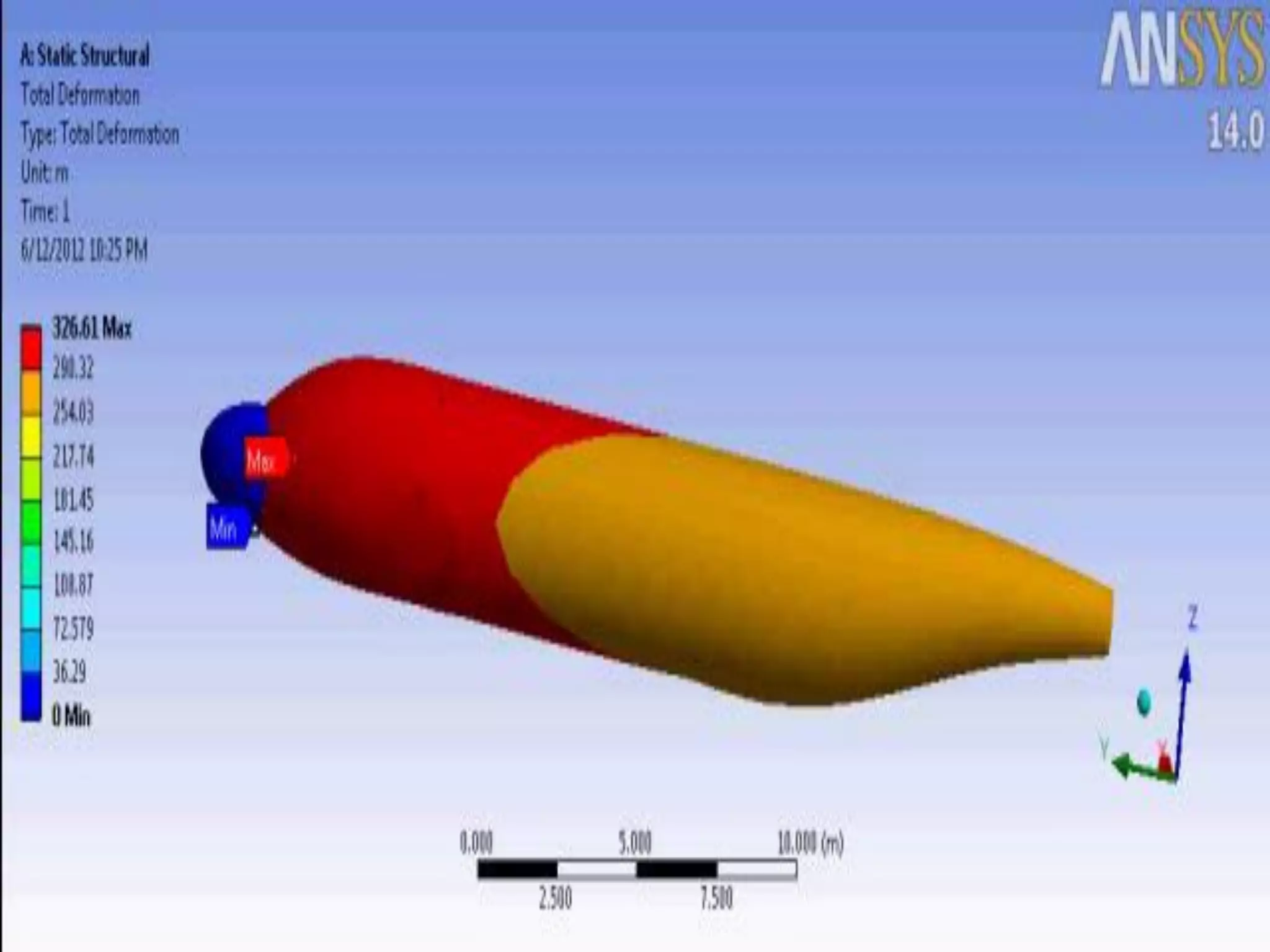
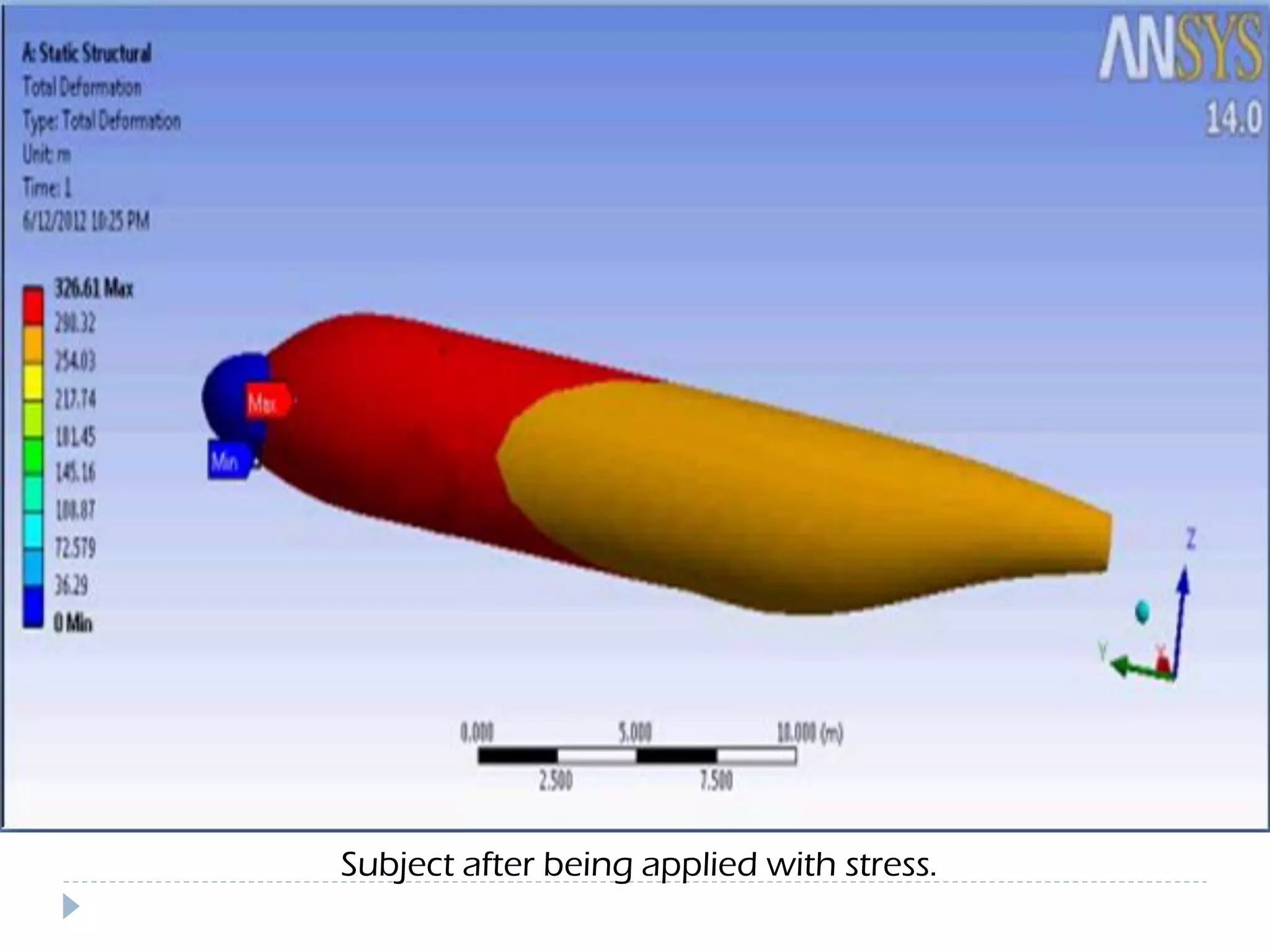
Subject after being applied with stress.
References
 http://ntl.bts.gov/lib/38000/38500/38554/aloha_flight_243
_a_new_direction.pdf
 www.disastercity.com
 Shari Stamford Krause, ‘Aircraft Safety Accident
Investigations, Analyses & Applications’ Second Edition,
McGraw-Hill (2003)
 David H.Allen, Walter E.Haisler, ‘INTRODUCTION TO
AEROSPACE STRUCTURAL ANALYSIS’ , John Wiley & Sons
(1985)
Image
 http://www.ansys.com/Industries/Electronics+&+Semiconductor/D
efense+&+Aerospace+Electronics
 http://www.theregister.co.uk/2010/11/10/panasas_pas12/
 http://www.mece.ualberta.ca/~wmoussa/lab/research.htm
 http://www.innoventengg.com/ansys-fluent.html
 http://www.esscano.com/page.asp?page_ID=14
 http://news.investors.com/photopopup.aspx?path=ITc_111207.jpg
&docId=593871&xmpSource=&width=1175&height=750&caption=
Ansys+software+is+used+to+model+the+flow-
path+lines+for+two+rockets+on+this+military+helicopter
 http://www.sme.org/MEMagazine/Article.aspx?id=49599&taxid=14
19
 http://ari3f.wordpress.com/2007/03/08/wisata-ke-finite-element-
method/
Project of Aircraft Structure Failure

Project of Aircraft Structure Failure

  • 1.
    AIRCRAFT STRUCTURE FAILURE PROJECT Members: AmirulIman B. Hasri AD110155 Jaswant Singh Bal A/L Hadip Singh AD110177 Amal Iqmal B. Adnan AD110189 FACULTY OF MECHANICAL & MANUFACTURING ENGINEERING AIRCRAFT STRUCTURES BDU20103 http://www.dnv.com/binaries/PULS-buckling_tcm4-284864.JPG
  • 2.
  • 3.
    News Of AlohaAirline 243 Disaster
  • 4.
  • 5.
    Captain Robert Schornstheimer Firstofficer Madeline "Mimi" Tompkins
  • 6.
  • 7.
    APRIL 28, 1988 At 13.25 P.M A Boeing 737-200 operated by Aloha Airlines as flight 243 take off from Hilo and its destination was to Honolulu, Hawaii. The first officer flew the plane while the captain handle the radio communications with the air traffic control (A.T.C).  At 13.46 P.M After just 21 minutes into the flight, , they experienced an explosive decompression and structural failure at 24,000 feet. Part of the front of the fuselage tare apart. First 5 rows were exposed completely to the sky. Approximately 18 feet of the cabin skin and structure of the cabin entrance door and above the passenger floor line separated from the airplane during flight. Both pilots immediately take action: Captain- control the plane & First officer- contact traffic control at Maui cause it was listed as the alternate landing airport.
  • 8.
    Continue….  At 13.50P.M The tower able to contact the pilots. So the pilots request an emergency landing and equipment. They notice that the door at the fuselage is missing.  At 13.55 P.M Captain request ‘ flight control manual inversion ’ ( used when hydraulic system and power steering malfunction) by using the controlling yolk. He puts the landing gear down and changes flap from 15 to 5 ( constantly change the flaps to get the precise speed landing). They safely land the aircraft at Kahului Airport on the Island of Maui. There were 89 passengers and 6 crewmembers on board. One flight attendant was swept overboard during the decompression and is presumed to have been fatally injured. 7 passengers and 1 flight attendant received serious injuries.
  • 9.
  • 10.
  • 11.
  • 12.
    The Boeing 737was designed for safe decompression in which a small hole acts as a valve to keep interior pressure from blowing the plane apart. But boiler engineer Matt Austin says the design does not work if something momentarily blocks the hole. 1. At 24000ft, forces exerted on the fuselage which had a crack along rivet holes above the windows-open a 10-inch-square safe- decompression hole in the roof.
  • 13.
    2. Air fromthe pressurized cabin begins to rush out at about 700mph. A flight attendant is sucked into, but not through, the opening. This shuts off the rush of escaping air for a few ten-thousandths of a second and pressure builds up to hundreds of pounds per square inch-powerful enough to rib the plane apart. The side of the plane blows out and downward, while the roof section peels up toward the center. A section of the windows folds toward the rear, trapping the flight attendant.
  • 14.
    3. The windowfolds over, tearing back to a reinforced joint, slamming against the fuselage. On the outside of the jet, blood and a mark that Austin says is a skull print are found. Austin says that the suggests the attendant’s body blocked the safe-decompression hole instead of being immediately swept clear of the aircraft.
  • 15.
  • 18.
  • 21.
  • 22.
     The FiniteElement Method(FEM) is based on the idea of building a complicated object with simple blocks, or, dividing a complicated object into small and manageable pieces. Application of these simple idea can be found everywhere in everyday life, as well as in engineering.
  • 23.
     1943-Courant(Variational Methods) 1956-Turner,Clough,Martin, & Top(stiffness)  1960-Clough(FE, plane problem)  1970-Application on mainframe computer  1980-Microcomputers  1990-Analysis of large structural system
  • 24.
     Design analysis-handcalculation, experiment, and computer simulation  This is the most widely applied computer simulation method in engineering.  Closely integrated with CAD/CAM applications like AutoCAD.
  • 25.
     One ofseveral numerical methods that can be used to solve complex problems and is the dominant method used today. As the name implies, it takes a complex problem and breaks it down into a finite number of simple problems.  A continuous structure theoretically has an infinite number of simple problems, but finite element analysis approximates the behavior of a continuous structure by analyzing a finite number of simple problems.  Each element in a finite element analysis is one of these simple problems. Each element in a finite element model will have a fixed number of nodes that define the element boundaries to which loads and boundary conditions can be applied.  The finer the mesh, the closer we can approximate the geometry of the structure, the load application, as well as the stress and strain gradients.
  • 26.
    Example using finiteelement analysis
  • 27.
     ANSYS offersa comprehensive range of engineering simulation solution sets providing access to virtually any field of engineering simulation that a design process requires. Companies in a wide variety of industries use ANSYS software.  ANSYS is a finite element analysis (FEA) code widely used in the computer-aided engineering (CAE) field.  ANSYS software allows engineers to construct computer models of structures, machine components or systems which apply operating loads and other design criteria and study physical responses, such as stress levels, temperature distributions, pressure and others.  It permits an evaluation of a design without having to build and destroy multiple prototypes in testing.
  • 28.
     ANSYS(general purpose,PC & workstation)  NASTRAN(FEAnalysis on mainframe)  COSMOS(general purpose FEA)  ALGOR(PC & workstation)  SDRC/I-DEAS(Complete CAD/CAM/CAE package)
  • 29.
  • 30.
  • 31.
  • 32.
    Continue… Subject after beingapplied with stress.
  • 33.
    References  http://ntl.bts.gov/lib/38000/38500/38554/aloha_flight_243 _a_new_direction.pdf  www.disastercity.com Shari Stamford Krause, ‘Aircraft Safety Accident Investigations, Analyses & Applications’ Second Edition, McGraw-Hill (2003)  David H.Allen, Walter E.Haisler, ‘INTRODUCTION TO AEROSPACE STRUCTURAL ANALYSIS’ , John Wiley & Sons (1985)
  • 34.
    Image  http://www.ansys.com/Industries/Electronics+&+Semiconductor/D efense+&+Aerospace+Electronics  http://www.theregister.co.uk/2010/11/10/panasas_pas12/ http://www.mece.ualberta.ca/~wmoussa/lab/research.htm  http://www.innoventengg.com/ansys-fluent.html  http://www.esscano.com/page.asp?page_ID=14  http://news.investors.com/photopopup.aspx?path=ITc_111207.jpg &docId=593871&xmpSource=&width=1175&height=750&caption= Ansys+software+is+used+to+model+the+flow- path+lines+for+two+rockets+on+this+military+helicopter  http://www.sme.org/MEMagazine/Article.aspx?id=49599&taxid=14 19  http://ari3f.wordpress.com/2007/03/08/wisata-ke-finite-element- method/