Turboshaft Engine
By: Ali Jraisheh
Department of Mechanical Engineering.
Indian Institute of Technology, Guwahati.
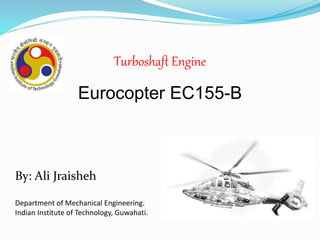
Eurocopter EC155-B
Road Map
General Information About EC155
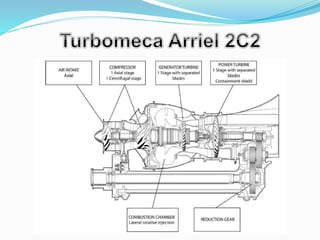
Turboshaft Engine (Turbomeca Arriel 2C1)
Specifications of the Engine
Specifications of the Helicopter
Aerodynamics & Performance of the
Helicopter
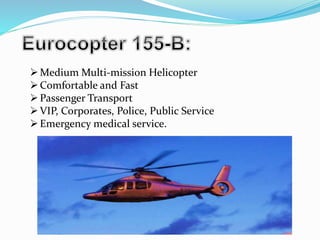
Medium Multi-mission Helicopter
Comfortable and Fast
Passenger Transport
VIP, Corporates, Police, Public Service
Emergency medical service.
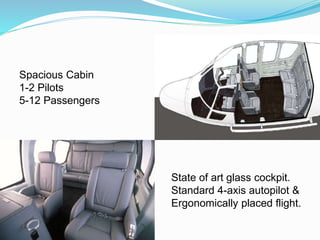
Spacious Cabin
1-2 Pilots
5-12 Passengers
State of art glass cockpit.
Standard 4-axis autopilot &
Ergonomically placed flight.
Specifications of the
Engine:
Length: 112 cm
Diameter: 60 cm
Dry weight: 111 Kg
Compressor: Single-stage axial
plus single-stage centrifugal.
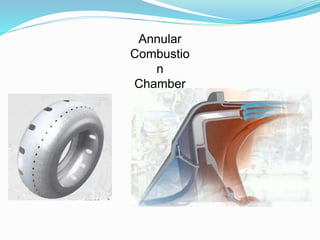
Combustor: Annular combustion
chamber.
Turbines: Single-stage power
turbine, Single-stage gas
generator turbine.
Maximum power output: 681
shp (508 KW).
Turbine inlet temperature: 840
C.
Power-to-weight ratio:
5KW/Kg.
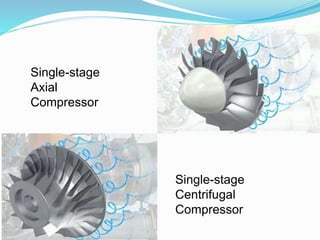
Single-stage
Axial
Compressor
Single-stage
Centrifugal
Compressor
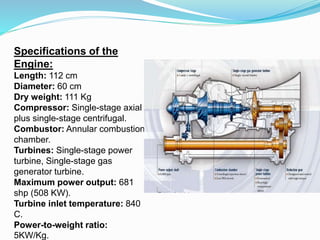
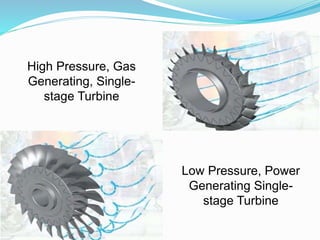
High Pressure, Gas
Generating, Single-
stage Turbine
Low Pressure, Power
Generating Single-
stage Turbine
Annular
Combustio
n
Chamber
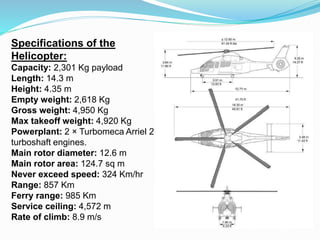
Specifications of the
Helicopter:
Capacity: 2,301 Kg payload
Length: 14.3 m
Height: 4.35 m
Empty weight: 2,618 Kg
Gross weight: 4,950 Kg
Max takeoff weight: 4,920 Kg
Powerplant: 2 × Turbomeca Arriel 2C2
turboshaft engines.
Main rotor diameter: 12.6 m
Main rotor area: 124.7 sq m
Never exceed speed: 324 Km/hr
Range: 857 Km
Ferry range: 985 Km
Service ceiling: 4,572 m
Rate of climb: 8.9 m/s
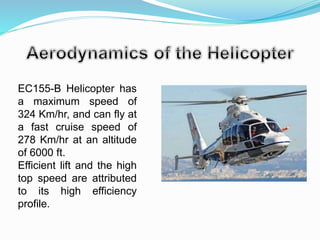
EC155-B Helicopter has
a maximum speed of
324 Km/hr, and can fly at
a fast cruise speed of
278 Km/hr at an altitude
of 6000 ft.
Efficient lift and the high
top speed are attributed
to its high efficiency
profile.
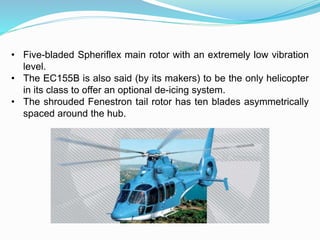
• Five-bladed Spheriflex main rotor with an extremely low vibration
level.
• The EC155B is also said (by its makers) to be the only helicopter
in its class to offer an optional de-icing system.
• The shrouded Fenestron tail rotor has ten blades asymmetrically
spaced around the hub.
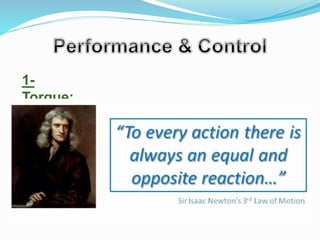
1-
Torque:
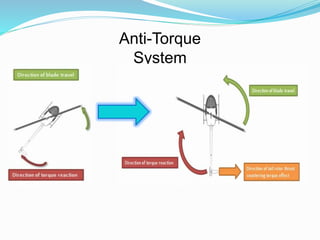
Anti-Torque
System
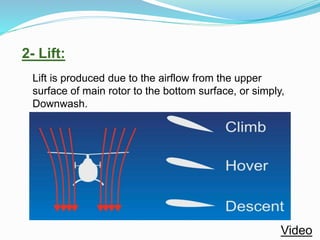
2- Lift:
Lift is produced due to the airflow from the upper
surface of main rotor to the bottom surface, or simply,
Downwash.
Video
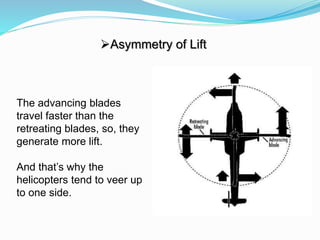
Asymmetry of Lift
The advancing blades
travel faster than the
retreating blades, so, they
generate more lift.
And that’s why the
helicopters tend to veer up
to one side.
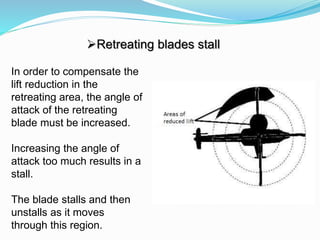
Retreating blades stall
In order to compensate the
lift reduction in the
retreating area, the angle of
attack of the retreating
blade must be increased.
Increasing the angle of
attack too much results in a
stall.
The blade stalls and then
unstalls as it moves
through this region.
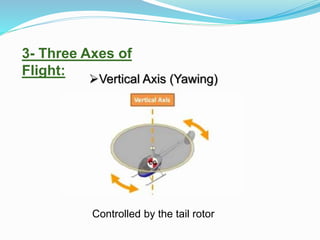
3- Three Axes of
Flight:
Vertical Axis (Yawing)
Controlled by the tail rotor
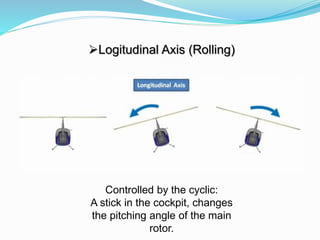
Logitudinal Axis (Rolling)
Controlled by the cyclic:
A stick in the cockpit, changes
the pitching angle of the main
rotor.
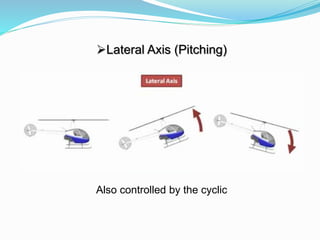
Lateral Axis (Pitching)
Also controlled by the cyclic
4- Forward & Backward
Flight:
Controlled by pitching
angle.
In forward flight, the rotor
disc is tilted downwards.
In backward flight, the
rotor disc is tilted
upwards.
Hence, the total lift will
has two components.
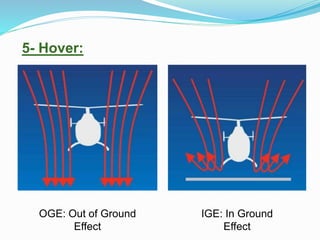
5- Hover:
IGE: In Ground
Effect
OGE: Out of Ground
Effect
Turbo shaft engine

Turbo shaft engine

  • 1.
    Turboshaft Engine By: AliJraisheh Department of Mechanical Engineering. Indian Institute of Technology, Guwahati. Eurocopter EC155-B
  • 2.
    Road Map General InformationAbout EC155 Turboshaft Engine (Turbomeca Arriel 2C1) Specifications of the Engine Specifications of the Helicopter Aerodynamics & Performance of the Helicopter
  • 3.
    Medium Multi-mission Helicopter Comfortableand Fast Passenger Transport VIP, Corporates, Police, Public Service Emergency medical service.
  • 4.
    Spacious Cabin 1-2 Pilots 5-12Passengers State of art glass cockpit. Standard 4-axis autopilot & Ergonomically placed flight.
  • 7.
    Specifications of the Engine: Length:112 cm Diameter: 60 cm Dry weight: 111 Kg Compressor: Single-stage axial plus single-stage centrifugal. Combustor: Annular combustion chamber. Turbines: Single-stage power turbine, Single-stage gas generator turbine. Maximum power output: 681 shp (508 KW). Turbine inlet temperature: 840 C. Power-to-weight ratio: 5KW/Kg.
  • 8.
  • 9.
    High Pressure, Gas Generating,Single- stage Turbine Low Pressure, Power Generating Single- stage Turbine
  • 10.
  • 11.
    Specifications of the Helicopter: Capacity:2,301 Kg payload Length: 14.3 m Height: 4.35 m Empty weight: 2,618 Kg Gross weight: 4,950 Kg Max takeoff weight: 4,920 Kg Powerplant: 2 × Turbomeca Arriel 2C2 turboshaft engines. Main rotor diameter: 12.6 m Main rotor area: 124.7 sq m Never exceed speed: 324 Km/hr Range: 857 Km Ferry range: 985 Km Service ceiling: 4,572 m Rate of climb: 8.9 m/s
  • 12.
    EC155-B Helicopter has amaximum speed of 324 Km/hr, and can fly at a fast cruise speed of 278 Km/hr at an altitude of 6000 ft. Efficient lift and the high top speed are attributed to its high efficiency profile.
  • 13.
    • Five-bladed Spheriflexmain rotor with an extremely low vibration level. • The EC155B is also said (by its makers) to be the only helicopter in its class to offer an optional de-icing system. • The shrouded Fenestron tail rotor has ten blades asymmetrically spaced around the hub.
  • 14.
  • 15.
  • 16.
    2- Lift: Lift isproduced due to the airflow from the upper surface of main rotor to the bottom surface, or simply, Downwash. Video
  • 17.
    Asymmetry of Lift Theadvancing blades travel faster than the retreating blades, so, they generate more lift. And that’s why the helicopters tend to veer up to one side.
  • 18.
    Retreating blades stall Inorder to compensate the lift reduction in the retreating area, the angle of attack of the retreating blade must be increased. Increasing the angle of attack too much results in a stall. The blade stalls and then unstalls as it moves through this region.
  • 19.
    3- Three Axesof Flight: Vertical Axis (Yawing) Controlled by the tail rotor
  • 20.
    Logitudinal Axis (Rolling) Controlledby the cyclic: A stick in the cockpit, changes the pitching angle of the main rotor.
  • 21.
    Lateral Axis (Pitching) Alsocontrolled by the cyclic
  • 22.
    4- Forward &Backward Flight: Controlled by pitching angle. In forward flight, the rotor disc is tilted downwards. In backward flight, the rotor disc is tilted upwards. Hence, the total lift will has two components.
  • 23.
    5- Hover: IGE: InGround Effect OGE: Out of Ground Effect