Progress Reports
Today’s Agenda
 Election Day
 Due Date Change
 Grades
 Progress Reports
 Structuring Your Presentation
 Writing Assignment
Election Day
   We’re going to end class early so you
    can vote.
Due Date Change
   Progress Reports due Nov. 20th.
Grades
 I’ve been swamped with the election.
 You’ll have your memos back by
  Thursday. Pinkie swear this time.
 Reports back by Tuesday.
 Revised projects back by Thursday
Progress Reports
 Generally fairly easy documents
 Discussing what’s going on
 Where you are
Progress Reports
 Two kinds
 Progress on a single project
 Progress on all of your projects
Concern with the Future
 Readers want to plan for the future
 Progress reports cover information in
  the past
 How to manage other projects
Reader Questions
 What work does your report cover?
 What is the purpose of the work?
 Is your work progressing as planned?
 What results have you produced?
 What progress do you expect?
 How do things stand overall?
 What do you think we should do?
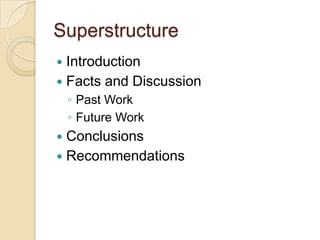
Superstructure
 Introduction
 Facts and Discussion
    ◦ Past Work
    ◦ Future Work
 Conclusions
 Recommendations
Defining Objectives
 Focus on the specific ways your
  readers will use the information
 Determined by organizational
  conventions
Research (?)
 Rarely need to conduct outside
  research in order to develop a
  progress report.
 “Research” is your own memory
 Make notes
 Brevity is key
Planning
 Write quickly.
 Plan a simple organization
 Chapter 26 has examples
 Very short report
Crafting - Introduction
 Address the first two questions
 What work does the report cover?
 What is the purpose of the work?
 May be able to skip the second
  question based on the audience.
 Background information
Crafting – Facts and
Discussion
 Is your work progressing as planned?
 What results have you produced?
 What progress do you expect to
  make?
 Compare what happened with plans
 Why are there discrepancies between
  the two?
Crafting – Facts and
Discussion
 Brief reports are better
 Specific details
 Immediately useful details
 What can your reader use?
Crafting - Conclusions
 Overall views on the progress of your
  report
 Short reports can skip this
 Longer reports on several projects
  need this
 Can be placed in the introduction
 “Work is on schedule” or “work has
  fallen behind”
Crafting - Recommendations
 Necessary
 What do we do with this information?
 What do you think we should do?
 Refocusing or altering your project
Tone
 Persuade readers you’re doing a good
  job
 Don’t be too optimistic
 Be honest
 Stay credible.
 Be straightforward about problems.
Length
 Shorter is better
 Cover all the pertinent details
 1-2 pages, usually.
Structuring Your Presentation
 Structure around your progress report
 How are you doing so far?
 If you decided not to write about your
  proposal, but about the instruction
  manual, tell us why.
 What difficulty did you have?
 What made your work easier?
Writing Assignment
 Write the outline to your progress
  report
 Answer the reader questions (next
  slide)
 Use this to structure your progress
  report
Reader Questions
 What work does your report cover?
 What is the purpose of the work?
 Is your work progressing as planned?
 What results have you produced?
 What progress do you expect?
 How do things stand overall?
 What do you think we should do?

Progress reports 110612

  • 1.
  • 2.
    Today’s Agenda  ElectionDay  Due Date Change  Grades  Progress Reports  Structuring Your Presentation  Writing Assignment
  • 3.
    Election Day  We’re going to end class early so you can vote.
  • 4.
    Due Date Change  Progress Reports due Nov. 20th.
  • 5.
    Grades  I’ve beenswamped with the election.  You’ll have your memos back by Thursday. Pinkie swear this time.  Reports back by Tuesday.  Revised projects back by Thursday
  • 6.
    Progress Reports  Generallyfairly easy documents  Discussing what’s going on  Where you are
  • 7.
    Progress Reports  Twokinds  Progress on a single project  Progress on all of your projects
  • 8.
    Concern with theFuture  Readers want to plan for the future  Progress reports cover information in the past  How to manage other projects
  • 9.
    Reader Questions  Whatwork does your report cover?  What is the purpose of the work?  Is your work progressing as planned?  What results have you produced?  What progress do you expect?  How do things stand overall?  What do you think we should do?
  • 10.
    Superstructure  Introduction  Factsand Discussion ◦ Past Work ◦ Future Work  Conclusions  Recommendations
  • 11.
    Defining Objectives  Focuson the specific ways your readers will use the information  Determined by organizational conventions
  • 12.
    Research (?)  Rarelyneed to conduct outside research in order to develop a progress report.  “Research” is your own memory  Make notes  Brevity is key
  • 13.
    Planning  Write quickly. Plan a simple organization  Chapter 26 has examples  Very short report
  • 14.
    Crafting - Introduction Address the first two questions  What work does the report cover?  What is the purpose of the work?  May be able to skip the second question based on the audience.  Background information
  • 15.
    Crafting – Factsand Discussion  Is your work progressing as planned?  What results have you produced?  What progress do you expect to make?  Compare what happened with plans  Why are there discrepancies between the two?
  • 16.
    Crafting – Factsand Discussion  Brief reports are better  Specific details  Immediately useful details  What can your reader use?
  • 17.
    Crafting - Conclusions Overall views on the progress of your report  Short reports can skip this  Longer reports on several projects need this  Can be placed in the introduction  “Work is on schedule” or “work has fallen behind”
  • 18.
    Crafting - Recommendations Necessary  What do we do with this information?  What do you think we should do?  Refocusing or altering your project
  • 19.
    Tone  Persuade readersyou’re doing a good job  Don’t be too optimistic  Be honest  Stay credible.  Be straightforward about problems.
  • 20.
    Length  Shorter isbetter  Cover all the pertinent details  1-2 pages, usually.
  • 21.
    Structuring Your Presentation Structure around your progress report  How are you doing so far?  If you decided not to write about your proposal, but about the instruction manual, tell us why.  What difficulty did you have?  What made your work easier?
  • 22.
    Writing Assignment  Writethe outline to your progress report  Answer the reader questions (next slide)  Use this to structure your progress report
  • 23.
    Reader Questions  Whatwork does your report cover?  What is the purpose of the work?  Is your work progressing as planned?  What results have you produced?  What progress do you expect?  How do things stand overall?  What do you think we should do?