ACADEMIC WRITING 
WORKSHOP 
By Dr. Khaled Ouanes Ph.D. 
E-mail: k.ouanes@seu.edu.sa 
Twitter: @khaled_ouanes
Why Writing skills are 
Important in Academic 
settings?
Why Writing is Important 
Any student in a high level 
institution will be usually required 
to write a variety of dissertations, 
papers and essays throughout the 
whole period of their studies.
These writing tasks and 
assignments will cover a 
myriad of goals, objectives 
and purposes.
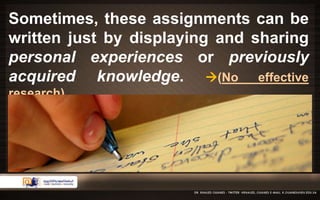
Sometimes, these assignments can be 
written just by displaying and sharing 
personal experiences or previously 
acquired knowledge. (No effective 
research)
But… 
Other times, essays will require 
extra efforts and additional 
research and the use of 
external sources…
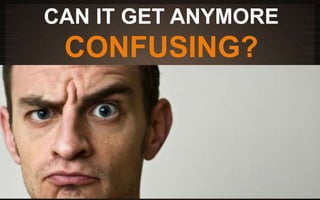
CAN IT GET ANYMORE 
CONFUSING?
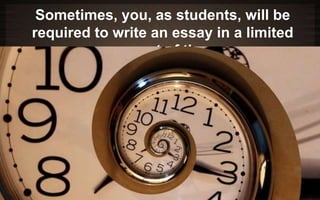
Sometimes, you, as students, will be 
required to write an essay in a limited 
amount of time.
Irrespective of the actual assignment, 
understanding what is good writing 
and what are the proper techniques to 
use, will lead YOU to be able to 
produce a well-crafted essay in 
SHORTER TIMES!
Good writing is also an important skill 
that translates into any career field. 
Nearly all professions require some 
form of writing in all business fields: 
e.g. e-mails, letters, reports, or any written 
communication for clients, co-workers, suppliers 
and other contacts.
Writing is, then, an 
IMPORTANT 
skill to acquire!
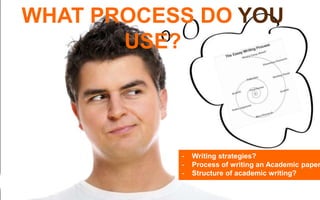
WHAT PROCESS DO YOU 
USE? 
- Writing strategies? 
- Process of writing an Academic paper? 
- Structure of academic writing?
HOW DO YOU ORGANIZE 
YOUR IDEAS?
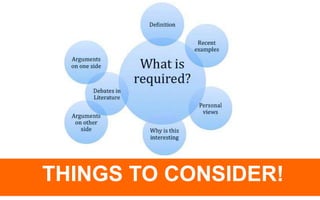
THINGS TO CONSIDER!
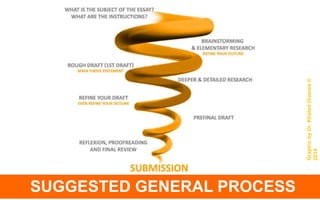
SUGGESTED GENERAL PROCESS 
- Graphic by Dr. Khaled Ouanes © 
2014
THE PROCESS HAS TO BE 
ADAPTED TO DIFFERENT 
ASSIGNEMENTS 
(According to subject, timeframe, type of content required 
etc…) 
DECIDE HOW MUCH TIME IS GOING 
TO SPENT ON EVERY PART OF THE 
PROCESS
DEFINITIONS & HOW-TOs
RESEARCH
Research 
Once you know the scope and the 
subject of the task , its time to start 
researching. 
BUT …WHERE TO START?
Research 
WHAT ARE CREDIBLE 
RESOURCES? 
WHERE TO FIND THEM? 
HOW MANY RESOURCES?
GIVE ME YOUR THOUGHTS? 
WHAT ARE CREDIBLE 
RESOURCES? 
WHERE TO FIND THEM? 
HOW MANY RESOURCES?
Research 
A credible source for academic writing 
is one whose accuracy is supported by 
academic peer review and reference to 
a foundation of relevant established 
research. 
i.e. a source with a solid authority within its 
discipline
Credible sources 
Your textbooks 
Books published by recognized authors & 
publishers 
Papers published in Scientific journals (IF…) 
Scholar and official websites that are regularly 
updated (.edu, .edu.sa, .edu.--, .gov) 
Scientific and scholar databases
Research 
So, a credible source is reviewed by 
experts in the field and cites the 
sources it, in turn, uses to generate 
and support its argument.
Research 
Wikipedia, for example, is not a 
credible source. Even if a given article 
may be completely and verifiably true, 
but there is no academic authority 
present to validate its truth. 
BUT IT CAN BE USED AS A STARTING 
POINT!
Research 
You have to determine what content will 
you look for in these credible sources to 
research your topic and to make yourself 
an “expert” in this topic. 
The number of needed resources depends 
on the type of paper (from ~5 to hundreds)
Research 
During research start saving 
interesting sources and taking notes 
and summarize the attention-grabbing 
thoughts . Try to immerse yourself in 
the literature published recently.
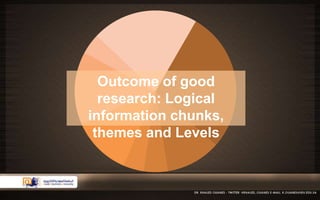
Outcome of good 
research: Logical 
information chunks, 
themes and Levels
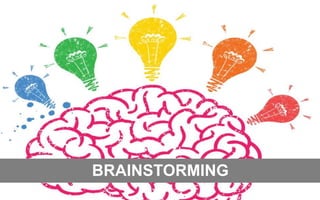
BRAINSTORMING
Brainstorming 
The purpose of Brainstorming and 
critical thinking is to be able to make 
better decisions and choices for your 

paper. 
Use Brainstorming for increased 
awareness and searching for deeper 
and clearer understanding.
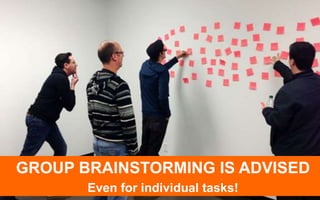
GROUP BRAINSTORMING IS ADVISED 
Even for individual tasks!
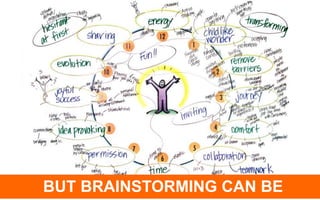
BUT BRAINSTORMING CAN BE 
INDIVIDUAL
Different techniques of brainstorming 
- Asking many and varied questions about 
the topic and answering them 
- Free writing 
- Breaking down the topic into levels 
- Clustering / Mapping and Webbing 
- Etc…
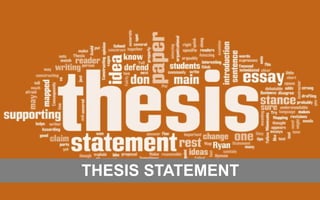
THESIS STATEMENT
Thesis Statement 
The thesis statement announces the 
topic of your essay and what you want 
to say about it. 
It’s your main idea sentence!
WHAT MAKES A GOOD 
THESIS?
A good thesis statement 
1- Must be a statement, not a question. 
2- must be a complete sentence. 
3- It is an opinion and shows intent; it 
cannot be a simple statement of fact. 
4- Should have only one guiding idea
Thesis statement 
Choose the main idea and pin it down 
in a clear statement/assertion. This has 
to be well summed up in a concise 
sentence allowing the reader to know 
where you're going? and why?
Thesis statement 
It's virtually impossible to write a 
good essay without a clear thesis.
Thesis statement 
A thesis statement should be specific 
and not too general. Otherwise, you 
will have to write a a lot of content to 
support it! Unless you are writing a 
long essay this should be avoided!
Thesis statement 
However, a thesis statement 
should not be too specific either. 
Because you probably won’t be 
able to write enough about it and 
finding sources to support will be 
hard.
To sum it up, a thesis statement: 
Expresses your viewpoint on a subject 
Introduces & anchors your arguments 
Should be stated explicitly in your 
introduction & conclusion 
Should be validated by providing evidence 
in your essay
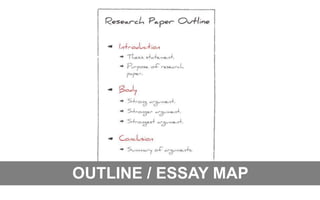
OUTLINE / ESSAY MAP
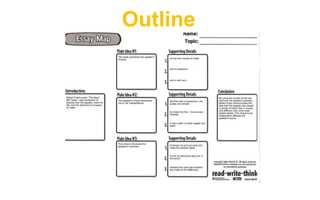
Outline (Essay map) 
It is always a good idea to sketch 
out your essay before straightway 
writing it out. 
There are many online tools to help 
you create outline and essay maps.
Outline 
For your outline, use short 
sentences to describe paragraphs. 
Use bullets to describe what each 
paragraph will cover.
Outline
DRAFT
Writing your first draft 
A draft is the preliminary and initial 
effort form of your essay. It is 
going to be subject to revision, 
amendments, refining etc…
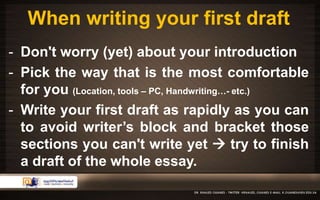
When writing your first draft 
- Don't worry (yet) about your introduction 
- Pick the way that is the most comfortable 
for you (Location, tools – PC, Handwriting…- etc.) 
- Write your first draft as rapidly as you can 
to avoid writer’s block and bracket those 
sections you can't write yet  try to finish 
a draft of the whole essay.
PROOFREADING
Proofreading 
Proofreading means examining 
your essay cautiously to spot and 
correct mistakes in grammar, style, 
and spelling. 
There are online tools but it is better to do it 
yourself!
Before proofreading 
Be sure you've reviewed and brushed 
up the most important aspects of your 
content. Don't make corrections at the 
sentence & word level if you still need 
to work on the focus, organization, 
structure and overall writing of the 
paper.
Before proofreading 
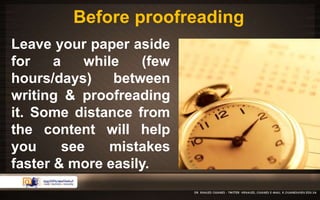
Leave your paper aside 
for a while (few 
hours/days) between 
writing & proofreading 
it. Some distance from 
the content will help 
you see mistakes 
faster & more easily.
Before proofreading 
Eliminate unnecessary words before 
looking for actual mistakes. Write 
short, clear, concise, direct sentences. 
Also, from the previous comments of 
your professors on old papers, set a 
list of mistakes you need to watch for.
Proofreading 
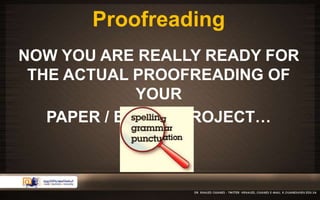
NOW YOU ARE REALLY READY FOR 
THE ACTUAL PROOFREADING OF 
YOUR 
PAPER / ESSAY / PROJECT…
Proofreading 
Start proofreading on a printout of 
your document before going back to 
on-screen editing. While doing this 
read out loud to spot run-on sentences 
and hear other problems that you may 
not see while reading silently.
Proofreading 
Go back to your Text editor on your 
computer to use the Spell check and 
search functions to find mistakes 
you're likely to make or to correct the 
spelling of a word you wrote 
incorrectly many times. 
The list of common mistakes you created will be helpful 
here!
Proofreading 
Once finished print again the 
document for a final proofread. If you 
have wisely respected previous steps 
you will only find few things to correct 
or adjust. 
This process will help you write better 
content in the future too!
COMPONENTS OF A 
PAPER
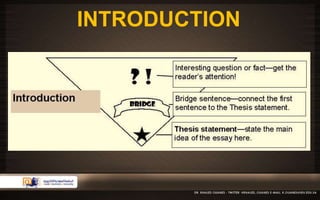
INTRODUCTION
INTRODUCTION
INTRODUCTION 
It signals the topic in an interesting way 
Announces the main points of the paper 
It include your thesis statement 
IMO, it shouldn’t be written in the 1st 
place 
Its length should be proportional to your 
full paper but not too long
INTRODUCTION 
An introduction should attention-grabbing 
and can give a glimpse about how you are 
going to support your thesis 
An introduction should NOT present 
background or general factual information; 
Nor start with a dictionary definition, a 
cliché, a general truth or a grand 
generalization
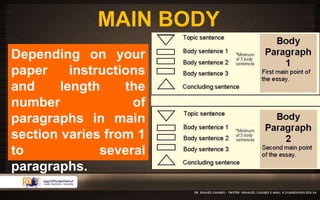
MAIN BODY
MAIN BODY 
Depending on your 
paper instructions 
and length the 
number of 
paragraphs in main 
section varies from 1 
to several 
paragraphs.
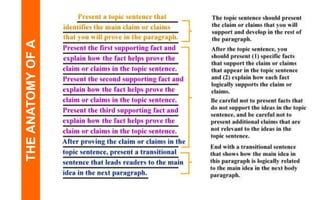
THE ANATOMY OF A 
PARAGRAPH
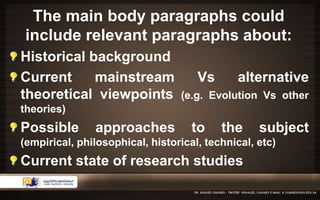
The main body paragraphs could 
include relevant paragraphs about: 
Historical background 
Current mainstream Vs alternative 
theoretical viewpoints (e.g. Evolution Vs other 
theories) 
Possible approaches to the subject 
(empirical, philosophical, historical, technical, etc) 
Current state of research studies
Main body will also generally contain 
paragraphs about: 
Definitions of words and concepts 
Major issues and questions raised 
Major theories to answer those questions 
Techniques, methodologies & methods 
used 
As usual, this depends on your paper instructions!
CONCLUSION
CONCLUSION 
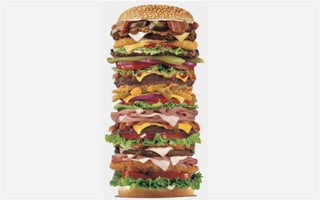
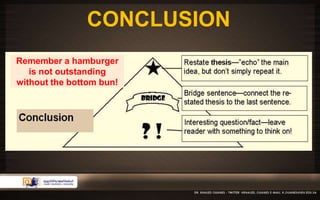
Remember a hamburger 
is not outstanding 
without the bottom bun!
CONCLUSION 
The conclusion states to the readers that 
you are winding up and preparing to finish 
off your paper. 
So in the conclusion it is advised to 
rephrase the thesis statement along with 
the main ideas of your paper.
THE CONCLUSION SHOULD 
Be a logical windup to what has been 
previously discussed 
Never contain any new information unless it 
is a question or future perspective 
Usually it is the shortest part of the essay 
Add to the overall quality and impact of the 
essay
THE CONCLUSION SHOULD 
NOT 
Just be a summary 
End with a long quotation (Or even contain 
one) 
Just focus on minor points of your argument 
Introduce new material
CONCLUSION 
The conclusion has to tie together the 
various issues enclosed in the body of 
the paper and to comment on the 
meaning of the whole writing. 
i.e.: implications resulting from your arguments, 
future perspectives, recommendations, trends, and 
what might need further research to improve this 
paper.
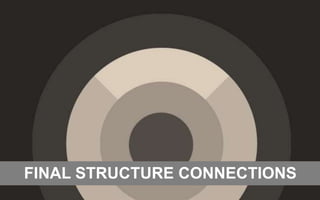
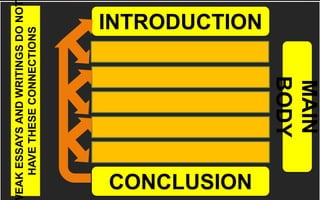
FINAL STRUCTURE CONNECTIONS
WEAK ESSAYS AND WRITINGS DO NOT 
HAVE THESE CONNECTIONS 
INTRODUCTION 
CONCLUSION 
MAIN 
BODY
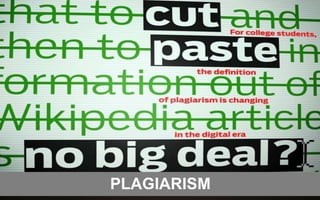
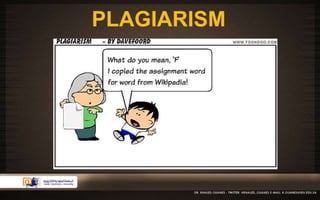
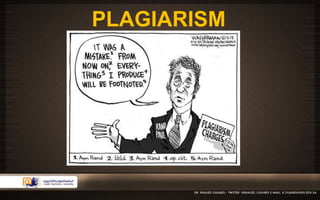
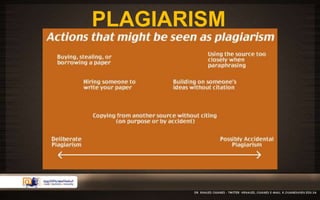
PLAGIARISM
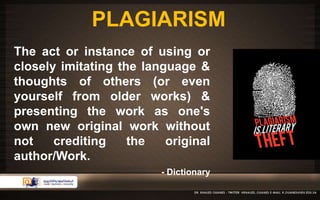
PLAGIARISM 
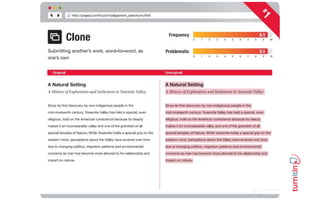
The act or instance of using or 
closely imitating the language & 
thoughts of others (or even 
yourself from older works) & 
presenting the work as one's 
own new original work without 
not crediting the original 
author/Work. 
- Dictionary
PLAGIARISM
PLAGIARISM
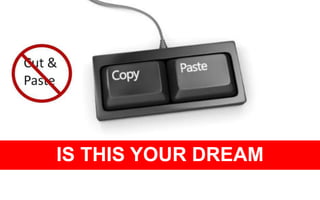
IS THIS YOUR DREAM 
KEYBOARD?
PLAGIARISM CAN HAVE SERIOUS 
CONSEQUENCES!
PLAGIARISM
PLAGIARISM
SO WHAT IS A SOURCE? 
A source is any person or content from which 
you get information that you use in your 
content(regardless of credibility). 
- Scholarly journals and books (online or 
printed) 
- websites or any online content 
-Newspapers & magazines 
- A colleague or a classmate you ask 
- A television show
…AND WHAT IS A CITATION? 
A citation simply means clearly giving 
credit where credit is due and tells 
the readers where the information 
comes from. In your paper, you cite 
or refer to the source of information.
…AND A REFERENCE? 
A reference gives the readers details 
about the source so that they understand 
what kind of source it is (to judge 
credibility among other things) and how to 
find the source themselves if necessary. 
The references are typically listed at the 
end of the writing.
A GOOD CITATION? 
Good citations indicate the author, title and 
publication information for the used source, 
which words/ideas come from which 
sources... When you shift from your own 
words & ideas to the ones of another Include 
source writer’s name and signal phrase. 
(in-text citations or footnote/endnote notations)
COMMON KNOWLEDGE 
Common knowledge is a well-known fact or 
an Information that appears in several known 
sources making familiar to large numbers of 
people or to professionals in a given field. 
E.g.: 
- Riyadh is the capital city of KSA 
- Cell nucleus contains DNA 
- Water freezes at 0 degrees Celsius
COMMON KNOWLEDGE 
Common knowledge statements are the only 
time you do not have to cite information, 
provided that you do not copy that 
information word-for-word from a source. 
If in doubt, cite it!
WHY CITING SOURCES IS 
IMPORTANT? 
For the sake of honesty & to give due credit 
To show that research and content are 
credible 
To prove the relevance/importance of the 
topic 
To help readers identify further sources
WHY DO HUMANS 
PLAGIARIZE? 
We don’t know why it is important to cite 
sources 
We lack confidence in our own ideas & 
language 
We actually can’t answer the writing 
assignment 
We don’t know how to use citations (MLA, APA,
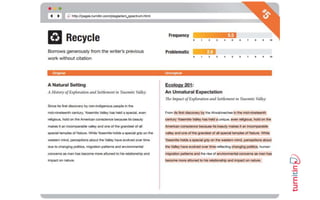
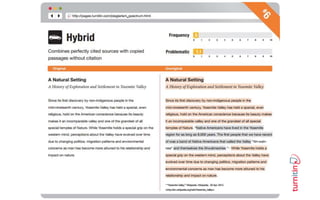
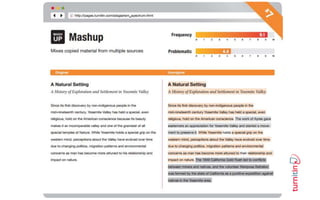
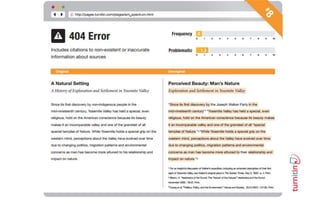
PLAGIARISM
PLAGIARISM
PLAGIARISM 
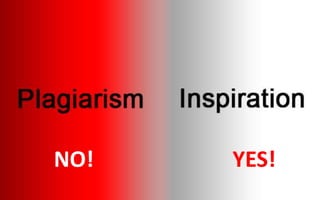
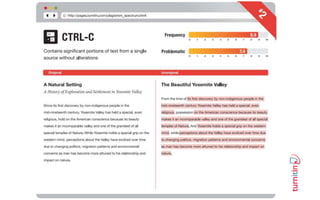
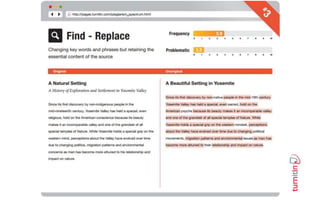
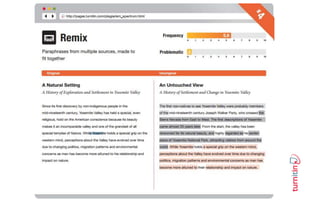
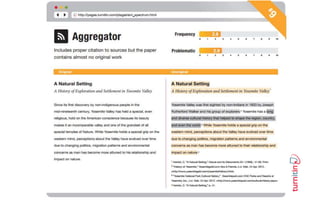
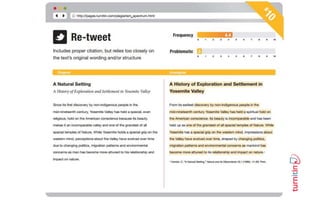
NO! YES!
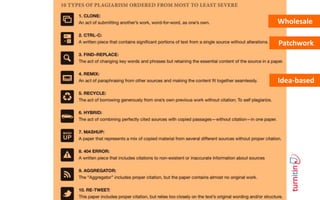
Wholesale 
Patchwork 
Idea-based
PARAPHRASE? 
When you paraphrase, your objective 
is to rewrite a statement with a 
different structure and using different 
words without altering the original 
meaning and organization of the 
content.
PARAPHRASE? 
When you paraphrase, your objective 
is to rewrite a statement with a 
different structure and using different 
words without altering the original 
meaning and organization of the 
content.
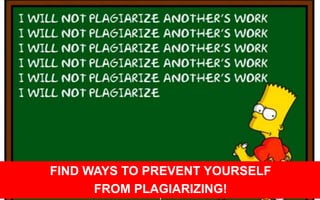
FIND WAYS TO PREVENT YOURSELF 
FROM PLAGIARIZING! 
t
SOME TIPS AND TRICKS
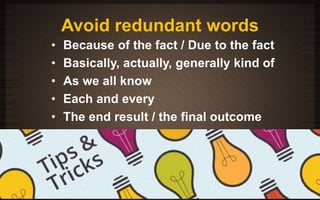
Avoid redundant words 
• Because of the fact / Due to the fact 
• Basically, actually, generally kind of 
• As we all know 
• Each and every 
• The end result / the final outcome
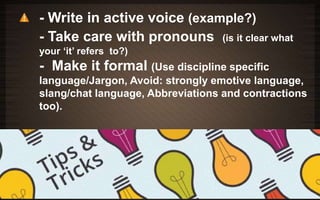
- Write in active voice (example?) 
- Take care with pronouns (is it clear what 
your ‘it’ refers to?) 
- Make it formal (Use discipline specific 
language/Jargon, Avoid: strongly emotive language, 
slang/chat language, Abbreviations and contractions 
too).
Avoiding Conscious Plagiarism 
Do not procrastinate start ASAP! 
If you can, find a subject that really interests you 
Use prewriting strategies we cited (Brainstorming, free-writing…) 
Realize how easy it is to discover a plagiarized paper 
Realize the severity & seriousness of the 
consequences of dishonesty 
11/3/2014
Avoiding Unintentional Plagiarism 
Along with the tips cited previously to avoid 
intentional plagiarism consider: 
1. Taking careful notes 
2. Following a structured note-taking procedure. 
3. Being very careful while copying and pasting 
11/3/2014 124
Avoiding Unintentional Plagiarism 
4. Indicate clearly which ideas are your ideas and 
which ideas are not (color code) 
5. Save draft versions of your writing 
6. Use online resources and tools to detect 
plagiarism 
7. Don’t forget the quotation marks & the 
parenthetical references 
11/3/2014 125
ONLINE MATERIAL AND 
RESOURCES 
• http://writingcenter.unc.edu/handouts/brainstorming/ 
• http://www.wikihow.com/Evaluate-the-Credibility-of-a-Source 
• http://writingcenter.appstate.edu/sites/writingcenter.appstate.ed 
u/files/Credible%20v%20Non-Credible%20Sources13.pdf 
• http://www.turnitin.com/ 
• https://provost.asu.edu/academicintegrity/students 
I hope that soon we will have our own 
resources and policies here at the SEU
THANKS FOR YOUR TIME
QUESTIONS? 
FUTURE REQUESTS?
ACADEMIC WRITING 
WORKSHOP 
By Dr. Khaled Ouanes Ph.D. 
E-mail: k.ouanes@seu.edu.sa 
Twitter: @khaled_ouanes

Academic Writing

  • 1.
    ACADEMIC WRITING WORKSHOP By Dr. Khaled Ouanes Ph.D. E-mail: k.ouanes@seu.edu.sa Twitter: @khaled_ouanes
  • 2.
    Why Writing skillsare Important in Academic settings?
  • 3.
    Why Writing isImportant Any student in a high level institution will be usually required to write a variety of dissertations, papers and essays throughout the whole period of their studies.
  • 4.
    These writing tasksand assignments will cover a myriad of goals, objectives and purposes.
  • 5.
    Sometimes, these assignmentscan be written just by displaying and sharing personal experiences or previously acquired knowledge. (No effective research)
  • 6.
    But… Other times,essays will require extra efforts and additional research and the use of external sources…
  • 8.
    CAN IT GETANYMORE CONFUSING?
  • 9.
    Sometimes, you, asstudents, will be required to write an essay in a limited amount of time.
  • 10.
    Irrespective of theactual assignment, understanding what is good writing and what are the proper techniques to use, will lead YOU to be able to produce a well-crafted essay in SHORTER TIMES!
  • 11.
    Good writing isalso an important skill that translates into any career field. Nearly all professions require some form of writing in all business fields: e.g. e-mails, letters, reports, or any written communication for clients, co-workers, suppliers and other contacts.
  • 12.
    Writing is, then,an IMPORTANT skill to acquire!
  • 13.
    WHAT PROCESS DOYOU USE? - Writing strategies? - Process of writing an Academic paper? - Structure of academic writing?
  • 14.
    HOW DO YOUORGANIZE YOUR IDEAS?
  • 15.
  • 16.
    SUGGESTED GENERAL PROCESS - Graphic by Dr. Khaled Ouanes © 2014
  • 17.
    THE PROCESS HASTO BE ADAPTED TO DIFFERENT ASSIGNEMENTS (According to subject, timeframe, type of content required etc…) DECIDE HOW MUCH TIME IS GOING TO SPENT ON EVERY PART OF THE PROCESS
  • 18.
  • 19.
  • 20.
    Research Once youknow the scope and the subject of the task , its time to start researching. BUT …WHERE TO START?
  • 21.
    Research WHAT ARECREDIBLE RESOURCES? WHERE TO FIND THEM? HOW MANY RESOURCES?
  • 22.
    GIVE ME YOURTHOUGHTS? WHAT ARE CREDIBLE RESOURCES? WHERE TO FIND THEM? HOW MANY RESOURCES?
  • 23.
    Research A crediblesource for academic writing is one whose accuracy is supported by academic peer review and reference to a foundation of relevant established research. i.e. a source with a solid authority within its discipline
  • 24.
    Credible sources Yourtextbooks Books published by recognized authors & publishers Papers published in Scientific journals (IF…) Scholar and official websites that are regularly updated (.edu, .edu.sa, .edu.--, .gov) Scientific and scholar databases
  • 25.
    Research So, acredible source is reviewed by experts in the field and cites the sources it, in turn, uses to generate and support its argument.
  • 26.
    Research Wikipedia, forexample, is not a credible source. Even if a given article may be completely and verifiably true, but there is no academic authority present to validate its truth. BUT IT CAN BE USED AS A STARTING POINT!
  • 27.
    Research You haveto determine what content will you look for in these credible sources to research your topic and to make yourself an “expert” in this topic. The number of needed resources depends on the type of paper (from ~5 to hundreds)
  • 28.
    Research During researchstart saving interesting sources and taking notes and summarize the attention-grabbing thoughts . Try to immerse yourself in the literature published recently.
  • 29.
    Outcome of good research: Logical information chunks, themes and Levels
  • 30.
  • 31.
    Brainstorming The purposeof Brainstorming and critical thinking is to be able to make better decisions and choices for your paper. Use Brainstorming for increased awareness and searching for deeper and clearer understanding.
  • 32.
    GROUP BRAINSTORMING ISADVISED Even for individual tasks!
  • 33.
    BUT BRAINSTORMING CANBE INDIVIDUAL
  • 34.
    Different techniques ofbrainstorming - Asking many and varied questions about the topic and answering them - Free writing - Breaking down the topic into levels - Clustering / Mapping and Webbing - Etc…
  • 35.
  • 36.
    Thesis Statement Thethesis statement announces the topic of your essay and what you want to say about it. It’s your main idea sentence!
  • 37.
    WHAT MAKES AGOOD THESIS?
  • 38.
    A good thesisstatement 1- Must be a statement, not a question. 2- must be a complete sentence. 3- It is an opinion and shows intent; it cannot be a simple statement of fact. 4- Should have only one guiding idea
  • 39.
    Thesis statement Choosethe main idea and pin it down in a clear statement/assertion. This has to be well summed up in a concise sentence allowing the reader to know where you're going? and why?
  • 40.
    Thesis statement It'svirtually impossible to write a good essay without a clear thesis.
  • 41.
    Thesis statement Athesis statement should be specific and not too general. Otherwise, you will have to write a a lot of content to support it! Unless you are writing a long essay this should be avoided!
  • 42.
    Thesis statement However,a thesis statement should not be too specific either. Because you probably won’t be able to write enough about it and finding sources to support will be hard.
  • 43.
    To sum itup, a thesis statement: Expresses your viewpoint on a subject Introduces & anchors your arguments Should be stated explicitly in your introduction & conclusion Should be validated by providing evidence in your essay
  • 44.
  • 45.
    Outline (Essay map) It is always a good idea to sketch out your essay before straightway writing it out. There are many online tools to help you create outline and essay maps.
  • 46.
    Outline For youroutline, use short sentences to describe paragraphs. Use bullets to describe what each paragraph will cover.
  • 47.
  • 48.
  • 49.
    Writing your firstdraft A draft is the preliminary and initial effort form of your essay. It is going to be subject to revision, amendments, refining etc…
  • 50.
    When writing yourfirst draft - Don't worry (yet) about your introduction - Pick the way that is the most comfortable for you (Location, tools – PC, Handwriting…- etc.) - Write your first draft as rapidly as you can to avoid writer’s block and bracket those sections you can't write yet  try to finish a draft of the whole essay.
  • 51.
  • 52.
    Proofreading Proofreading meansexamining your essay cautiously to spot and correct mistakes in grammar, style, and spelling. There are online tools but it is better to do it yourself!
  • 53.
    Before proofreading Besure you've reviewed and brushed up the most important aspects of your content. Don't make corrections at the sentence & word level if you still need to work on the focus, organization, structure and overall writing of the paper.
  • 54.
    Before proofreading Leaveyour paper aside for a while (few hours/days) between writing & proofreading it. Some distance from the content will help you see mistakes faster & more easily.
  • 55.
    Before proofreading Eliminateunnecessary words before looking for actual mistakes. Write short, clear, concise, direct sentences. Also, from the previous comments of your professors on old papers, set a list of mistakes you need to watch for.
  • 56.
    Proofreading NOW YOUARE REALLY READY FOR THE ACTUAL PROOFREADING OF YOUR PAPER / ESSAY / PROJECT…
  • 57.
    Proofreading Start proofreadingon a printout of your document before going back to on-screen editing. While doing this read out loud to spot run-on sentences and hear other problems that you may not see while reading silently.
  • 58.
    Proofreading Go backto your Text editor on your computer to use the Spell check and search functions to find mistakes you're likely to make or to correct the spelling of a word you wrote incorrectly many times. The list of common mistakes you created will be helpful here!
  • 59.
    Proofreading Once finishedprint again the document for a final proofread. If you have wisely respected previous steps you will only find few things to correct or adjust. This process will help you write better content in the future too!
  • 60.
  • 61.
  • 62.
  • 63.
    INTRODUCTION It signalsthe topic in an interesting way Announces the main points of the paper It include your thesis statement IMO, it shouldn’t be written in the 1st place Its length should be proportional to your full paper but not too long
  • 64.
    INTRODUCTION An introductionshould attention-grabbing and can give a glimpse about how you are going to support your thesis An introduction should NOT present background or general factual information; Nor start with a dictionary definition, a cliché, a general truth or a grand generalization
  • 65.
  • 67.
    MAIN BODY Dependingon your paper instructions and length the number of paragraphs in main section varies from 1 to several paragraphs.
  • 69.
    THE ANATOMY OFA PARAGRAPH
  • 71.
    The main bodyparagraphs could include relevant paragraphs about: Historical background Current mainstream Vs alternative theoretical viewpoints (e.g. Evolution Vs other theories) Possible approaches to the subject (empirical, philosophical, historical, technical, etc) Current state of research studies
  • 72.
    Main body willalso generally contain paragraphs about: Definitions of words and concepts Major issues and questions raised Major theories to answer those questions Techniques, methodologies & methods used As usual, this depends on your paper instructions!
  • 73.
  • 74.
    CONCLUSION Remember ahamburger is not outstanding without the bottom bun!
  • 75.
    CONCLUSION The conclusionstates to the readers that you are winding up and preparing to finish off your paper. So in the conclusion it is advised to rephrase the thesis statement along with the main ideas of your paper.
  • 76.
    THE CONCLUSION SHOULD Be a logical windup to what has been previously discussed Never contain any new information unless it is a question or future perspective Usually it is the shortest part of the essay Add to the overall quality and impact of the essay
  • 77.
    THE CONCLUSION SHOULD NOT Just be a summary End with a long quotation (Or even contain one) Just focus on minor points of your argument Introduce new material
  • 78.
    CONCLUSION The conclusionhas to tie together the various issues enclosed in the body of the paper and to comment on the meaning of the whole writing. i.e.: implications resulting from your arguments, future perspectives, recommendations, trends, and what might need further research to improve this paper.
  • 79.
  • 80.
    WEAK ESSAYS ANDWRITINGS DO NOT HAVE THESE CONNECTIONS INTRODUCTION CONCLUSION MAIN BODY
  • 82.
  • 84.
    PLAGIARISM The actor instance of using or closely imitating the language & thoughts of others (or even yourself from older works) & presenting the work as one's own new original work without not crediting the original author/Work. - Dictionary
  • 85.
  • 86.
  • 87.
    IS THIS YOURDREAM KEYBOARD?
  • 88.
    PLAGIARISM CAN HAVESERIOUS CONSEQUENCES!
  • 89.
  • 90.
  • 91.
    SO WHAT ISA SOURCE? A source is any person or content from which you get information that you use in your content(regardless of credibility). - Scholarly journals and books (online or printed) - websites or any online content -Newspapers & magazines - A colleague or a classmate you ask - A television show
  • 92.
    …AND WHAT ISA CITATION? A citation simply means clearly giving credit where credit is due and tells the readers where the information comes from. In your paper, you cite or refer to the source of information.
  • 93.
    …AND A REFERENCE? A reference gives the readers details about the source so that they understand what kind of source it is (to judge credibility among other things) and how to find the source themselves if necessary. The references are typically listed at the end of the writing.
  • 94.
    A GOOD CITATION? Good citations indicate the author, title and publication information for the used source, which words/ideas come from which sources... When you shift from your own words & ideas to the ones of another Include source writer’s name and signal phrase. (in-text citations or footnote/endnote notations)
  • 95.
    COMMON KNOWLEDGE Commonknowledge is a well-known fact or an Information that appears in several known sources making familiar to large numbers of people or to professionals in a given field. E.g.: - Riyadh is the capital city of KSA - Cell nucleus contains DNA - Water freezes at 0 degrees Celsius
  • 96.
    COMMON KNOWLEDGE Commonknowledge statements are the only time you do not have to cite information, provided that you do not copy that information word-for-word from a source. If in doubt, cite it!
  • 97.
    WHY CITING SOURCESIS IMPORTANT? For the sake of honesty & to give due credit To show that research and content are credible To prove the relevance/importance of the topic To help readers identify further sources
  • 98.
    WHY DO HUMANS PLAGIARIZE? We don’t know why it is important to cite sources We lack confidence in our own ideas & language We actually can’t answer the writing assignment We don’t know how to use citations (MLA, APA,
  • 99.
  • 100.
  • 101.
  • 102.
  • 115.
    PARAPHRASE? When youparaphrase, your objective is to rewrite a statement with a different structure and using different words without altering the original meaning and organization of the content.
  • 116.
    PARAPHRASE? When youparaphrase, your objective is to rewrite a statement with a different structure and using different words without altering the original meaning and organization of the content.
  • 117.
    FIND WAYS TOPREVENT YOURSELF FROM PLAGIARIZING! t
  • 120.
  • 121.
    Avoid redundant words • Because of the fact / Due to the fact • Basically, actually, generally kind of • As we all know • Each and every • The end result / the final outcome
  • 122.
    - Write inactive voice (example?) - Take care with pronouns (is it clear what your ‘it’ refers to?) - Make it formal (Use discipline specific language/Jargon, Avoid: strongly emotive language, slang/chat language, Abbreviations and contractions too).
  • 123.
    Avoiding Conscious Plagiarism Do not procrastinate start ASAP! If you can, find a subject that really interests you Use prewriting strategies we cited (Brainstorming, free-writing…) Realize how easy it is to discover a plagiarized paper Realize the severity & seriousness of the consequences of dishonesty 11/3/2014
  • 124.
    Avoiding Unintentional Plagiarism Along with the tips cited previously to avoid intentional plagiarism consider: 1. Taking careful notes 2. Following a structured note-taking procedure. 3. Being very careful while copying and pasting 11/3/2014 124
  • 125.
    Avoiding Unintentional Plagiarism 4. Indicate clearly which ideas are your ideas and which ideas are not (color code) 5. Save draft versions of your writing 6. Use online resources and tools to detect plagiarism 7. Don’t forget the quotation marks & the parenthetical references 11/3/2014 125
  • 129.
    ONLINE MATERIAL AND RESOURCES • http://writingcenter.unc.edu/handouts/brainstorming/ • http://www.wikihow.com/Evaluate-the-Credibility-of-a-Source • http://writingcenter.appstate.edu/sites/writingcenter.appstate.ed u/files/Credible%20v%20Non-Credible%20Sources13.pdf • http://www.turnitin.com/ • https://provost.asu.edu/academicintegrity/students I hope that soon we will have our own resources and policies here at the SEU
  • 130.
  • 131.
  • 132.
    ACADEMIC WRITING WORKSHOP By Dr. Khaled Ouanes Ph.D. E-mail: k.ouanes@seu.edu.sa Twitter: @khaled_ouanes