Academic Writing 
By Dian A.N. Nurmala Dewi
definitions 
• It is the process of writing analytically — the 
breaking down of ideas with the purpose of 
presenting information that depicts a clear 
understanding of a certain subject. 
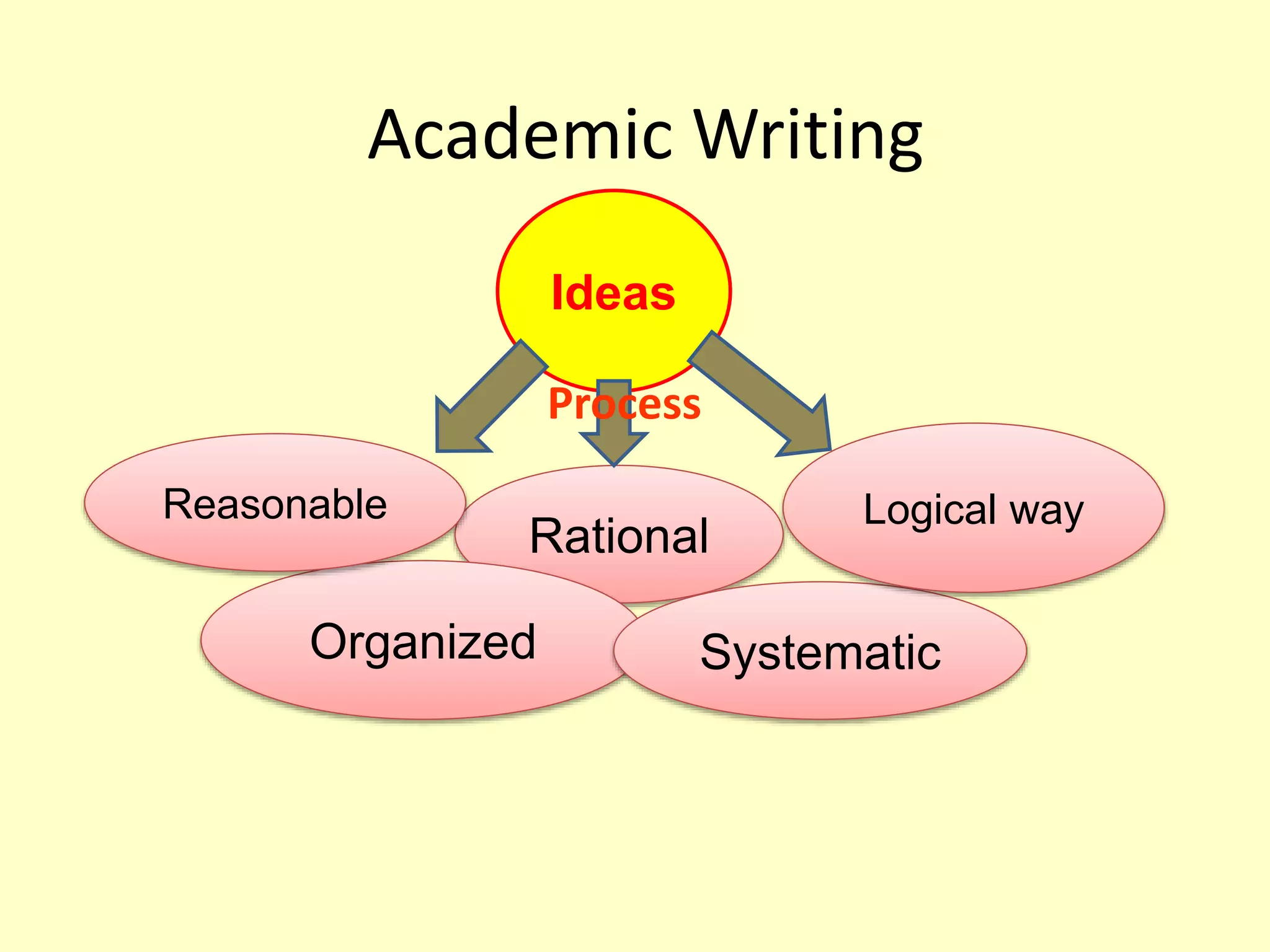
• Academic writing is the process of presenting 
ideas in a rational, organized, systematic, 
reasonable, and logical way.
Academic Writing 
Ideas 
Process 
Reasonable Logical way 
Rational 
Organized Systematic
a list of documents where academic 
writing is used 
• Book reviews 
• Essays 
• Research report 
• Research proposal 
• Scientific paper 
• Academic journal 
• Dissertation and Thesis - These are written to obtaining 
an advanced degree at a college or university. 
• Abstract - This is a short summary of a long document.
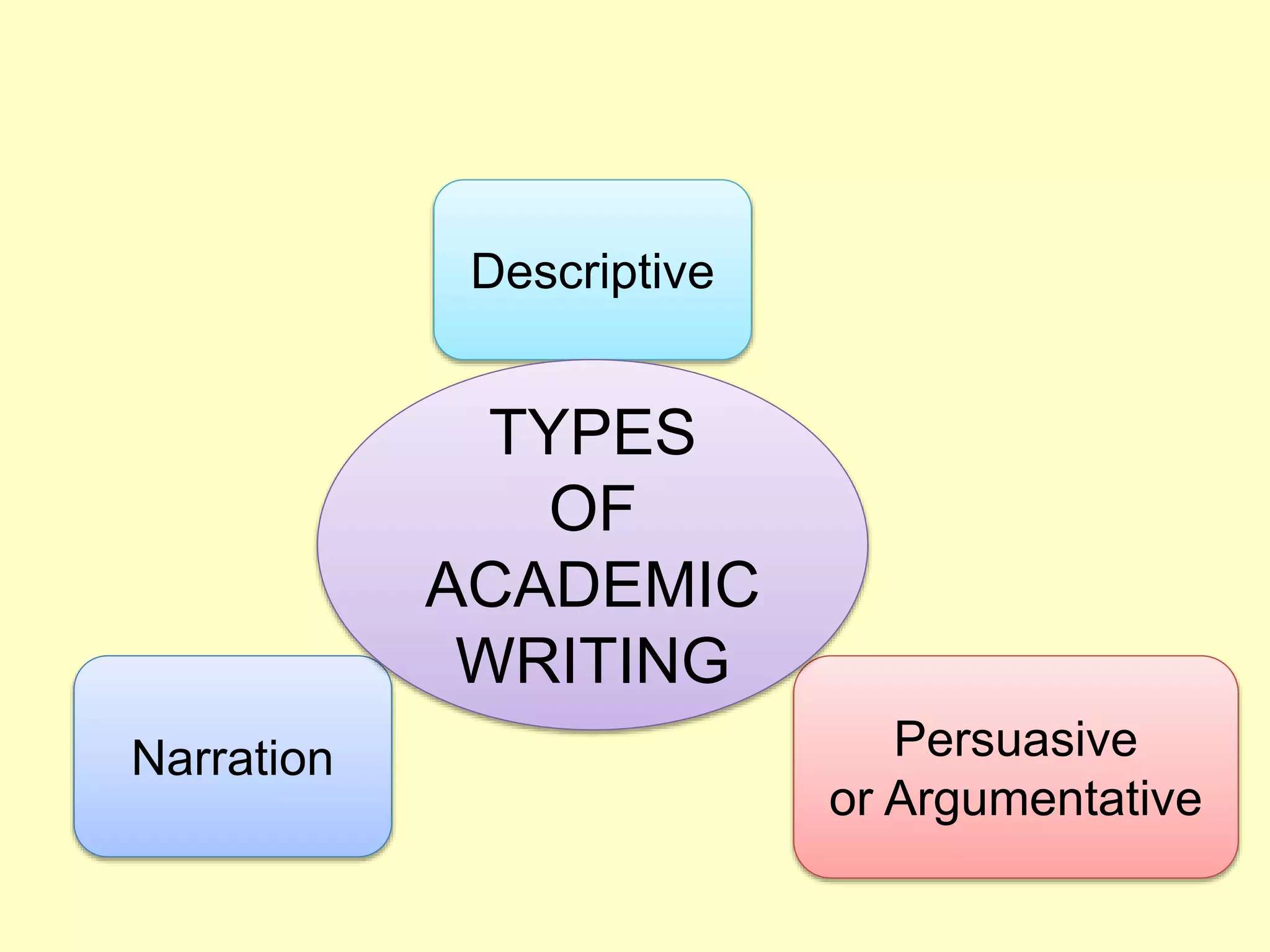
Descriptive 
Persuasive 
or Argumentative 
Narration 
TYPES 
OF 
ACADEMIC 
WRITING
Types of Academic Writing: 
• 1. Descriptive: it tells how something looks, feels, 
smells, tastes, and/or sounds. A good description 
is a word picture, the reader can imagine the 
object. 
• 2. Narration: To give an account or tell the story 
of something, someone, or an event. Use time 
order to organize sentences. 
• 3. Argumentative or Persuasive: To induce 
readers to believe in writer’s opinions or views 
through appealing reasons. To convince readers.
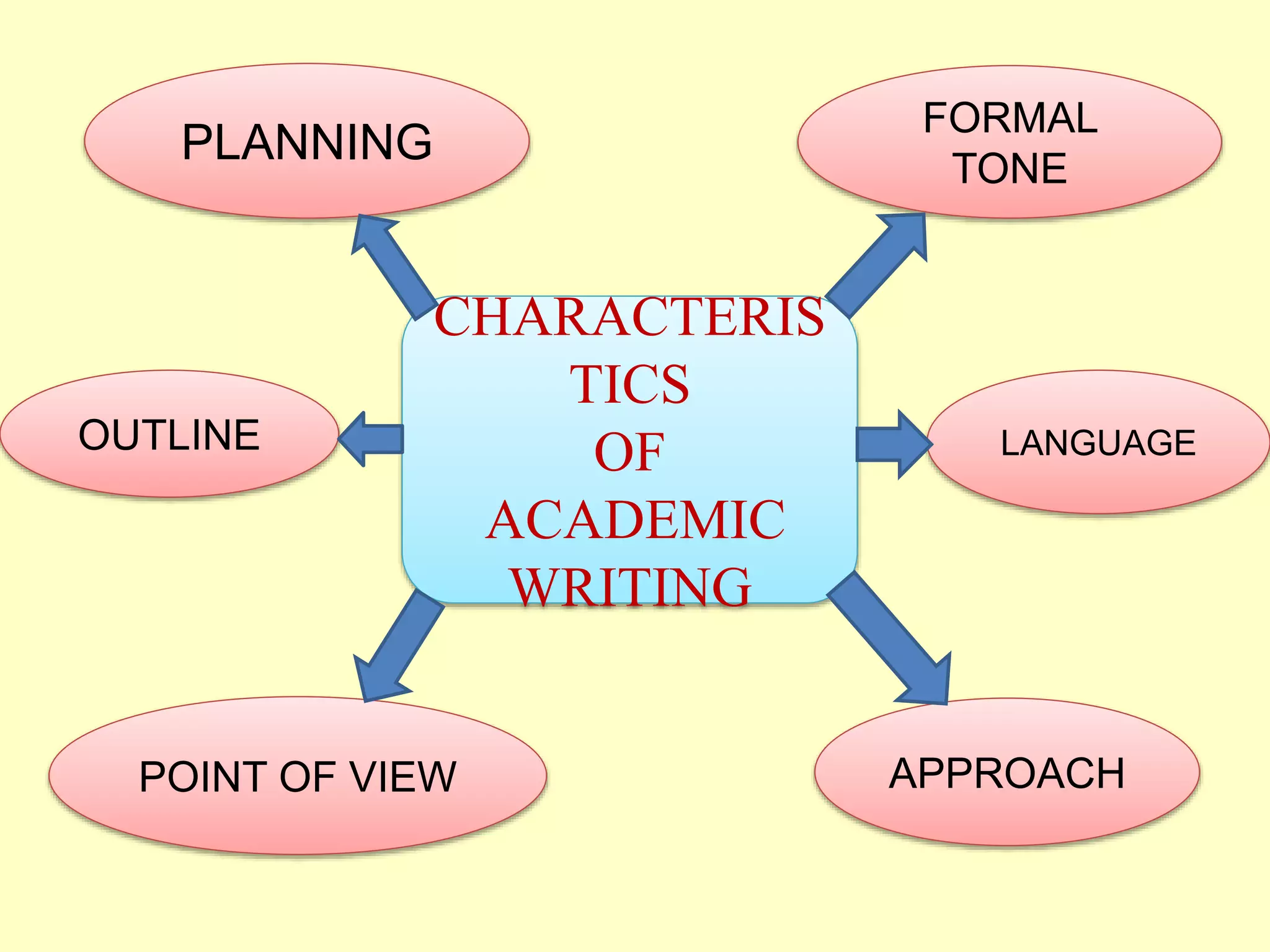
PLANNING 
OUTLINE 
FORMAL 
TONE 
LANGUAGE 
CHARACTERIS 
TICS 
OF 
ACADEMIC 
WRITING 
POINT OF VIEW APPROACH
Characteristics of Academic Writing 
• Planning - There is a certain amount of planning 
before you start writing the paper analytical and 
organized. 
• Outline - A proper outline is a must for academic 
writing. help you formulate your thoughts, make you 
aware of certain relationships between topics. It will 
help you determine the pertinent information to be 
included in your paper. 
• Tone - A formal tone is used. You do not use slang 
words, jargon, abbreviations, or many clichés.
Characteristics of Academic Writing 
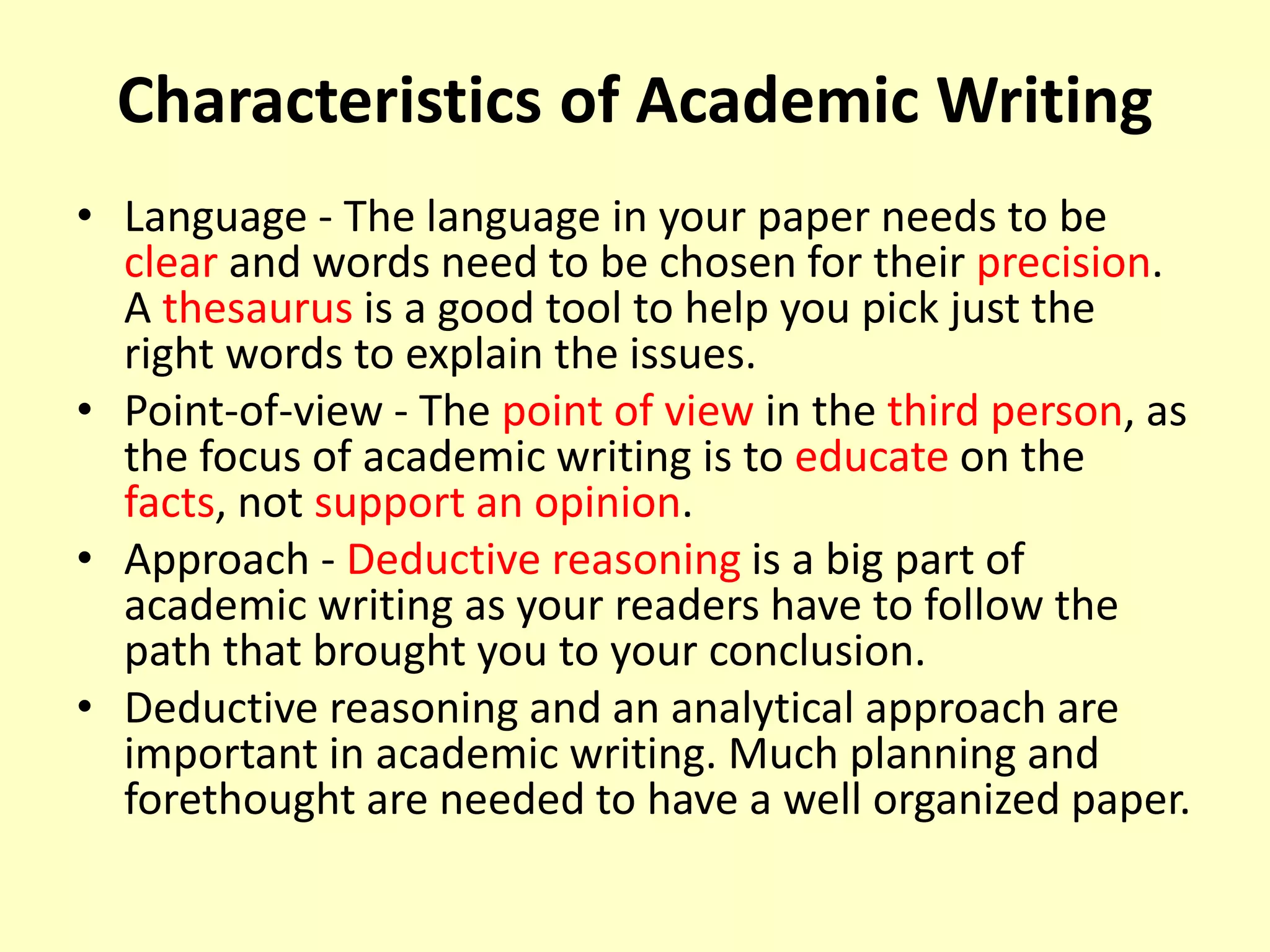
• Language - The language in your paper needs to be 
clear and words need to be chosen for their precision. 
A thesaurus is a good tool to help you pick just the 
right words to explain the issues. 
• Point-of-view - The point of view in the third person, as 
the focus of academic writing is to educate on the 
facts, not support an opinion. 
• Approach - Deductive reasoning is a big part of 
academic writing as your readers have to follow the 
path that brought you to your conclusion. 
• Deductive reasoning and an analytical approach are 
important in academic writing. Much planning and 
forethought are needed to have a well organized paper.
Sources 
• http://grammar.yourdictionary.com/word-definitions/ 
definition-of-academic-writing. 
html 
• http://www.servitokss.com/definitions-of-academic- 
writing/

Introduction to Academic writing

  • 1.
    Academic Writing ByDian A.N. Nurmala Dewi
  • 2.
    definitions • Itis the process of writing analytically — the breaking down of ideas with the purpose of presenting information that depicts a clear understanding of a certain subject. • Academic writing is the process of presenting ideas in a rational, organized, systematic, reasonable, and logical way.
  • 3.
    Academic Writing Ideas Process Reasonable Logical way Rational Organized Systematic
  • 4.
    a list ofdocuments where academic writing is used • Book reviews • Essays • Research report • Research proposal • Scientific paper • Academic journal • Dissertation and Thesis - These are written to obtaining an advanced degree at a college or university. • Abstract - This is a short summary of a long document.
  • 5.
    Descriptive Persuasive orArgumentative Narration TYPES OF ACADEMIC WRITING
  • 6.
    Types of AcademicWriting: • 1. Descriptive: it tells how something looks, feels, smells, tastes, and/or sounds. A good description is a word picture, the reader can imagine the object. • 2. Narration: To give an account or tell the story of something, someone, or an event. Use time order to organize sentences. • 3. Argumentative or Persuasive: To induce readers to believe in writer’s opinions or views through appealing reasons. To convince readers.
  • 7.
    PLANNING OUTLINE FORMAL TONE LANGUAGE CHARACTERIS TICS OF ACADEMIC WRITING POINT OF VIEW APPROACH
  • 8.
    Characteristics of AcademicWriting • Planning - There is a certain amount of planning before you start writing the paper analytical and organized. • Outline - A proper outline is a must for academic writing. help you formulate your thoughts, make you aware of certain relationships between topics. It will help you determine the pertinent information to be included in your paper. • Tone - A formal tone is used. You do not use slang words, jargon, abbreviations, or many clichés.
  • 9.
    Characteristics of AcademicWriting • Language - The language in your paper needs to be clear and words need to be chosen for their precision. A thesaurus is a good tool to help you pick just the right words to explain the issues. • Point-of-view - The point of view in the third person, as the focus of academic writing is to educate on the facts, not support an opinion. • Approach - Deductive reasoning is a big part of academic writing as your readers have to follow the path that brought you to your conclusion. • Deductive reasoning and an analytical approach are important in academic writing. Much planning and forethought are needed to have a well organized paper.
  • 10.
    Sources • http://grammar.yourdictionary.com/word-definitions/ definition-of-academic-writing. html • http://www.servitokss.com/definitions-of-academic- writing/