Professional Etiquette
Etiquette
Covers the rules of conducting yourself in a professional setting, including
how to handle.
Guidelines designed to put you and other at ease.
Professional Etiquette
Professional etiquette means the rules and conventions governing correct
or polite behavior in a specific professional group or situation.
Professional etiquette is applicable in any professional setting. It includes:
how you greet people
how you show respect to seasoned professionals
how you introduce yourself
how you network
what you wear
how you eat and drink with other professionals
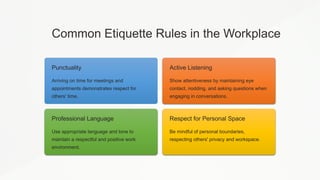
Common Etiquette Rules in the Workplace
Punctuality
Arriving on time for meetings and
appointments demonstrates respect for
others' time.
Active Listening
Show attentiveness by maintaining eye
contact, nodding, and asking questions when
engaging in conversations.
Professional Language
Use appropriate language and tone to
maintain a respectful and positive work
environment.
Respect for Personal Space
Be mindful of personal boundaries,
respecting others' privacy and workspace.
Importance of Professional Etiquette
First Impressions Matter
Learn how to make a positive first impression and build professional relationships.
Gain Respect and Credibility
Understand how professional behavior enhances your reputation in the workplace.
Create Harmonious Workplace
Discover how following etiquette can contribute to a positive work environment.
Professional Etiquette Rules
Common Etiquette Rules in the Workplace
Punctuality
Arriving on time for meetings and
appointments demonstrates respect for
others' time.
Active Listening
Show attentiveness by maintaining eye
contact, nodding, and asking questions when
engaging in conversations.
Professional Language
Use appropriate language and tone to
maintain a respectful and positive work
environment.
Respect for Personal Space
Be mindful of personal boundaries,
respecting others' privacy and workspace.
Dress Code and Appearance
Dress Professionally
Adhere to the dress code,
maintaining a neat and
polished appearance that
aligns with company standards.
Business Casual Basics
Know when it's appropriate to
dress in business casual attire
and how to strike the right
balance.
Formal Occasions
Be prepared for formal events,
ensuring you dress
appropriately in accordance
with the occasion.
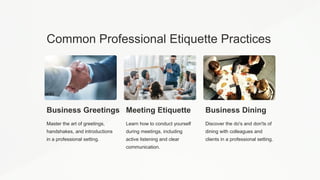
Common Professional Etiquette Practices
Business Greetings
Master the art of greetings,
handshakes, and introductions
in a professional setting.
Meeting Etiquette
Learn how to conduct yourself
during meetings, including
active listening and clear
communication.
Business Dining
Discover the do's and don'ts of
dining with colleagues and
clients in a professional setting.
Common Professional Etiquette Practices
Business Greetings
Master the art of greetings,
handshakes, and introductions
in a professional setting.
Meeting Etiquette
Learn how to conduct yourself
during meetings, including
active listening and clear
communication.
Business Dining
Discover the do's and don'ts of
dining with colleagues and
clients in a professional setting.
Time management in Professional
Settings
1 Punctuality
Be punctual for meetings, appointments, and deadlines.
This shows that you value others' time and
are committed to the efficient use of resources.
2
Meeting Efficiency
Conduct well-organized and purposeful
meetings, respecting participants’
time by staying focused on the agenda
Effective Communication in Professional
Settings
1 Clear & Concise Messages
Convey information in a
straightforward manner, avoiding
unnecessary jargon or ambiguity.
2
Active and Engaged Listening
Listen attentively, take notes, and
provide appropriate responses to
foster understanding and collaboration. 3 Body Language Awareness
Understand non-verbal cues and use
them effectively to communicate
interest and engagement.
Adaptability in Professional Settings
1 Cultural Sensitivity
Be aware of and respect cultural differences.
Adapt your communication and leadership style
to be inclusive and considerate of diverse perspectives
2
Open Mindedness
Be open to new ideas and feedback. A
willingness to adapt and learn fosters a
cultureof continuous improvement.
Team Building in Professional Settings
1 Inclusivity
Create an inclusive environment where everyone feels
valued and included. Encourage diverse
perspectives and foster a sense of belonging
2
Collaboration
Promote teamwork and collaboration by
encouraging open communication and
sharing of ideas among team members
Handling Conflicts and Difficult Situations
1 Stay Calm
Maintain composure and approach
conflicts with a level head to prevent
escalation.
2
Active Listening
Listen attentively to understand others'
perspectives, promoting empathy and
effective resolution. 3 Seek Mediation
When necessary, involve a neutral
party to help facilitate a fair and
unbiased resolution.
Handling Conflicts and Difficult Situations
1 Stay Calm
Maintain composure and approach
conflicts with a level head to prevent
escalation.
2
Active Listening
Listen attentively to understand others'
perspectives, promoting empathy and
effective resolution. 3 Seek Mediation
When necessary, involve a neutral
party to help facilitate a fair and
unbiased resolution.
Conclusion
Mastering professional etiquette is essential for success in the workplace
By incorporating these leadership skills into your professional etiquette, you can create a positive and respectful work environment that
promotes productivity and collaboration. Remember that effective leadership is not only about achieving results but also about building
and maintaining strong relationships within the team and across the organization.
Professional-Etiquette-3.pptx

Professional-Etiquette-3.pptx

  • 1.
  • 2.
    Etiquette Covers the rulesof conducting yourself in a professional setting, including how to handle. Guidelines designed to put you and other at ease.
  • 3.
    Professional Etiquette Professional etiquettemeans the rules and conventions governing correct or polite behavior in a specific professional group or situation. Professional etiquette is applicable in any professional setting. It includes: how you greet people how you show respect to seasoned professionals how you introduce yourself how you network what you wear how you eat and drink with other professionals
  • 4.
    Common Etiquette Rulesin the Workplace Punctuality Arriving on time for meetings and appointments demonstrates respect for others' time. Active Listening Show attentiveness by maintaining eye contact, nodding, and asking questions when engaging in conversations. Professional Language Use appropriate language and tone to maintain a respectful and positive work environment. Respect for Personal Space Be mindful of personal boundaries, respecting others' privacy and workspace.
  • 5.
    Importance of ProfessionalEtiquette First Impressions Matter Learn how to make a positive first impression and build professional relationships. Gain Respect and Credibility Understand how professional behavior enhances your reputation in the workplace. Create Harmonious Workplace Discover how following etiquette can contribute to a positive work environment.
  • 6.
  • 7.
    Common Etiquette Rulesin the Workplace Punctuality Arriving on time for meetings and appointments demonstrates respect for others' time. Active Listening Show attentiveness by maintaining eye contact, nodding, and asking questions when engaging in conversations. Professional Language Use appropriate language and tone to maintain a respectful and positive work environment. Respect for Personal Space Be mindful of personal boundaries, respecting others' privacy and workspace.
  • 8.
    Dress Code andAppearance Dress Professionally Adhere to the dress code, maintaining a neat and polished appearance that aligns with company standards. Business Casual Basics Know when it's appropriate to dress in business casual attire and how to strike the right balance. Formal Occasions Be prepared for formal events, ensuring you dress appropriately in accordance with the occasion.
  • 9.
    Common Professional EtiquettePractices Business Greetings Master the art of greetings, handshakes, and introductions in a professional setting. Meeting Etiquette Learn how to conduct yourself during meetings, including active listening and clear communication. Business Dining Discover the do's and don'ts of dining with colleagues and clients in a professional setting.
  • 10.
    Common Professional EtiquettePractices Business Greetings Master the art of greetings, handshakes, and introductions in a professional setting. Meeting Etiquette Learn how to conduct yourself during meetings, including active listening and clear communication. Business Dining Discover the do's and don'ts of dining with colleagues and clients in a professional setting.
  • 11.
    Time management inProfessional Settings 1 Punctuality Be punctual for meetings, appointments, and deadlines. This shows that you value others' time and are committed to the efficient use of resources. 2 Meeting Efficiency Conduct well-organized and purposeful meetings, respecting participants’ time by staying focused on the agenda
  • 12.
    Effective Communication inProfessional Settings 1 Clear & Concise Messages Convey information in a straightforward manner, avoiding unnecessary jargon or ambiguity. 2 Active and Engaged Listening Listen attentively, take notes, and provide appropriate responses to foster understanding and collaboration. 3 Body Language Awareness Understand non-verbal cues and use them effectively to communicate interest and engagement.
  • 13.
    Adaptability in ProfessionalSettings 1 Cultural Sensitivity Be aware of and respect cultural differences. Adapt your communication and leadership style to be inclusive and considerate of diverse perspectives 2 Open Mindedness Be open to new ideas and feedback. A willingness to adapt and learn fosters a cultureof continuous improvement.
  • 14.
    Team Building inProfessional Settings 1 Inclusivity Create an inclusive environment where everyone feels valued and included. Encourage diverse perspectives and foster a sense of belonging 2 Collaboration Promote teamwork and collaboration by encouraging open communication and sharing of ideas among team members
  • 15.
    Handling Conflicts andDifficult Situations 1 Stay Calm Maintain composure and approach conflicts with a level head to prevent escalation. 2 Active Listening Listen attentively to understand others' perspectives, promoting empathy and effective resolution. 3 Seek Mediation When necessary, involve a neutral party to help facilitate a fair and unbiased resolution.
  • 16.
    Handling Conflicts andDifficult Situations 1 Stay Calm Maintain composure and approach conflicts with a level head to prevent escalation. 2 Active Listening Listen attentively to understand others' perspectives, promoting empathy and effective resolution. 3 Seek Mediation When necessary, involve a neutral party to help facilitate a fair and unbiased resolution.
  • 17.
    Conclusion Mastering professional etiquetteis essential for success in the workplace By incorporating these leadership skills into your professional etiquette, you can create a positive and respectful work environment that promotes productivity and collaboration. Remember that effective leadership is not only about achieving results but also about building and maintaining strong relationships within the team and across the organization.