







May 2013
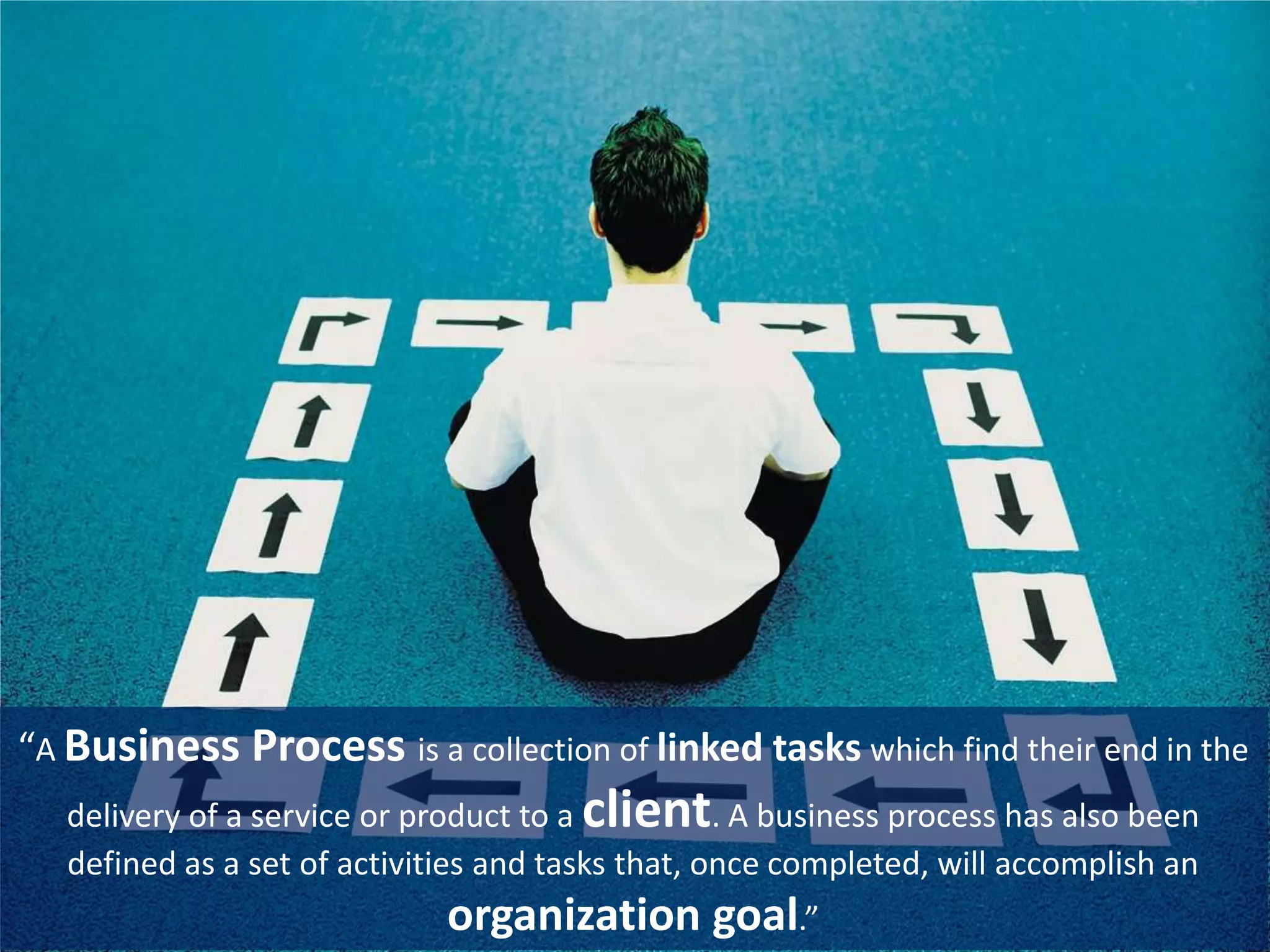
“A Business Process is a collection of linked tasks which find their end in the
delivery of a service or product to a client. A business process has also been
defined as a set of activities and tasks that, once completed, will accomplish an
organization goal.”
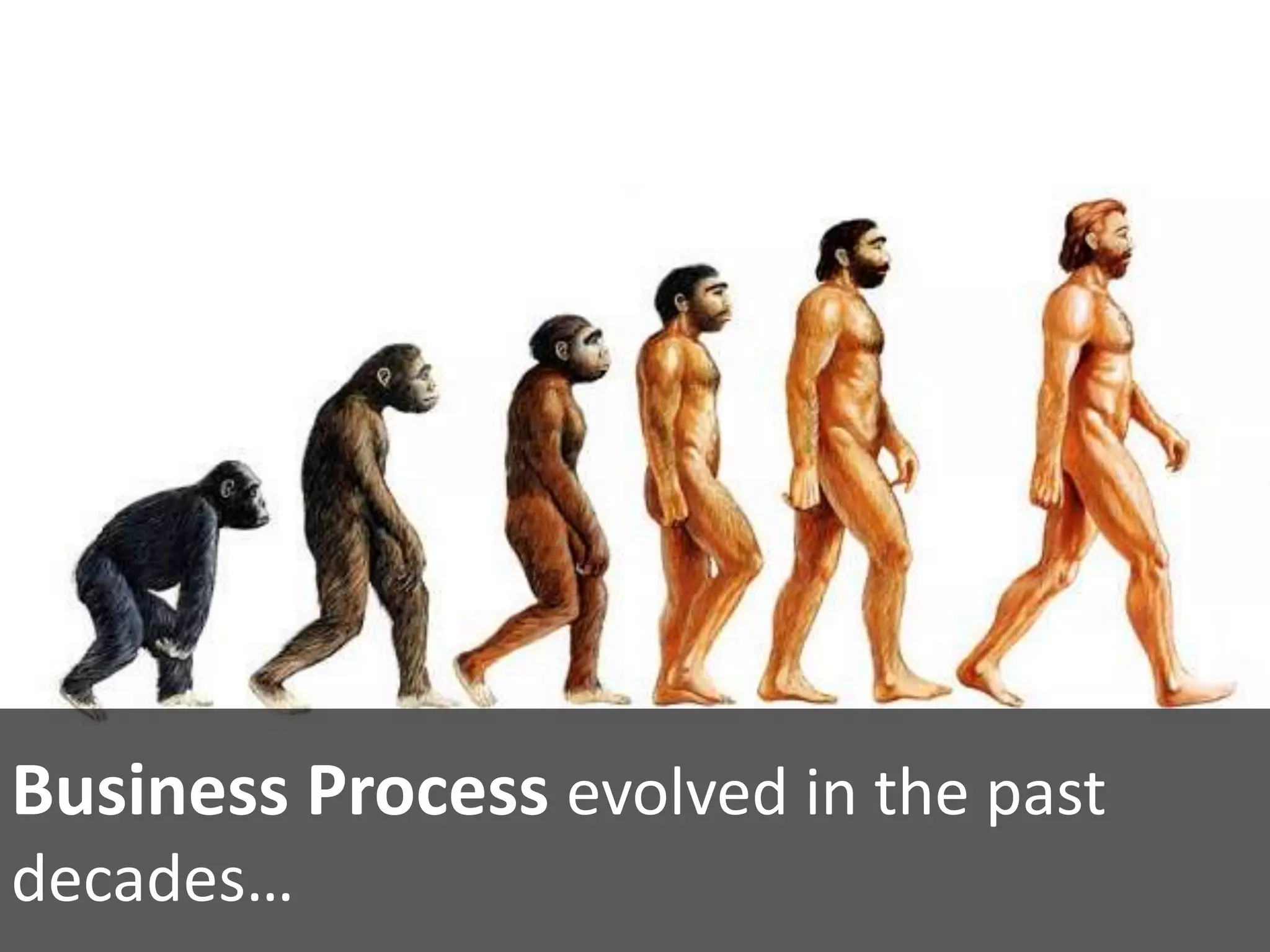
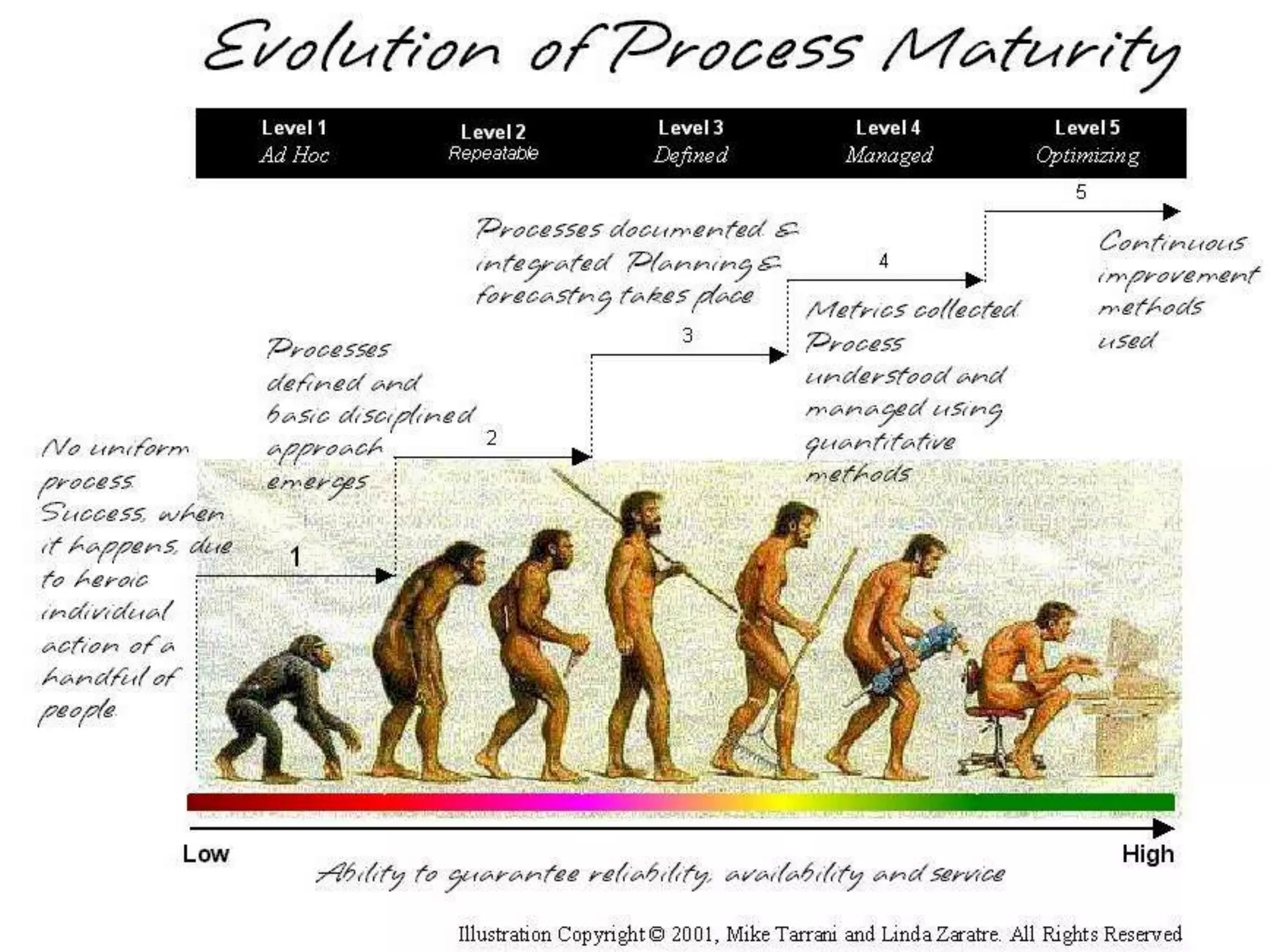
Business Process evolved in the past
decades…
… and became more mature
Why do we need
Process
Improvement?
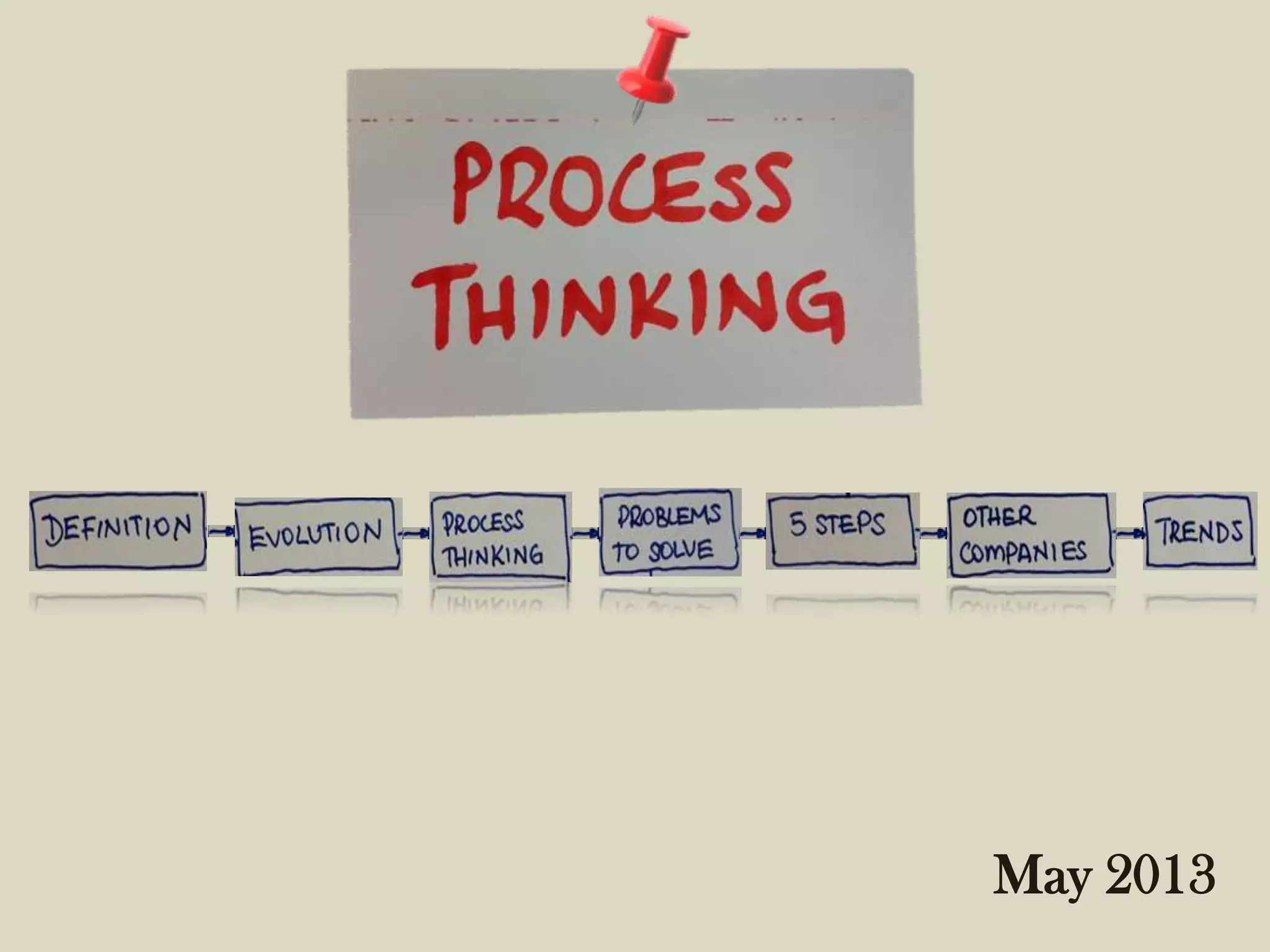
Let’s talk about Process Thinking
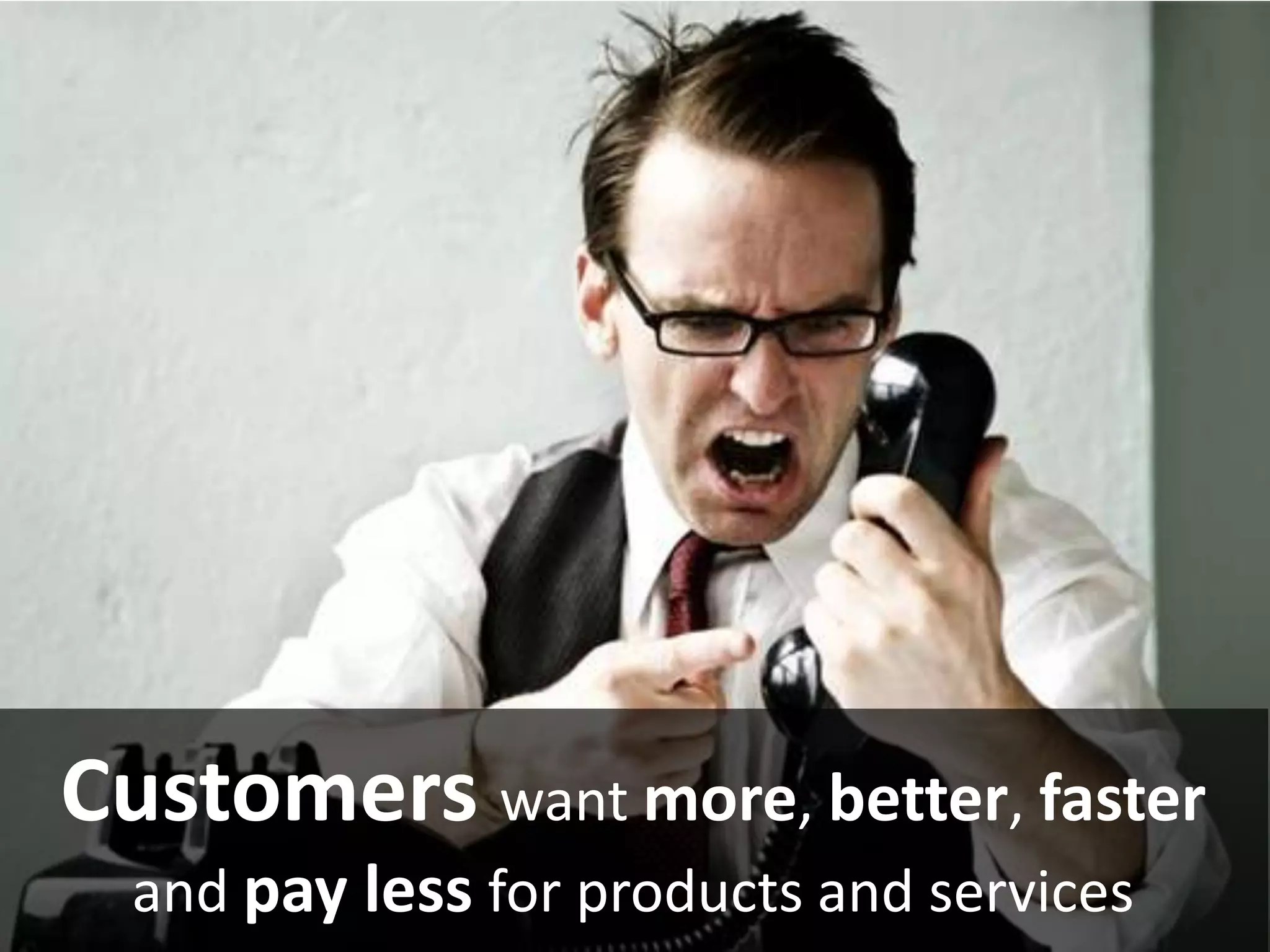
Customers want more, better, faster
and pay less for products and services
Shareholders determine new directions
and expect more efficiency
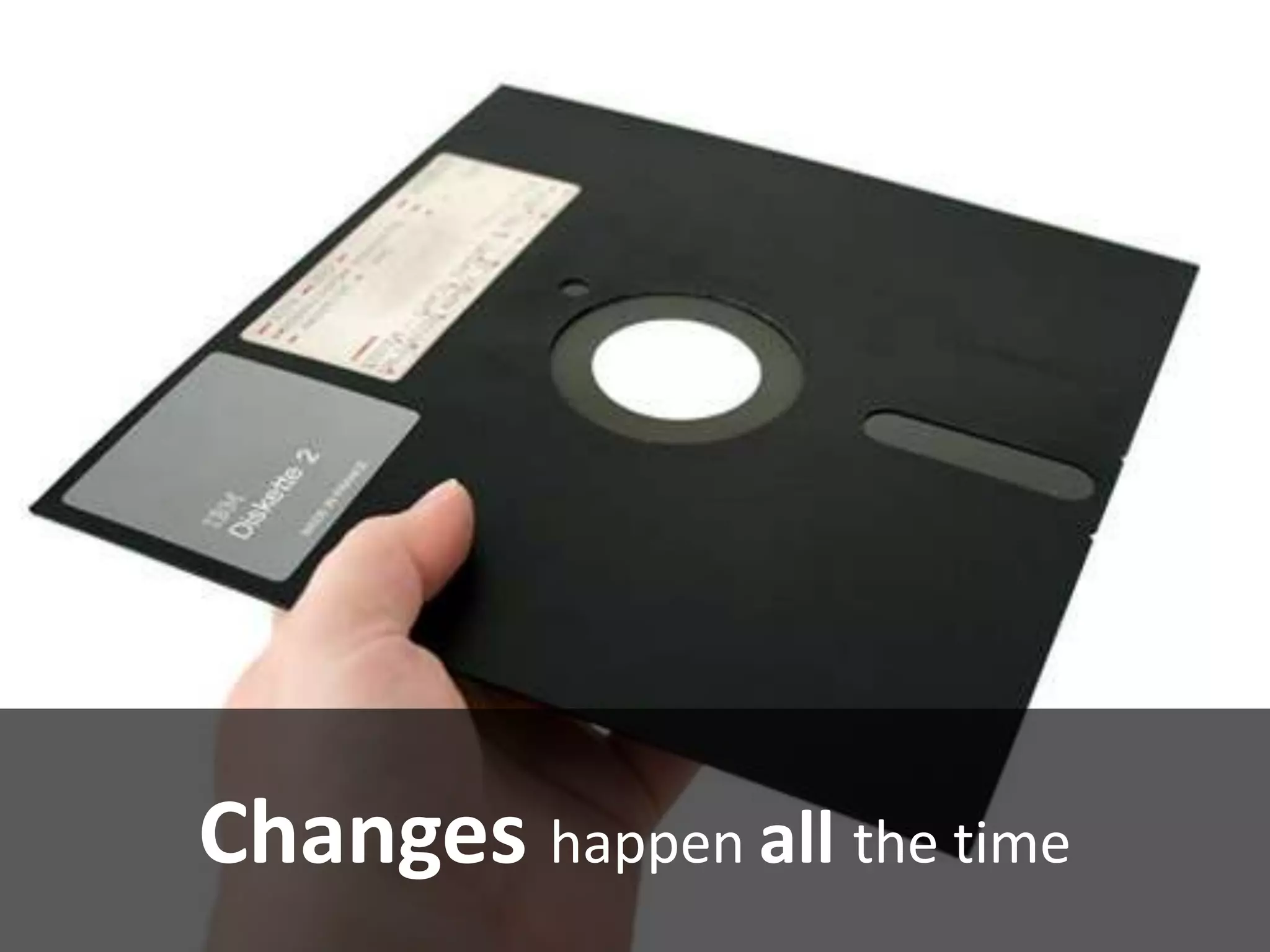
Changes happen all the time
Resources are not always available
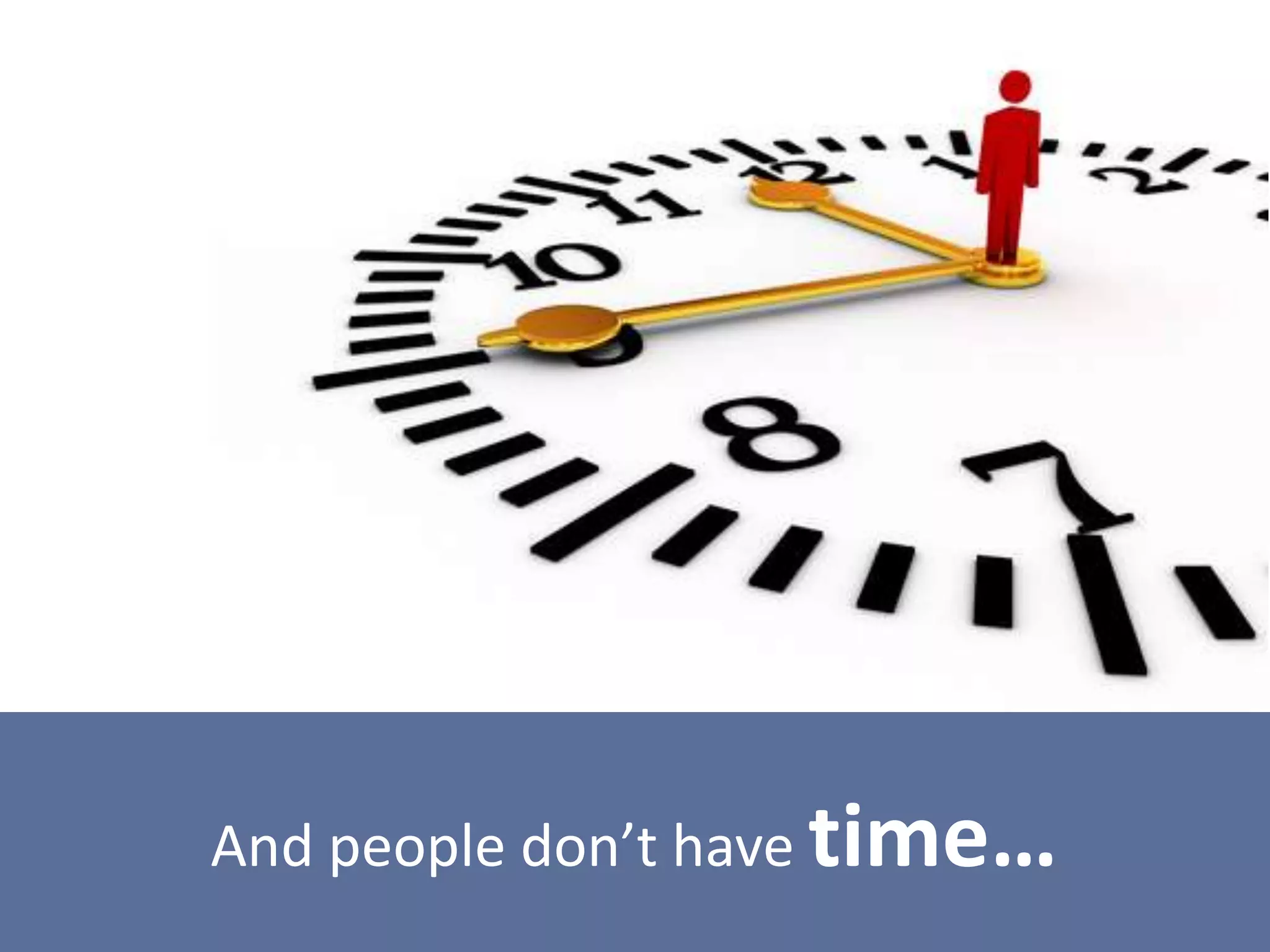
And people don’t have time…
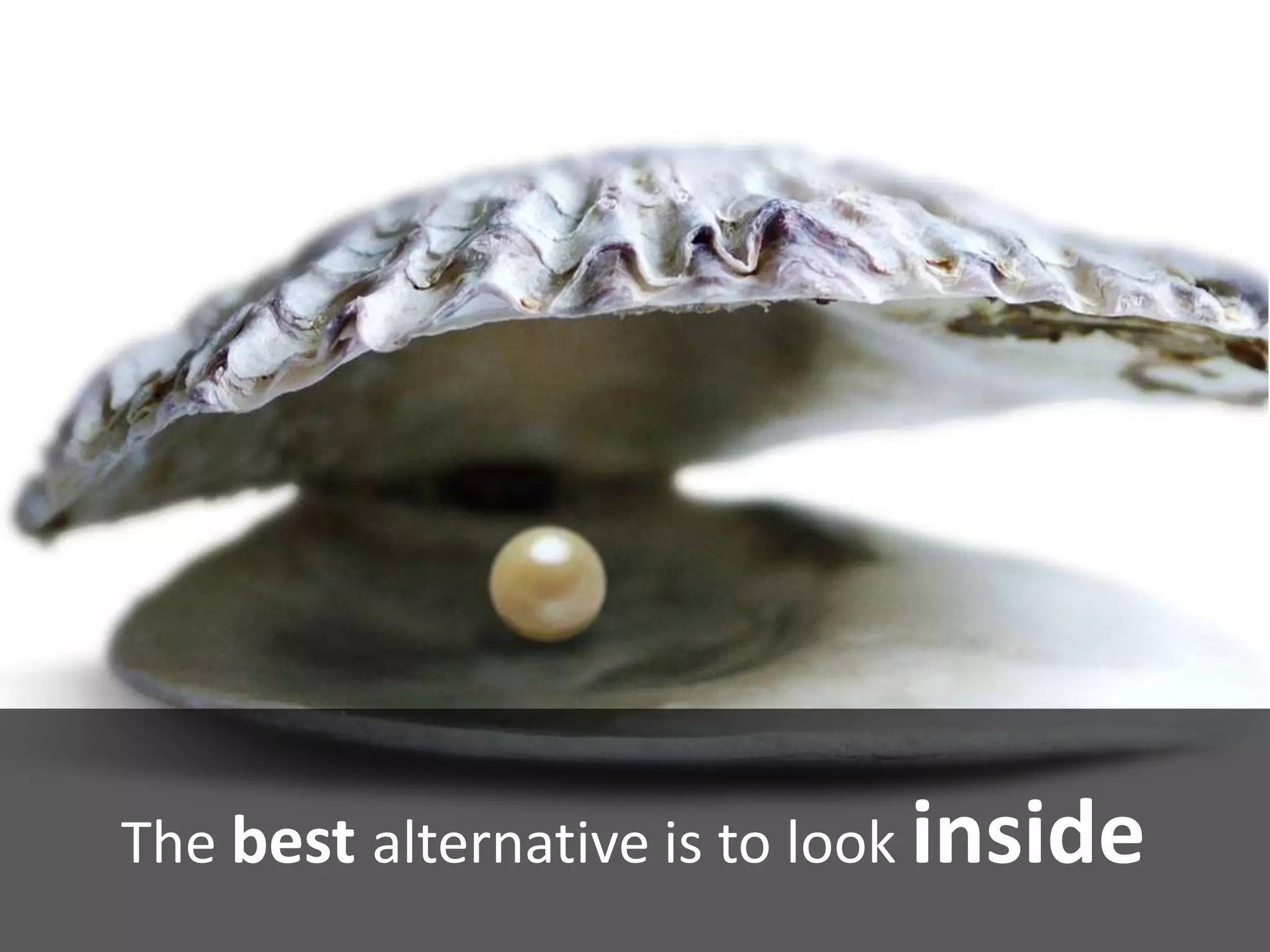
The best alternative is to look inside
We know how to do things. We have all
the pieces.
Results can be achieved if we put the
“pieces” in the right place
This becomes a
Process
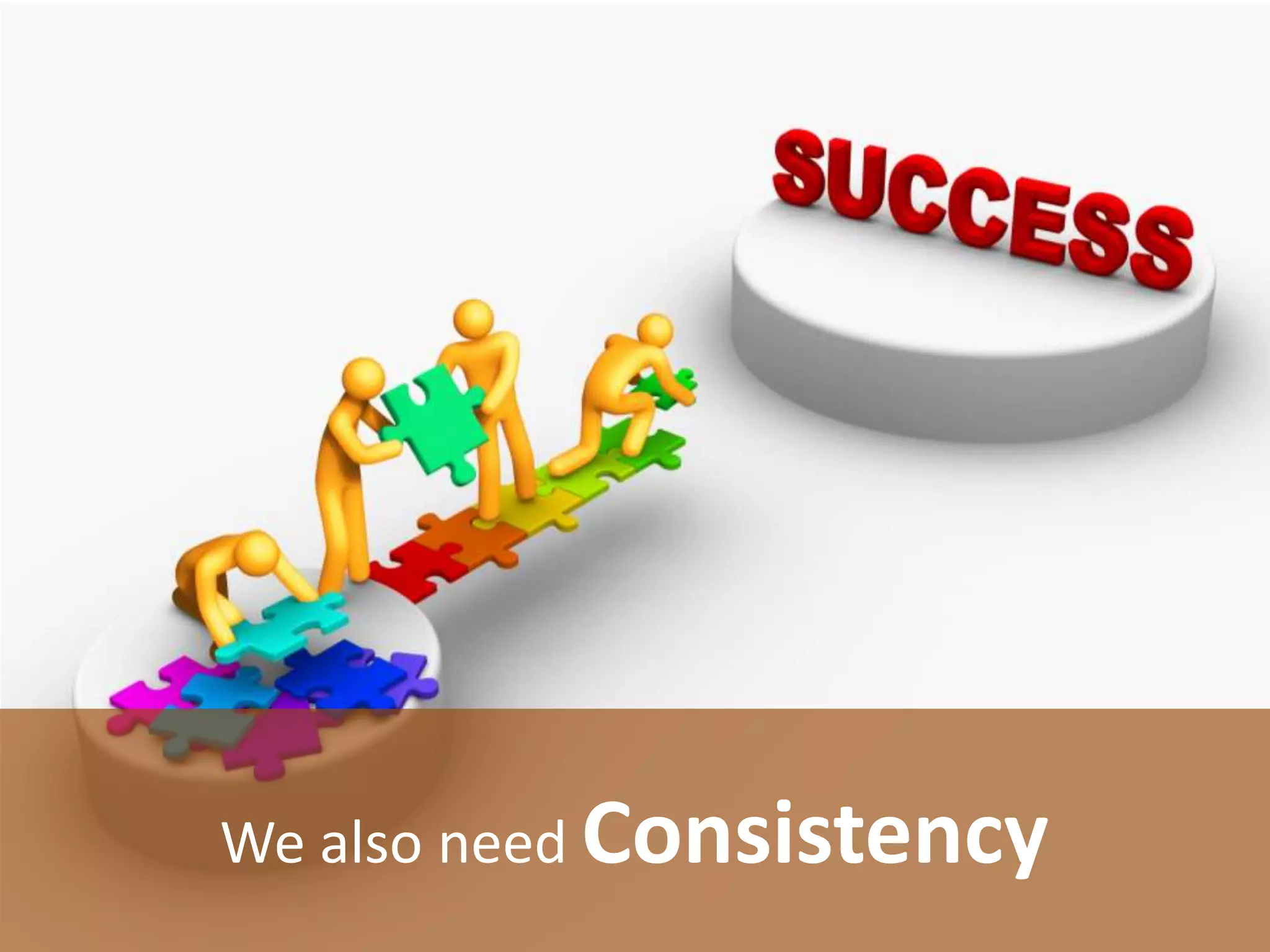
We also need Consistency
Optimize our resources
Measure and control our progress
and improve Continually
What kind of problems we solve with
Process?
Waste of TIME
Waste of MONEY
Waste of RESOURCES
It is possible to do it FASTER
CHEAPER
and.. BETTER
How?
5 STEPS
1. Define and Understand the
problem
2. Collect Data, Historical
information, insights, past experience, etc.
3. Identify opportunities, assess
risk/impact/cost, and prioritize initiatives
4. Implement your Quick Wins and then
your best opportunity
5. See the results… and be ready to
make it even better!
We just need 3
things:
1.Processes
2.People
3.Tools
What are other companies
doing???
http://www.youtube.com/watch?v=IEmEY4yGWuw&feature=player_embedded
http://www.youtube.com/watch?v=YIuF_QmRyh8
You showed me good examples in Health and Education…
What about Public sector, Utilities, Energy??
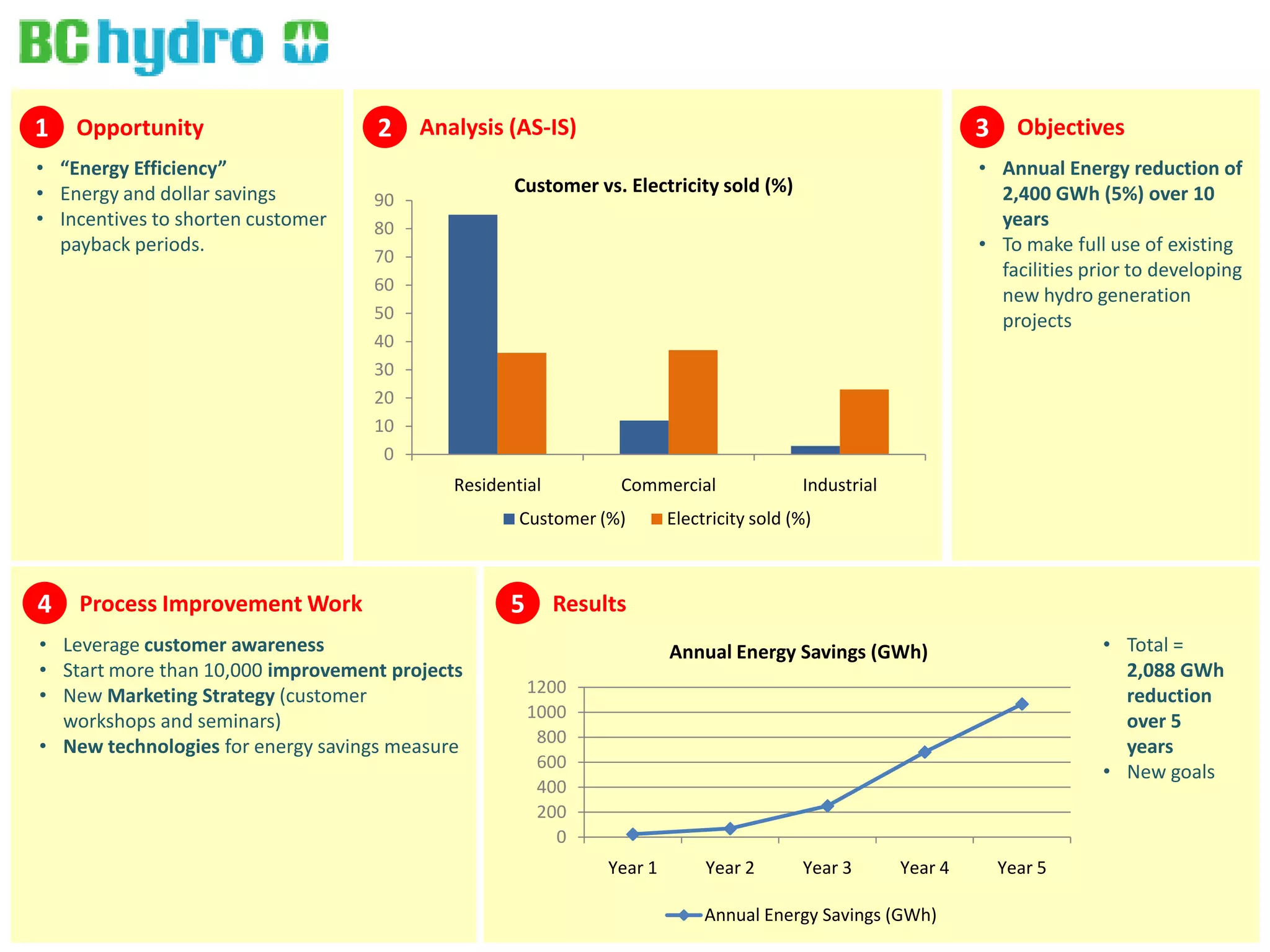
1 Opportunity
• “Energy Efficiency”
• Energy and dollar savings
• Incentives to shorten customer
payback periods.
0
10
20
30
40
50
60
70
80
90
Residential Commercial Industrial
Customer vs. Electricity sold (%)
Customer (%) Electricity sold (%)
2 Analysis (AS-IS) 3 Objectives
• Annual Energy reduction of
2,400 GWh (5%) over 10
years
• To make full use of existing
facilities prior to developing
new hydro generation
projects
4 Process Improvement Work
• Leverage customer awareness
• Start more than 10,000 improvement projects
• New Marketing Strategy (customer
workshops and seminars)
• New technologies for energy savings measure
5 Results
0
200
400
600
800
1000
1200
Year 1 Year 2 Year 3 Year 4 Year 5
Annual Energy Savings (GWh)
• Total =
2,088 GWh
reduction
over 5
years
• New goals
But this was
20 years
ago!
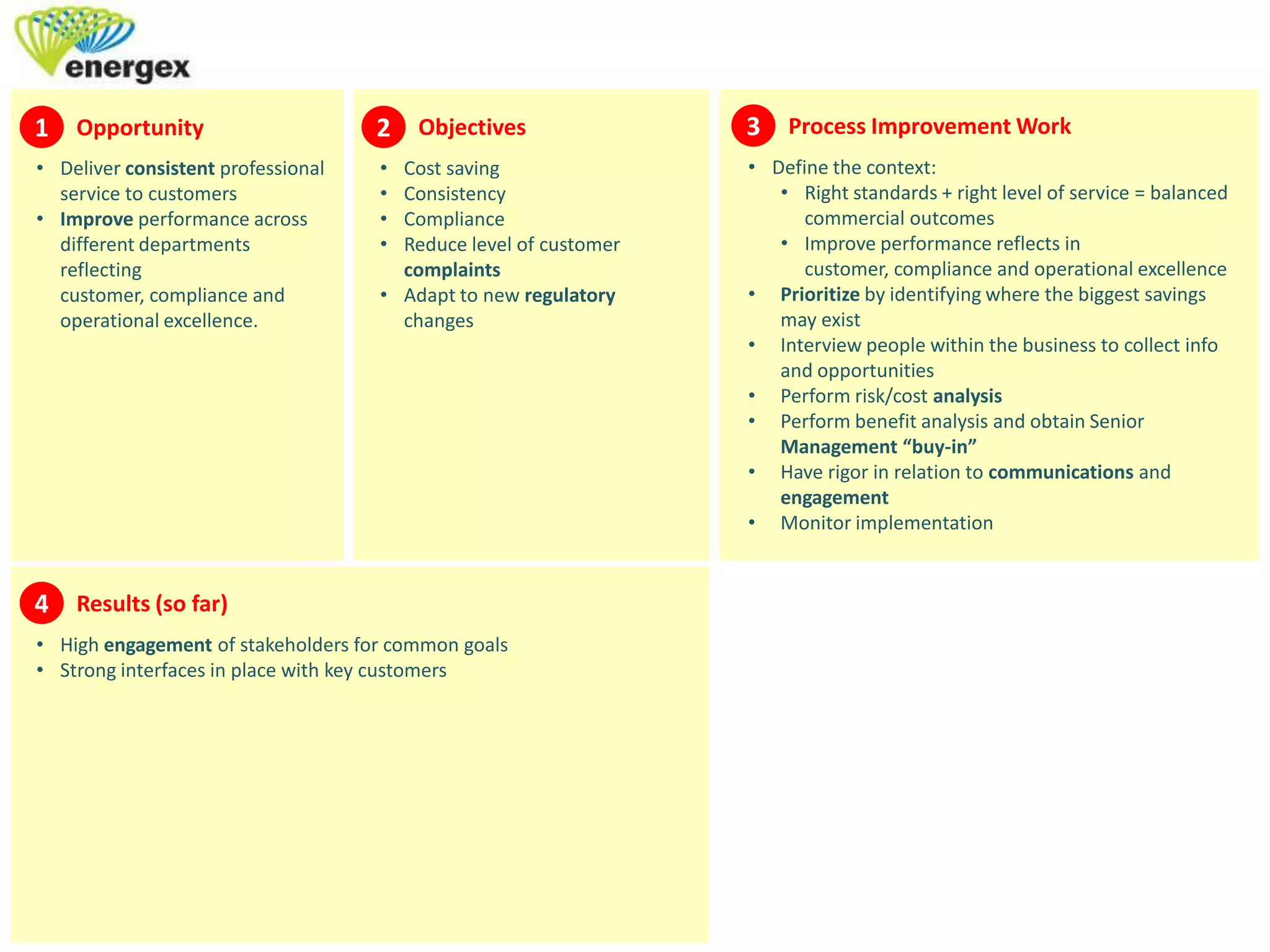
1 Opportunity
• Deliver consistent professional
service to customers
• Improve performance across
different departments
reflecting
customer, compliance and
operational excellence.
2 Objectives
• Cost saving
• Consistency
• Compliance
• Reduce level of customer
complaints
• Adapt to new regulatory
changes
3 Process Improvement Work
• Define the context:
• Right standards + right level of service = balanced
commercial outcomes
• Improve performance reflects in
customer, compliance and operational excellence
• Prioritize by identifying where the biggest savings
may exist
• Interview people within the business to collect info
and opportunities
• Perform risk/cost analysis
• Perform benefit analysis and obtain Senior
Management “buy-in”
• Have rigor in relation to communications and
engagement
• Monitor implementation
4 Results (so far)
• High engagement of stakeholders for common goals
• Strong interfaces in place with key customers
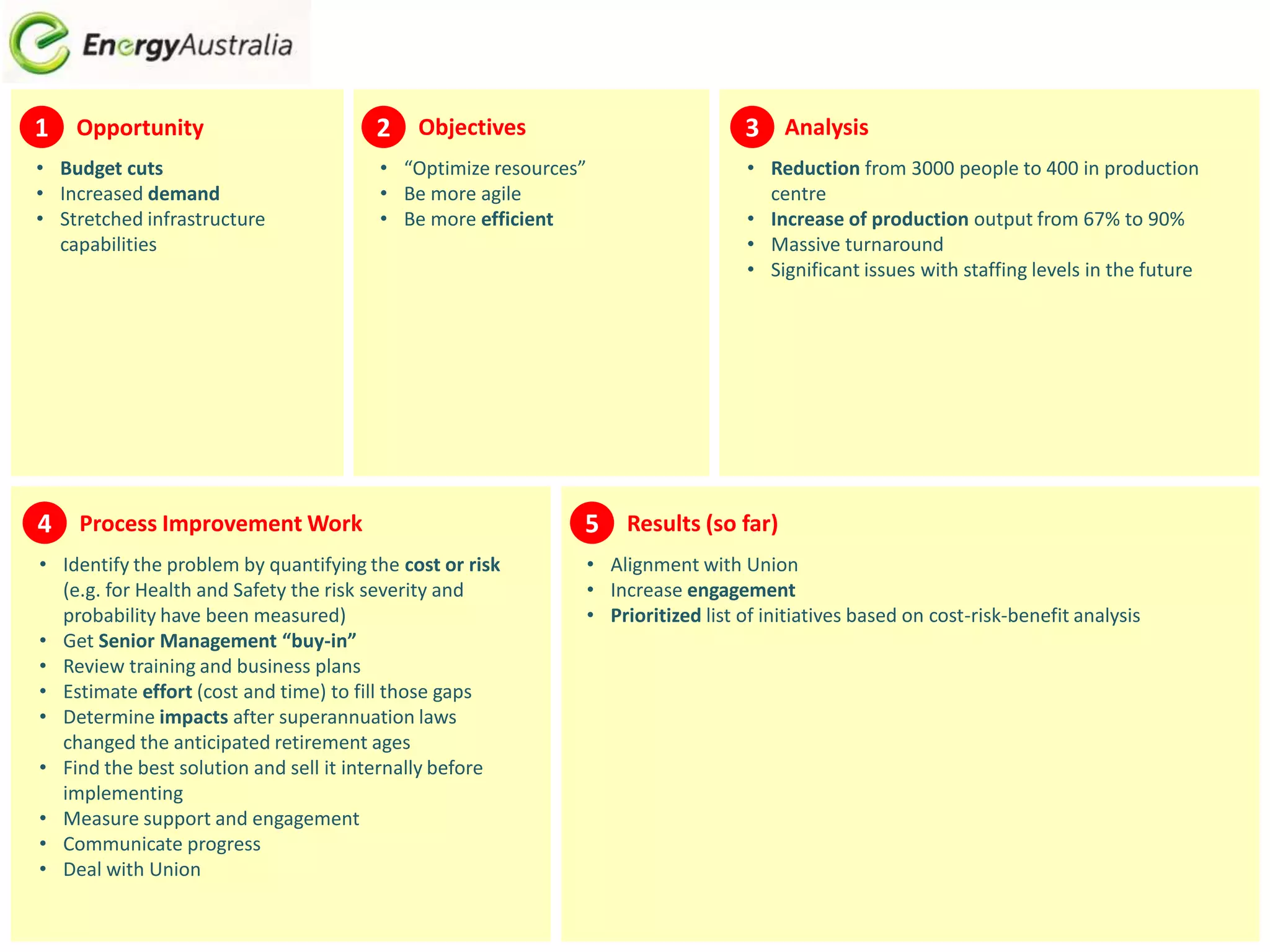
1 Opportunity
• Budget cuts
• Increased demand
• Stretched infrastructure
capabilities
2 Objectives
• “Optimize resources”
• Be more agile
• Be more efficient
4 Process Improvement Work
• Identify the problem by quantifying the cost or risk
(e.g. for Health and Safety the risk severity and
probability have been measured)
• Get Senior Management “buy-in”
• Review training and business plans
• Estimate effort (cost and time) to fill those gaps
• Determine impacts after superannuation laws
changed the anticipated retirement ages
• Find the best solution and sell it internally before
implementing
• Measure support and engagement
• Communicate progress
• Deal with Union
5 Results (so far)
• Alignment with Union
• Increase engagement
• Prioritized list of initiatives based on cost-risk-benefit analysis
Analysis3
• Reduction from 3000 people to 400 in production
centre
• Increase of production output from 67% to 90%
• Massive turnaround
• Significant issues with staffing levels in the future
What can I expect for the Future?
Process Utility Industry
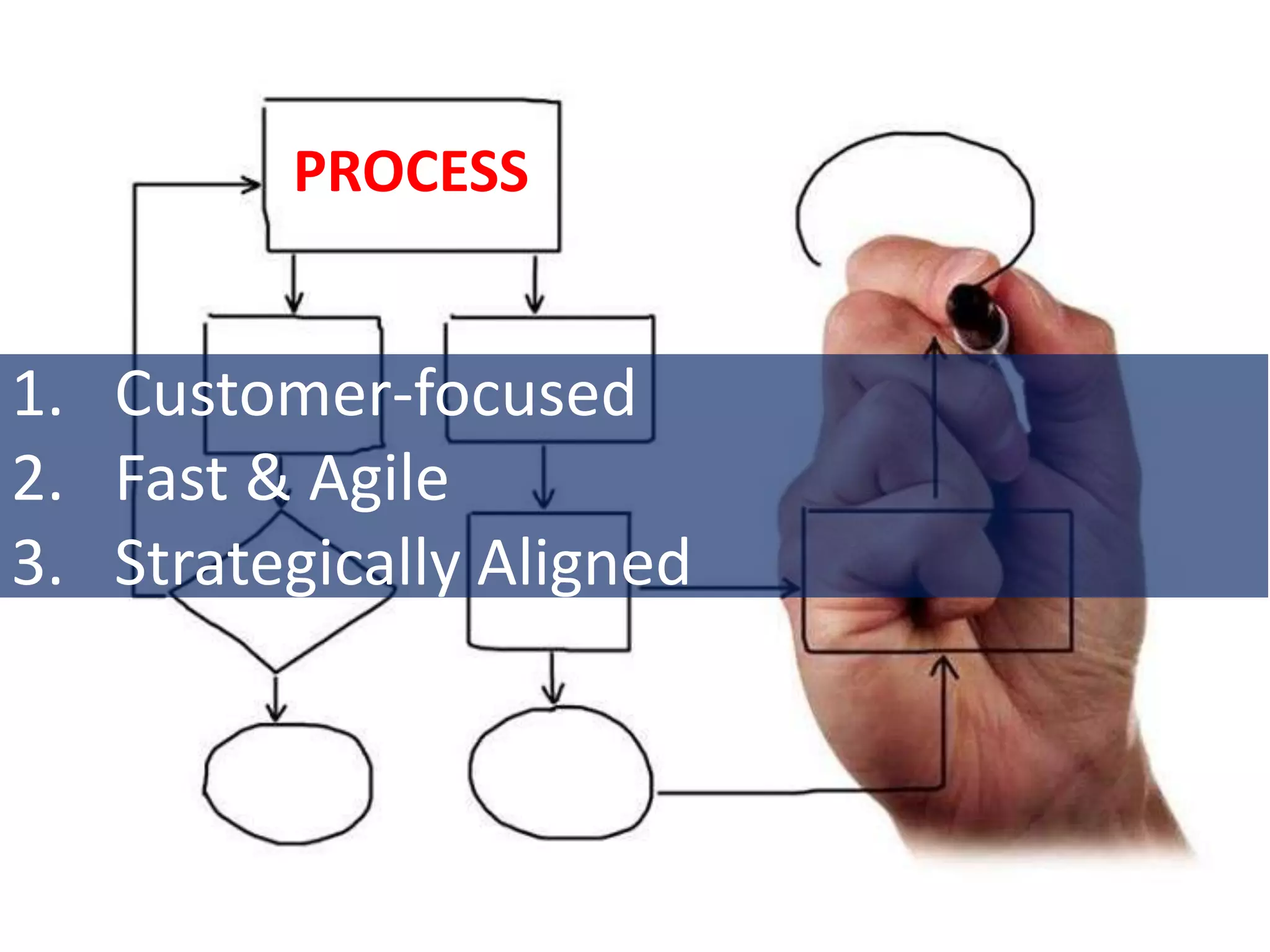
1. Customer-focused
2. Fast & Agile
3. Strategically Aligned
PROCESS
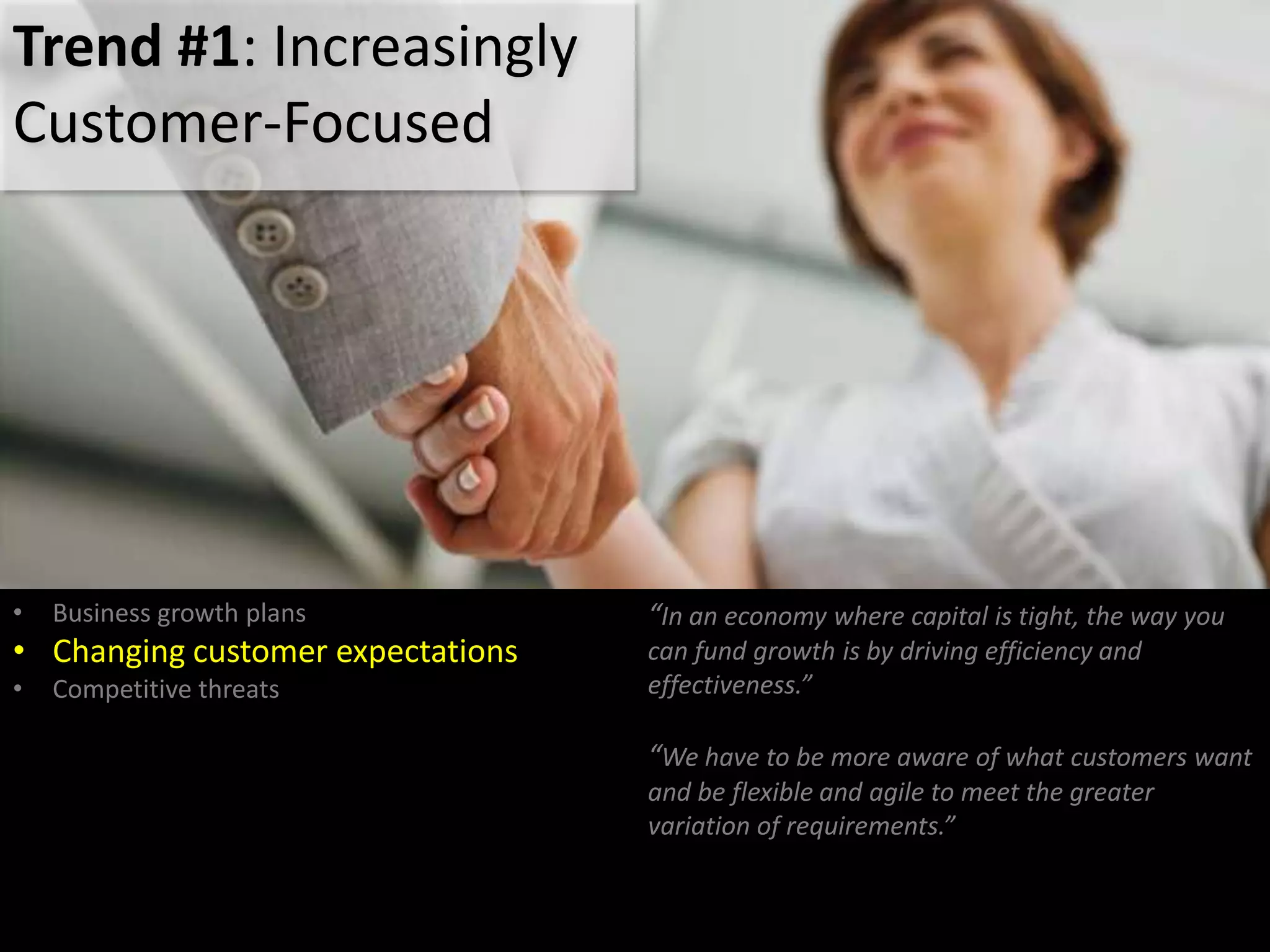
Trend #1: Increasingly
Customer-Focused
• Business growth plans
• Changing customer expectations
• Competitive threats
“In an economy where capital is tight, the way you
can fund growth is by driving efficiency and
effectiveness.”
“We have to be more aware of what customers want
and be flexible and agile to meet the greater
variation of requirements.”
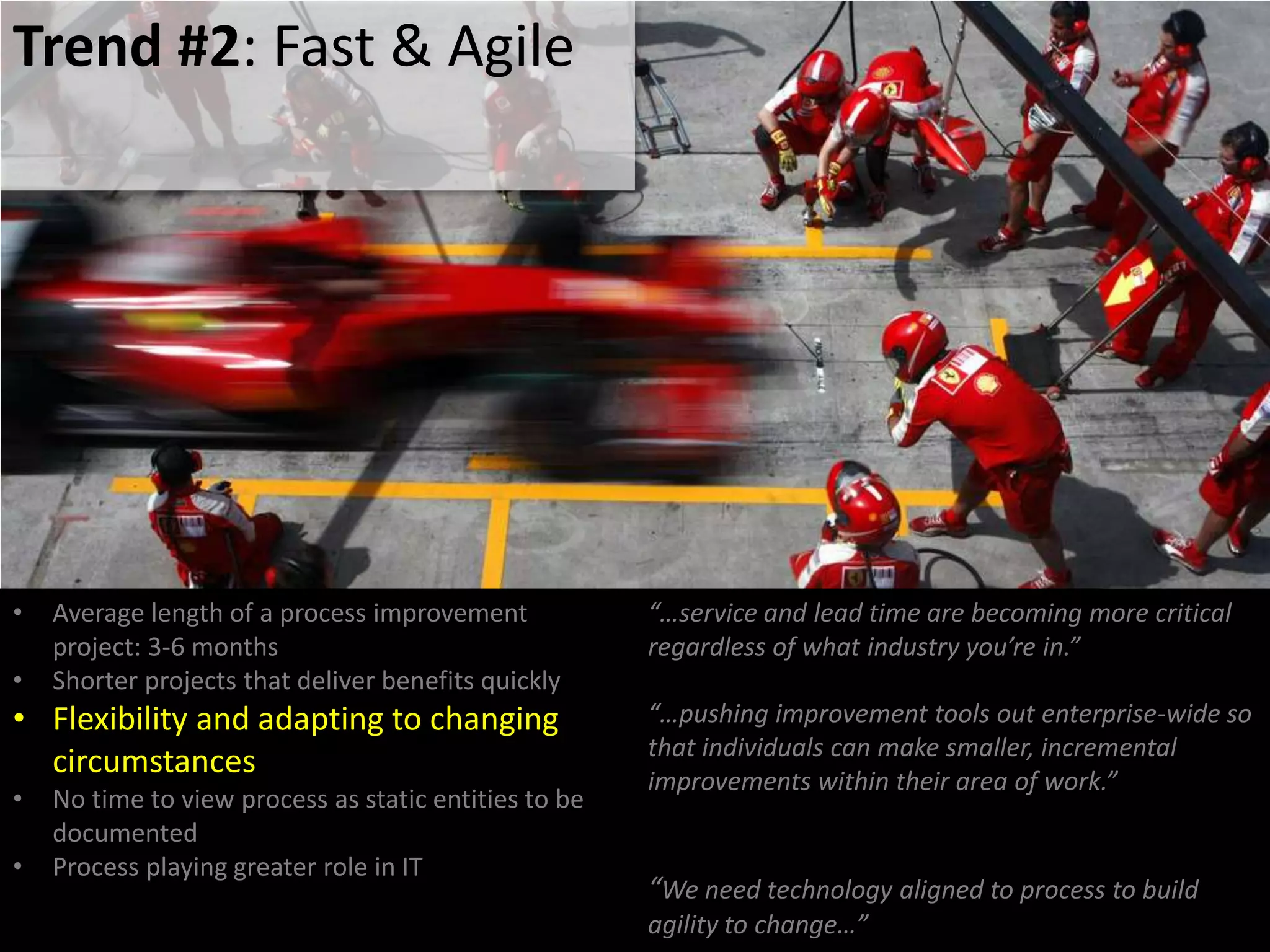
Trend #2: Fast & Agile
• Average length of a process improvement
project: 3-6 months
• Shorter projects that deliver benefits quickly
• Flexibility and adapting to changing
circumstances
• No time to view process as static entities to be
documented
• Process playing greater role in IT
“…service and lead time are becoming more critical
regardless of what industry you’re in.”
“…pushing improvement tools out enterprise-wide so
that individuals can make smaller, incremental
improvements within their area of work.”
“We need technology aligned to process to build
agility to change…”
• Improve Efficiency
• Reduce Costs
• Improve Customer Satisfaction
• Increase Market Share and Revenue
• Reduce Operational Risk
• Interest in Process is expanding
• (challenge 1) Link process improvement with top
level business strategy
• (challenge 2) Sustaining change
“…we have to do continuous improvement or process
improvement or some form of operational
excellence.”
“…to be less adherent to labels and more focused on
capabilities and competencies.”
Trend #3: Strategically
Aligned
“Sometimes process professionals don’t know how to
relate process to clear business objectives.”
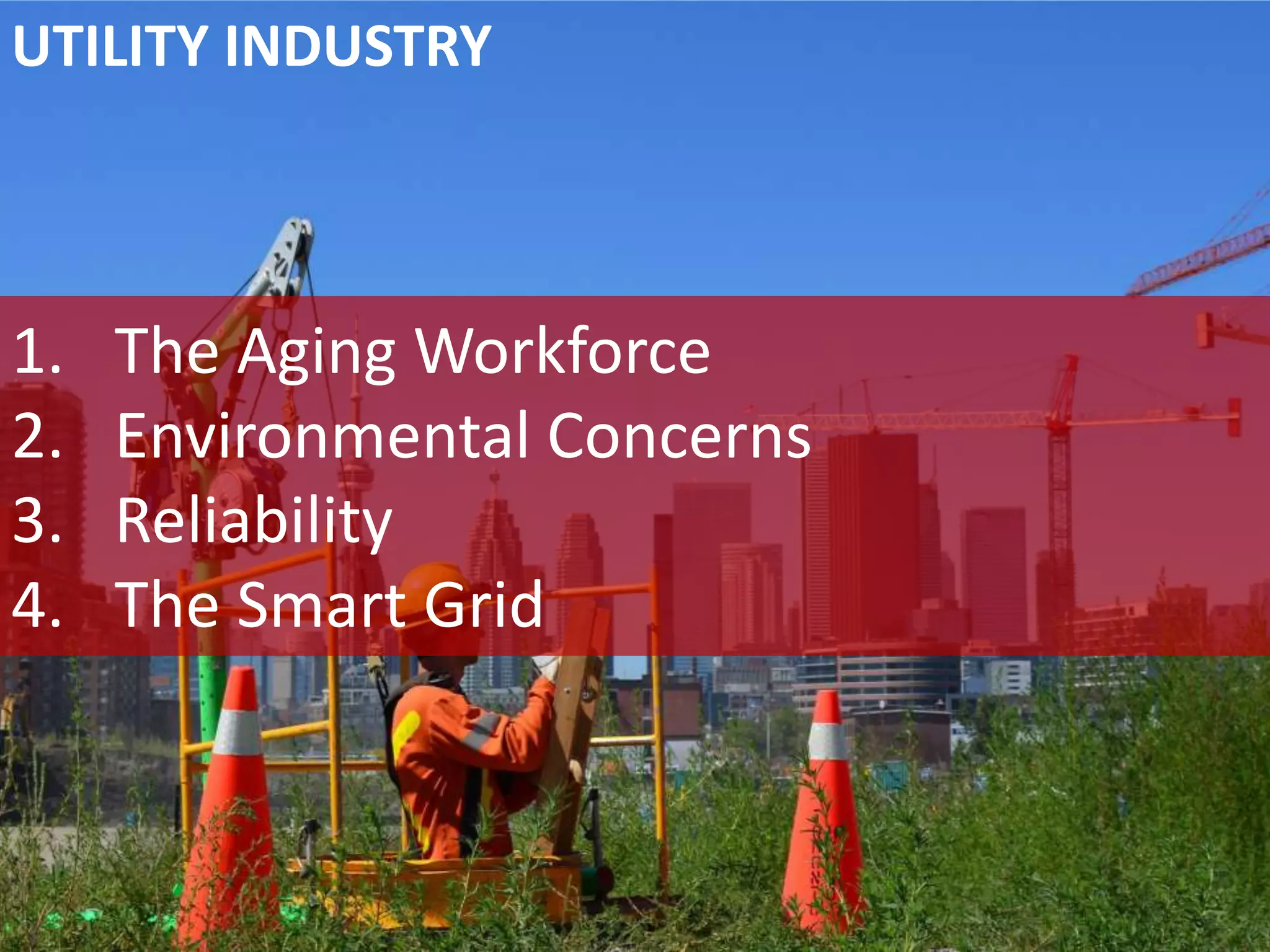
1. The Aging Workforce
2. Environmental Concerns
3. Reliability
4. The Smart Grid
UTILITY INDUSTRY
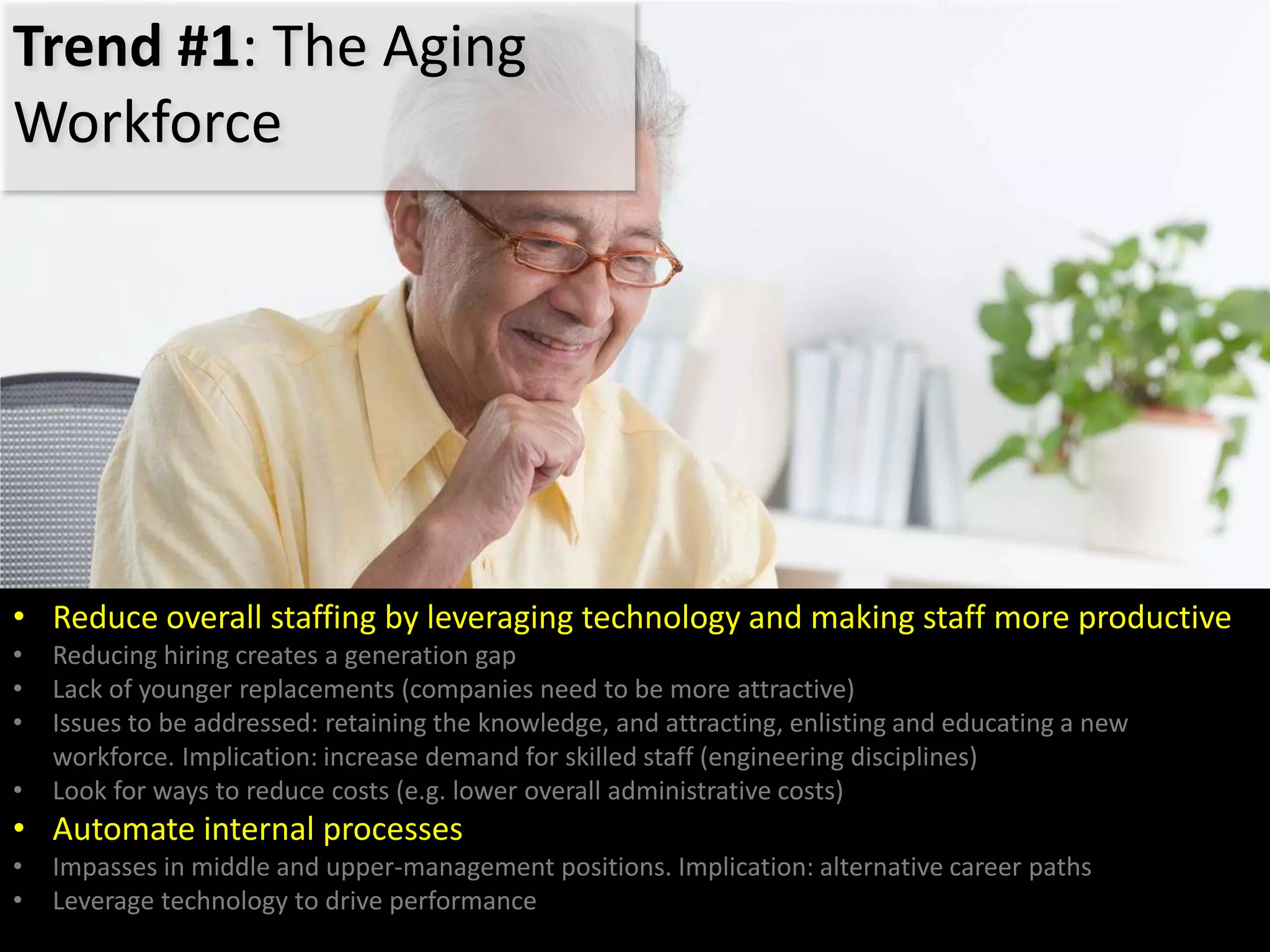
Trend #1: The Aging
Workforce
• Reduce overall staffing by leveraging technology and making staff more productive
• Reducing hiring creates a generation gap
• Lack of younger replacements (companies need to be more attractive)
• Issues to be addressed: retaining the knowledge, and attracting, enlisting and educating a new
workforce. Implication: increase demand for skilled staff (engineering disciplines)
• Look for ways to reduce costs (e.g. lower overall administrative costs)
• Automate internal processes
• Impasses in middle and upper-management positions. Implication: alternative career paths
• Leverage technology to drive performance
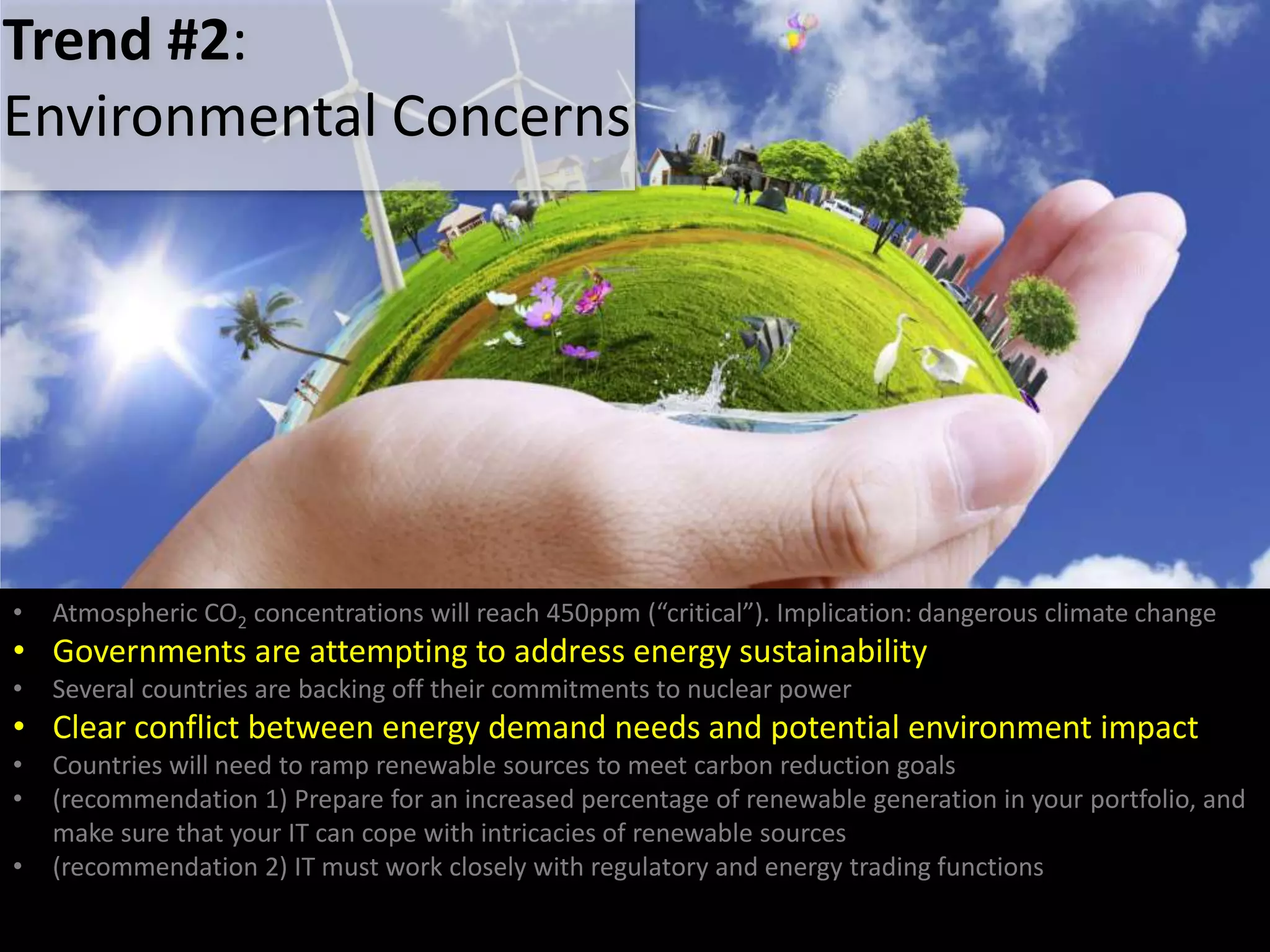
• Atmospheric CO2 concentrations will reach 450ppm (“critical”). Implication: dangerous climate change
• Governments are attempting to address energy sustainability
• Several countries are backing off their commitments to nuclear power
• Clear conflict between energy demand needs and potential environment impact
• Countries will need to ramp renewable sources to meet carbon reduction goals
• (recommendation 1) Prepare for an increased percentage of renewable generation in your portfolio, and
make sure that your IT can cope with intricacies of renewable sources
• (recommendation 2) IT must work closely with regulatory and energy trading functions
Trend #2:
Environmental Concerns
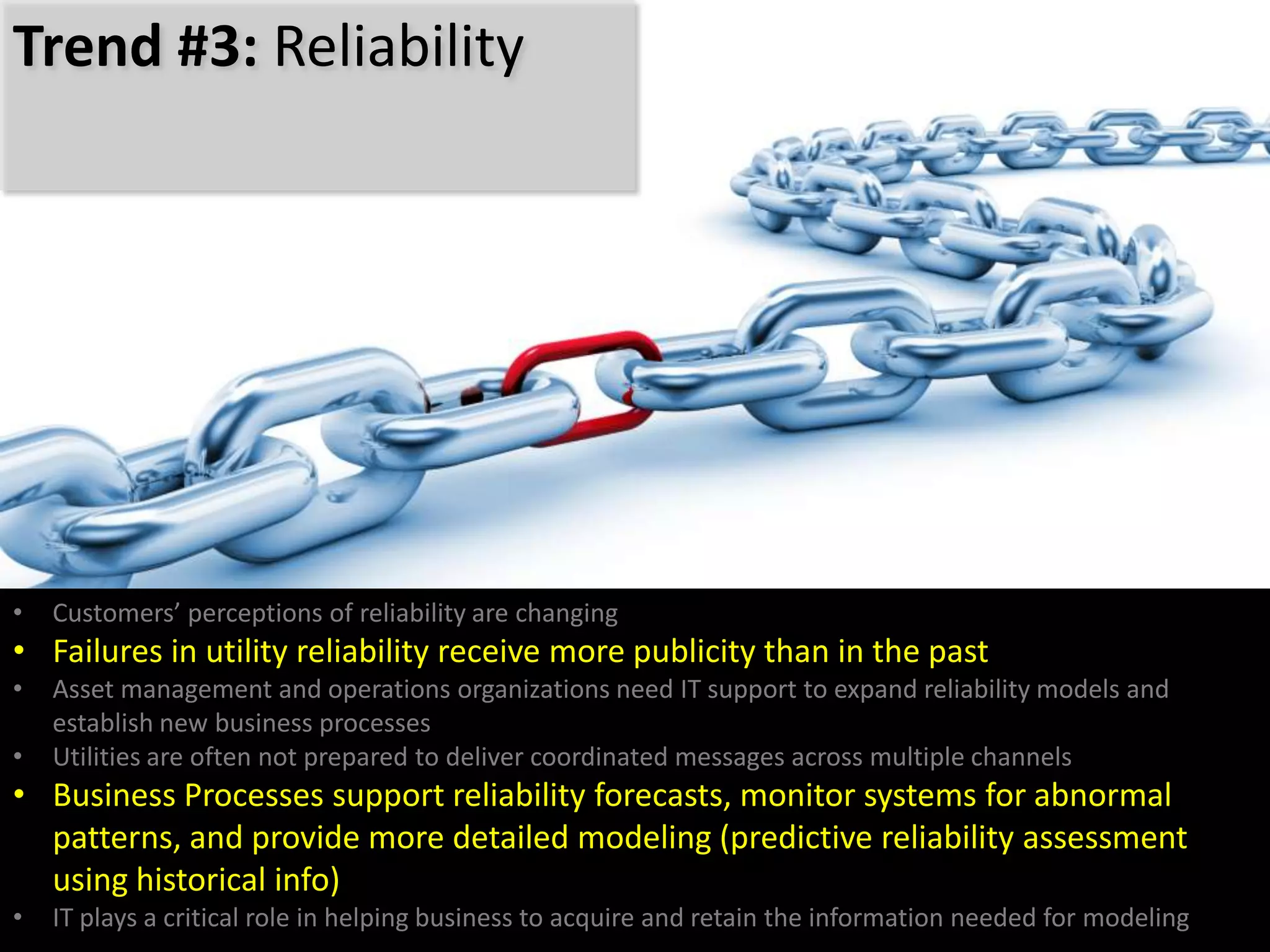
• Customers’ perceptions of reliability are changing
• Failures in utility reliability receive more publicity than in the past
• Asset management and operations organizations need IT support to expand reliability models and
establish new business processes
• Utilities are often not prepared to deliver coordinated messages across multiple channels
• Business Processes support reliability forecasts, monitor systems for abnormal
patterns, and provide more detailed modeling (predictive reliability assessment
using historical info)
• IT plays a critical role in helping business to acquire and retain the information needed for modeling
Trend #3: Reliability
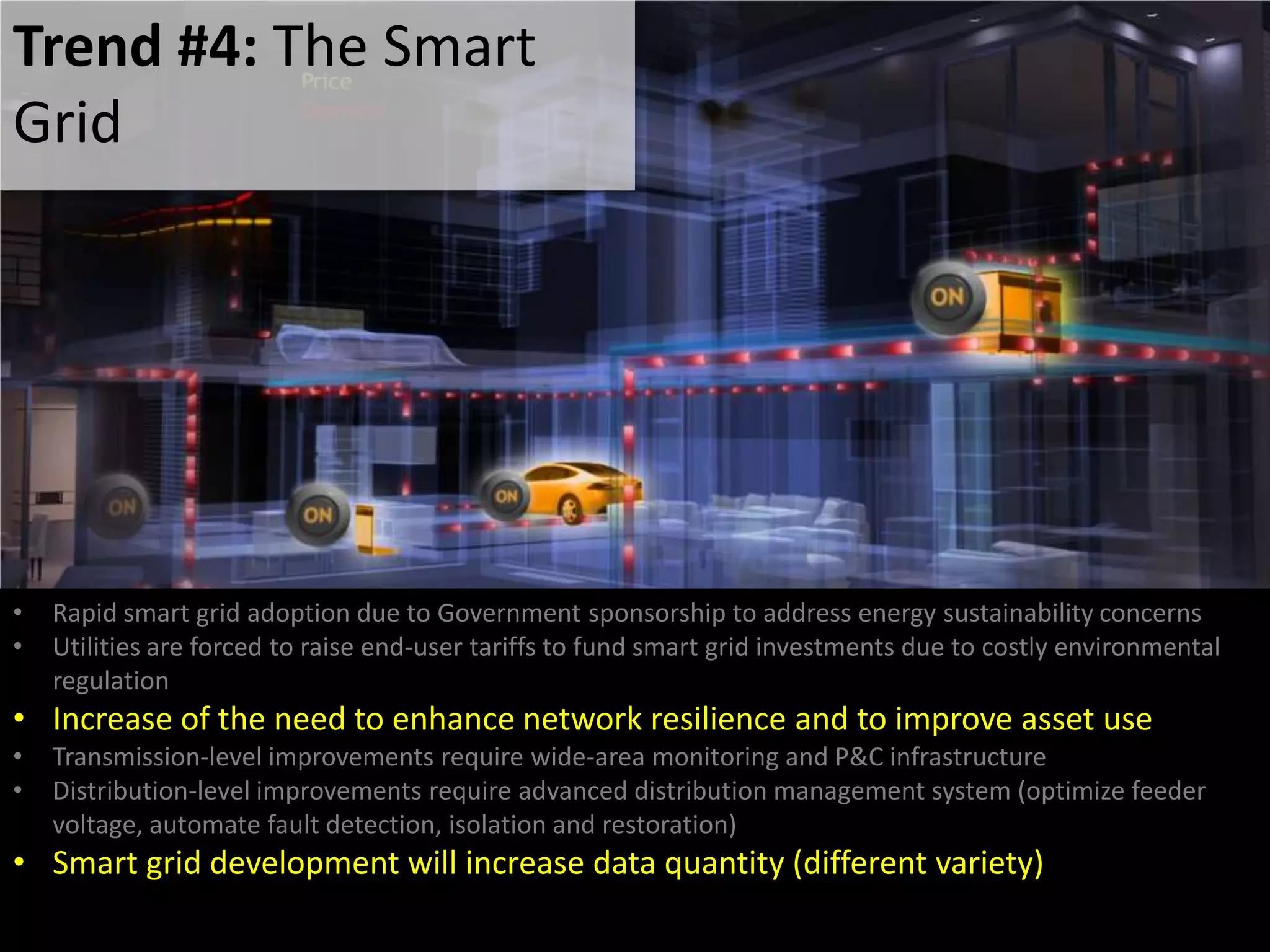
• Rapid smart grid adoption due to Government sponsorship to address energy sustainability concerns
• Utilities are forced to raise end-user tariffs to fund smart grid investments due to costly environmental
regulation
• Increase of the need to enhance network resilience and to improve asset use
• Transmission-level improvements require wide-area monitoring and P&C infrastructure
• Distribution-level improvements require advanced distribution management system (optimize feeder
voltage, automate fault detection, isolation and restoration)
• Smart grid development will increase data quantity (different variety)
Trend #4: The Smart
Grid
Introduction to Process Thinking

Introduction to Process Thinking

  • 1.
  • 3.
    “A Business Processis a collection of linked tasks which find their end in the delivery of a service or product to a client. A business process has also been defined as a set of activities and tasks that, once completed, will accomplish an organization goal.”
  • 5.
    Business Process evolvedin the past decades…
  • 6.
    … and becamemore mature
  • 8.
    Why do weneed Process Improvement?
  • 10.
    Let’s talk aboutProcess Thinking
  • 11.
    Customers want more,better, faster and pay less for products and services
  • 12.
    Shareholders determine newdirections and expect more efficiency
  • 13.
  • 14.
    Resources are notalways available
  • 15.
    And people don’thave time…
  • 16.
    The best alternativeis to look inside
  • 17.
    We know howto do things. We have all the pieces.
  • 18.
    Results can beachieved if we put the “pieces” in the right place
  • 19.
  • 21.
    We also needConsistency
  • 22.
  • 23.
    Measure and controlour progress
  • 24.
  • 25.
    What kind ofproblems we solve with Process?
  • 27.
  • 28.
  • 29.
  • 30.
    It is possibleto do it FASTER
  • 31.
  • 32.
  • 33.
  • 35.
  • 36.
    1. Define andUnderstand the problem
  • 37.
    2. Collect Data,Historical information, insights, past experience, etc.
  • 38.
    3. Identify opportunities,assess risk/impact/cost, and prioritize initiatives
  • 39.
    4. Implement yourQuick Wins and then your best opportunity
  • 40.
    5. See theresults… and be ready to make it even better!
  • 41.
    We just need3 things: 1.Processes 2.People 3.Tools
  • 42.
    What are othercompanies doing???
  • 44.
  • 45.
  • 46.
    You showed megood examples in Health and Education… What about Public sector, Utilities, Energy??
  • 47.
    1 Opportunity • “EnergyEfficiency” • Energy and dollar savings • Incentives to shorten customer payback periods. 0 10 20 30 40 50 60 70 80 90 Residential Commercial Industrial Customer vs. Electricity sold (%) Customer (%) Electricity sold (%) 2 Analysis (AS-IS) 3 Objectives • Annual Energy reduction of 2,400 GWh (5%) over 10 years • To make full use of existing facilities prior to developing new hydro generation projects 4 Process Improvement Work • Leverage customer awareness • Start more than 10,000 improvement projects • New Marketing Strategy (customer workshops and seminars) • New technologies for energy savings measure 5 Results 0 200 400 600 800 1000 1200 Year 1 Year 2 Year 3 Year 4 Year 5 Annual Energy Savings (GWh) Annual Energy Savings (GWh) • Total = 2,088 GWh reduction over 5 years • New goals
  • 48.
    But this was 20years ago!
  • 49.
    1 Opportunity • Deliverconsistent professional service to customers • Improve performance across different departments reflecting customer, compliance and operational excellence. 2 Objectives • Cost saving • Consistency • Compliance • Reduce level of customer complaints • Adapt to new regulatory changes 3 Process Improvement Work • Define the context: • Right standards + right level of service = balanced commercial outcomes • Improve performance reflects in customer, compliance and operational excellence • Prioritize by identifying where the biggest savings may exist • Interview people within the business to collect info and opportunities • Perform risk/cost analysis • Perform benefit analysis and obtain Senior Management “buy-in” • Have rigor in relation to communications and engagement • Monitor implementation 4 Results (so far) • High engagement of stakeholders for common goals • Strong interfaces in place with key customers
  • 50.
    1 Opportunity • Budgetcuts • Increased demand • Stretched infrastructure capabilities 2 Objectives • “Optimize resources” • Be more agile • Be more efficient 4 Process Improvement Work • Identify the problem by quantifying the cost or risk (e.g. for Health and Safety the risk severity and probability have been measured) • Get Senior Management “buy-in” • Review training and business plans • Estimate effort (cost and time) to fill those gaps • Determine impacts after superannuation laws changed the anticipated retirement ages • Find the best solution and sell it internally before implementing • Measure support and engagement • Communicate progress • Deal with Union 5 Results (so far) • Alignment with Union • Increase engagement • Prioritized list of initiatives based on cost-risk-benefit analysis Analysis3 • Reduction from 3000 people to 400 in production centre • Increase of production output from 67% to 90% • Massive turnaround • Significant issues with staffing levels in the future
  • 51.
    What can Iexpect for the Future?
  • 53.
  • 54.
    1. Customer-focused 2. Fast& Agile 3. Strategically Aligned PROCESS
  • 55.
    Trend #1: Increasingly Customer-Focused •Business growth plans • Changing customer expectations • Competitive threats “In an economy where capital is tight, the way you can fund growth is by driving efficiency and effectiveness.” “We have to be more aware of what customers want and be flexible and agile to meet the greater variation of requirements.”
  • 56.
    Trend #2: Fast& Agile • Average length of a process improvement project: 3-6 months • Shorter projects that deliver benefits quickly • Flexibility and adapting to changing circumstances • No time to view process as static entities to be documented • Process playing greater role in IT “…service and lead time are becoming more critical regardless of what industry you’re in.” “…pushing improvement tools out enterprise-wide so that individuals can make smaller, incremental improvements within their area of work.” “We need technology aligned to process to build agility to change…”
  • 57.
    • Improve Efficiency •Reduce Costs • Improve Customer Satisfaction • Increase Market Share and Revenue • Reduce Operational Risk • Interest in Process is expanding • (challenge 1) Link process improvement with top level business strategy • (challenge 2) Sustaining change “…we have to do continuous improvement or process improvement or some form of operational excellence.” “…to be less adherent to labels and more focused on capabilities and competencies.” Trend #3: Strategically Aligned “Sometimes process professionals don’t know how to relate process to clear business objectives.”
  • 58.
    1. The AgingWorkforce 2. Environmental Concerns 3. Reliability 4. The Smart Grid UTILITY INDUSTRY
  • 59.
    Trend #1: TheAging Workforce • Reduce overall staffing by leveraging technology and making staff more productive • Reducing hiring creates a generation gap • Lack of younger replacements (companies need to be more attractive) • Issues to be addressed: retaining the knowledge, and attracting, enlisting and educating a new workforce. Implication: increase demand for skilled staff (engineering disciplines) • Look for ways to reduce costs (e.g. lower overall administrative costs) • Automate internal processes • Impasses in middle and upper-management positions. Implication: alternative career paths • Leverage technology to drive performance
  • 60.
    • Atmospheric CO2concentrations will reach 450ppm (“critical”). Implication: dangerous climate change • Governments are attempting to address energy sustainability • Several countries are backing off their commitments to nuclear power • Clear conflict between energy demand needs and potential environment impact • Countries will need to ramp renewable sources to meet carbon reduction goals • (recommendation 1) Prepare for an increased percentage of renewable generation in your portfolio, and make sure that your IT can cope with intricacies of renewable sources • (recommendation 2) IT must work closely with regulatory and energy trading functions Trend #2: Environmental Concerns
  • 61.
    • Customers’ perceptionsof reliability are changing • Failures in utility reliability receive more publicity than in the past • Asset management and operations organizations need IT support to expand reliability models and establish new business processes • Utilities are often not prepared to deliver coordinated messages across multiple channels • Business Processes support reliability forecasts, monitor systems for abnormal patterns, and provide more detailed modeling (predictive reliability assessment using historical info) • IT plays a critical role in helping business to acquire and retain the information needed for modeling Trend #3: Reliability
  • 62.
    • Rapid smartgrid adoption due to Government sponsorship to address energy sustainability concerns • Utilities are forced to raise end-user tariffs to fund smart grid investments due to costly environmental regulation • Increase of the need to enhance network resilience and to improve asset use • Transmission-level improvements require wide-area monitoring and P&C infrastructure • Distribution-level improvements require advanced distribution management system (optimize feeder voltage, automate fault detection, isolation and restoration) • Smart grid development will increase data quantity (different variety) Trend #4: The Smart Grid

Editor's Notes

  • #48 And that was 20 years ago!