Problems in learning
morphological aspects of
English
Ms. Supranee Chuangkarn
Ms. Natthiya Soranet
Ms. Sukraphansa Datchanon
Morphology is a study of word
structure.
A word is made of morphemes which
are
smaller units that can carry meaning.
For example;
work+er = worker
bone+s = bones
There are two kinds of morphemes
 Free morpheme can stand by itself as
a single word.
 Bound morphemes normally cannot
stand alone, for example, plural
morpheme –s.
Based on our teaching experiences,
types of morphology that pose
difficulties for Thai students
Free morpheme
 Lexical morpheme
Nouns do not pose any difficulty.
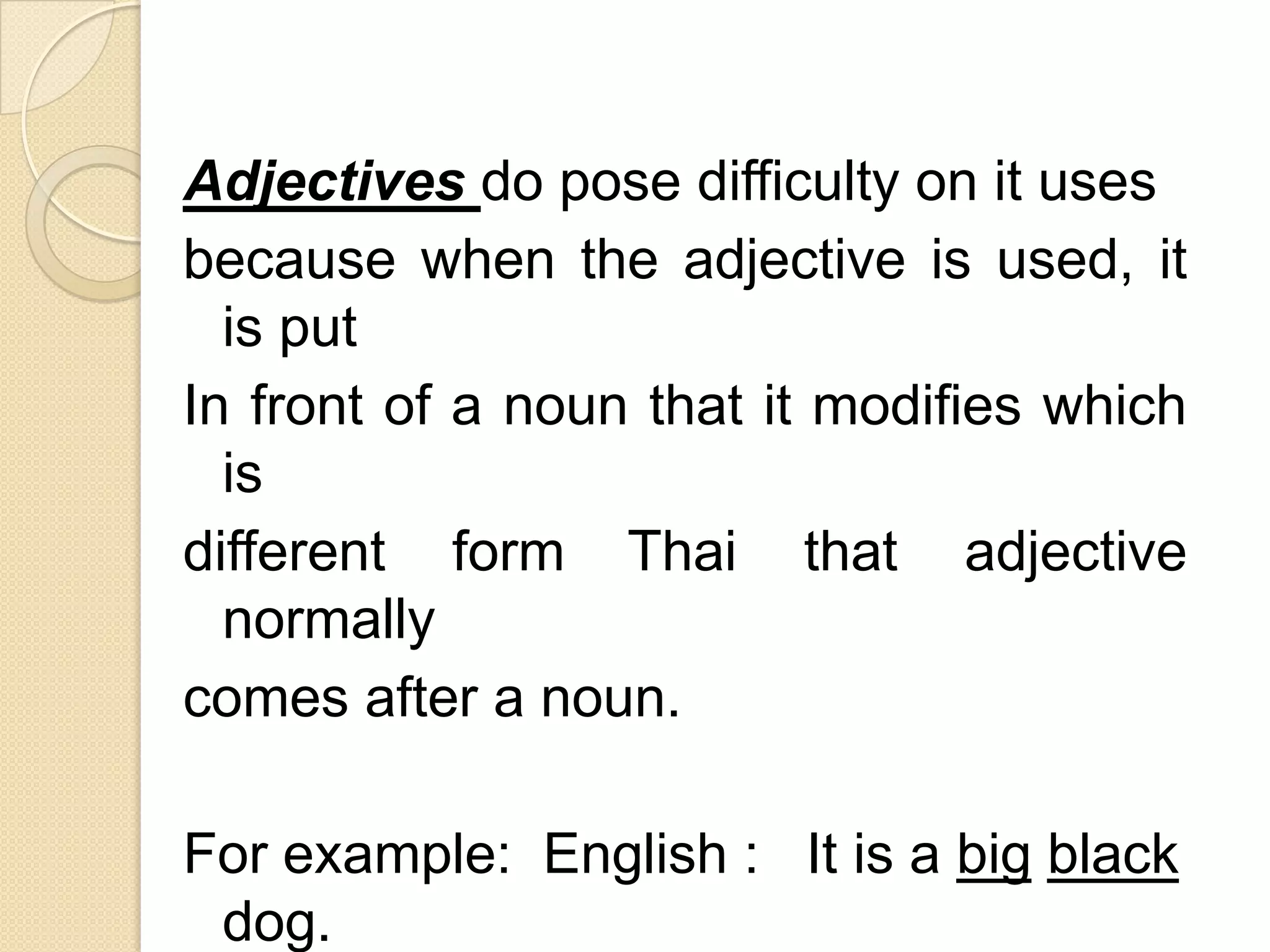
Adjectives do pose difficulty on it uses
because when the adjective is used, it
is put
In front of a noun that it modifies which
is
different form Thai that adjective
normally
comes after a noun.
For example: English : It is a big black
dog.
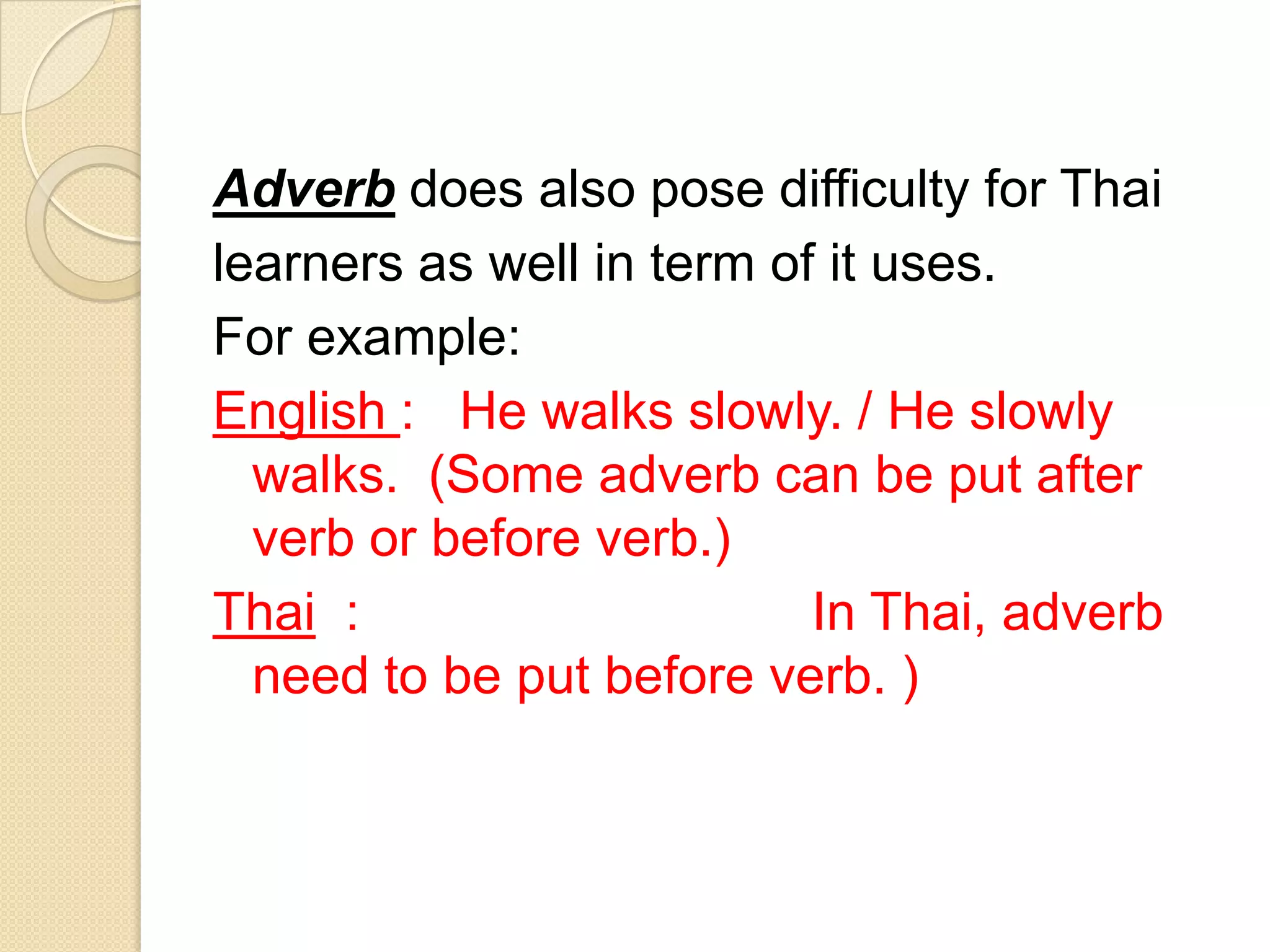
Adverb does also pose difficulty for Thai
learners as well in term of it uses.
For example:
English : He walks slowly. / He slowly
walks. (Some adverb can be put after
verb or before verb.)
Thai : In Thai, adverb
need to be put before verb. )
Functional morpheme
Conjunction, preposition, and pronouns
do not
post difficulty because many of them
share
the uses in common. Even there are
some
uses that does not actually use in the
same
way, but still learners keep on
practicing
and finally acquire word i.e. on—use
as in
Suggestion:
Solved by keep students practicing often
and
provide context when practice.
Bound morpheme
Both inflectional and derivational pose
difficulty for Thai learners because both
inflectional and derivational morpheme
are
not parts of Thai language which is their
mother tongue.
Johanne Paradis (2005) found out that
grammatical morphology in children
learning English as a second language
that pose difficulties to learner are
following:
 third person singular –s/-es
 past tense –ed
 irregular past tense
 verb to be as auxiliary verb
 do as auxiliary verb
 plural –s
 progressive – ing

Problems in learning morphological aspects of english

  • 1.
    Problems in learning morphologicalaspects of English Ms. Supranee Chuangkarn Ms. Natthiya Soranet Ms. Sukraphansa Datchanon
  • 2.
    Morphology is astudy of word structure. A word is made of morphemes which are smaller units that can carry meaning. For example; work+er = worker bone+s = bones
  • 3.
    There are twokinds of morphemes  Free morpheme can stand by itself as a single word.  Bound morphemes normally cannot stand alone, for example, plural morpheme –s.
  • 4.
    Based on ourteaching experiences, types of morphology that pose difficulties for Thai students Free morpheme  Lexical morpheme Nouns do not pose any difficulty.
  • 5.
    Adjectives do posedifficulty on it uses because when the adjective is used, it is put In front of a noun that it modifies which is different form Thai that adjective normally comes after a noun. For example: English : It is a big black dog.
  • 6.
    Adverb does alsopose difficulty for Thai learners as well in term of it uses. For example: English : He walks slowly. / He slowly walks. (Some adverb can be put after verb or before verb.) Thai : In Thai, adverb need to be put before verb. )
  • 7.
    Functional morpheme Conjunction, preposition,and pronouns do not post difficulty because many of them share the uses in common. Even there are some uses that does not actually use in the same way, but still learners keep on practicing and finally acquire word i.e. on—use as in
  • 8.
    Suggestion: Solved by keepstudents practicing often and provide context when practice.
  • 9.
    Bound morpheme Both inflectionaland derivational pose difficulty for Thai learners because both inflectional and derivational morpheme are not parts of Thai language which is their mother tongue.
  • 10.
    Johanne Paradis (2005)found out that grammatical morphology in children learning English as a second language that pose difficulties to learner are following:  third person singular –s/-es  past tense –ed  irregular past tense  verb to be as auxiliary verb  do as auxiliary verb  plural –s  progressive – ing