Ammar Algburi
Ph.D. in Microbial Biology
Diyala University, College of Sciences
Biotechnology Dept.
Dec. 27th, 2017
Probiotic and Prebiotic;
Their Antimicrobial Impact
on Human Health
2
3
Outlines
4
 Probiotics
 Species of Probiotic
 Charactristcs
 Health benefit
 Antimicrobial activity
 Probiotics and biofilm
 Prebiotics
 General benefits of Prebiotics
 Symbiotics
 Protecting Probiotic Bacteria
“Microencapsulation”
5
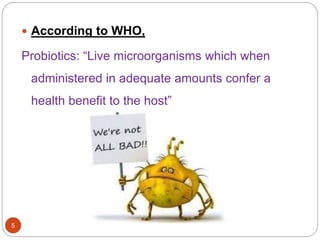
 According to WHO,
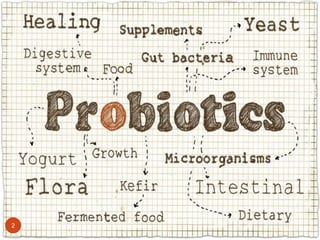
Probiotics: “Live microorganisms which when
administered in adequate amounts confer a
health benefit to the host”
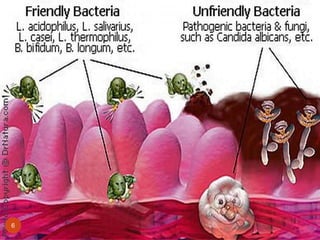
6
Species of Probiotoc
7
 There are numerous probiotic microorganisms:
1. Fermented foods: Lactobacillus rhamnosus,
Lactobacillus reuteri, Lactobacillus casei,
Lactobacillus acidophilus and bifidobacteria.
2. Investigated: Escherichia coli Nissle 1917,
Enterococcus faecium SF68, and the probiotic
yeast Saccharomyces boulardii.
• In addition, probiotic may include strains of;
Streptococcus, Pedicococcus, Aspergillus, and
Bacillus.
Characteristics
8
Acid and Bile tolerance
 Cell surface hydrophobicity, for adhesion to
intestinal cells
 Antibiotic sensitivity
 Antimicrobial activity
 Gut colonization and persisting there
 Lactose removal
 Protease and aminopeptidase activity
Safety in food and clinical applications
Health Benefits
9
 Elimination of lactose intolerance
 Anti-diarrheal
 Antioxidant
 Hypocholesterolemic
 Anticarcinogenic; Neutralization of dietary
carcinogens
 Antidiabetic
 Antihypertensive
 Immunomodulatory
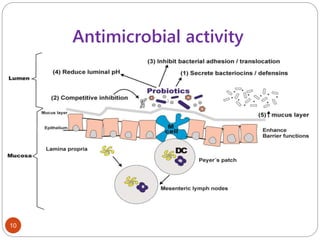
Antimicrobial activity
10
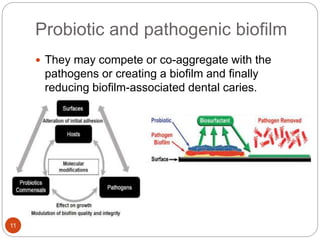
Probiotic and pathogenic biofilm
11
 They may compete or co-aggregate with the
pathogens or creating a biofilm and finally
reducing biofilm-associated dental caries.
Prebiotics
12
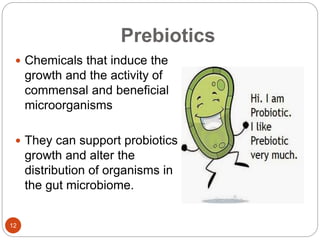
 Chemicals that induce the
growth and the activity of
commensal and beneficial
microorganisms
 They can support probiotics
growth and alter the
distribution of organisms in
the gut microbiome.
Prebiotics, a fermented fiber
13
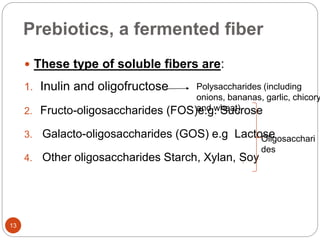
 These type of soluble fibers are:
1. Inulin and oligofructose
2. Fructo-oligosaccharides (FOS)e.g. Sucrose
3. Galacto-oligosaccharides (GOS) e.g Lactose
4. Other oligosaccharides Starch, Xylan, Soy
Oligosacchari
des
Polysaccharides (including
onions, bananas, garlic, chicory
and wheat)
General benefits of
Prebiotics
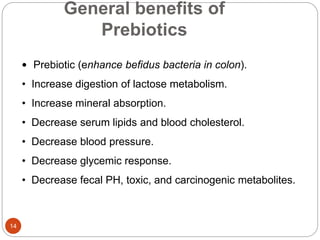
• Prebiotic (enhance befidus bacteria in colon).
• Increase digestion of lactose metabolism.
• Increase mineral absorption.
• Decrease serum lipids and blood cholesterol.
• Decrease blood pressure.
• Decrease glycemic response.
• Decrease fecal PH, toxic, and carcinogenic metabolites.
14
Synbiotics
15
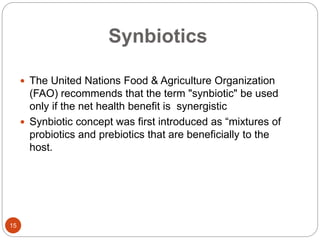
 The United Nations Food & Agriculture Organization
(FAO) recommends that the term "synbiotic" be used
only if the net health benefit is synergistic
 Synbiotic concept was first introduced as “mixtures of
probiotics and prebiotics that are beneficially to the
host.
Protecting Probiotic
Bacteria “Microencapsulation”
16
 Enhanced viability of Probiotics in the gastrointestinal
tract.
 Prevent these microorganisms from multiplying in food
 Can control releasing and optimizing delivery to the site
of action.
A technology to Protect Probiotic Bacteria
17

Probiotic and Prebiotic; Their Antimicrobial effect

  • 1.
    Ammar Algburi Ph.D. inMicrobial Biology Diyala University, College of Sciences Biotechnology Dept. Dec. 27th, 2017 Probiotic and Prebiotic; Their Antimicrobial Impact on Human Health
  • 2.
  • 3.
  • 4.
    Outlines 4  Probiotics  Speciesof Probiotic  Charactristcs  Health benefit  Antimicrobial activity  Probiotics and biofilm  Prebiotics  General benefits of Prebiotics  Symbiotics  Protecting Probiotic Bacteria “Microencapsulation”
  • 5.
    5  According toWHO, Probiotics: “Live microorganisms which when administered in adequate amounts confer a health benefit to the host”
  • 6.
  • 7.
    Species of Probiotoc 7 There are numerous probiotic microorganisms: 1. Fermented foods: Lactobacillus rhamnosus, Lactobacillus reuteri, Lactobacillus casei, Lactobacillus acidophilus and bifidobacteria. 2. Investigated: Escherichia coli Nissle 1917, Enterococcus faecium SF68, and the probiotic yeast Saccharomyces boulardii. • In addition, probiotic may include strains of; Streptococcus, Pedicococcus, Aspergillus, and Bacillus.
  • 8.
    Characteristics 8 Acid and Biletolerance  Cell surface hydrophobicity, for adhesion to intestinal cells  Antibiotic sensitivity  Antimicrobial activity  Gut colonization and persisting there  Lactose removal  Protease and aminopeptidase activity Safety in food and clinical applications
  • 9.
    Health Benefits 9  Eliminationof lactose intolerance  Anti-diarrheal  Antioxidant  Hypocholesterolemic  Anticarcinogenic; Neutralization of dietary carcinogens  Antidiabetic  Antihypertensive  Immunomodulatory
  • 10.
  • 11.
    Probiotic and pathogenicbiofilm 11  They may compete or co-aggregate with the pathogens or creating a biofilm and finally reducing biofilm-associated dental caries.
  • 12.
    Prebiotics 12  Chemicals thatinduce the growth and the activity of commensal and beneficial microorganisms  They can support probiotics growth and alter the distribution of organisms in the gut microbiome.
  • 13.
    Prebiotics, a fermentedfiber 13  These type of soluble fibers are: 1. Inulin and oligofructose 2. Fructo-oligosaccharides (FOS)e.g. Sucrose 3. Galacto-oligosaccharides (GOS) e.g Lactose 4. Other oligosaccharides Starch, Xylan, Soy Oligosacchari des Polysaccharides (including onions, bananas, garlic, chicory and wheat)
  • 14.
    General benefits of Prebiotics •Prebiotic (enhance befidus bacteria in colon). • Increase digestion of lactose metabolism. • Increase mineral absorption. • Decrease serum lipids and blood cholesterol. • Decrease blood pressure. • Decrease glycemic response. • Decrease fecal PH, toxic, and carcinogenic metabolites. 14
  • 15.
    Synbiotics 15  The UnitedNations Food & Agriculture Organization (FAO) recommends that the term "synbiotic" be used only if the net health benefit is synergistic  Synbiotic concept was first introduced as “mixtures of probiotics and prebiotics that are beneficially to the host.
  • 16.
    Protecting Probiotic Bacteria “Microencapsulation” 16 Enhanced viability of Probiotics in the gastrointestinal tract.  Prevent these microorganisms from multiplying in food  Can control releasing and optimizing delivery to the site of action. A technology to Protect Probiotic Bacteria
  • 17.

Editor's Notes

  • #10 Changing and improving the digestion of lactose to short chain fatty acids or other organic acids consumption of probiotics-containing dairy products results in the reduction of blood cholesterol, which may be helpful in the prevention of obesity, diabetes, cardiovascular diseases. inhibition of acetyl-CoA carboxylase and of glukose-6-phosphate dehydrogenase lead to blood cholesterol reduction. improve glycaemic control in people with type 2 diabetes (autoimmune disease) by Decreased methylation process.