TIME – TESTED
METHODS
7
 Similar to the Inductive
method
 Study a typical case
thoroughly and in detail
 Aims to organize into a
coherent whole all necessary
and related details
PROBLEM – SOLVING
removes difficulty or
perplexity in learning through
a process of reasoning or
reflective thinking.
3 TYPES
1. Mental
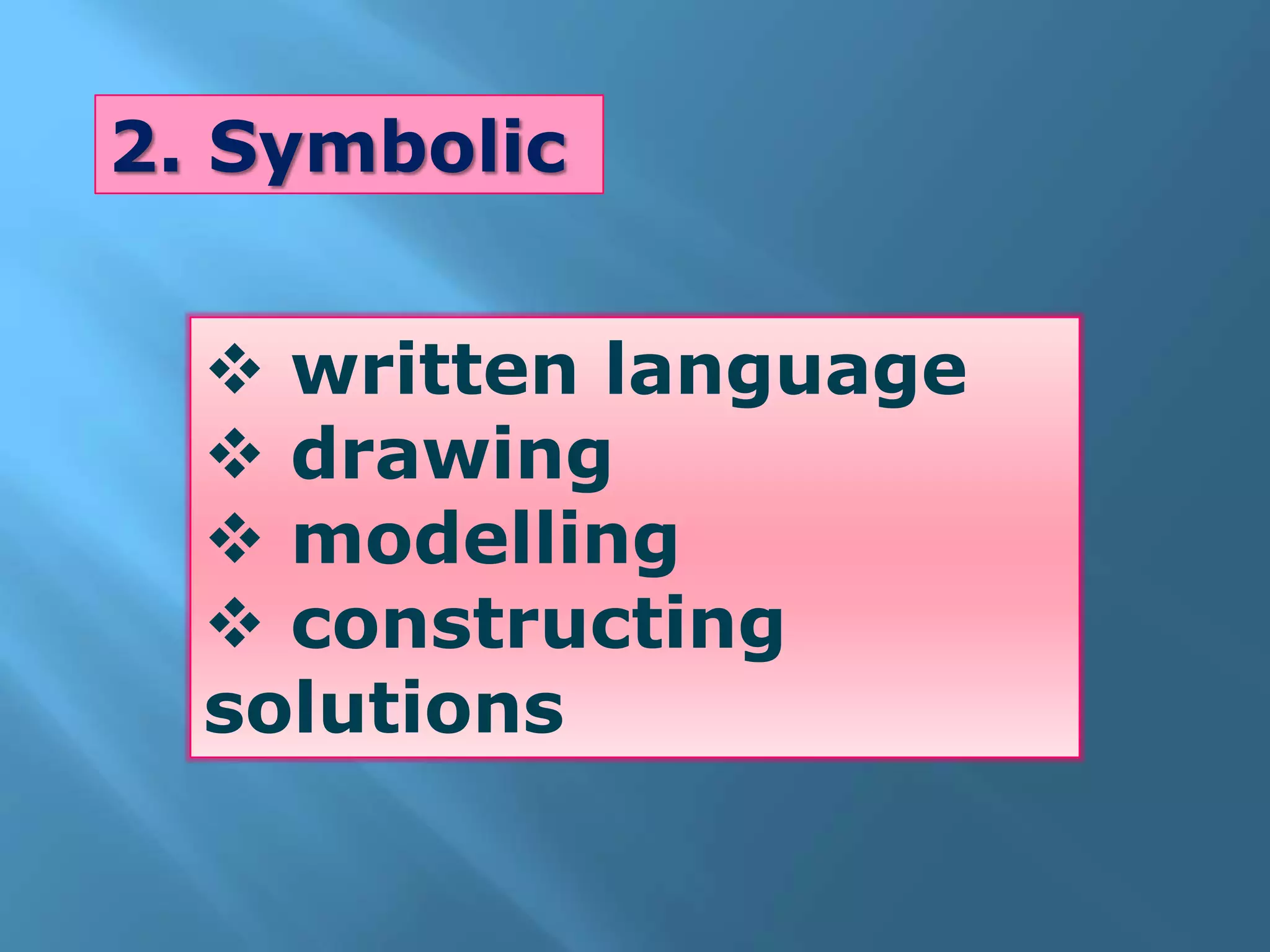
2. Symbolic
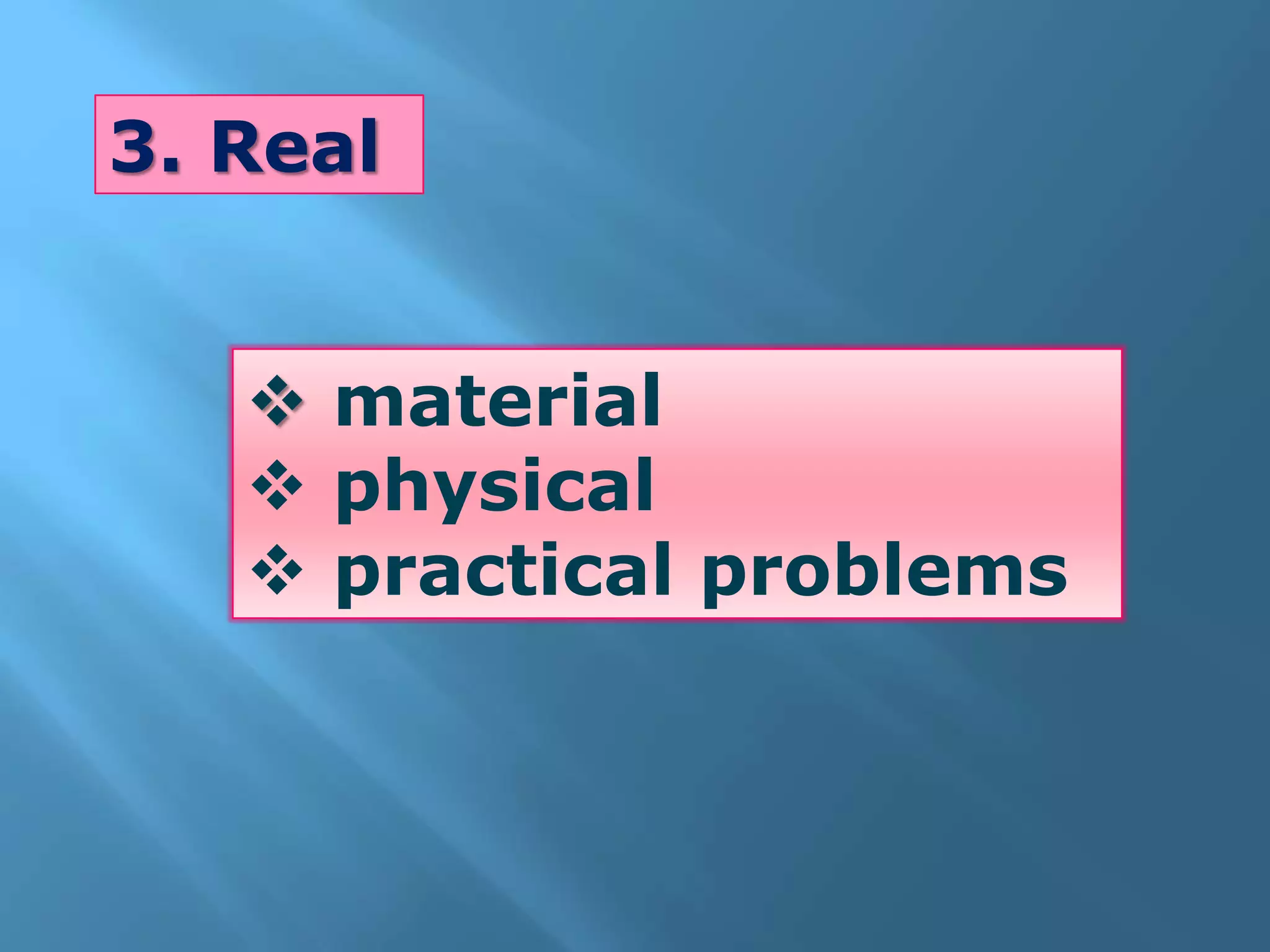
3. Real
 contemplative
 reflective
 academic
 reconstructive
 imaginative in
character
1. Mental
2. Symbolic
 written language
 drawing
 modelling
 constructing
solutions
3. Real
 material
 physical
 practical problems
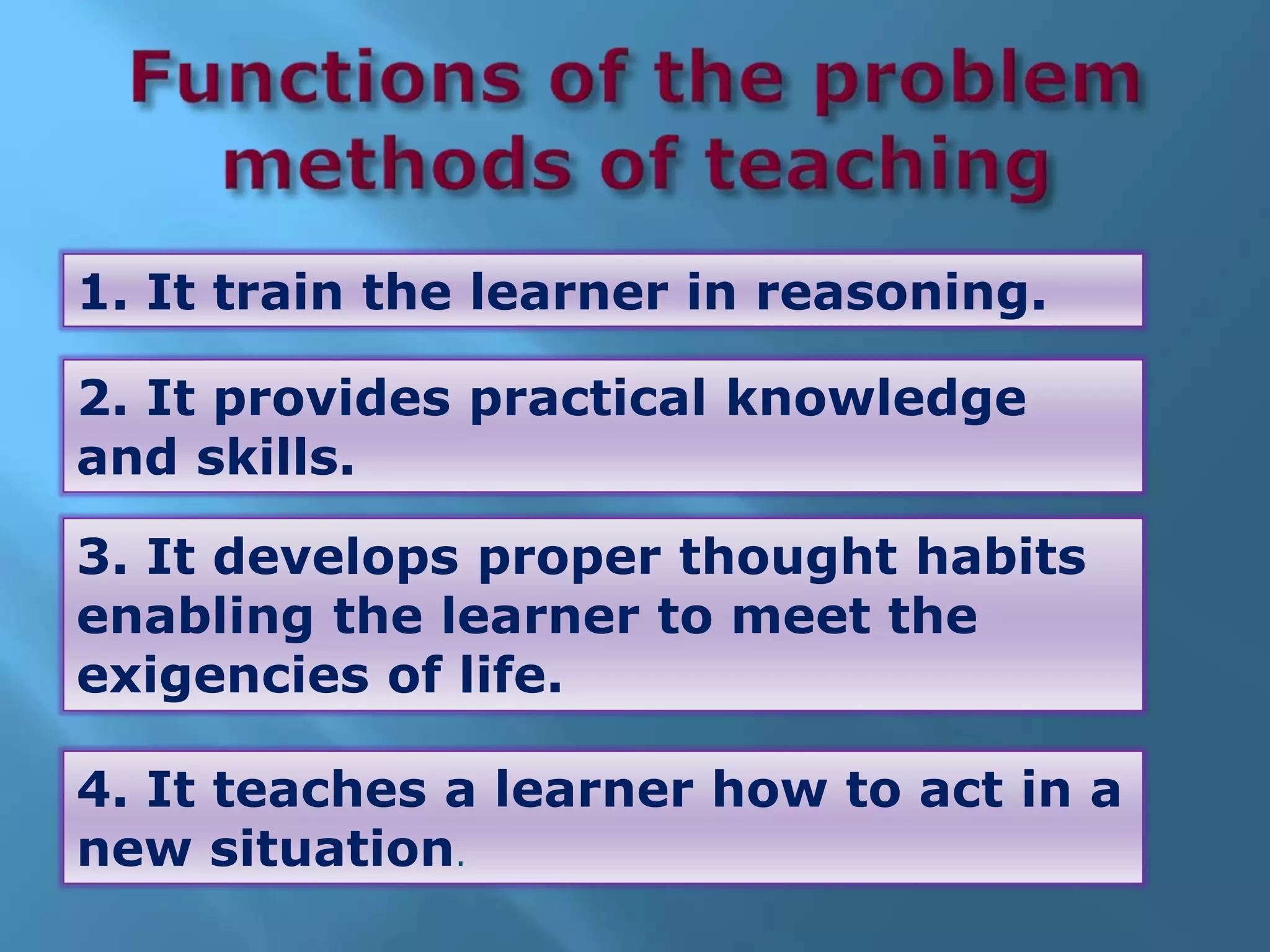
1. It train the learner in reasoning.
2. It provides practical knowledge
and skills.
3. It develops proper thought habits
enabling the learner to meet the
exigencies of life.
4. It teaches a learner how to act in a
new situation.
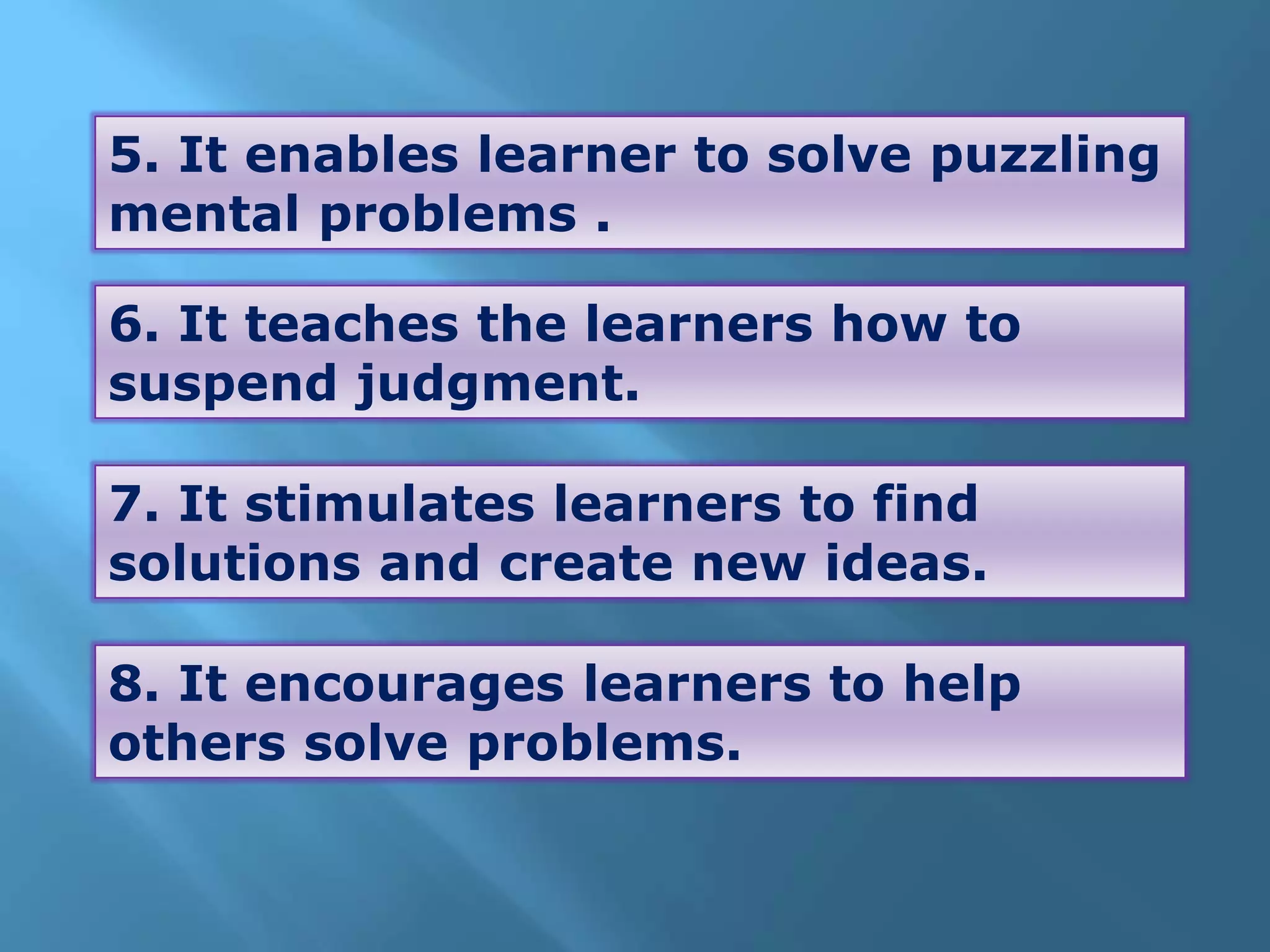
5. It enables learner to solve puzzling
mental problems .
6. It teaches the learners how to
suspend judgment.
7. It stimulates learners to find
solutions and create new ideas.
8. It encourages learners to help
others solve problems.
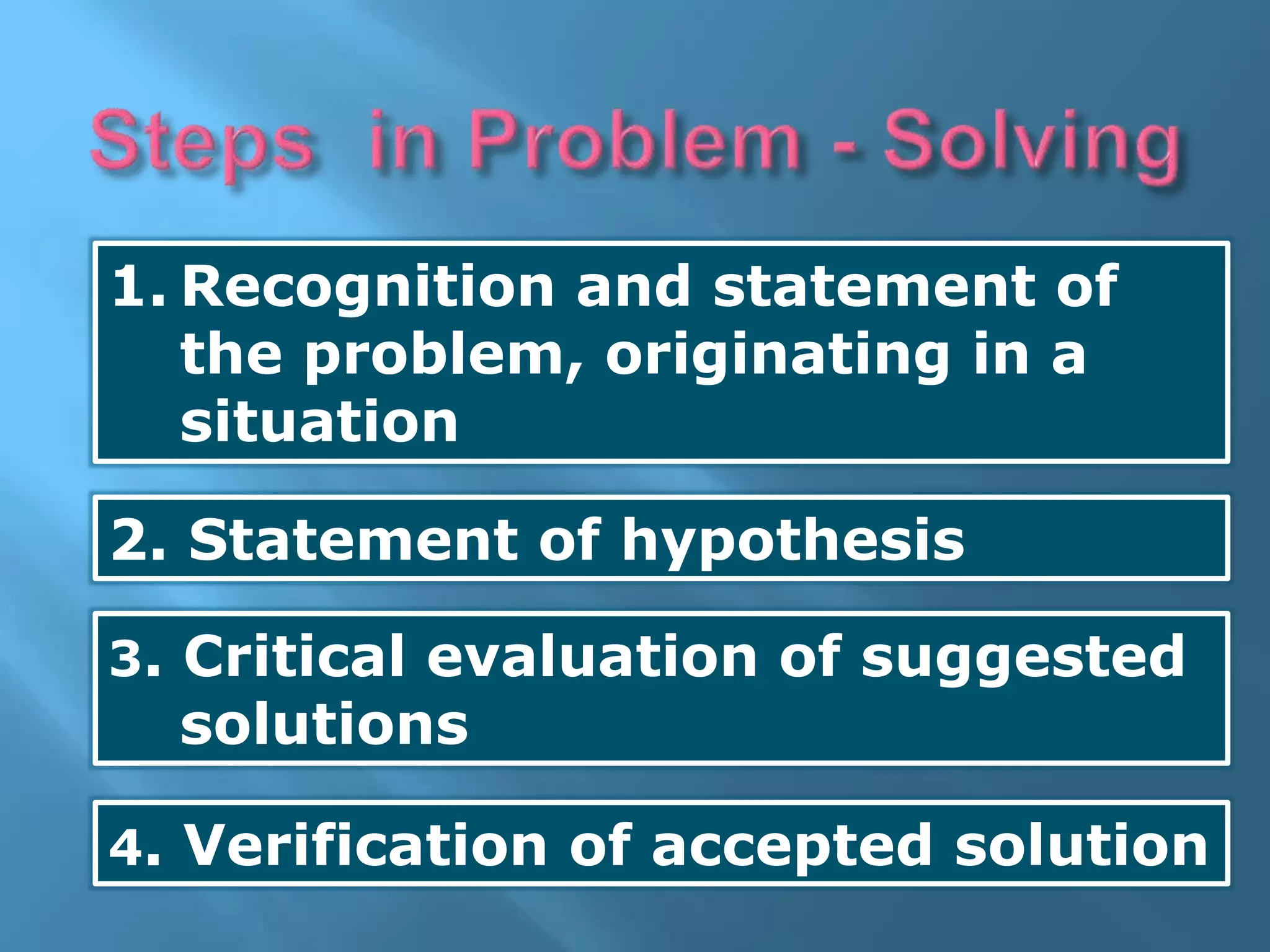
1. Recognition and statement of
the problem, originating in a
situation
2. Statement of hypothesis
3. Critical evaluation of suggested
solutions
4. Verification of accepted solution

Time - TESTED METHOD ( MODULE 7 )

  • 1.
  • 2.
     Similar tothe Inductive method  Study a typical case thoroughly and in detail  Aims to organize into a coherent whole all necessary and related details
  • 3.
    PROBLEM – SOLVING removesdifficulty or perplexity in learning through a process of reasoning or reflective thinking.
  • 4.
    3 TYPES 1. Mental 2.Symbolic 3. Real
  • 5.
     contemplative  reflective academic  reconstructive  imaginative in character 1. Mental
  • 6.
    2. Symbolic  writtenlanguage  drawing  modelling  constructing solutions
  • 7.
    3. Real  material physical  practical problems
  • 8.
    1. It trainthe learner in reasoning. 2. It provides practical knowledge and skills. 3. It develops proper thought habits enabling the learner to meet the exigencies of life. 4. It teaches a learner how to act in a new situation.
  • 9.
    5. It enableslearner to solve puzzling mental problems . 6. It teaches the learners how to suspend judgment. 7. It stimulates learners to find solutions and create new ideas. 8. It encourages learners to help others solve problems.
  • 10.
    1. Recognition andstatement of the problem, originating in a situation 2. Statement of hypothesis 3. Critical evaluation of suggested solutions 4. Verification of accepted solution