Teachers of all public
elementary and secondary
schools will not be required to
prepare detailed lesson plans.
They may adopt daily lesson logs which
contain the need information and guide from
the Teacher Guide (TG) and Teacher Manual
(TM) reference material with page number,
interventions given to the students and remarks
to indicate how many students have mastered
the lesson or are needing remediation.
However, teachers with less than 2
years teaching experience shall be
required to prepare Daily Lesson
Plans which shall include the
following:
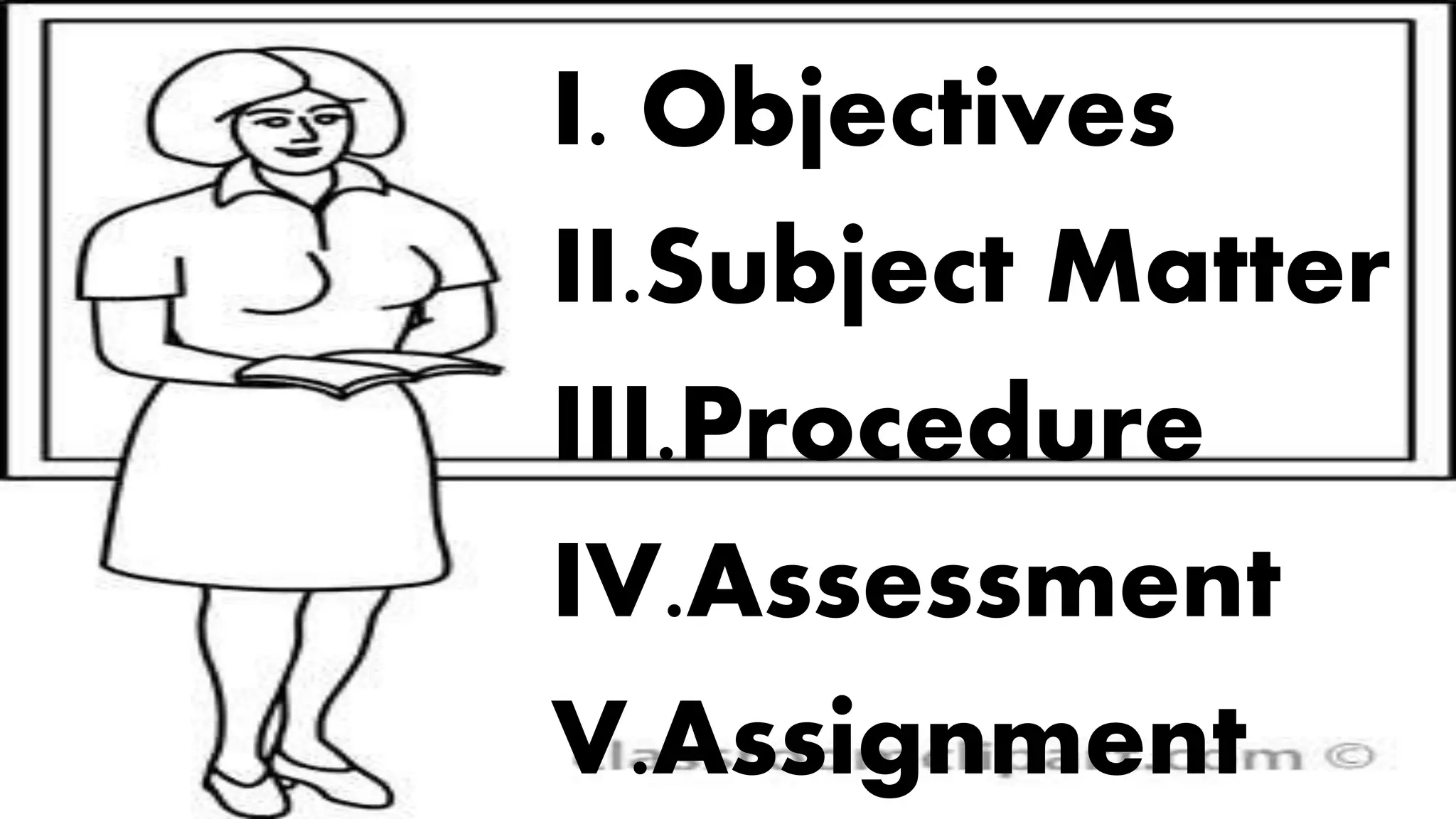
I. Objectives
II.Subject Matter
III.Procedure
IV.Assessment
V.Assignment
I. Starting the Class
Right: laying Down
the Curriculum Plan
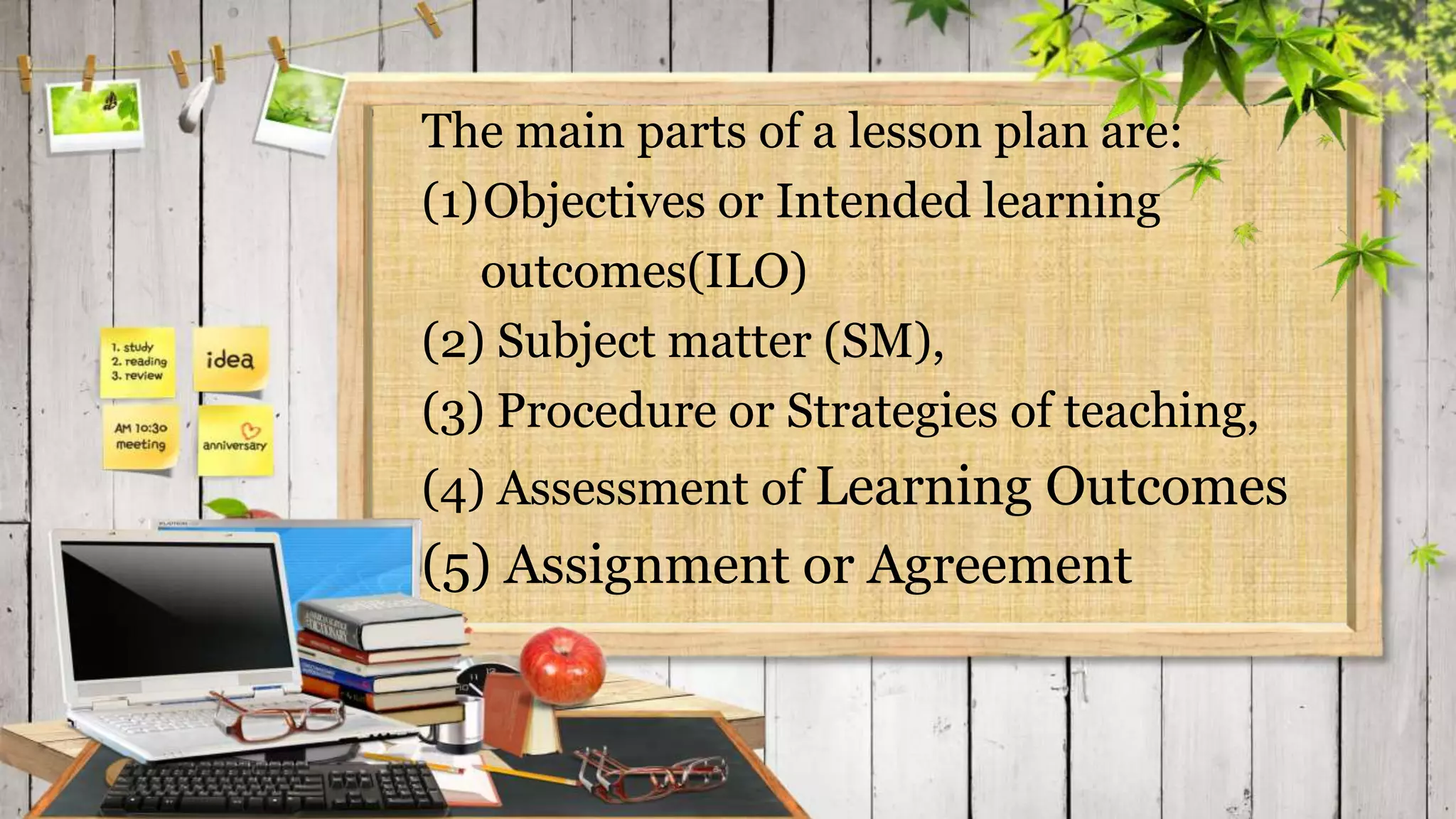
The main parts of a lesson plan are:
(1)Objectives or Intended learning
outcomes(ILO)
(2) Subject matter (SM),
(3) Procedure or Strategies of teaching,
(4) Assessment of Learning Outcomes
(5) Assignment or Agreement
II. Intended
learning
Outcomes
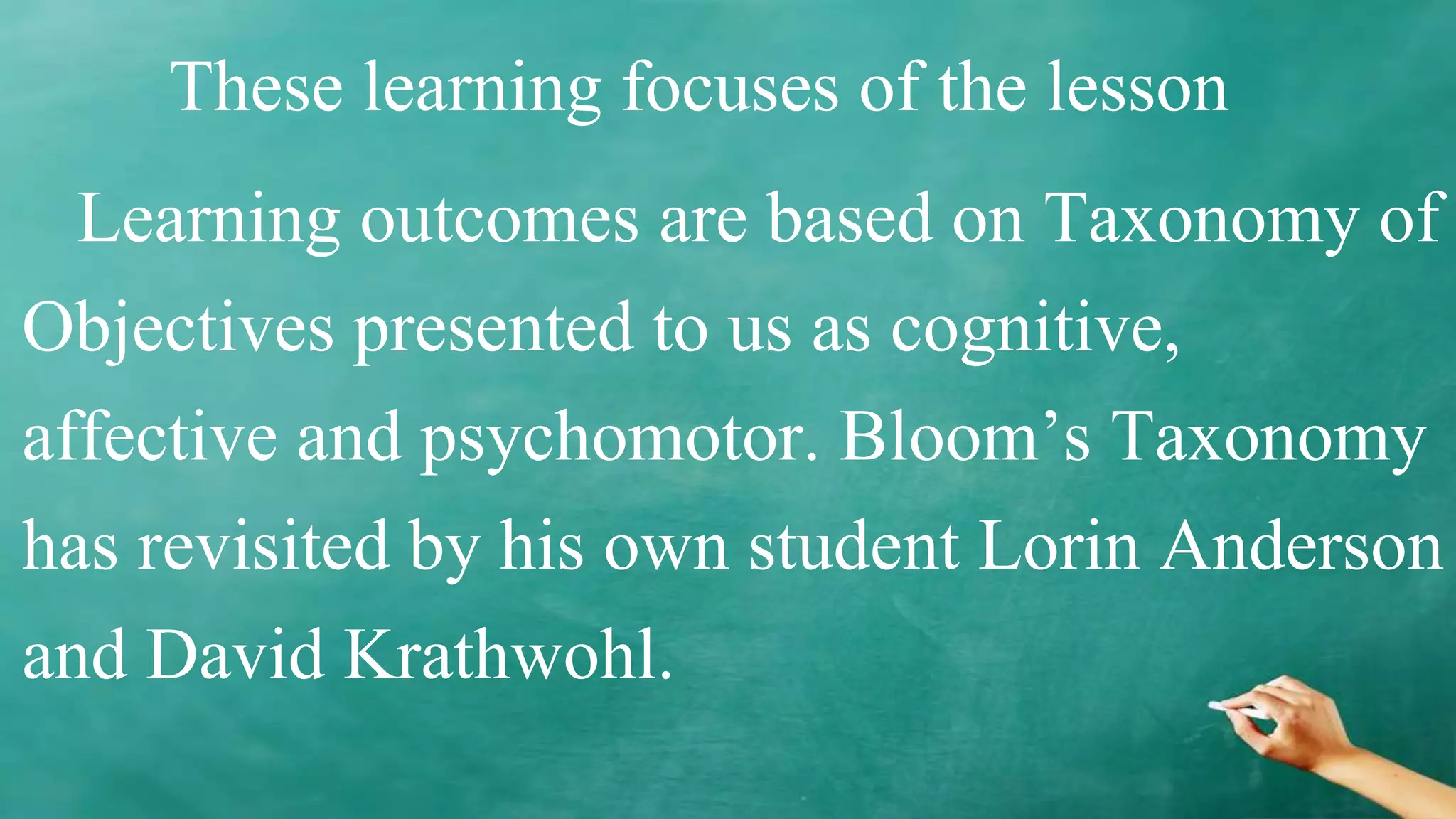
These learning focuses of the lesson
Learning outcomes are based on Taxonomy of
Objectives presented to us as cognitive,
affective and psychomotor. Bloom’s Taxonomy
has revisited by his own student Lorin Anderson
and David Krathwohl.
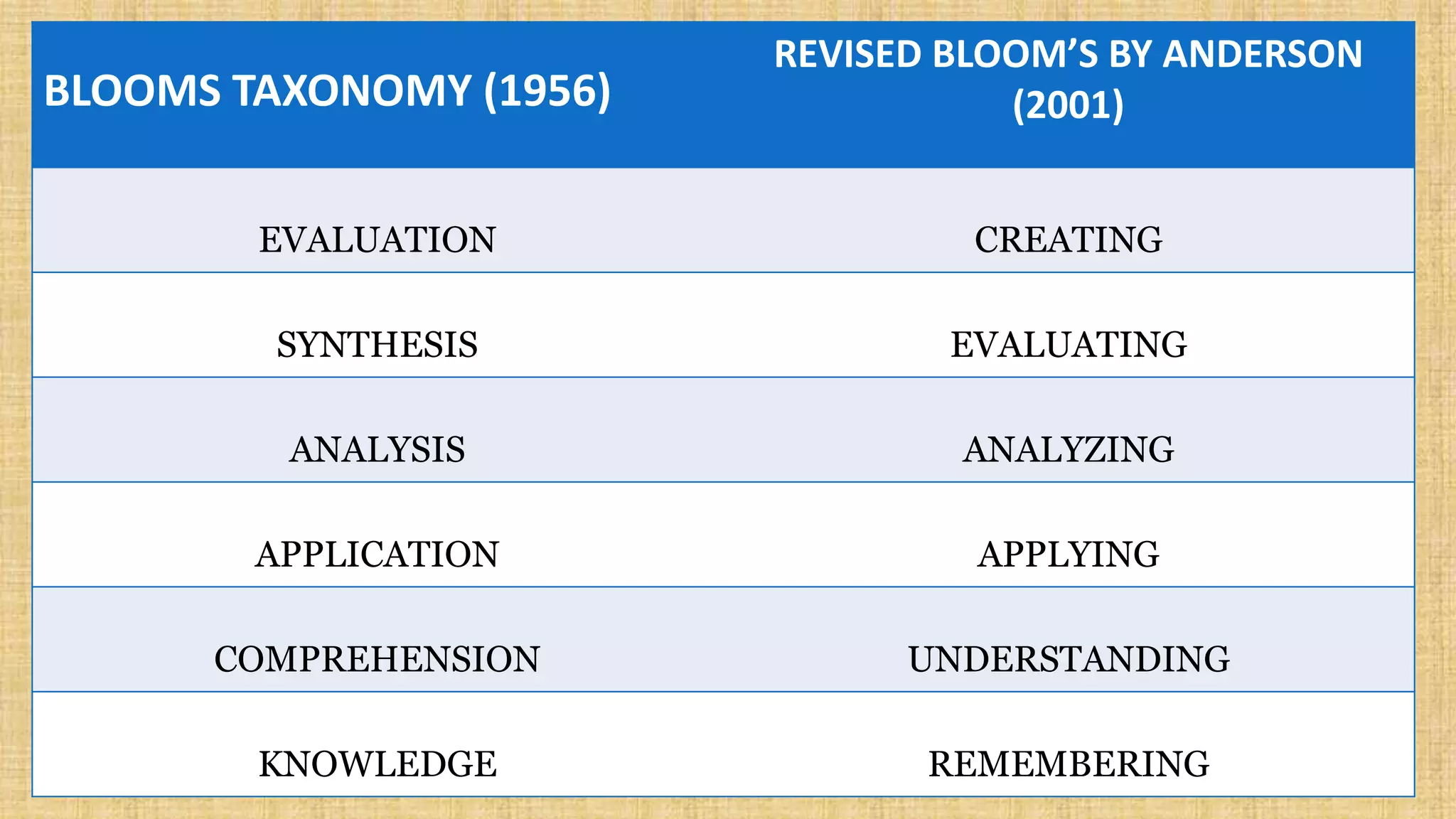
BLOOMS TAXONOMY (1956)
REVISED BLOOM’S BY ANDERSON
(2001)
EVALUATION CREATING
SYNTHESIS EVALUATING
ANALYSIS ANALYZING
APPLICATION APPLYING
COMPREHENSION UNDERSTANDING
KNOWLEDGE REMEMBERING
Revised Bloom’s
Taxonomy: A
Quick Look
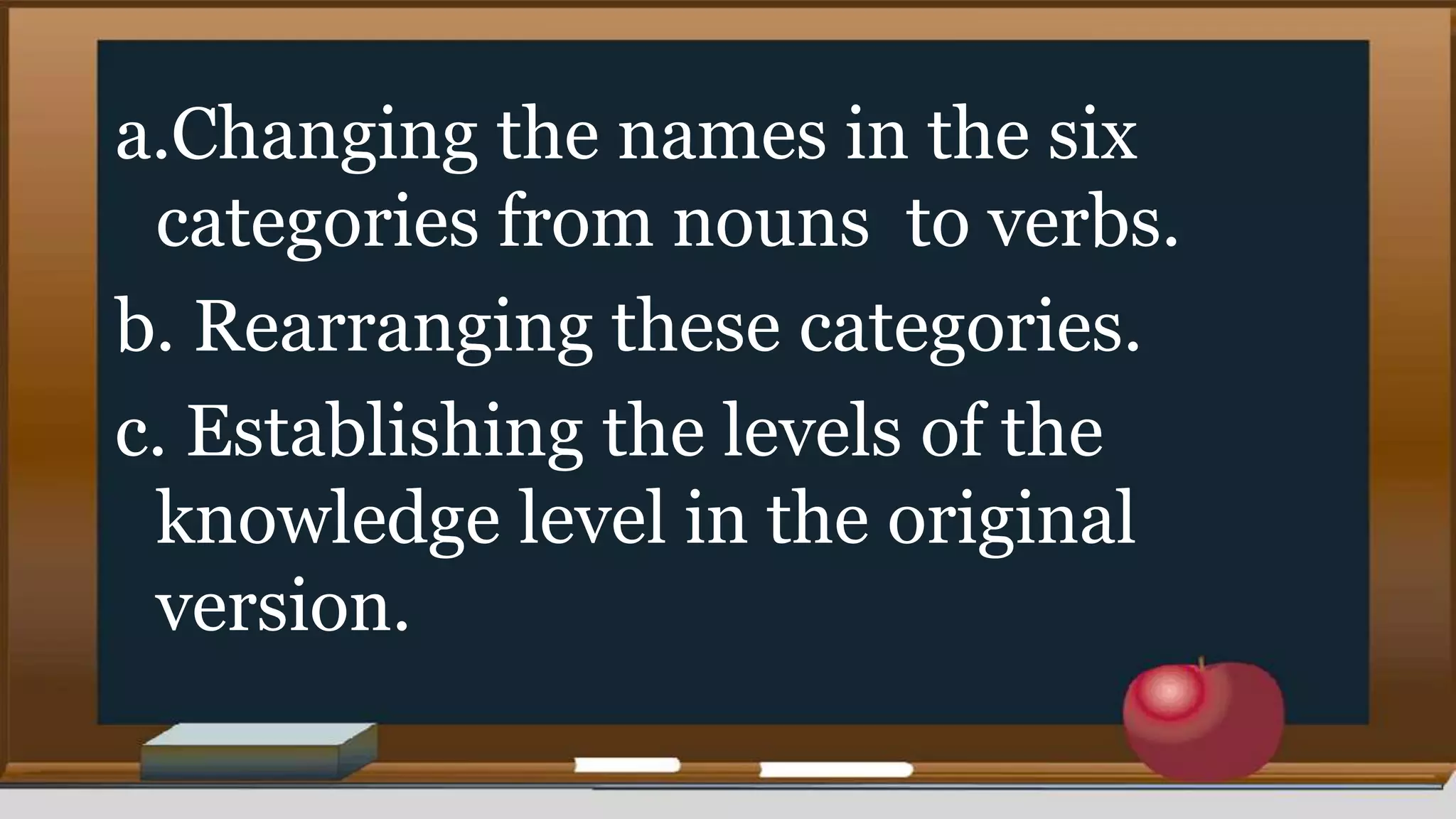
a.Changing the names in the six
categories from nouns to verbs.
b. Rearranging these categories.
c. Establishing the levels of the
knowledge level in the original
version.
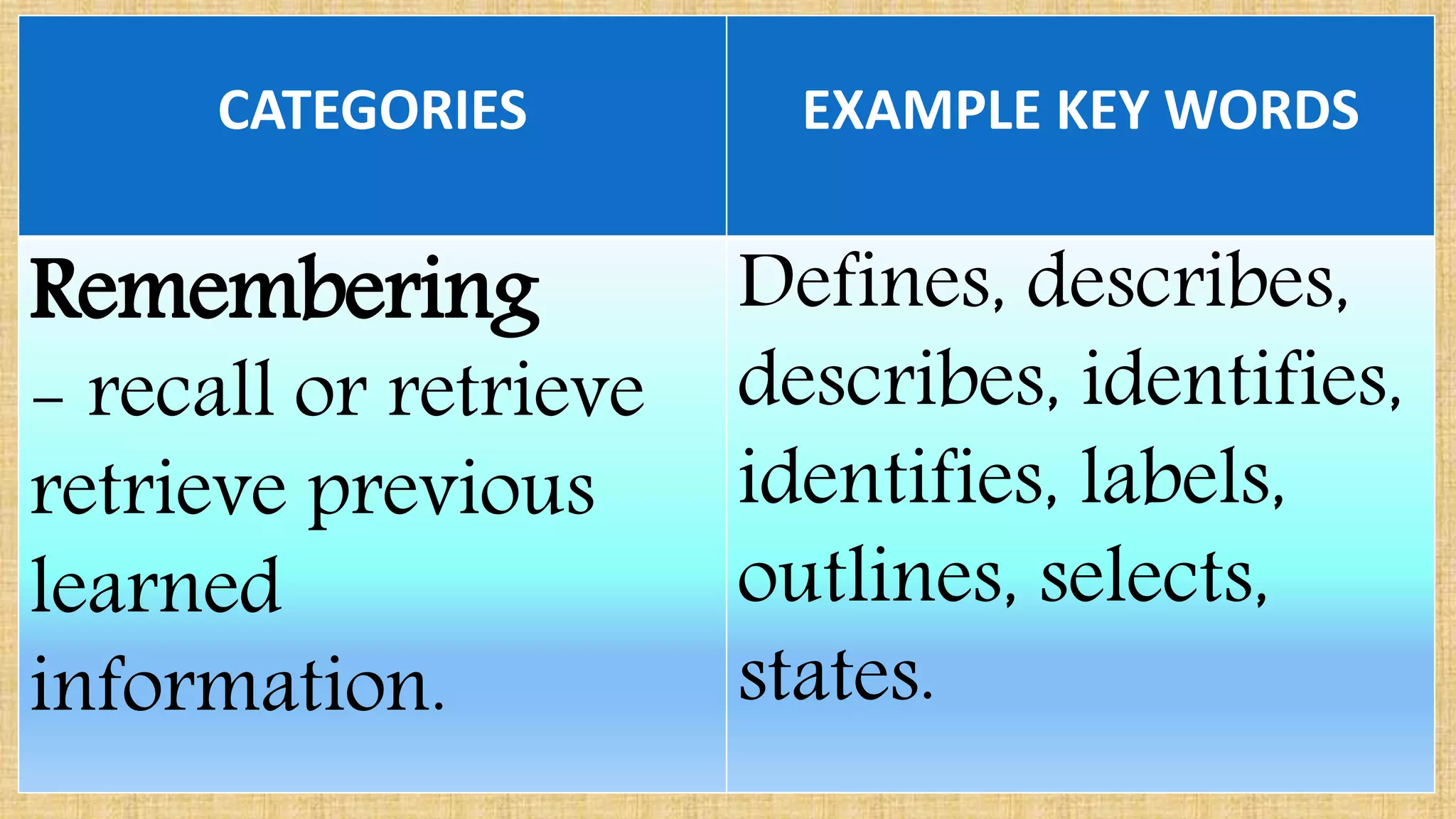
CATEGORIES EXAMPLE KEY WORDS
Remembering
- recall or retrieve
retrieve previous
learned
information.
Defines, describes,
describes, identifies,
identifies, labels,
outlines, selects,
states.
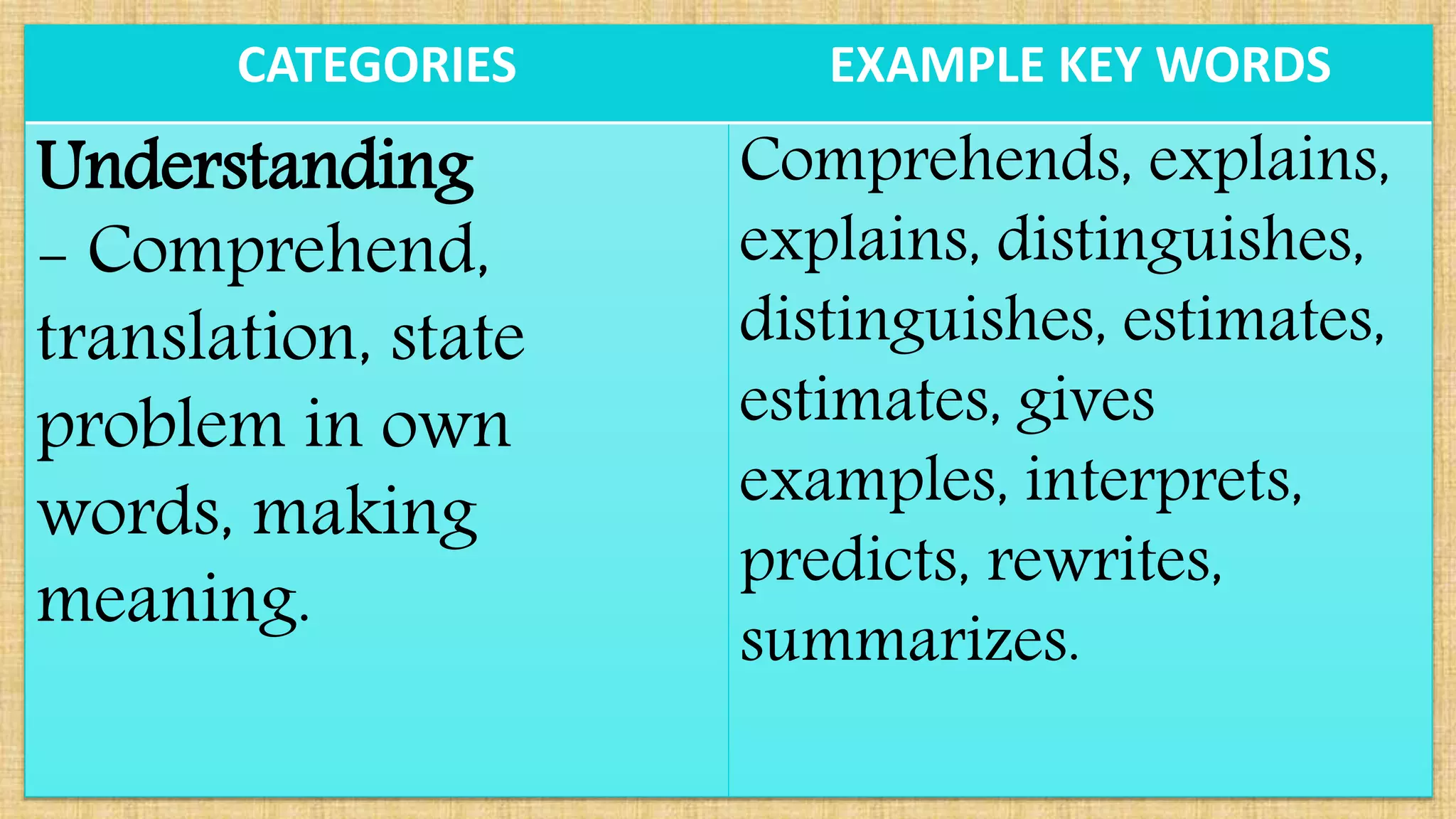
CATEGORIES EXAMPLE KEY WORDS
Understanding
- Comprehend,
translation, state
problem in own
words, making
meaning.
Comprehends, explains,
explains, distinguishes,
distinguishes, estimates,
estimates, gives
examples, interprets,
predicts, rewrites,
summarizes.
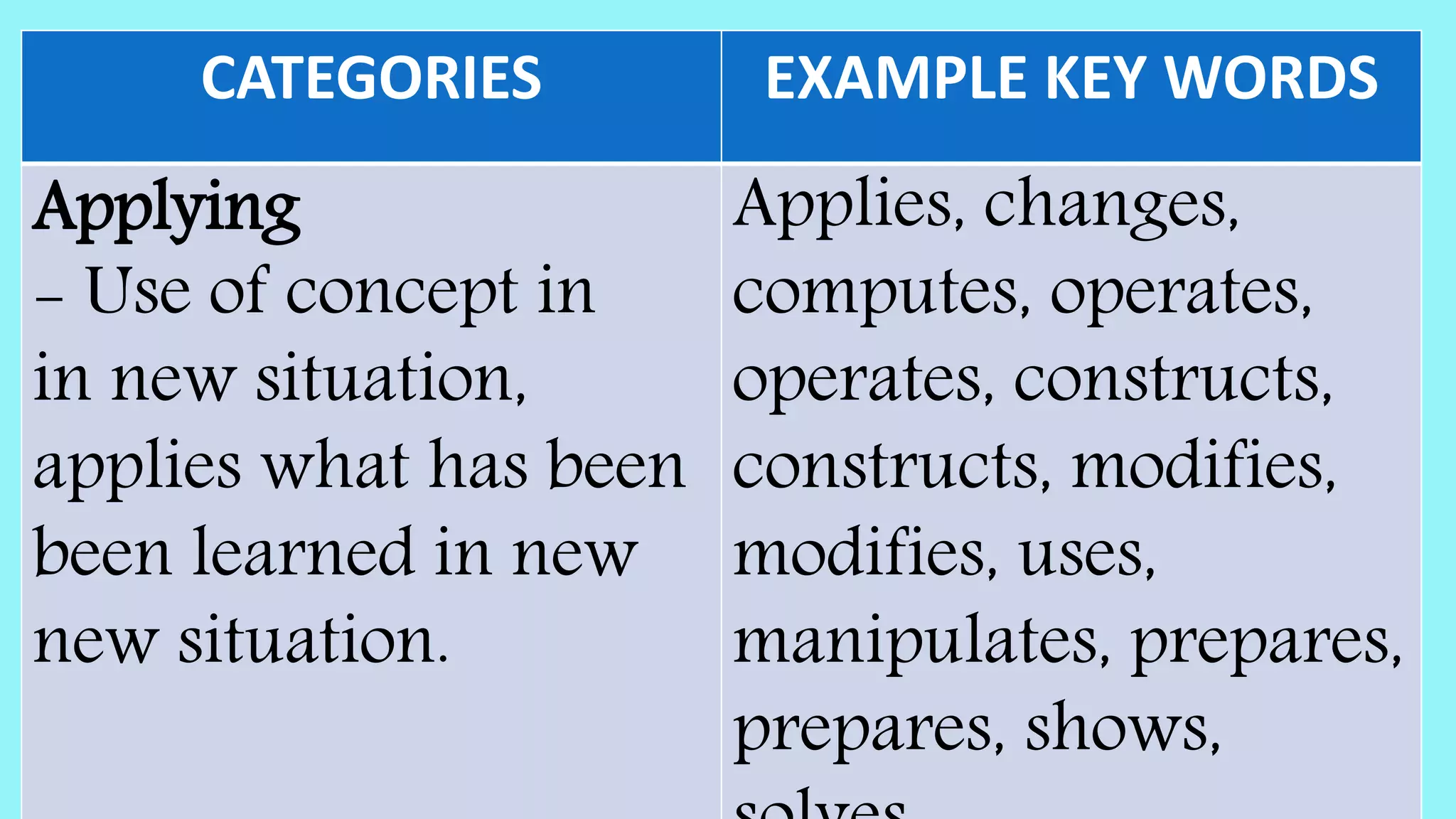
CATEGORIES EXAMPLE KEY WORDS
Applying
- Use of concept in
in new situation,
applies what has been
been learned in new
new situation.
Applies, changes,
computes, operates,
operates, constructs,
constructs, modifies,
modifies, uses,
manipulates, prepares,
prepares, shows,
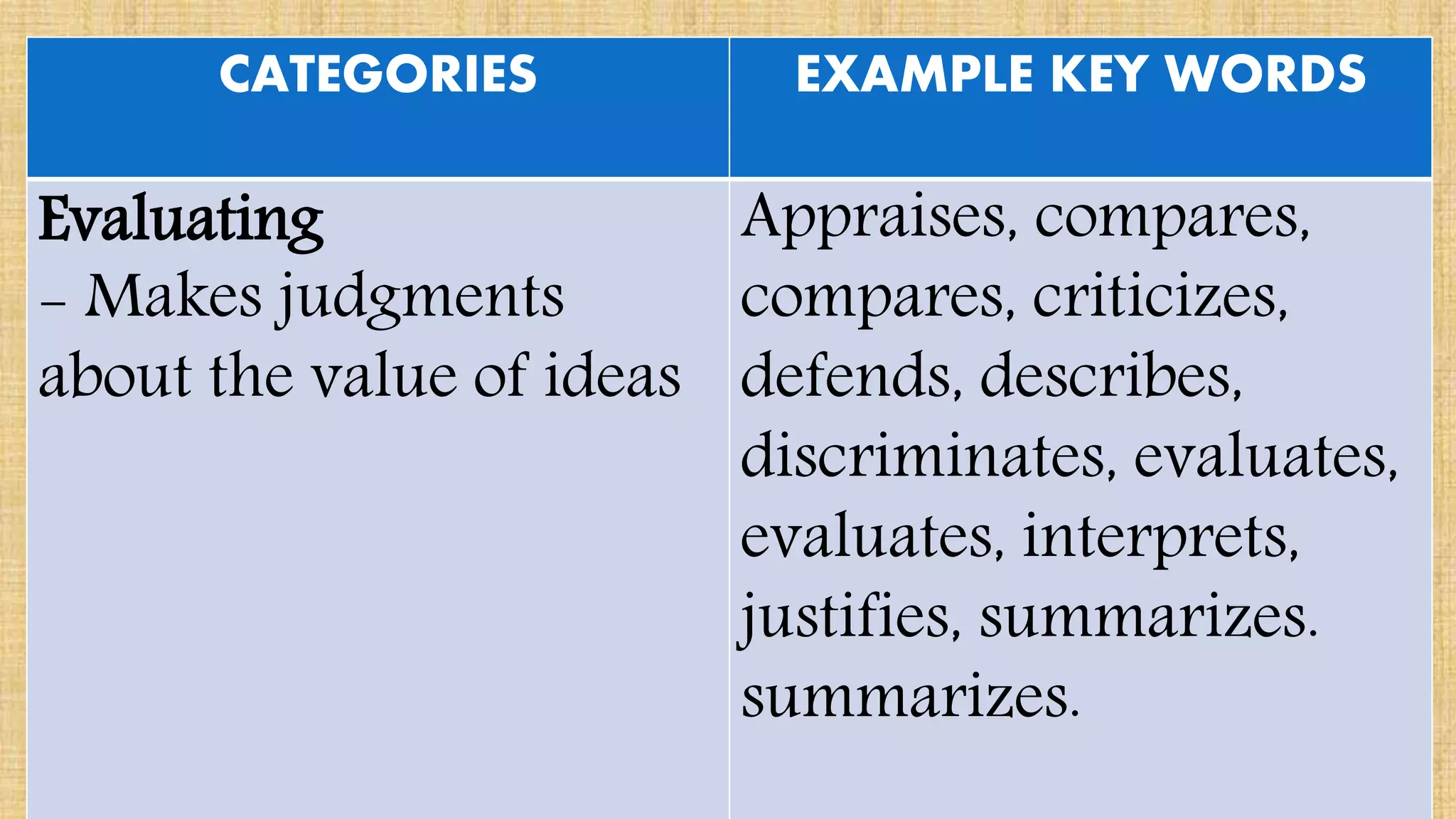
CATEGORIES EXAMPLE KEY WORDS
Evaluating
- Makes judgments
about the value of ideas
Appraises, compares,
compares, criticizes,
defends, describes,
discriminates, evaluates,
evaluates, interprets,
justifies, summarizes.
summarizes.
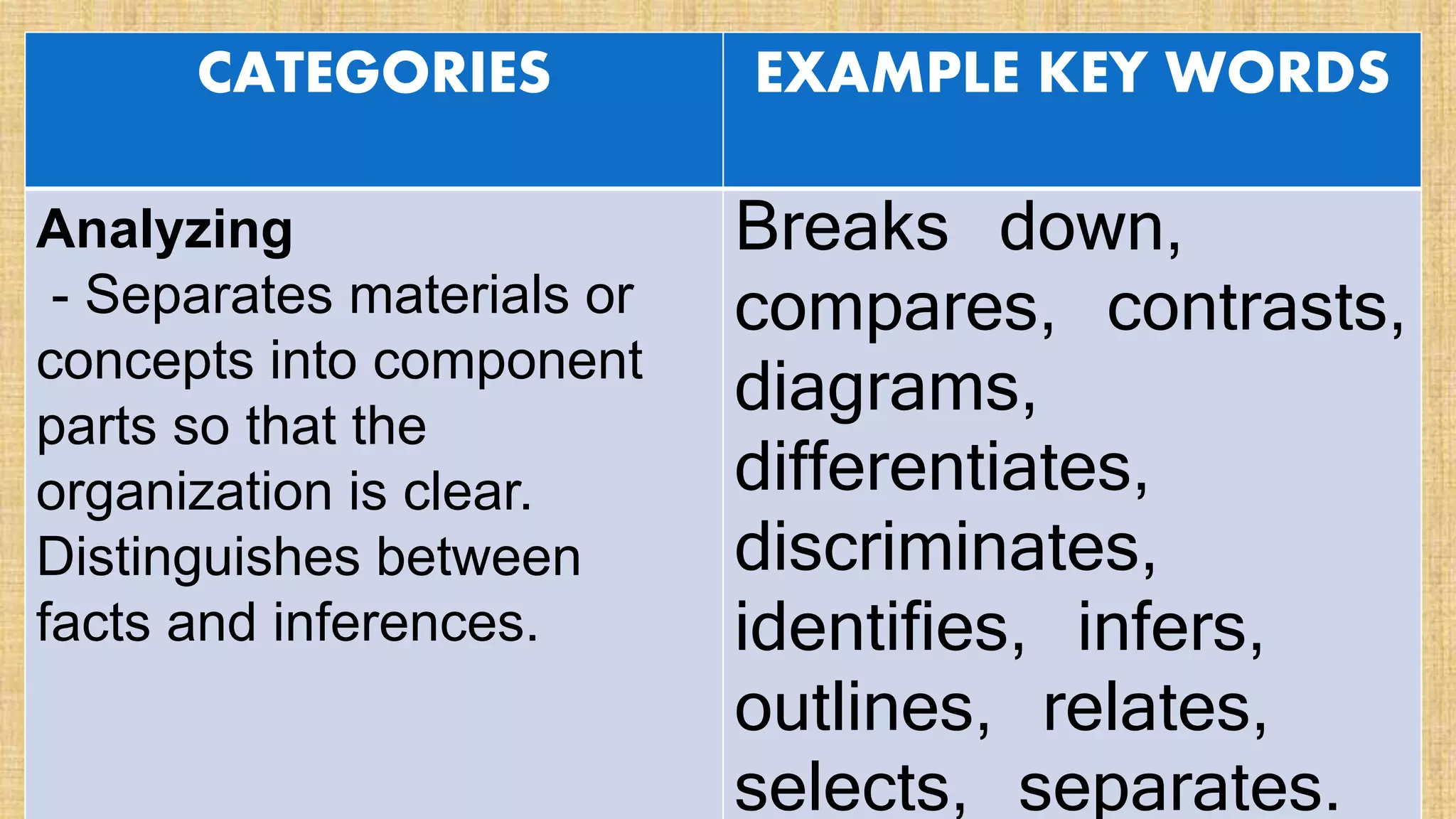
CATEGORIES EXAMPLE KEY WORDS
Analyzing
- Separates materials or
concepts into component
parts so that the
organization is clear.
Distinguishes between
facts and inferences.
Breaks down,
compares, contrasts,
diagrams,
differentiates,
discriminates,
identifies, infers,
outlines, relates,
selects, separates.
CATEGORIES EXAMPLE KEY WORDS
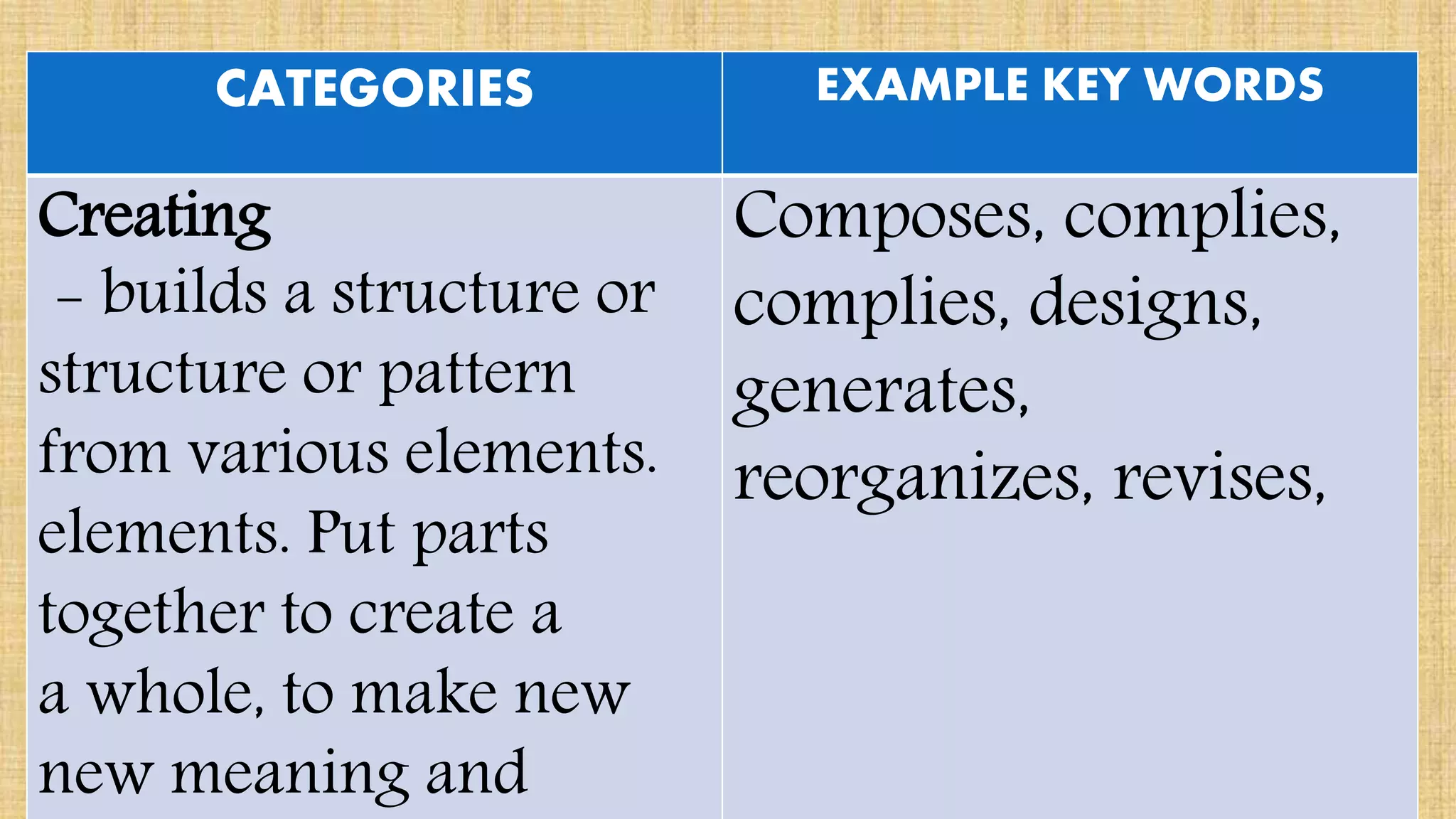
Creating
- builds a structure or
structure or pattern
from various elements.
elements. Put parts
together to create a
a whole, to make new
new meaning and
Composes, complies,
complies, designs,
generates,
reorganizes, revises,
LEVELS OF
KNOWLEDGE
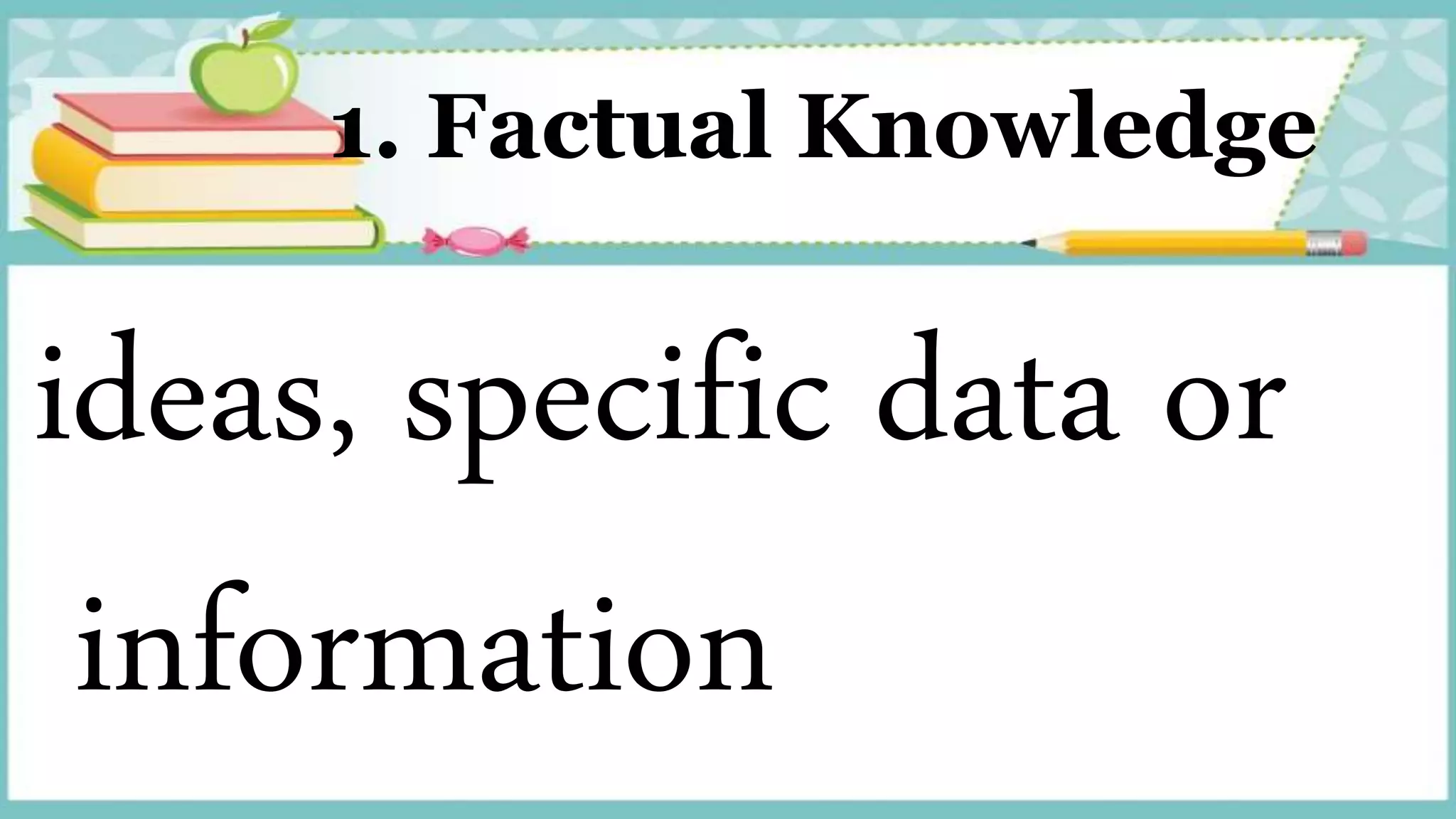
1. Factual Knowledge
ideas, specific data or
information
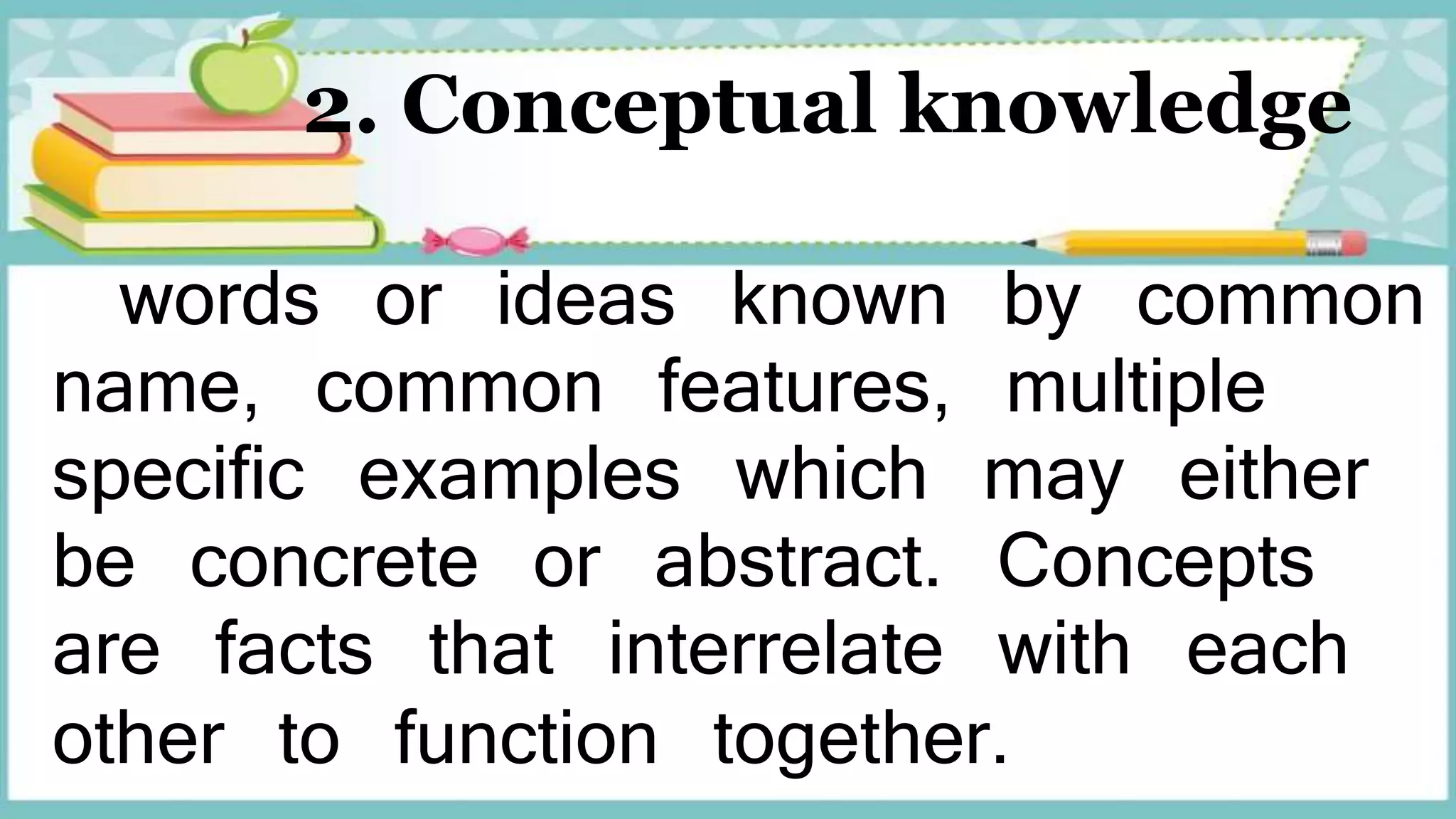
2. Conceptual knowledge
words or ideas known by common
name, common features, multiple
specific examples which may either
be concrete or abstract. Concepts
are facts that interrelate with each
other to function together.
3. Procedural knowledge
how things work,
step-by-step
actions methods
4. Metacognitive knowledge
knowledge of cognition
in general, awareness of
knowledge of one’s own
cognition, thinking about
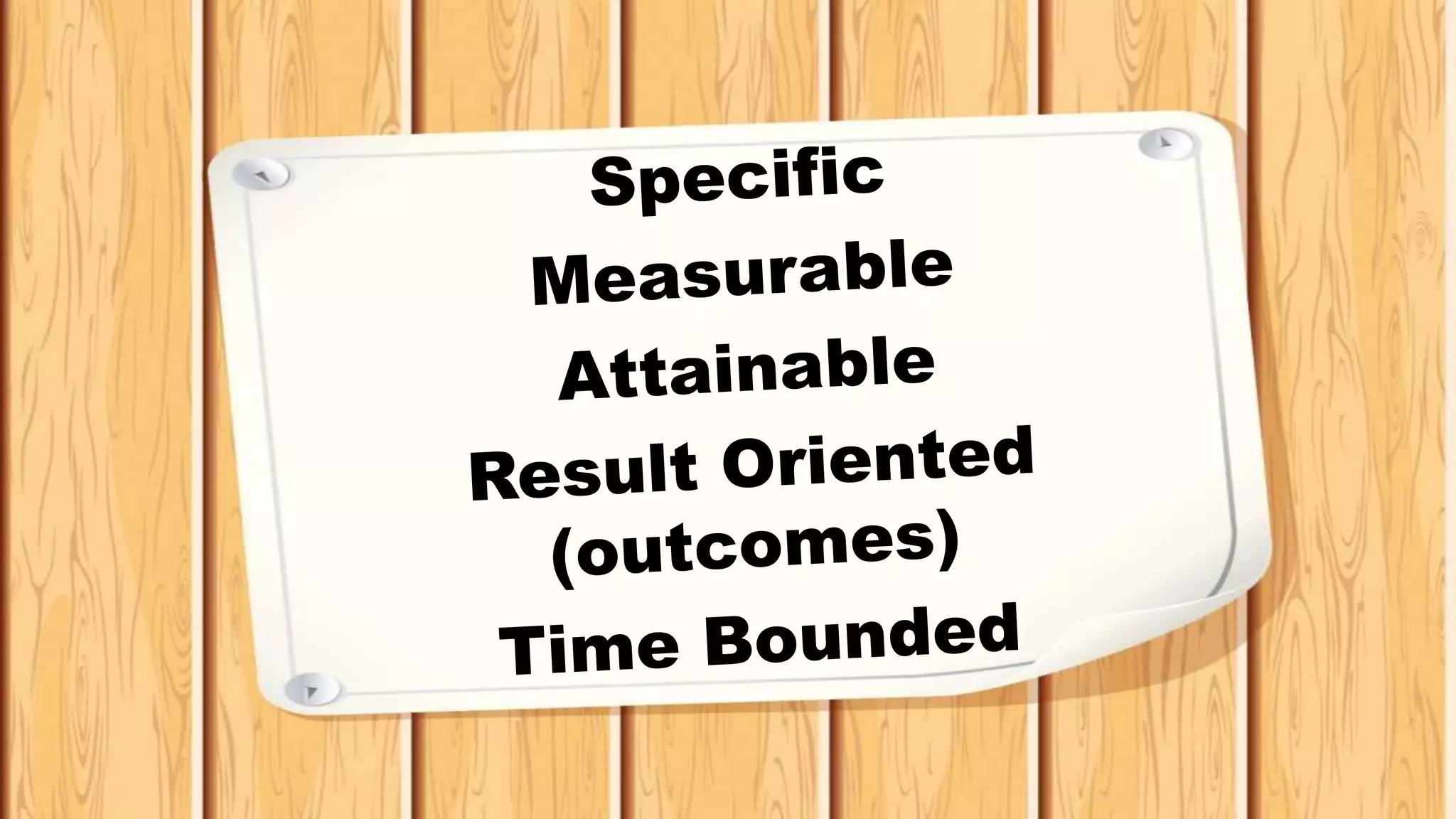
SMART way
Subject Matter or Content
comes from the body of knowledge
that will be learned through the
guidance of the teacher. Subject
matter is the WHAT in teaching
Procedure or Methods and
Strategies
This is the crux of curriculum
implementation. How a teacher will put
to the intended outcomes and the subject
matter to be used depends to on this
component.
Ways of Teaching
for the
different kinds of
Learners (Corpuz &
Salandanan, 2013)
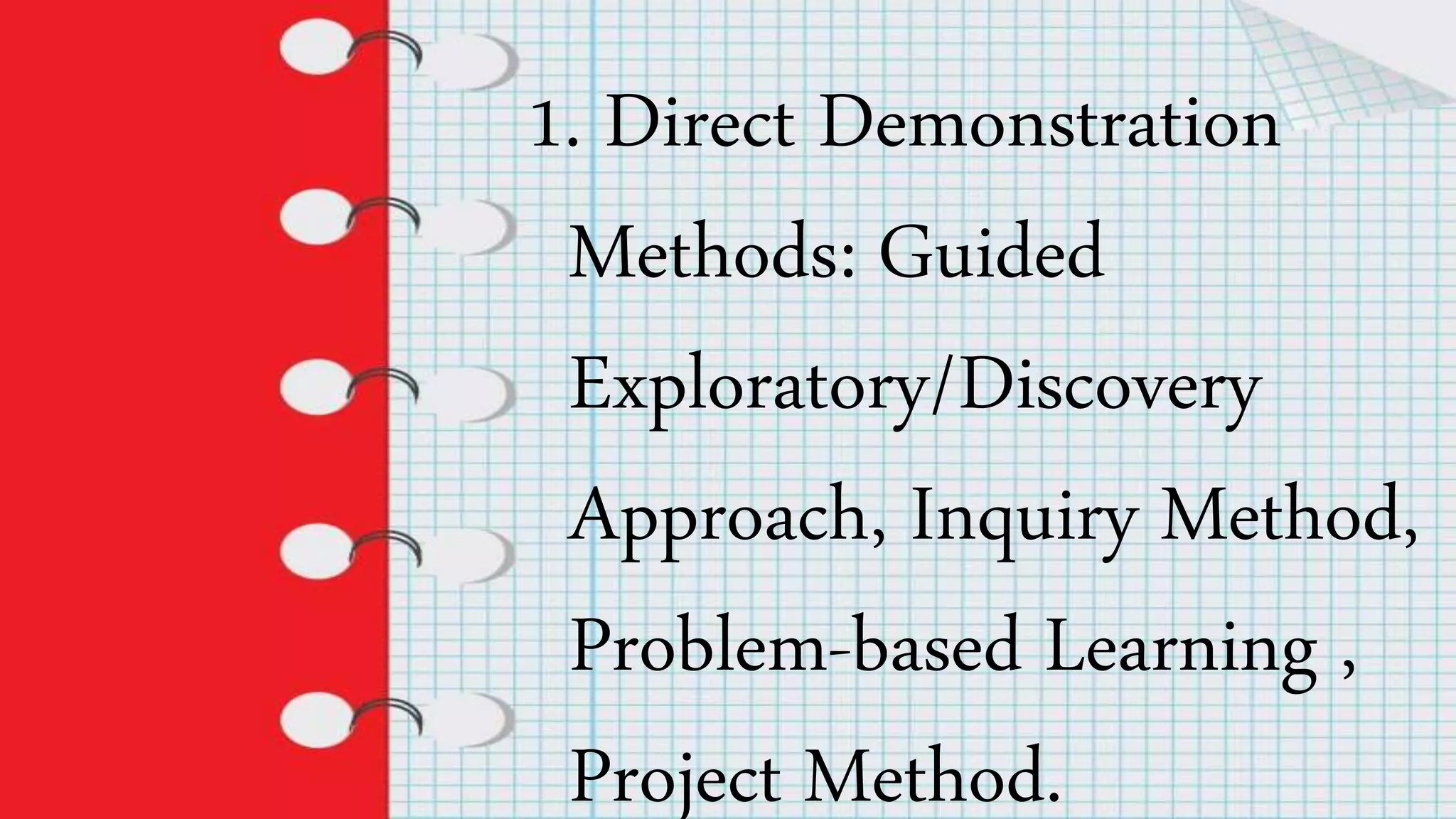
1. Direct Demonstration
Methods: Guided
Exploratory/Discovery
Approach, Inquiry Method,
Problem-based Learning ,
Project Method.
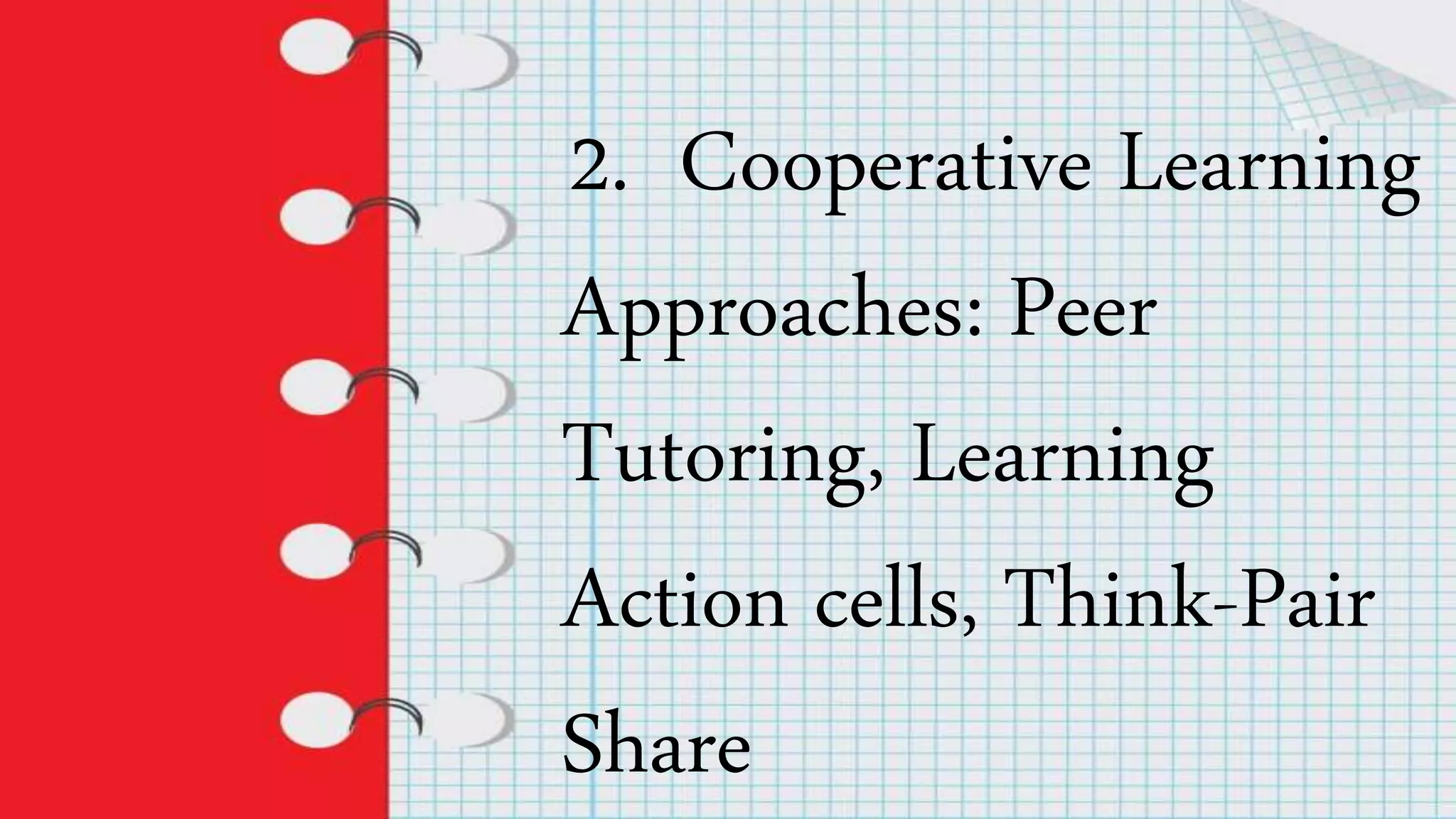
2. Cooperative Learning
Approaches: Peer
Tutoring, Learning
Action cells, Think-Pair
Share
3.Deductive or Inductive
Approaches: Project
Teaching, Inquiry-based
Learning,
4.Other Approaches:
Blended learning, Reflective
Teaching, Integrated
Learning, Outcomes-based
Approach
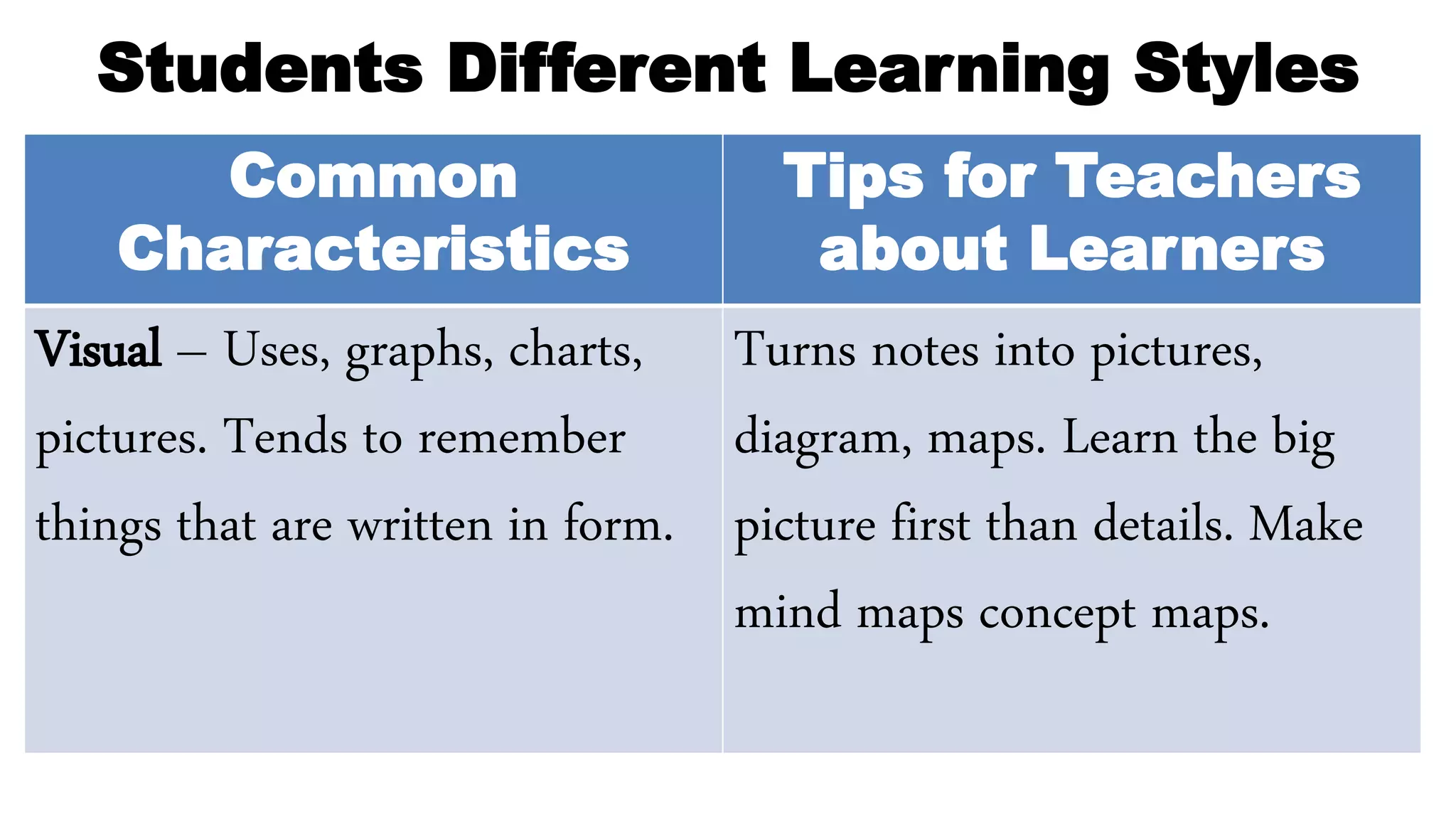
Students Different Learning Styles
Common
Characteristics
Tips for Teachers
about Learners
Visual – Uses, graphs, charts,
pictures. Tends to remember
things that are written in form.
Turns notes into pictures,
diagram, maps. Learn the big
picture first than details. Make
mind maps concept maps.
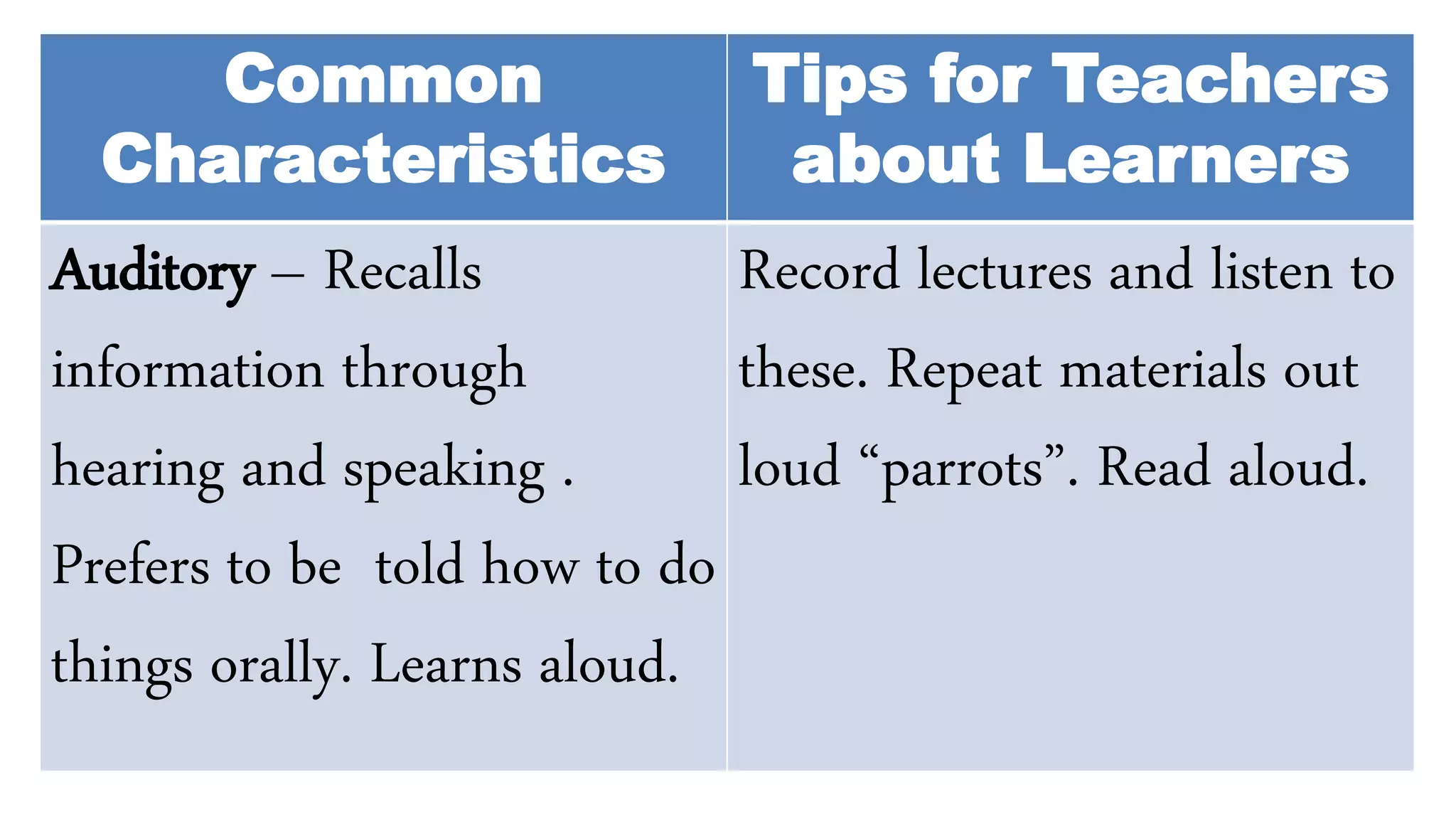
Common
Characteristics
Tips for Teachers
about Learners
Auditory – Recalls
information through
hearing and speaking .
Prefers to be told how to do
things orally. Learns aloud.
Record lectures and listen to
these. Repeat materials out
loud “parrots”. Read aloud.
Common
Characteristics
Tips for Teachers
about Learners
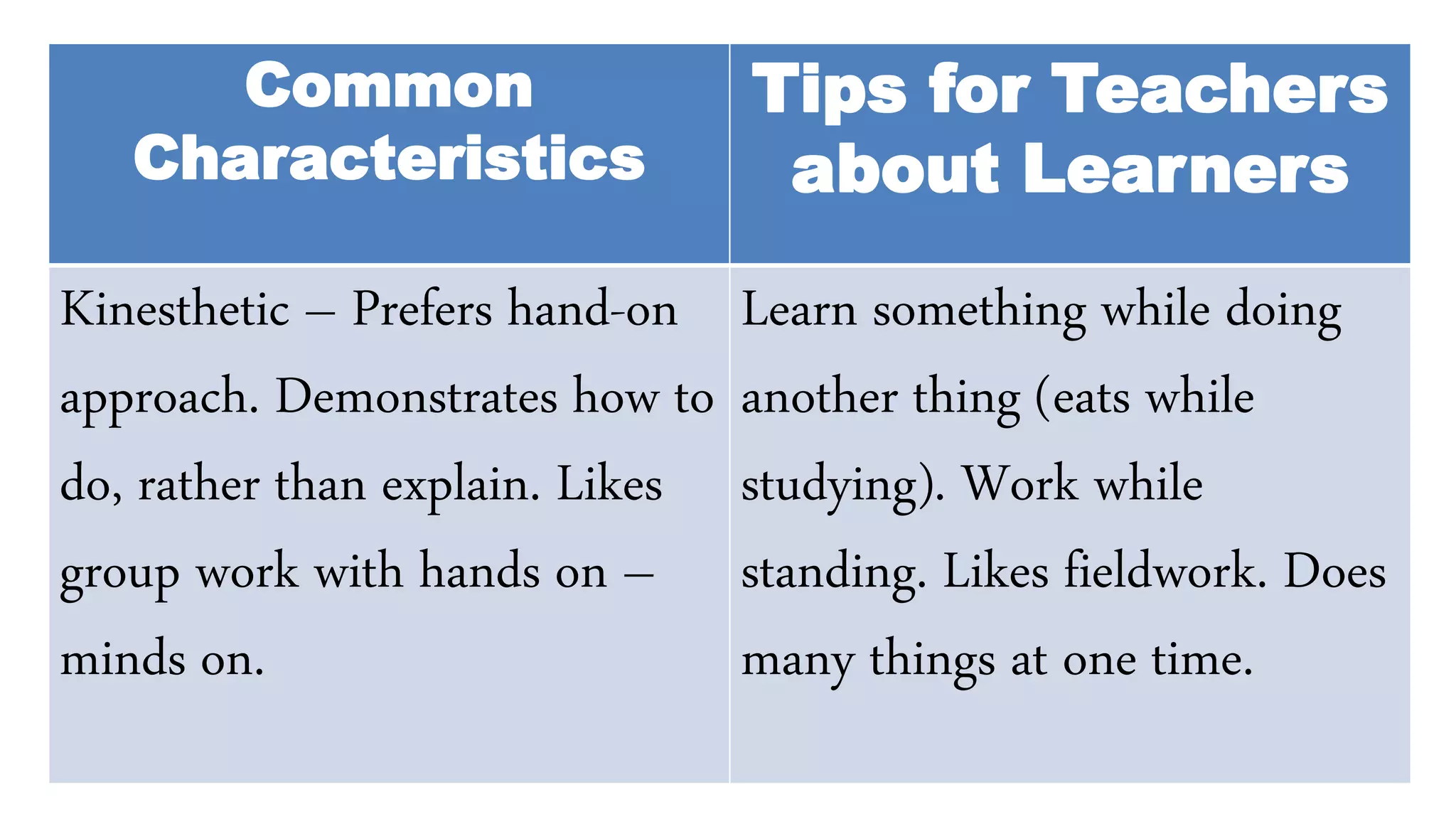
Kinesthetic – Prefers hand-on
approach. Demonstrates how to
do, rather than explain. Likes
group work with hands on –
minds on.
Learn something while doing
another thing (eats while
studying). Work while
standing. Likes fieldwork. Does
many things at one time.
Cone of
Learning &
Experience
GUIDELINES FOR
INSTRUCTIONAL
SUPPORT
MATERIALS
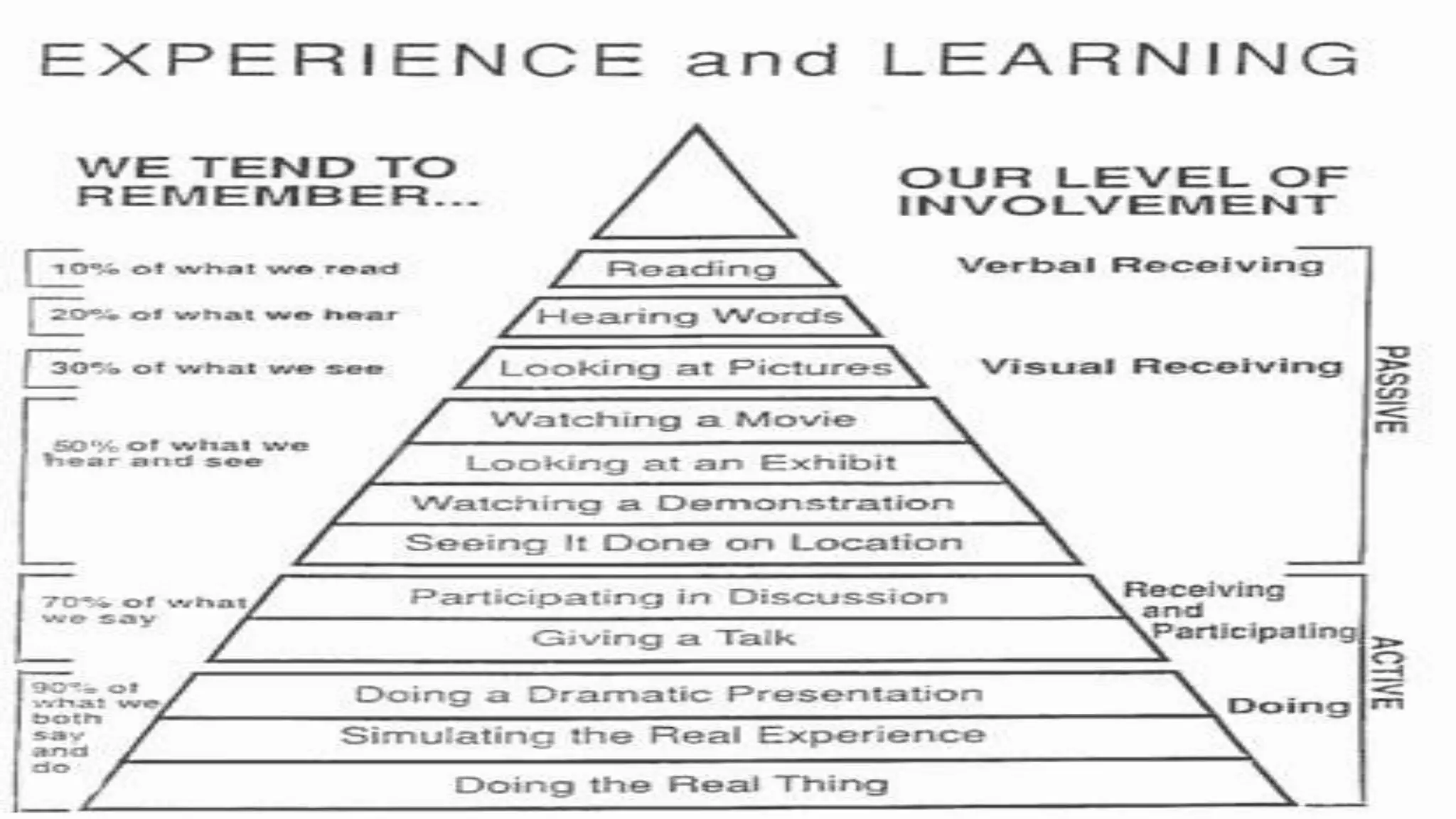
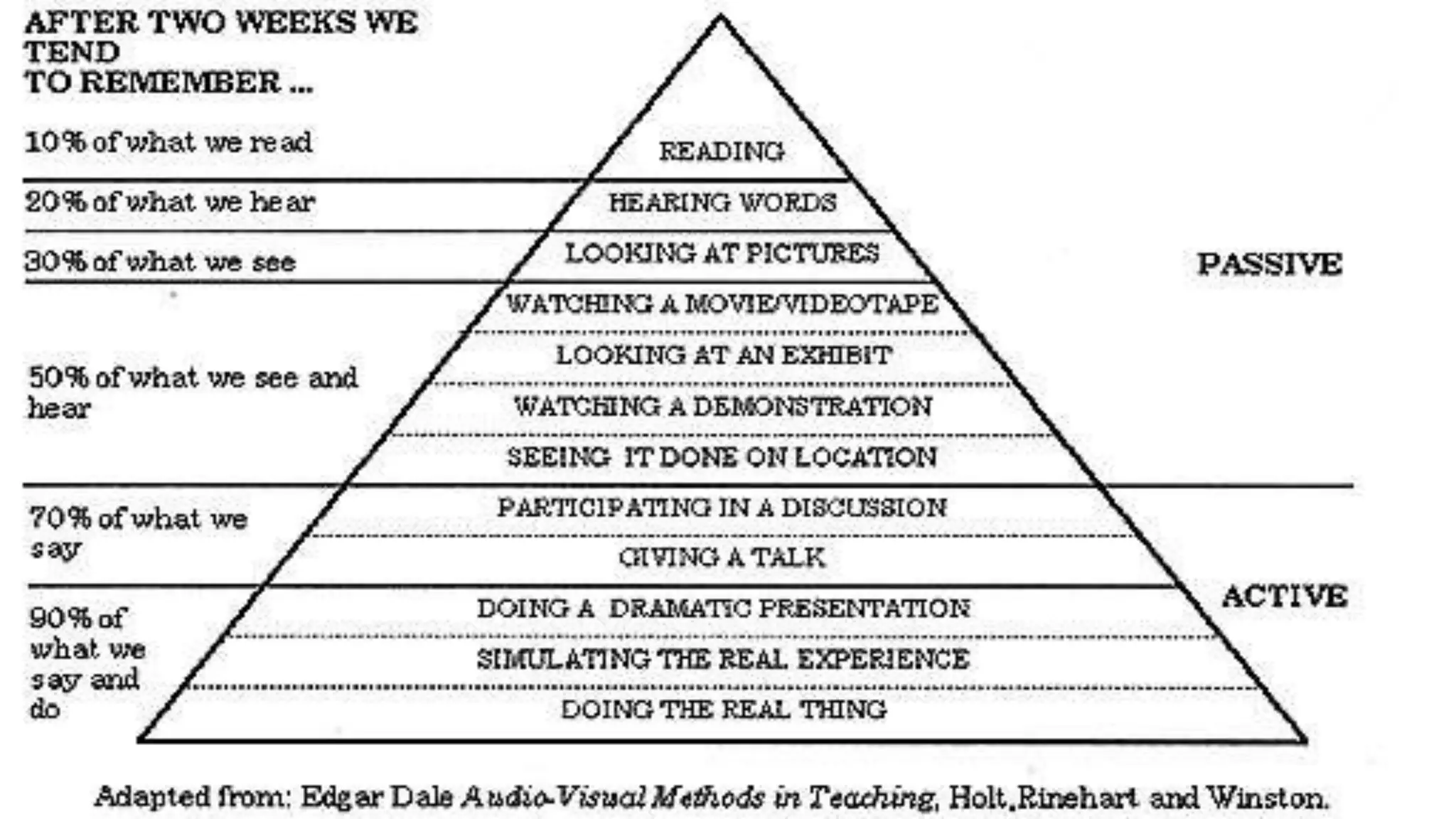
1. Use of direct purposeful experience
through learning by doing retains
almost all of the learning outcomes.
Ninety percent of learning is retained.
2. Participation in class activities, discussion,
reporting and similar activities where
learners have the opportunity to say and
write. Seventy percent of learning is
remembered.
3. Passive participation as in watching
a movie, viewing exhibits, watching
demonstration will retain around 50%
of what has been communicated.
4. By just looking at still pictures,
painting, illustration and drawings,
will allow the retention of around
30% of the material content.
5. By hearing as in lecture,
sermon, monologues, only 20%
is remembered.
6. Reading, will assure
10% remembered of the
material.
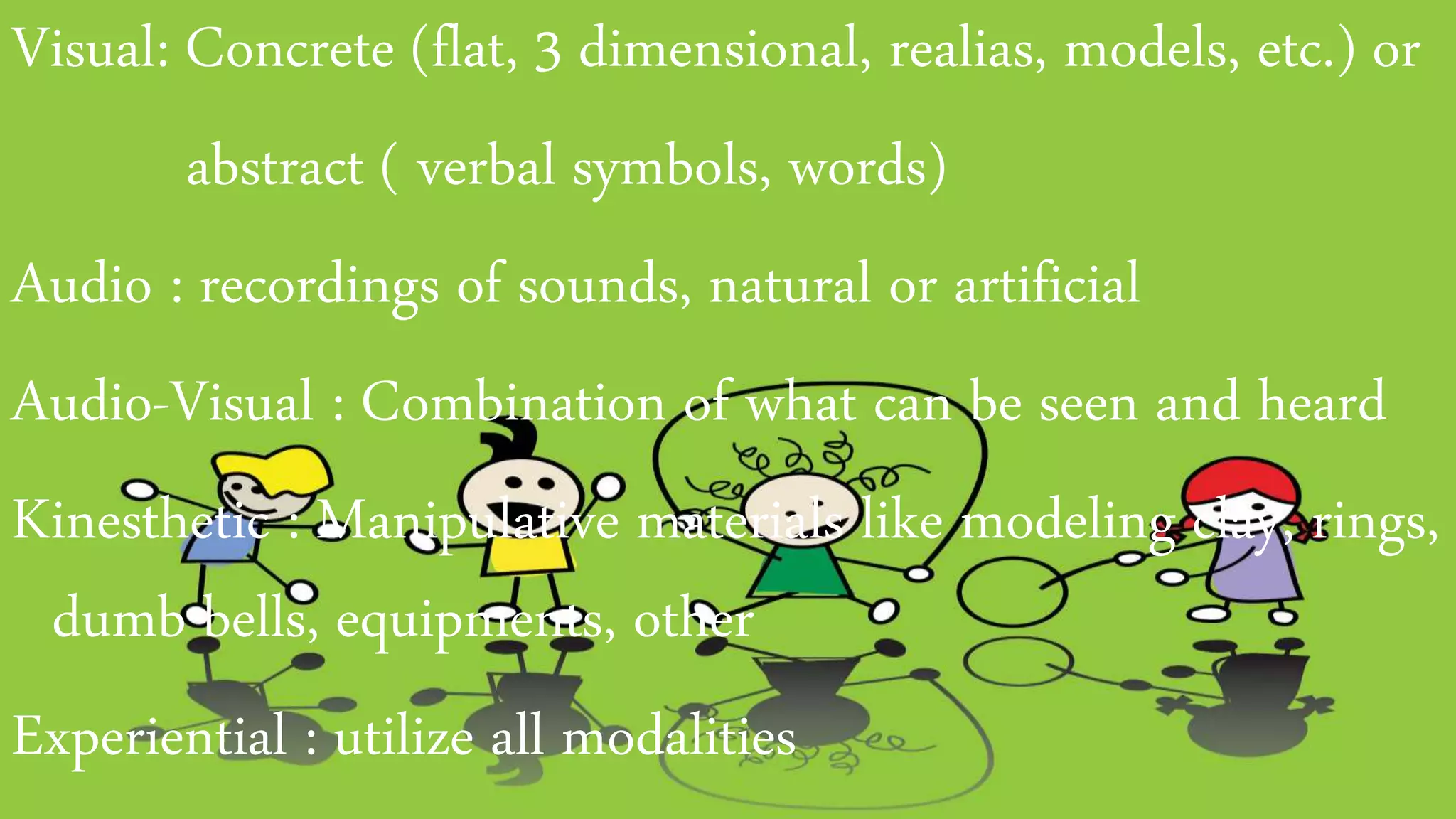
Visual: Concrete (flat, 3 dimensional, realias, models, etc.) or
abstract ( verbal symbols, words)
Audio : recordings of sounds, natural or artificial
Audio-Visual : Combination of what can be seen and heard
Kinesthetic : Manipulative materials like modeling clay, rings,
dumb bells, equipments, other
Experiential : utilize all modalities

Implementing a Curriculum Daily in the Classrooms

  • 3.
    Teachers of allpublic elementary and secondary schools will not be required to prepare detailed lesson plans.
  • 4.
    They may adoptdaily lesson logs which contain the need information and guide from the Teacher Guide (TG) and Teacher Manual (TM) reference material with page number, interventions given to the students and remarks to indicate how many students have mastered the lesson or are needing remediation.
  • 5.
    However, teachers withless than 2 years teaching experience shall be required to prepare Daily Lesson Plans which shall include the following:
  • 6.
  • 7.
    I. Starting theClass Right: laying Down the Curriculum Plan
  • 8.
    The main partsof a lesson plan are: (1)Objectives or Intended learning outcomes(ILO) (2) Subject matter (SM), (3) Procedure or Strategies of teaching, (4) Assessment of Learning Outcomes (5) Assignment or Agreement
  • 9.
  • 10.
    These learning focusesof the lesson Learning outcomes are based on Taxonomy of Objectives presented to us as cognitive, affective and psychomotor. Bloom’s Taxonomy has revisited by his own student Lorin Anderson and David Krathwohl.
  • 11.
    BLOOMS TAXONOMY (1956) REVISEDBLOOM’S BY ANDERSON (2001) EVALUATION CREATING SYNTHESIS EVALUATING ANALYSIS ANALYZING APPLICATION APPLYING COMPREHENSION UNDERSTANDING KNOWLEDGE REMEMBERING
  • 12.
  • 13.
    a.Changing the namesin the six categories from nouns to verbs. b. Rearranging these categories. c. Establishing the levels of the knowledge level in the original version.
  • 14.
    CATEGORIES EXAMPLE KEYWORDS Remembering - recall or retrieve retrieve previous learned information. Defines, describes, describes, identifies, identifies, labels, outlines, selects, states.
  • 15.
    CATEGORIES EXAMPLE KEYWORDS Understanding - Comprehend, translation, state problem in own words, making meaning. Comprehends, explains, explains, distinguishes, distinguishes, estimates, estimates, gives examples, interprets, predicts, rewrites, summarizes.
  • 16.
    CATEGORIES EXAMPLE KEYWORDS Applying - Use of concept in in new situation, applies what has been been learned in new new situation. Applies, changes, computes, operates, operates, constructs, constructs, modifies, modifies, uses, manipulates, prepares, prepares, shows,
  • 17.
    CATEGORIES EXAMPLE KEYWORDS Evaluating - Makes judgments about the value of ideas Appraises, compares, compares, criticizes, defends, describes, discriminates, evaluates, evaluates, interprets, justifies, summarizes. summarizes.
  • 18.
    CATEGORIES EXAMPLE KEYWORDS Analyzing - Separates materials or concepts into component parts so that the organization is clear. Distinguishes between facts and inferences. Breaks down, compares, contrasts, diagrams, differentiates, discriminates, identifies, infers, outlines, relates, selects, separates.
  • 19.
    CATEGORIES EXAMPLE KEYWORDS Creating - builds a structure or structure or pattern from various elements. elements. Put parts together to create a a whole, to make new new meaning and Composes, complies, complies, designs, generates, reorganizes, revises,
  • 20.
  • 21.
    1. Factual Knowledge ideas,specific data or information
  • 22.
    2. Conceptual knowledge wordsor ideas known by common name, common features, multiple specific examples which may either be concrete or abstract. Concepts are facts that interrelate with each other to function together.
  • 23.
    3. Procedural knowledge howthings work, step-by-step actions methods
  • 24.
    4. Metacognitive knowledge knowledgeof cognition in general, awareness of knowledge of one’s own cognition, thinking about
  • 25.
  • 27.
    Subject Matter orContent comes from the body of knowledge that will be learned through the guidance of the teacher. Subject matter is the WHAT in teaching
  • 28.
    Procedure or Methodsand Strategies This is the crux of curriculum implementation. How a teacher will put to the intended outcomes and the subject matter to be used depends to on this component.
  • 29.
    Ways of Teaching forthe different kinds of Learners (Corpuz & Salandanan, 2013)
  • 30.
    1. Direct Demonstration Methods:Guided Exploratory/Discovery Approach, Inquiry Method, Problem-based Learning , Project Method.
  • 31.
    2. Cooperative Learning Approaches:Peer Tutoring, Learning Action cells, Think-Pair Share
  • 32.
    3.Deductive or Inductive Approaches:Project Teaching, Inquiry-based Learning,
  • 33.
    4.Other Approaches: Blended learning,Reflective Teaching, Integrated Learning, Outcomes-based Approach
  • 34.
    Students Different LearningStyles Common Characteristics Tips for Teachers about Learners Visual – Uses, graphs, charts, pictures. Tends to remember things that are written in form. Turns notes into pictures, diagram, maps. Learn the big picture first than details. Make mind maps concept maps.
  • 35.
    Common Characteristics Tips for Teachers aboutLearners Auditory – Recalls information through hearing and speaking . Prefers to be told how to do things orally. Learns aloud. Record lectures and listen to these. Repeat materials out loud “parrots”. Read aloud.
  • 36.
    Common Characteristics Tips for Teachers aboutLearners Kinesthetic – Prefers hand-on approach. Demonstrates how to do, rather than explain. Likes group work with hands on – minds on. Learn something while doing another thing (eats while studying). Work while standing. Likes fieldwork. Does many things at one time.
  • 37.
  • 40.
  • 41.
    1. Use ofdirect purposeful experience through learning by doing retains almost all of the learning outcomes. Ninety percent of learning is retained.
  • 42.
    2. Participation inclass activities, discussion, reporting and similar activities where learners have the opportunity to say and write. Seventy percent of learning is remembered.
  • 43.
    3. Passive participationas in watching a movie, viewing exhibits, watching demonstration will retain around 50% of what has been communicated.
  • 44.
    4. By justlooking at still pictures, painting, illustration and drawings, will allow the retention of around 30% of the material content.
  • 45.
    5. By hearingas in lecture, sermon, monologues, only 20% is remembered.
  • 46.
    6. Reading, willassure 10% remembered of the material.
  • 47.
    Visual: Concrete (flat,3 dimensional, realias, models, etc.) or abstract ( verbal symbols, words) Audio : recordings of sounds, natural or artificial Audio-Visual : Combination of what can be seen and heard Kinesthetic : Manipulative materials like modeling clay, rings, dumb bells, equipments, other Experiential : utilize all modalities