TEACHING STUDENTS TO REACH
THEIR FULL POTENTIAL
Human Learning
Theory
Introduction
Approach to learning is based on the belief that individuals
are inherently good and intrinsically motivated, encouraging
students to take responsibility for their own goals and
progress. Our primary objective as educators is to help
students thrive as confident, functional adults who contribute
positively to their communities, focusing on the "whole
being" by addressing emotional, social, and intellectual
growth. In this presentation, we will explore the application
of Humanism in education, its benefits and drawbacks, and
how it can be effectively implemented in online classrooms.
• Philosophy emphasizing
human dignity and worth
• Belief in unlimited potential for
growth and development
WHAT IS
HUMANISM
1.Free will
2.Innate goodnesses
3.Positive emotion
4.Intrinsic
motivation
FOUNDATIONS OF
HUMANISTIC
LEARNING THEORY
• Importance of
cognitive and affective
learning
• Addressing emotional
state and basic needs
Educating the
person as a whole
1.Promotes positivity
2.Empower self-motivation
3.Hollistic focus on
emotional states
4.Inclusive of individual
needs
Advantages of the
humanistic approach
to learning
1.Requires flexible
curriculum
2.Not all students have
intrinsic motivation
3.Some need structure and
routine
Disadvantages of the
humanistic approach
to learning
APPLYING THE HUMANISTIC
LEARNING THEORY IN THE ONLINE
CLASSROOM
• Help student create
personal goals at the
start of the year
• Discuss achievement and
strategies for success
Goal-Setting
• Cater to different interest
and learning style
• Options : practical
activities, videos,
research and online
discussion
Different Learning
Opportunities
• Increase engagement
through level and
experience points
• Promote intrinsic
motivation and progress
evaluation
Gamification
• Allow for flexible
schedules and
participation modes
• Use adaptive software for
self-paced learning
Flexibility in Learning
• Encourage breaks and
emotional sharing
• Establishe a culture of
acceptance and open
discussion
Creating a Safe
Environment
• Technique to enhance
critical thinking and
accomplishment
• Importance of
celebrating milestone for
motivation
Problem-Based and
Inquiry-Based Learning
• Support students during
stress and anxiety
• Build strong relationships
and maintain
communication outside
class
Practicing Empathy
and Respect
The Humanistic Learning Theory
emphasizes that learning extends
beyond intellect, focusing on helping
students reach their full potential. Its key
contributions include promoting
independence, fostering a love for
learning, and motivating self-growth. As
teachers, we have the privilege of
guiding students to become confident
individuals who make meaningful
contributions to society.
Conclusion
Thank
s!
www.reallygreatsite.com

Humanism-Report-_20240830_232855_0000.pptx

  • 1.
    TEACHING STUDENTS TOREACH THEIR FULL POTENTIAL Human Learning Theory
  • 2.
    Introduction Approach to learningis based on the belief that individuals are inherently good and intrinsically motivated, encouraging students to take responsibility for their own goals and progress. Our primary objective as educators is to help students thrive as confident, functional adults who contribute positively to their communities, focusing on the "whole being" by addressing emotional, social, and intellectual growth. In this presentation, we will explore the application of Humanism in education, its benefits and drawbacks, and how it can be effectively implemented in online classrooms.
  • 3.
    • Philosophy emphasizing humandignity and worth • Belief in unlimited potential for growth and development WHAT IS HUMANISM
  • 4.
    1.Free will 2.Innate goodnesses 3.Positiveemotion 4.Intrinsic motivation FOUNDATIONS OF HUMANISTIC LEARNING THEORY
  • 5.
    • Importance of cognitiveand affective learning • Addressing emotional state and basic needs Educating the person as a whole
  • 6.
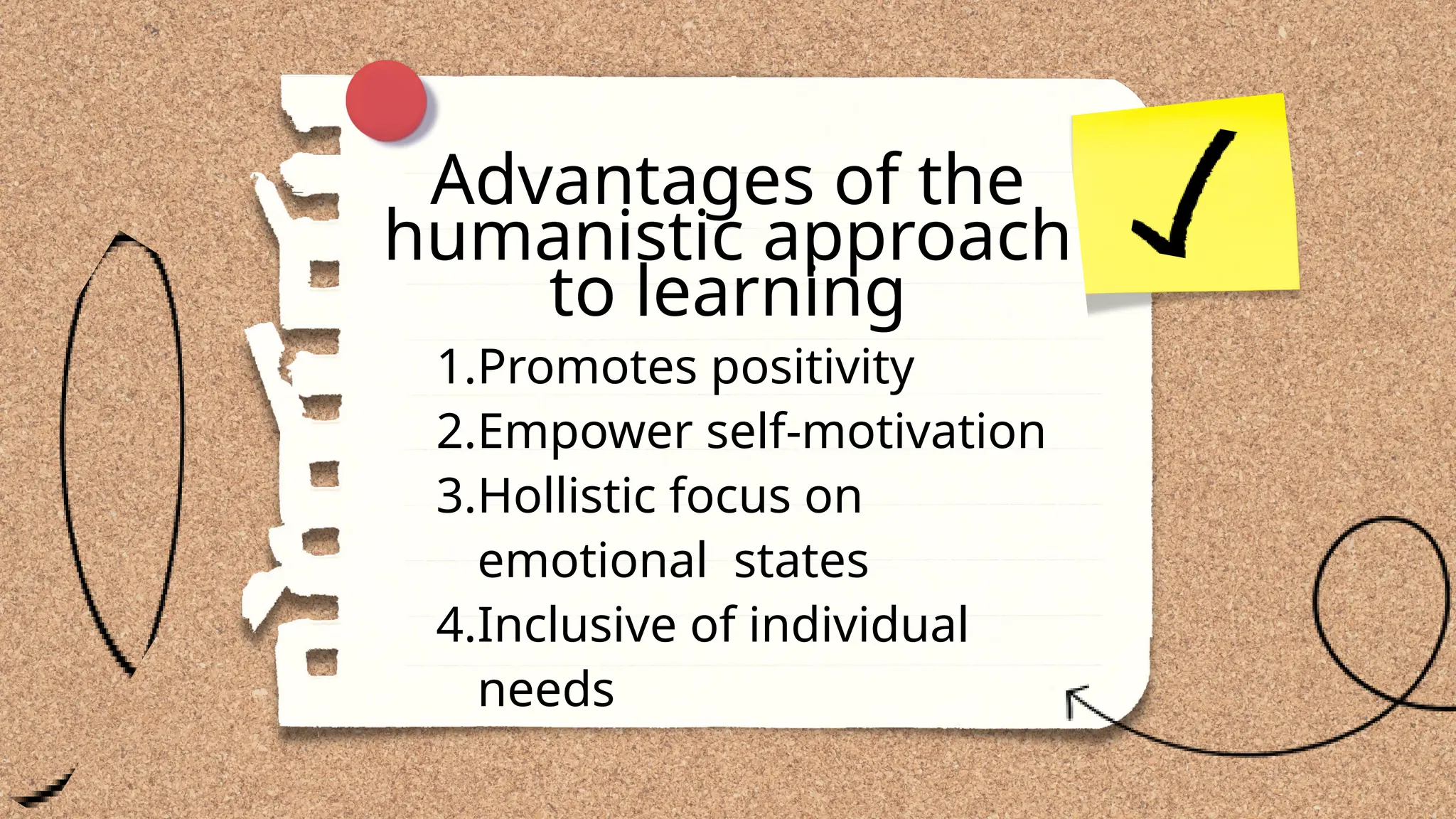
    1.Promotes positivity 2.Empower self-motivation 3.Hollisticfocus on emotional states 4.Inclusive of individual needs Advantages of the humanistic approach to learning
  • 7.
    1.Requires flexible curriculum 2.Not allstudents have intrinsic motivation 3.Some need structure and routine Disadvantages of the humanistic approach to learning
  • 8.
    APPLYING THE HUMANISTIC LEARNINGTHEORY IN THE ONLINE CLASSROOM
  • 9.
    • Help studentcreate personal goals at the start of the year • Discuss achievement and strategies for success Goal-Setting
  • 10.
    • Cater todifferent interest and learning style • Options : practical activities, videos, research and online discussion Different Learning Opportunities
  • 11.
    • Increase engagement throughlevel and experience points • Promote intrinsic motivation and progress evaluation Gamification
  • 12.
    • Allow forflexible schedules and participation modes • Use adaptive software for self-paced learning Flexibility in Learning
  • 13.
    • Encourage breaksand emotional sharing • Establishe a culture of acceptance and open discussion Creating a Safe Environment
  • 14.
    • Technique toenhance critical thinking and accomplishment • Importance of celebrating milestone for motivation Problem-Based and Inquiry-Based Learning
  • 15.
    • Support studentsduring stress and anxiety • Build strong relationships and maintain communication outside class Practicing Empathy and Respect
  • 16.
    The Humanistic LearningTheory emphasizes that learning extends beyond intellect, focusing on helping students reach their full potential. Its key contributions include promoting independence, fostering a love for learning, and motivating self-growth. As teachers, we have the privilege of guiding students to become confident individuals who make meaningful contributions to society. Conclusion
  • 17.