Principles of Design
      What is Design?
Design- arrangement of details which
make up a piece of art (2 types)
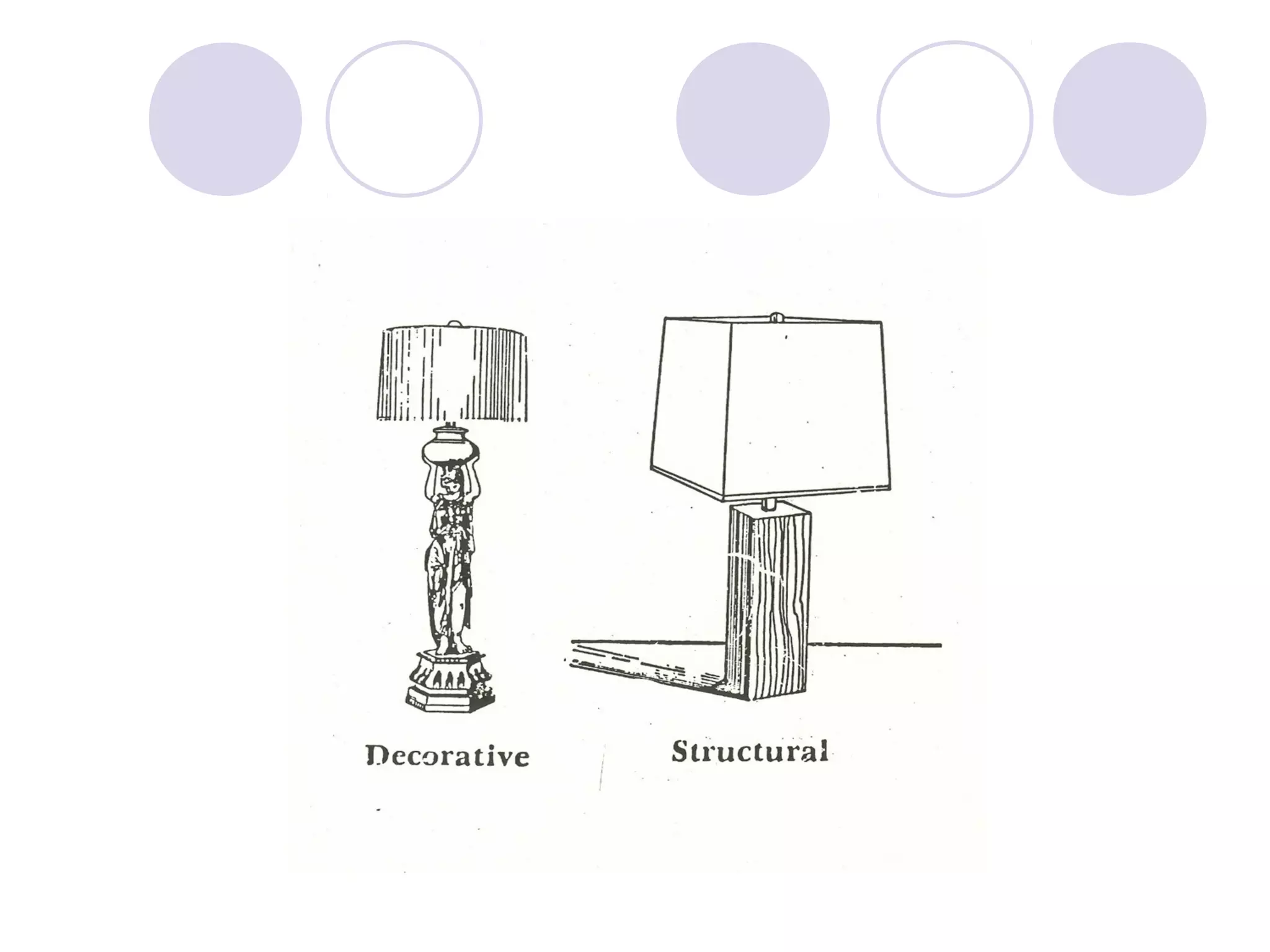
   Structural Design
        Simple
        Purpose of object is easily recognized
        Ex. Pyramids, modern furniture


   Decorative Design
        Ornamentation of a basic structure
Principles Of Design
5   principles
   Proportion/   Scale
   Balance

   Rhythm

   Emphasis

   Harmony/   Unity
Proportion
 Isthe relationship of objects to one
  another and to the design as a whole
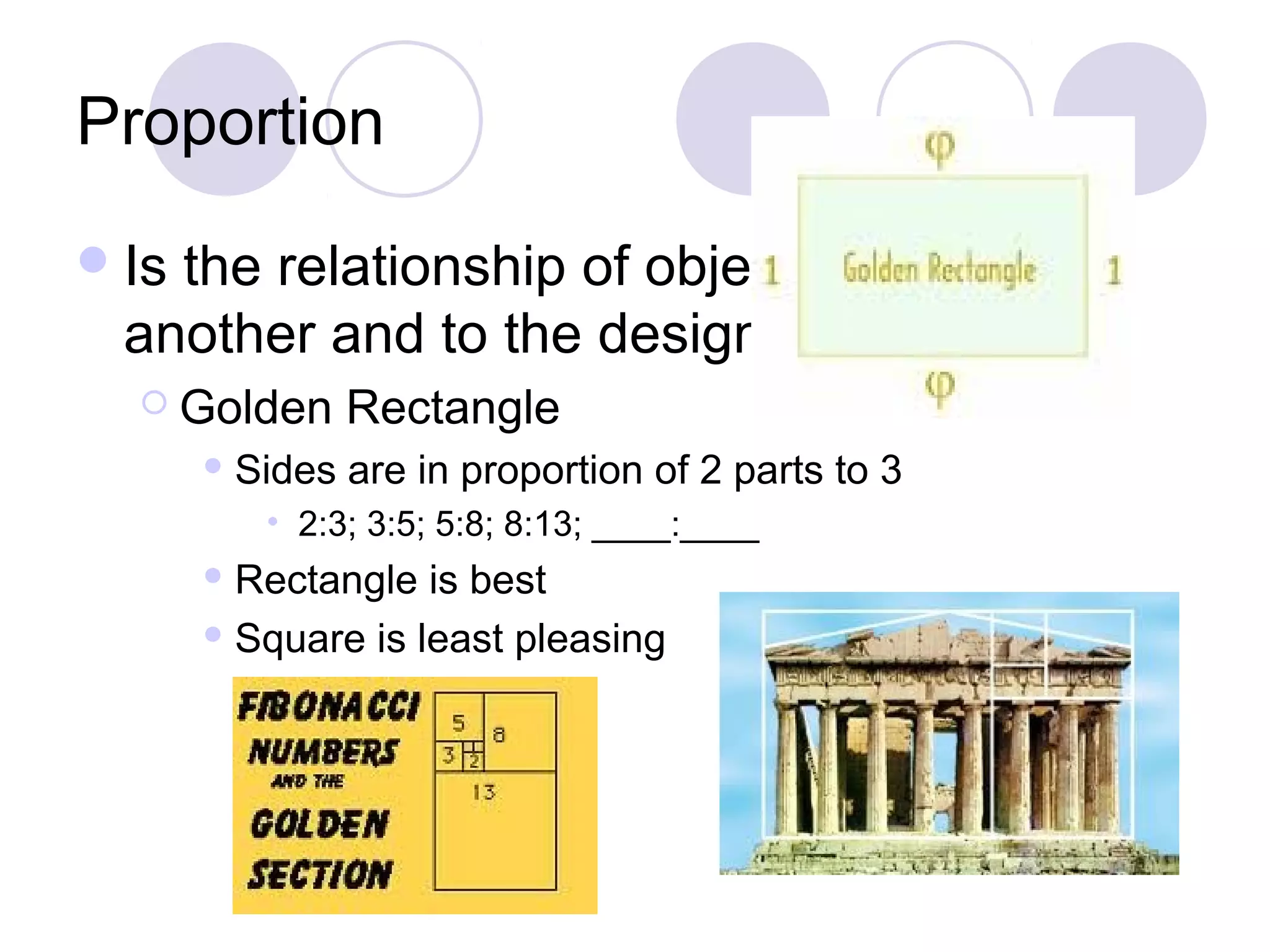
   Golden       Rectangle
        Sides   are in proportion of 2 parts to 3
          • 2:3; 3:5; 5:8; 8:13; ____:____
        Rectangle  is best
        Square is least pleasing
Proportion continued…..
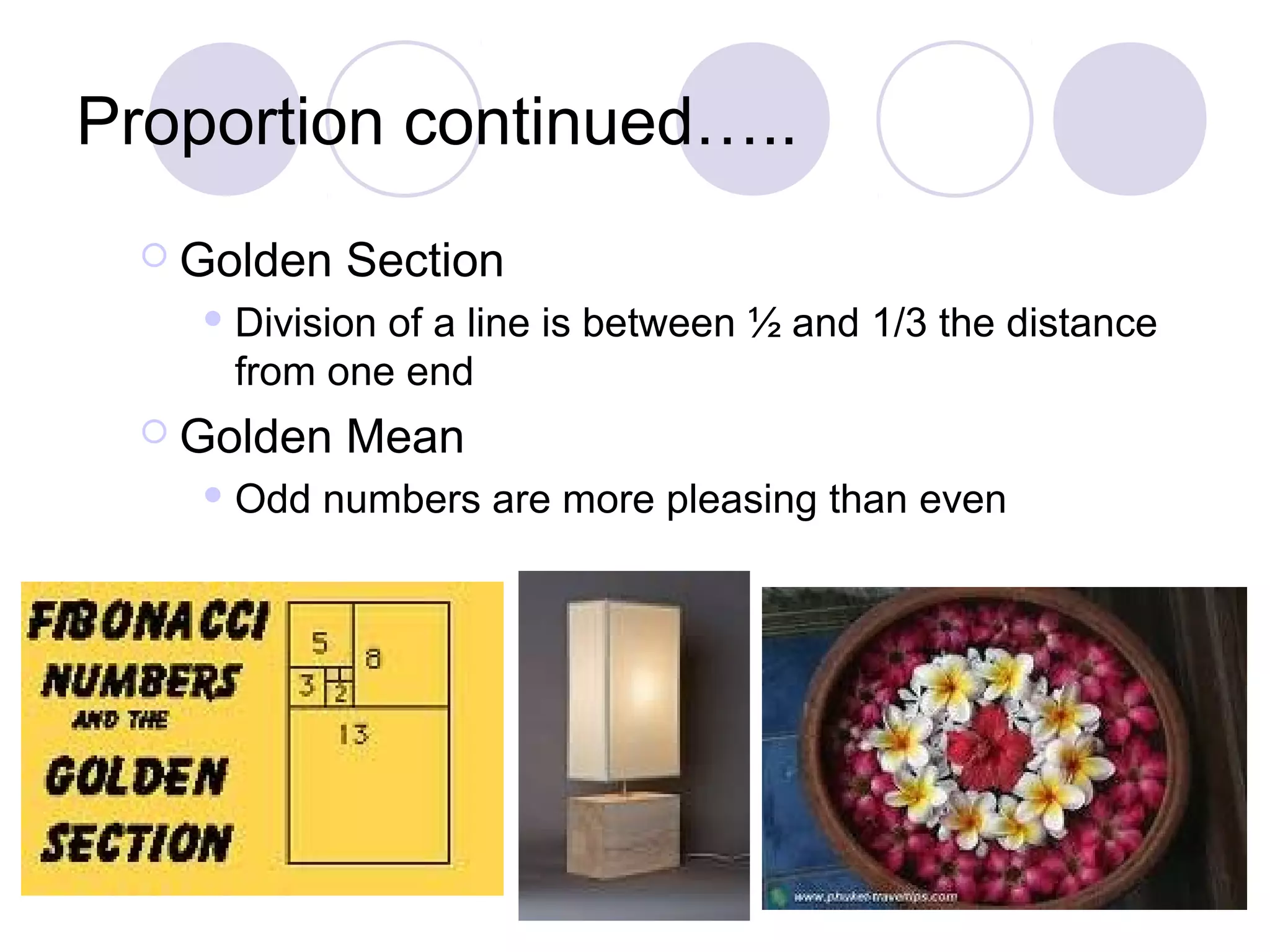
   Golden   Section
     Division
             of a line is between ½ and 1/3 the distance
     from one end
   Golden   Mean
     Odd   numbers are more pleasing than even
Scale
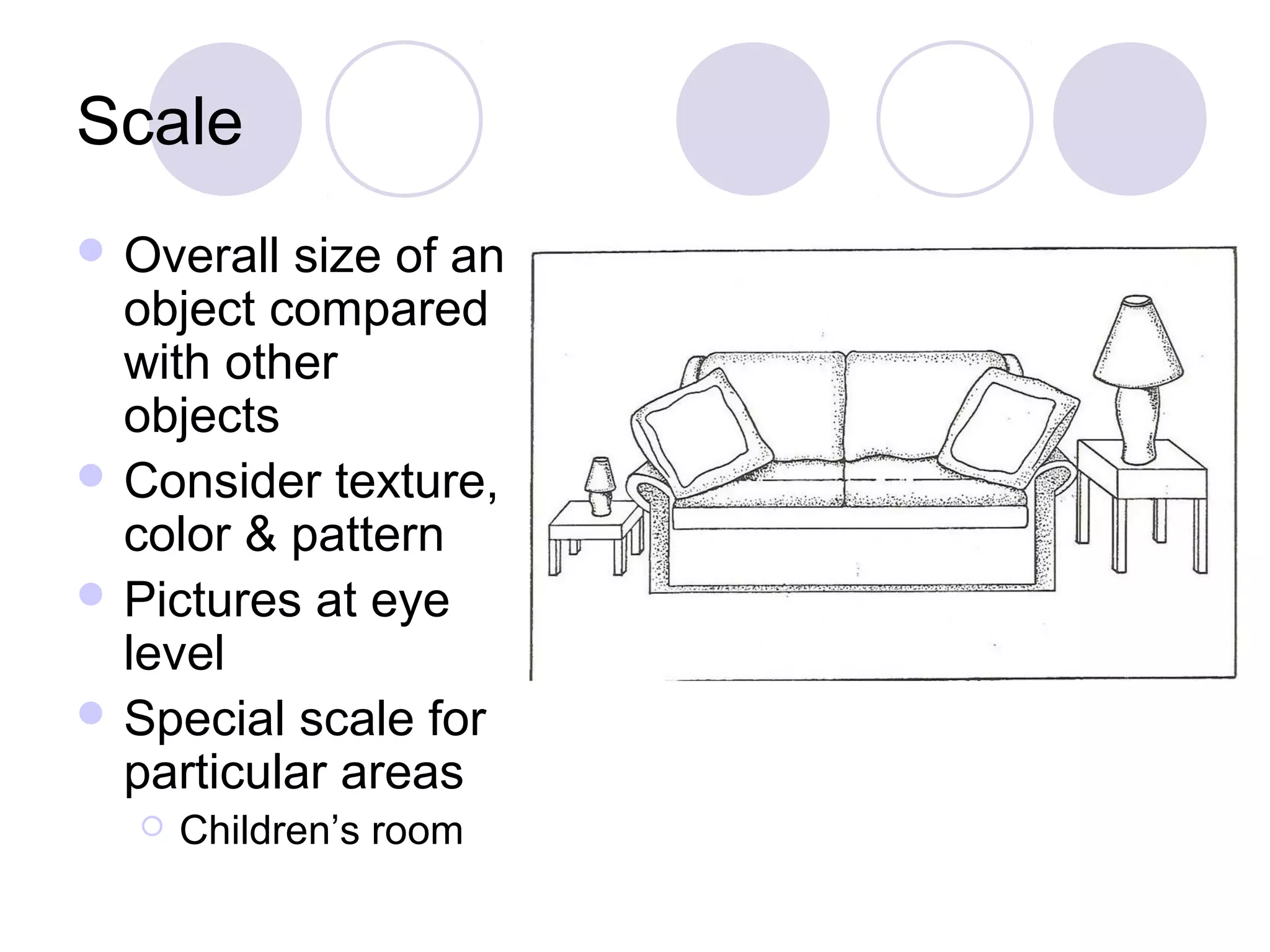
 Overall size of an
  object compared
  with other
  objects
 Consider texture,
  color & pattern
 Pictures at eye
  level
 Special scale for
  particular areas
     Children’s room
Scale
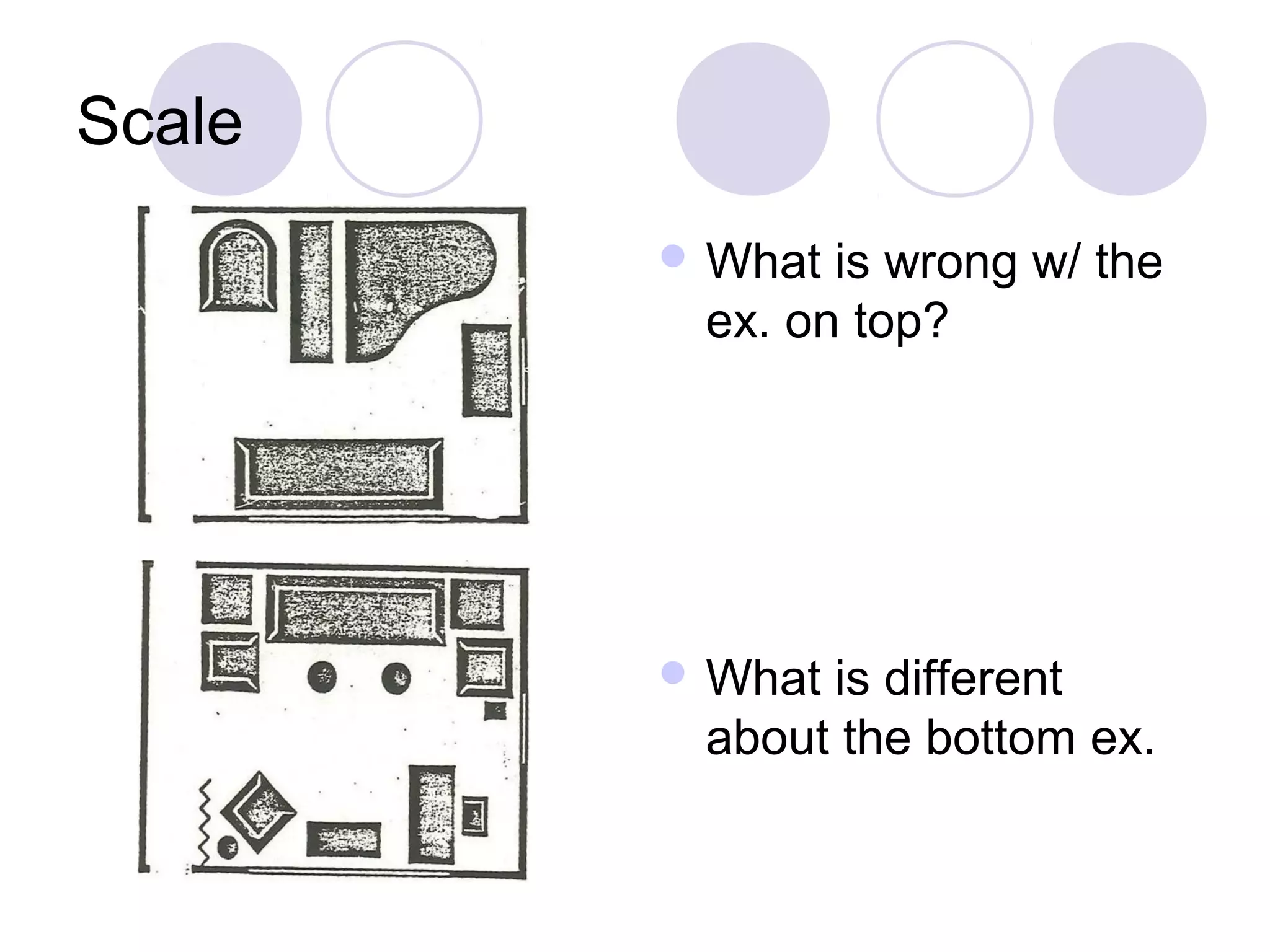
         What is wrong w/ the
         ex. on top?


         Whatis different
         about the bottom ex.
Balance
 quality of a room that gives a sense of
  equilibrium

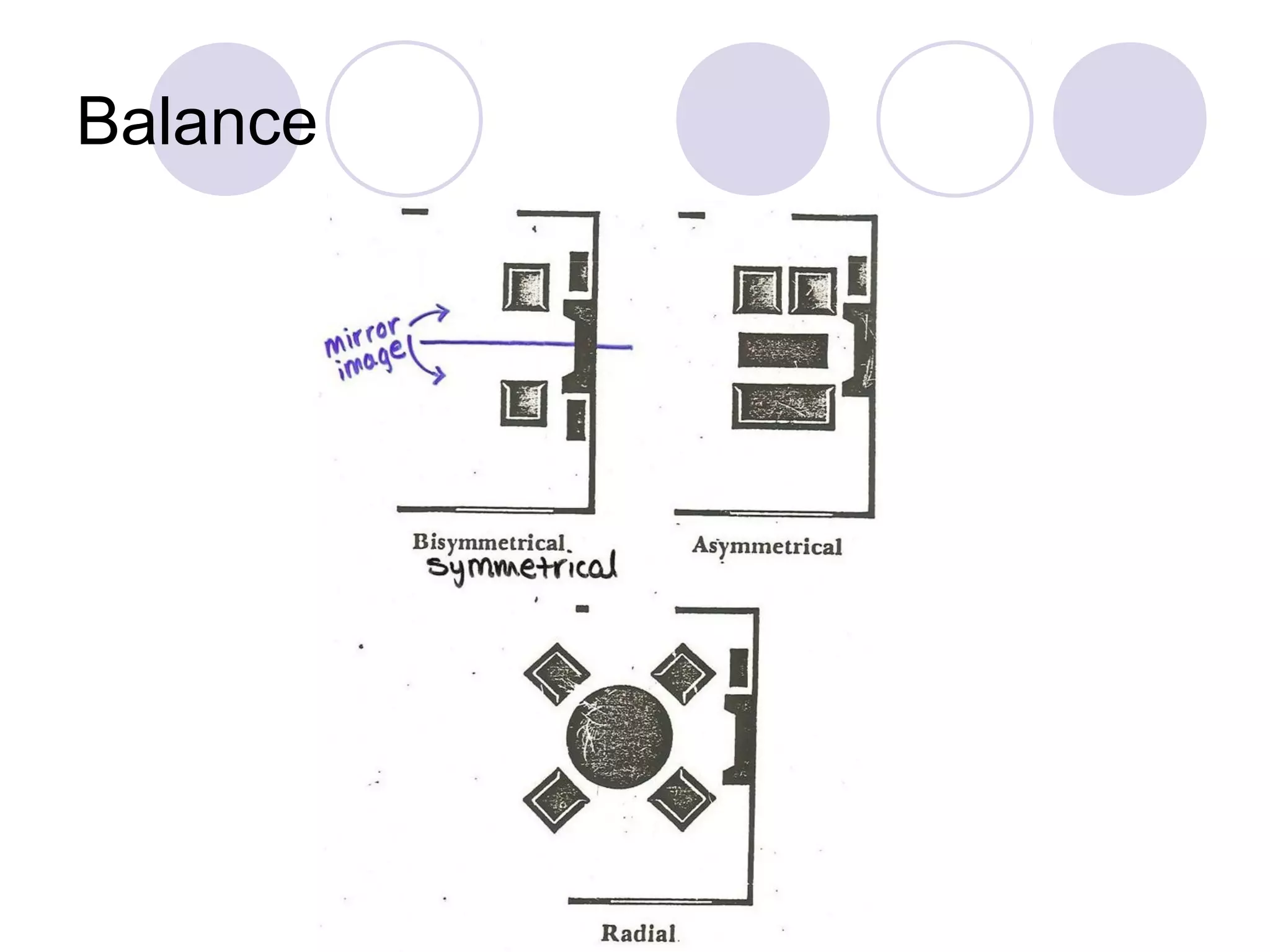
2   types of balance
   Symmetrical

   Asymmetrical
Balance
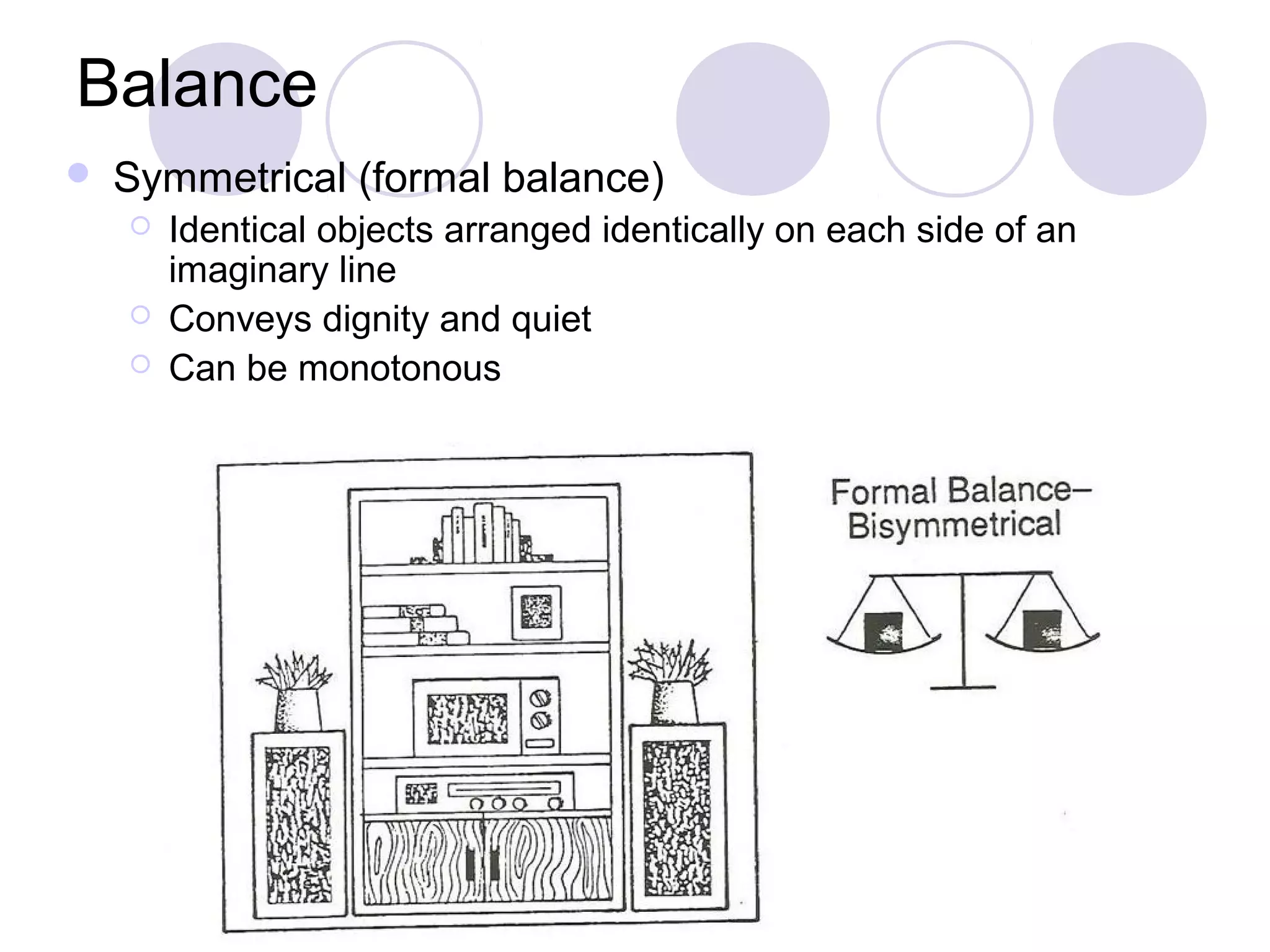
   Symmetrical (formal balance)
       Identical objects arranged identically on each side of an
        imaginary line
       Conveys dignity and quiet
       Can be monotonous
Balance
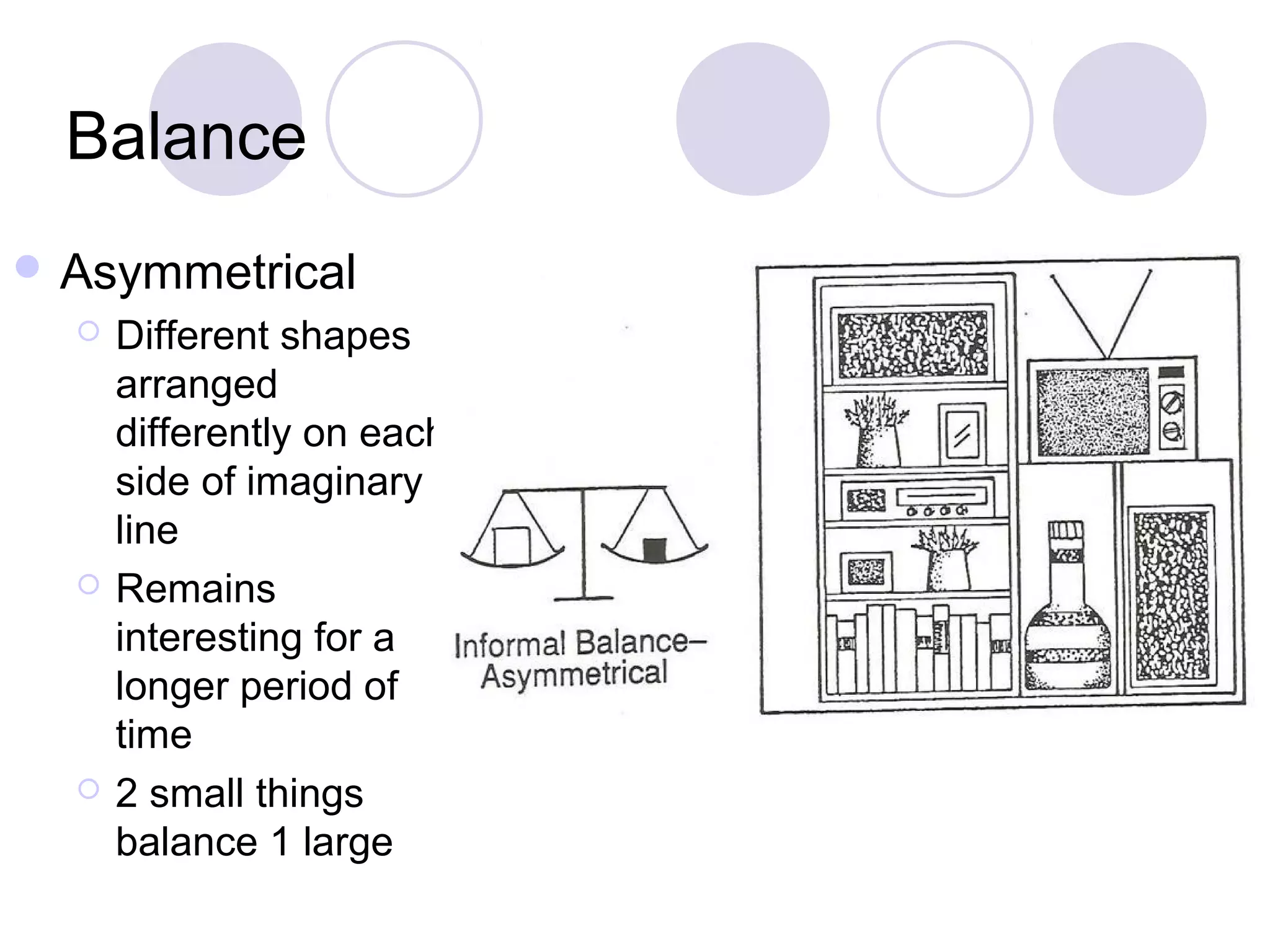
 Asymmetrical
     Different shapes
      arranged
      differently on each
      side of imaginary
      line
     Remains
      interesting for a
      longer period of
      time
     2 small things
      balance 1 large
Balance
Rhythm
 Helps move the eye from one area to
  another
 creates motion
 4 types
     repetition

     gradation

     transition

     radiation
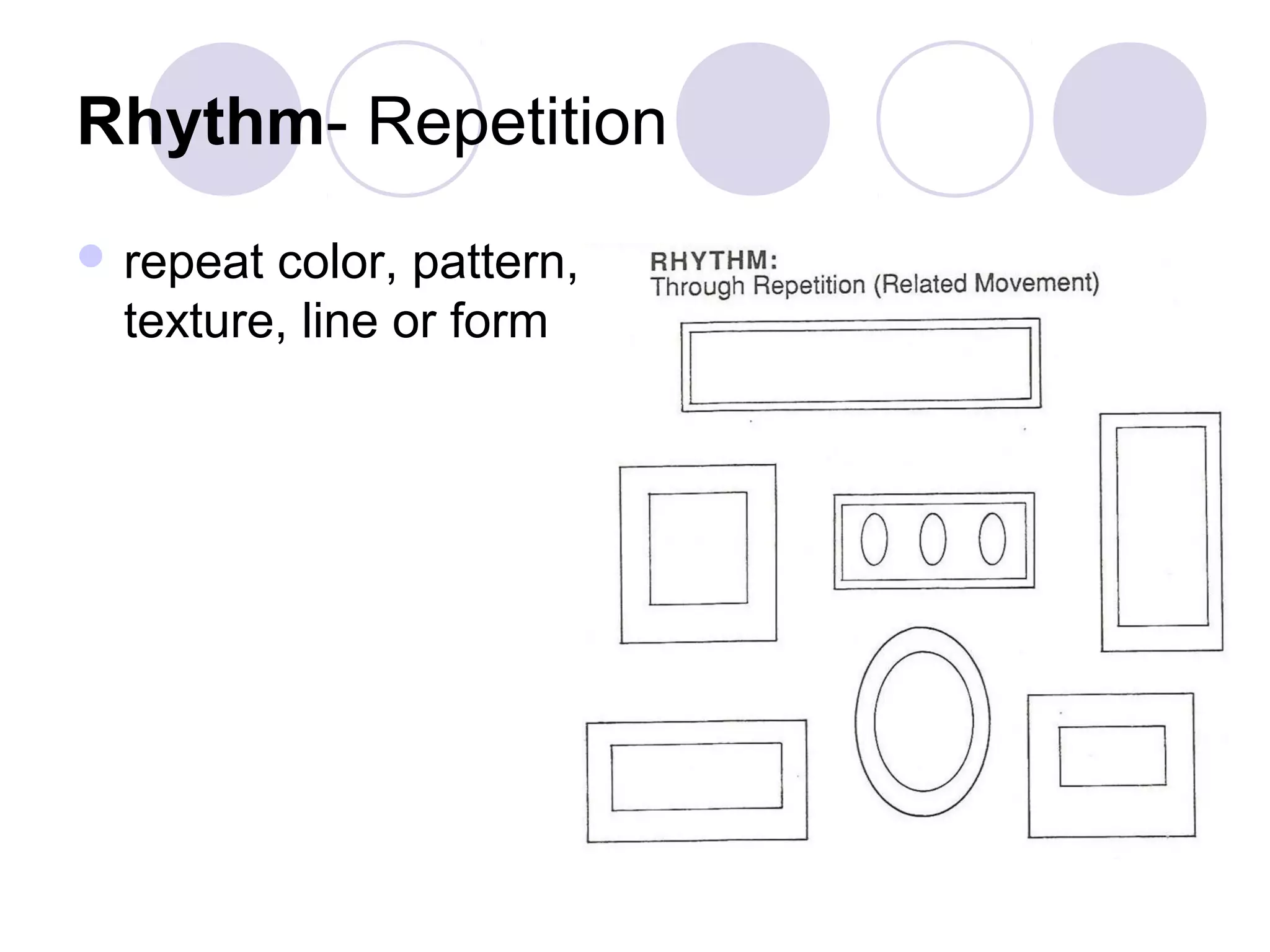
Rhythm- Repetition
 repeat color, pattern,
  texture, line or form
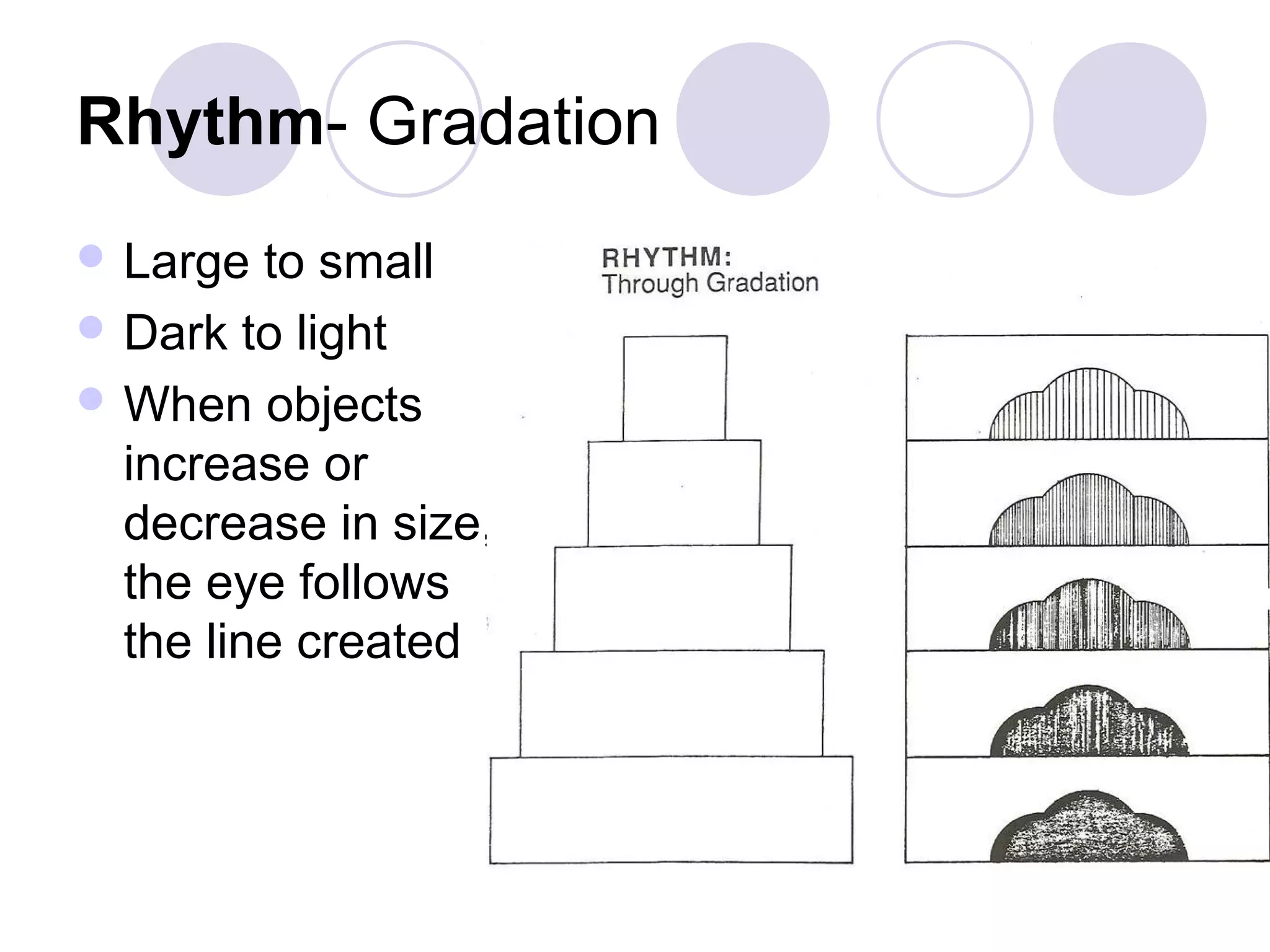
Rhythm- Gradation
 Large  to small
 Dark to light
 When objects
  increase or
  decrease in size,
  the eye follows
  the line created
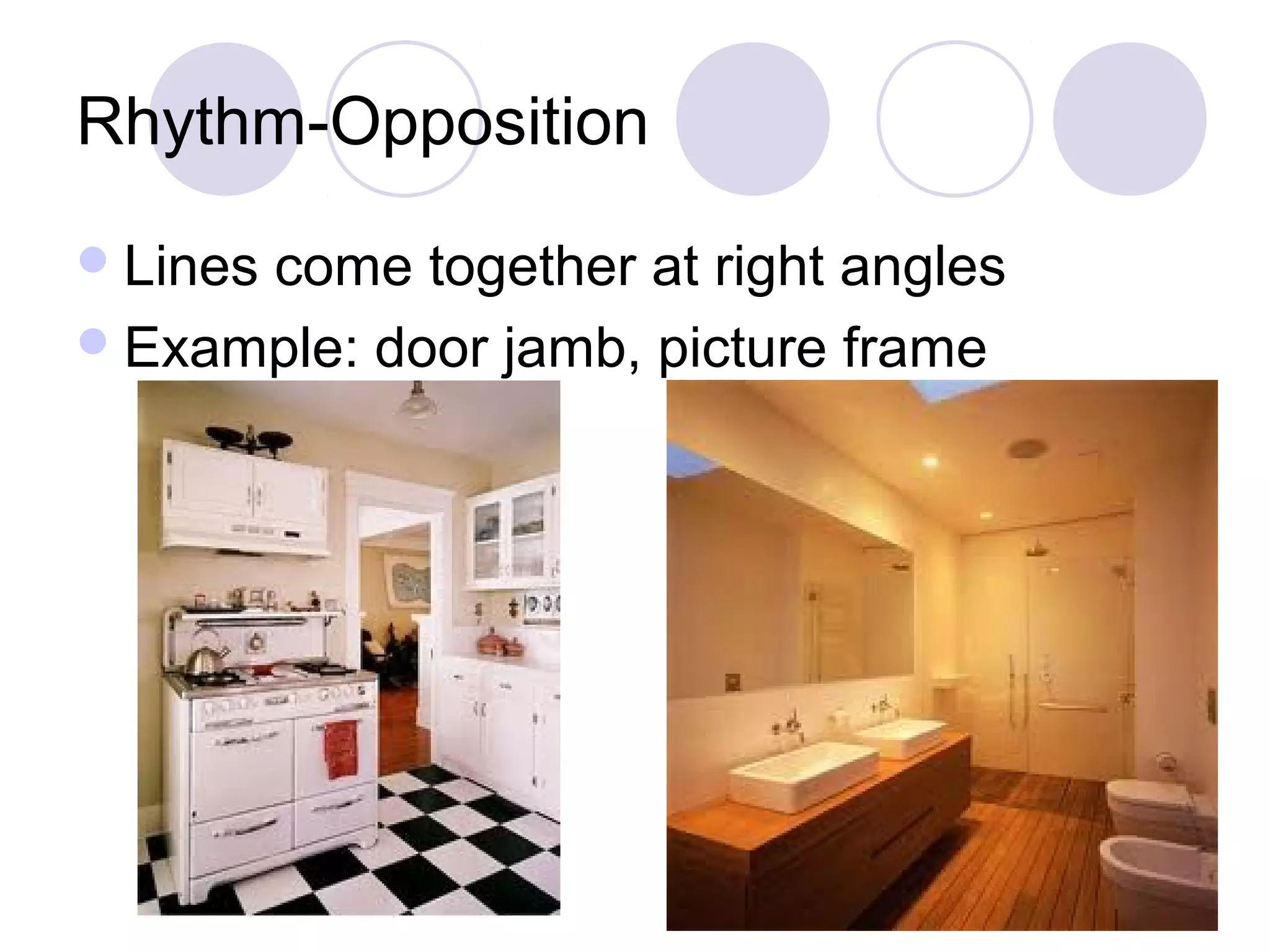
Rhythm-Opposition
 Lines
      come together at right angles
 Example: door jamb, picture frame
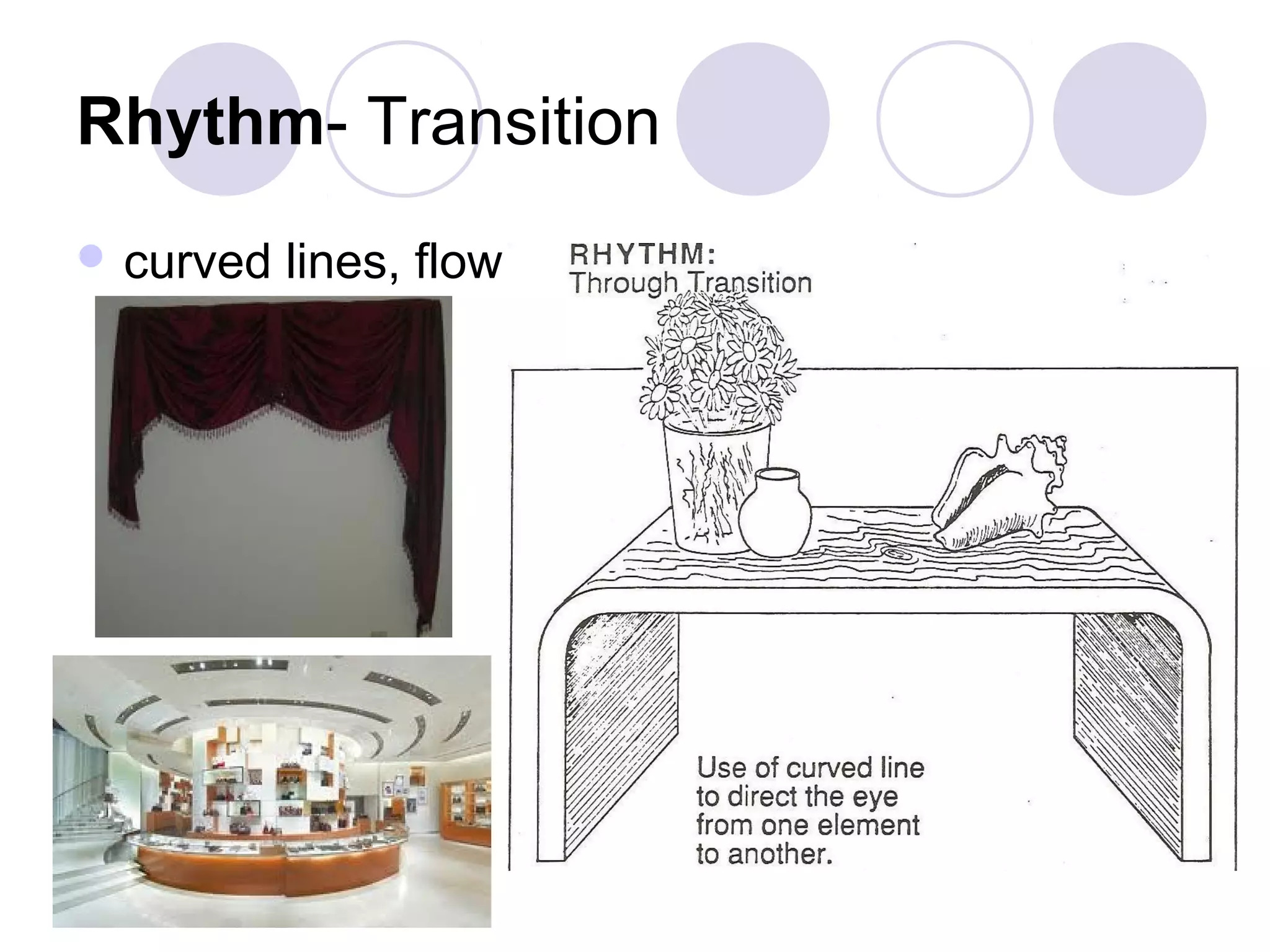
Rhythm- Transition
 curved   lines, flow
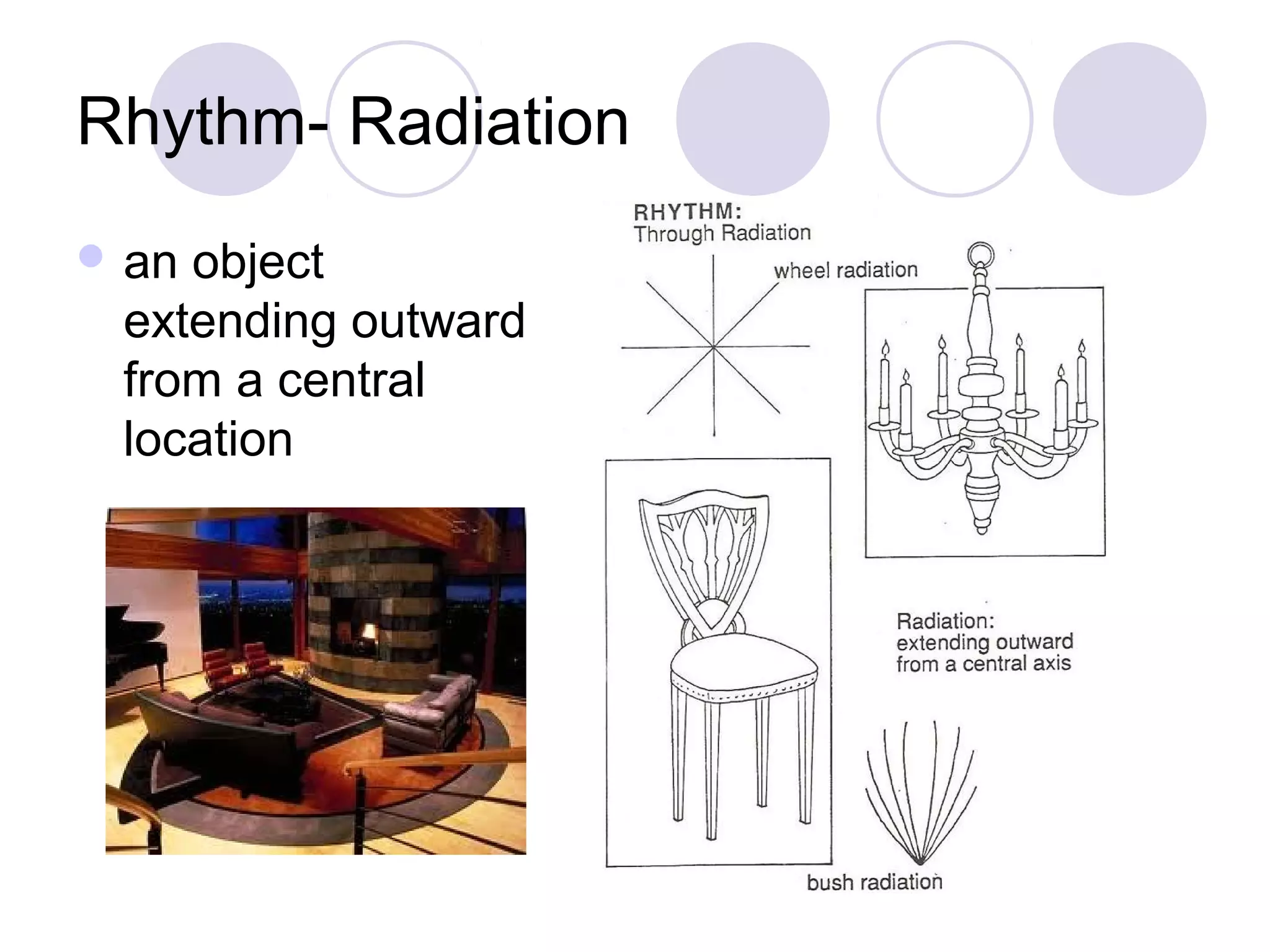
Rhythm- Radiation
 anobject
 extending outward
 from a central
 location
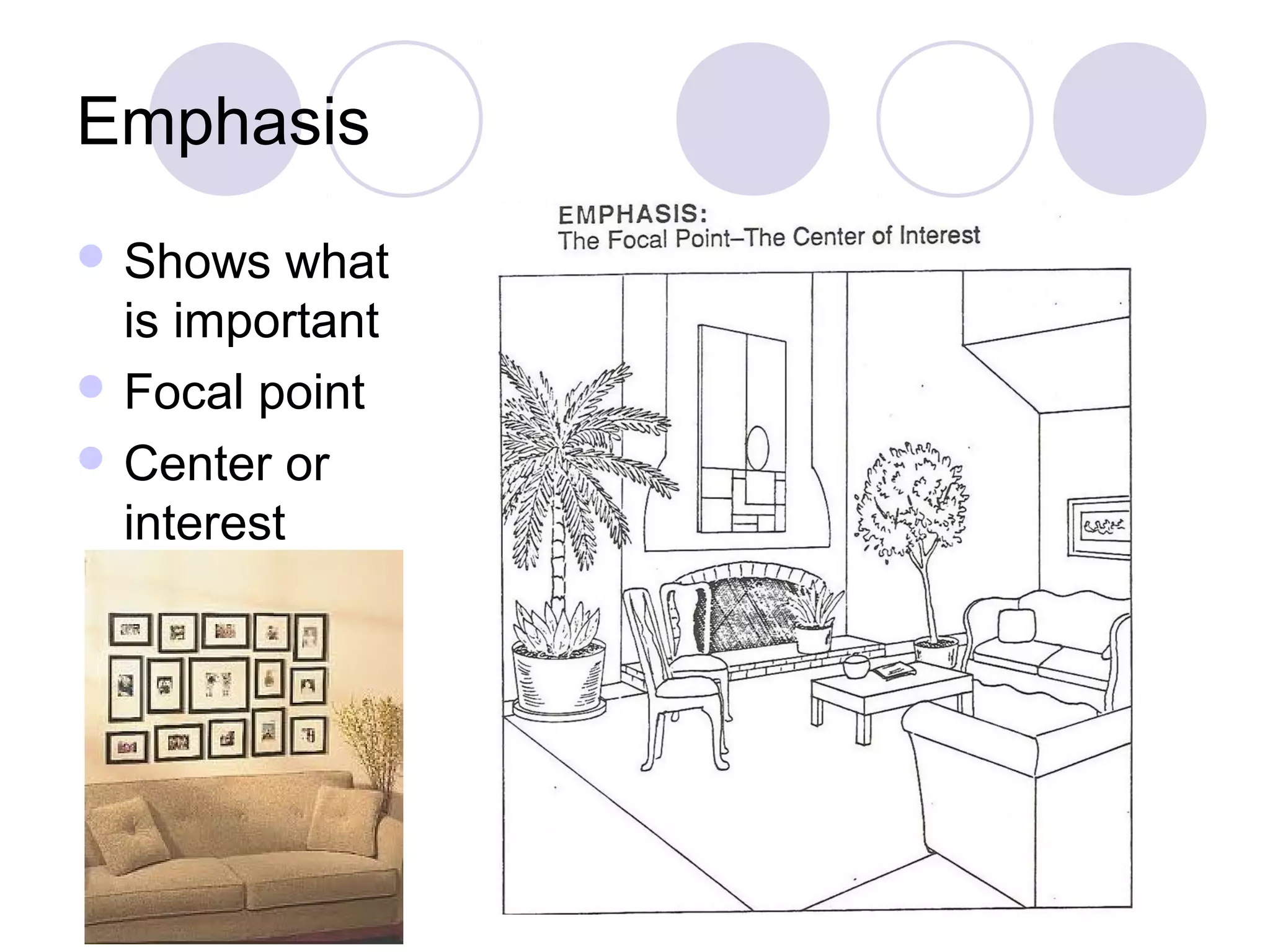
Emphasis
 Shows   what
  is important
 Focal point
 Center or
  interest
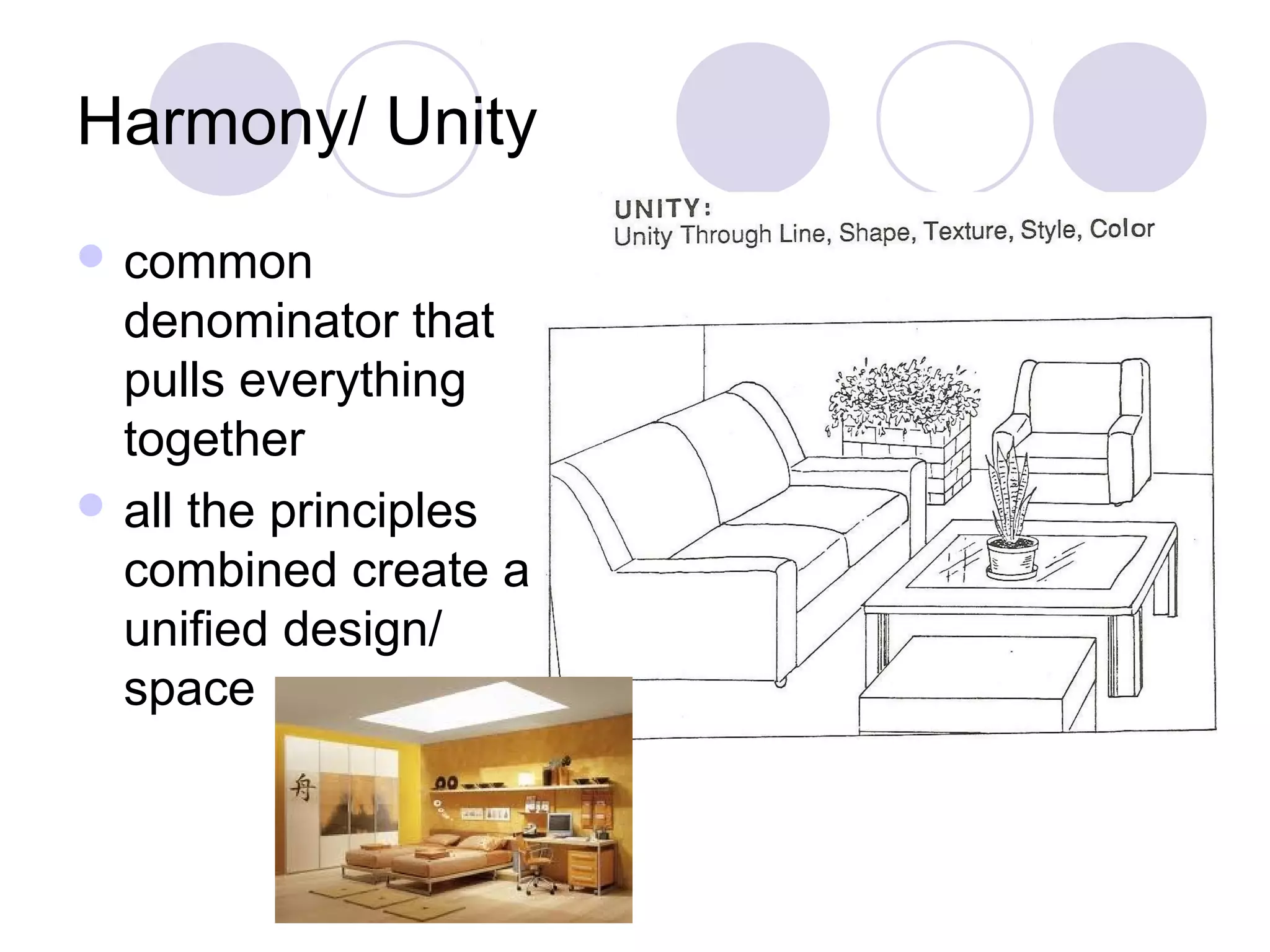
Harmony/ Unity
 common
  denominator that
  pulls everything
  together
 all the principles
  combined create a
  unified design/
  space
Principles of Design - Project
 Supplies   needed:
   Folderwith brads
   Handouts from Mrs. Jez

   Scissors

   Glue

   Markers

   Magazines

   An eye for design!!!!!!!

Principles of design

  • 1.
    Principles of Design What is Design?
  • 2.
    Design- arrangement ofdetails which make up a piece of art (2 types)  Structural Design  Simple  Purpose of object is easily recognized  Ex. Pyramids, modern furniture  Decorative Design  Ornamentation of a basic structure
  • 4.
    Principles Of Design 5 principles  Proportion/ Scale  Balance  Rhythm  Emphasis  Harmony/ Unity
  • 5.
    Proportion  Isthe relationshipof objects to one another and to the design as a whole  Golden Rectangle  Sides are in proportion of 2 parts to 3 • 2:3; 3:5; 5:8; 8:13; ____:____  Rectangle is best  Square is least pleasing
  • 6.
    Proportion continued…..  Golden Section  Division of a line is between ½ and 1/3 the distance from one end  Golden Mean  Odd numbers are more pleasing than even
  • 7.
    Scale  Overall sizeof an object compared with other objects  Consider texture, color & pattern  Pictures at eye level  Special scale for particular areas  Children’s room
  • 8.
    Scale  What is wrong w/ the ex. on top?  Whatis different about the bottom ex.
  • 9.
    Balance  quality ofa room that gives a sense of equilibrium 2 types of balance  Symmetrical  Asymmetrical
  • 10.
    Balance  Symmetrical (formal balance)  Identical objects arranged identically on each side of an imaginary line  Conveys dignity and quiet  Can be monotonous
  • 11.
    Balance  Asymmetrical  Different shapes arranged differently on each side of imaginary line  Remains interesting for a longer period of time  2 small things balance 1 large
  • 12.
  • 13.
    Rhythm  Helps movethe eye from one area to another  creates motion  4 types  repetition  gradation  transition  radiation
  • 14.
    Rhythm- Repetition  repeatcolor, pattern, texture, line or form
  • 15.
    Rhythm- Gradation  Large to small  Dark to light  When objects increase or decrease in size, the eye follows the line created
  • 16.
    Rhythm-Opposition  Lines come together at right angles  Example: door jamb, picture frame
  • 17.
  • 18.
    Rhythm- Radiation  anobject extending outward from a central location
  • 19.
    Emphasis  Shows what is important  Focal point  Center or interest
  • 20.
    Harmony/ Unity  common denominator that pulls everything together  all the principles combined create a unified design/ space
  • 21.
    Principles of Design- Project  Supplies needed:  Folderwith brads  Handouts from Mrs. Jez  Scissors  Glue  Markers  Magazines  An eye for design!!!!!!!