
S P A C E
CAN SPACE BE
DEFINED?
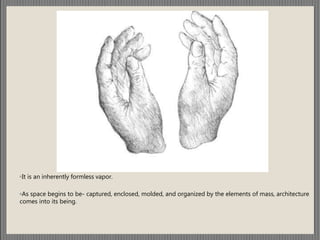
◦It is an inherently formless vapor.
◦As space begins to be- captured, enclosed, molded, and organized by the elements of mass, architecture
comes into its being.
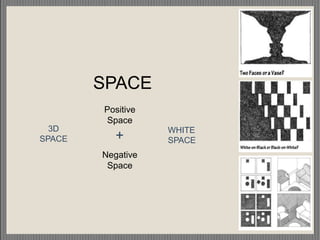
Positive
Space
Negative
Space
+
3D
SPACE
WHITE
SPACE
SPACE
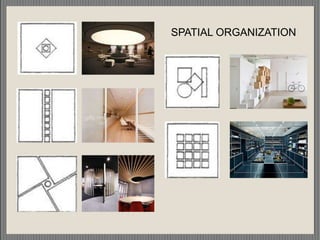
SPATIAL ORGANIZATION
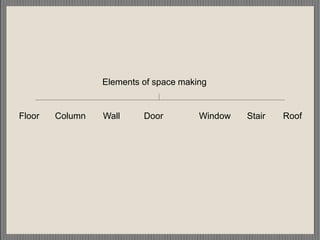
Elements of space making
Floor Column Wall Door Window Stair Roof
FLOOR
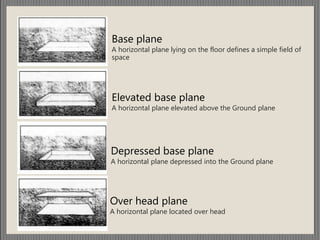
Base plane
A horizontal plane lying on the floor defines a simple field of
space
Elevated base plane
A horizontal plane elevated above the Ground plane
Depressed base plane
A horizontal plane depressed into the Ground plane
Over head plane
A horizontal plane located over head
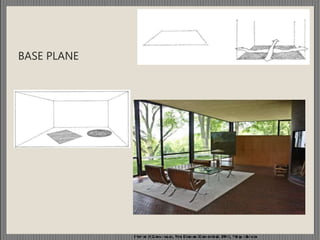
BASE PLANE
Interior of Glass House, New Canaan, Connecticut, 1949, Philip Johnson
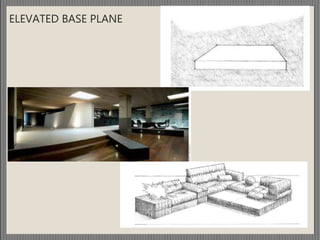
ELEVATED BASE PLANE
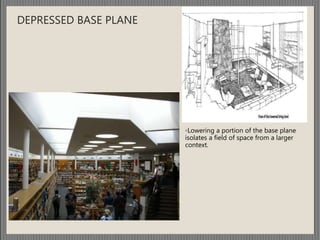
DEPRESSED BASE PLANE
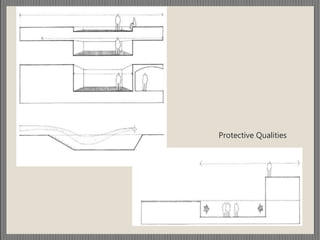
◦Lowering a portion of the base plane
isolates a field of space from a larger
context.
Protective Qualities
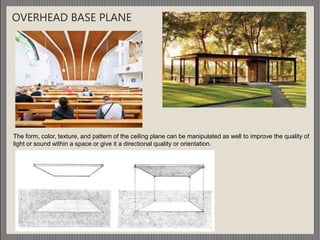
OVERHEAD BASE PLANE
The form, color, texture, and pattern of the ceiling plane can be manipulated as well to improve the quality of
light or sound within a space or give it a directional quality or orientation.
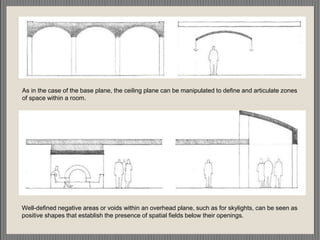
As in the case of the base plane, the ceiling plane can be manipulated to define and articulate zones
of space within a room.
Well-defined negative areas or voids within an overhead plane, such as for skylights, can be seen as
positive shapes that establish the presence of spatial fields below their openings.
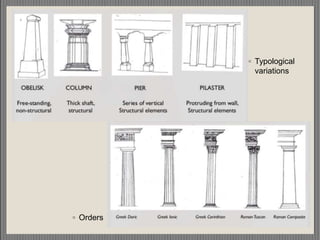
COLUMNS
◦ Typological
variations
◦ Orders
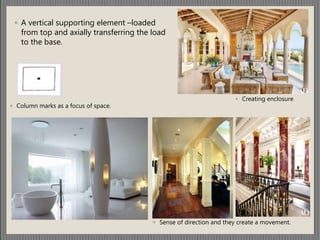
◦ A vertical supporting element –loaded
from top and axially transferring the load
to the base.
◦ Column marks as a focus of space.
◦ Sense of direction and they create a movement.
◦ Creating enclosure
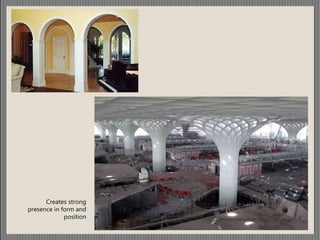
Creates strong
presence in form and
position
WALLS
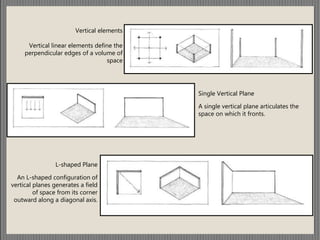
Vertical elements
Vertical linear elements define the
perpendicular edges of a volume of
space
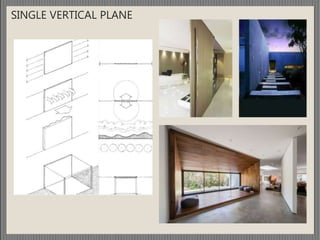
Single Vertical Plane
A single vertical plane articulates the
space on which it fronts.
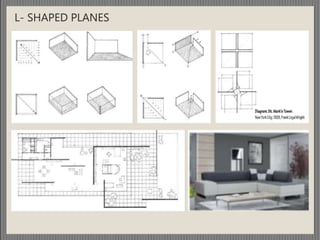
L-shaped Plane
An L-shaped configuration of
vertical planes generates a field
of space from its corner
outward along a diagonal axis.
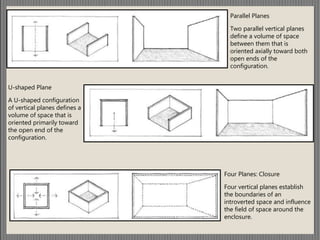
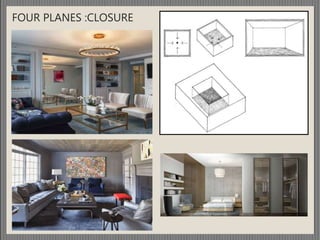
Four Planes: Closure
Four vertical planes establish
the boundaries of an
introverted space and influence
the field of space around the
enclosure.
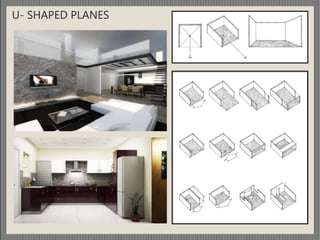
U-shaped Plane
A U-shaped configuration
of vertical planes defines a
volume of space that is
oriented primarily toward
the open end of the
configuration.
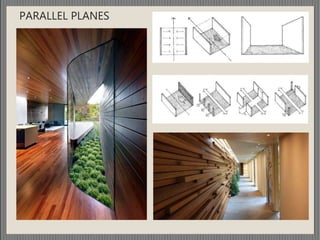
Parallel Planes
Two parallel vertical planes
define a volume of space
between them that is
oriented axially toward both
open ends of the
configuration.
SINGLE VERTICAL PLANE
L- SHAPED PLANES
PARALLEL PLANES
U- SHAPED PLANES
FOUR PLANES :CLOSURE
DOORS
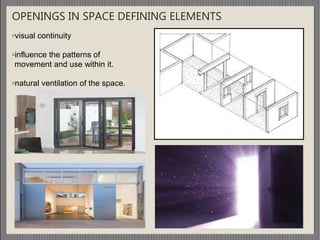
OPENINGS IN SPACE DEFINING ELEMENTS
◦visual continuity
◦influence the patterns of
movement and use within it.
◦natural ventilation of the space.
WINDOWS
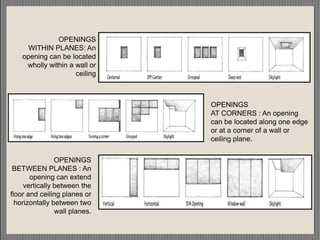
OPENINGS
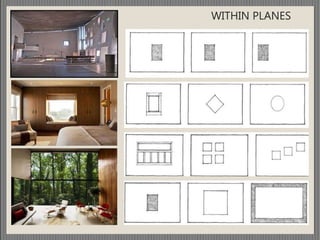
WITHIN PLANES: An
opening can be located
wholly within a wall or
ceiling
OPENINGS
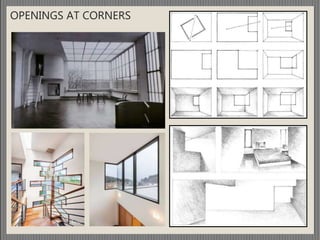
AT CORNERS : An opening
can be located along one edge
or at a corner of a wall or
ceiling plane.
OPENINGS
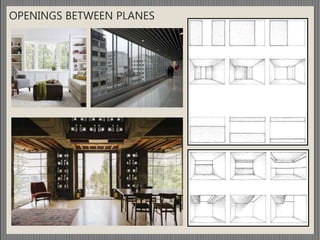
BETWEEN PLANES : An
opening can extend
vertically between the
floor and ceiling planes or
horizontally between two
wall planes.
WITHIN PLANES
OPENINGS AT CORNERS
OPENINGS BETWEEN PLANES
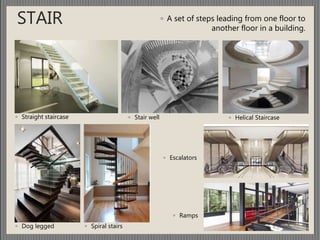
STAIRS
◦ A set of steps leading from one floor to
another floor in a building.
STAIR
◦ Straight staircase
◦ Dog legged
◦ Stair well
◦ Spiral stairs
◦ Helical Staircase
◦ Escalators
◦ Ramps
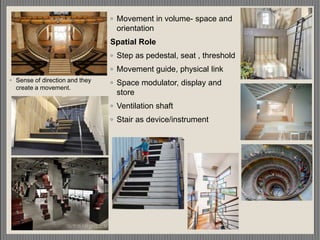
◦ Sense of direction and they
create a movement.
◦ Movement in volume- space and
orientation
Spatial Role
◦ Step as pedestal, seat , threshold
◦ Movement guide, physical link
◦ Space modulator, display and
store
◦ Ventilation shaft
◦ Stair as device/instrument
ROOF
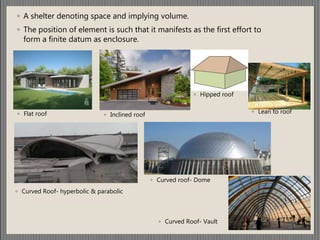
◦ A shelter denoting space and implying volume.
◦ The position of element is such that it manifests as the first effort to
form a finite datum as enclosure.
◦ Flat roof ◦ Inclined roof
◦ Hipped roof
◦ Lean to roof
◦ Curved Roof- hyperbolic & parabolic
◦ Curved roof- Dome
◦ Curved Roof- Vault
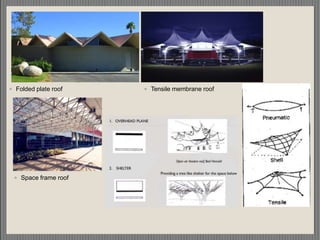
◦ Folded plate roof ◦ Tensile membrane roof
◦ Space frame roof
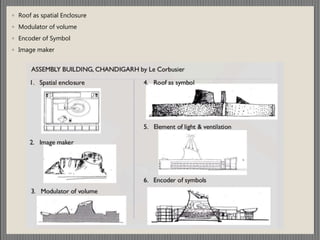
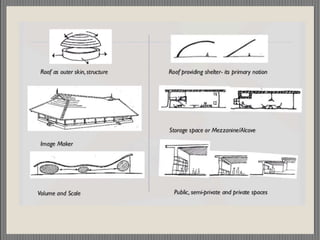
◦ Roof as spatial Enclosure
◦ Modulator of volume
◦ Encoder of Symbol
◦ Image maker
T H A N K Y O U

Elements of space making in interior design

  • 1.
    S P AC E
  • 2.
  • 3.
    ◦It is aninherently formless vapor. ◦As space begins to be- captured, enclosed, molded, and organized by the elements of mass, architecture comes into its being.
  • 4.
  • 6.
  • 7.
    Elements of spacemaking Floor Column Wall Door Window Stair Roof
  • 8.
  • 9.
    Base plane A horizontalplane lying on the floor defines a simple field of space Elevated base plane A horizontal plane elevated above the Ground plane Depressed base plane A horizontal plane depressed into the Ground plane Over head plane A horizontal plane located over head
  • 10.
    BASE PLANE Interior ofGlass House, New Canaan, Connecticut, 1949, Philip Johnson
  • 11.
  • 12.
    DEPRESSED BASE PLANE ◦Loweringa portion of the base plane isolates a field of space from a larger context.
  • 13.
  • 14.
    OVERHEAD BASE PLANE Theform, color, texture, and pattern of the ceiling plane can be manipulated as well to improve the quality of light or sound within a space or give it a directional quality or orientation.
  • 15.
    As in thecase of the base plane, the ceiling plane can be manipulated to define and articulate zones of space within a room. Well-defined negative areas or voids within an overhead plane, such as for skylights, can be seen as positive shapes that establish the presence of spatial fields below their openings.
  • 16.
  • 17.
  • 18.
    ◦ A verticalsupporting element –loaded from top and axially transferring the load to the base. ◦ Column marks as a focus of space. ◦ Sense of direction and they create a movement. ◦ Creating enclosure
  • 19.
    Creates strong presence inform and position
  • 21.
  • 22.
    Vertical elements Vertical linearelements define the perpendicular edges of a volume of space Single Vertical Plane A single vertical plane articulates the space on which it fronts. L-shaped Plane An L-shaped configuration of vertical planes generates a field of space from its corner outward along a diagonal axis.
  • 23.
    Four Planes: Closure Fourvertical planes establish the boundaries of an introverted space and influence the field of space around the enclosure. U-shaped Plane A U-shaped configuration of vertical planes defines a volume of space that is oriented primarily toward the open end of the configuration. Parallel Planes Two parallel vertical planes define a volume of space between them that is oriented axially toward both open ends of the configuration.
  • 24.
  • 25.
  • 26.
  • 27.
  • 28.
  • 29.
  • 30.
    OPENINGS IN SPACEDEFINING ELEMENTS ◦visual continuity ◦influence the patterns of movement and use within it. ◦natural ventilation of the space.
  • 31.
  • 32.
    OPENINGS WITHIN PLANES: An openingcan be located wholly within a wall or ceiling OPENINGS AT CORNERS : An opening can be located along one edge or at a corner of a wall or ceiling plane. OPENINGS BETWEEN PLANES : An opening can extend vertically between the floor and ceiling planes or horizontally between two wall planes.
  • 33.
  • 34.
  • 35.
  • 36.
  • 37.
    ◦ A setof steps leading from one floor to another floor in a building. STAIR ◦ Straight staircase ◦ Dog legged ◦ Stair well ◦ Spiral stairs ◦ Helical Staircase ◦ Escalators ◦ Ramps
  • 38.
    ◦ Sense ofdirection and they create a movement. ◦ Movement in volume- space and orientation Spatial Role ◦ Step as pedestal, seat , threshold ◦ Movement guide, physical link ◦ Space modulator, display and store ◦ Ventilation shaft ◦ Stair as device/instrument
  • 39.
  • 40.
    ◦ A shelterdenoting space and implying volume. ◦ The position of element is such that it manifests as the first effort to form a finite datum as enclosure. ◦ Flat roof ◦ Inclined roof ◦ Hipped roof ◦ Lean to roof ◦ Curved Roof- hyperbolic & parabolic ◦ Curved roof- Dome ◦ Curved Roof- Vault
  • 41.
    ◦ Folded plateroof ◦ Tensile membrane roof ◦ Space frame roof
  • 42.
    ◦ Roof asspatial Enclosure ◦ Modulator of volume ◦ Encoder of Symbol ◦ Image maker
  • 44.
    T H AN K Y O U