INTERIOR
DESIGN
What an Interior Designer does
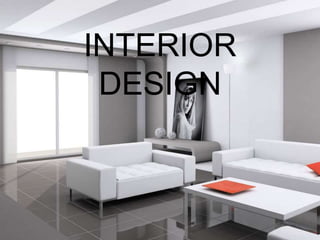
Description: An Interior Designer is professionally
trained to create a functional and quality interior
environment. (Ex. houses, hotels, restaurants, stores,
medical facilities, office complexes and more.)
 This job requires artistry and creativity in order to create
functional spaces that are visually appearing and meet
requirements of clients.

Responsibilities: An Interior Designer is
responsible for meeting with clients to discuss their
needs, planning the space, purchasing furnishings and
making the environment suitable for their needs.
Skills needed
Organization: Must be able to plan ideas, also the
possession of organizational skills makes it easier for
decorators to keep track of their current and former
decorating projects.

Budgeting: In almost every case a customer would
have a spending cap prior to the project starting. Interior
designers must create a functional area while staying
within budget.

Blueprint Creation: Requires

measurements and
mathematics. Blueprints allow the interior designer to
share the visions with others working on the project.
Education
The education needed to become an
interior designer is a bachelor’s degree.
Employment settings
 Private: self-employed.
30% of interior designers
are self-employed.
 Public: Major employers
such as interior design
firms, architecture firms
and furnitre stores

Demand
 Much of the demand for
interior designers will be
to decorate private
homes, restaurants,
offices, and retail
businesses.
Pay for Interior Designers
Hourly wages range from $24-$34 hourly.
Average yearly pay: $45,000-$50,000.
Maximum pay: $90,000.
Regional differences: The income for this
job can vary on location due to number of
employments, demand, cost and the
population of the area.
Preparation
High School: Taking classes such as Art,
Design and computer classes.
On your own: Decorate and redo rooms in
your house such as bedrooms, bathrooms,
etc.
Shadow: Contact an interior designer or
business and get the opportunity to follow
around a professional.
University of Cincinnati
 Benefits to the University of Cincinnati.
 Previous years has been ranked #1 for best design
schools in the nation.
 In 2013 Cincinnati is found within the top 5 for best
interior design.
 In the state of Ohio, Cincinnati is among the top school
for acedemics.
 Large student body.
 Sports teams are always successful.
 Cost: around $30,000.
Related Careers
Graphic Designer
Architect
Landscape Designer
Product Designer
Industrial Designer

Jobs included art
Reaction Statement
Since I was young I found the career of
interior design interesting and always
wanted to become one. The job seems fun
to do no matter how much or little money it
makes. As long as you're doing something
you enjoy then it’s a good career for you.

Interior design

  • 1.
  • 2.
    What an InteriorDesigner does Description: An Interior Designer is professionally trained to create a functional and quality interior environment. (Ex. houses, hotels, restaurants, stores, medical facilities, office complexes and more.)  This job requires artistry and creativity in order to create functional spaces that are visually appearing and meet requirements of clients. Responsibilities: An Interior Designer is responsible for meeting with clients to discuss their needs, planning the space, purchasing furnishings and making the environment suitable for their needs.
  • 3.
    Skills needed Organization: Mustbe able to plan ideas, also the possession of organizational skills makes it easier for decorators to keep track of their current and former decorating projects. Budgeting: In almost every case a customer would have a spending cap prior to the project starting. Interior designers must create a functional area while staying within budget. Blueprint Creation: Requires measurements and mathematics. Blueprints allow the interior designer to share the visions with others working on the project.
  • 4.
    Education The education neededto become an interior designer is a bachelor’s degree.
  • 5.
    Employment settings  Private:self-employed. 30% of interior designers are self-employed.  Public: Major employers such as interior design firms, architecture firms and furnitre stores Demand  Much of the demand for interior designers will be to decorate private homes, restaurants, offices, and retail businesses.
  • 6.
    Pay for InteriorDesigners Hourly wages range from $24-$34 hourly. Average yearly pay: $45,000-$50,000. Maximum pay: $90,000. Regional differences: The income for this job can vary on location due to number of employments, demand, cost and the population of the area.
  • 7.
    Preparation High School: Takingclasses such as Art, Design and computer classes. On your own: Decorate and redo rooms in your house such as bedrooms, bathrooms, etc. Shadow: Contact an interior designer or business and get the opportunity to follow around a professional.
  • 8.
    University of Cincinnati Benefits to the University of Cincinnati.  Previous years has been ranked #1 for best design schools in the nation.  In 2013 Cincinnati is found within the top 5 for best interior design.  In the state of Ohio, Cincinnati is among the top school for acedemics.  Large student body.  Sports teams are always successful.  Cost: around $30,000.
  • 9.
    Related Careers Graphic Designer Architect LandscapeDesigner Product Designer Industrial Designer Jobs included art
  • 10.
    Reaction Statement Since Iwas young I found the career of interior design interesting and always wanted to become one. The job seems fun to do no matter how much or little money it makes. As long as you're doing something you enjoy then it’s a good career for you.