Presentation Skills


                               HOW TO PREPARE
                               HOW TO PRESENT


SHL1013 Professional English                    5 October 2012
Presentations

 Can be ideas, concepts, or issues
 Can be recorded for transmission or
  presented in person
 Can be transmitted to a person or
  group
 Includes the sender and the medium
 Good presentation skills can be
  developed.
SHL1013 Professional English                   5 October 2012
Presentation Skills

 Planning is the first step
 Preparation or practice is the second step
 Aspects in the development of a good
   presentation
       Self Centered (Self)
       Audience Centered (Audience)
       Subject Centered (Material)
 “I want (who) to (what) (where, when and
   how) because (why)”

SHL1013 Professional English                 5 October 2012
Presentation Guide Questions

 What do you want to present (content)?
 Why do you want to present (purpose)?
 Where will you be presenting (place)?
 How do you want to present (words to
  be used or not, number of words or
  slides to be used)
 What does your audience need?
SHL1013 Professional English       5 October 2012
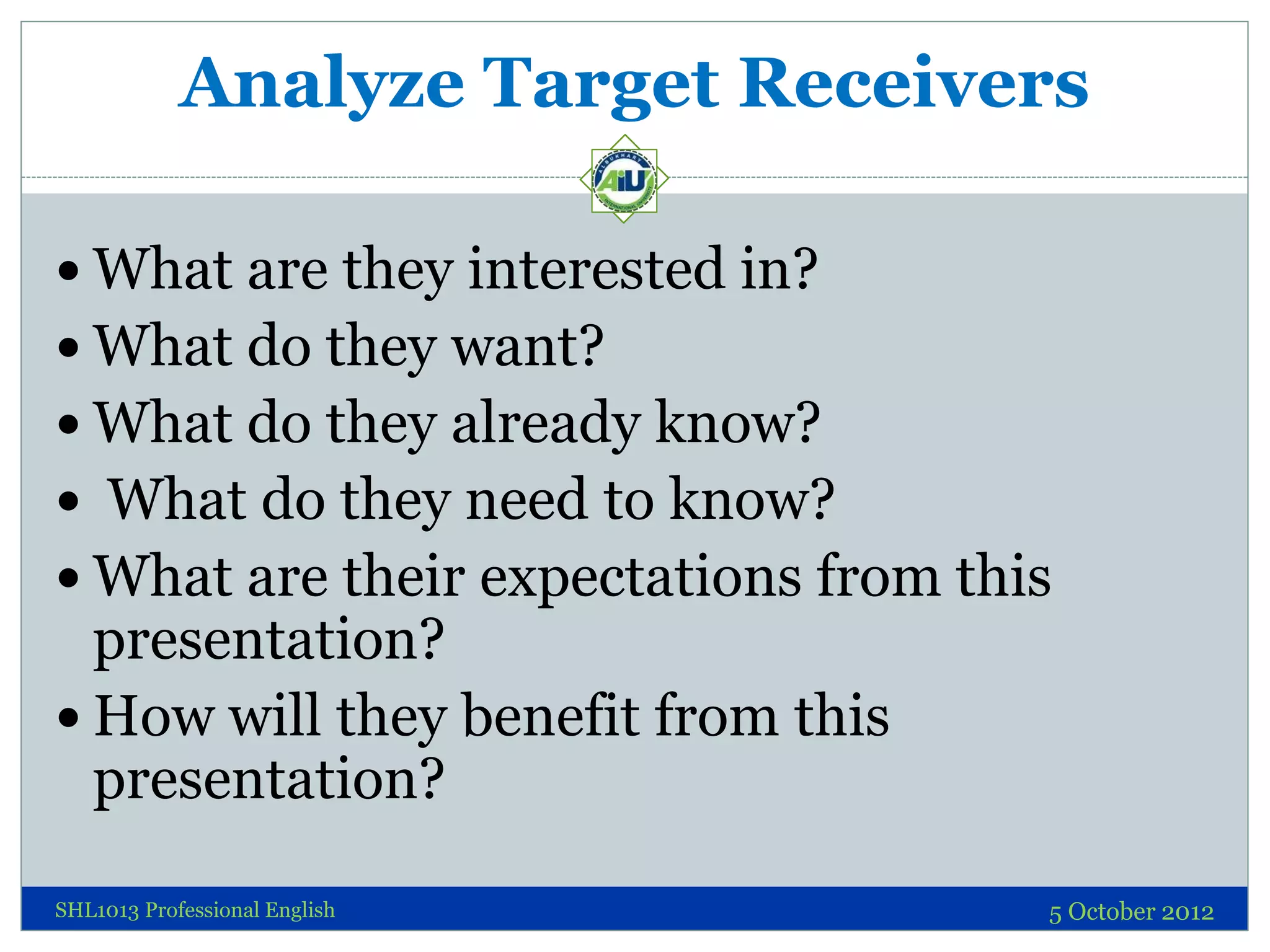
Analyze Target Receivers

 What are they interested in?
 What do they want?
 What do they already know?
 What do they need to know?
 What are their expectations from this
  presentation?
 How will they benefit from this
  presentation?

SHL1013 Professional English          5 October 2012
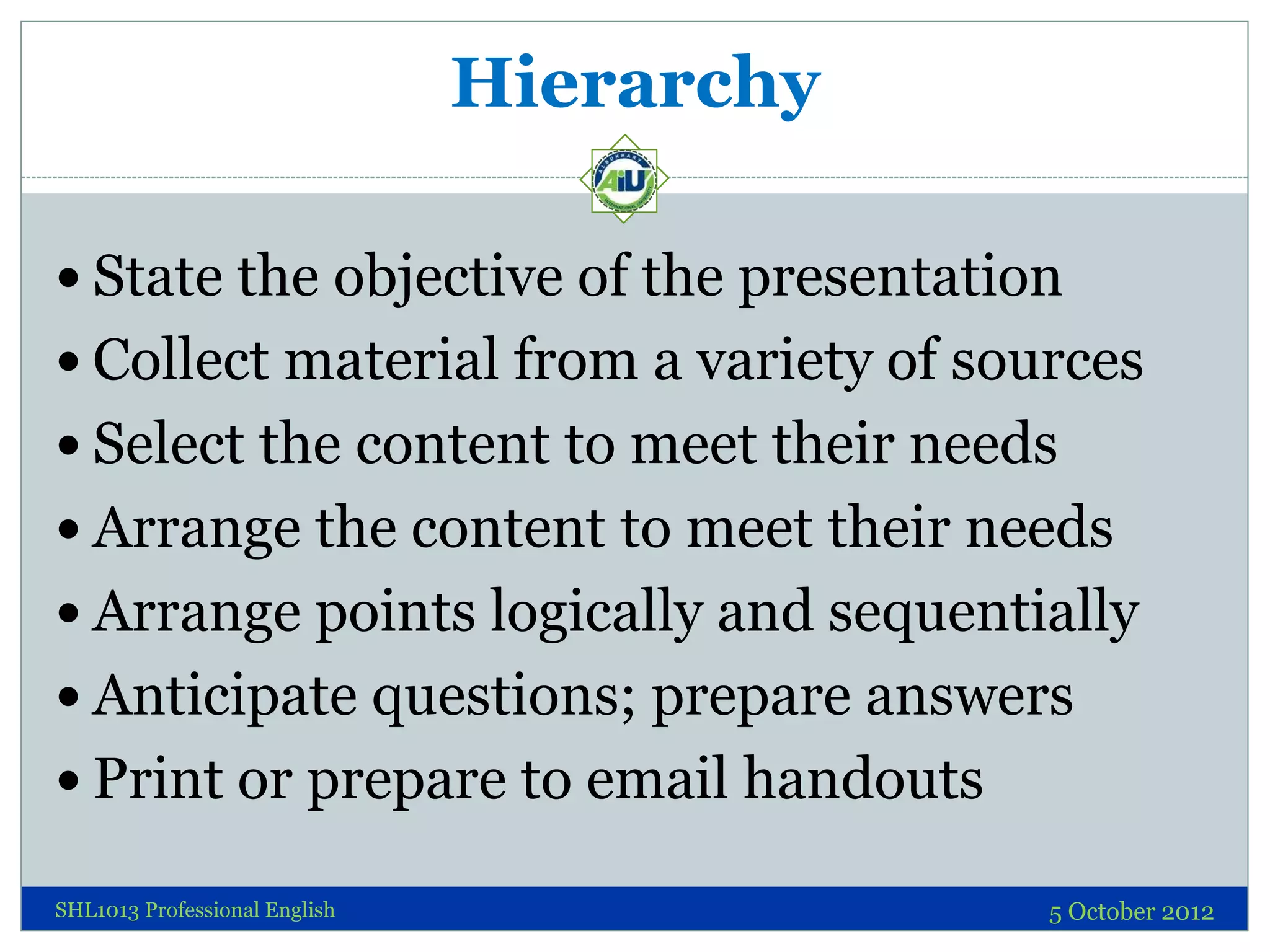
Hierarchy

 State the objective of the presentation
 Collect material from a variety of sources
 Select the content to meet their needs
 Arrange the content to meet their needs
 Arrange points logically and sequentially
 Anticipate questions; prepare answers
 Print or prepare to email handouts

SHL1013 Professional English               5 October 2012
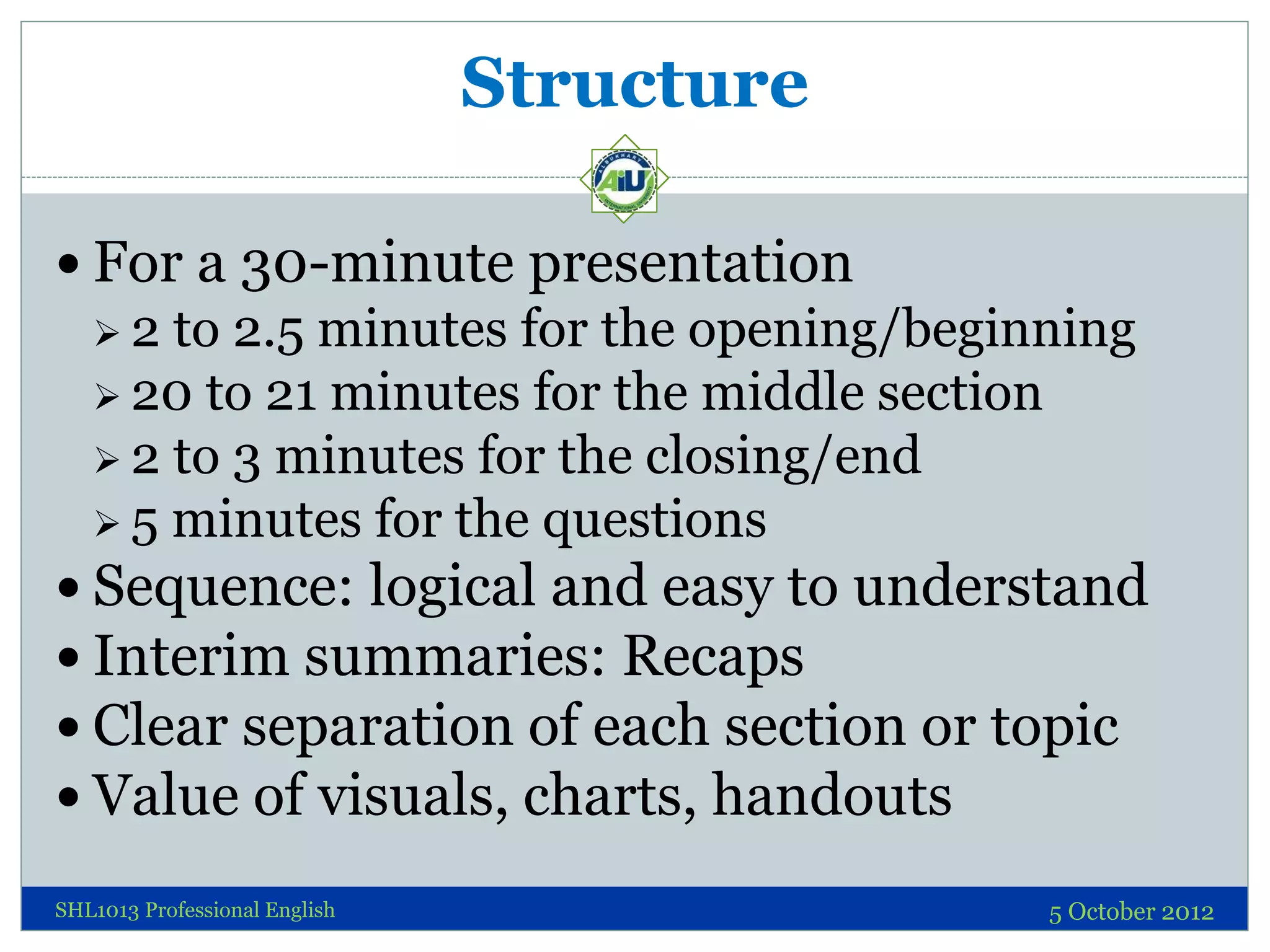
Structure

 For a 30-minute presentation
   2  to 2.5 minutes for the opening/beginning
    20 to 21 minutes for the middle section
    2 to 3 minutes for the closing/end
    5 minutes for the questions
 Sequence: logical and easy to understand
 Interim summaries: Recaps
 Clear separation of each section or topic
 Value of visuals, charts, handouts

SHL1013 Professional English               5 October 2012
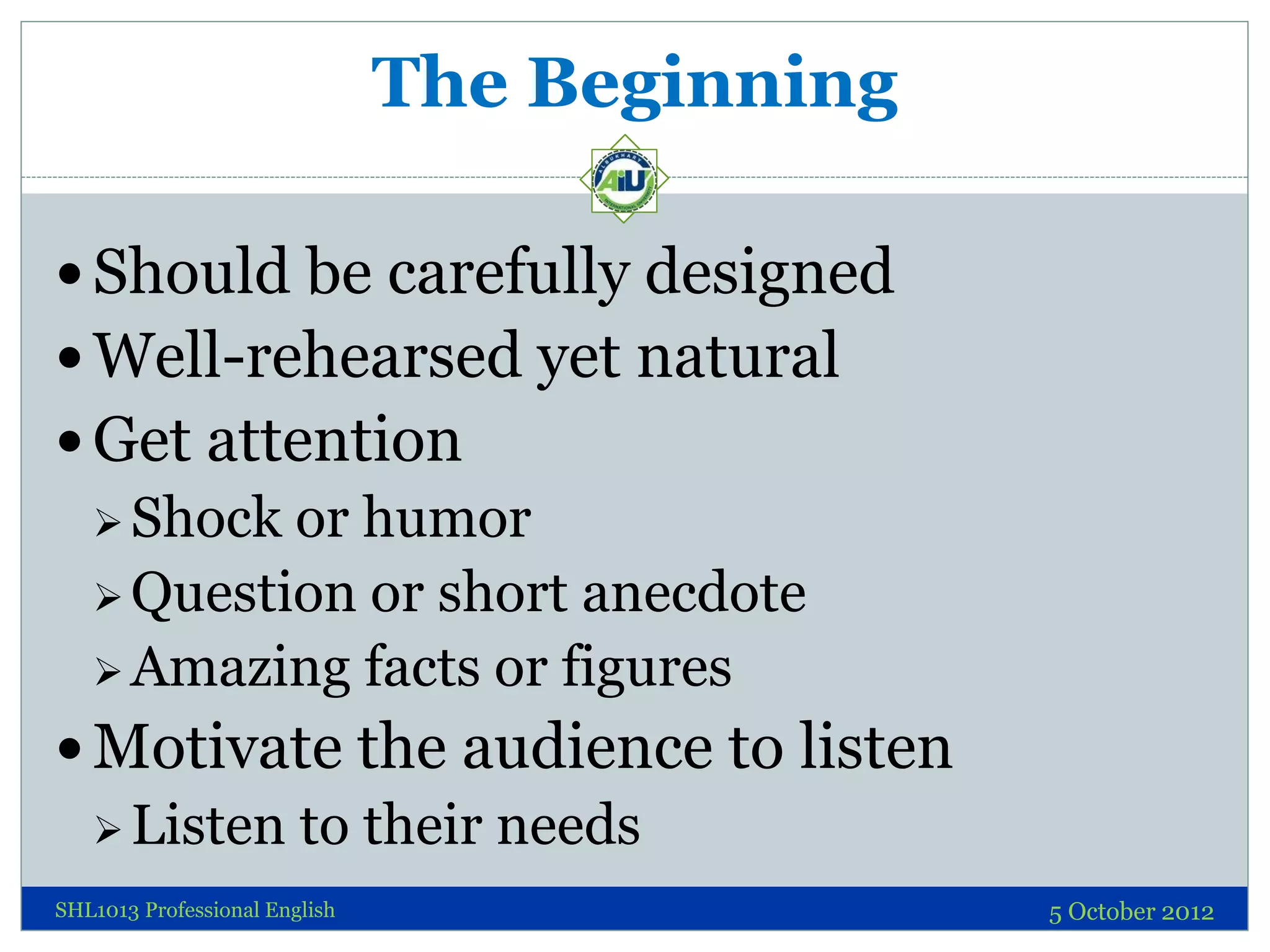
The Beginning

 Should be carefully designed
 Well-rehearsed yet natural
 Get attention
   Shock or humor
   Question or short anecdote
   Amazing facts or figures

 Motivate the audience to listen
   Listen to their needs
SHL1013 Professional English                   5 October 2012
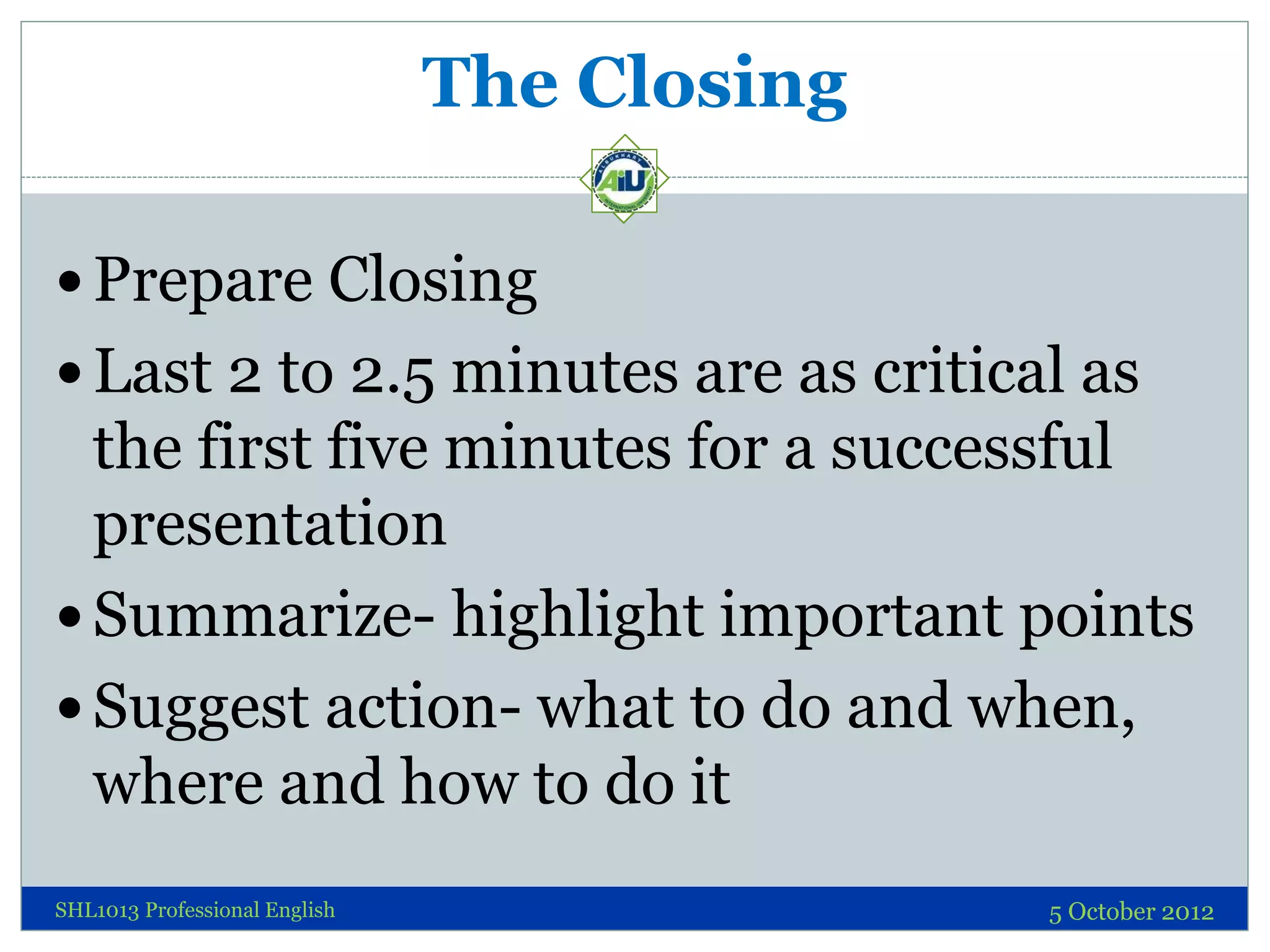
The Closing

 Prepare Closing
 Last 2 to 2.5 minutes are as critical as
  the first five minutes for a successful
  presentation
 Summarize- highlight important points
 Suggest action- what to do and when,
  where and how to do it
SHL1013 Professional English                 5 October 2012
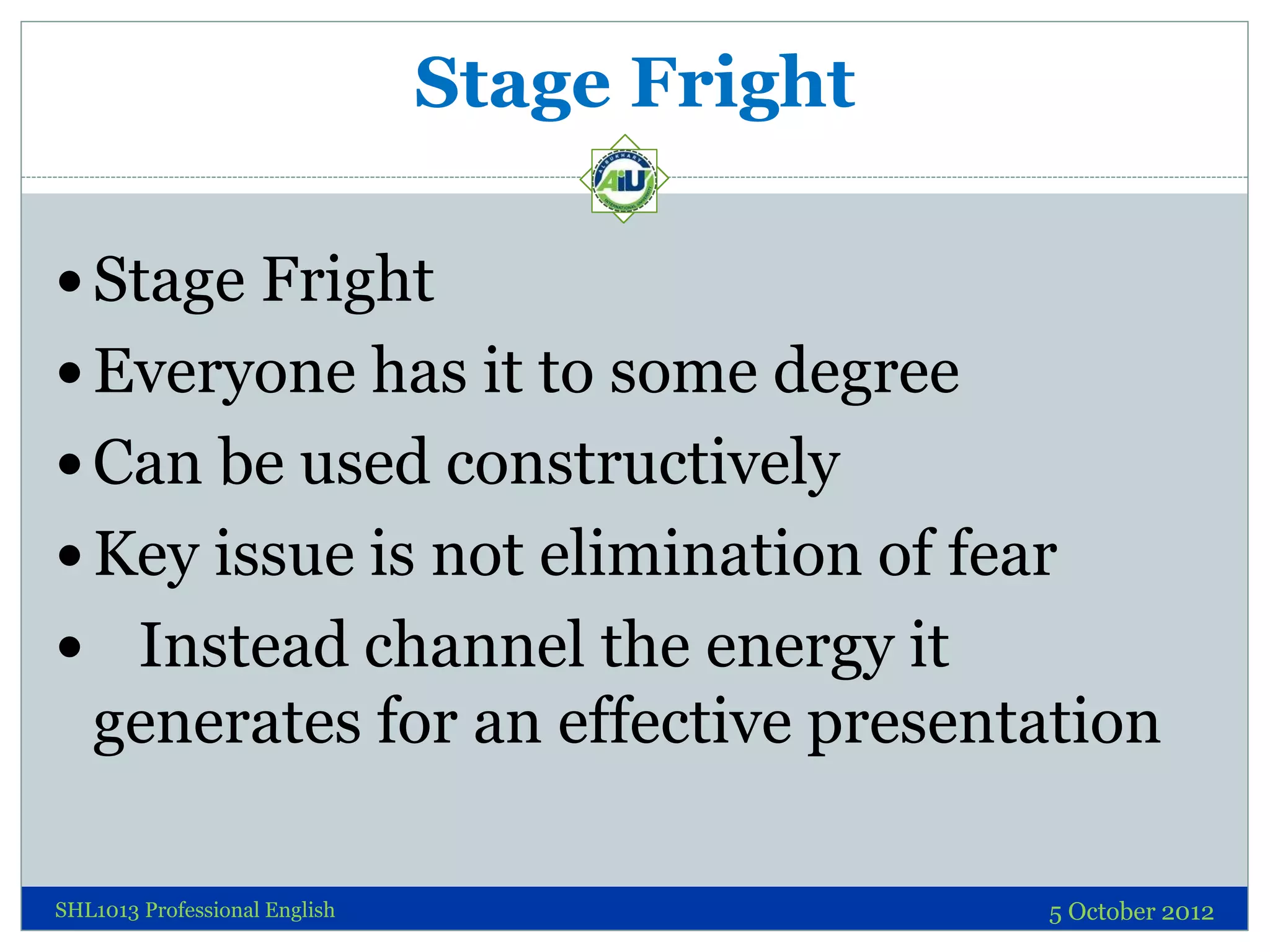
Stage Fright

 Stage Fright
 Everyone has it to some degree
 Can be used constructively
 Key issue is not elimination of fear
 Instead channel the energy it
   generates for an effective presentation

SHL1013 Professional English                  5 October 2012
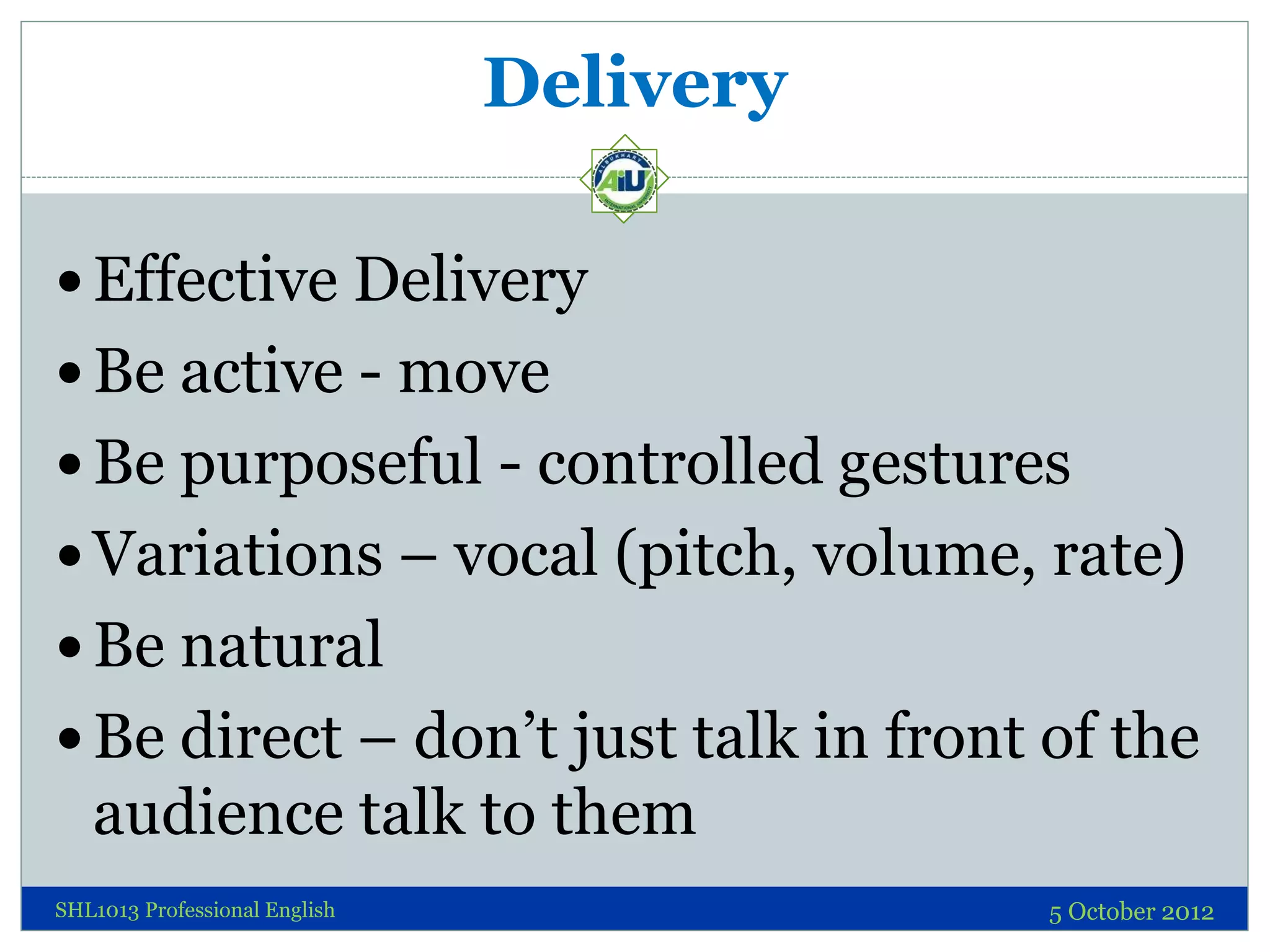
Delivery

 Effective Delivery
 Be active - move
 Be purposeful - controlled gestures
 Variations – vocal (pitch, volume, rate)
 Be natural
 Be direct – don’t just talk in front of the
   audience talk to them
SHL1013 Professional English              5 October 2012
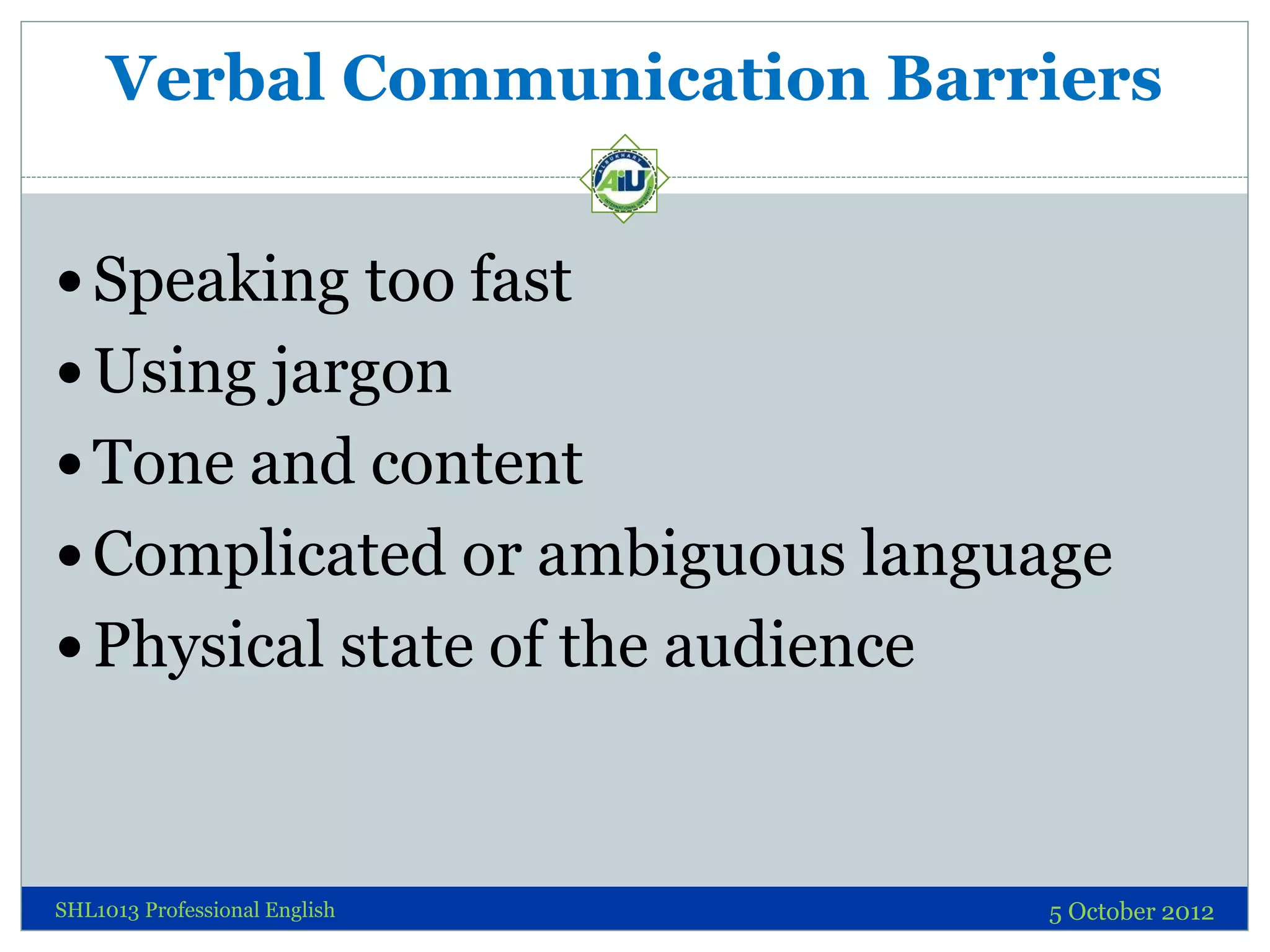
Verbal Communication Barriers


 Speaking too fast
 Using jargon
 Tone and content
 Complicated or ambiguous language
 Physical state of the audience


SHL1013 Professional English       5 October 2012
Audience Sensitivity

 “see” the audience
 Take non-verbal feedback:
    congruentbody language
    incongruent body language

 Modify to meet audience needs
 Don’t just make it as a presentation


SHL1013 Professional English               5 October 2012
Handling Questions

 Do not get confused
 You are not supposed to know
  everything
 Anticipate and keep answers ready
 Sometimes questions can give you a
  lead to highlight your point of view

SHL1013 Professional English              5 October 2012
Visual Aids

 Always face the audience while talking
 Ensure clear visibility for large
  audiences
 The colors, fonts, images should never
  take attention away from the message
 Everything in the visual aid should
  strengthen, clarify, or add to the
  message
SHL1013 Professional English                 5 October 2012
To Conclude

 Always prepare
 Channelize your fear
 Interact with your audience


SHL1013 Professional English                 5 October 2012

Presentation Speaking Skills

  • 1.
    Presentation Skills HOW TO PREPARE HOW TO PRESENT SHL1013 Professional English 5 October 2012
  • 2.
    Presentations  Can beideas, concepts, or issues  Can be recorded for transmission or presented in person  Can be transmitted to a person or group  Includes the sender and the medium  Good presentation skills can be developed. SHL1013 Professional English 5 October 2012
  • 3.
    Presentation Skills  Planningis the first step  Preparation or practice is the second step  Aspects in the development of a good presentation  Self Centered (Self)  Audience Centered (Audience)  Subject Centered (Material)  “I want (who) to (what) (where, when and how) because (why)” SHL1013 Professional English 5 October 2012
  • 4.
    Presentation Guide Questions What do you want to present (content)?  Why do you want to present (purpose)?  Where will you be presenting (place)?  How do you want to present (words to be used or not, number of words or slides to be used)  What does your audience need? SHL1013 Professional English 5 October 2012
  • 5.
    Analyze Target Receivers What are they interested in?  What do they want?  What do they already know?  What do they need to know?  What are their expectations from this presentation?  How will they benefit from this presentation? SHL1013 Professional English 5 October 2012
  • 6.
    Hierarchy  State theobjective of the presentation  Collect material from a variety of sources  Select the content to meet their needs  Arrange the content to meet their needs  Arrange points logically and sequentially  Anticipate questions; prepare answers  Print or prepare to email handouts SHL1013 Professional English 5 October 2012
  • 7.
    Structure  For a30-minute presentation 2 to 2.5 minutes for the opening/beginning  20 to 21 minutes for the middle section  2 to 3 minutes for the closing/end  5 minutes for the questions  Sequence: logical and easy to understand  Interim summaries: Recaps  Clear separation of each section or topic  Value of visuals, charts, handouts SHL1013 Professional English 5 October 2012
  • 8.
    The Beginning  Shouldbe carefully designed  Well-rehearsed yet natural  Get attention  Shock or humor  Question or short anecdote  Amazing facts or figures  Motivate the audience to listen  Listen to their needs SHL1013 Professional English 5 October 2012
  • 9.
    The Closing  PrepareClosing  Last 2 to 2.5 minutes are as critical as the first five minutes for a successful presentation  Summarize- highlight important points  Suggest action- what to do and when, where and how to do it SHL1013 Professional English 5 October 2012
  • 10.
    Stage Fright  StageFright  Everyone has it to some degree  Can be used constructively  Key issue is not elimination of fear  Instead channel the energy it generates for an effective presentation SHL1013 Professional English 5 October 2012
  • 11.
    Delivery  Effective Delivery Be active - move  Be purposeful - controlled gestures  Variations – vocal (pitch, volume, rate)  Be natural  Be direct – don’t just talk in front of the audience talk to them SHL1013 Professional English 5 October 2012
  • 12.
    Verbal Communication Barriers Speaking too fast  Using jargon  Tone and content  Complicated or ambiguous language  Physical state of the audience SHL1013 Professional English 5 October 2012
  • 13.
    Audience Sensitivity  “see”the audience  Take non-verbal feedback:  congruentbody language  incongruent body language  Modify to meet audience needs  Don’t just make it as a presentation SHL1013 Professional English 5 October 2012
  • 14.
    Handling Questions  Donot get confused  You are not supposed to know everything  Anticipate and keep answers ready  Sometimes questions can give you a lead to highlight your point of view SHL1013 Professional English 5 October 2012
  • 15.
    Visual Aids  Alwaysface the audience while talking  Ensure clear visibility for large audiences  The colors, fonts, images should never take attention away from the message  Everything in the visual aid should strengthen, clarify, or add to the message SHL1013 Professional English 5 October 2012
  • 16.
    To Conclude  Alwaysprepare  Channelize your fear  Interact with your audience SHL1013 Professional English 5 October 2012