TALK ENGLISH !
Presentator:Shershah Ahmadzai
Roll no:15
Presentation
 Ideas, concepts or issues talked about or
spoken to a group or audience
 Public speaking is one of the most feared
things
 Skills required to give a good presentation can
be developed
Presentation Skills
What should I do before starting?
How should I start?
How should I end?
How long should I take?
How to arise interest of my audience?
Would it be done by me?
Confused
 Preparation/ Planning is the first step on
the ladder to success so:-
1. Planning Presentations
2. Preparing Presentations
3. Visuals/equipment
4. the presentation itself.
For a Successful Start
When you plan your presentation you need to answer the
following questions:
1. Who is my audience (how much do they know about my
topic?)
2. How am I going to organise my topic? (it needs to tell a
story)
3. How long should my presentation be? (you will have time
limits and you need to say everything within that limit)
4. What visual support shall I use? (PowerPoint,
transparencies, models, objects...?)
In Addition
 This is the basic structure of a talk:
How should I start?
Question/Answer Session
Body
Conclusion
Introduction
Introduction is probably the most important part. The purpose
of the introduction is “to tell the audience what you are going
to tell them”. You should remember that there is no second
chance for a first bad impression. If you start off badly you will
spoil everything. During the introduction you need to achieve
the following aims:
 Gain Attention
 attract Interest
 create Desire
Introduction
• Good morning, ladies and gentlemen.
• Welcome to my presentation.
• It’s very nice to see you all here today.
• Lets get started.
• Let me say just a few words about my background...
• Then you proceed to the introduction to your
topic.
Some Useful expression for a good start
1. Start with welcoming courtesies/introduce
yourself
2. State the purpose of your talk, using one of the
techniques
3. give a route map (tell them how long your
presentation will take)
4. give the rules (do you allow to be interrupted or
should your audience keep questions until the
end?)
Still confused about how to start, try
Still confuse?
Bullet the important part of information.
Don’t congest your slides with too much and irrelevant
information.
Remember many things should be said less things written.
You are allowed to add colour to your text, but that
shouldn’t make it boring or difficult to read.
Body
Conclude all the information of your presentation.
Be sure that conclusion should cover all the important parts
of your presentation.
Try to make a relation between your start and conclusion of
your presentation.
Keep it precise and simple.
Conclusion
Follow this scheme:-
• summarise facts
• give recommendations
• give proposals
Thank the audience.
Invite questions.
How should I end my presentation?
Wrapping up
• This brings me to the end of my presentation.
• Let me just run over the key points again…
• To sum up briefly…
• To conclude …
• As we’ve seen…
• So, my recommendation is ….
• I would welcome any suggestions.
Thanking the audience and inviting questions
• Thank you for your attention and if you have any questions I’ll be
pleased
to answer them.
• I’ll be happy to answer any questions.
• Are there any questions you’d like to ask?
Some useful expressions to end your
presentation
Remember you have limited time so winding up your
presentation within the required time is must.
You should bear the time in mind during initial
preparation of phase of your presentation.
Be sure to have in your mind the time for question
answer.
How much time should I take
present?
The Beginning
Get attention
- shock, humor, question, story, facts & figures
- well rehearsed yet natural
Motivate audience to listen
- listen to their needs
Prepare Closing
Last 2 to 2.5 minutes are as critical as the first five minutes
for a successful presentation
Summarize- highlight important points
Sequence should be logical and understandable
Arise interest of your audience in
your topic, but how?
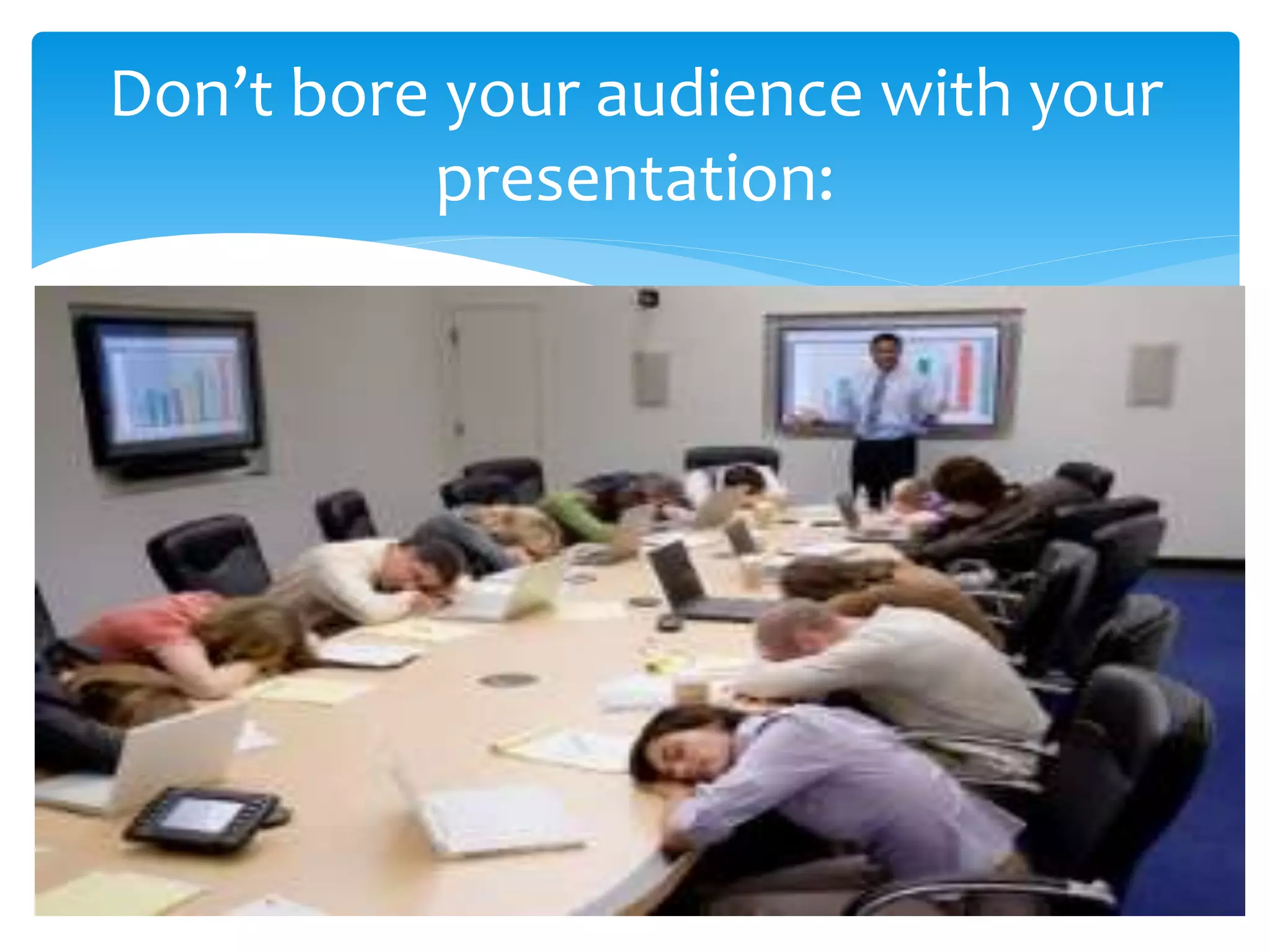
Don’t bore your audience with your
presentation:
Some Presentation Tips
 During your presentation try to give signposts using verbs like
However, as a result of, Moreover ,In addition to and etc.
 Try to show yourself bold and energetic.
 Be sure to have a perfect body language and facial expressions
according to the topic and to what is going to be said or
presented.
 Look is always a positive and vital point.
 Don’t hesitate keep cool. Remember you know many of the
questions so be cool and try to answer them with a smile.
 Keep a good control of pitch, tone and pronunciation of language.
Remember
Would I do it?
 Of course you can. If you follow what you have
studied, you’ll be a successful presenter .
Could I do it?
Consider this in preparing your presentation:
• Simplify the text.
• Focus your material. You can’t say everything.
• Use transitions (signsposting) to move smoothly.
• Use examples, anecdotes, statistics to support your message.
• Use a lot of visuals to reinforce the message.
• Consider timing.
• Apply the KISS (Keep it simple stupid) principle.
• Practise alone and with the whole group.
Conclusion
Any Questions!
Thank you!
Thank you!
Thank you!
Thank you!
Thank you!
Thank you!
Thank you!
Thank you!
Thank you!
Thank you!
Thank you!

Talk english !

  • 1.
  • 2.
  • 3.
     Ideas, conceptsor issues talked about or spoken to a group or audience  Public speaking is one of the most feared things  Skills required to give a good presentation can be developed Presentation Skills
  • 4.
    What should Ido before starting? How should I start? How should I end? How long should I take? How to arise interest of my audience? Would it be done by me? Confused
  • 5.
     Preparation/ Planningis the first step on the ladder to success so:- 1. Planning Presentations 2. Preparing Presentations 3. Visuals/equipment 4. the presentation itself. For a Successful Start
  • 6.
    When you planyour presentation you need to answer the following questions: 1. Who is my audience (how much do they know about my topic?) 2. How am I going to organise my topic? (it needs to tell a story) 3. How long should my presentation be? (you will have time limits and you need to say everything within that limit) 4. What visual support shall I use? (PowerPoint, transparencies, models, objects...?) In Addition
  • 7.
     This isthe basic structure of a talk: How should I start? Question/Answer Session Body Conclusion Introduction
  • 8.
    Introduction is probablythe most important part. The purpose of the introduction is “to tell the audience what you are going to tell them”. You should remember that there is no second chance for a first bad impression. If you start off badly you will spoil everything. During the introduction you need to achieve the following aims:  Gain Attention  attract Interest  create Desire Introduction
  • 9.
    • Good morning,ladies and gentlemen. • Welcome to my presentation. • It’s very nice to see you all here today. • Lets get started. • Let me say just a few words about my background... • Then you proceed to the introduction to your topic. Some Useful expression for a good start
  • 10.
    1. Start withwelcoming courtesies/introduce yourself 2. State the purpose of your talk, using one of the techniques 3. give a route map (tell them how long your presentation will take) 4. give the rules (do you allow to be interrupted or should your audience keep questions until the end?) Still confused about how to start, try
  • 11.
  • 12.
    Bullet the importantpart of information. Don’t congest your slides with too much and irrelevant information. Remember many things should be said less things written. You are allowed to add colour to your text, but that shouldn’t make it boring or difficult to read. Body
  • 13.
    Conclude all theinformation of your presentation. Be sure that conclusion should cover all the important parts of your presentation. Try to make a relation between your start and conclusion of your presentation. Keep it precise and simple. Conclusion
  • 14.
    Follow this scheme:- •summarise facts • give recommendations • give proposals Thank the audience. Invite questions. How should I end my presentation?
  • 15.
    Wrapping up • Thisbrings me to the end of my presentation. • Let me just run over the key points again… • To sum up briefly… • To conclude … • As we’ve seen… • So, my recommendation is …. • I would welcome any suggestions. Thanking the audience and inviting questions • Thank you for your attention and if you have any questions I’ll be pleased to answer them. • I’ll be happy to answer any questions. • Are there any questions you’d like to ask? Some useful expressions to end your presentation
  • 16.
    Remember you havelimited time so winding up your presentation within the required time is must. You should bear the time in mind during initial preparation of phase of your presentation. Be sure to have in your mind the time for question answer. How much time should I take present?
  • 17.
    The Beginning Get attention -shock, humor, question, story, facts & figures - well rehearsed yet natural Motivate audience to listen - listen to their needs Prepare Closing Last 2 to 2.5 minutes are as critical as the first five minutes for a successful presentation Summarize- highlight important points Sequence should be logical and understandable Arise interest of your audience in your topic, but how?
  • 18.
    Don’t bore youraudience with your presentation:
  • 19.
  • 20.
     During yourpresentation try to give signposts using verbs like However, as a result of, Moreover ,In addition to and etc.  Try to show yourself bold and energetic.  Be sure to have a perfect body language and facial expressions according to the topic and to what is going to be said or presented.  Look is always a positive and vital point.  Don’t hesitate keep cool. Remember you know many of the questions so be cool and try to answer them with a smile.  Keep a good control of pitch, tone and pronunciation of language. Remember
  • 21.
  • 22.
     Of courseyou can. If you follow what you have studied, you’ll be a successful presenter . Could I do it?
  • 23.
    Consider this inpreparing your presentation: • Simplify the text. • Focus your material. You can’t say everything. • Use transitions (signsposting) to move smoothly. • Use examples, anecdotes, statistics to support your message. • Use a lot of visuals to reinforce the message. • Consider timing. • Apply the KISS (Keep it simple stupid) principle. • Practise alone and with the whole group. Conclusion
  • 24.
  • 25.
    Thank you! Thank you! Thankyou! Thank you! Thank you! Thank you! Thank you! Thank you! Thank you! Thank you! Thank you!