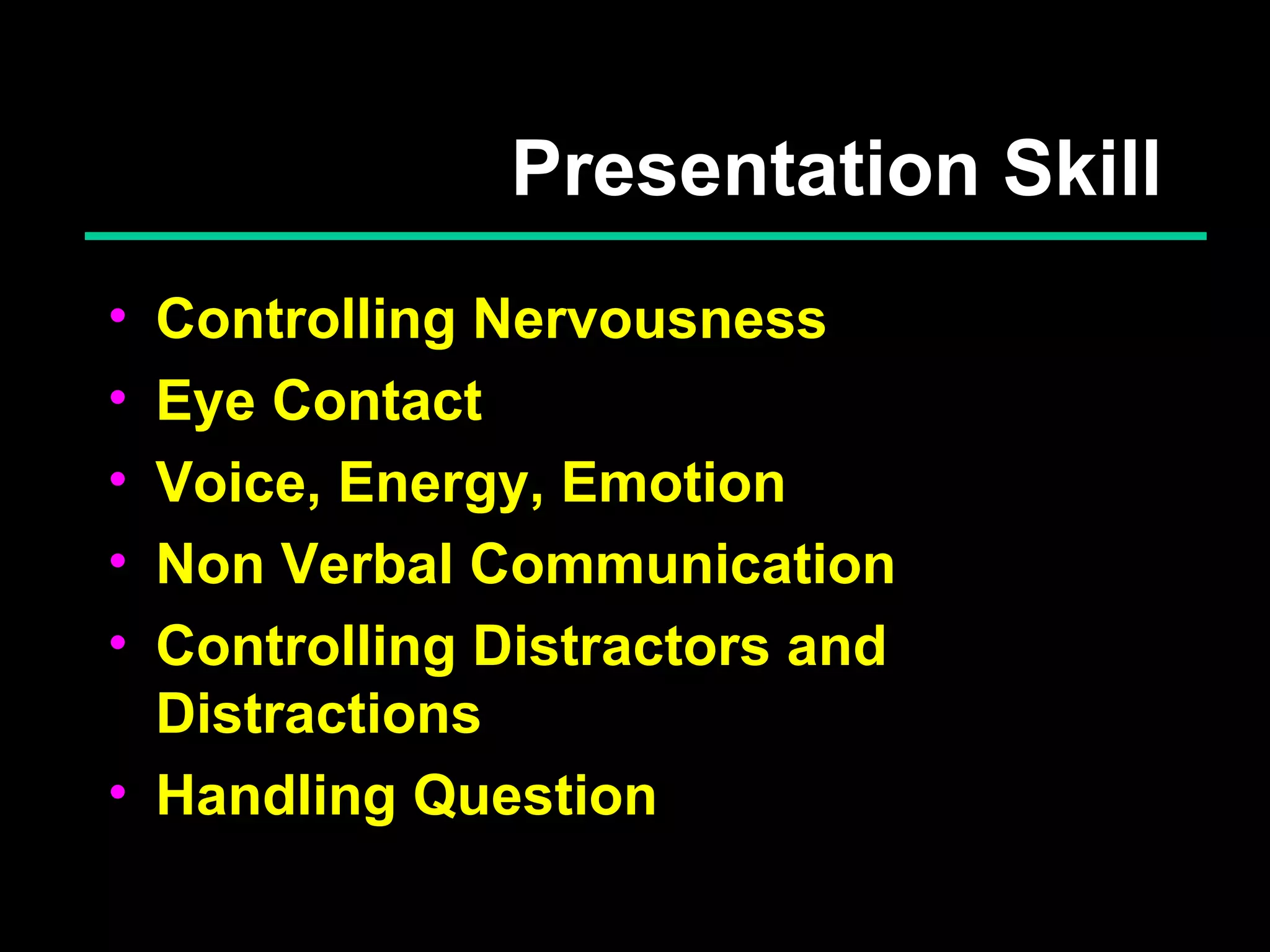
Presentation Skill Controlling Nervousness Eye Contact Voice, Energy, Emotion Non Verbal Communication Controlling Distractors and Distractions Handling Question
An Effective Presenter Control Audience Material Yourself
How to Control Nervousness Quality Preparation Mentally Physically Miscellaneous
Nervousness happen when Your On the spot (tampil mendadak) The Focus Of Attention (pusat perhatian) You want to do well (ingin terbaik)
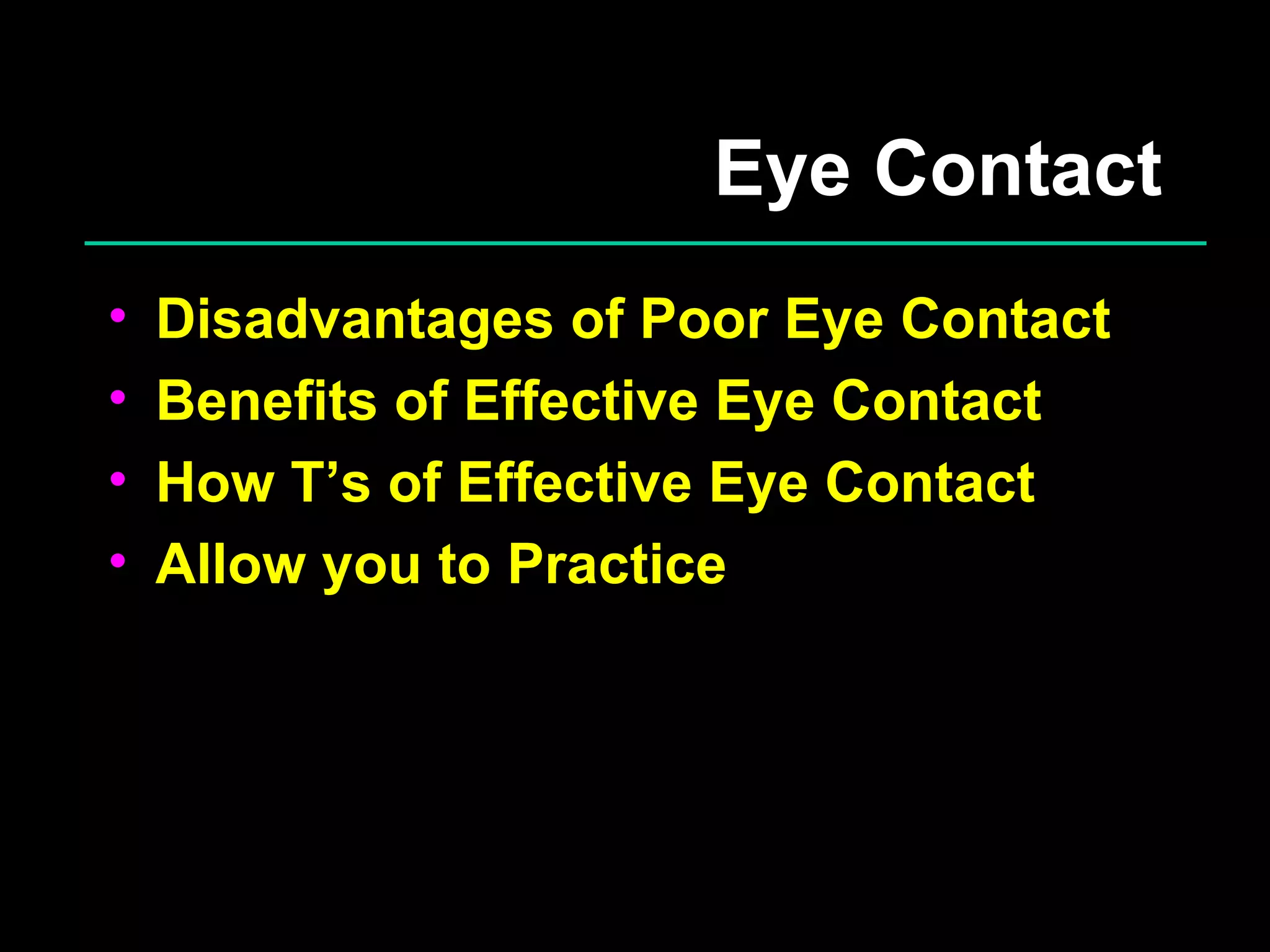
Eye Contact Disadvantages of Poor Eye Contact Benefits of Effective Eye Contact How T’s of Effective Eye Contact Allow you to Practice
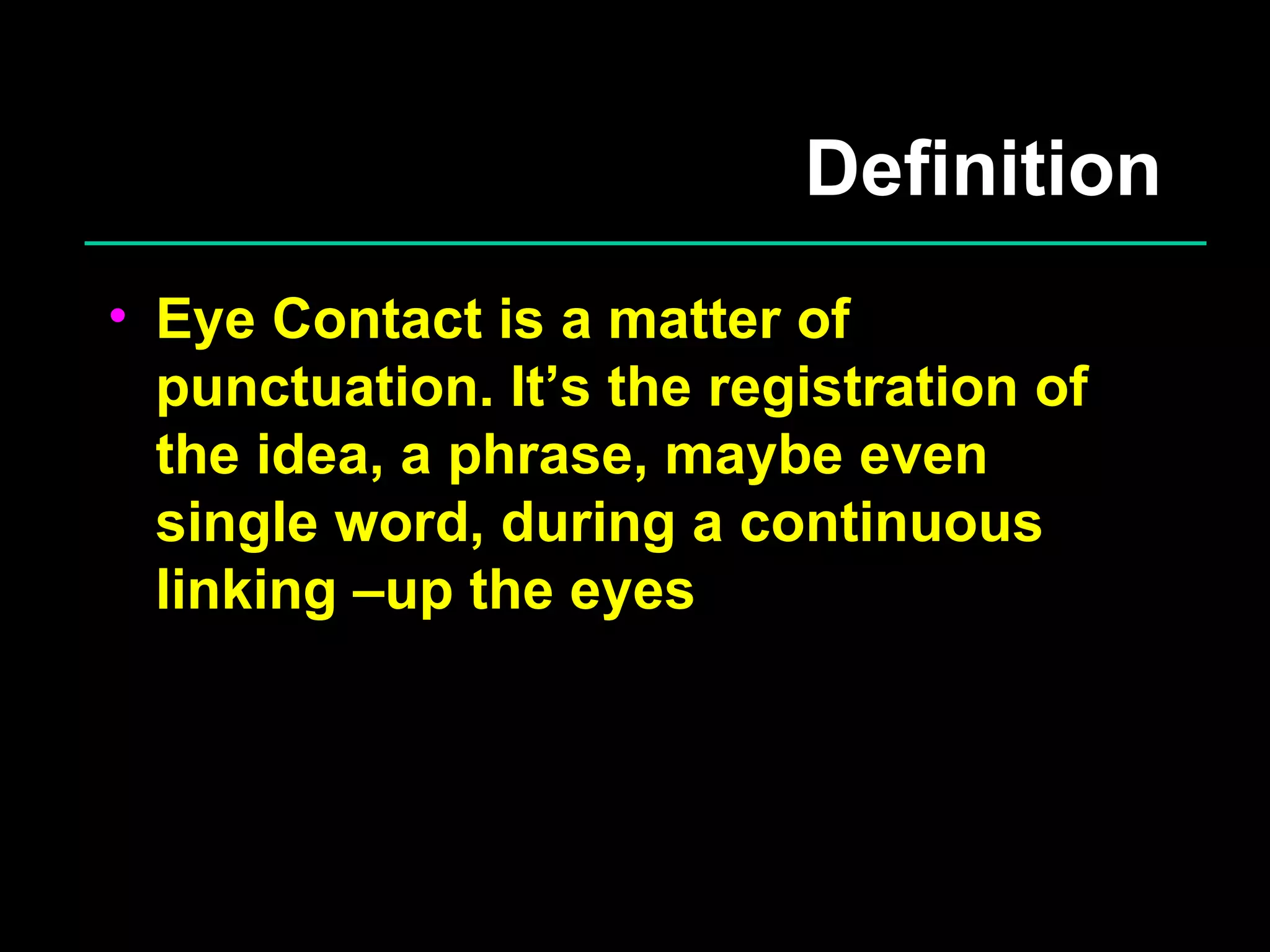
Definition Eye Contact is a matter of punctuation. It’s the registration of the idea, a phrase, maybe even single word, during a continuous linking –up the eyes
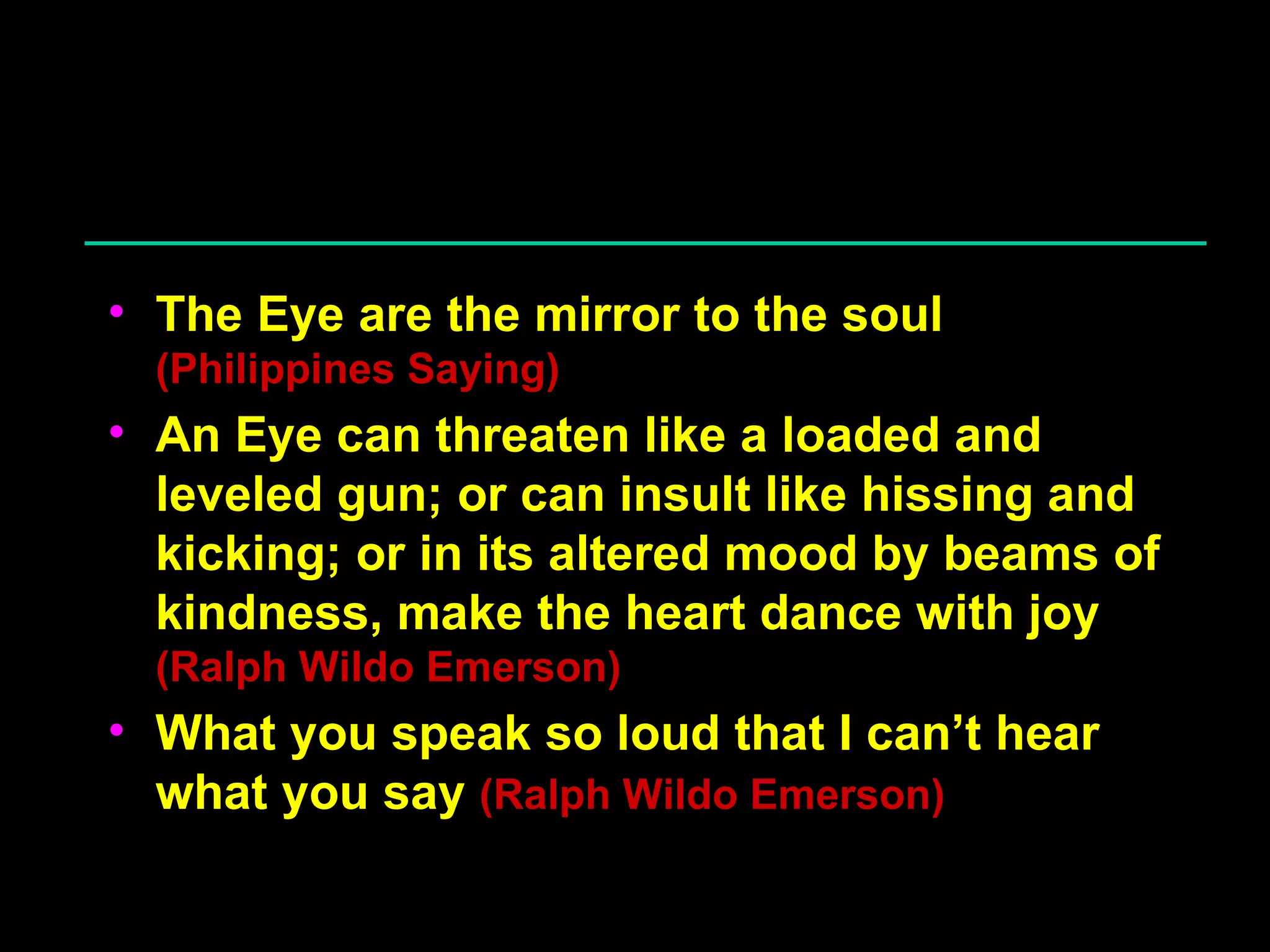
The Eye are the mirror to the soul  (Philippines Saying) An Eye can threaten like a loaded and leveled gun; or can insult like hissing and kicking; or in its altered mood by beams of kindness, make the heart dance with joy  (Ralph Wildo Emerson) What you speak so loud that I can’t hear what you say  (Ralph Wildo Emerson)
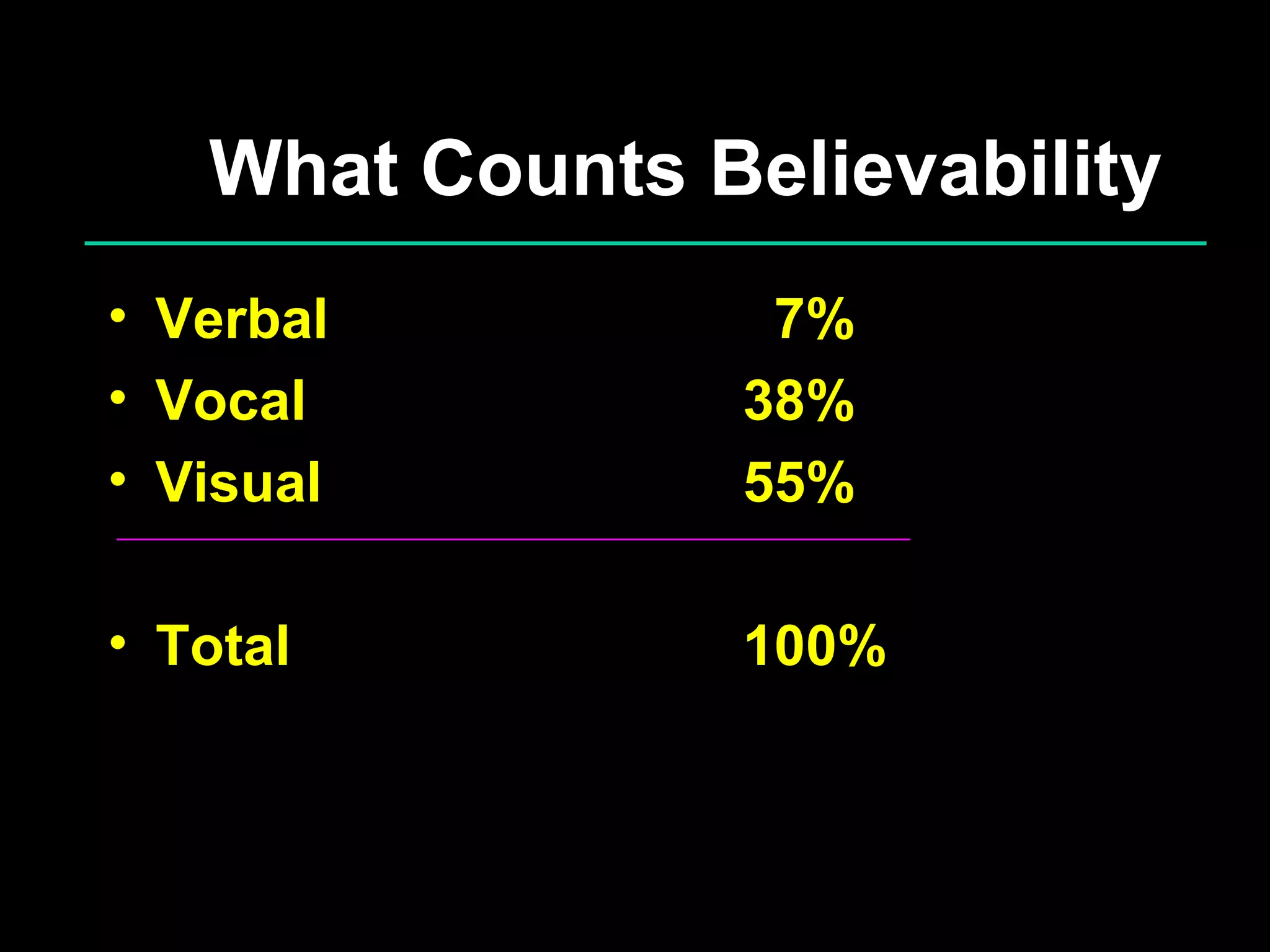
What Counts Believability Verbal   7% Vocal 38% Visual 55% Total  100%
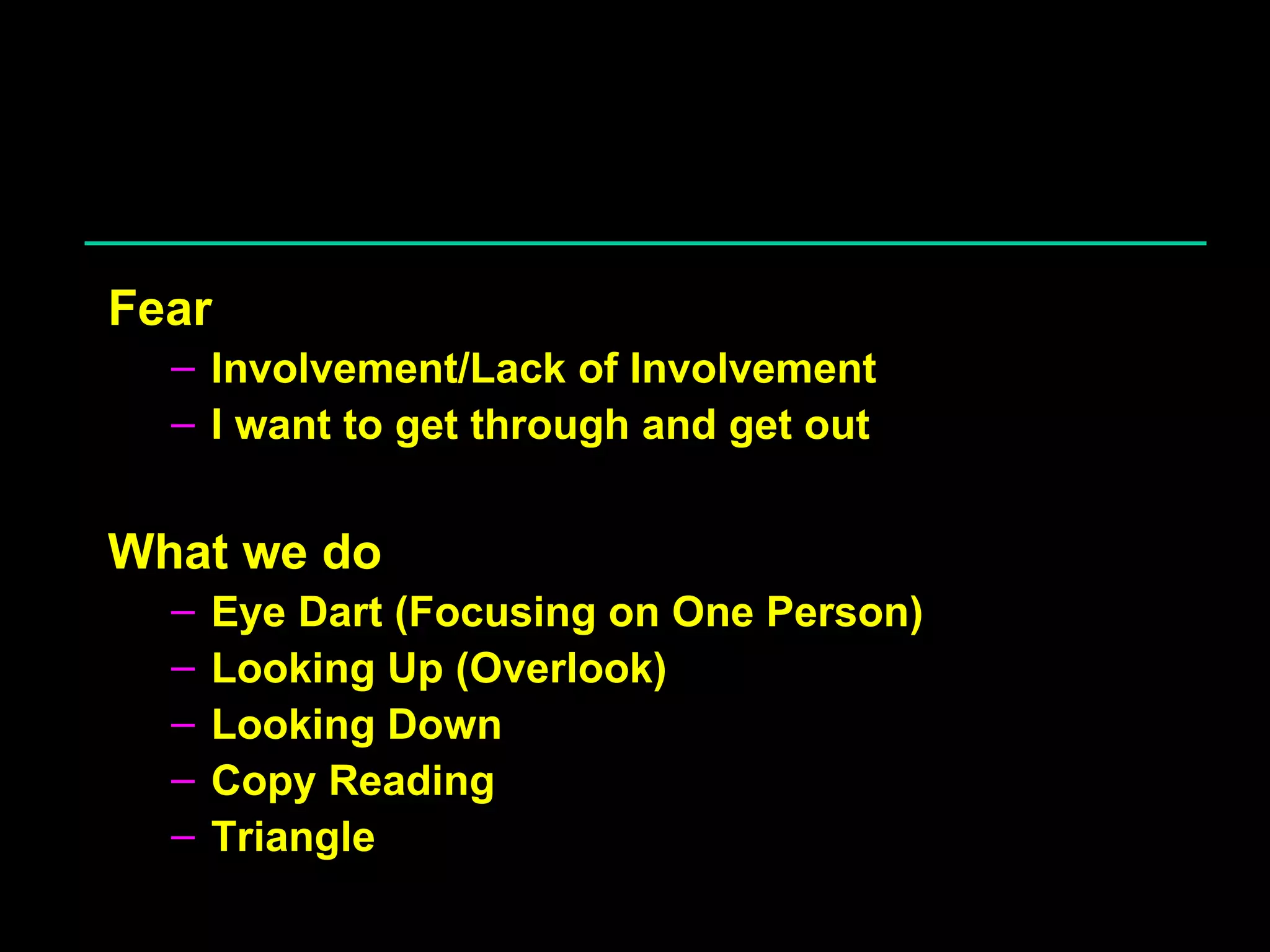
Fear Involvement/Lack of Involvement I want to get through and get out What we do Eye Dart (Focusing on One Person) Looking Up (Overlook) Looking Down Copy Reading Triangle
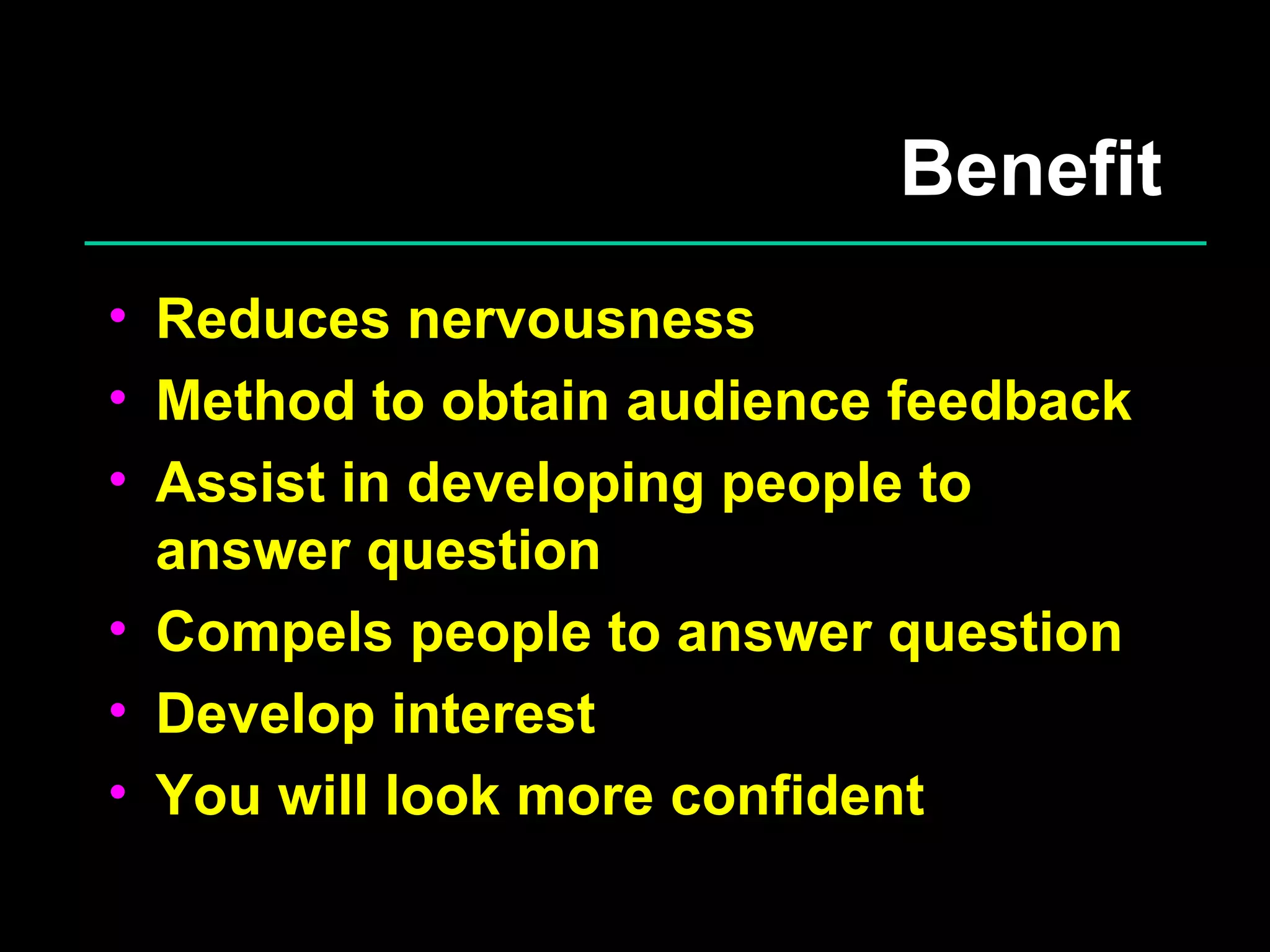
Benefit Reduces nervousness Method to obtain audience feedback Assist in developing people to answer question Compels people to answer question Develop interest You will look more confident
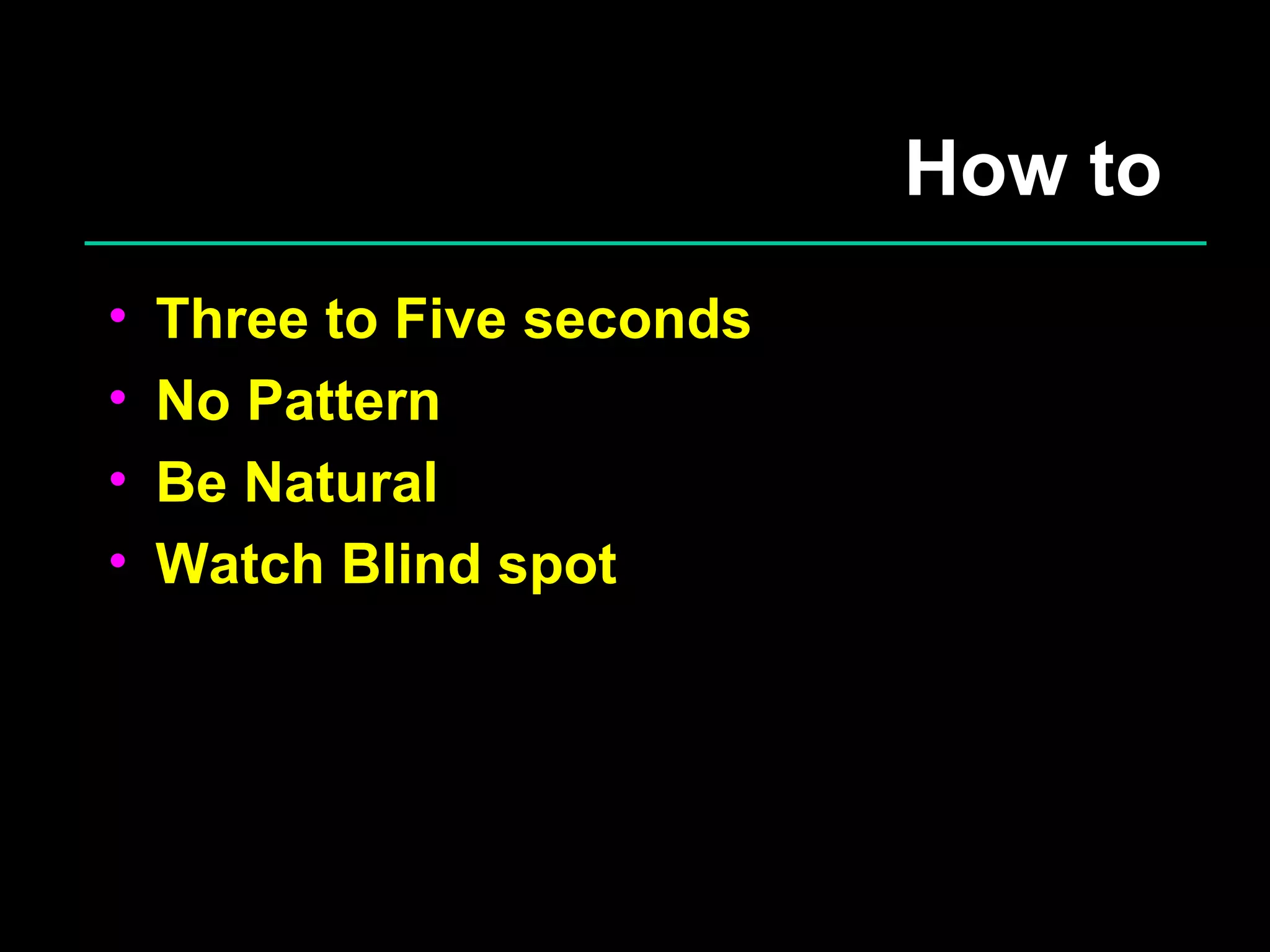
How to Three to Five seconds No Pattern Be Natural Watch Blind spot
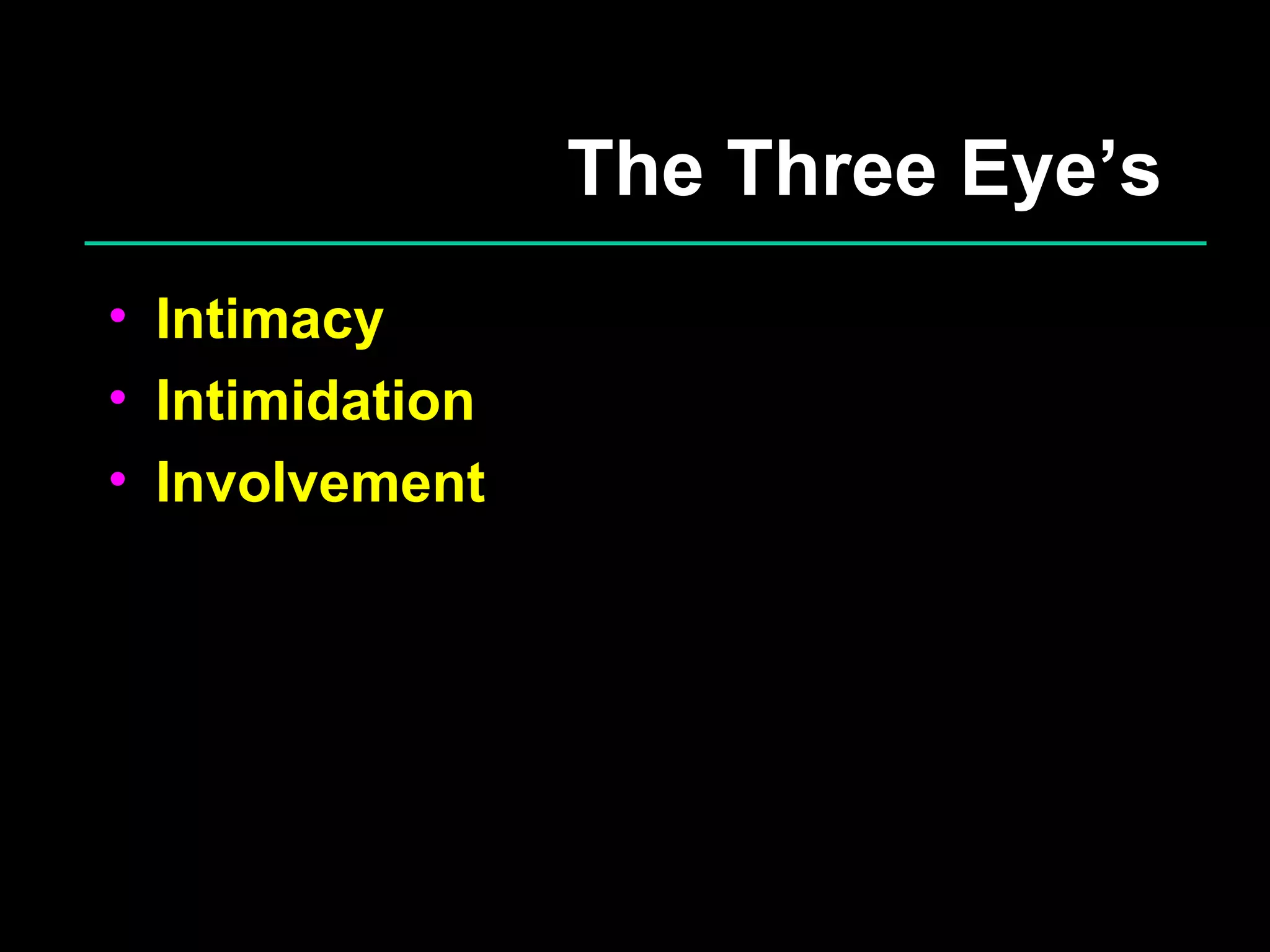
The Three Eye’s Intimacy Intimidation Involvement
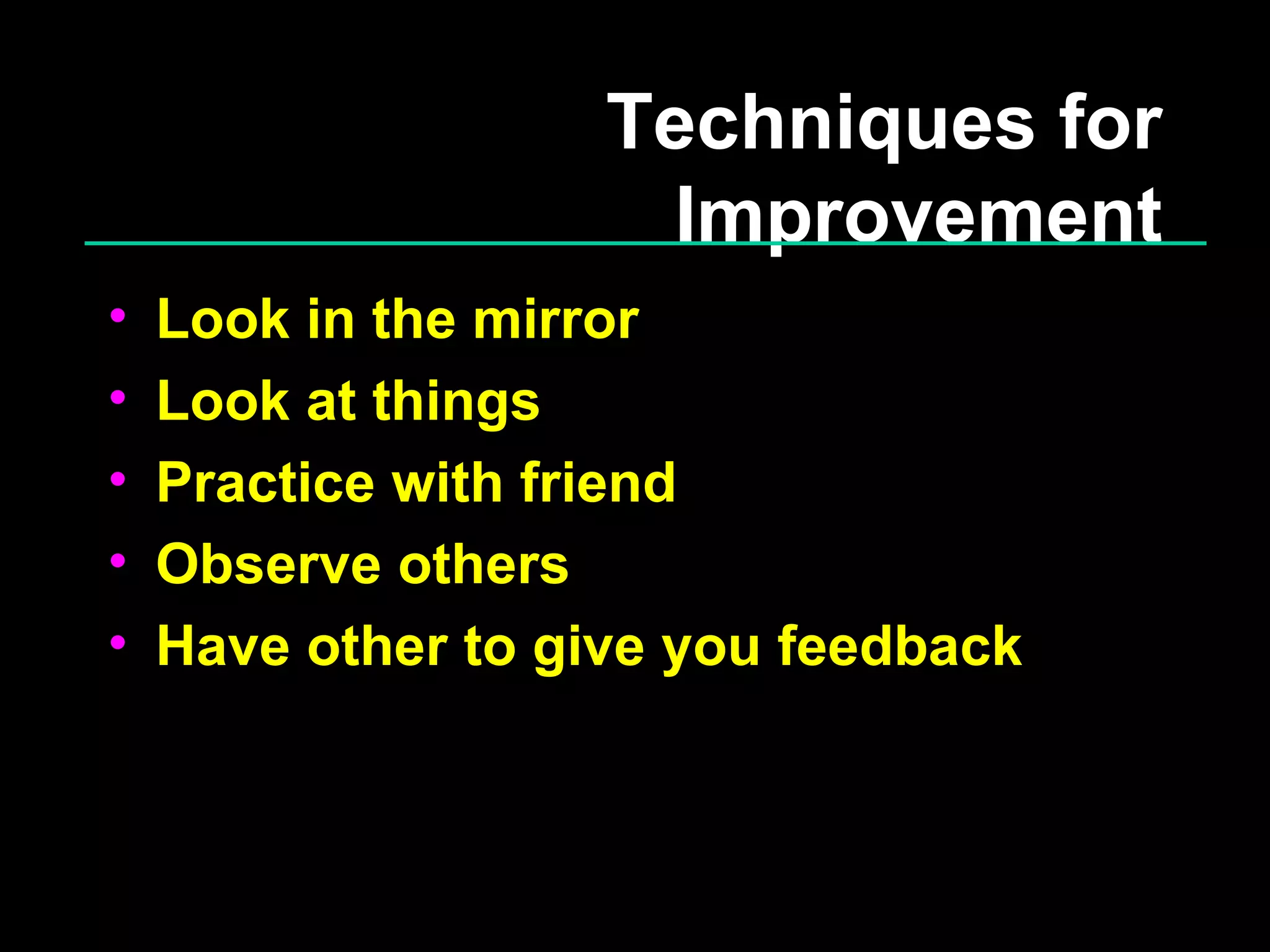
Techniques for Improvement Look in the mirror Look at things Practice with friend Observe others Have other to give you feedback
VOICE  ENERGY EMOTION
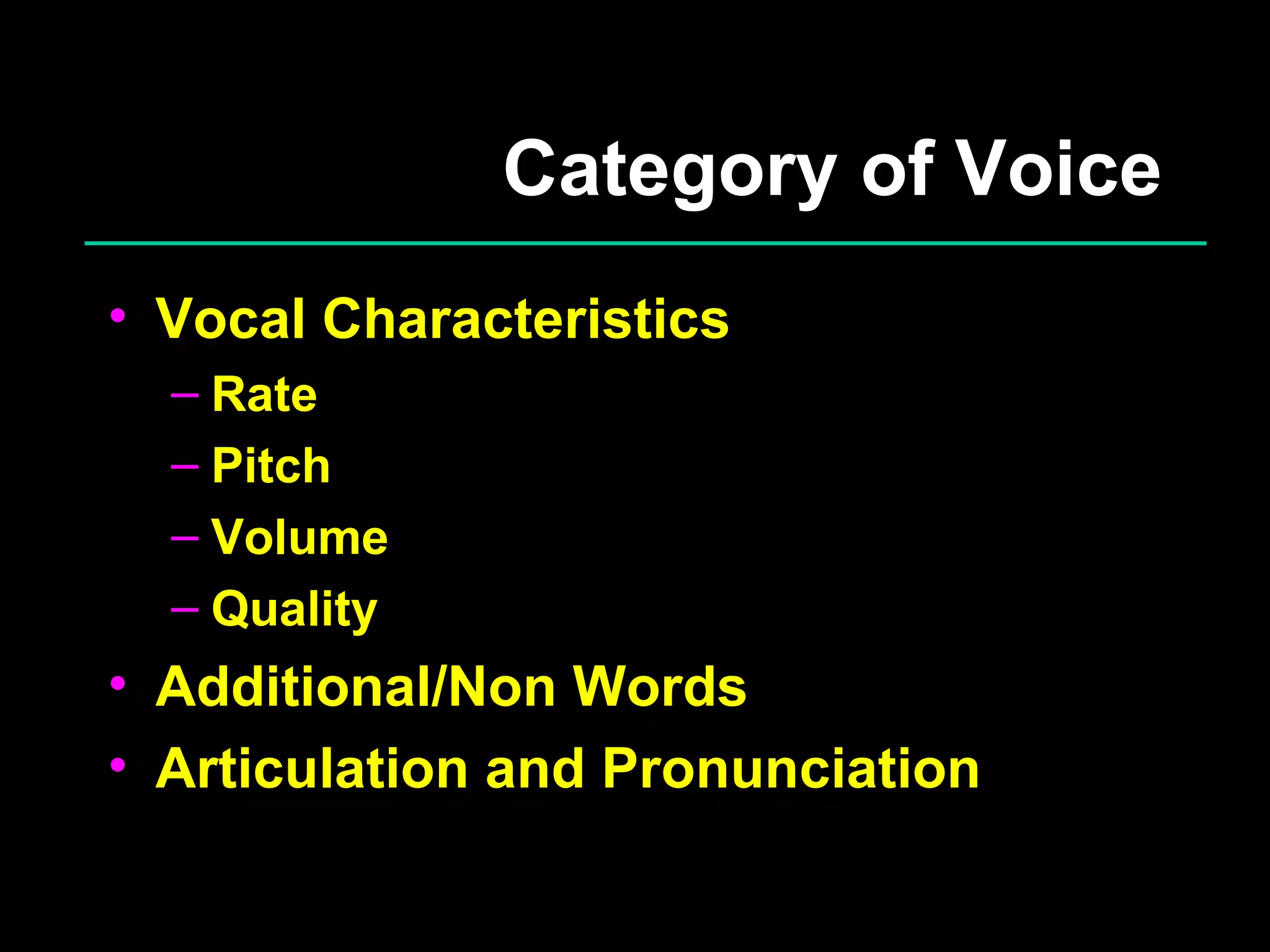
Category of Voice Vocal Characteristics Rate Pitch Volume Quality Additional/Non Words Articulation and Pronunciation
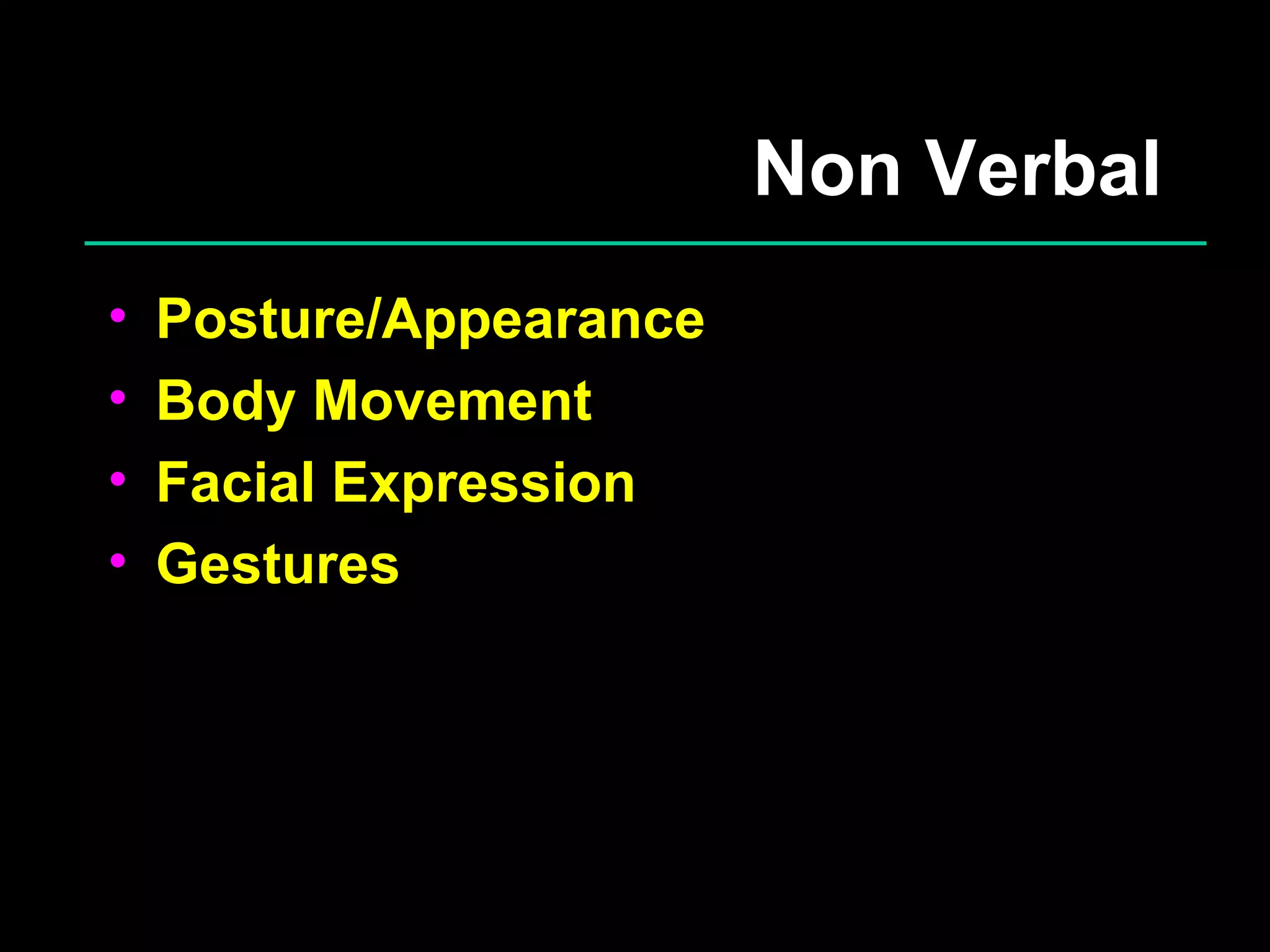
Non Verbal Posture/Appearance Body Movement Facial Expression Gestures
Posture Shoulder Feet Don’t lean on or get the trapped by tradition or podium Stand tall Stand tall. The different between towering and cowering is totally a matter of inner posture. It’s got nothing to do with height, its cost nothing and its more fun  (Malcolm Forbes)
Benefit  You feel taller and look ore powerful You look more confidence Your movement make eye communication easier Your habit of being forward in the ready position helps you be more psychologically forward Your movement gives variety to the eye of the audience
Dress Appearance Be Appropriate Be Conscious Be Smart You never get the second chance to make a good first impression
Benefit Your feel confident in how in look You make a positive impression that adds to your effectiveness You don’t have to overcome a negative first impression
Facial Expression Smile A powerful nonverbal signal Be honest, can’t fake it Can be extremely negative Facial expressions should match the message He who would have friends, let him show himself to be friendly
Gesture Use the hands Can help to put action to your words To paint picture Channel your nervous energy to your hands, arms and body
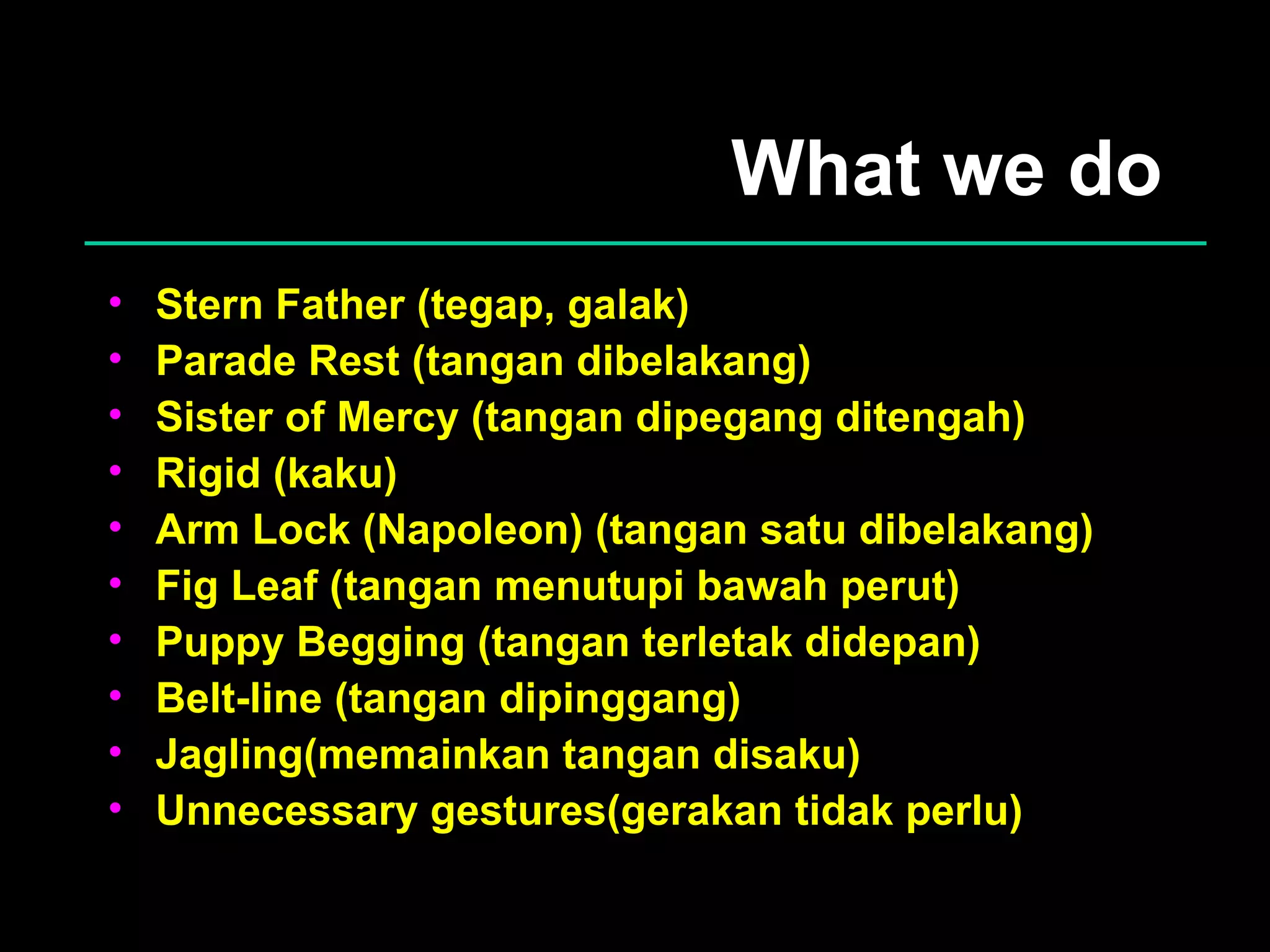
What we do Stern Father (tegap, galak) Parade Rest (tangan dibelakang) Sister of Mercy (tangan dipegang ditengah) Rigid (kaku) Arm Lock (Napoleon) (tangan satu dibelakang) Fig Leaf (tangan menutupi bawah perut) Puppy Begging (tangan terletak didepan) Belt-line (tangan dipinggang) Jagling(memainkan tangan disaku) Unnecessary gestures(gerakan tidak perlu)
Disadvantage May appear to be small thing People pickup on it People pay attention to it People catch the nervous energy Find your nervous gesture and stop making it
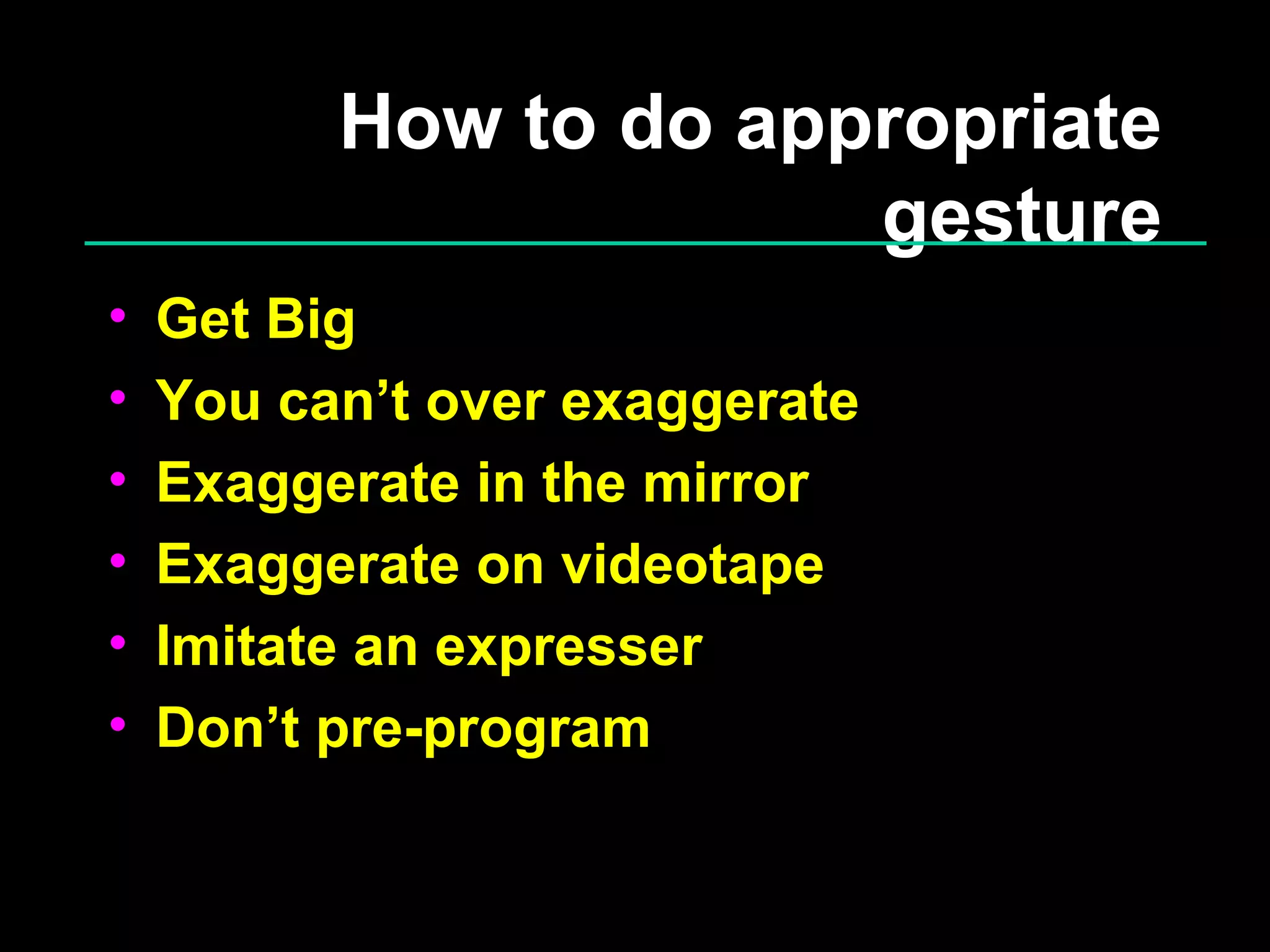
How to do appropriate gesture Get Big You can’t over exaggerate Exaggerate in the mirror Exaggerate on videotape Imitate an expresser Don’t pre-program
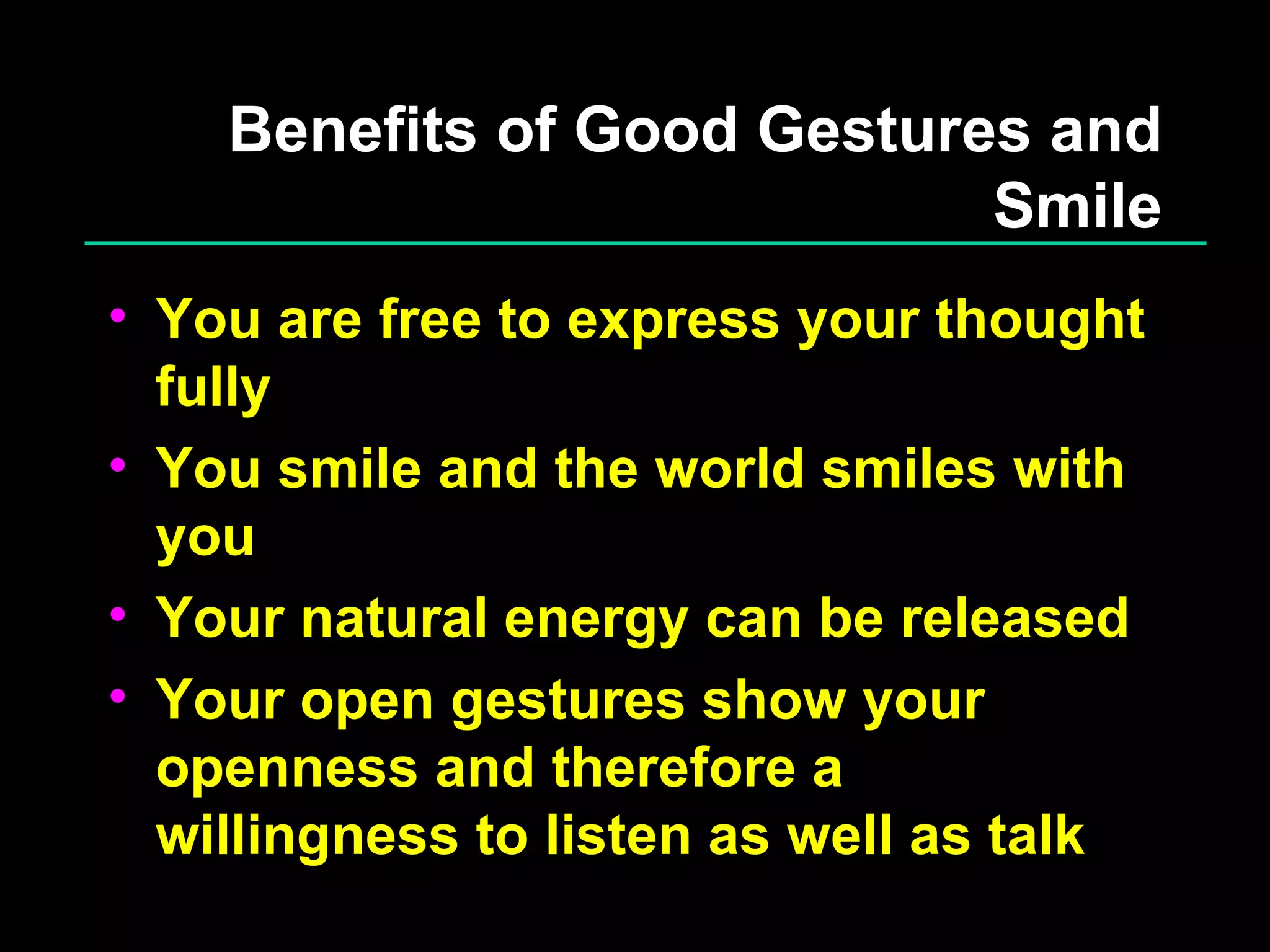
Benefits of Good Gestures and Smile You are free to express your thought fully You smile and the world smiles with you Your natural energy can be released Your open gestures show your openness and therefore a willingness to listen as well as talk
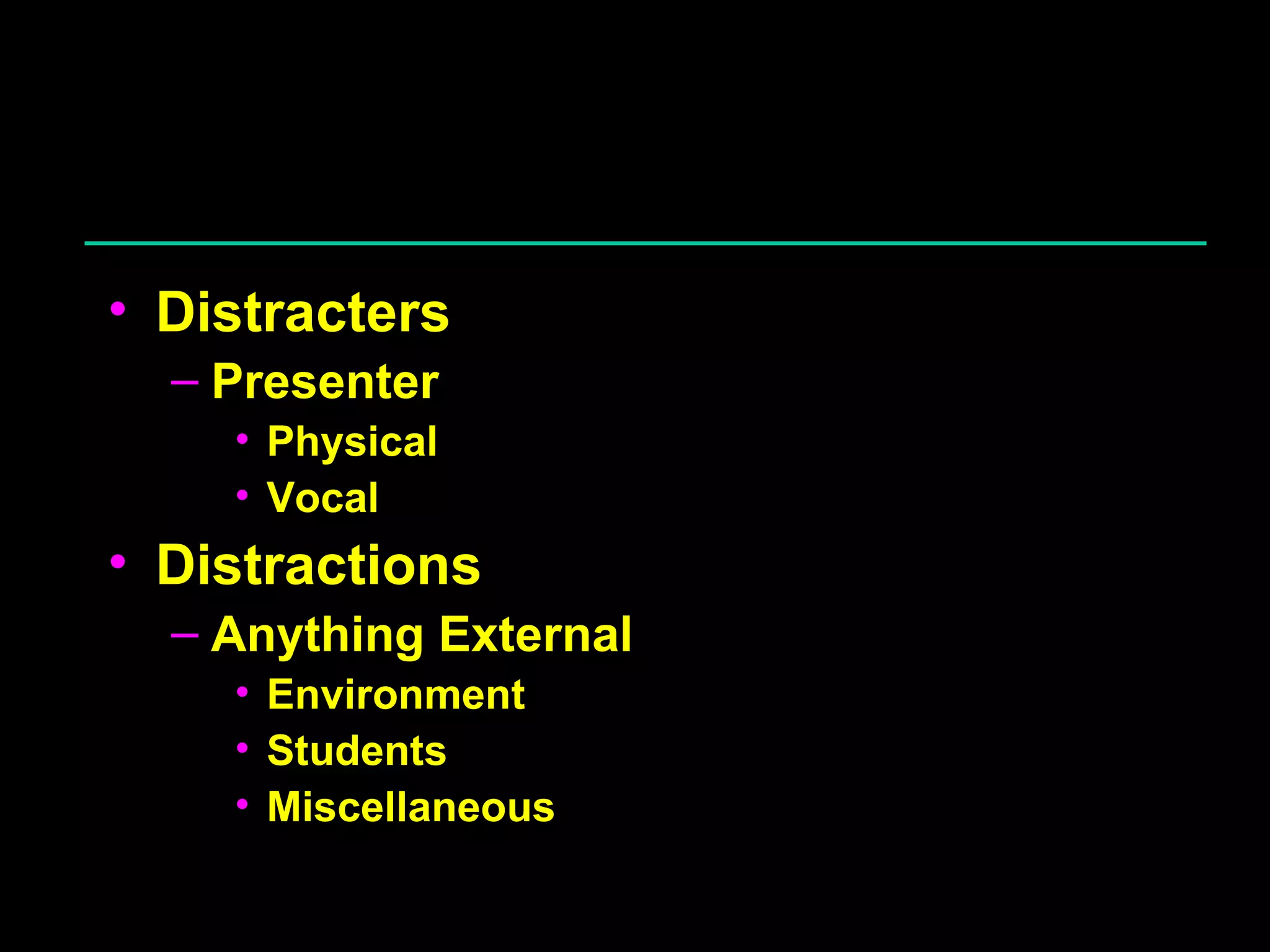
Distracters Presenter Physical Vocal Distractions Anything External Environment Students Miscellaneous
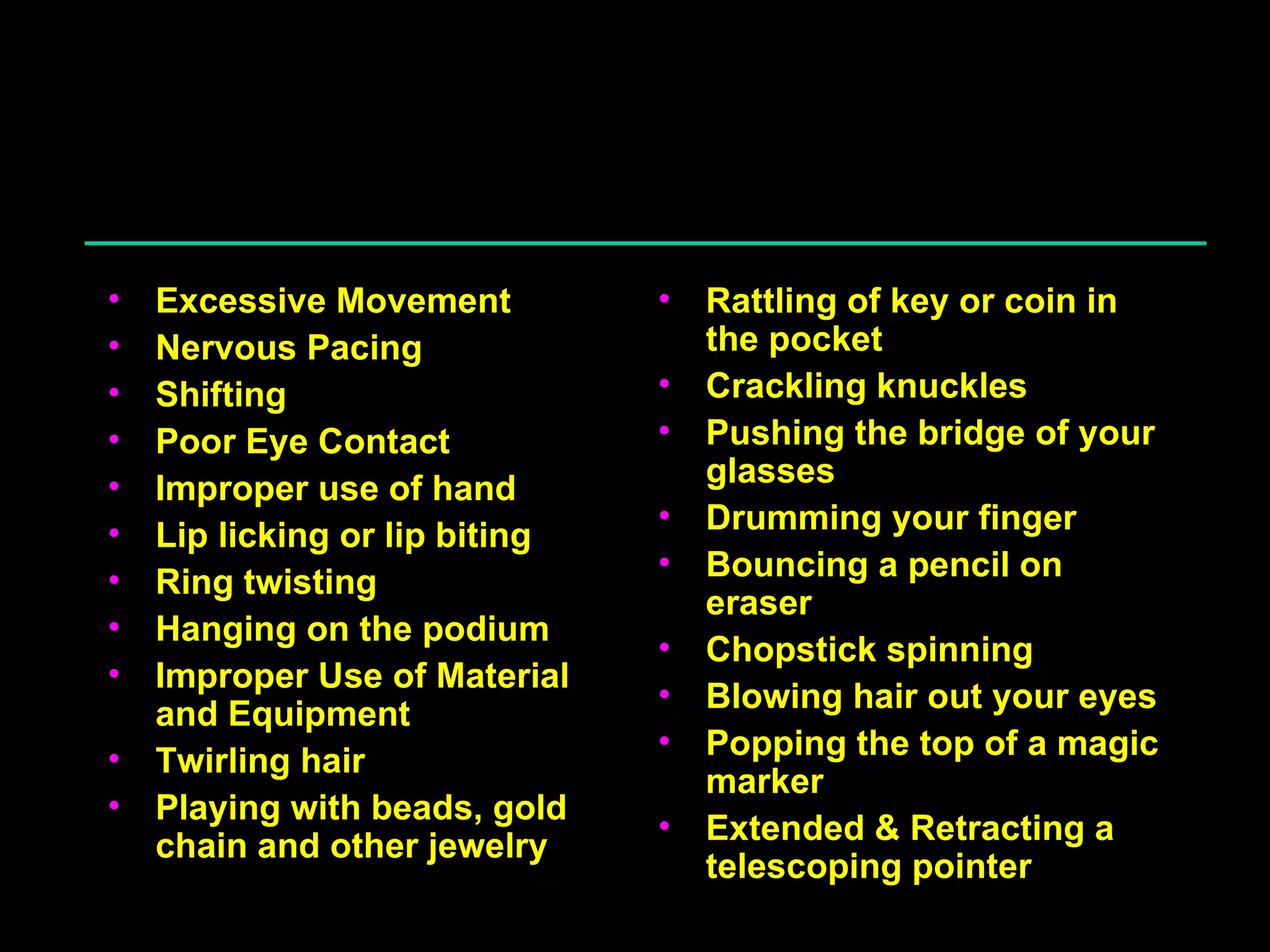
Distracters Physical Excessive Movement Nervous Pacing Shifting Poor Eye Contact Improper use of hand Lip licking or lip biting Ring twisting Hanging on the podium Improper Use of Material and Equipment Twirling hair Playing with beads, gold chain and other jewelry Rattling of key or coin in the pocket Crackling knuckles Pushing the bridge of your glasses Drumming your finger Bouncing a pencil on eraser Chopstick spinning Blowing hair out your eyes Popping the top of a magic marker Extended & Retracting a telescoping pointer
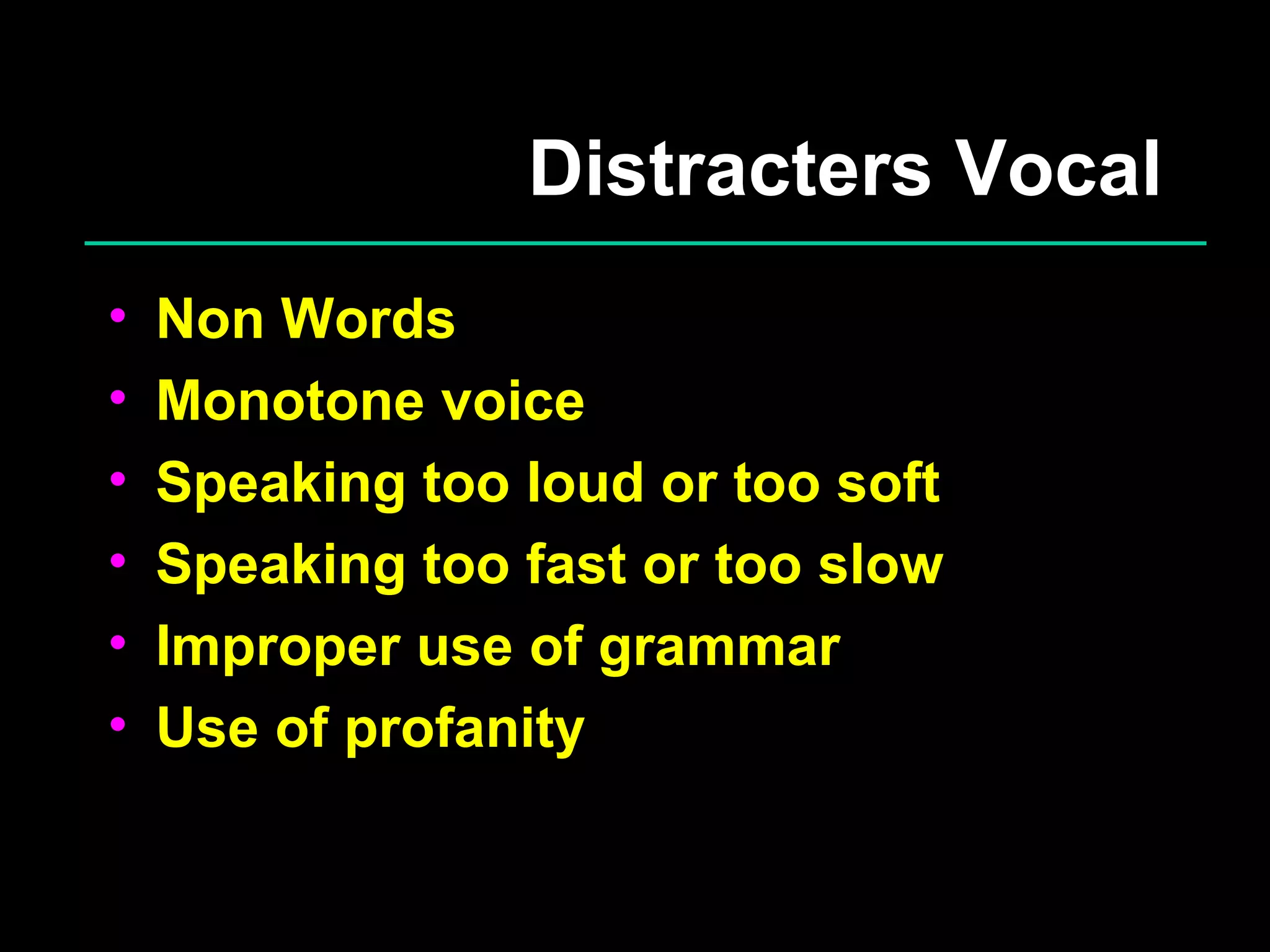
Distracters Vocal Non Words Monotone voice Speaking too loud or too soft Speaking too fast or too slow Improper use of grammar Use of profanity
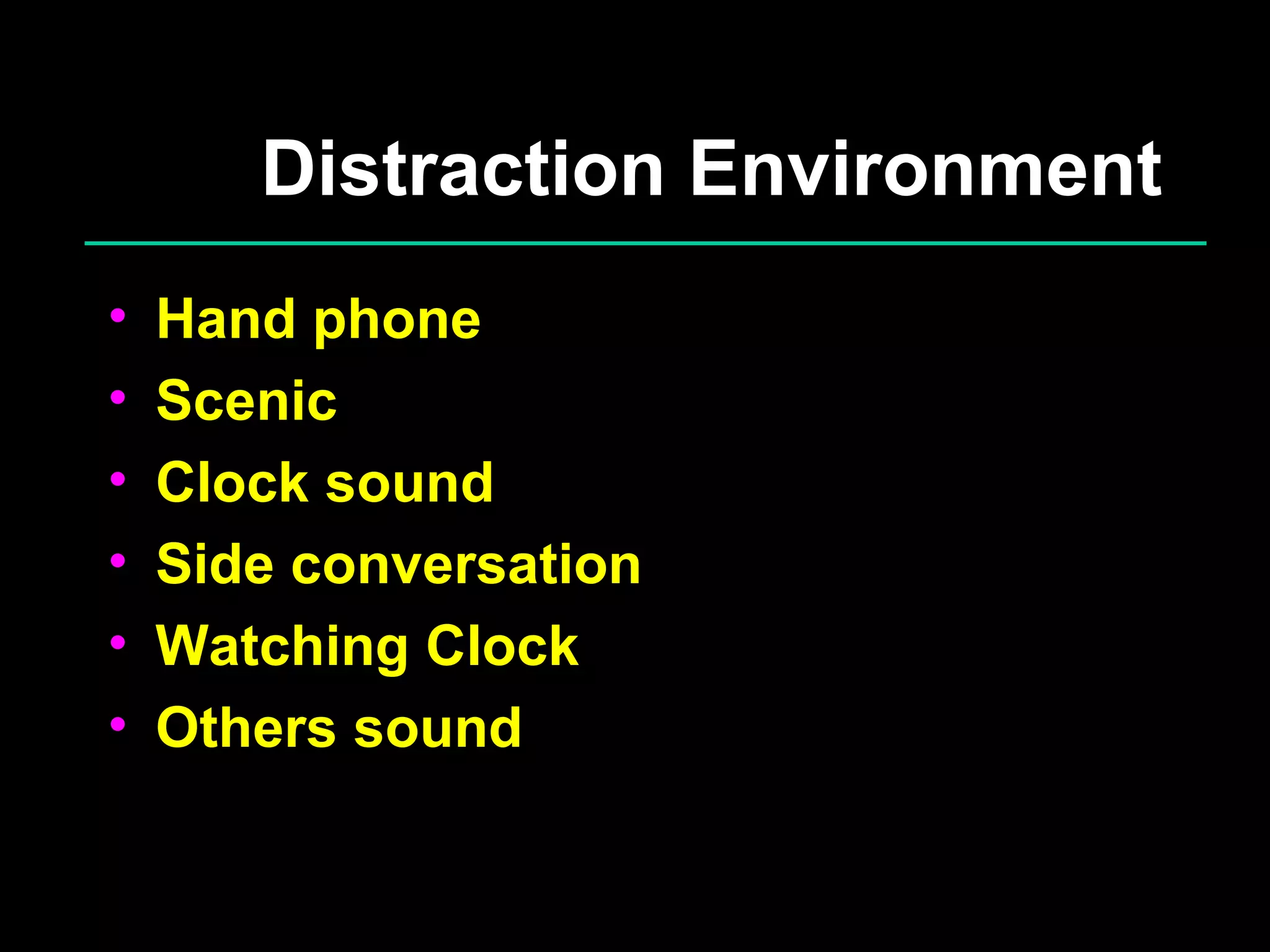
Distraction Environment Hand phone Scenic Clock sound Side conversation Watching Clock Others sound
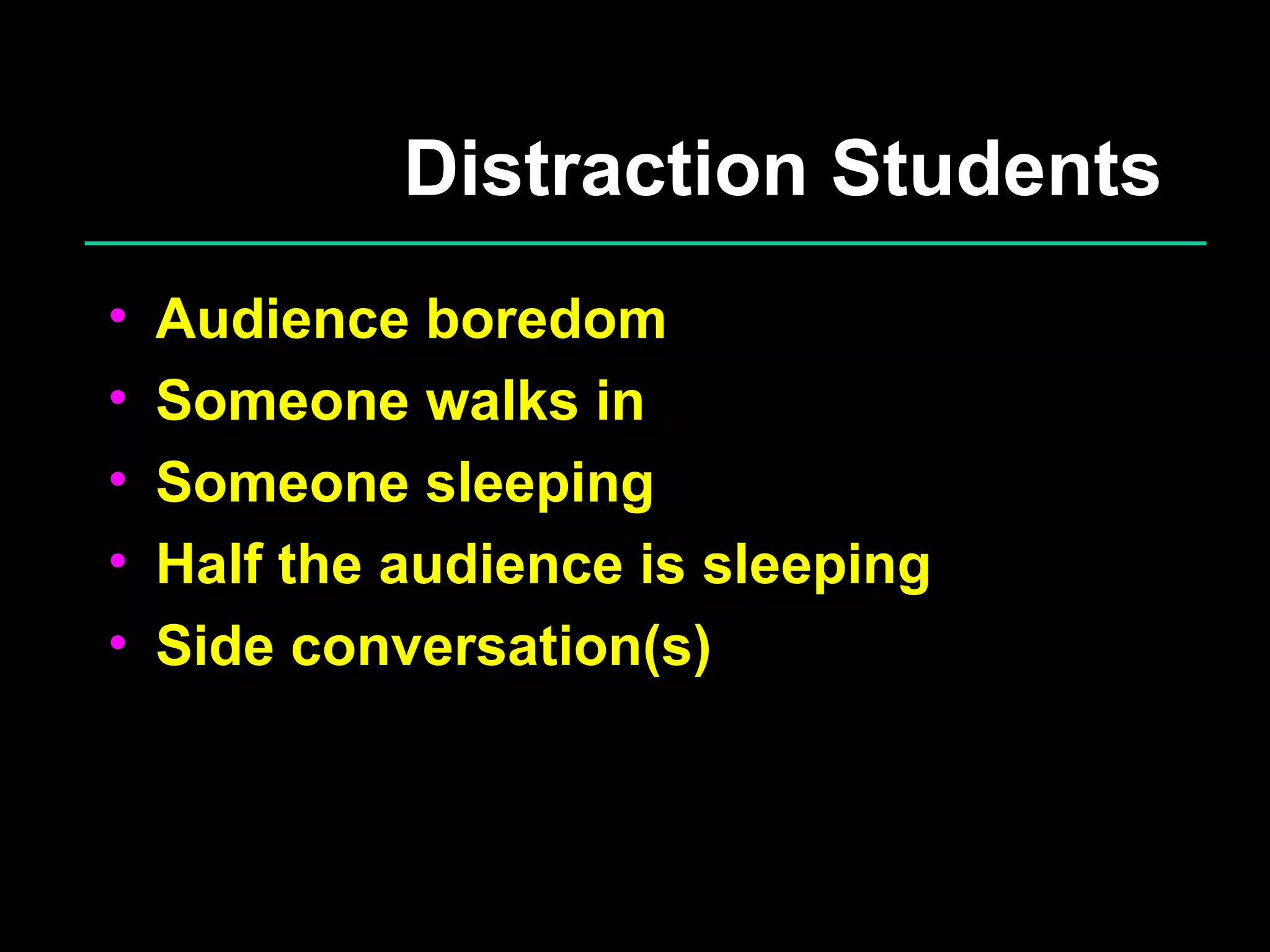
Distraction Students Audience boredom Someone walks in Someone sleeping Half the audience is sleeping Side conversation(s)
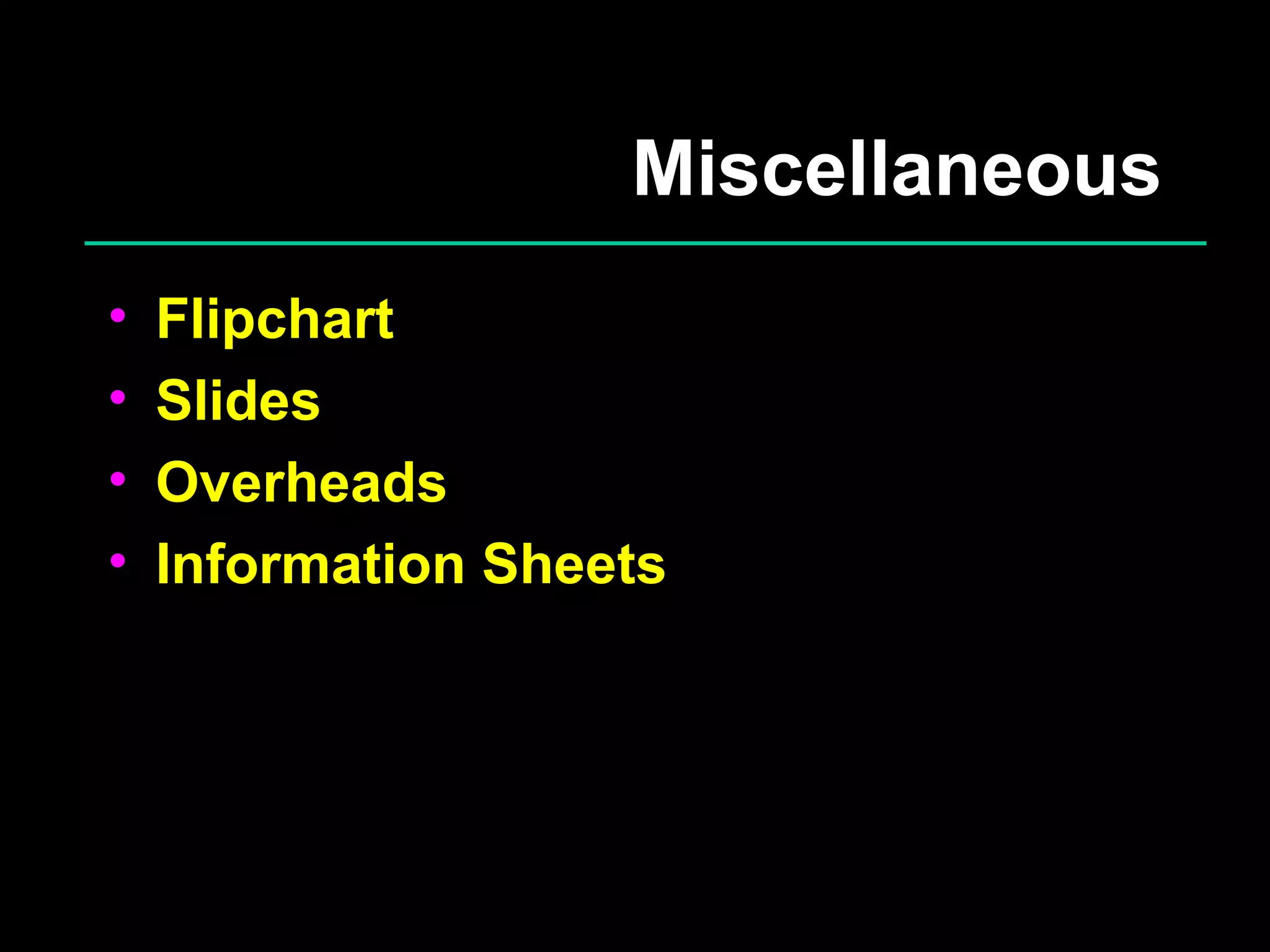
Miscellaneous Flipchart Slides Overheads Information Sheets
Handling Questions Dispel your fear Be prepared The Transition Begin Question Answering Question Controlling the session Concluding the session
Answering Question Remove your eye contact from the person who asked with total the group Direct your answer to the student of the group If it is a multiple part question, answer all part Related your answer to the purpose and key point of your presentation Its your decision whether to answer the question directly or even not to answer the question at all Keep your answer simple and concise When completed the answer, do not look the person who originally asked the question Take all the question

Presentation skill

  • 1.
    Presentation Skill ControllingNervousness Eye Contact Voice, Energy, Emotion Non Verbal Communication Controlling Distractors and Distractions Handling Question
  • 2.
    An Effective PresenterControl Audience Material Yourself
  • 3.
    How to ControlNervousness Quality Preparation Mentally Physically Miscellaneous
  • 4.
    Nervousness happen whenYour On the spot (tampil mendadak) The Focus Of Attention (pusat perhatian) You want to do well (ingin terbaik)
  • 5.
    Eye Contact Disadvantagesof Poor Eye Contact Benefits of Effective Eye Contact How T’s of Effective Eye Contact Allow you to Practice
  • 6.
    Definition Eye Contactis a matter of punctuation. It’s the registration of the idea, a phrase, maybe even single word, during a continuous linking –up the eyes
  • 7.
    The Eye arethe mirror to the soul (Philippines Saying) An Eye can threaten like a loaded and leveled gun; or can insult like hissing and kicking; or in its altered mood by beams of kindness, make the heart dance with joy (Ralph Wildo Emerson) What you speak so loud that I can’t hear what you say (Ralph Wildo Emerson)
  • 8.
    What Counts BelievabilityVerbal 7% Vocal 38% Visual 55% Total 100%
  • 9.
    Fear Involvement/Lack ofInvolvement I want to get through and get out What we do Eye Dart (Focusing on One Person) Looking Up (Overlook) Looking Down Copy Reading Triangle
  • 10.
    Benefit Reduces nervousnessMethod to obtain audience feedback Assist in developing people to answer question Compels people to answer question Develop interest You will look more confident
  • 11.
    How to Threeto Five seconds No Pattern Be Natural Watch Blind spot
  • 12.
    The Three Eye’sIntimacy Intimidation Involvement
  • 13.
    Techniques for ImprovementLook in the mirror Look at things Practice with friend Observe others Have other to give you feedback
  • 14.
    VOICE ENERGYEMOTION
  • 15.
    Category of VoiceVocal Characteristics Rate Pitch Volume Quality Additional/Non Words Articulation and Pronunciation
  • 16.
    Non Verbal Posture/AppearanceBody Movement Facial Expression Gestures
  • 17.
    Posture Shoulder FeetDon’t lean on or get the trapped by tradition or podium Stand tall Stand tall. The different between towering and cowering is totally a matter of inner posture. It’s got nothing to do with height, its cost nothing and its more fun (Malcolm Forbes)
  • 18.
    Benefit Youfeel taller and look ore powerful You look more confidence Your movement make eye communication easier Your habit of being forward in the ready position helps you be more psychologically forward Your movement gives variety to the eye of the audience
  • 19.
    Dress Appearance BeAppropriate Be Conscious Be Smart You never get the second chance to make a good first impression
  • 20.
    Benefit Your feelconfident in how in look You make a positive impression that adds to your effectiveness You don’t have to overcome a negative first impression
  • 21.
    Facial Expression SmileA powerful nonverbal signal Be honest, can’t fake it Can be extremely negative Facial expressions should match the message He who would have friends, let him show himself to be friendly
  • 22.
    Gesture Use thehands Can help to put action to your words To paint picture Channel your nervous energy to your hands, arms and body
  • 23.
    What we doStern Father (tegap, galak) Parade Rest (tangan dibelakang) Sister of Mercy (tangan dipegang ditengah) Rigid (kaku) Arm Lock (Napoleon) (tangan satu dibelakang) Fig Leaf (tangan menutupi bawah perut) Puppy Begging (tangan terletak didepan) Belt-line (tangan dipinggang) Jagling(memainkan tangan disaku) Unnecessary gestures(gerakan tidak perlu)
  • 24.
    Disadvantage May appearto be small thing People pickup on it People pay attention to it People catch the nervous energy Find your nervous gesture and stop making it
  • 25.
    How to doappropriate gesture Get Big You can’t over exaggerate Exaggerate in the mirror Exaggerate on videotape Imitate an expresser Don’t pre-program
  • 26.
    Benefits of GoodGestures and Smile You are free to express your thought fully You smile and the world smiles with you Your natural energy can be released Your open gestures show your openness and therefore a willingness to listen as well as talk
  • 27.
    Distracters Presenter PhysicalVocal Distractions Anything External Environment Students Miscellaneous
  • 28.
    Distracters Physical ExcessiveMovement Nervous Pacing Shifting Poor Eye Contact Improper use of hand Lip licking or lip biting Ring twisting Hanging on the podium Improper Use of Material and Equipment Twirling hair Playing with beads, gold chain and other jewelry Rattling of key or coin in the pocket Crackling knuckles Pushing the bridge of your glasses Drumming your finger Bouncing a pencil on eraser Chopstick spinning Blowing hair out your eyes Popping the top of a magic marker Extended & Retracting a telescoping pointer
  • 29.
    Distracters Vocal NonWords Monotone voice Speaking too loud or too soft Speaking too fast or too slow Improper use of grammar Use of profanity
  • 30.
    Distraction Environment Handphone Scenic Clock sound Side conversation Watching Clock Others sound
  • 31.
    Distraction Students Audienceboredom Someone walks in Someone sleeping Half the audience is sleeping Side conversation(s)
  • 32.
    Miscellaneous Flipchart SlidesOverheads Information Sheets
  • 33.
    Handling Questions Dispelyour fear Be prepared The Transition Begin Question Answering Question Controlling the session Concluding the session
  • 34.
    Answering Question Removeyour eye contact from the person who asked with total the group Direct your answer to the student of the group If it is a multiple part question, answer all part Related your answer to the purpose and key point of your presentation Its your decision whether to answer the question directly or even not to answer the question at all Keep your answer simple and concise When completed the answer, do not look the person who originally asked the question Take all the question