Presented to:
Sir Colonel
Zulfiqaar Ahmed
Group Members
Hafiz Zohaib Ali
Sameera khan
Sohaib
Rohail Ali
Hafiz Zohaib
Ali
Personality
A relatively stable set of characteristics that
influences an individual’s behavior.
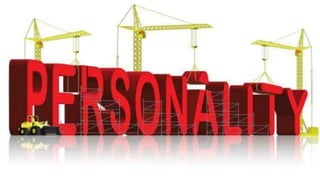
Personality
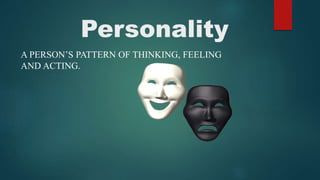
A PERSON’S PATTERN OF THINKING, FEELING
AND ACTING.
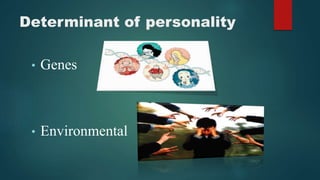
Determinant of personality
• Genes
• Environmental
Genes
BIOLOGICAL HERITAGE
The human infant comes into world equipped with
biological structure, physiological processes and capacities.
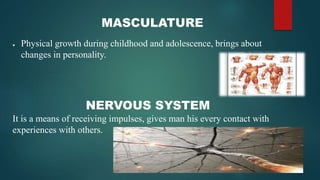
MASCULATURE
● Physical growth during childhood and adolescence, brings about
changes in personality.
NERVOUS SYSTEM
It is a means of receiving impulses, gives man his every contact with
experiences with others.
HORMONES
Control the rates of certain bodily processes associated with maturation.
EQ factor
Emotional Intelligence”(EQ)
.To describe qualities like understanding one's feelings, empathy for the feelings of
others.
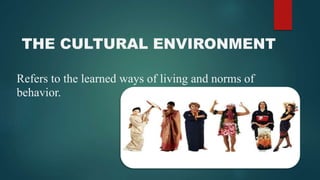
THE CULTURAL ENVIRONMENT
Refers to the learned ways of living and norms of
behavior.
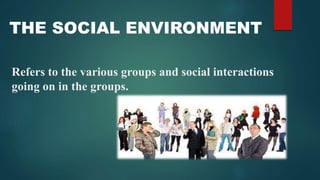
THE SOCIAL ENVIRONMENT
Refers to the various groups and social interactions
going on in the groups.
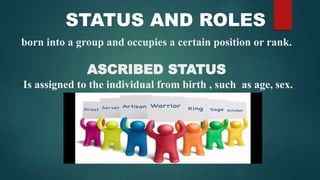
STATUS AND ROLES
born into a group and occupies a certain position or rank.
ASCRIBED STATUS
Is assigned to the individual from birth , such as age, sex.
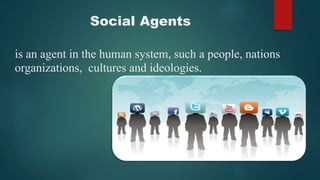
Social Agents
is an agent in the human system, such a people, nations
organizations, cultures and ideologies.
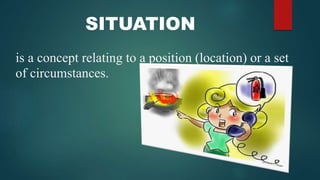
SITUATION
is a concept relating to a position (location) or a set
of circumstances.
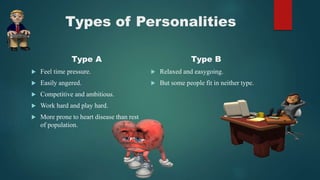
Types of Personalities
Type A
 Feel time pressure.
 Easily angered.
 Competitive and ambitious.
 Work hard and play hard.
 More prone to heart disease than rest
of population.
Type B
 Relaxed and easygoing.
 But some people fit in neither type.
Sameera Khan
Adlerian Therapy
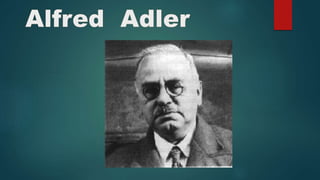
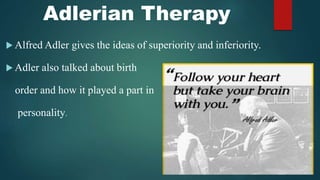
 Alfred Adler gives the ideas of superiority and inferiority.
 Adler also talked about birth
order and how it played a part in
personality.
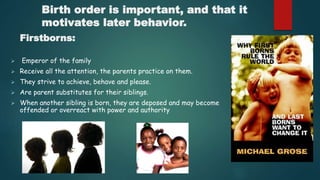
Birth order is important, and that it
motivates later behavior.
Firstborns:
 Emperor of the family
 Receive all the attention, the parents practice on them.
 They strive to achieve, behave and please.
 Are parent substitutes for their siblings.
 When another sibling is born, they are deposed and may become
offended or overreact with power and authority
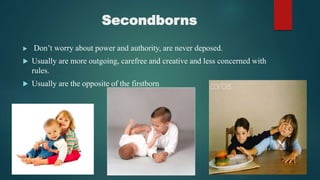
Secondborns
 Don’t worry about power and authority, are never deposed.
 Usually are more outgoing, carefree and creative and less concerned with
rules.
 Usually are the opposite of the firstborn
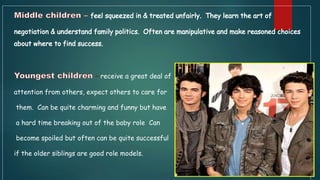
receive a great deal of
attention from others, expect others to care for
them. Can be quite charming and funny but have
a hard time breaking out of the baby role Can
become spoiled but often can be quite successful
if the older siblings are good role models.
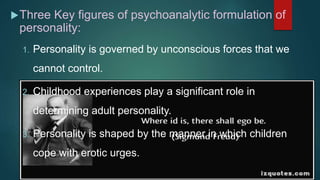
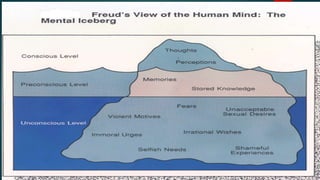
Three Key figures of psychoanalytic formulation of
personality:
1. Personality is governed by unconscious forces that we
cannot control.
2. Childhood experiences play a significant role in
determining adult personality.
3. Personality is shaped by the manner in which children
cope with erotic urges.
Jung also focused on the role of the unconscious in shaping
personality.
However, he argued that the unconscious is consist of two
layers:
Sohaib Yousaf
Myers-Briggs Type Indicator
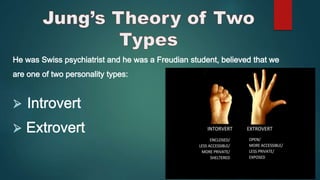
 Myers-Briggs: based on Jungian theory of personality
Classifies individuals along 4 theoretically independent dimensions.
1. Introversion / Extroversion(E-I) : How is your general attitude toward the world?
2. Sensing / Intuition (S-N) : How do you acquire information?
3. Thinking / Feeling (T-F) : How is information processed?
4. Judging / Perceiving (J-P): How do you make decisions?
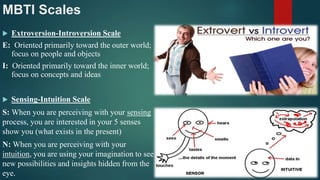
MBTI Scales
 Extroversion-Introversion Scale
E: Oriented primarily toward the outer world;
focus on people and objects
I: Oriented primarily toward the inner world;
focus on concepts and ideas
 Sensing-Intuition Scale
S: When you are perceiving with your sensing
process, you are interested in your 5 senses
show you (what exists in the present)
N: When you are perceiving with your
intuition, you are using your imagination to see
new possibilities and insights hidden from the
eye.
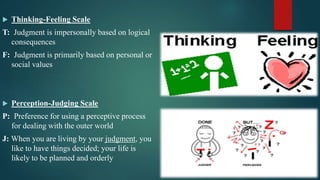
 Thinking-Feeling Scale
T: Judgment is impersonally based on logical
consequences
F: Judgment is primarily based on personal or
social values
 Perception-Judging Scale
P: Preference for using a perceptive process
for dealing with the outer world
J: When you are living by your judgment, you
like to have things decided; your life is
likely to be planned and orderly
Healthy personality
“HEALTHY PERSONALITY MEANS EQUILIBRIUM
BETWEEN SPIRIT, MIND AND BODY AND THE
CAPACITY TO ADAPT TO NEW ENVIRONMENTS”
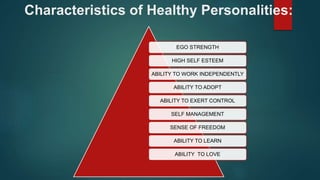
Characteristics of Healthy Personalities:
EGO STRENGTH
HIGH SELF ESTEEM
ABILITY TO WORK INDEPENDENTLY
ABILITY TO ADOPT
ABILITY TO EXERT CONTROL
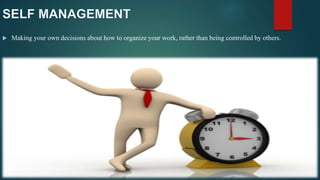
SELF MANAGEMENT
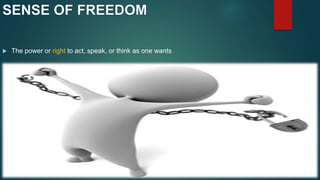
SENSE OF FREEDOM
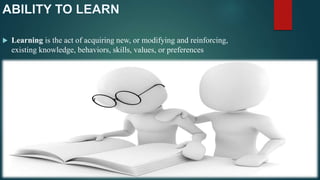
ABILITY TO LEARN
ABILITY TO LOVE
 An individual with strong ego-strength approaches challenges
with a sense that he or she can overcome the problem and even
grow as a result. By having strong ego-strength, the individual
feels that he or she can cope with the problem and find new ways
of dealing with struggles.
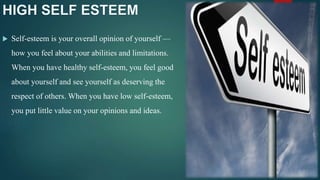
 Self-esteem is your overall opinion of yourself —
how you feel about your abilities and limitations.
When you have healthy self-esteem, you feel good
about yourself and see yourself as deserving the
respect of others. When you have low self-esteem,
you put little value on your opinions and ideas.
 Becoming self-aware, self-monitoring and self-correcting
 Knowing what you need to do
 Taking the initiative rather than waiting to be told what to do
 Taking ownership of your mistakes without looking for excuses
 This is basically adopt the changes which occurs with the passage of time :
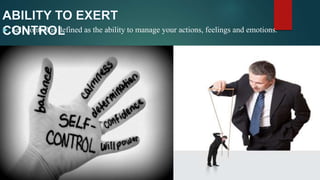
 Self control is defined as the ability to manage your actions, feelings and emotions.
 Making your own decisions about how to organize your work, rather than being controlled by others.
 The power or right to act, speak, or think as one wants
 Learning is the act of acquiring new, or modifying and reinforcing,
existing knowledge, behaviors, skills, values, or preferences
 Love yourself….
 Love the Environment….
 Love the Nature
Rohail Ali
Personality with organizational
aspect
WHICH TYPE OF PERSONALITY GENERALLY REQUIRED IN THE
ORGANIZATION?
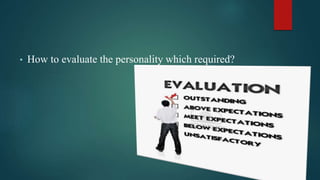
• How to evaluate the personality which required?
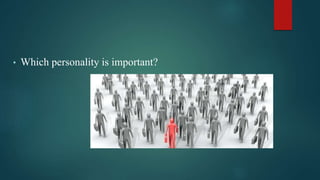
• Which personality is important?
• If you find the deficiency in personality what will your criteria to
improve it?
 Which type of deficiencies ignore in the personality?
• Which type of qualities and abilities are important in the personality for the firm?
 What are the personality evaluation measures?
Any Question?

Presentation on healthy personality

  • 3.
  • 4.
    Group Members Hafiz ZohaibAli Sameera khan Sohaib Rohail Ali
  • 5.
  • 6.
    Personality A relatively stableset of characteristics that influences an individual’s behavior.
  • 7.
    Personality A PERSON’S PATTERNOF THINKING, FEELING AND ACTING.
  • 8.
    Determinant of personality •Genes • Environmental
  • 9.
  • 10.
    BIOLOGICAL HERITAGE The humaninfant comes into world equipped with biological structure, physiological processes and capacities.
  • 11.
    MASCULATURE ● Physical growthduring childhood and adolescence, brings about changes in personality. NERVOUS SYSTEM It is a means of receiving impulses, gives man his every contact with experiences with others.
  • 12.
    HORMONES Control the ratesof certain bodily processes associated with maturation. EQ factor Emotional Intelligence”(EQ) .To describe qualities like understanding one's feelings, empathy for the feelings of others.
  • 14.
    THE CULTURAL ENVIRONMENT Refersto the learned ways of living and norms of behavior.
  • 15.
    THE SOCIAL ENVIRONMENT Refersto the various groups and social interactions going on in the groups.
  • 16.
    STATUS AND ROLES borninto a group and occupies a certain position or rank. ASCRIBED STATUS Is assigned to the individual from birth , such as age, sex.
  • 17.
    Social Agents is anagent in the human system, such a people, nations organizations, cultures and ideologies.
  • 18.
    SITUATION is a conceptrelating to a position (location) or a set of circumstances.
  • 19.
    Types of Personalities TypeA  Feel time pressure.  Easily angered.  Competitive and ambitious.  Work hard and play hard.  More prone to heart disease than rest of population. Type B  Relaxed and easygoing.  But some people fit in neither type.
  • 21.
  • 24.
    Adlerian Therapy  AlfredAdler gives the ideas of superiority and inferiority.  Adler also talked about birth order and how it played a part in personality.
  • 25.
    Birth order isimportant, and that it motivates later behavior. Firstborns:  Emperor of the family  Receive all the attention, the parents practice on them.  They strive to achieve, behave and please.  Are parent substitutes for their siblings.  When another sibling is born, they are deposed and may become offended or overreact with power and authority
  • 26.
    Secondborns  Don’t worryabout power and authority, are never deposed.  Usually are more outgoing, carefree and creative and less concerned with rules.  Usually are the opposite of the firstborn
  • 27.
    receive a greatdeal of attention from others, expect others to care for them. Can be quite charming and funny but have a hard time breaking out of the baby role Can become spoiled but often can be quite successful if the older siblings are good role models.
  • 29.
    Three Key figuresof psychoanalytic formulation of personality: 1. Personality is governed by unconscious forces that we cannot control. 2. Childhood experiences play a significant role in determining adult personality. 3. Personality is shaped by the manner in which children cope with erotic urges.
  • 33.
    Jung also focusedon the role of the unconscious in shaping personality. However, he argued that the unconscious is consist of two layers:
  • 35.
  • 37.
    Myers-Briggs Type Indicator Myers-Briggs: based on Jungian theory of personality Classifies individuals along 4 theoretically independent dimensions. 1. Introversion / Extroversion(E-I) : How is your general attitude toward the world? 2. Sensing / Intuition (S-N) : How do you acquire information? 3. Thinking / Feeling (T-F) : How is information processed? 4. Judging / Perceiving (J-P): How do you make decisions?
  • 38.
    MBTI Scales  Extroversion-IntroversionScale E: Oriented primarily toward the outer world; focus on people and objects I: Oriented primarily toward the inner world; focus on concepts and ideas  Sensing-Intuition Scale S: When you are perceiving with your sensing process, you are interested in your 5 senses show you (what exists in the present) N: When you are perceiving with your intuition, you are using your imagination to see new possibilities and insights hidden from the eye.
  • 39.
     Thinking-Feeling Scale T:Judgment is impersonally based on logical consequences F: Judgment is primarily based on personal or social values  Perception-Judging Scale P: Preference for using a perceptive process for dealing with the outer world J: When you are living by your judgment, you like to have things decided; your life is likely to be planned and orderly
  • 40.
    Healthy personality “HEALTHY PERSONALITYMEANS EQUILIBRIUM BETWEEN SPIRIT, MIND AND BODY AND THE CAPACITY TO ADAPT TO NEW ENVIRONMENTS”
  • 41.
    Characteristics of HealthyPersonalities: EGO STRENGTH HIGH SELF ESTEEM ABILITY TO WORK INDEPENDENTLY ABILITY TO ADOPT ABILITY TO EXERT CONTROL SELF MANAGEMENT SENSE OF FREEDOM ABILITY TO LEARN ABILITY TO LOVE
  • 42.
     An individualwith strong ego-strength approaches challenges with a sense that he or she can overcome the problem and even grow as a result. By having strong ego-strength, the individual feels that he or she can cope with the problem and find new ways of dealing with struggles.
  • 43.
     Self-esteem isyour overall opinion of yourself — how you feel about your abilities and limitations. When you have healthy self-esteem, you feel good about yourself and see yourself as deserving the respect of others. When you have low self-esteem, you put little value on your opinions and ideas.
  • 44.
     Becoming self-aware,self-monitoring and self-correcting  Knowing what you need to do  Taking the initiative rather than waiting to be told what to do  Taking ownership of your mistakes without looking for excuses
  • 45.
     This isbasically adopt the changes which occurs with the passage of time :
  • 46.
     Self controlis defined as the ability to manage your actions, feelings and emotions.
  • 47.
     Making yourown decisions about how to organize your work, rather than being controlled by others.
  • 48.
     The poweror right to act, speak, or think as one wants
  • 49.
     Learning isthe act of acquiring new, or modifying and reinforcing, existing knowledge, behaviors, skills, values, or preferences
  • 50.
     Love yourself…. Love the Environment….  Love the Nature
  • 51.
  • 52.
    Personality with organizational aspect WHICHTYPE OF PERSONALITY GENERALLY REQUIRED IN THE ORGANIZATION?
  • 53.
    • How toevaluate the personality which required?
  • 54.
    • Which personalityis important?
  • 55.
    • If youfind the deficiency in personality what will your criteria to improve it?
  • 56.
     Which typeof deficiencies ignore in the personality?
  • 57.
    • Which typeof qualities and abilities are important in the personality for the firm?
  • 58.
     What arethe personality evaluation measures?
  • 60.