Logic Models & Theories of Change
Scot Evans
Natalie Kivell
University of Miami
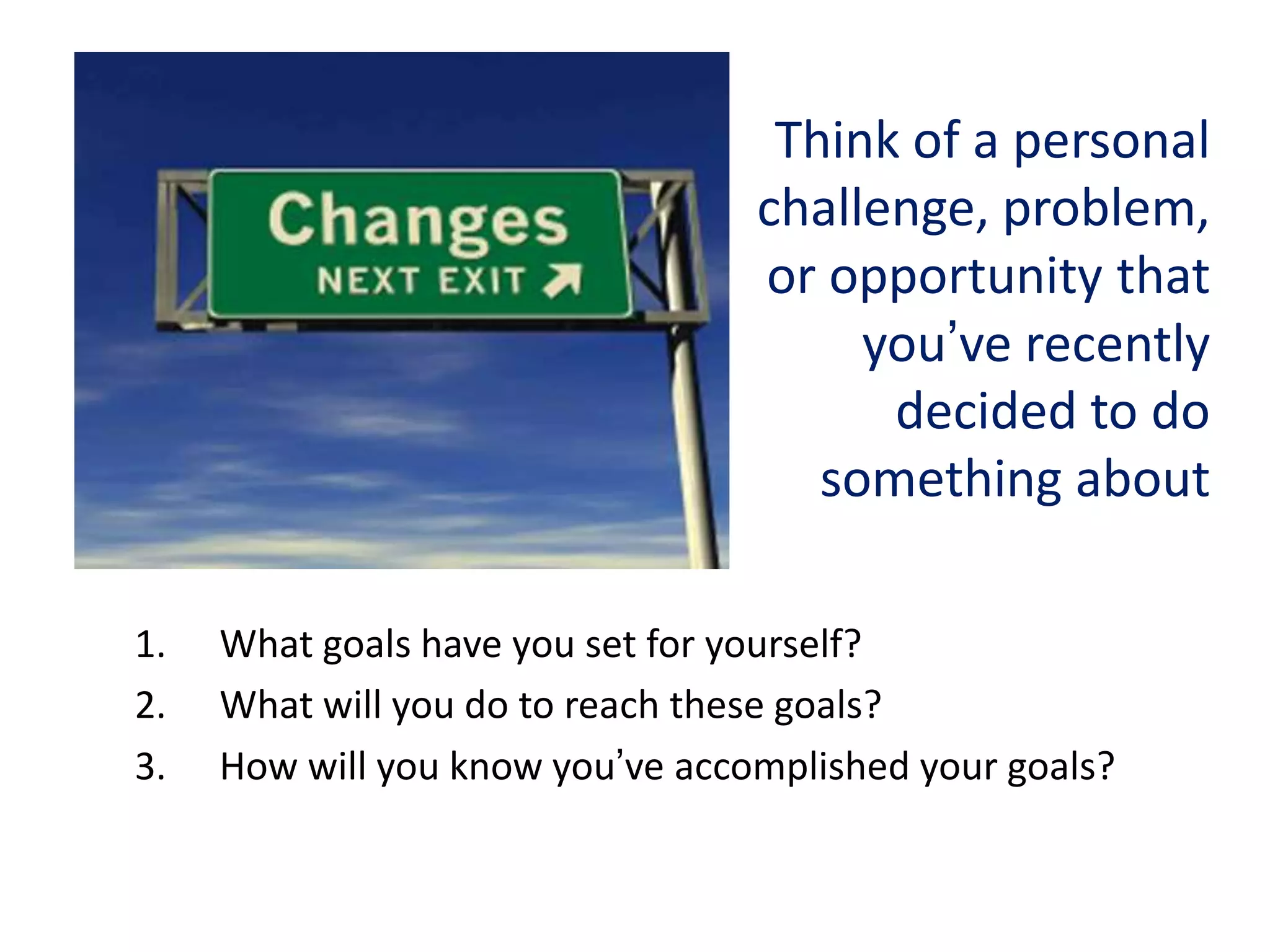
Think of a personal
challenge, problem,
or opportunity that
you’ve recently
decided to do
something about
1.
2.
3.

What goals have you set for yourself?
What will you do to reach these goals?
How will you know you’ve accomplished your goals?
Two reasons why
change efforts don’t
work:
Theory failure
Implementation failure
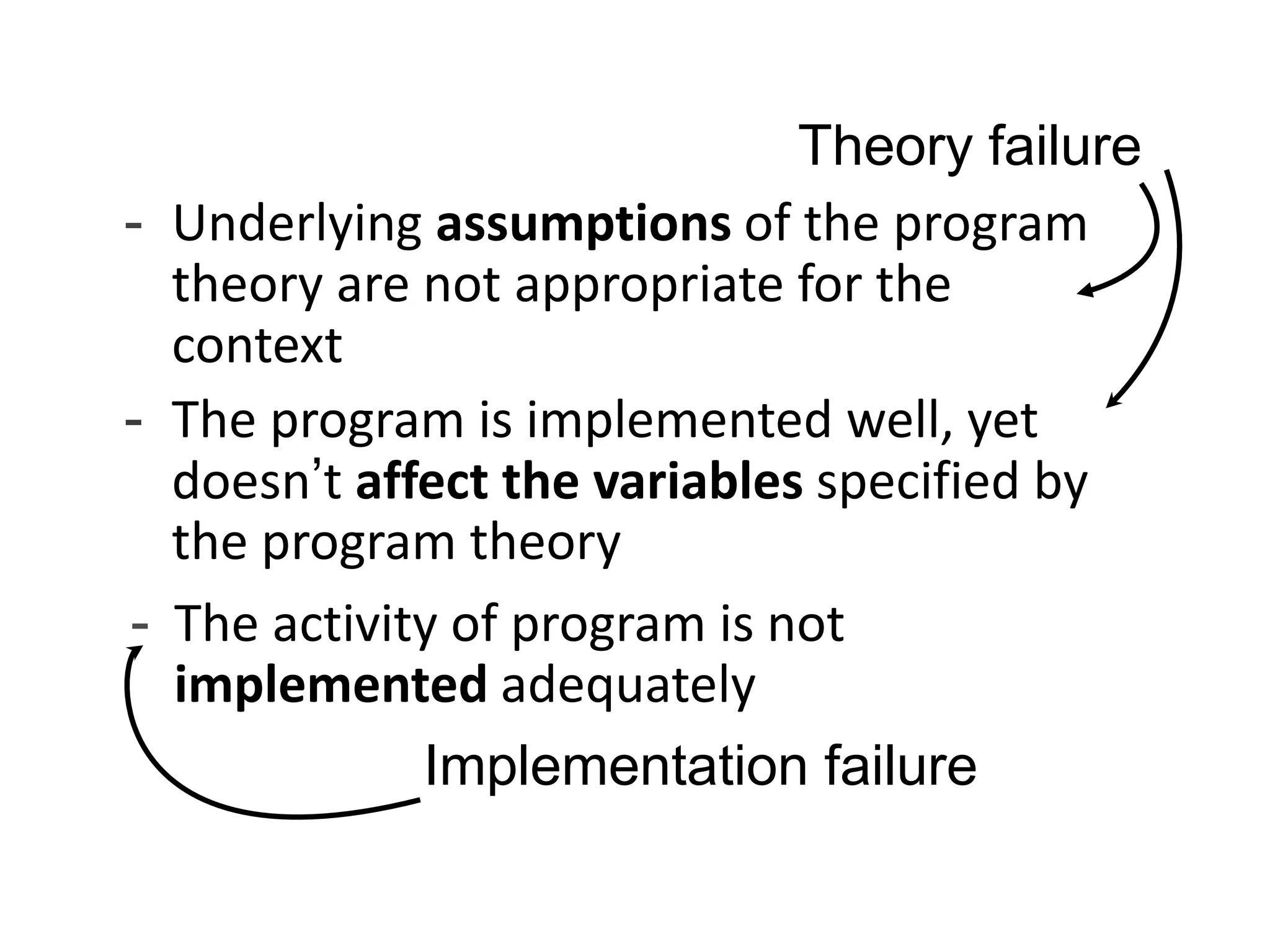
Theory failure
- Underlying assumptions of the program
theory are not appropriate for the
context
- The program is implemented well, yet
doesn’t affect the variables specified by
the program theory
- The activity of program is not
implemented adequately
Implementation failure
• Theory: “a set of beliefs or
assumptions that underlie
action” (Weiss, 1997)
• Program theory: “a plausible and
sensible model of how a
program is supposed to work”
(Bickman, 1987)
• Make program theory explicit in
advance to help surface
assumptions, make explicit
plans, and structure the
evaluation
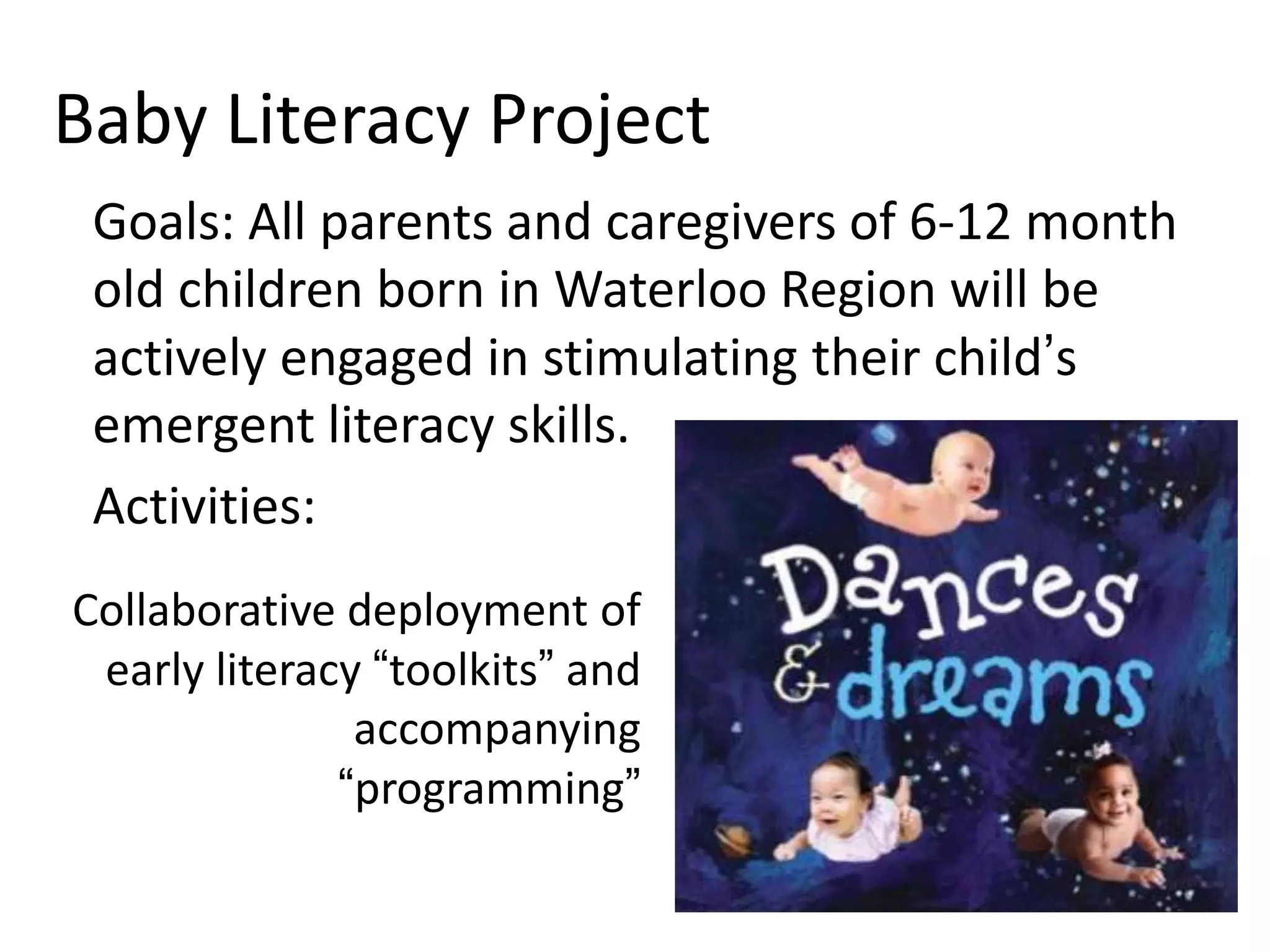
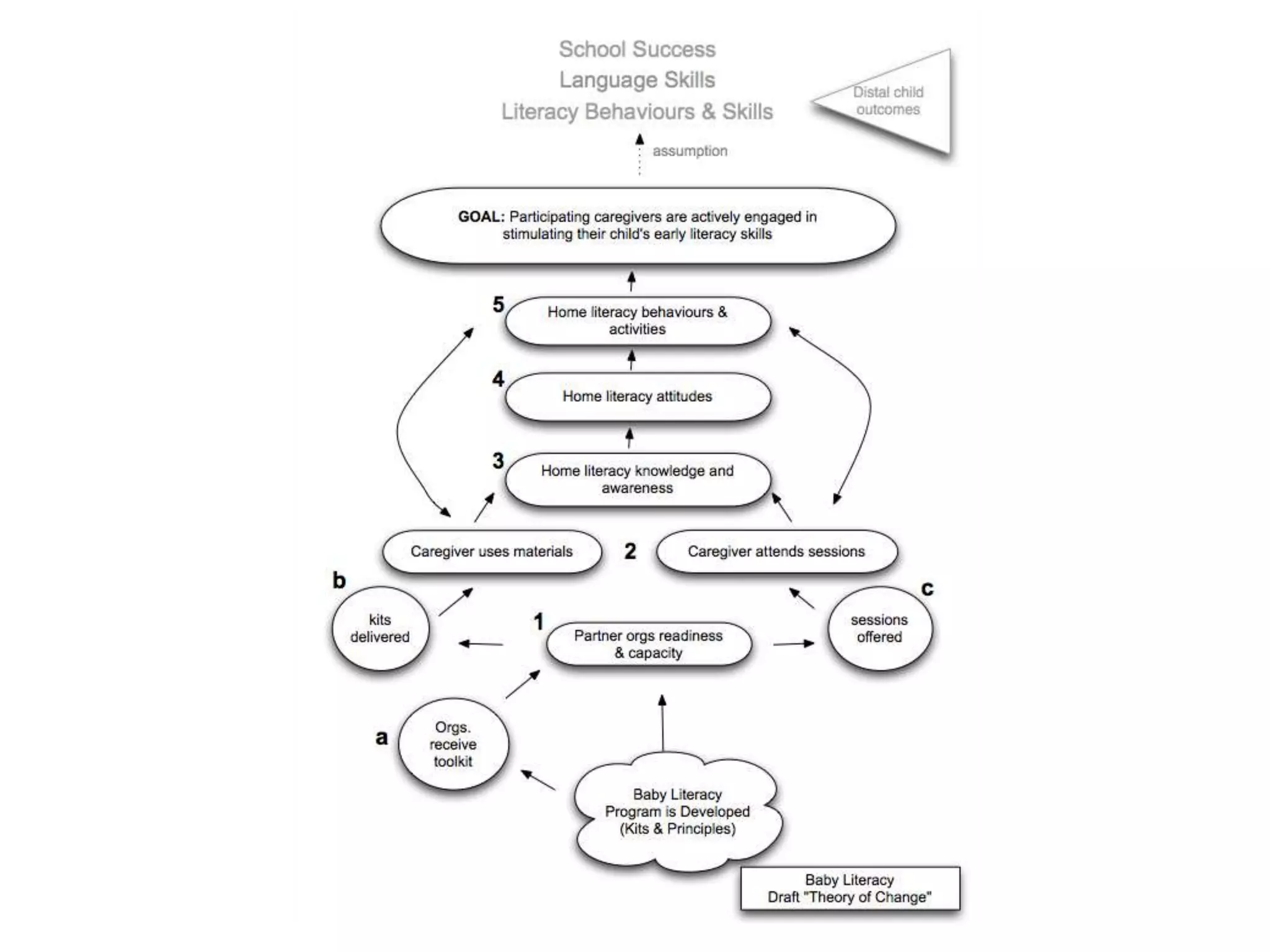
Baby Literacy Project
• Goal: All parents and caregivers of 6-12 month
old children born in Waterloo Region will be
actively engaged in stimulating their child’s
emergent literacy skills.

Activities:
Collaborative deployment of
early literacy “toolkits” and
accompanying programming
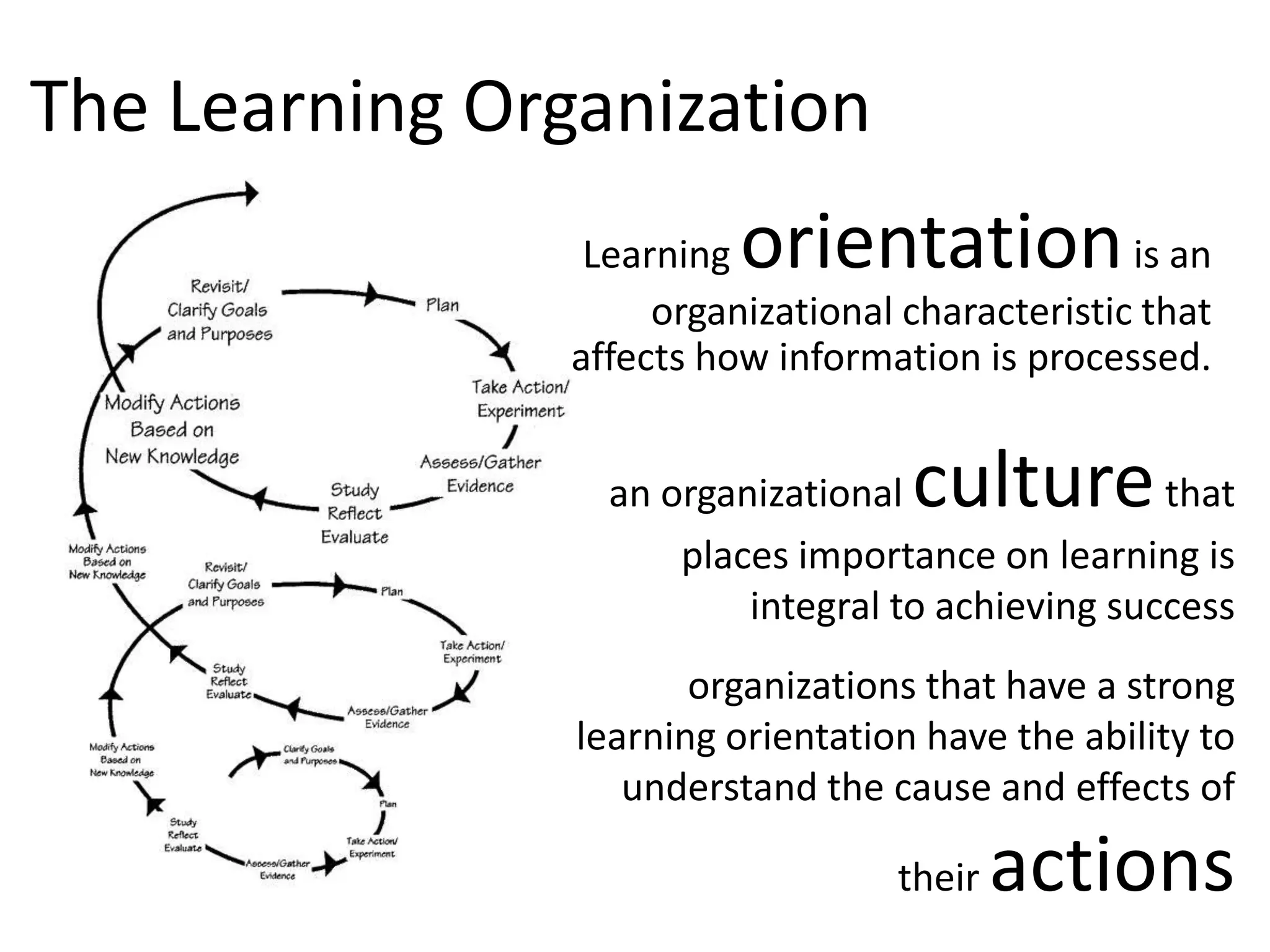
The Learning Organization

orientation

Learning
is an
organizational characteristic that
affects how information is processed.

culture

an organizational
that
places importance on learning is
integral to achieving success
organizations that have a strong
learning orientation have the ability to
understand the cause and effects of
their

actions
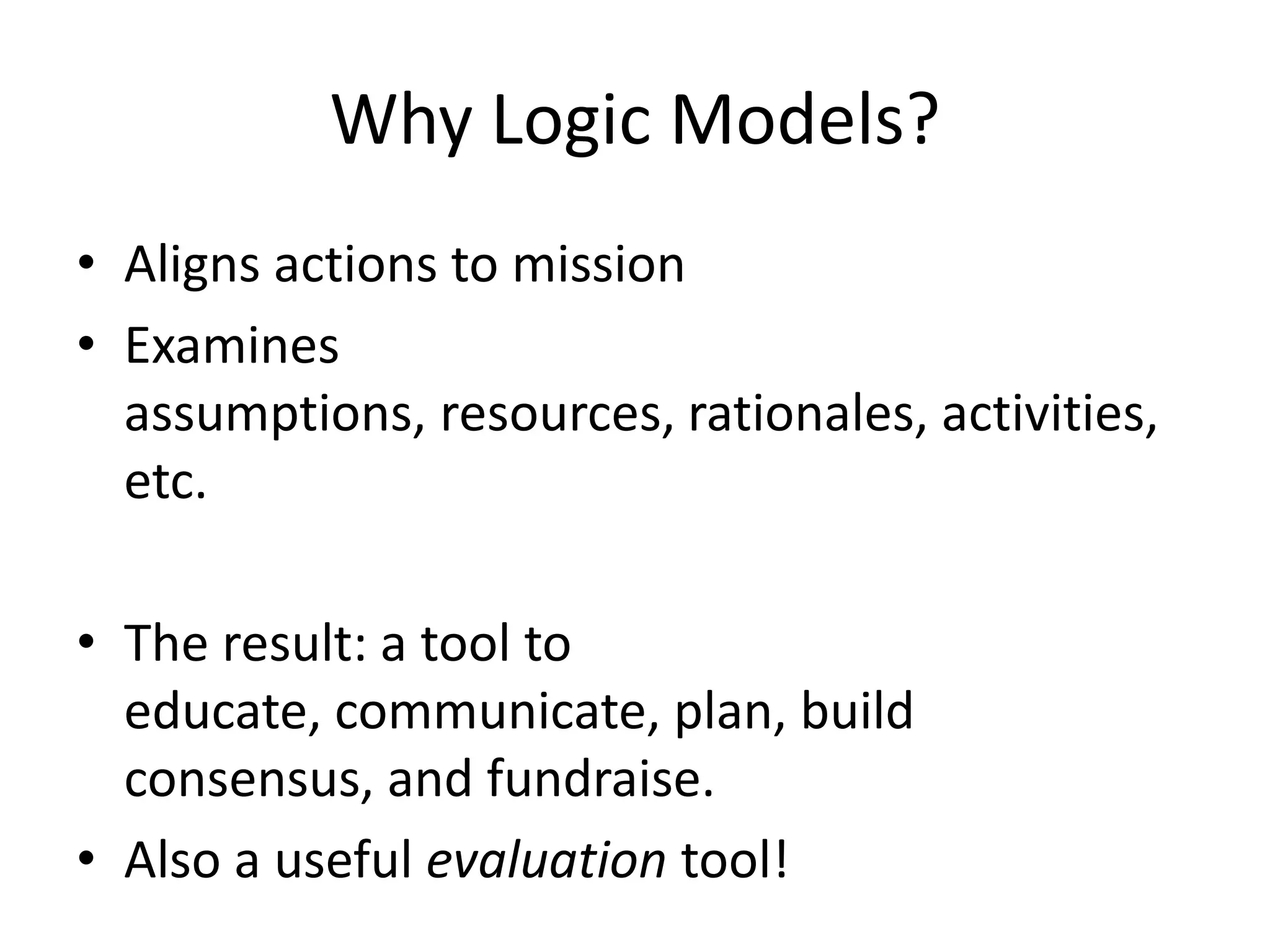
Why Logic Models?
Aligns actions to mission
Examines
assumptions, resources, rat
ionales, activities, etc.

The result: a tool to
educate, communicate, pla
n, build consensus, and
fundraise.
Also critical for evaluation!
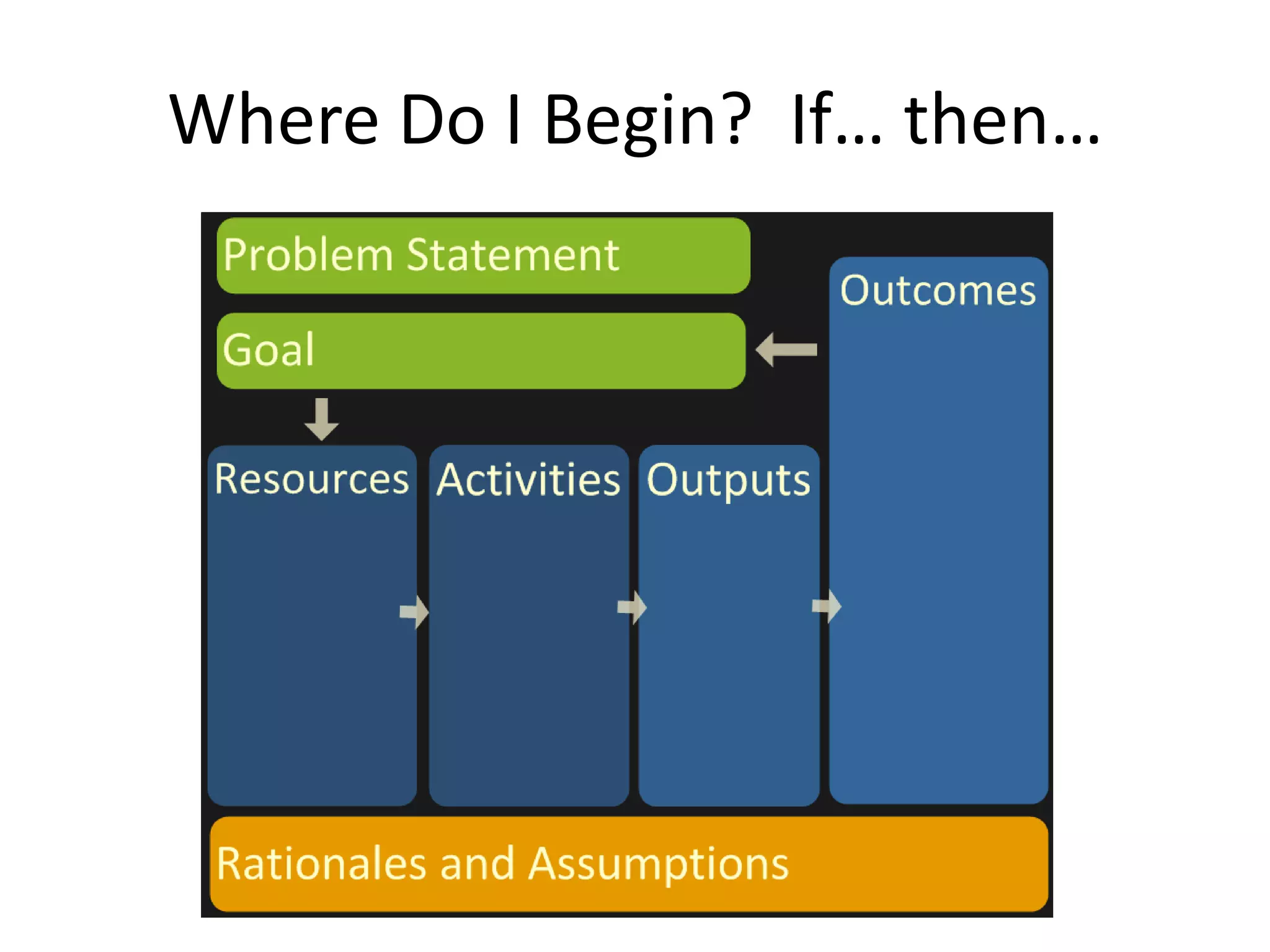
Where Do I Begin? If… then…
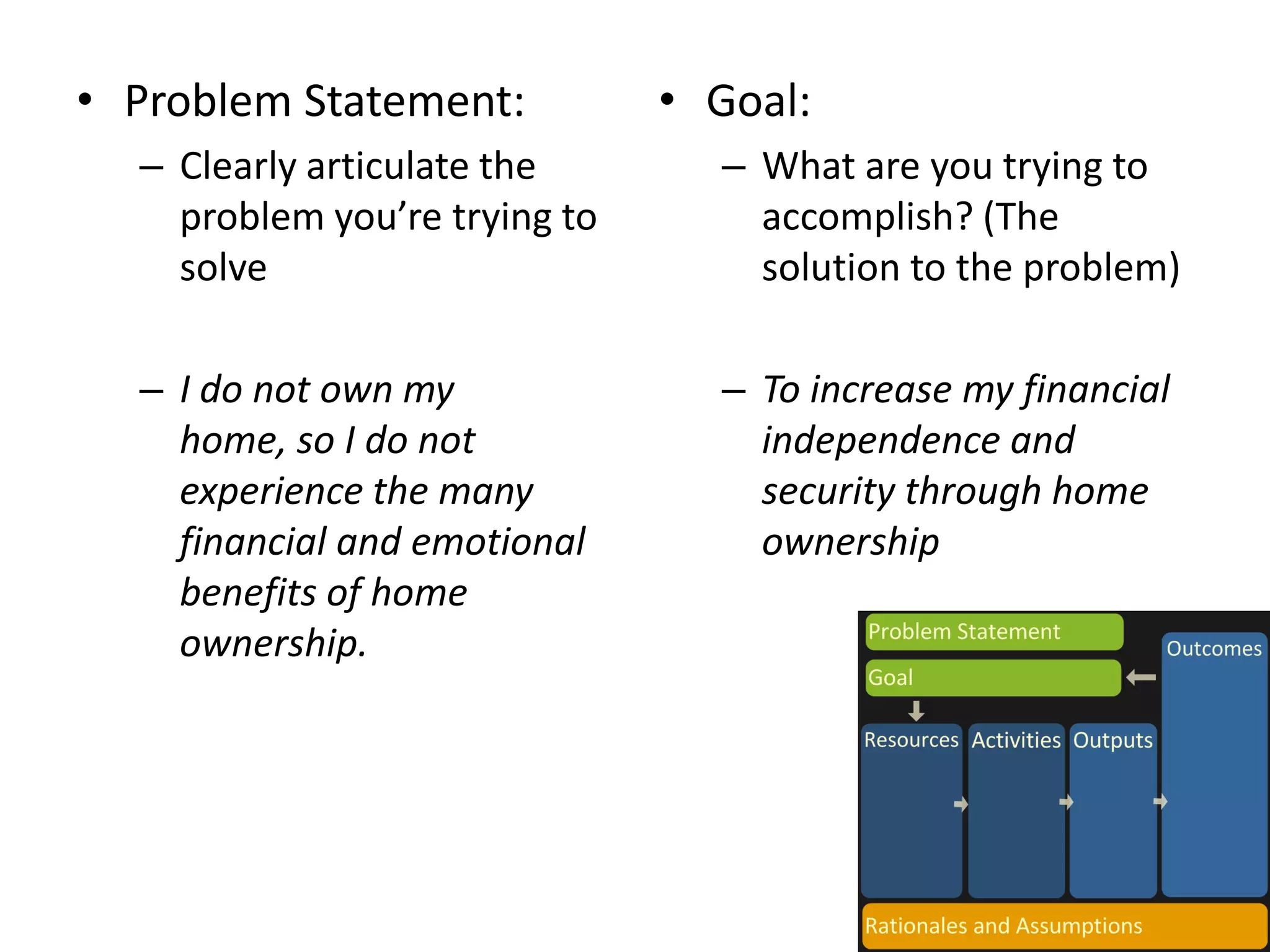
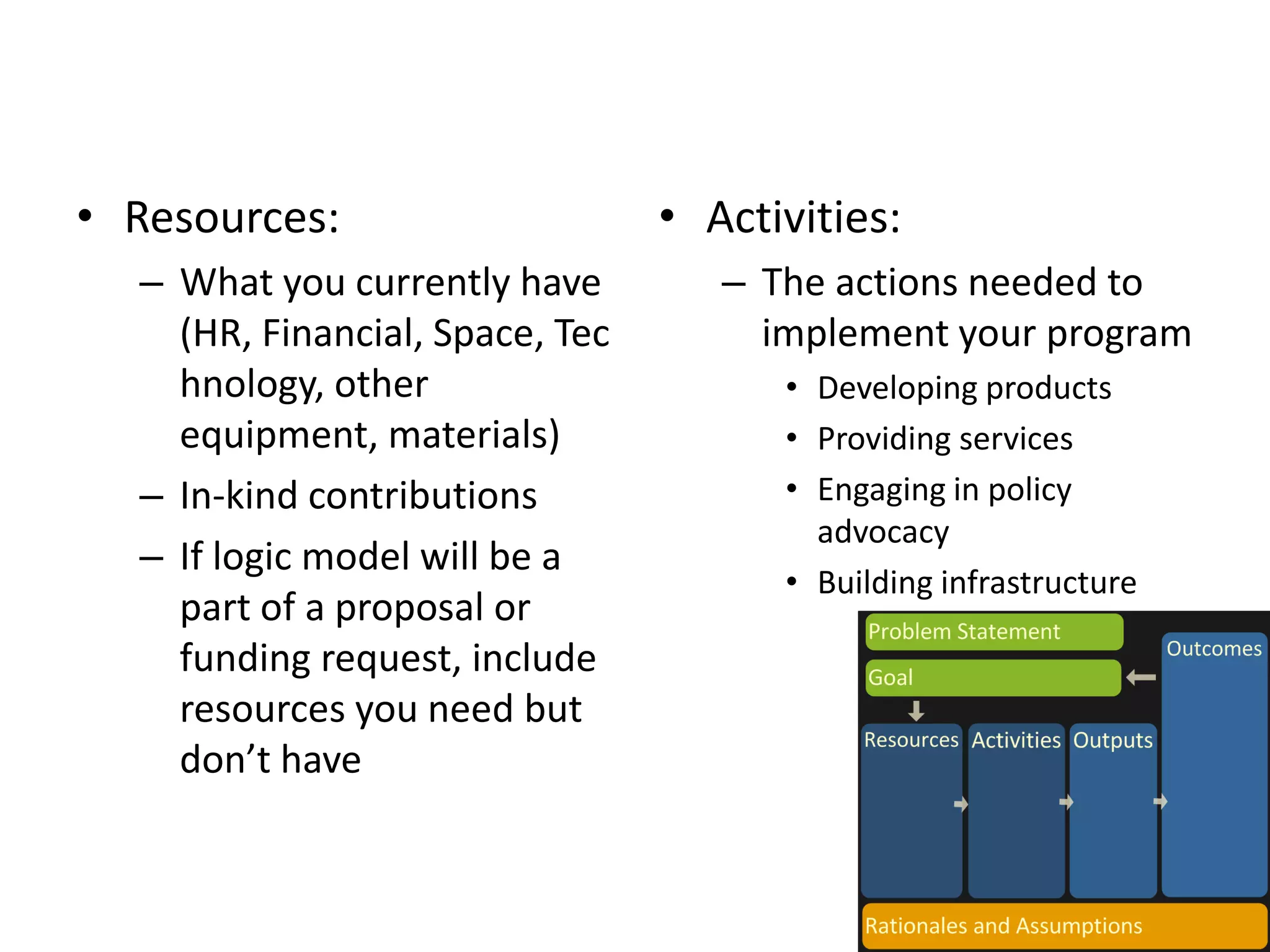
• Problem Statement:

• Goal:

– Clearly articulate the
problem you’re trying to
solve

– What are you trying to
accomplish? (The
solution to the problem)

– I do not own my
home, so I do not
experience the many
financial and emotional
benefits of home
ownership.

– To increase my financial
independence and
security through home
ownership
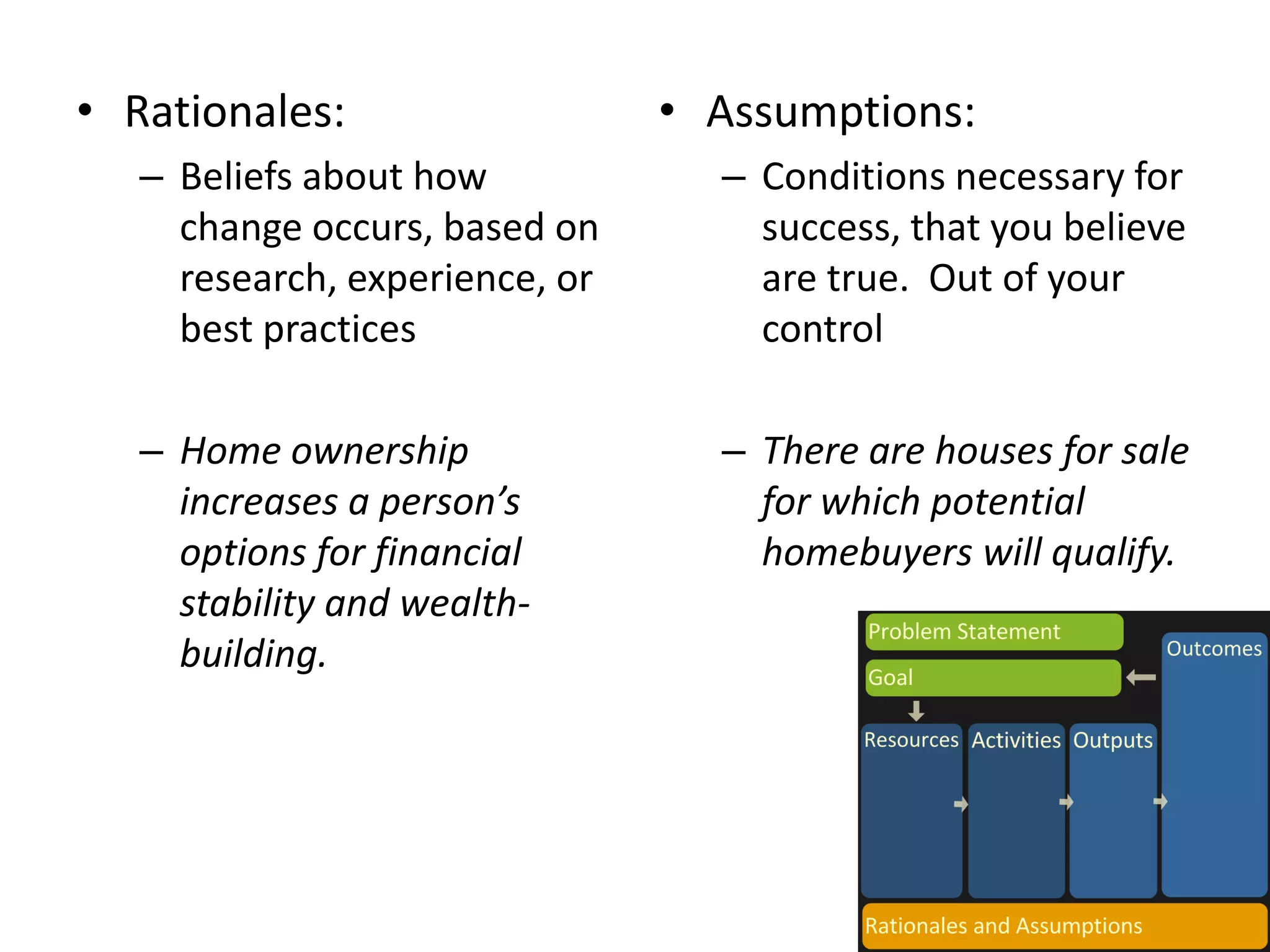
• Rationales:

• Assumptions:

– Beliefs about how
change occurs, based on
research, experience, or
best practices

– Conditions necessary for
success, that you believe
are true. Out of your
control

– Home ownership
increases a person’s
options for financial
stability and wealthbuilding.

– There are houses for sale
for which potential
homebuyers will qualify.
• Resources:
– What you currently have
(HR, Financial, Space, Tec
hnology, other
equipment, materials)
– In-kind contributions
– If logic model will be a
part of a proposal or
funding request, include
resources you need but
don’t have

• Activities:
– The actions needed to
implement your program
• Developing products
• Providing services
• Engaging in policy
advocacy
• Building infrastructure
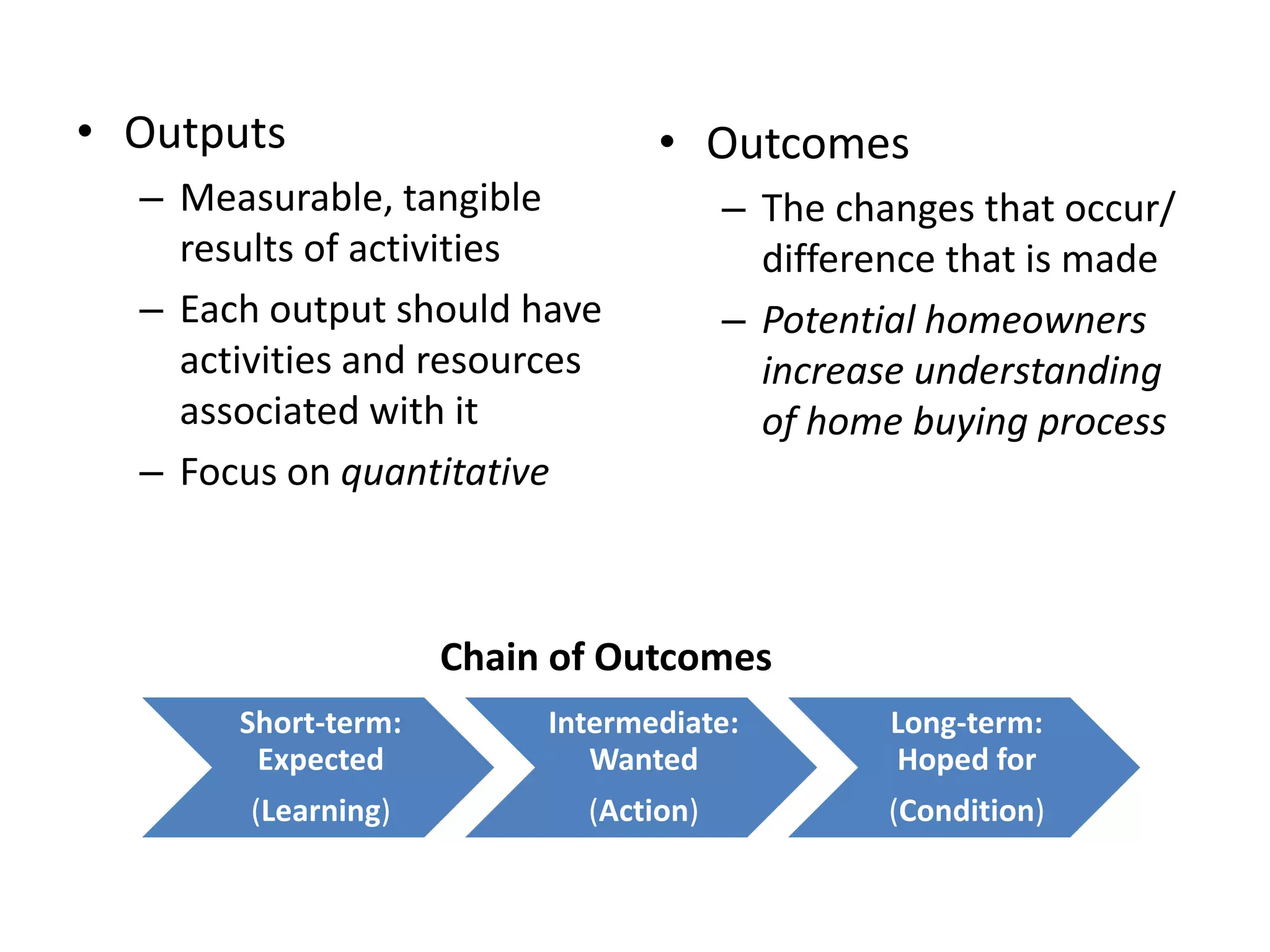
• Outputs

• Outcomes

– Measurable, tangible
results of activities
– Each output should have
activities and resources
associated with it
– Focus on quantitative

– The changes that occur/
difference that is made
– Potential homeowners
increase understanding
of home buying process

Chain of Outcomes
Short-term:
Expected

Intermediate:
Wanted

Long-term:
Hoped for

(Learning)

(Action)

(Condition)
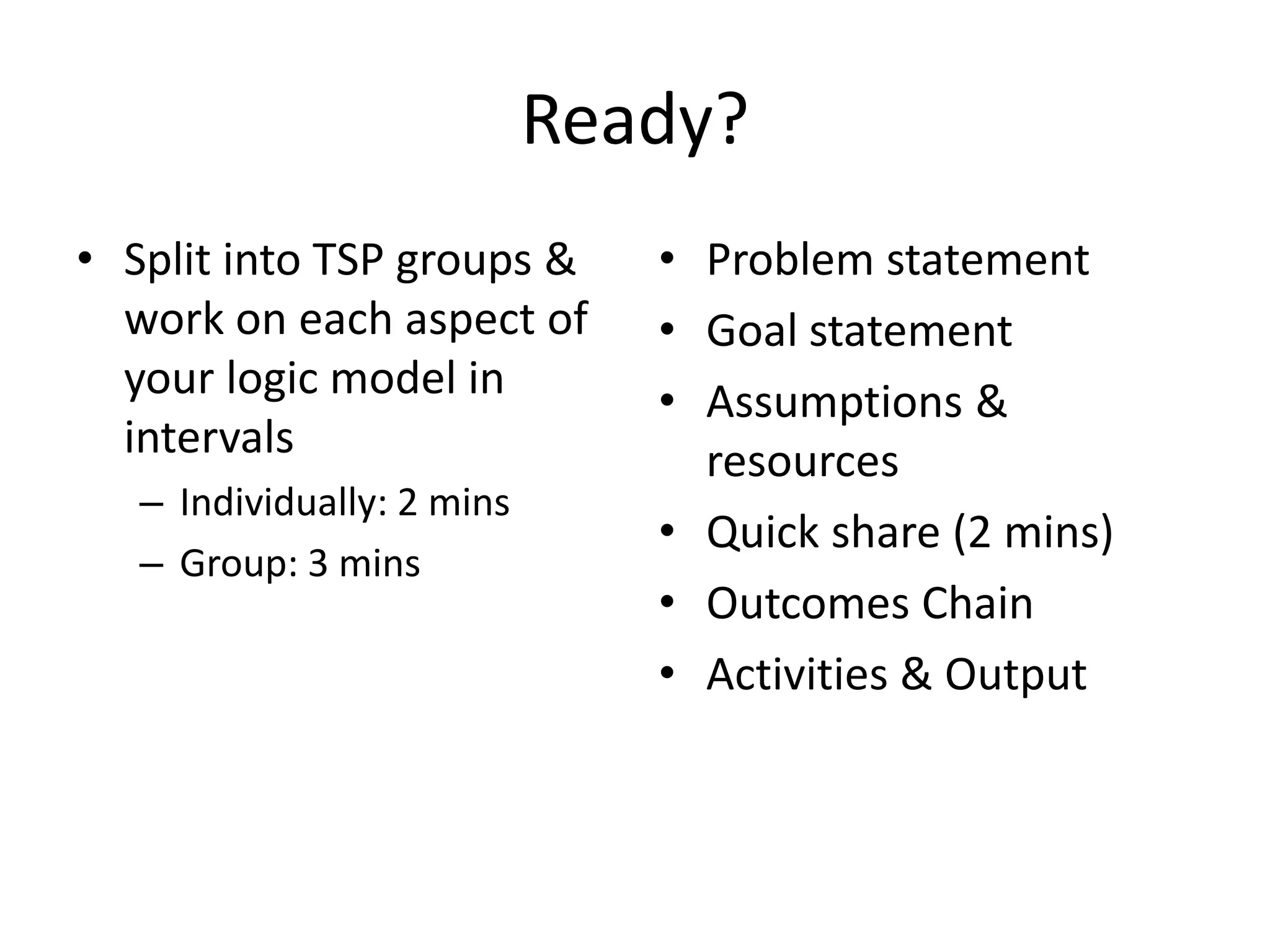
Ready?
• Split into TSP groups &
work on each aspect of
your logic model in
intervals
– Individually: 2 mins
– Group: 3 mins

• Problem statement
• Goal statement
• Assumptions &
resources
• Quick share (2 mins)
• Outcomes Chain
• Activities & Output
Additional Resources:

Innovation Network Logic Model Workbook:
http://www.innonet.org/client_docs/File/logic_model_workb
ook.pdf
Kellogg Foundation Logic Model Development Guide:
http://www.uwsa.edu/edi/grants/Kellogg_Logic_Model.pdf
Action Evaluation Collaborative – Theory of Action Guide:
http://actionevaluation.org/theory-of-actiontheory-of-changetools-resources/
“Tearless Logic Model”
http://www.gjcpp.org/en/tool.php?issue=7&tool=9

Logic Models and Theories of Change

  • 1.
    Logic Models &Theories of Change Scot Evans Natalie Kivell University of Miami
  • 2.
    Think of apersonal challenge, problem, or opportunity that you’ve recently decided to do something about 1. 2. 3. What goals have you set for yourself? What will you do to reach these goals? How will you know you’ve accomplished your goals?
  • 3.
    Two reasons why changeefforts don’t work: Theory failure Implementation failure
  • 4.
    Theory failure - Underlyingassumptions of the program theory are not appropriate for the context - The program is implemented well, yet doesn’t affect the variables specified by the program theory - The activity of program is not implemented adequately Implementation failure
  • 5.
    • Theory: “aset of beliefs or assumptions that underlie action” (Weiss, 1997) • Program theory: “a plausible and sensible model of how a program is supposed to work” (Bickman, 1987) • Make program theory explicit in advance to help surface assumptions, make explicit plans, and structure the evaluation
  • 7.
    Baby Literacy Project •Goal: All parents and caregivers of 6-12 month old children born in Waterloo Region will be actively engaged in stimulating their child’s emergent literacy skills. Activities: Collaborative deployment of early literacy “toolkits” and accompanying programming
  • 9.
    The Learning Organization orientation Learning isan organizational characteristic that affects how information is processed. culture an organizational that places importance on learning is integral to achieving success organizations that have a strong learning orientation have the ability to understand the cause and effects of their actions
  • 10.
    Why Logic Models? Alignsactions to mission Examines assumptions, resources, rat ionales, activities, etc. The result: a tool to educate, communicate, pla n, build consensus, and fundraise. Also critical for evaluation!
  • 11.
    Where Do IBegin? If… then…
  • 12.
    • Problem Statement: •Goal: – Clearly articulate the problem you’re trying to solve – What are you trying to accomplish? (The solution to the problem) – I do not own my home, so I do not experience the many financial and emotional benefits of home ownership. – To increase my financial independence and security through home ownership
  • 13.
    • Rationales: • Assumptions: –Beliefs about how change occurs, based on research, experience, or best practices – Conditions necessary for success, that you believe are true. Out of your control – Home ownership increases a person’s options for financial stability and wealthbuilding. – There are houses for sale for which potential homebuyers will qualify.
  • 14.
    • Resources: – Whatyou currently have (HR, Financial, Space, Tec hnology, other equipment, materials) – In-kind contributions – If logic model will be a part of a proposal or funding request, include resources you need but don’t have • Activities: – The actions needed to implement your program • Developing products • Providing services • Engaging in policy advocacy • Building infrastructure
  • 15.
    • Outputs • Outcomes –Measurable, tangible results of activities – Each output should have activities and resources associated with it – Focus on quantitative – The changes that occur/ difference that is made – Potential homeowners increase understanding of home buying process Chain of Outcomes Short-term: Expected Intermediate: Wanted Long-term: Hoped for (Learning) (Action) (Condition)
  • 16.
    Ready? • Split intoTSP groups & work on each aspect of your logic model in intervals – Individually: 2 mins – Group: 3 mins • Problem statement • Goal statement • Assumptions & resources • Quick share (2 mins) • Outcomes Chain • Activities & Output
  • 17.
    Additional Resources: Innovation NetworkLogic Model Workbook: http://www.innonet.org/client_docs/File/logic_model_workb ook.pdf Kellogg Foundation Logic Model Development Guide: http://www.uwsa.edu/edi/grants/Kellogg_Logic_Model.pdf Action Evaluation Collaborative – Theory of Action Guide: http://actionevaluation.org/theory-of-actiontheory-of-changetools-resources/ “Tearless Logic Model” http://www.gjcpp.org/en/tool.php?issue=7&tool=9

Editor's Notes

  • #2 Greetings
  • #11 Start here.The whole purpose of a Logic Model is to lay everything out: goals, resources, activities, assumptions, so that anyone who looks at the model can see the logic, the why of what you're doing.One aspect that many nonprofits get criticized on, is that they aren't taking the steps necessary to achieve their mission. If your mission is to end hunger, but all you do is give out meals to the homeless, nothing is being done to keep them from coming back the next day.Result: a model that everyone from upper management to volunteers can use as a guide. Many funders want to see a plan hashed out, and a discussion of all current and needed resources.Finally, since a logic model requires you to determine your activities, outputs, and outcomes, it’s a perfect start for any evaluations that may take place in the future.
  • #12 Where you begin is up to you. Some prefer to start at the beginning with the issue your program is addressing, and work through it systematically. Others choose to start at the end, with your desired impact, and backwards map.Essentially, it’s a series of if, then statements. If I have these resources, then I can conduct these activities. If we conduct these activities, then we can expect these outputs, and so on. If, at any point, there’s no logical connection, something needs to be adjusted.
  • #13 Problem statement AKA Issue statement or Situation.Goal AKA Objective or Long Term Outcome, should specify target populationOnly have 1 goal! Other goals may be long-term outcomes.Be broad, but not so broad as to provide no guidance
  • #15 Resources AKA Inputs or Program InvestmentsDon’t go into a detailed list of all program expenditures. A logic model is great for creating a budget later, but while hashing all this out, you don’t want to get in the nitty gritty of pricing.Everything from simple office supplies to peopleActivities AKA processes, strategies, methods, action stepsLarger programs may group activities together for sake of clarity. Smaller programs may have just one or two activities.Activities will guide the development of a work plan, with staff assignments and a timeline, more detailFor homebuyer example: preliminary research, financial preparation, homebuyer’s education, identify a neighborhood, secure mortgage loan, choose a house, make the purchase
  • #16 Outputs AKA deliverables, units of service, productsOutcomes AKA results, impacts, objectivesOutcomes can occur across all ecological levels (individual, family, community, systems, organizationsOutputs are direct and measurable products, while outcomes are impacts, results
  • #17 To give you a chance to see what it’s like, we’ve built some time in for you to try it here.