Systemic Maturity Models and
Multi-organization Collaborations:
ACMHI Mentally Healthy Campus Maturity Model
Sharon Matthias | Innovation Platform
Jess McMullin | Situ Strategy
1
Backstory
2
• ACMHI = Alberta Campus
Mental Health Innovation
• 4 yrs. Funding from AB Gov’t
• Student Associations in
14 small - midsize colleges,
universities and polytechnics
• Legacy tools created by mining
Innovation projects
• Long view as well as short
• Strategic cohort – ROI to
society
• Society and personal benefit –
habits and norms in PS are
carried through life –
workplaces, families and
communities benefit
• Helping students grow their
mental wellness capabilities
• Disruptive thinking yields
value for all PSI players and
policy makers
3
Value Proposition : Post Secondary Students
4
Systemic Learning Evaluation for
Legacy Tools
- If they were doing what they did purposefully,
what would they have been assuming?
/ what program model would they have been using?
—> Tools so others “stand on their shoulders”
3 Core Requirements
-Based in Student Experience
-Dual continua model of mental wellness
-Mentally Healthy Campus
5
Mentally Healthy Campus
as complex adaptive system
6
ACMHI Legacy Tools
-Emergent Program Model / Strategy
-Student Academic Journey Map, Wellness Journey Map
-Mentally Healthy Campus Developmental Maturity Model
-Evaluation & Learning Framework
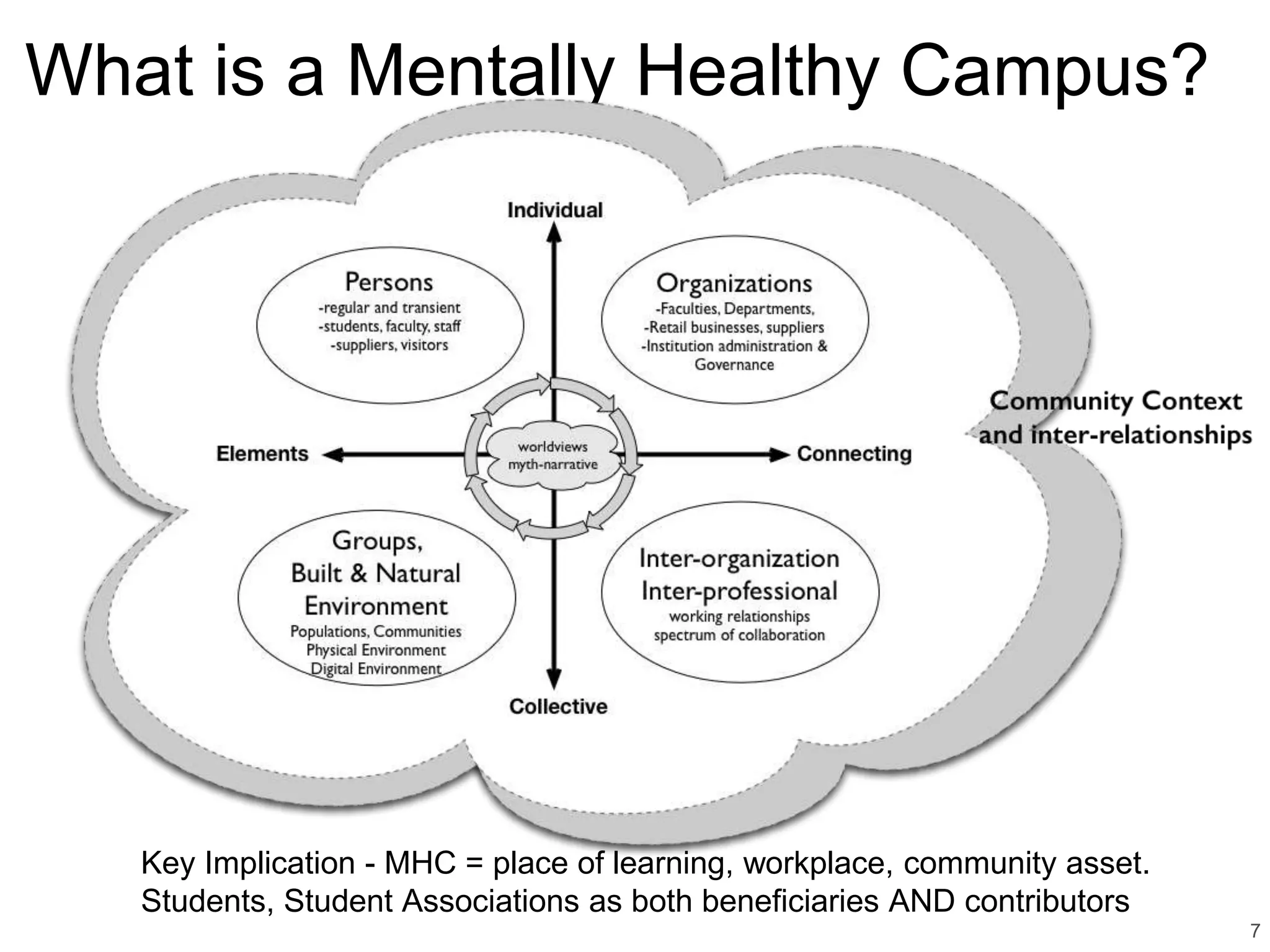
What is a Mentally Healthy Campus?
7
Key Implication - MHC = place of learning, workplace, community asset.
Students, Student Associations as both beneficiaries AND contributors
The Challenge
‣ Tackling complex systems challenges like integrated
mental wellness and mental disorders requires a
host of factors (and organizations) to work together.
‣ However, this holistic view can be paralyzing: Which
factors? How do we know how we’re doing, who
should do it, and what should we do next?
‣ A maturity model can help focus efforts in complex
systems challenges.
‣ A developmental maturity model visualizes the need
for both growth and development.
8
9
Progress Vs The Mirage of Perfection
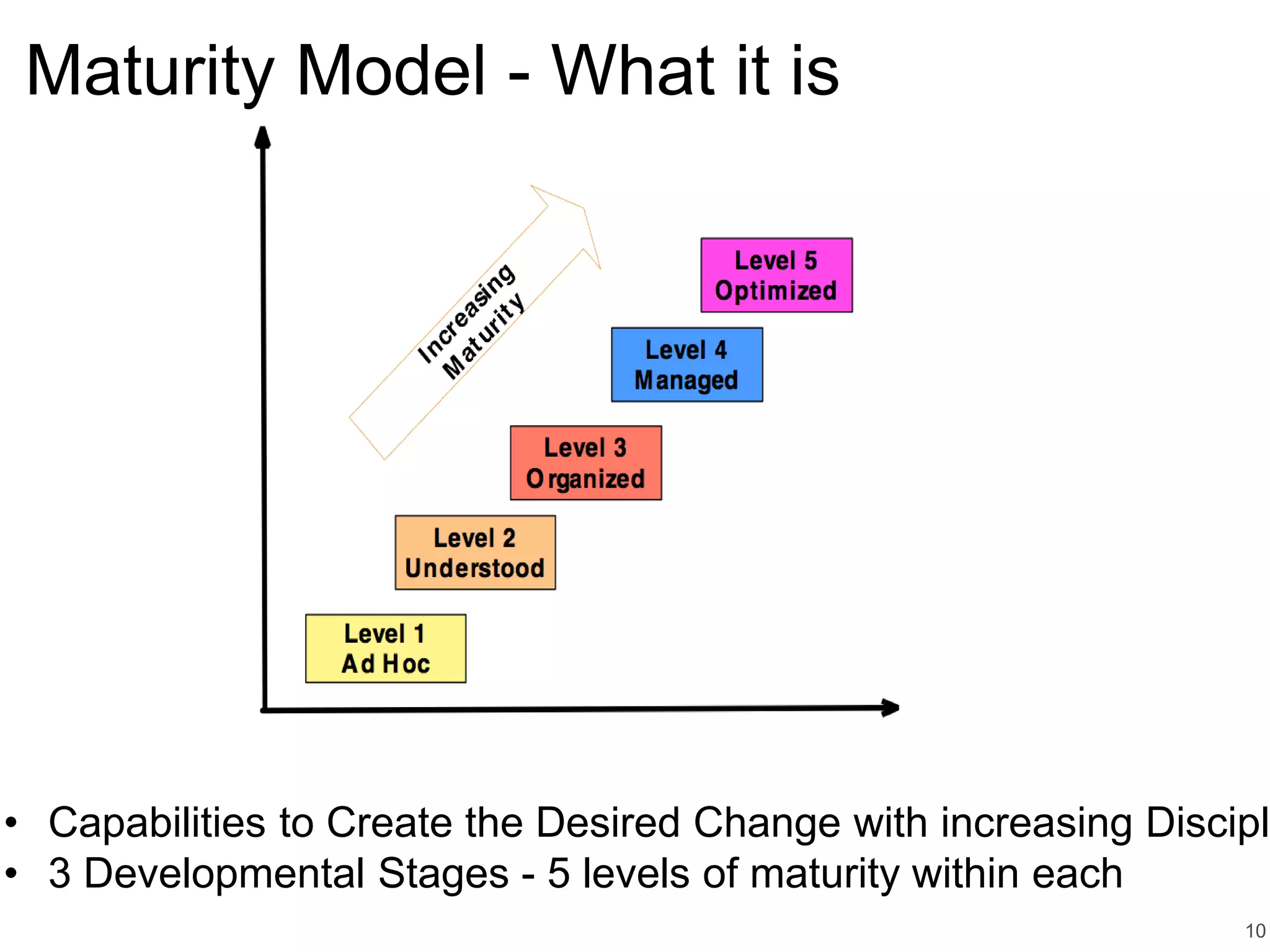
Maturity Model - What it is
10
• Capabilities to Create the Desired Change with increasing Discipli
• 3 Developmental Stages - 5 levels of maturity within each
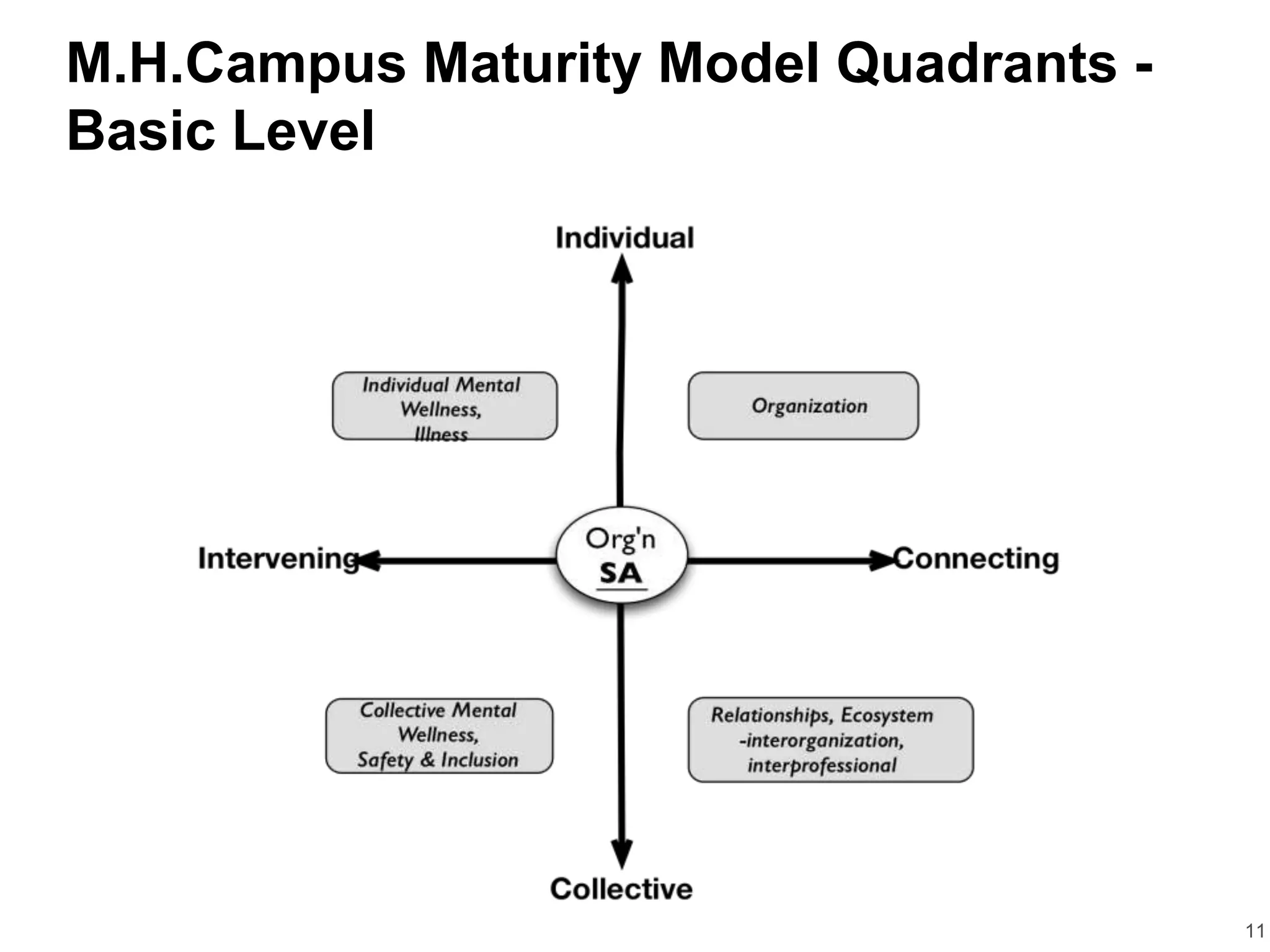
M.H.Campus Maturity Model Quadrants -
Basic Level
11
Multi-organization & Multi-professional
Collaborations
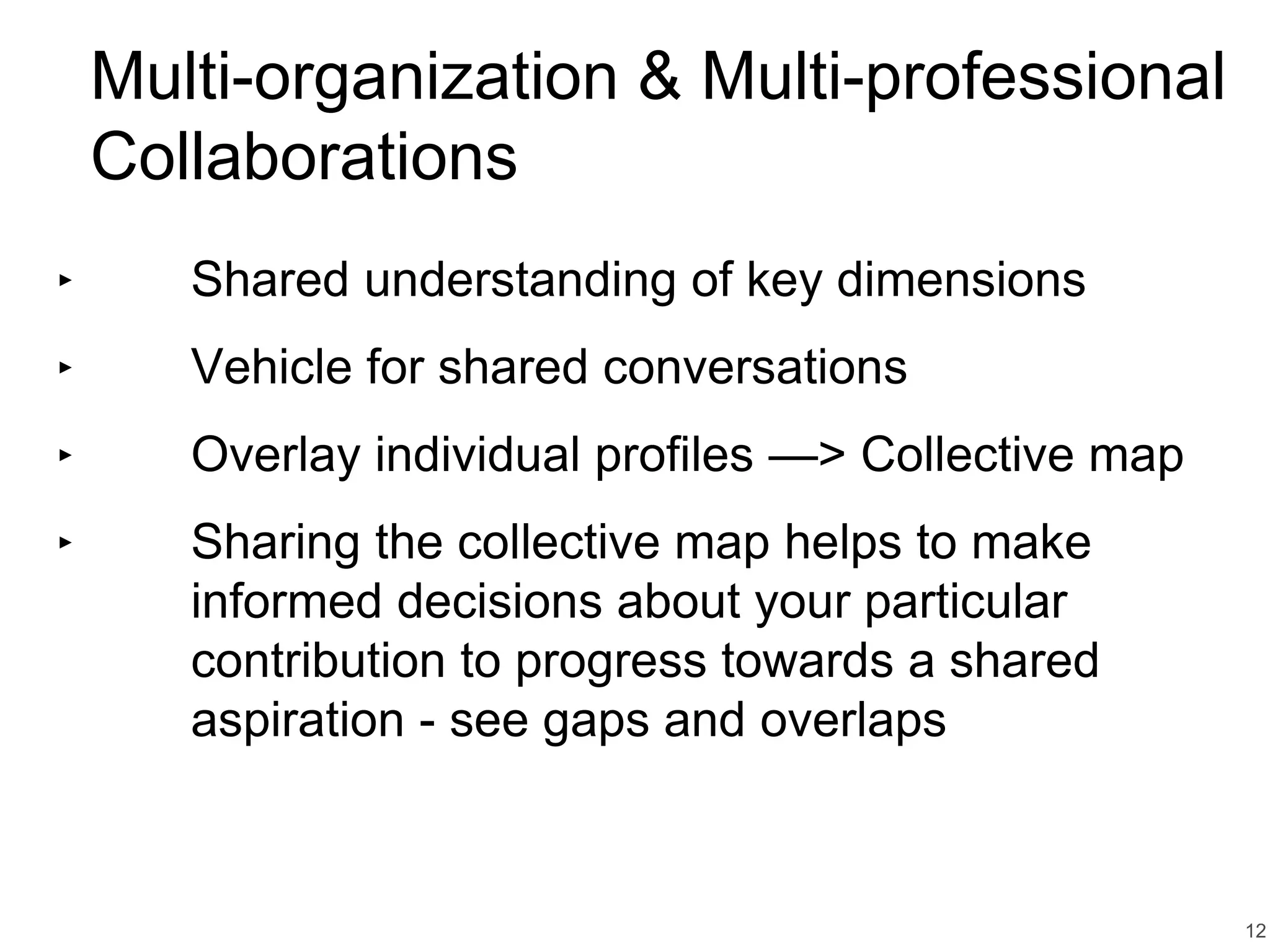
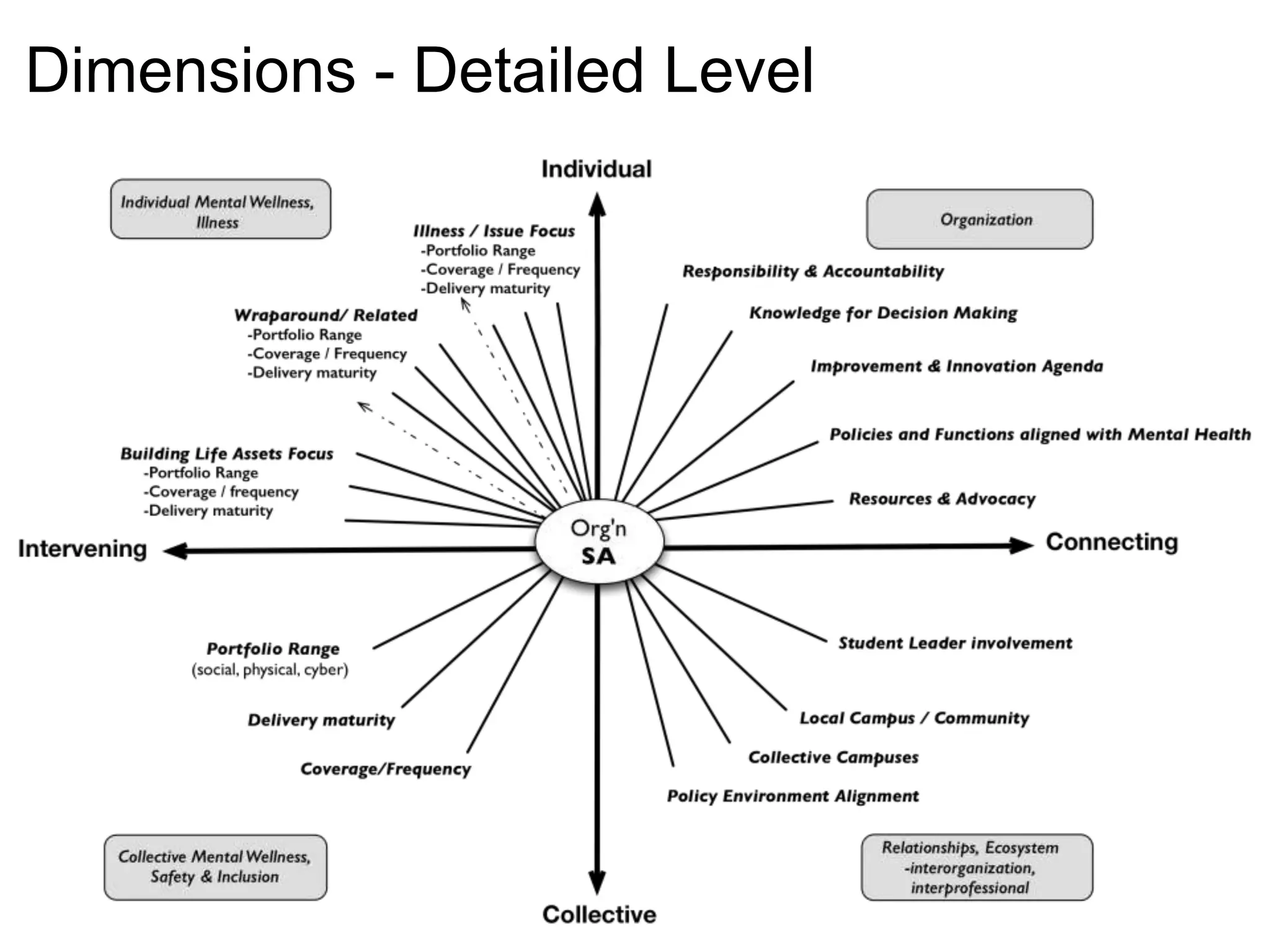
‣ Shared understanding of key dimensions
‣ Vehicle for shared conversations
‣ Overlay individual profiles —> Collective map
‣ Sharing the collective map helps to make
informed decisions about your particular
contribution to progress towards a shared
aspiration - see gaps and overlaps
12
Dimensions - Detailed Level
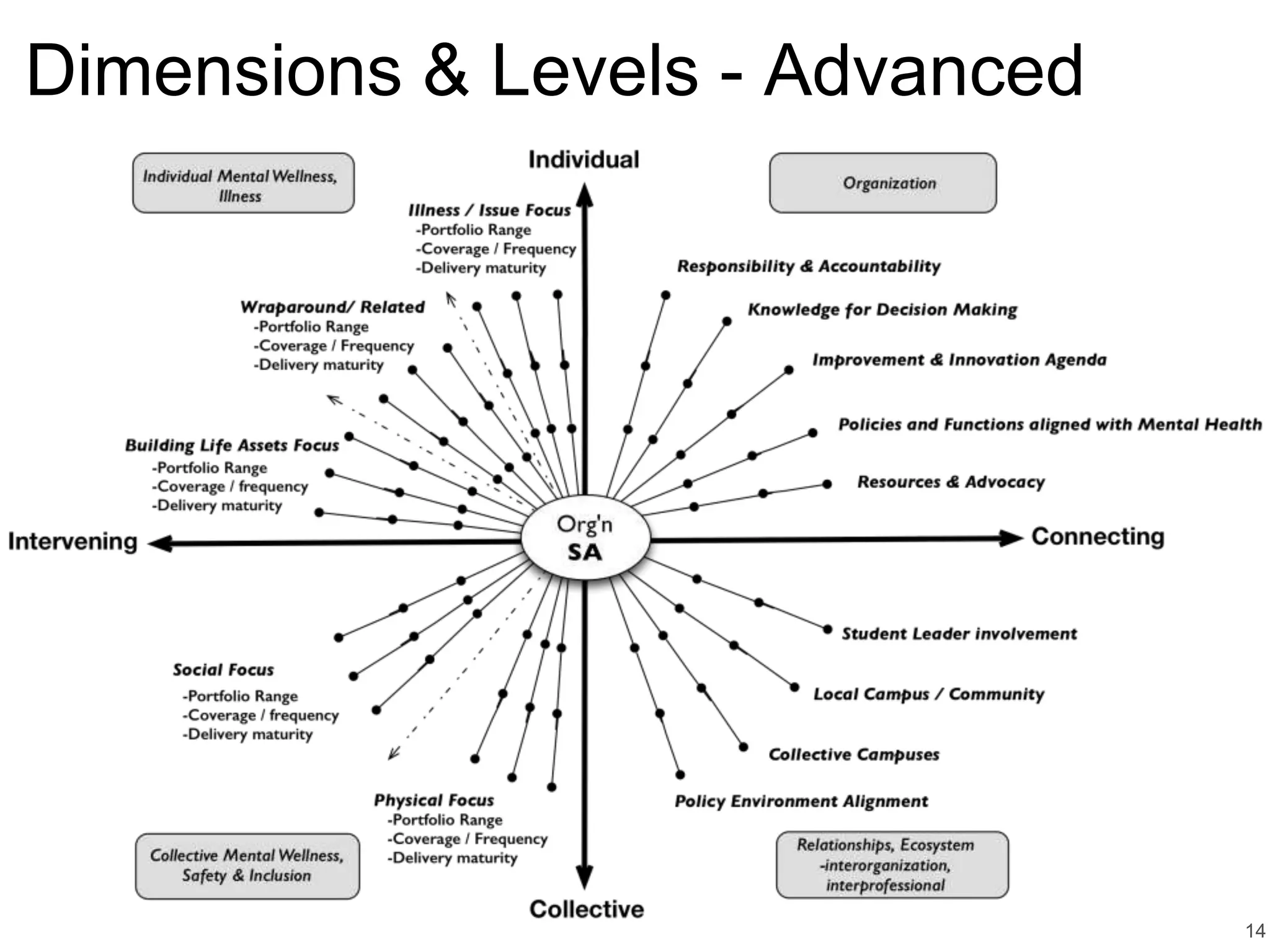
Dimensions & Levels - Advanced
14
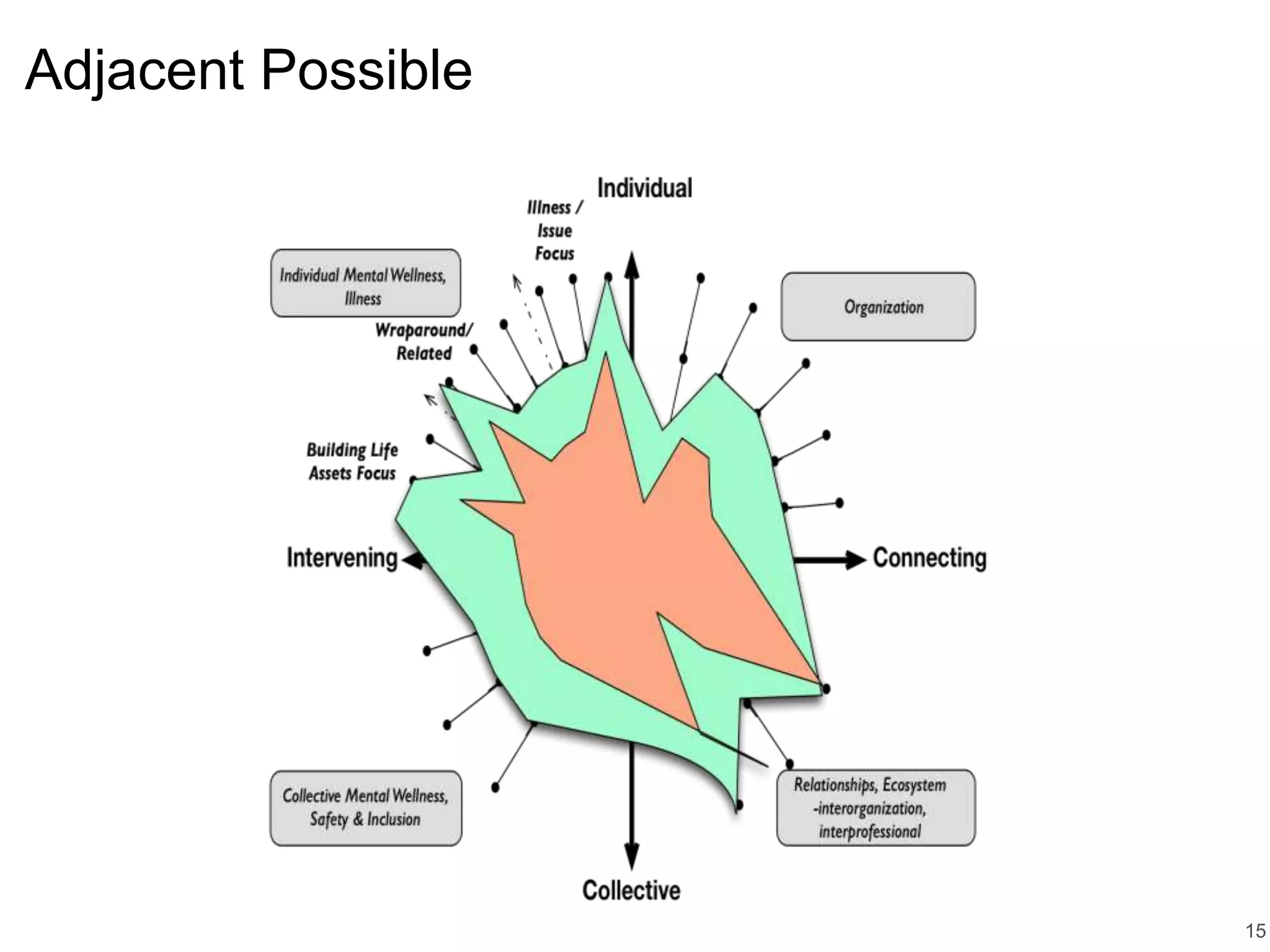
Adjacent Possible
15
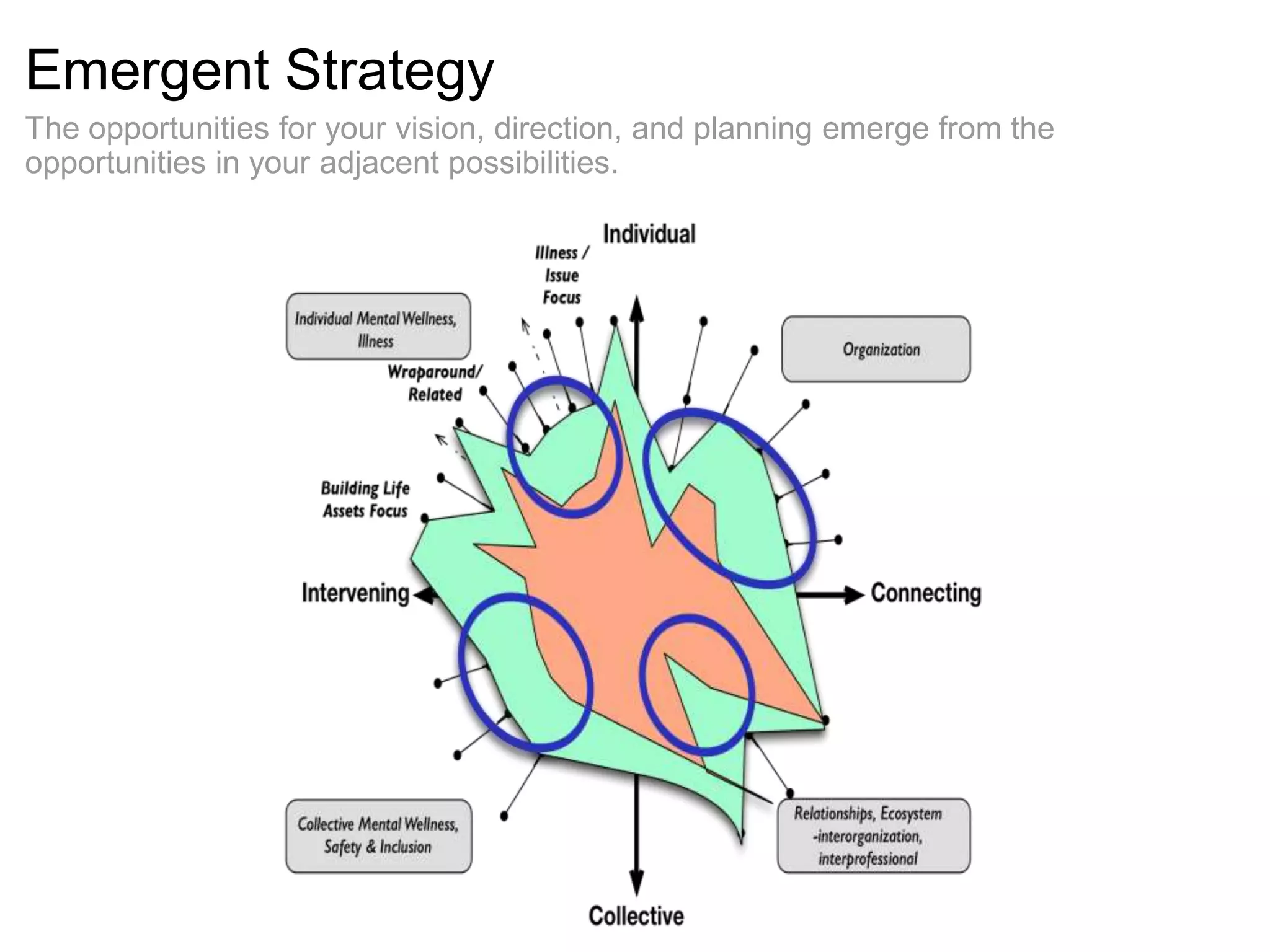
Emergent Strategy
The opportunities for your vision, direction, and planning emerge from the
opportunities in your adjacent possibilities.
17
Thank You! Questions?
Sharon Matthias,
Innovation Platform: for Flourishing Societies
sharon@InnovationPlatform.com
Jess McMullin,
Situ Strategy , Centre for Citizen Experience
jess@situ.org

Rsd6 mm presentation 8 ppt

  • 1.
    Systemic Maturity Modelsand Multi-organization Collaborations: ACMHI Mentally Healthy Campus Maturity Model Sharon Matthias | Innovation Platform Jess McMullin | Situ Strategy 1
  • 2.
    Backstory 2 • ACMHI =Alberta Campus Mental Health Innovation • 4 yrs. Funding from AB Gov’t • Student Associations in 14 small - midsize colleges, universities and polytechnics • Legacy tools created by mining Innovation projects
  • 3.
    • Long viewas well as short • Strategic cohort – ROI to society • Society and personal benefit – habits and norms in PS are carried through life – workplaces, families and communities benefit • Helping students grow their mental wellness capabilities • Disruptive thinking yields value for all PSI players and policy makers 3 Value Proposition : Post Secondary Students
  • 4.
    4 Systemic Learning Evaluationfor Legacy Tools - If they were doing what they did purposefully, what would they have been assuming? / what program model would they have been using? —> Tools so others “stand on their shoulders” 3 Core Requirements -Based in Student Experience -Dual continua model of mental wellness -Mentally Healthy Campus
  • 5.
    5 Mentally Healthy Campus ascomplex adaptive system
  • 6.
    6 ACMHI Legacy Tools -EmergentProgram Model / Strategy -Student Academic Journey Map, Wellness Journey Map -Mentally Healthy Campus Developmental Maturity Model -Evaluation & Learning Framework
  • 7.
    What is aMentally Healthy Campus? 7 Key Implication - MHC = place of learning, workplace, community asset. Students, Student Associations as both beneficiaries AND contributors
  • 8.
    The Challenge ‣ Tacklingcomplex systems challenges like integrated mental wellness and mental disorders requires a host of factors (and organizations) to work together. ‣ However, this holistic view can be paralyzing: Which factors? How do we know how we’re doing, who should do it, and what should we do next? ‣ A maturity model can help focus efforts in complex systems challenges. ‣ A developmental maturity model visualizes the need for both growth and development. 8
  • 9.
    9 Progress Vs TheMirage of Perfection
  • 10.
    Maturity Model -What it is 10 • Capabilities to Create the Desired Change with increasing Discipli • 3 Developmental Stages - 5 levels of maturity within each
  • 11.
    M.H.Campus Maturity ModelQuadrants - Basic Level 11
  • 12.
    Multi-organization & Multi-professional Collaborations ‣Shared understanding of key dimensions ‣ Vehicle for shared conversations ‣ Overlay individual profiles —> Collective map ‣ Sharing the collective map helps to make informed decisions about your particular contribution to progress towards a shared aspiration - see gaps and overlaps 12
  • 13.
  • 14.
    Dimensions & Levels- Advanced 14
  • 15.
  • 16.
    Emergent Strategy The opportunitiesfor your vision, direction, and planning emerge from the opportunities in your adjacent possibilities.
  • 17.
    17 Thank You! Questions? SharonMatthias, Innovation Platform: for Flourishing Societies sharon@InnovationPlatform.com Jess McMullin, Situ Strategy , Centre for Citizen Experience jess@situ.org

Editor's Notes

  • #4 PSE is also a stage in life journey Impact not just during PSE experience, Benefit not just to individual Not just student body at large but the student leaders who’ve been immersed in trying to influence mental health – skills and abilities in engaging students, writing proposals and managing projects, -- but many have gained an unexpected passion for improving mental health
  • #14 About your strategies – what are you doing (ELF gives you how well you’re doing, Student Journey can give you some differentiation) Diversity – Universal to Unique – designed for specific groups, targeted at specific area of the Student Journey Map
  • #17 Won’t go into details of the right side dimensions today – suffice to say that each of them also has defined dimensions and levels This allows graphic representation of state and process, by integrating findings from ELF, and continuing to ground activities in the Student Journey --- can have a dashboard that quickly tells the story of where we are, and where we might consider moving next, given the realities of our situation and windows of opportunity that may be open. From these, strategies can be purposefully developed .