1
Good Documentation Practices
2
Quality Assurance
The sum total of organized
arrangements made with the
object of ensuring that
products are of the quality
required for their intended
use and that quality systems
are maintained.
3
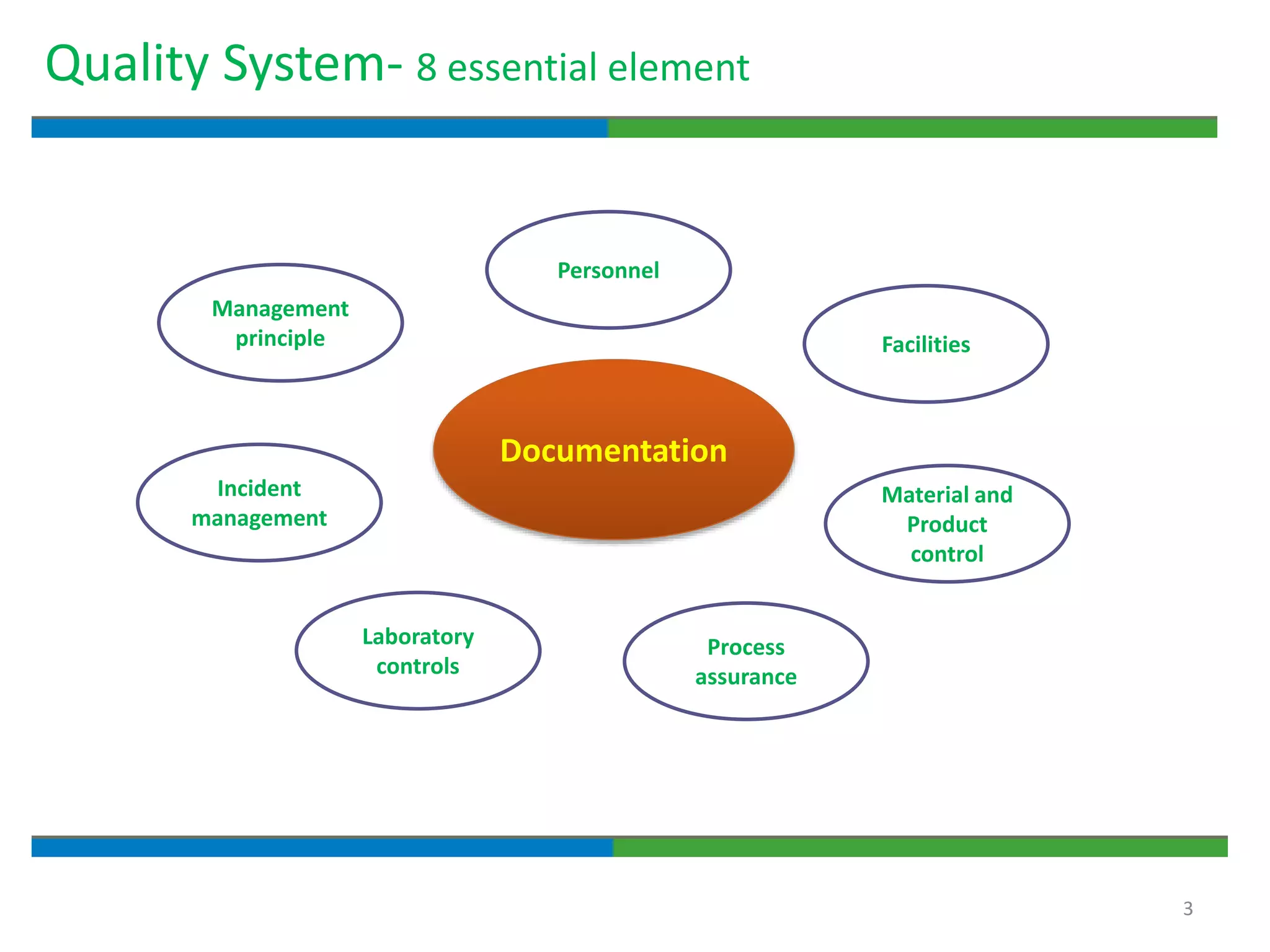
Quality System- 8 essential element
Management
principle
Personnel
Documentation
Facilities
Material and
Product
control
Process
assurance
Laboratory
controls
Incident
management
4
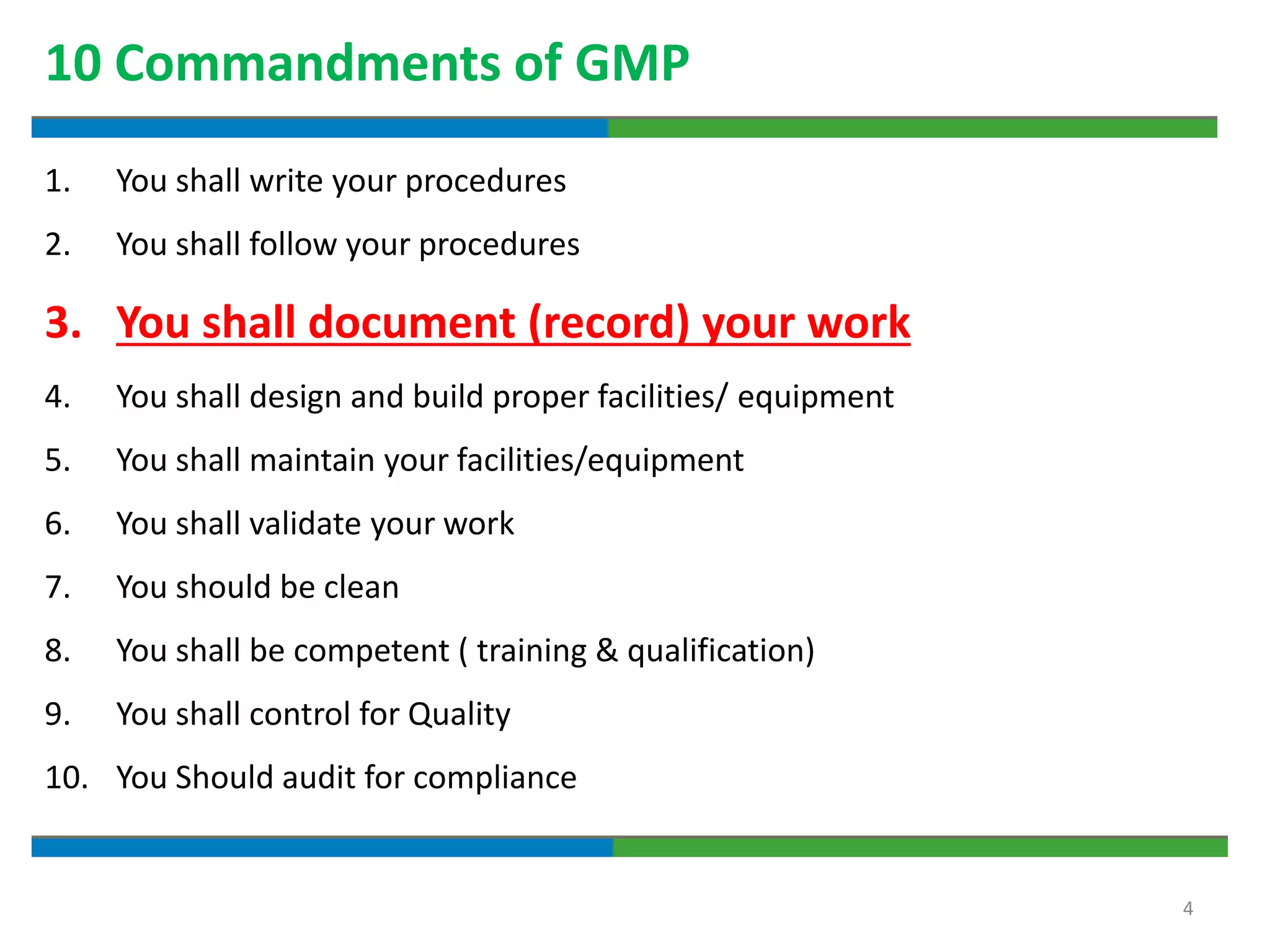
10 Commandments of GMP
1. You shall write your procedures
2. You shall follow your procedures
3. You shall document (record) your work
4. You shall design and build proper facilities/ equipment
5. You shall maintain your facilities/equipment
6. You shall validate your work
7. You should be clean
8. You shall be competent ( training & qualification)
9. You shall control for Quality
10. You Should audit for compliance
5
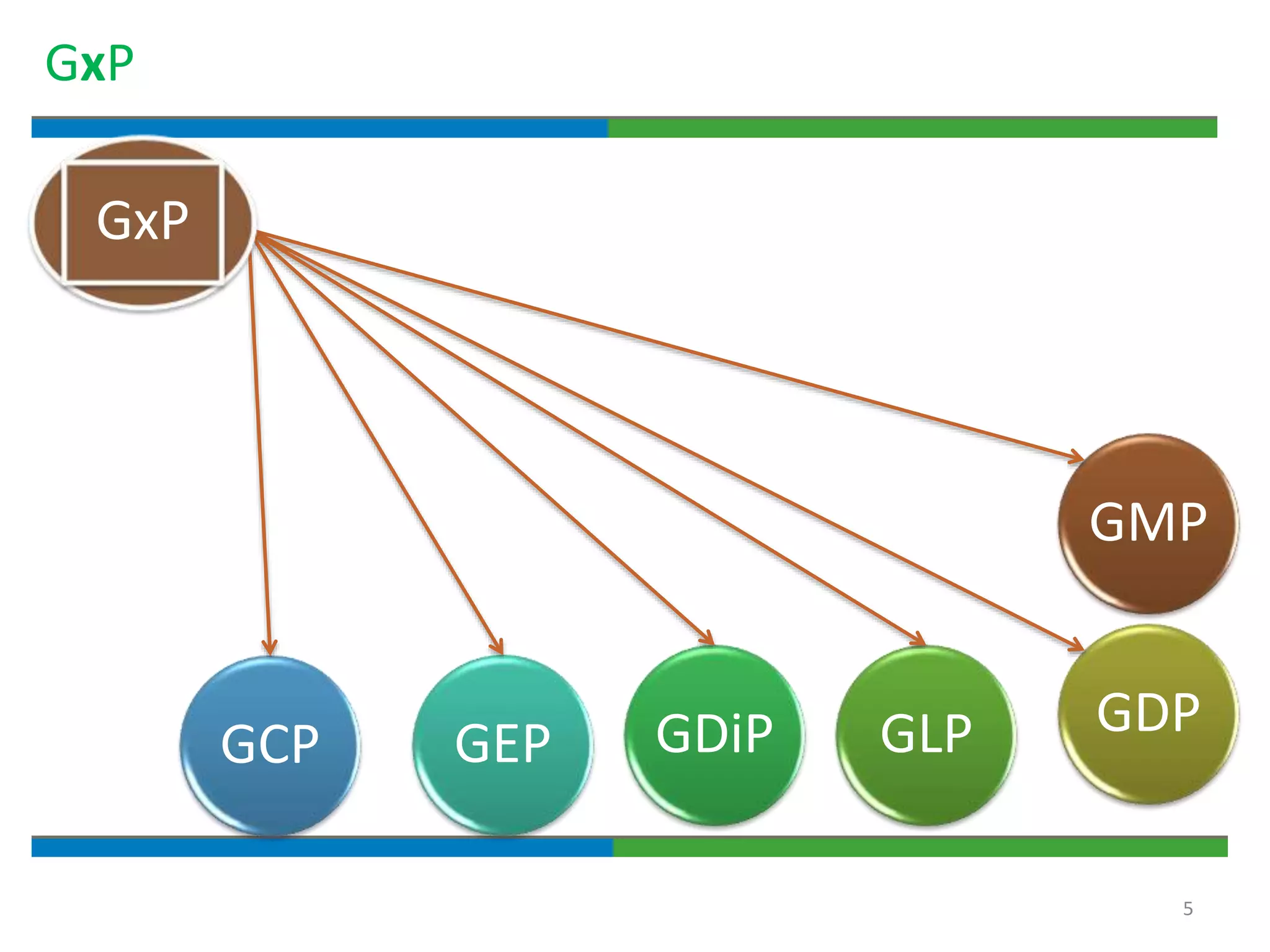
GxP
GMP
GDPGLPGDiPGEPGCP
GxP
6
Definition
Document:
Any written and approved information or instructions
procedures.
Document Management:
Creation, distribution and deletion of documents
7
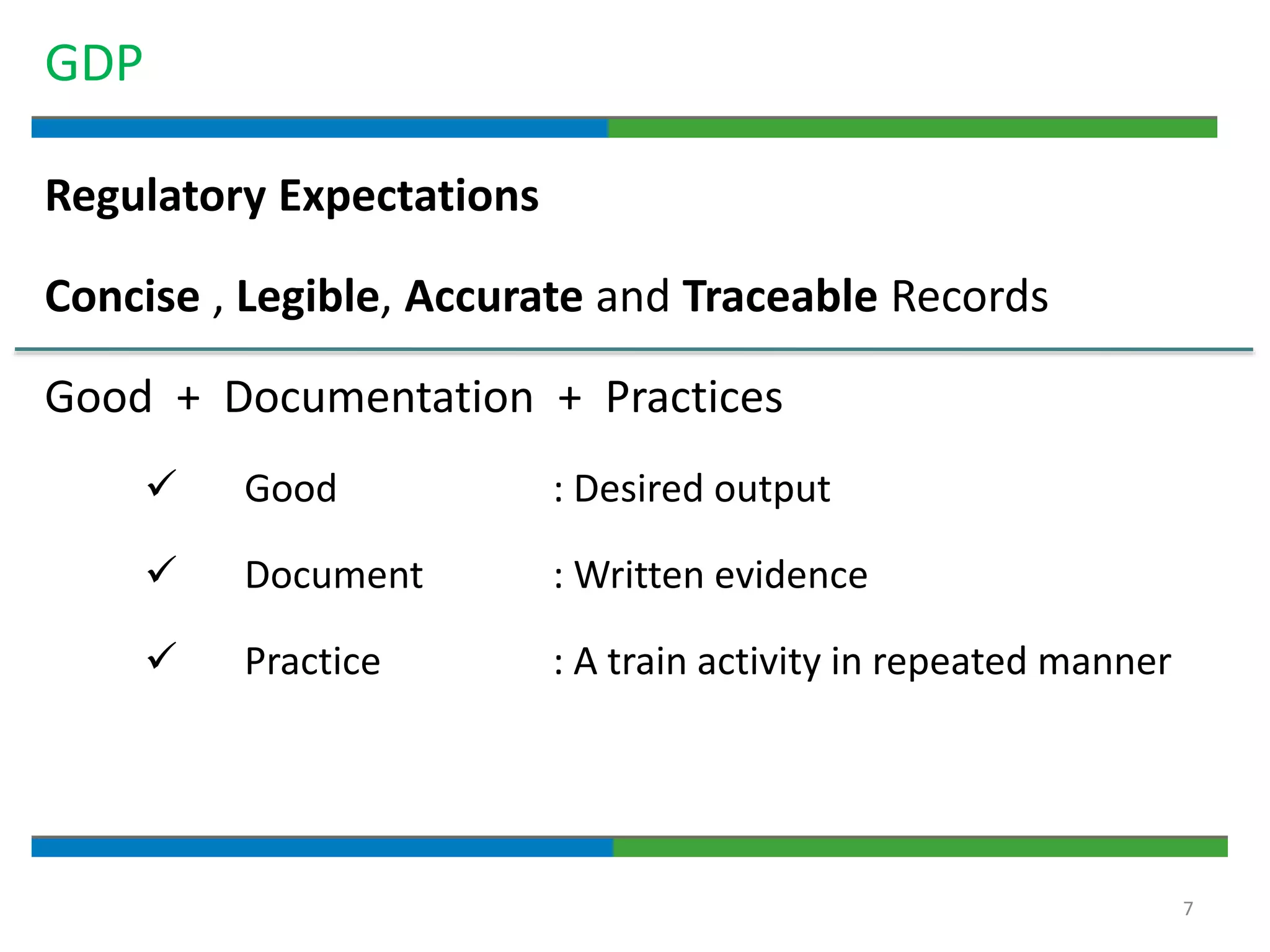
GDP
Regulatory Expectations
Concise , Legible, Accurate and Traceable Records
Good + Documentation + Practices
 Good : Desired output
 Document : Written evidence
 Practice : A train activity in repeated manner
8
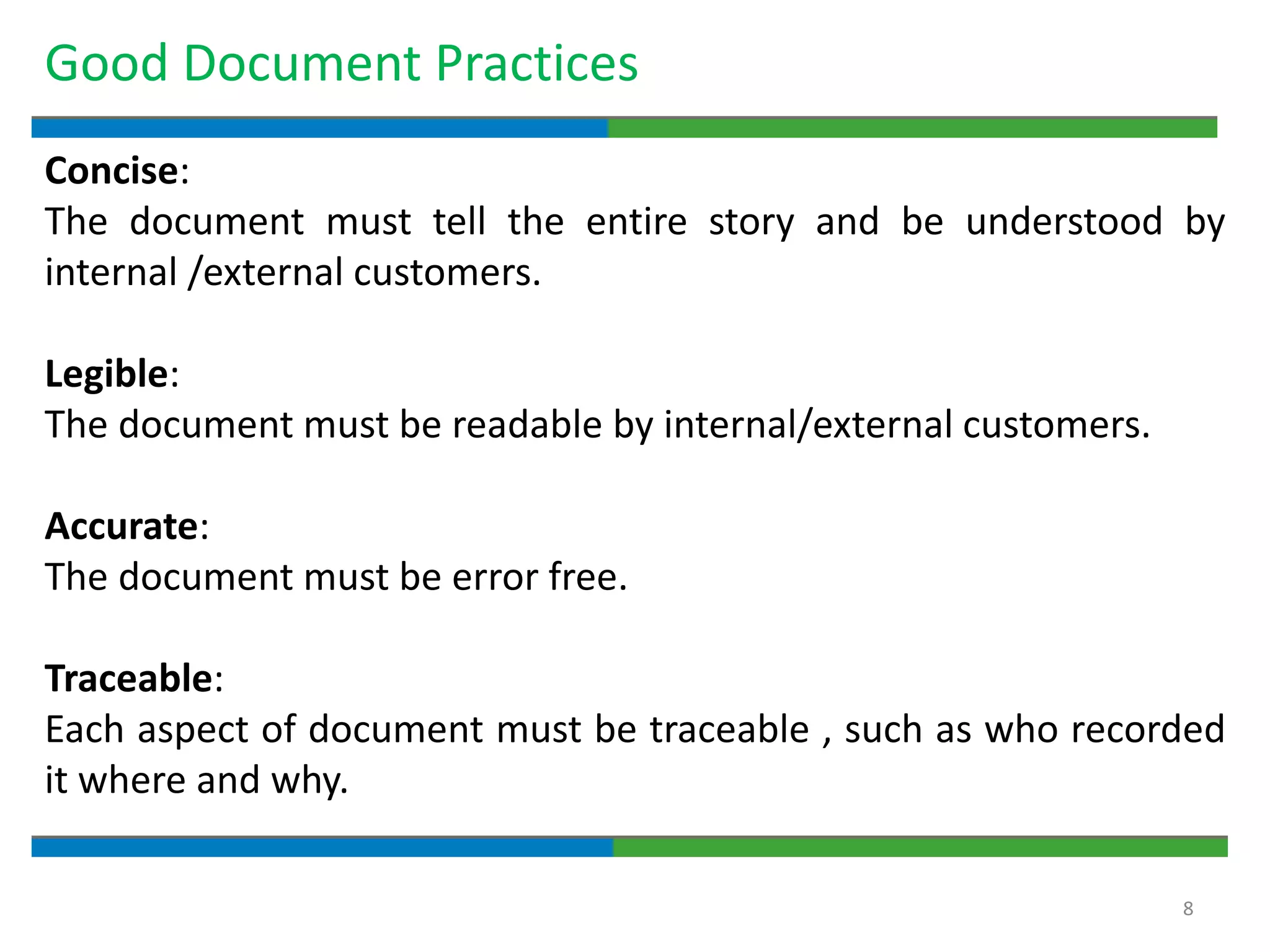
Good Document Practices
Concise:
The document must tell the entire story and be understood by
internal /external customers.
Legible:
The document must be readable by internal/external customers.
Accurate:
The document must be error free.
Traceable:
Each aspect of document must be traceable , such as who recorded
it where and why.
9
Requirement
 Deals with good and acceptable practices in
document:
 Generation
 Handling
 Distribution
 Archival
 Retiring
10
Document Control for…
 Instructions for tasks (procedures)
 Instructions for behaviors (policies)
 Instructions for organization (processes)
 And any associated material related to these
instructions.
11
Importance
 Correct and appropriate informations
 Easy to share informations
 Easy to demonstrate
 Easy to collect
 Regulatory appreciates
 Current regulatory requirements
 Harmonised work practices
 Avoid 483’s / Observations
 Expected Practice
12
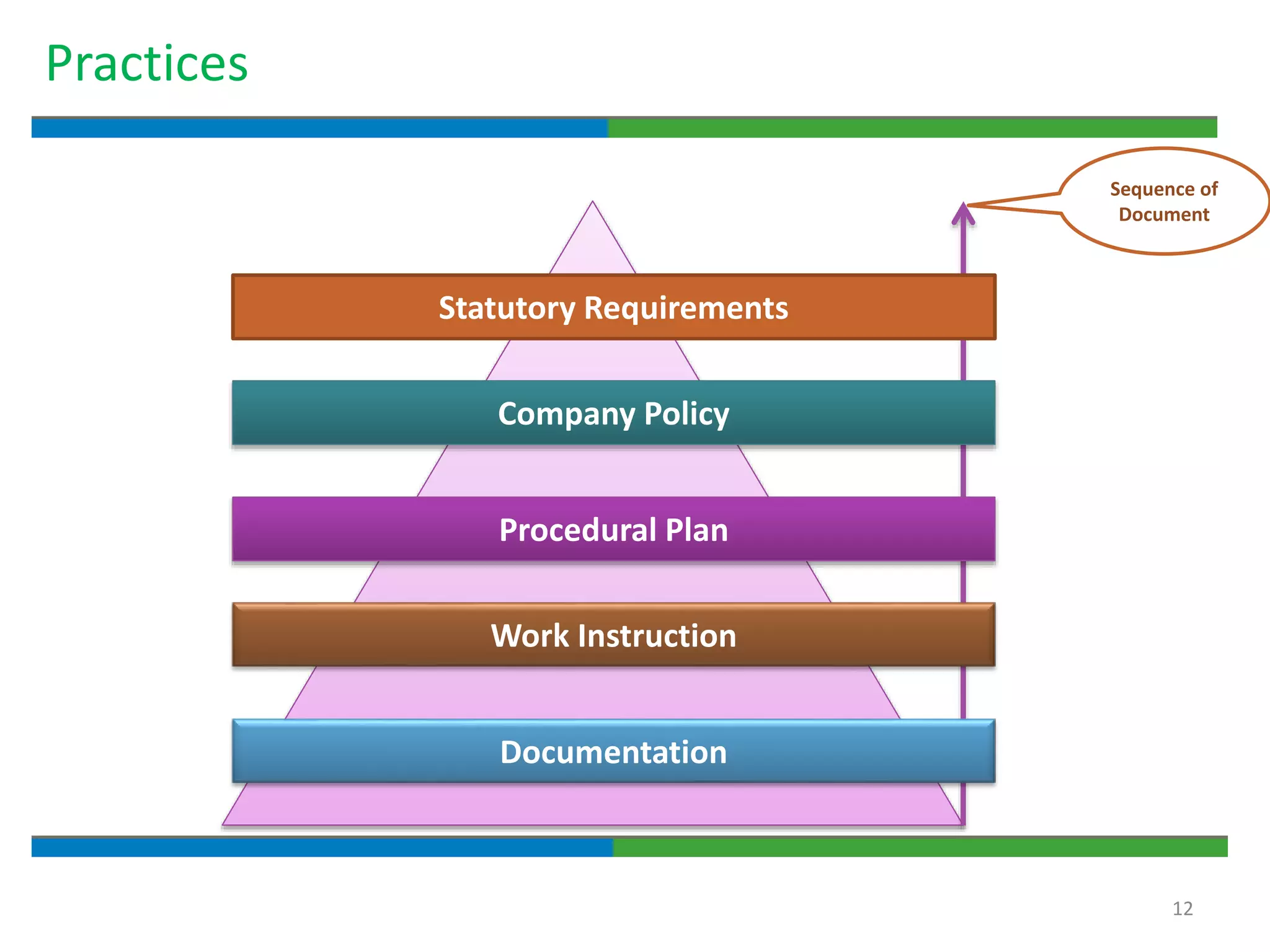
Practices
Documentation
Work Instruction
Procedural Plan
Company Policy
Statutory Requirements
Sequence of
Document
13
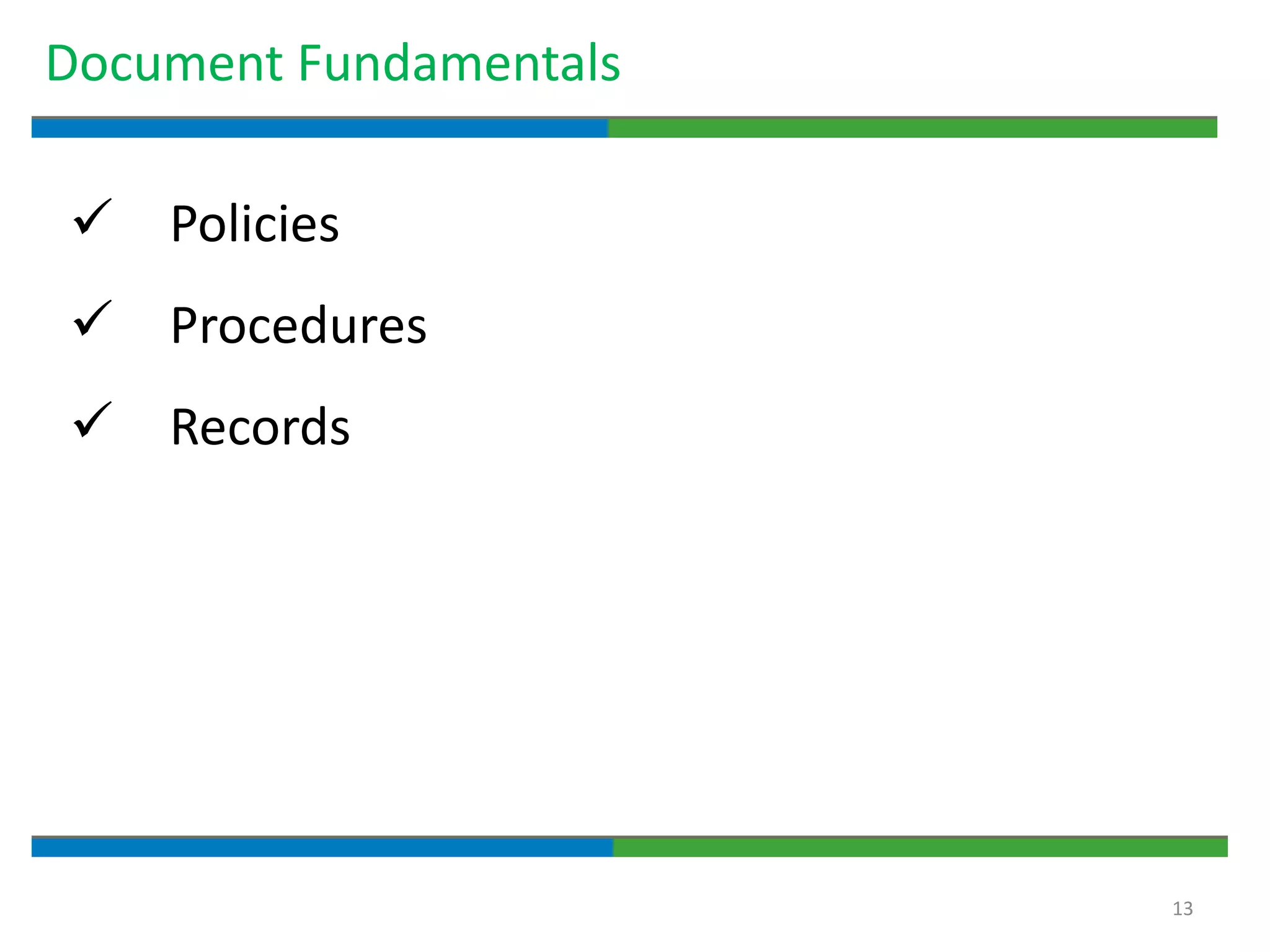
Document Fundamentals
 Policies
 Procedures
 Records
14
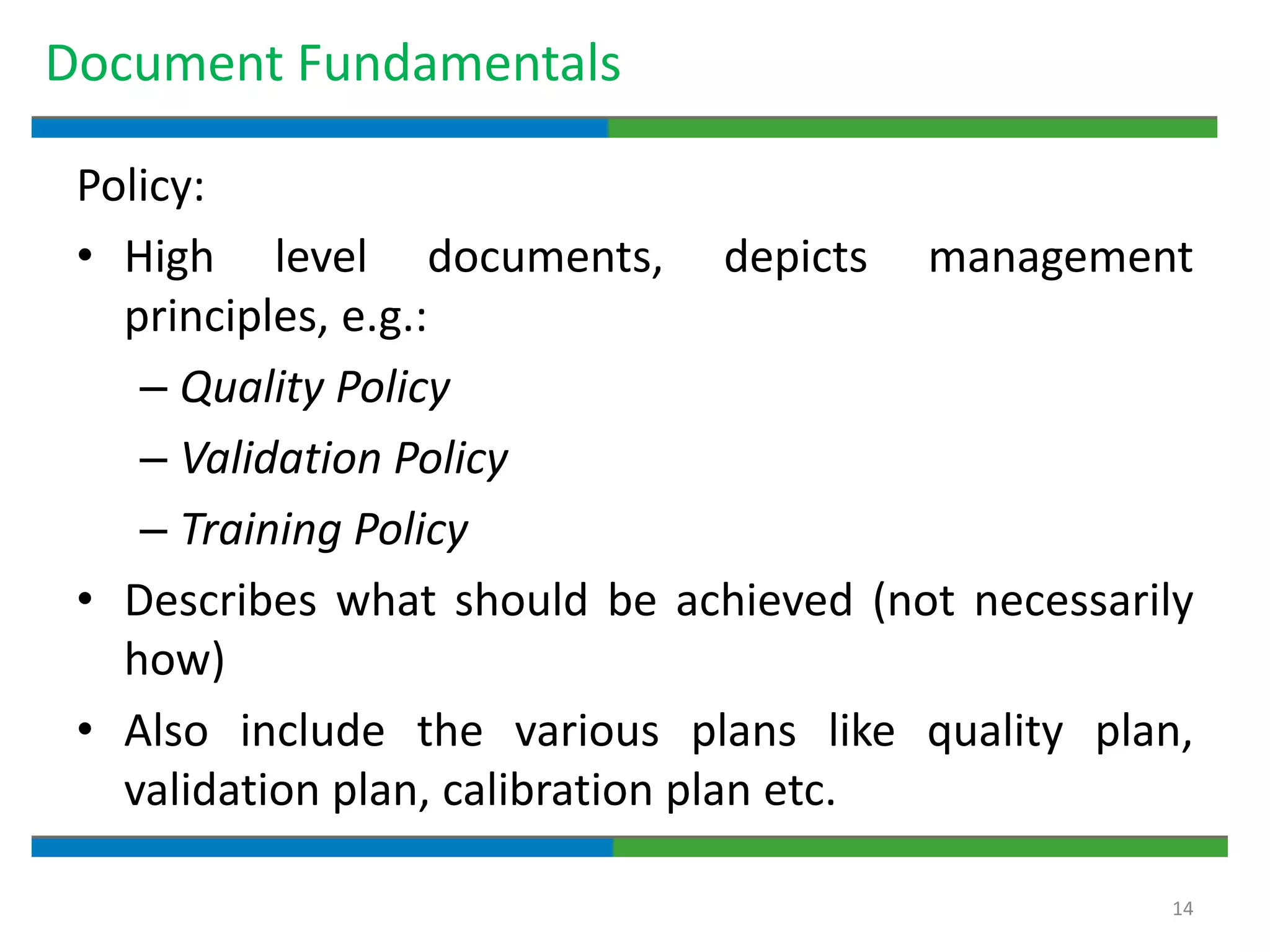
Document Fundamentals
Policy:
• High level documents, depicts management
principles, e.g.:
– Quality Policy
– Validation Policy
– Training Policy
• Describes what should be achieved (not necessarily
how)
• Also include the various plans like quality plan,
validation plan, calibration plan etc.
15
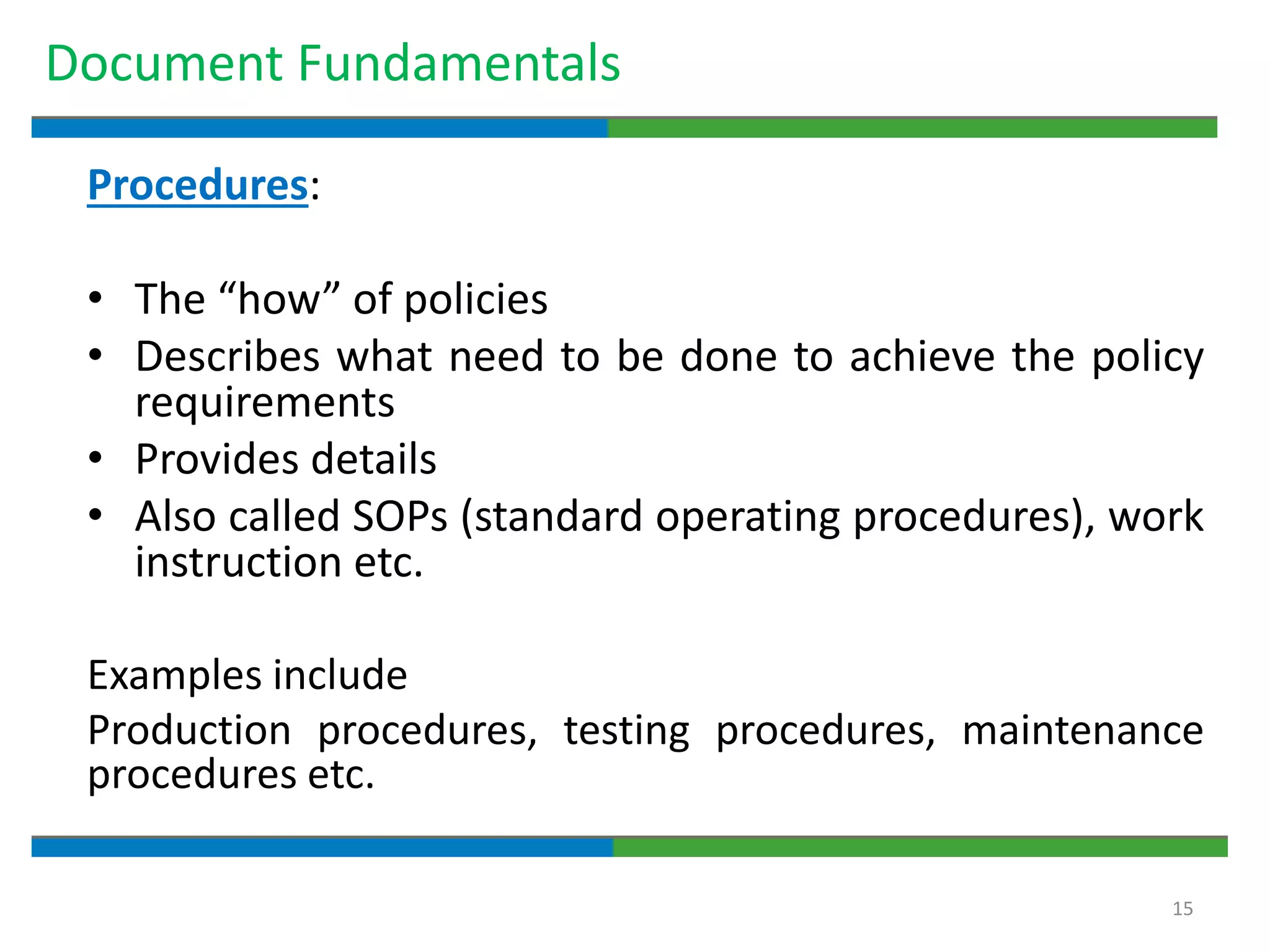
Document Fundamentals
Procedures:
• The “how” of policies
• Describes what need to be done to achieve the policy
requirements
• Provides details
• Also called SOPs (standard operating procedures), work
instruction etc.
Examples include
Production procedures, testing procedures, maintenance
procedures etc.
16
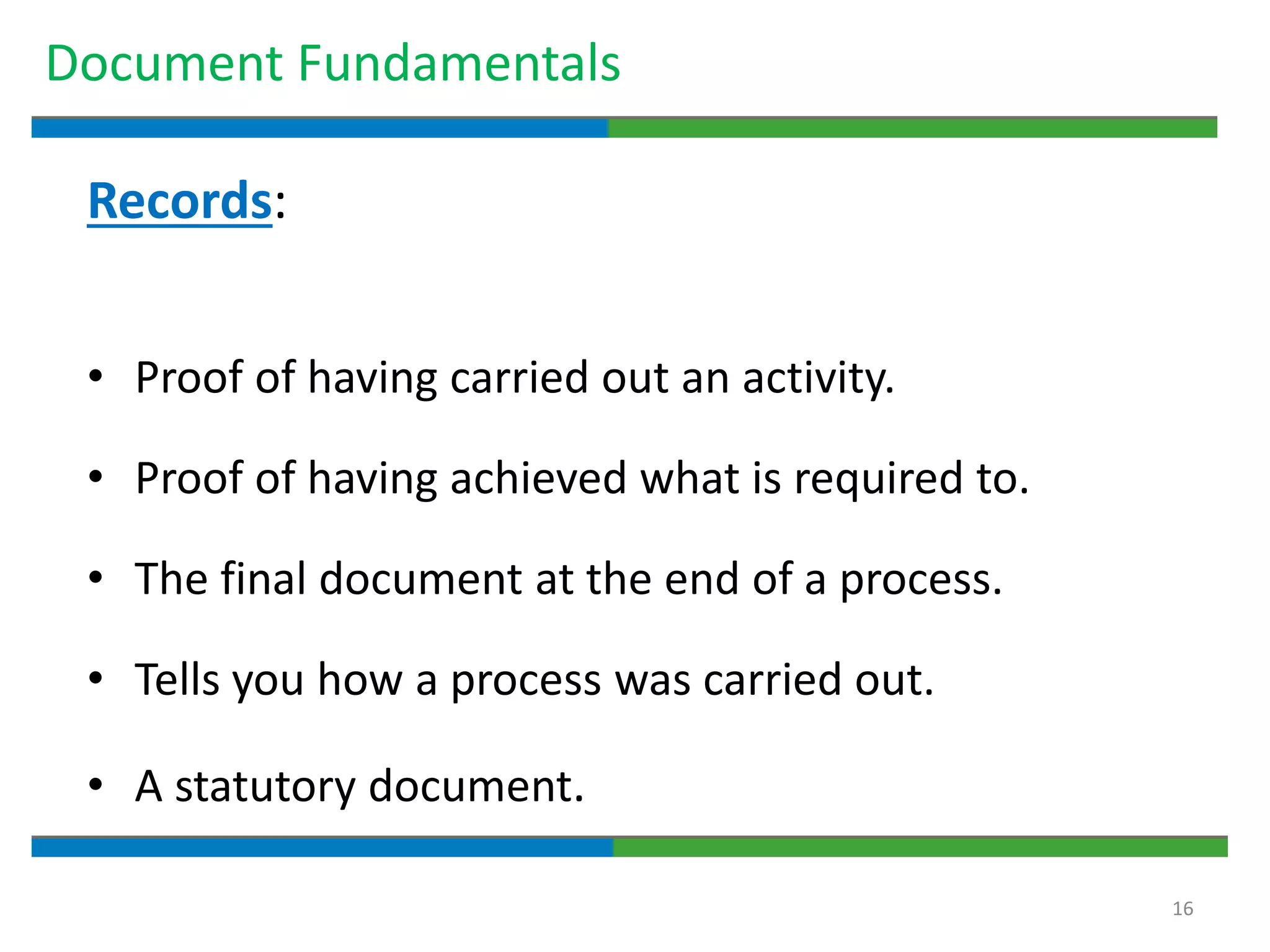
Document Fundamentals
Records:
• Proof of having carried out an activity.
• Proof of having achieved what is required to.
• The final document at the end of a process.
• Tells you how a process was carried out.
• A statutory document.
17
Document Fundamentals
 Simple, clear and complete documentation
is at the heart of any Quality Management
System
 Use simple, clear language to ‘state what we
do’ - then only we can ‘do what we state
18
Document Fundamentals
 Good documentation is the only proof that
we are (and we were) under control:
 Since your documents may be seen after few
years of generation.
 Since auditors have not witnessed what you
have done.
 Since they depend only on documents.
19
Golden rule of documentation
 If it is not documented.
……………It is a rumor !!!!
 If it is documented, but not signed and dated.
…………… It is invalid !!!!
 In God alone we trust…….
…………… All others must provide data !!!!
20
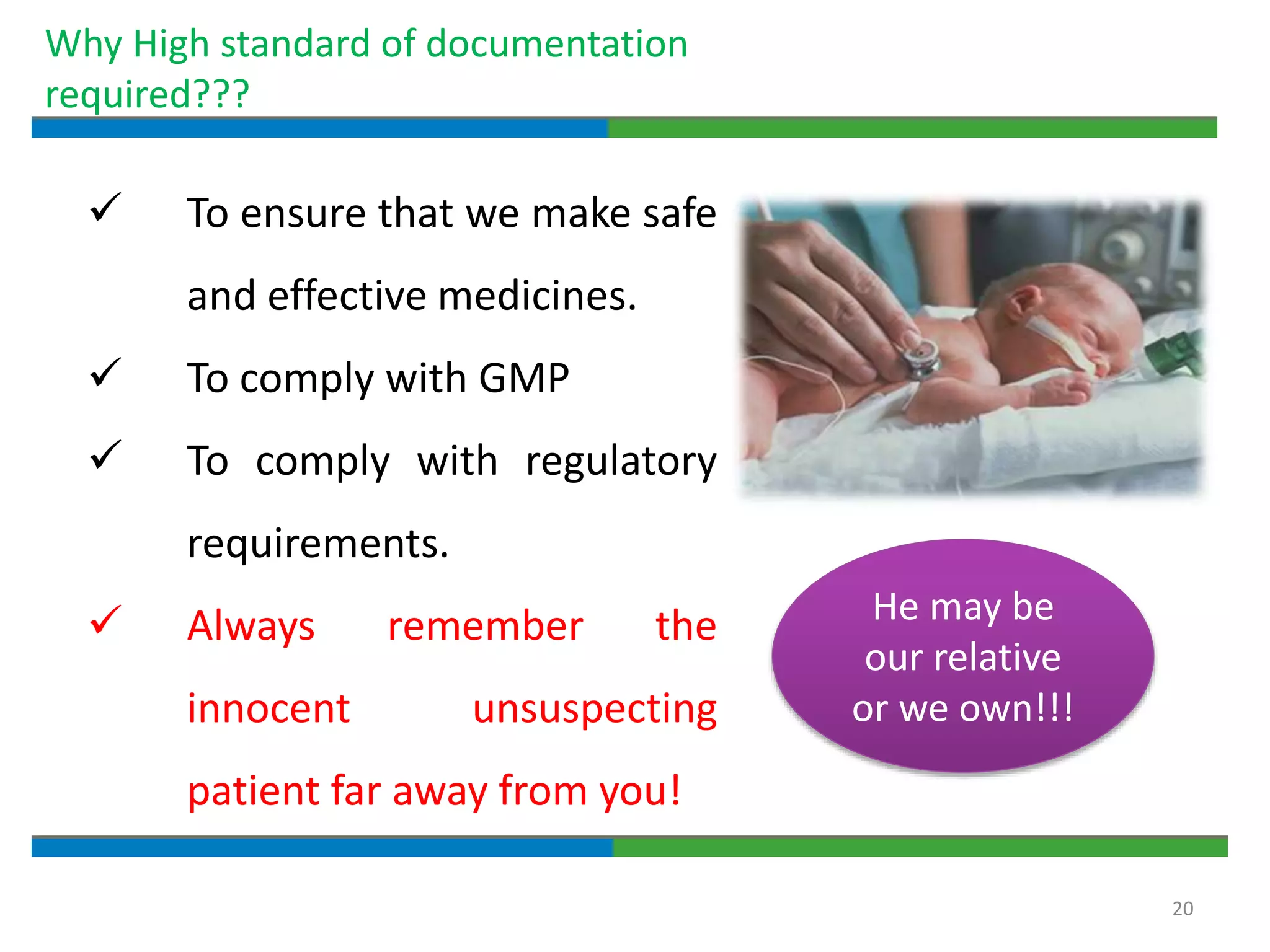
Why High standard of documentation
required???
 To ensure that we make safe
and effective medicines.
 To comply with GMP
 To comply with regulatory
requirements.
 Always remember the
innocent unsuspecting
patient far away from you!
He may be
our relative
or we own!!!
21
Practices
 Documents remain legible and readily
identifiable.
 Documents of external origin identified and
their distribution controlled
 Prevent unintended use of obsolete
documents, and archiving
22
Practices
 Document error correction not signed/dated,
and didn’t include a reason for the correction.
 Write – over's, multiple line-through and use
of "White-out" or other masking device.
23
Practices
 Sample sequence table and audit trail not
documented (if its not documented, it didn’t
happen)
 SOP related to production, calibration,
storage and maintenance not authorized by
the QA head.
24
Practices
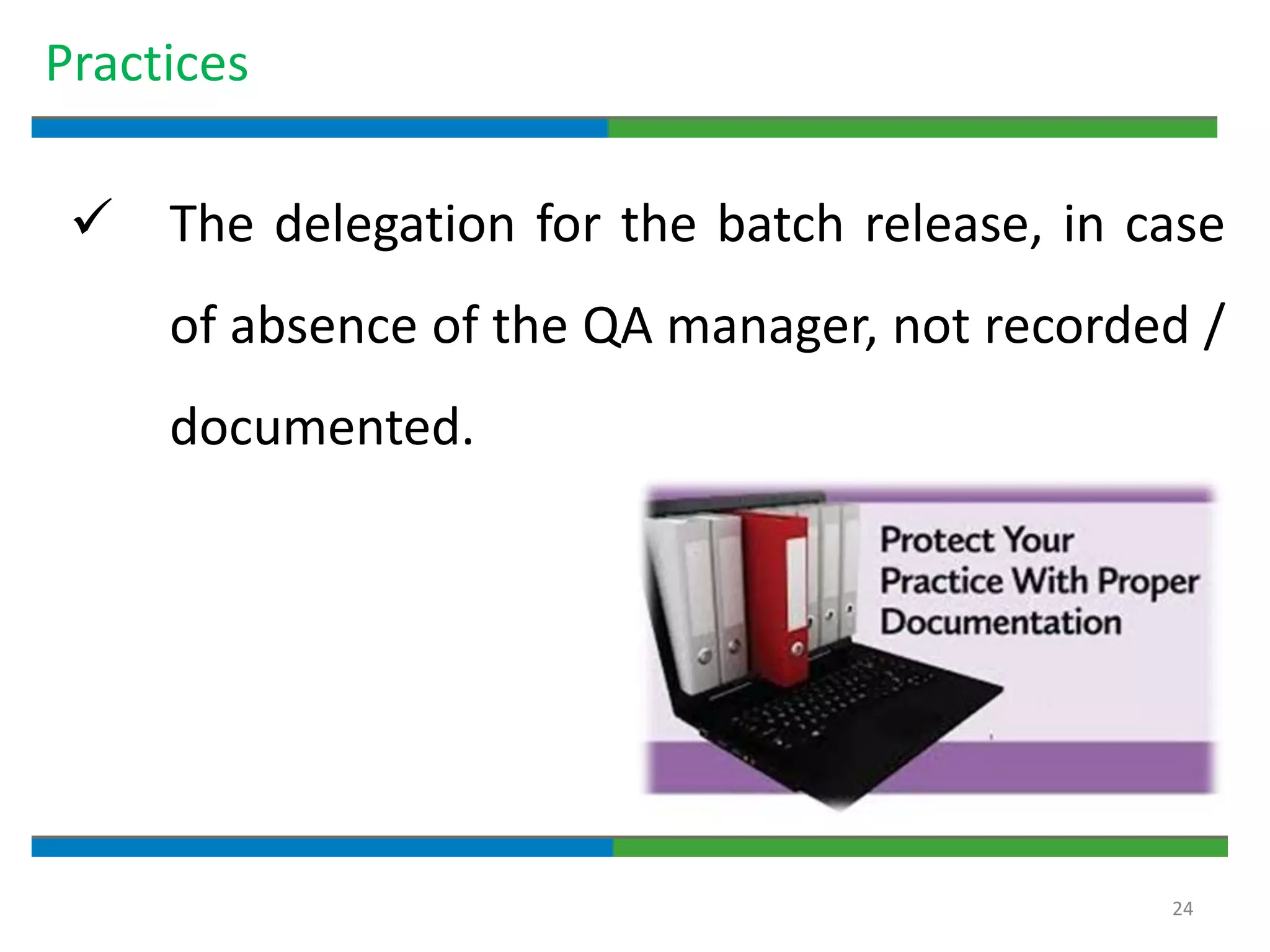
 The delegation for the batch release, in case
of absence of the QA manager, not recorded /
documented.
25
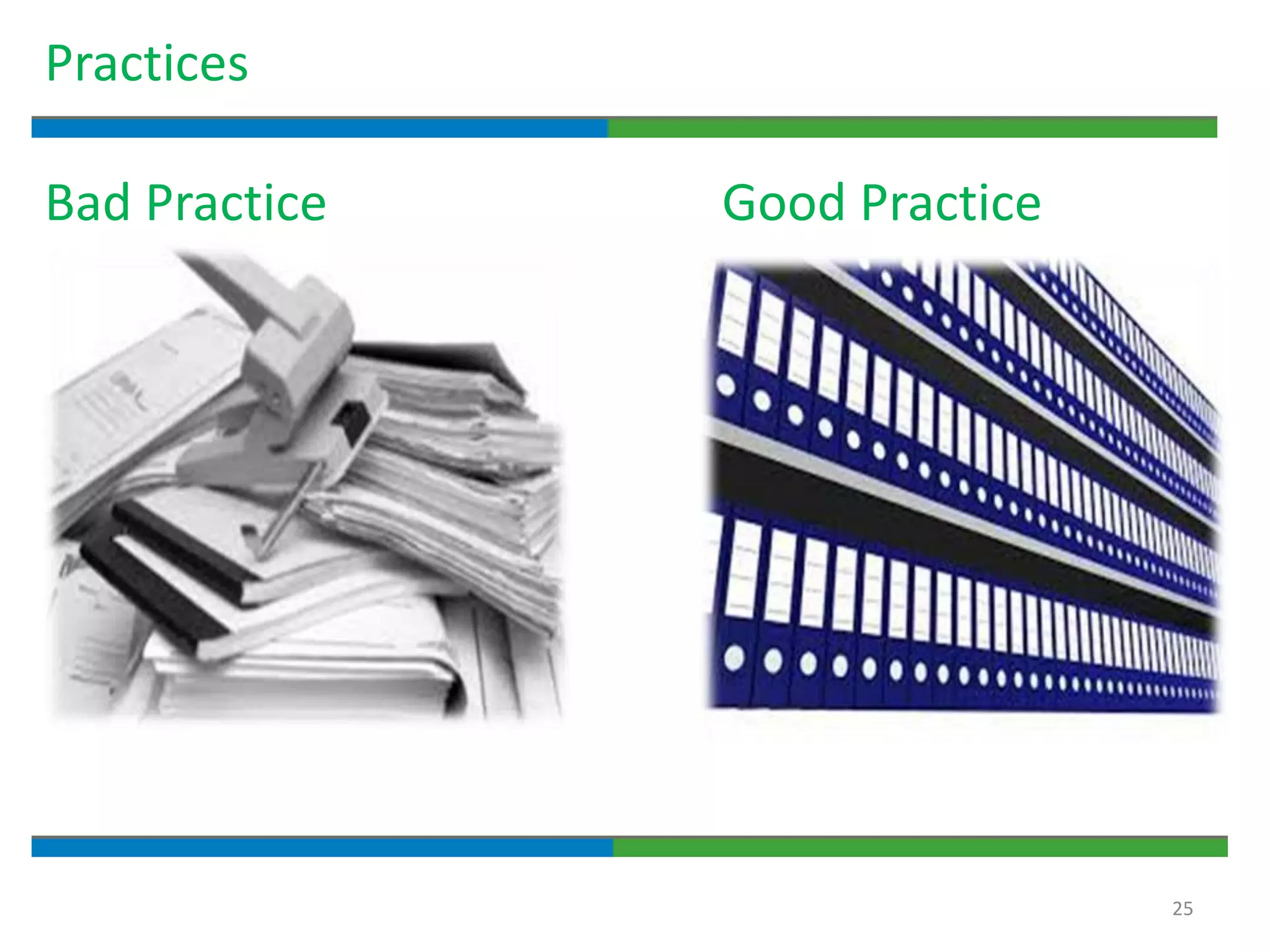
Practices
Good PracticeBad Practice
26
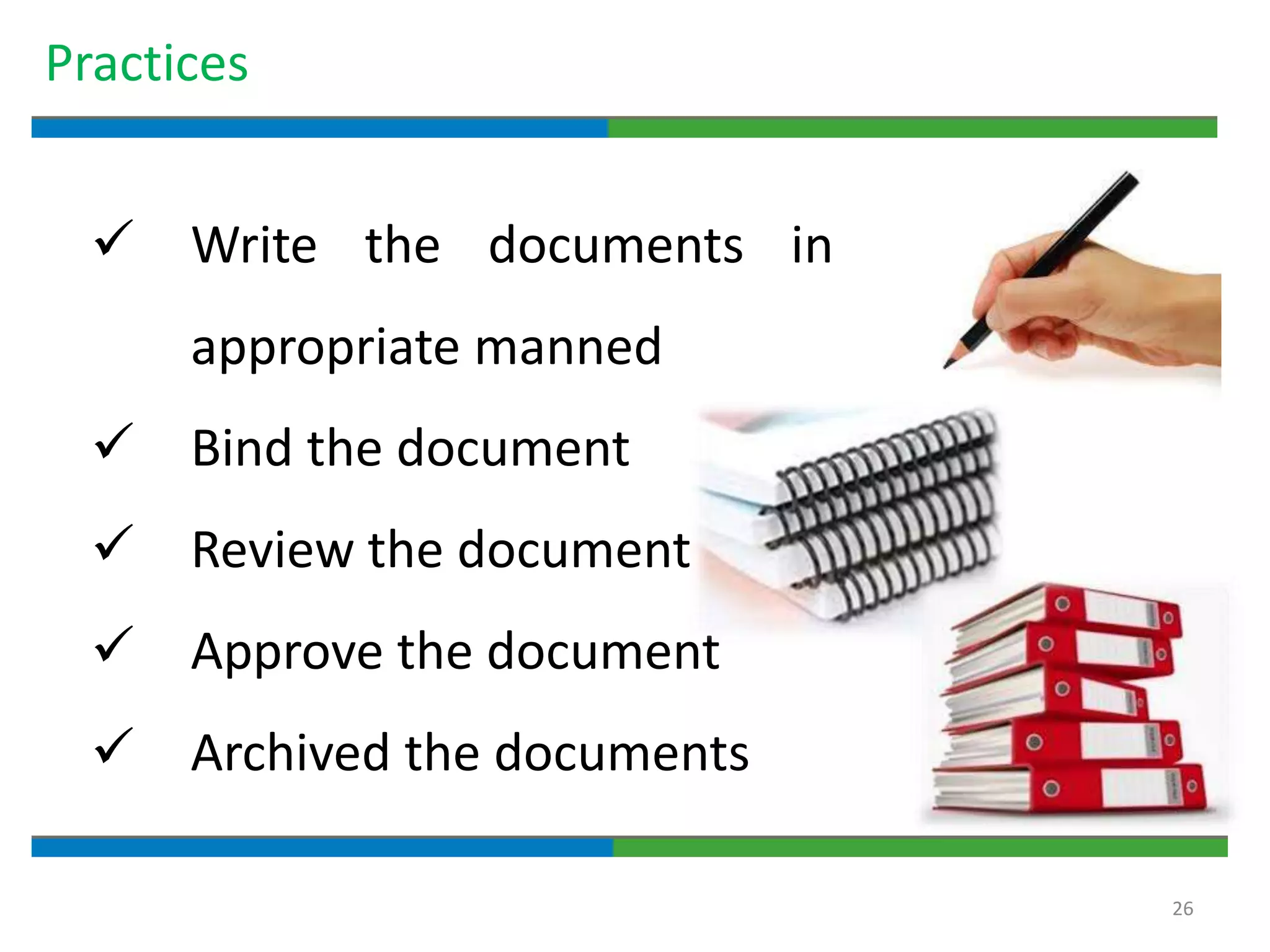
Practices
 Write the documents in
appropriate manned
 Bind the document
 Review the document
 Approve the document
 Archived the documents
27
General Practices
 Do not over write the entry
 Do not make corrections into the master
documents
 Do not hide if make wrong entry
28
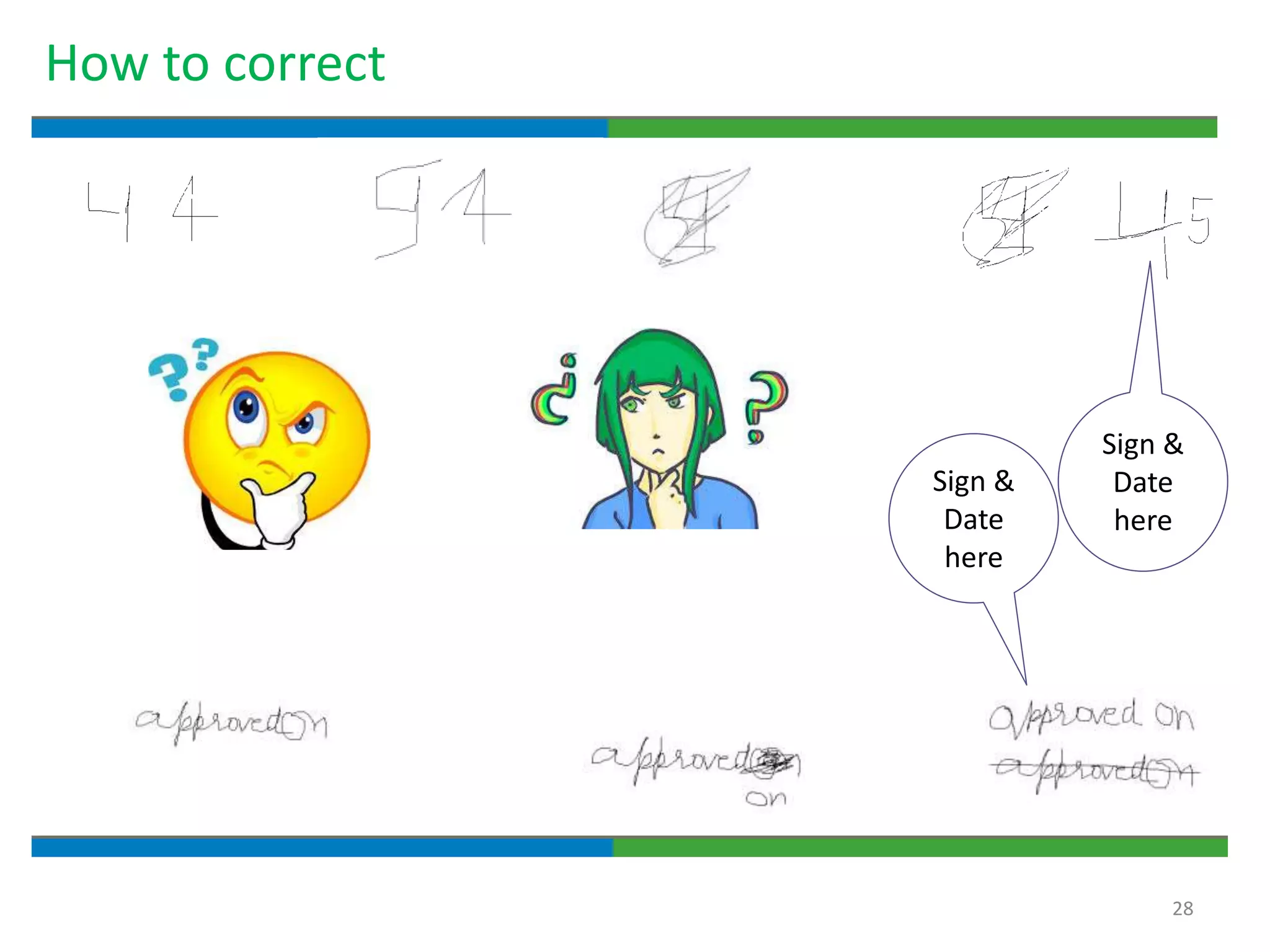
How to correct
Sign &
Date
here
Sign &
Date
here
29
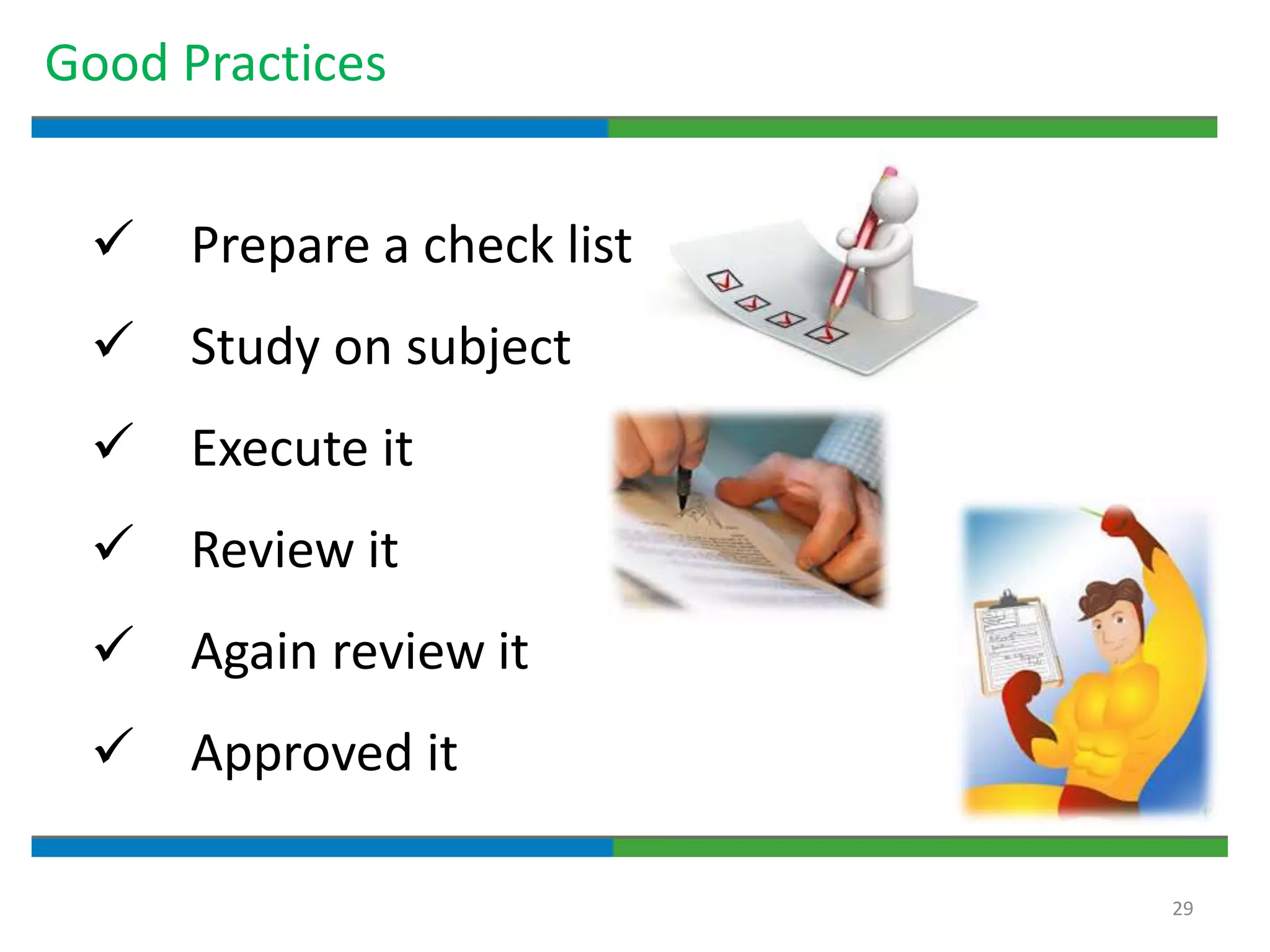
Good Practices
 Prepare a check list
 Study on subject
 Execute it
 Review it
 Again review it
 Approved it
30
Good Practices
 Date writing
12/07/2014 or 12.07.2014
 Document should be written in narrative
form.
 Document should have user friendly
instructions & language
31
32

Presentation for good documentary practices revised shravan

  • 1.
  • 2.
    2 Quality Assurance The sumtotal of organized arrangements made with the object of ensuring that products are of the quality required for their intended use and that quality systems are maintained.
  • 3.
    3 Quality System- 8essential element Management principle Personnel Documentation Facilities Material and Product control Process assurance Laboratory controls Incident management
  • 4.
    4 10 Commandments ofGMP 1. You shall write your procedures 2. You shall follow your procedures 3. You shall document (record) your work 4. You shall design and build proper facilities/ equipment 5. You shall maintain your facilities/equipment 6. You shall validate your work 7. You should be clean 8. You shall be competent ( training & qualification) 9. You shall control for Quality 10. You Should audit for compliance
  • 5.
  • 6.
    6 Definition Document: Any written andapproved information or instructions procedures. Document Management: Creation, distribution and deletion of documents
  • 7.
    7 GDP Regulatory Expectations Concise ,Legible, Accurate and Traceable Records Good + Documentation + Practices  Good : Desired output  Document : Written evidence  Practice : A train activity in repeated manner
  • 8.
    8 Good Document Practices Concise: Thedocument must tell the entire story and be understood by internal /external customers. Legible: The document must be readable by internal/external customers. Accurate: The document must be error free. Traceable: Each aspect of document must be traceable , such as who recorded it where and why.
  • 9.
    9 Requirement  Deals withgood and acceptable practices in document:  Generation  Handling  Distribution  Archival  Retiring
  • 10.
    10 Document Control for… Instructions for tasks (procedures)  Instructions for behaviors (policies)  Instructions for organization (processes)  And any associated material related to these instructions.
  • 11.
    11 Importance  Correct andappropriate informations  Easy to share informations  Easy to demonstrate  Easy to collect  Regulatory appreciates  Current regulatory requirements  Harmonised work practices  Avoid 483’s / Observations  Expected Practice
  • 12.
    12 Practices Documentation Work Instruction Procedural Plan CompanyPolicy Statutory Requirements Sequence of Document
  • 13.
  • 14.
    14 Document Fundamentals Policy: • Highlevel documents, depicts management principles, e.g.: – Quality Policy – Validation Policy – Training Policy • Describes what should be achieved (not necessarily how) • Also include the various plans like quality plan, validation plan, calibration plan etc.
  • 15.
    15 Document Fundamentals Procedures: • The“how” of policies • Describes what need to be done to achieve the policy requirements • Provides details • Also called SOPs (standard operating procedures), work instruction etc. Examples include Production procedures, testing procedures, maintenance procedures etc.
  • 16.
    16 Document Fundamentals Records: • Proofof having carried out an activity. • Proof of having achieved what is required to. • The final document at the end of a process. • Tells you how a process was carried out. • A statutory document.
  • 17.
    17 Document Fundamentals  Simple,clear and complete documentation is at the heart of any Quality Management System  Use simple, clear language to ‘state what we do’ - then only we can ‘do what we state
  • 18.
    18 Document Fundamentals  Gooddocumentation is the only proof that we are (and we were) under control:  Since your documents may be seen after few years of generation.  Since auditors have not witnessed what you have done.  Since they depend only on documents.
  • 19.
    19 Golden rule ofdocumentation  If it is not documented. ……………It is a rumor !!!!  If it is documented, but not signed and dated. …………… It is invalid !!!!  In God alone we trust……. …………… All others must provide data !!!!
  • 20.
    20 Why High standardof documentation required???  To ensure that we make safe and effective medicines.  To comply with GMP  To comply with regulatory requirements.  Always remember the innocent unsuspecting patient far away from you! He may be our relative or we own!!!
  • 21.
    21 Practices  Documents remainlegible and readily identifiable.  Documents of external origin identified and their distribution controlled  Prevent unintended use of obsolete documents, and archiving
  • 22.
    22 Practices  Document errorcorrection not signed/dated, and didn’t include a reason for the correction.  Write – over's, multiple line-through and use of "White-out" or other masking device.
  • 23.
    23 Practices  Sample sequencetable and audit trail not documented (if its not documented, it didn’t happen)  SOP related to production, calibration, storage and maintenance not authorized by the QA head.
  • 24.
    24 Practices  The delegationfor the batch release, in case of absence of the QA manager, not recorded / documented.
  • 25.
  • 26.
    26 Practices  Write thedocuments in appropriate manned  Bind the document  Review the document  Approve the document  Archived the documents
  • 27.
    27 General Practices  Donot over write the entry  Do not make corrections into the master documents  Do not hide if make wrong entry
  • 28.
    28 How to correct Sign& Date here Sign & Date here
  • 29.
    29 Good Practices  Preparea check list  Study on subject  Execute it  Review it  Again review it  Approved it
  • 30.
    30 Good Practices  Datewriting 12/07/2014 or 12.07.2014  Document should be written in narrative form.  Document should have user friendly instructions & language
  • 31.
  • 32.