M I C R O P L AT E A S S AY S : T H E K E Y
P L AT F O R M F O R H I G H T H R O U G H P U T
SCREENING IN BIOMEDICAL
RESEARCH AND PHARMACOLOGICAL
Microtiter Plate
•

develop in 1990s

•

2:3 rectangle matrix with wells

•

6, 24, 96, 384, 1536 wells

•

used for Enzyme-linked Immunosorbent Assay, High
Throughput Screening, storage

•

Flat-shaped, U-shaped, V-shaped
Well shape
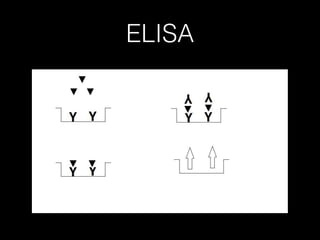
ELISA
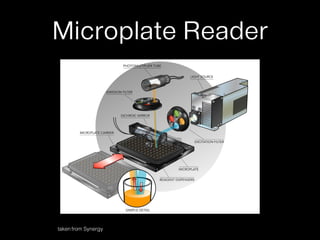
Microplate Reader

taken from Synergy
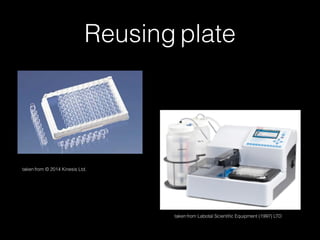
Reusing plate

taken from © 2014 Kinesis Ltd.

taken from Labotal Scientific Equipment (1997) LTD
Materials
•

polyprolyene- for wide change in temperature
environment

•

polycrabonate- disposable,

•

Cyclo-olefins
High Throughput Screening

an optimized, miniaturized assay format that enables the
testing of > 100,000 chemically diverse compounds per
day.
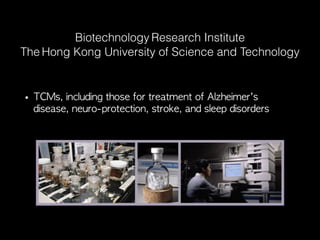
Biotechnology Research Institute
The Hong Kong University of Science and Technology

•

TCMs, including those for treatment of Alzheimer’s
disease, neuro-protection, stroke, and sleep disorders
taken from RNAi @ NIH Chemical Genomics Center
History of Developing a Drug
!
Drug discovery
!
Initial characterisation
!
Pre-clinical trials
!
Regulatory approval sought to start
trials in humans
!
Clinical trials Phases I, II, III
!
Submission of marketing/manufacturing
authorization application to regulatory authorities
!
Regulatory authorities review
information and grant (or refuse) licences
!
Product goes on sale
!
Post-marketing surveillance

!

Library of compounds
!
In vitro screening: human/animal
receptor/enzyme assay; reporter system
!
Hits/lead
!
Biochemical, tissue or animal model of
function
!
lead
!
Animal model of therapeutic target
!
ADME, formulation, acute toxicology
High throughput screening for drug discovery
high throughput screening (HTS) is number one tool for early-stage drug discovery

!
HTS is process by which large numbers of compounds are rapidly tested for their
ability to modify the properties of a selected biological target.
Goal is to identify ‘hits’ or ‘leads’
- affect target in desired manner
- active at fairly low concs (∴ more likely to show specificity)
- new structure

!
!
HTS = 50,000-100,000 cpds screenings per day!!!
taken from Pete the Blogger
!
Aim of screening is to find progressible hits, not to discover
the lead molecule itself

!
!
The majority of drug targets are
a) G-protein coupled 7 TM receptors (est total 5000)
b) nuclear receptors
c) ion channels
d) enzymes

(est total >150)
(est total 1000)
(est total uncertain)
Assays
Definition - a test system in which biological activity can be detected
•

Aequorin assays

•

Colorimetric assays

•

Membrane potential assays

•

Intracellular calcium flux assays

•

Fluorometric assays

•

Luciferase reporter gene assays

•

Fluorescent and radiolabeled ligand binding assays
Fluorescent Polarization
Assay

taken from GlycoForum
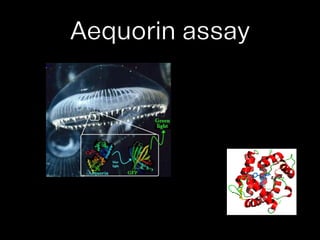
Aequorin assay
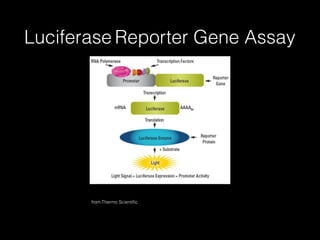
Luciferase Reporter Gene Assay

from Thermo Scientific
Virtual Screening

•

computational technique used in drug discovery to search
libraries of small molecules in order to identify those structures
which are most likely to bind to a drug target, typically a protein
receptor or enzyme
•

Ligand based- logic based
rules feature substructures
and chemical properties of
the candidate ligands

•

Structure based- virtually
docking candidate ligands to
the receptors
The End

Microplate Assays and High Throughput Screening HTPC

  • 1.
    M I CR O P L AT E A S S AY S : T H E K E Y P L AT F O R M F O R H I G H T H R O U G H P U T SCREENING IN BIOMEDICAL RESEARCH AND PHARMACOLOGICAL
  • 2.
    Microtiter Plate • develop in1990s • 2:3 rectangle matrix with wells • 6, 24, 96, 384, 1536 wells • used for Enzyme-linked Immunosorbent Assay, High Throughput Screening, storage • Flat-shaped, U-shaped, V-shaped
  • 3.
  • 4.
  • 5.
  • 6.
    Reusing plate taken from© 2014 Kinesis Ltd. taken from Labotal Scientific Equipment (1997) LTD
  • 7.
    Materials • polyprolyene- for widechange in temperature environment • polycrabonate- disposable, • Cyclo-olefins
  • 8.
    High Throughput Screening anoptimized, miniaturized assay format that enables the testing of > 100,000 chemically diverse compounds per day.
  • 9.
    Biotechnology Research Institute TheHong Kong University of Science and Technology • TCMs, including those for treatment of Alzheimer’s disease, neuro-protection, stroke, and sleep disorders
  • 10.
    taken from RNAi@ NIH Chemical Genomics Center
  • 11.
    History of Developinga Drug ! Drug discovery ! Initial characterisation ! Pre-clinical trials ! Regulatory approval sought to start trials in humans ! Clinical trials Phases I, II, III ! Submission of marketing/manufacturing authorization application to regulatory authorities ! Regulatory authorities review information and grant (or refuse) licences ! Product goes on sale ! Post-marketing surveillance ! Library of compounds ! In vitro screening: human/animal receptor/enzyme assay; reporter system ! Hits/lead ! Biochemical, tissue or animal model of function ! lead ! Animal model of therapeutic target ! ADME, formulation, acute toxicology
  • 12.
    High throughput screeningfor drug discovery high throughput screening (HTS) is number one tool for early-stage drug discovery ! HTS is process by which large numbers of compounds are rapidly tested for their ability to modify the properties of a selected biological target. Goal is to identify ‘hits’ or ‘leads’ - affect target in desired manner - active at fairly low concs (∴ more likely to show specificity) - new structure ! ! HTS = 50,000-100,000 cpds screenings per day!!!
  • 13.
    taken from Petethe Blogger
  • 14.
    ! Aim of screeningis to find progressible hits, not to discover the lead molecule itself ! ! The majority of drug targets are a) G-protein coupled 7 TM receptors (est total 5000) b) nuclear receptors c) ion channels d) enzymes (est total >150) (est total 1000) (est total uncertain)
  • 15.
    Assays Definition - atest system in which biological activity can be detected • Aequorin assays • Colorimetric assays • Membrane potential assays • Intracellular calcium flux assays • Fluorometric assays • Luciferase reporter gene assays • Fluorescent and radiolabeled ligand binding assays
  • 16.
  • 17.
  • 18.
    Luciferase Reporter GeneAssay from Thermo Scientific
  • 19.
    Virtual Screening • computational techniqueused in drug discovery to search libraries of small molecules in order to identify those structures which are most likely to bind to a drug target, typically a protein receptor or enzyme
  • 20.
    • Ligand based- logicbased rules feature substructures and chemical properties of the candidate ligands • Structure based- virtually docking candidate ligands to the receptors
  • 21.