Biopharmaceutical
Products, GMP,
Manufacturing Facilities
for Biopharmaceuticals
Nikitha Polineni
Tanvi Potluri
Varshaniyah Ravishankar
BIOPHARMACEUTICAL
PRODUCTS
Biopharmaceuticals
• Any medicinal product manufactured in or
extracted from biological sources.
• Biologics can be composed of sugars, proteins or
nucleic acids or complex combinations of these
substances, or may be living entities such as
cells and tissues.
• Examples of biopharmaceuticals
include vaccines, blood or blood
components, allergenics, somatic cells, gene
therapies, tissues, recombinant therapeutic
protein and living cells.
Vaccines
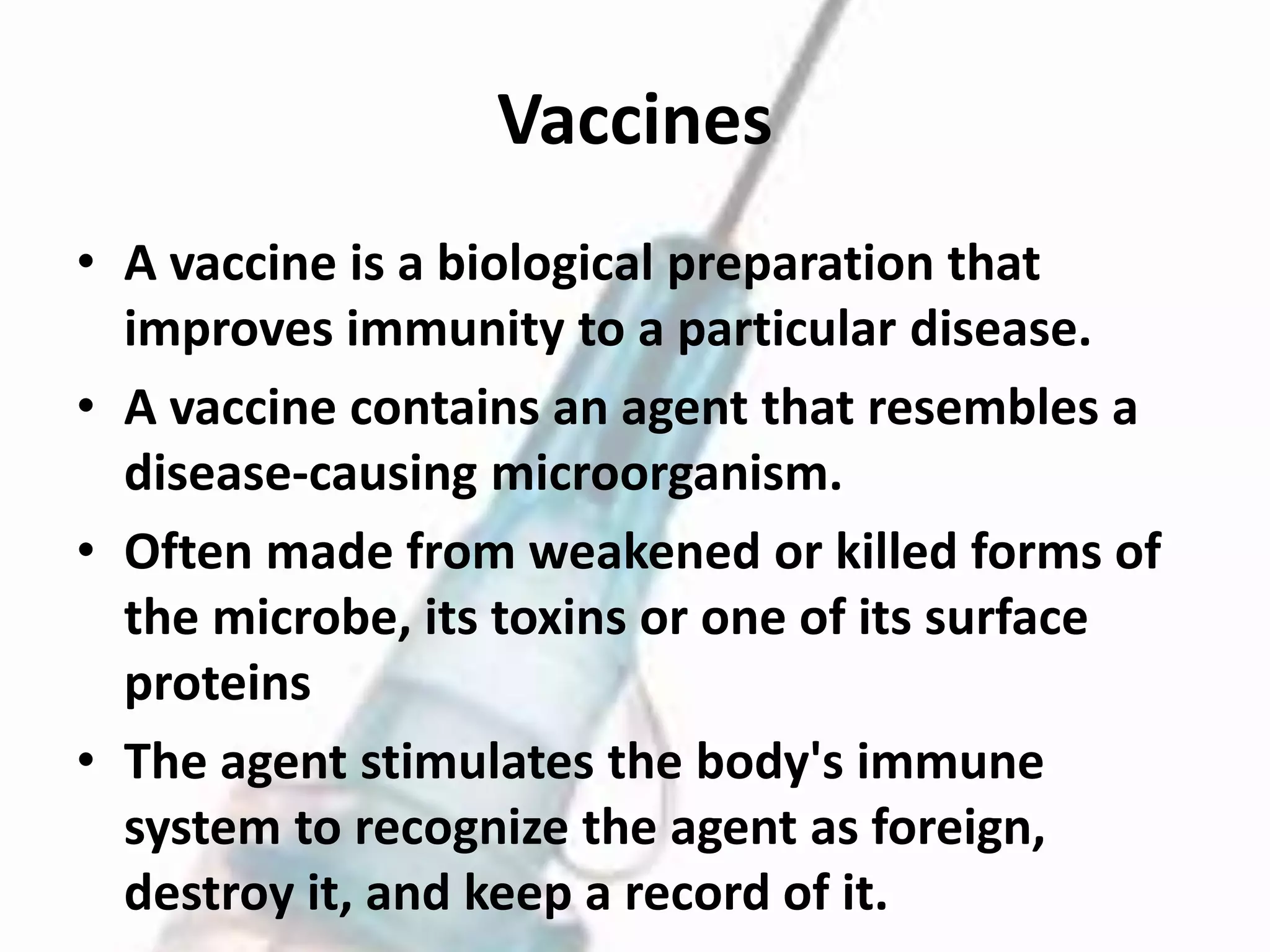
• A vaccine is a biological preparation that
improves immunity to a particular disease.
• A vaccine contains an agent that resembles a
disease-causing microorganism.
• Often made from weakened or killed forms of
the microbe, its toxins or one of its surface
proteins
• The agent stimulates the body's immune
system to recognize the agent as foreign,
destroy it, and keep a record of it.
Vaccines
• Two categories- Prophylactic (Prevention of a
disease) and Therapeutic (Treatment of a
disease).
Types of vaccines
• Inactivated: Inactivated but previously
virulent. Rabies, Polio, Influenza
• Attenuated: Live, virulence reduced. Measles,
Rubella, Mumps
• Toxoid: Inactivated toxins. Tetanus,
Diphtheria
• Protein subunit: A fragment of micro-
organism is used. Hepatitis B (contains only
surface proteins), HPV (capsid)
Allergenics
• An allergen is a type of antigen that produces
an abnormally vigorous immune response in
which the immune system fights off a
perceived threat that would otherwise be
harmless to the body.
Allergens (Contd.)
• Allergen immunotherapy- A person is
gradually vaccinated with progressively larger
doses of allergens.
• Allergy Testing
Gene therapy
• Gene therapy is the use of nucleic acid polymers
as a drug to treat disease by therapeutic delivery
into a patient's cells
• Expressed as proteins, interfere with the
expression of proteins, or possibly even correct
genetic mutations.
• Two types- Somatic gene therapy, Germ line gene
therapy.
• Viral vectors are commonly used.
• Non viral gene therapy includes injection of naked
DNA, electroporation, gene gun, sonoporation,
etc
Biosimilars
• Medical products whose active drug is made
by living organisms.
• Called “Innovator Biopharmaceutical
products”
• Follow on manufactures do not have access
to original molecules or fermentation
techniques.
• Copies of biological drugs are made
(generics)
Other products
• Somatic cells
• Hormones
• Recombinant DNA
• Important enzymes
• Proteins (Interferon, TNF)
GOOD
MANUFACTURING
PRACTICES
Good Manufacturing Practices
• Practices required in order to conform to
guidelines recommended by agencies that
control authorization and licensing for
manufacture and sale of food, drug products
and active pharmaceutical products.
• Ensure high quality and do not pose any risk to
consumer or public.
• Organizations like FDA, WHO.
• In India Schedule M of Drug and Cosmetic Act
specifies the current practices (CGMPs) to be
followed.
Basic Guidelines in GMP
1. Hygiene: Facility must maintain a clean and
hygienic manufacturing area.
2. Controlled Environment: To prevent cross
contamination of one product from another
drug or particulate matter.
3. Defined Manufacturing process: Manufacturing
processes are controlled and changes are to be
evaluated.
4. Instructions and procedures are written in clear
and unambiguous language.
GMP Guidelines (Contd.)
5. Operators are to be trained to carry out and
document their work and procedures.
6. Records are to be maintained manually or
by instruments and all steps are to be
documented.
7. Proper labeling and distribution system
should be in place.
8. A system should be available for recalling
any batch or supply.
GMP Guidelines (Contd.)
9. Complaints about marketed drugs should be
examined; the causes of quality defects
investigated and appropriate measures to
prevent recurrence should be undertaken.
10. Practices are recommended with the goal of
safeguarding the health of patients.
GMP (Contd.)
• GMP guidelines are not prescriptive instructions
on how to manufacture products.
• They are a series of general principles that must
be observed during manufacturing.
• When a company is setting up its quality
program and manufacturing process, there may
be many ways it can fulfil GMP requirements.
• It is the company's responsibility to determine
the most effective and efficient quality process.

Biopharmaceutical Products, GMP, Manufacturing Facilities for Biopharmaceuticals

  • 1.
    Biopharmaceutical Products, GMP, Manufacturing Facilities forBiopharmaceuticals Nikitha Polineni Tanvi Potluri Varshaniyah Ravishankar
  • 2.
  • 3.
    Biopharmaceuticals • Any medicinalproduct manufactured in or extracted from biological sources. • Biologics can be composed of sugars, proteins or nucleic acids or complex combinations of these substances, or may be living entities such as cells and tissues. • Examples of biopharmaceuticals include vaccines, blood or blood components, allergenics, somatic cells, gene therapies, tissues, recombinant therapeutic protein and living cells.
  • 4.
    Vaccines • A vaccineis a biological preparation that improves immunity to a particular disease. • A vaccine contains an agent that resembles a disease-causing microorganism. • Often made from weakened or killed forms of the microbe, its toxins or one of its surface proteins • The agent stimulates the body's immune system to recognize the agent as foreign, destroy it, and keep a record of it.
  • 5.
    Vaccines • Two categories-Prophylactic (Prevention of a disease) and Therapeutic (Treatment of a disease).
  • 6.
    Types of vaccines •Inactivated: Inactivated but previously virulent. Rabies, Polio, Influenza • Attenuated: Live, virulence reduced. Measles, Rubella, Mumps • Toxoid: Inactivated toxins. Tetanus, Diphtheria • Protein subunit: A fragment of micro- organism is used. Hepatitis B (contains only surface proteins), HPV (capsid)
  • 7.
    Allergenics • An allergenis a type of antigen that produces an abnormally vigorous immune response in which the immune system fights off a perceived threat that would otherwise be harmless to the body.
  • 8.
    Allergens (Contd.) • Allergenimmunotherapy- A person is gradually vaccinated with progressively larger doses of allergens. • Allergy Testing
  • 9.
    Gene therapy • Genetherapy is the use of nucleic acid polymers as a drug to treat disease by therapeutic delivery into a patient's cells • Expressed as proteins, interfere with the expression of proteins, or possibly even correct genetic mutations. • Two types- Somatic gene therapy, Germ line gene therapy. • Viral vectors are commonly used. • Non viral gene therapy includes injection of naked DNA, electroporation, gene gun, sonoporation, etc
  • 10.
    Biosimilars • Medical productswhose active drug is made by living organisms. • Called “Innovator Biopharmaceutical products” • Follow on manufactures do not have access to original molecules or fermentation techniques. • Copies of biological drugs are made (generics)
  • 11.
    Other products • Somaticcells • Hormones • Recombinant DNA • Important enzymes • Proteins (Interferon, TNF)
  • 12.
  • 13.
    Good Manufacturing Practices •Practices required in order to conform to guidelines recommended by agencies that control authorization and licensing for manufacture and sale of food, drug products and active pharmaceutical products. • Ensure high quality and do not pose any risk to consumer or public. • Organizations like FDA, WHO. • In India Schedule M of Drug and Cosmetic Act specifies the current practices (CGMPs) to be followed.
  • 14.
    Basic Guidelines inGMP 1. Hygiene: Facility must maintain a clean and hygienic manufacturing area. 2. Controlled Environment: To prevent cross contamination of one product from another drug or particulate matter. 3. Defined Manufacturing process: Manufacturing processes are controlled and changes are to be evaluated. 4. Instructions and procedures are written in clear and unambiguous language.
  • 15.
    GMP Guidelines (Contd.) 5.Operators are to be trained to carry out and document their work and procedures. 6. Records are to be maintained manually or by instruments and all steps are to be documented. 7. Proper labeling and distribution system should be in place. 8. A system should be available for recalling any batch or supply.
  • 16.
    GMP Guidelines (Contd.) 9.Complaints about marketed drugs should be examined; the causes of quality defects investigated and appropriate measures to prevent recurrence should be undertaken. 10. Practices are recommended with the goal of safeguarding the health of patients.
  • 17.
    GMP (Contd.) • GMPguidelines are not prescriptive instructions on how to manufacture products. • They are a series of general principles that must be observed during manufacturing. • When a company is setting up its quality program and manufacturing process, there may be many ways it can fulfil GMP requirements. • It is the company's responsibility to determine the most effective and efficient quality process.

Editor's Notes

  • #10 Thalassemia, SCID, Huntington's, Parkinson's