CLASSIFICATION OF 
MATTER 
VIJITHA V. 
PHYSICAL SCIENCE 
N.S.S.T.C PANDALAM 
REG NO: 13304020
Elements, Compounds 
and Mixtures 
“ single, attached, play play…”
Elements 
Definition of an element: 
An element is a pure substance which 
cannot be split up into two or more 
simpler substances by chemical 
means. 
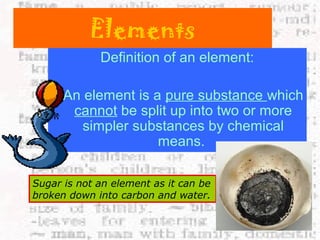
Sugar is not an element as it can be 
broken down into carbon and water.
Elements 
Note that an element: 
• Consists of only one kind of atom, 
• Cannot be broken down into a simpler 
type of matter by either physical or 
chemical means 
• Can exist as either atoms (e.g. argon) or 
molecules (e.g., nitrogen).
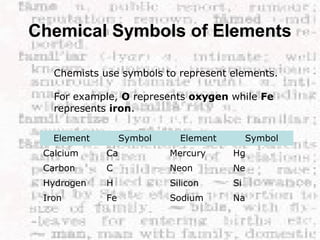
Chemical Symbols of Elements 
Chemists use symbols to represent elements. 
For example, O represents oxygen while Fe 
represents iron. 
Element Symbol Element Symbol 
Calcium Ca Mercury Hg 
Carbon C Neon Ne 
Hydrogen H Silicon Si 
Iron Fe Sodium Na
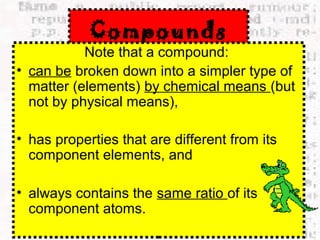
Compounds 
Note that a compound: 
• can be broken down into a simpler type of 
matter (elements) by chemical means (but 
not by physical means), 
• has properties that are different from its 
component elements, and 
• always contains the same ratio of its 
component atoms.
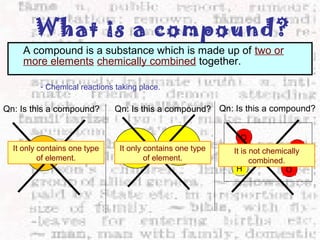
What is a compound? 
A compound is a substance which is made up of two or 
more elements chemically combined together. 
- Chemical reactions taking place. 
Qn: Is this a compound? 
It only contains one type 
of element. 
Qn: Is this a compound? 
It only contains one type 
of element. 
Qn: Is this a compound? 
O 
H 
H 
O 
O 
It is not chemically 
combined.
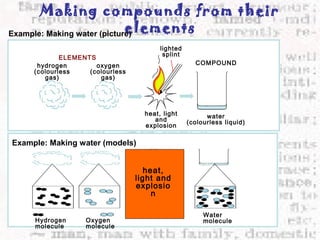
Making compounds from their 
elements Example: Making water (picture) 
ELEMENTS 
hydrogen COMPOUND 
(colourless 
gas) 
oxygen 
(colourless 
gas) 
lighted 
splint 
heat, light 
and 
explosion 
water 
(colourless liquid) 
Water 
Oxygen molecule 
molecule 
Hydrogen 
molecule 
mixture of 
hydrogen 
and 
oxygen 
water 
Example: Making water (models) 
heat, 
light and 
explosio 
n
Summarizing 
• A compound is made up of two or more 
elements chemically joined together 
• A compound has a fixed composition 
• Every compound has a unique chemical 
formula 
• A compound has a completely different 
properties from its elements 
• A chemical reaction (decomposition or 
electrolysis) is needed to separate the 
elements in the compound
Mixtures 
Definition of a mixture: 
A mixture is not a pure substance as it 
contains a mixture of atoms of 
molecules which are not chemically 
combined together.
Mixtures 
• Note that a mixture: 
• consists of two or more different elements 
and/or compounds NOT chemically combined. 
• Can be homogeneous or non-homogeneous 
• can be separated into its components by 
physical means, and 
• often retains many of the properties of its 
components.
Mixtures 
• Examples of mixtures include muddy 
water and air. 
Air is made up of gases such as nitrogen 
and oxygen mixed together.
Conclusion 
An element is a pure substance which cannot be 
split up into two or more simpler substances 
by chemical means. 
A compound consist of a fixed number of 
different kinds of atoms chemically combined 
together. 
A mixture is not a pure substance as it contains 
a mixture of atoms of molecules which are not 
chemically combined together.

presentation

  • 1.
    CLASSIFICATION OF MATTER VIJITHA V. PHYSICAL SCIENCE N.S.S.T.C PANDALAM REG NO: 13304020
  • 2.
    Elements, Compounds andMixtures “ single, attached, play play…”
  • 3.
    Elements Definition ofan element: An element is a pure substance which cannot be split up into two or more simpler substances by chemical means. Sugar is not an element as it can be broken down into carbon and water.
  • 4.
    Elements Note thatan element: • Consists of only one kind of atom, • Cannot be broken down into a simpler type of matter by either physical or chemical means • Can exist as either atoms (e.g. argon) or molecules (e.g., nitrogen).
  • 5.
    Chemical Symbols ofElements Chemists use symbols to represent elements. For example, O represents oxygen while Fe represents iron. Element Symbol Element Symbol Calcium Ca Mercury Hg Carbon C Neon Ne Hydrogen H Silicon Si Iron Fe Sodium Na
  • 6.
    Compounds Note thata compound: • can be broken down into a simpler type of matter (elements) by chemical means (but not by physical means), • has properties that are different from its component elements, and • always contains the same ratio of its component atoms.
  • 7.
    What is acompound? A compound is a substance which is made up of two or more elements chemically combined together. - Chemical reactions taking place. Qn: Is this a compound? It only contains one type of element. Qn: Is this a compound? It only contains one type of element. Qn: Is this a compound? O H H O O It is not chemically combined.
  • 8.
    Making compounds fromtheir elements Example: Making water (picture) ELEMENTS hydrogen COMPOUND (colourless gas) oxygen (colourless gas) lighted splint heat, light and explosion water (colourless liquid) Water Oxygen molecule molecule Hydrogen molecule mixture of hydrogen and oxygen water Example: Making water (models) heat, light and explosio n
  • 9.
    Summarizing • Acompound is made up of two or more elements chemically joined together • A compound has a fixed composition • Every compound has a unique chemical formula • A compound has a completely different properties from its elements • A chemical reaction (decomposition or electrolysis) is needed to separate the elements in the compound
  • 10.
    Mixtures Definition ofa mixture: A mixture is not a pure substance as it contains a mixture of atoms of molecules which are not chemically combined together.
  • 11.
    Mixtures • Notethat a mixture: • consists of two or more different elements and/or compounds NOT chemically combined. • Can be homogeneous or non-homogeneous • can be separated into its components by physical means, and • often retains many of the properties of its components.
  • 12.
    Mixtures • Examplesof mixtures include muddy water and air. Air is made up of gases such as nitrogen and oxygen mixed together.
  • 13.
    Conclusion An elementis a pure substance which cannot be split up into two or more simpler substances by chemical means. A compound consist of a fixed number of different kinds of atoms chemically combined together. A mixture is not a pure substance as it contains a mixture of atoms of molecules which are not chemically combined together.