Value Chain in Transportation System


Nopporn Thepsithar

12 -13 October 2012
Logistics Management


                       2
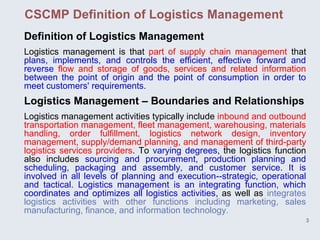
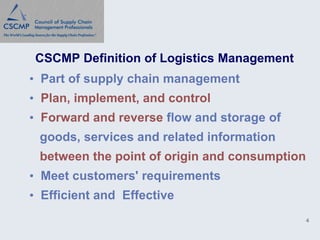
CSCMP Definition of Logistics Management
Definition of Logistics Management
Logistics management is that part of supply chain management that
plans, implements, and controls the efficient, effective forward and
reverse flow and storage of goods, services and related information
between the point of origin and the point of consumption in order to
meet customers' requirements.
Logistics Management – Boundaries and Relationships
Logistics management activities typically include inbound and outbound
transportation management, fleet management, warehousing, materials
handling, order fulfillment, logistics network design, inventory
management, supply/demand planning, and management of third-party
logistics services providers. To varying degrees, the logistics function
also includes sourcing and procurement, production planning and
scheduling, packaging and assembly, and customer service. It is
involved in all levels of planning and execution--strategic, operational
and tactical. Logistics management is an integrating function, which
coordinates and optimizes all logistics activities, as well as integrates
logistics activities with other functions including marketing, sales
manufacturing, finance, and information technology.
                                                                        3
CSCMP Definition of Logistics Management
â€Ē Part of supply chain management
â€Ē Plan, implement, and control
â€Ē Forward and reverse flow and storage of
 goods, services and related information
 between the point of origin and consumption
â€Ē Meet customers' requirements
â€Ē Efficient and Effective
                                               4
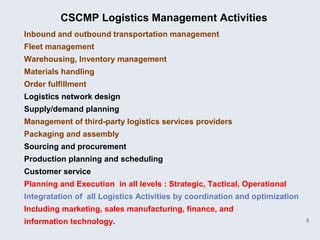
CSCMP Logistics Management Activities
Inbound and outbound transportation management
Fleet management
Warehousing, Inventory management
Materials handling
Order fulfillment
Logistics network design
Supply/demand planning
Management of third-party logistics services providers
Packaging and assembly
Sourcing and procurement
Production planning and scheduling
Customer service
Planning and Execution in all levels : Strategic, Tactical, Operational
Integratation of all Logistics Activities by coordination and optimization
Including marketing, sales manufacturing, finance, and
information technology.                                                      5
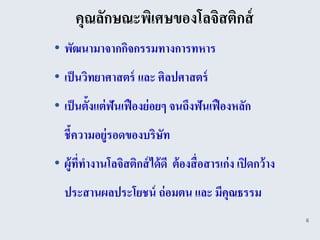
āļ„āļļāļ“āļĨāļąāļāļĐāļ“āļ°āļžāļīāđ€āļĻāļĐāļ‚āļ­āļ‡āđ‚āļĨāļˆāļīāļŠāļ•āļīāļāļŠāđŒ
â€Ē āļžāļąāļ’āļ™āļēāļĄāļēāļˆāļēāļāļāļīāļˆāļāļĢāļĢāļĄāļ—āļēāļ‡āļāļēāļĢāļ—āļŦāļēāļĢ
â€Ē āđ€āļ›āđ‡ āļ™āļ§āļīāļ—āļĒāļēāļĻāļēāļŠāļ•āļĢāđŒ āđāļĨāļ° āļĻāļīāļĨāļ›āļĻāļēāļŠāļ•āļĢāđŒ
â€Ē āđ€āļ›āđ‡ āļ™āļ•āļąāđ‰āļ‡āđāļ•āđˆ āļŸāļąāļ™āđ€āļŸāļ· āļ­āļ‡āļĒāđˆ āļ­āļĒāđ† āļˆāļ™āļ–āļķāļ‡āļŸāļąāļ™āđ€āļŸāļ· āļ­āļ‡āļŦāļĨāļąāļ
  āļŠāļĩāđ‰āļ„āļ§āļēāļĄāļ­āļĒāļđāđˆāļĢāļ­āļ”āļ‚āļ­āļ‡āļšāļĢāļīāļĐāļ—
                       āļą
â€Ē āļœāļđāđ‰āļ—āļ—āļēāļ‡āļēāļ™āđ‚āļĨāļˆāļīāļŠāļ•āļīāļāļŠāđŒ āđ„āļ”āđ‰ āļ”āļĩ āļ•āđ‰ āļ­āļ‡āļŠāļ·āđˆ āļ­āļŠāļēāļĢāđ€āļāđˆ āļ‡ āđ€āļ›āļī āļ”āļāļ§āđ‰ āļēāļ‡
      āļĩāđˆ
  āļ›āļĢāļ°āļŠāļēāļ™āļœāļĨāļ›āļĢāļ°āđ‚āļĒāļŠāļ™āđŒ āļ–āđˆ āļ­āļĄāļ•āļ™ āđāļĨāļ° āļĄāļĩāļ„āļļāļ“āļ˜āļĢāļĢāļĄ
                                                              6
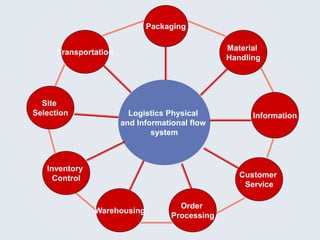
Packaging

                                                 Material
      Transportation
                                                 Handling


  Site
Selection                Logistics Physical            Information
                       and Informational flow
                               system


   Inventory
     Control                                        Customer
                                                     Service

                                      Order
               Warehousing
                                    Processing
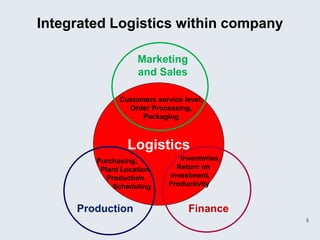
Integrated Logistics within company

                   Marketing
                   and Sales

              Customers service level,
                Order Processing,
                    Packaging


                 Logistics
        Purchasing,            Inventories,
         Plant Location,      Return on
           Production       investment,
            Scheduling      Productivity


     Production                  Finance
                                              8
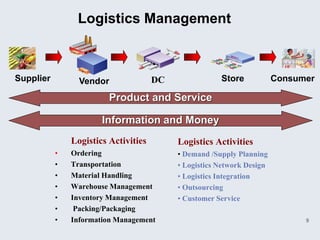
Logistics Management


Supplier         Vendor               DC               Store            Consumer

                         Product and Service

                       Information and Money
               Logistics Activities        Logistics Activities
           â€Ē   Ordering                    â€Ē Demand /Supply Planning
           â€Ē   Transportation              â€Ē Logistics Network Design
           â€Ē   Material Handling           â€Ē Logistics Integration
           â€Ē   Warehouse Management        â€Ē Outsourcing
           â€Ē   Inventory Management        â€Ē Customer Service
           â€Ē    Packing/Packaging
           â€Ē   Information Management                                         9
Supply Chain Management


                          10
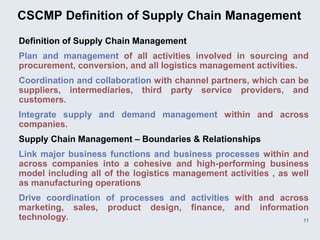
CSCMP Definition of Supply Chain Management
Definition of Supply Chain Management
Plan and management of all activities involved in sourcing and
procurement, conversion, and all logistics management activities.
Coordination and collaboration with channel partners, which can be
suppliers, intermediaries, third party service providers, and
customers.
Integrate supply and demand management within and across
companies.
Supply Chain Management – Boundaries & Relationships
Link major business functions and business processes within and
across companies into a cohesive and high-performing business
model including all of the logistics management activities , as well
as manufacturing operations
Drive coordination of processes and activities with and across
marketing, sales, product design, finance, and information
technology.                                                  11
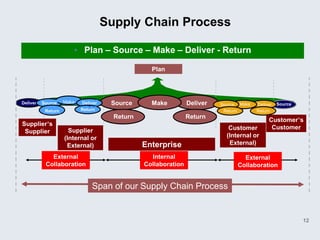
Supply Chain Process

                        â€Ē Plan – Source – Make – Deliver - Return

                                                   Plan


Deliver   Source    Make
                     Make   Deliver    Source      Make          Deliver   Source Make   Deliver   Source
           Return           Return                                          Return       Return
                                        Return                   Return
                                                                                              Customer’s
Supplier’s
                                                                              Customer         Customer
 Supplier             Supplier
                    (Internal or                                             (Internal or
                     External)                   Enterprise                   External)

             External                              Internal                        External
           Collaboration                         Collaboration                   Collaboration


                                Span of our Supply Chain Process


                                                                                                            12
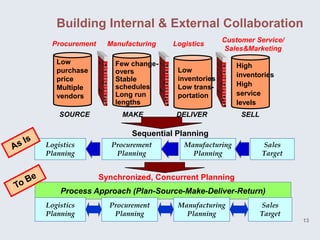
Building Internal & External Collaboration
                                                Customer Service/
 Procurement     Manufacturing   Logistics
                                                 Sales&Marketing
   Low             Few change-                      High
   purchase        overs          Low
                                                    inventories
   price           Stable         inventories
   Multiple        schedules      Low trans-        High
   vendors         Long run       portation         service
                   lengths                          levels
    SOURCE           MAKE         DELIVER            SELL

                       Sequential Planning
Logistics         Procurement       Manufacturing           Sales
Planning           Planning           Planning              Target


               Synchronized, Concurrent Planning
    Process Approach (Plan-Source-Make-Deliver-Return)
Logistics        Procurement      Manufacturing             Sales
Planning          Planning          Planning                Target
                                                                     13
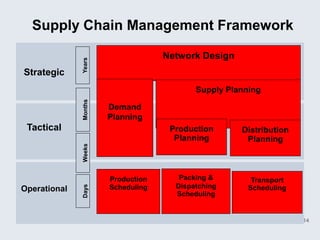
Supply Chain Management Framework

                                    Network Design

              Years
Strategic
                                           Supply Planning
              Months


                       Demand
                       Planning
 Tactical                            Production      Distribution
                                      Planning        Planning
              Weeks


                       Production      Packing &        Transport
                                      Dispatching
              Days


Operational            Scheduling                      Scheduling
                                      Scheduling


                                                                    14
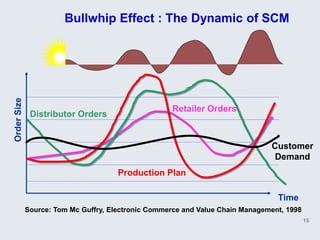
Order Size             Bullwhip Effect : The Dynamic of SCM


                                                    Retailer Orders
              Distributor Orders


                                                                               Customer
                                                                                Demand
                                      Production Plan

                                                                                 Time
             Source: Tom Mc Guffry, Electronic Commerce and Value Chain Management, 1998
                                                                                           15
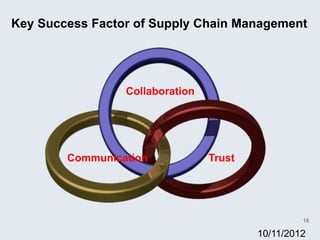
Key Success Factor of Supply Chain Management


                 Collaboration


        Communication            Trust


                                                  16

                                         10/11/2012
Marketplace competition
 is not ............firm vs. firm,
              it’s .....
supply chain vs.supply chain.
Value Chain Management


                         18
“Value” is defined as “any activity
   that increases the market form or
  function of the product or service.”
   And in today’s business climate,
       we need to maximize the
value of every process in our business.


                                          19
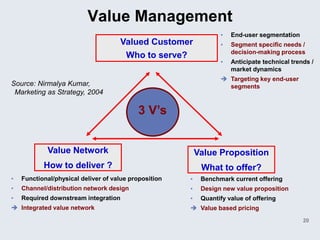
Value Management
                                                                  â€Ē   End-user segmentation
                                     Valued Customer              â€Ē   Segment specific needs /
                                                                      decision-making process
                                      Who to serve?
                                                                  â€Ē   Anticipate technical trends /
                                                                      market dynamics
                                                                  ïƒĻ Targeting key end-user
Source: Nirmalya Kumar,                                             segments
 Marketing as Strategy, 2004

                                           3 V’s


            Value Network                                  Value Proposition
           How to deliver ?                                 What to offer?
â€Ē   Functional/physical deliver of value proposition   â€Ē    Benchmark current offering
â€Ē   Channel/distribution network design                â€Ē    Design new value proposition
â€Ē   Required downstream integration                    â€Ē    Quantify value of offering
ïƒĻ Integrated value network                             ïƒĻ Value based pricing
                                                                                               20
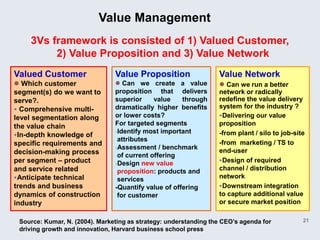
Value Management
    3Vs framework is consisted of 1) Valued Customer,
         2) Value Proposition and 3) Value Network
Valued Customer                 Value Proposition                 Value Network
 Which customer                 Can we create a value            Can we run a better
segment(s) do we want to        proposition that delivers         network or radically
serve?.                         superior     value    through     redefine the value delivery
 Comprehensive multi-          dramatically higher benefits      system for the industry ?
level segmentation along        or lower costs?                    Delivering our value
the value chain                 For targeted segments             proposition
                                -Identify most important          -from plant / silo to job-site
 In-depth knowledge of
                                 attributes
specific requirements and                                         -from marketing / TS to
                                -Assessment / benchmark
decision-making process                                           end-user
                                 of current offering
per segment – product           -Design new value
                                                                   Design of required
and service related              proposition: products and        channel / distribution
 Anticipate technical           services                         network
trends and business             -Quantify value of offering        Downstream integration
dynamics of construction         for customer                     to capture additional value
industry                                                          or secure market position

 Source: Kumar, N. (2004). Marketing as strategy: understanding the CEO’s agenda for           21
 driving growth and innovation, Harvard business school press
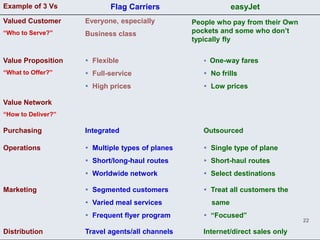
Example of 3 Vs            Flag Carriers                     easyJet
Valued Customer     Everyone, especially         People who pay from their Own
“Who to Serve?”     Business class               pockets and some who don’t
                                                 typically fly

Value Proposition    Flexible                       One-way fares
“What to Offer?”     Full-service                   No frills
                     High prices                    Low prices

Value Network
“How to Deliver?”

Purchasing          Integrated                      Outsourced

Operations           Multiple types of planes       Single type of plane
                     Short/long-haul routes         Short-haul routes
                     Worldwide network              Select destinations

Marketing            Segmented customers            Treat all customers the
                     Varied meal services            same
                     Frequent flyer program         “Focused”
                                                                                 22

Distribution        Travel agents/all channels      Internet/direct sales only
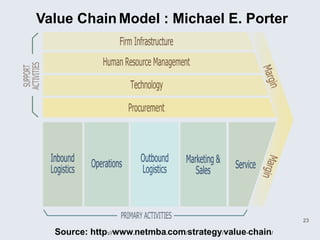
Value Chain Model : Michael E. Porter


                                                        23

  Source: http://www.netmba.com/strategy/value-chain/
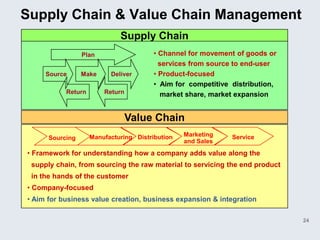
Supply Chain & Value Chain Management
                             Supply Chain
                 Plan                   â€Ē Channel for movement of goods or
                                          services from source to end-user
     Source      Make     Deliver       â€Ē Product-focused
                                        â€Ē Aim for competitive distribution,
           Return       Return             market share, market expansion


                                 Value Chain
                    Manufacturing Distribution   Marketing    Service
      Sourcing
                                                 and Sales
â€Ē Framework for understanding how a company adds value along the
 supply chain, from sourcing the raw material to servicing the end product
 in the hands of the customer
â€Ē Company-focused
â€Ē Aim for business value creation, business expansion & integration

                                                                              24
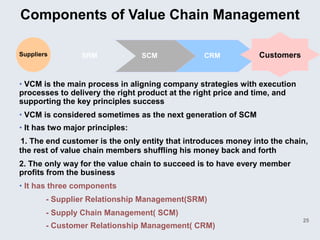
Components of Value Chain Management

Suppliers        SRM             SCM             CRM           Customers


â€Ē VCM is the main process in aligning company strategies with execution
processes to delivery the right product at the right price and time, and
supporting the key principles success
â€Ē VCM is considered sometimes as the next generation of SCM
â€Ē It has two major principles:
 1. The end customer is the only entity that introduces money into the chain,
the rest of value chain members shuffling his money back and forth
2. The only way for the value chain to succeed is to have every member
profits from the business
â€Ē It has three components
        - Supplier Relationship Management(SRM)
        - Supply Chain Management( SCM)
                                                                           25
        - Customer Relationship Management( CRM)
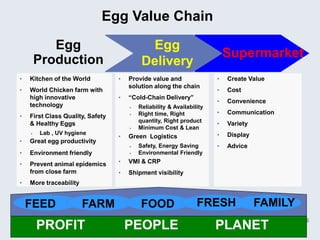
Egg Value Chain

        Egg                                 Egg
     Ping Gu                                                               Supermarket
     Production                            Delivery
â€Ē   Kitchen of the World          â€Ē   Provide value and                â€Ē   Create Value
                                      solution along the chain
â€Ē   World Chicken farm with                                            â€Ē   Cost
    high innovative               â€Ē   “Cold-Chain Delivery”
                                                                       â€Ē   Convenience
    technology                        ï€ī   Reliability & Availability
                                          Right time, Right            â€Ē   Communication
â€Ē   First Class Quality, Safety       ï€ī

                                          quantity, Right product
    & Healthy Eggs                                                     â€Ē   Variety
                                      ï€ī   Minimum Cost & Lean
    ï€ī   Lab , UV hygiene                                               â€Ē   Display
                                  â€Ē   Green Logistics
â€Ē   Great egg productivity
                                      ï€ī   Safety, Energy Saving        â€Ē   Advice
â€Ē   Environment friendly              ï€ī   Environmental Friendly

â€Ē   Prevent animal epidemics      â€Ē   VMI & CRP
    from close farm               â€Ē   Shipment visibility
â€Ē   More traceability


    FEED                FARM               FOOD                  FRESH               FAMILY
                                                                                              26
        PROFIT                        PEOPLE                           PLANET
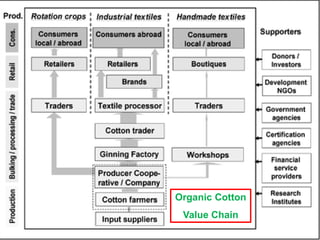
Organic Cotton
 Value Chain     27
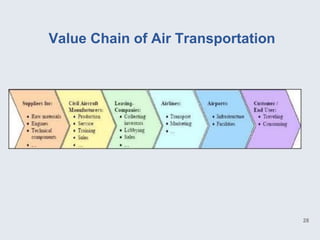
Value Chain of Air Transportation


                                    28
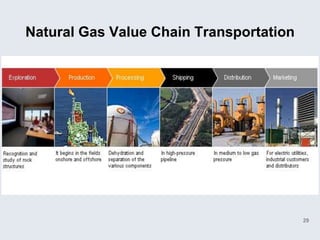
Natural Gas Value Chain Transportation


                                         29
30
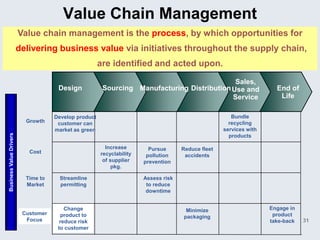
Value Chain Management
                         Value chain management is the process, by which opportunities for
                         delivering business value via initiatives throughout the supply chain,
                                                       are identified and acted upon.
                                                                                             Sales,
                                      Design            Sourcing Manufacturing Distribution Use and                   End of
                                                                                            Service                    Life

                                     Develop product                                                   Bundle
                           Growth     customer can                                                    recycling
                                     market as green                                                services with
Business Value Drivers


                                                                                                      products

                                                         Increase        Pursue      Reduce fleet
                            Cost                       recyclability    pollution     accidents
                                                        of supplier    prevention
                                                            pkg.

                           Time to     Streamline                      Assess risk
                           Market      permitting                       to reduce
                                                                        downtime


                                         Change                                       Minimize                      Engage in
                          Customer      product to                                                                   product
                                                                                     packaging
                           Focus       reduce risk                                                                  take-back   31
                                      to customer
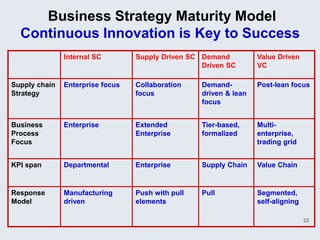
Business Strategy Maturity Model
  Continuous Innovation is Key to Success
               Internal SC        Supply Driven SC Demand          Value Driven
                                                   Driven SC       VC

Supply chain   Enterprise focus   Collaboration    Demand-         Post-lean focus
Strategy                          focus            driven & lean
                                                   focus


Business       Enterprise         Extended         Tier-based,     Multi-
Process                           Enterprise       formalized      enterprise,
Focus                                                              trading grid


KPI span       Departmental       Enterprise       Supply Chain    Value Chain


Response       Manufacturing      Push with pull   Pull            Segmented,
Model          driven             elements                         self-aligning

                                                                                   32
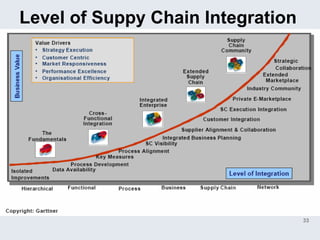
Level of Suppy Chain Integration


                                   33
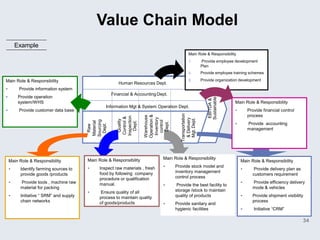
Value Chain Model
        Example
                                                                                             Main Role & Responsibility
                                                                                             1.         Provide employee development
                                                                                                        Plan
                                                                                             2.         Provide employee training schemes

Main Role & Responsibility                                                                   3.         Provide organization development
                                                        Human Resources Dept.
        Provide information system
                                                    Financial & Accounting Dept.
        Provide operation


                                                                                                            Sustainable
                                                                                                            EBITDA &
         system/WHS                                                                                                       Main Role & Responsibility
                                                  Information Mgt & System Operation Dept.
        Provide customer data base                                                                                              Provide financial control


                                                                                       Transportation
                                                                                                                                  process


                                                                      Operation &
                                                                      Warehouse
                                                       Inspection
                                                        Control &


                                                                       Inventory


                                                                                         & Delivery
                                                                                         Mgt. Dept.
                                                         Quality
                                         Sourcing


                                                                        control
                                         Material


                                                         Dept.


                                                                         Dept.
                                                                                                                                 Provide accounting
                                          Dept.
                                           Raw


                                                                                                                                  management


                                         Main Role & Responsibility           Main Role & Responsibility
    Main Role & Responsibility                                                                                                Main Role & Responsibility
                                             Inspect raw materials , fresh        Provide stock model and
         Identify farming sources to                                                                                               Provide delivery plan as
                                              food by following company             inventory management
          provide goods /products                                                                                                   customers requirement
                                              procedure or qualification            control process
         Provide tools , machine raw         manual.                                                                              Provide efficiency delivery
                                                                                    Provide the best facility to
          material for packing                                                                                                      mode & vehicles
                                             Ensure quality of all                 storage /stock to maintain
         Initiative “ SRM” and supply        process to maintain quality           quality of products                            Provide shipment visibility
          chain networks                      of goods/products                                                                     process
                                                                                   Provide sanitary and
                                                                                    hygienic facilities                             Initiative “CRM”

                                                                                                                                                                34
35
36
37
38
Product/Service Provider
           VS
    Solution Provider


                           39
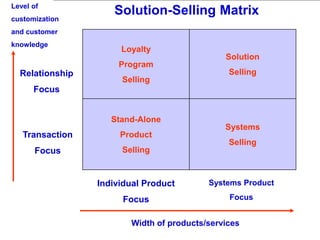
Level of
                    Solution-Selling Matrix
customization
and customer
knowledge
                      Loyalty
      High :                                  Solution
                     Program
  Relationship                                 Selling
                      Selling
      Focus


       Low :        Stand-Alone
                                              Systems
   Transaction        Product
                                               Selling
      Focus           Selling


                 Individual Product       Systems Product

                      Focus                    Focus


                        Width of products/services
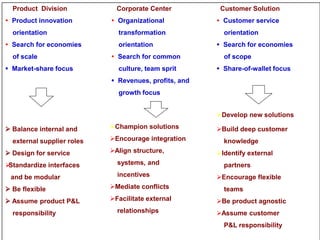
Product Division            Corporate Center          Customer Solution
 Product innovation         Organizational            Customer service
  orientation                 transformation             orientation
 Search for economies        orientation               Search for economies
  of scale                   Search for common          of scope
 Market-share focus          culture, team sprit       Share-of-wallet focus
                             Revenues, profits, and
                              growth focus


                                                       Develop new solutions

 Balance internal and      Champion solutions        Build deep customer
  external supplier roles   Encourage integration       knowledge
 Design for service        Align structure,          Identify external
Standardize interfaces       systems, and               partners
 and be modular               incentives               Encourage flexible
 Be flexible               Mediate conflicts           teams
 Assume product P&L        Facilitate external       Be product agnostic
  responsibility              relationships            Assume customer
                                                         P&L responsibility
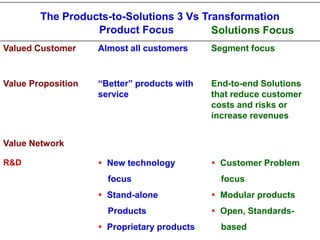
The Products-to-Solutions 3 Vs Transformation
                  Product Focus          Solutions Focus
Valued Customer     Almost all customers     Segment focus


Value Proposition   “Better” products with   End-to-end Solutions
                    service                  that reduce customer
                                             costs and risks or
                                             increase revenues


Value Network

R&D                  New technology          Customer Problem
                      focus                    focus
                     Stand-alone             Modular products
                      Products                Open, Standards-
                     Proprietary products     based
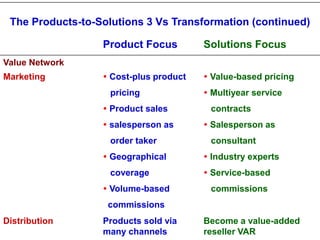
The Products-to-Solutions 3 Vs Transformation (continued)

                  Product Focus         Solutions Focus
Value Network
Marketing          Cost-plus product    Value-based pricing
                    pricing              Multiyear service
                   Product sales        contracts
                   salesperson as       Salesperson as
                    order taker          consultant
                   Geographical         Industry experts
                    coverage             Service-based
                   Volume-based         commissions
                   commissions
Distribution      Products sold via     Become a value-added
                  many channels         reseller VAR
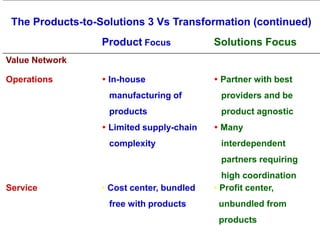
The Products-to-Solutions 3 Vs Transformation (continued)
                  Product Focus            Solutions Focus
Value Network

Operations         In-house                Partner with best
                   manufacturing of         providers and be
                   products                 product agnostic
                   Limited supply-chain    Many
                   complexity               interdependent
                                            partners requiring
                                             high coordination
Service           â€Ē Cost center, bundled   â€Ē Profit center,
                   free with products       unbundled from
                                            products
Value Chain in Transportation System


                                       45
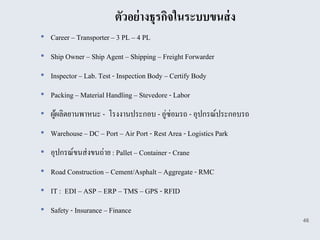
āļ•āļąāļ§āļ­āļĒāđˆ āļēāļ‡āļ˜āļļāļĢāļāļīāļˆāđƒāļ™āļĢāļ°āļšāļšāļ‚āļ™āļŠāđˆ āļ‡
â€Ē Career – Transporter – 3 PL – 4 PL
â€Ē Ship Owner – Ship Agent – Shipping – Freight Forwarder
â€Ē Inspector – Lab. Test - Inspection Body – Certify Body
â€Ē Packing – Material Handling – Stevedore - Labor
â€Ē āļœāļđāļœāļĨāļīāļ•āļĒāļēāļ™āļžāļēāļŦāļ™āļ° - āđ‚āļĢāļ‡āļ‡āļēāļ™āļ›āļĢāļ°āļāļ­āļš - āļ­āļđāđˆāļ‹āđˆāļ­āļĄāļĢāļ– - āļ­āļļāļ›āļāļĢāļ“āđŒāļ›āļĢāļ°āļāļ­āļšāļĢāļ–
    āđ‰
â€Ē Warehouse – DC – Port – Air Port - Rest Area - Logistics Park
â€Ē āļ­āļļāļ›āļāļĢāļ“āđŒāļ‚āļ™āļŠāđˆ āļ‡āļ‚āļ™āļ–āđˆāļēāļĒ : Pallet – Container - Crane
â€Ē Road Construction – Cement/Asphalt – Aggregate - RMC
â€Ē IT : EDI – ASP – ERP – TMS – GPS - RFID
â€Ē Safety - Insurance – Finance
                                                                  46
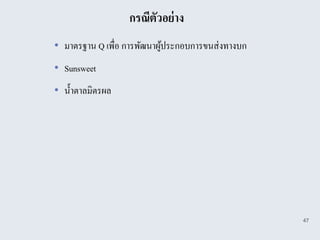
āļāļĢāļ“āļĩāļ•āļąāļ§āļ­āļĒāđˆ āļēāļ‡
â€Ē āļĄāļēāļ•āļĢāļāļēāļ™ Q āđ€āļžāļ·āđˆāļ­ āļāļēāļĢāļžāļąāļ’āļ™āļēāļœāļđāļ›āļĢāļ°āļāļ­āļšāļāļēāļĢāļ‚āļ™āļŠāđˆ āļ‡āļ—āļēāļ‡āļšāļ
                            āđ‰
â€Ē Sunsweet
â€Ē āļ™āđ‰ āļēāļ•āļēāļĨāļĄāļīāļ•āļĢāļœāļĨ


                                                   47
Future Value Chain


                     48
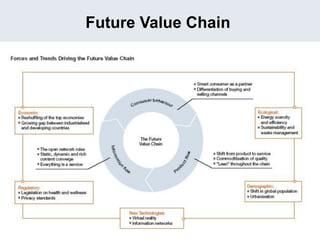
Future Value Chain


                     49
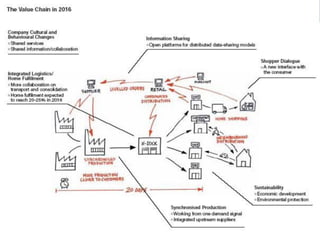
50
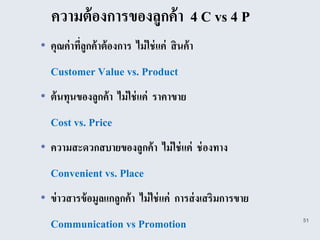
āļ„āļ§āļēāļĄāļ•āđ‰ āļ­āļ‡āļāļēāļĢāļ‚āļ­āļ‡āļĨāļđāļāļ„āđ‰ āļē 4 C vs 4 P
â€Ē āļ„āļļāļ“āļ„āđˆ āļēāļ—āļĩāļĨāļđāļāļ„āđ‰ āļēāļ•āđ‰ āļ­āļ‡āļāļēāļĢ āđ„āļĄāđˆ āđƒāļŠāđˆ āđāļ„āđˆ āļŠāļī āļ™āļ„āđ‰ āļē
           āđˆ
   Customer Value vs. Product
â€Ē āļ•āđ‰ āļ™āļ—āļļāļ™āļ‚āļ­āļ‡āļĨāļđāļāļ„āđ‰ āļē āđ„āļĄāđˆ āđƒāļŠāđˆ āđāļ„āđˆ āļĢāļēāļ„āļēāļ‚āļēāļĒ
   Cost vs. Price
â€Ē āļ„āļ§āļēāļĄāļŠāļ°āļ”āļ§āļāļŠāļšāļēāļĒāļ‚āļ­āļ‡āļĨāļđāļāļ„āđ‰ āļē āđ„āļĄāđˆ āđƒāļŠāđˆ āđāļ„āđˆ āļŠāđˆ āļ­āļ‡āļ—āļēāļ‡
   Convenient vs. Place
â€Ē āļ‚āđˆ āļēāļ§āļŠāļēāļĢāļ‚āđ‰ āļ­āļĄāļđāļĨāđāļāļĨāļđāļāļ„āđ‰ āļē āđ„āļĄāđˆ āđƒāļŠāđˆ āđāļ„āđˆ āļāļēāļĢāļŠāđˆ āļ‡āđ€āļŠāļĢāļīāļĄāļāļēāļĢāļ‚āļēāļĒ
   Communication vs Promotion                               51
52
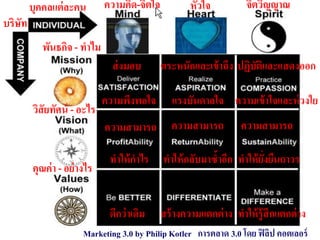
āļšāļļāļ„āļ„āļĨāđāļ•āđˆ āļĨāļ°āļ„āļ™        āļ„āļ§āļēāļĄāļ„āļīāļ”-āļˆāļīāļ•āđƒāļˆ          āļŦāļąāļ§āđƒāļˆ           āļˆāļīāļ•āļ§āļīāļāļāļēāļ“
āļšāļĢāļīāļĐāļąāļ—
            āļžāļąāļ™āļ˜āļāļīāļˆ - āļ—āļēāđ„āļĄ
                                āļŠāđˆ āļ‡āļĄāļ­āļš       āļ•āļĢāļ°āļŦāļ™āļąāļāđāļĨāļ°āđ€āļ‚āđ‰ āļēāļ–āļķāļ‡ āļ›āļāļīāļšāļąāļ•āļīāđāļĨāļ°āđāļŠāļ”āļ‡āļ­āļ­āļ

                              āļ„āļ§āļēāļĄāļžāļķāļ‡āļžāļ­āđƒāļˆ        āđāļĢāļ‡āļšāļąāļ™āļ”āļēāļĨāđƒāļˆ āļ„āļ§āļēāļĄāđ€āļ‚āđ‰ āļēāđƒāļˆāđāļĨāļ°āļŦāđˆ āļ§āļ‡āđƒāļĒ
         āļ§āļīāļŠāļąāļĒāļ—āļąāļĻāļ™āđŒ - āļ­āļ°āđ„āļĢ
                              āļ„āļ§āļēāļĄāļŠāļēāļĄāļēāļĢāļ–        āļ„āļ§āļēāļĄāļŠāļēāļĄāļēāļĢāļ–         āļ„āļ§āļēāļĄāļŠāļēāļĄāļēāļĢāļ–

                               āļ—āļēāđƒāļŦāđ‰ āļāļēāđ„āļĢ     āļ—āļēāđƒāļŦāđ‰ āļāļĨāļąāļšāļĄāļēāļ‹āđ‰āļēāļ­āļĩāļ āļ—āļēāđƒāļŦāđ‰ āļĒāļ‡āļĒāļ·āļ™āļ–āļēāļ§āļĢ
                                                                        āļąāđˆ
         āļ„āļļāļ“āļ„āđˆ āļē - āļ­āļĒāđˆ āļēāļ‡āđ„āļĢ


                               āļ”āļĩāļāļ§āđˆ āļēāđ€āļ”āļīāļĄ    āļŠāļĢāđ‰ āļēāļ‡āļ„āļ§āļēāļĄāđāļ•āļāļ•āđˆ āļēāļ‡ āļ—āļēāđƒāļŦāđ‰ āļĢāđ‰āļđāļŠāļķāļāđāļ•āļāļ•āđˆ āļēāļ‡
                                                                                    53

                        Marketing 3.0 by Philip Kotler āļāļēāļĢāļ•āļĨāļēāļ” 3.0 āđ‚āļ”āļĒ āļŸāļī āļĨāļīāļ› āļ„āļ­āļ•āđ€āļĨāļ­āļĢāđŒ
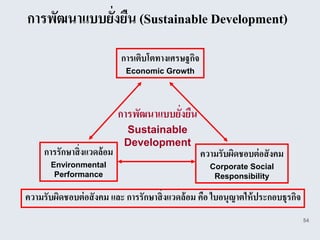
āļāļēāļĢāļžāļąāļ’āļ™āļēāđāļšāļšāļĒāļąāļ‡āļĒāļ·āļ™ (Sustainable Development)
             āđˆ
                             āļāļēāļĢāđ€āļ•āļīāļšāđ‚āļ•āļ—āļēāļ‡āđ€āļĻāļĢāļĐāļāļāļīāļˆ
                              Economic Growth


                             āļāļēāļĢāļžāļąāļ’āļ™āļēāđāļšāļšāļĒāļąāļ‡āļĒāļ·āļ™
                                          āđˆ
                              Sustainable
                              Development
     āļāļēāļĢāļĢāļąāļāļĐāļēāļŠāļīāđˆ āļ‡āđāļ§āļ”āļĨāđ‰ āļ­āļĄ                          āļ„āļ§āļēāļĄāļĢāļąāļšāļœāļīāļ”āļŠāļ­āļšāļ•āđˆ āļ­āļŠāļą āļ‡āļ„āļĄ
       Environmental                                  Corporate Social
        Performance                                    Responsibility

āļ„āļ§āļēāļĄāļĢāļąāļšāļœāļīāļ”āļŠāļ­āļšāļ•āđˆ āļ­āļŠāļą āļ‡āļ„āļĄ āđāļĨāļ° āļāļēāļĢāļĢāļąāļāļĐāļēāļŠāļīāđˆ āļ‡āđāļ§āļ”āļĨāđ‰ āļ­āļĄ āļ„āļ·āļ­ āđƒāļšāļ­āļ™āļļāļāļēāļ•āđƒāļŦāđ‰ āļ›āļĢāļ°āļāļ­āļšāļ˜āļļāļĢāļāļīāļˆ
                                                                                 54
āļšāļ—āļŠāļĢāļļ āļ›
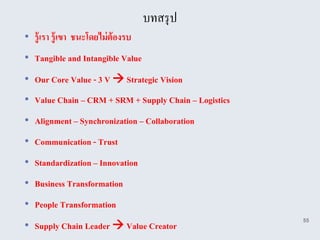
â€Ē āļĢāļđāđ‰ āđ€āļĢāļē āļĢāļđāđ‰ āđ€āļ‚āļē āļŠāļ™āļ°āđ‚āļ”āļĒāđ„āļĄāđˆ āļ•āđ‰āļ­āļ‡āļĢāļš
â€Ē Tangible and Intangible Value
â€Ē Our Core Value - 3 V  Strategic Vision
â€Ē Value Chain – CRM + SRM + Supply Chain – Logistics
â€Ē Alignment – Synchronization – Collaboration
â€Ē Communication - Trust
â€Ē Standardization – Innovation
â€Ē Business Transformation
â€Ē People Transformation
â€Ē Supply Chain Leader  Value Creator
                                                       55
Thank you


            56

Presentation 2012-10-12-13 Value Chain Management in Transportation System v1

  • 1.
    Value Chain inTransportation System Nopporn Thepsithar 12 -13 October 2012
  • 2.
  • 3.
    CSCMP Definition ofLogistics Management Definition of Logistics Management Logistics management is that part of supply chain management that plans, implements, and controls the efficient, effective forward and reverse flow and storage of goods, services and related information between the point of origin and the point of consumption in order to meet customers' requirements. Logistics Management – Boundaries and Relationships Logistics management activities typically include inbound and outbound transportation management, fleet management, warehousing, materials handling, order fulfillment, logistics network design, inventory management, supply/demand planning, and management of third-party logistics services providers. To varying degrees, the logistics function also includes sourcing and procurement, production planning and scheduling, packaging and assembly, and customer service. It is involved in all levels of planning and execution--strategic, operational and tactical. Logistics management is an integrating function, which coordinates and optimizes all logistics activities, as well as integrates logistics activities with other functions including marketing, sales manufacturing, finance, and information technology. 3
  • 4.
    CSCMP Definition ofLogistics Management â€Ē Part of supply chain management â€Ē Plan, implement, and control â€Ē Forward and reverse flow and storage of goods, services and related information between the point of origin and consumption â€Ē Meet customers' requirements â€Ē Efficient and Effective 4
  • 5.
    CSCMP Logistics ManagementActivities Inbound and outbound transportation management Fleet management Warehousing, Inventory management Materials handling Order fulfillment Logistics network design Supply/demand planning Management of third-party logistics services providers Packaging and assembly Sourcing and procurement Production planning and scheduling Customer service Planning and Execution in all levels : Strategic, Tactical, Operational Integratation of all Logistics Activities by coordination and optimization Including marketing, sales manufacturing, finance, and information technology. 5
  • 6.
    āļ„āļļāļ“āļĨāļąāļāļĐāļ“āļ°āļžāļīāđ€āļĻāļĐāļ‚āļ­āļ‡āđ‚āļĨāļˆāļīāļŠāļ•āļīāļāļŠāđŒ â€Ē āļžāļąāļ’āļ™āļēāļĄāļēāļˆāļēāļāļāļīāļˆāļāļĢāļĢāļĄāļ—āļēāļ‡āļāļēāļĢāļ—āļŦāļēāļĢ â€Ē āđ€āļ›āđ‡āļ™āļ§āļīāļ—āļĒāļēāļĻāļēāļŠāļ•āļĢāđŒ āđāļĨāļ° āļĻāļīāļĨāļ›āļĻāļēāļŠāļ•āļĢāđŒ â€Ē āđ€āļ›āđ‡ āļ™āļ•āļąāđ‰āļ‡āđāļ•āđˆ āļŸāļąāļ™āđ€āļŸāļ· āļ­āļ‡āļĒāđˆ āļ­āļĒāđ† āļˆāļ™āļ–āļķāļ‡āļŸāļąāļ™āđ€āļŸāļ· āļ­āļ‡āļŦāļĨāļąāļ āļŠāļĩāđ‰āļ„āļ§āļēāļĄāļ­āļĒāļđāđˆāļĢāļ­āļ”āļ‚āļ­āļ‡āļšāļĢāļīāļĐāļ— āļą â€Ē āļœāļđāđ‰āļ—āļ—āļēāļ‡āļēāļ™āđ‚āļĨāļˆāļīāļŠāļ•āļīāļāļŠāđŒ āđ„āļ”āđ‰ āļ”āļĩ āļ•āđ‰ āļ­āļ‡āļŠāļ·āđˆ āļ­āļŠāļēāļĢāđ€āļāđˆ āļ‡ āđ€āļ›āļī āļ”āļāļ§āđ‰ āļēāļ‡ āļĩāđˆ āļ›āļĢāļ°āļŠāļēāļ™āļœāļĨāļ›āļĢāļ°āđ‚āļĒāļŠāļ™āđŒ āļ–āđˆ āļ­āļĄāļ•āļ™ āđāļĨāļ° āļĄāļĩāļ„āļļāļ“āļ˜āļĢāļĢāļĄ 6
  • 7.
    Packaging Material Transportation Handling Site Selection Logistics Physical Information and Informational flow system Inventory Control Customer Service Order Warehousing Processing
  • 8.
    Integrated Logistics withincompany Marketing and Sales Customers service level, Order Processing, Packaging Logistics Purchasing, Inventories, Plant Location, Return on Production investment, Scheduling Productivity Production Finance 8
  • 9.
    Logistics Management Supplier Vendor DC Store Consumer Product and Service Information and Money Logistics Activities Logistics Activities â€Ē Ordering â€Ē Demand /Supply Planning â€Ē Transportation â€Ē Logistics Network Design â€Ē Material Handling â€Ē Logistics Integration â€Ē Warehouse Management â€Ē Outsourcing â€Ē Inventory Management â€Ē Customer Service â€Ē Packing/Packaging â€Ē Information Management 9
  • 10.
  • 11.
    CSCMP Definition ofSupply Chain Management Definition of Supply Chain Management Plan and management of all activities involved in sourcing and procurement, conversion, and all logistics management activities. Coordination and collaboration with channel partners, which can be suppliers, intermediaries, third party service providers, and customers. Integrate supply and demand management within and across companies. Supply Chain Management – Boundaries & Relationships Link major business functions and business processes within and across companies into a cohesive and high-performing business model including all of the logistics management activities , as well as manufacturing operations Drive coordination of processes and activities with and across marketing, sales, product design, finance, and information technology. 11
  • 12.
    Supply Chain Process â€Ē Plan – Source – Make – Deliver - Return Plan Deliver Source Make Make Deliver Source Make Deliver Source Make Deliver Source Return Return Return Return Return Return Customer’s Supplier’s Customer Customer Supplier Supplier (Internal or (Internal or External) Enterprise External) External Internal External Collaboration Collaboration Collaboration Span of our Supply Chain Process 12
  • 13.
    Building Internal &External Collaboration Customer Service/ Procurement Manufacturing Logistics Sales&Marketing Low Few change- High purchase overs Low inventories price Stable inventories Multiple schedules Low trans- High vendors Long run portation service lengths levels SOURCE MAKE DELIVER SELL Sequential Planning Logistics Procurement Manufacturing Sales Planning Planning Planning Target Synchronized, Concurrent Planning Process Approach (Plan-Source-Make-Deliver-Return) Logistics Procurement Manufacturing Sales Planning Planning Planning Target 13
  • 14.
    Supply Chain ManagementFramework Network Design Years Strategic Supply Planning Months Demand Planning Tactical Production Distribution Planning Planning Weeks Production Packing & Transport Dispatching Days Operational Scheduling Scheduling Scheduling 14
  • 15.
    Order Size Bullwhip Effect : The Dynamic of SCM Retailer Orders Distributor Orders Customer Demand Production Plan Time Source: Tom Mc Guffry, Electronic Commerce and Value Chain Management, 1998 15
  • 16.
    Key Success Factorof Supply Chain Management Collaboration Communication Trust 16 10/11/2012
  • 17.
    Marketplace competition isnot ............firm vs. firm, it’s ..... supply chain vs.supply chain.
  • 18.
  • 19.
    “Value” is definedas “any activity that increases the market form or function of the product or service.” And in today’s business climate, we need to maximize the value of every process in our business. 19
  • 20.
    Value Management â€Ē End-user segmentation Valued Customer â€Ē Segment specific needs / decision-making process Who to serve? â€Ē Anticipate technical trends / market dynamics ïƒĻ Targeting key end-user Source: Nirmalya Kumar, segments Marketing as Strategy, 2004 3 V’s Value Network Value Proposition How to deliver ? What to offer? â€Ē Functional/physical deliver of value proposition â€Ē Benchmark current offering â€Ē Channel/distribution network design â€Ē Design new value proposition â€Ē Required downstream integration â€Ē Quantify value of offering ïƒĻ Integrated value network ïƒĻ Value based pricing 20
  • 21.
    Value Management 3Vs framework is consisted of 1) Valued Customer, 2) Value Proposition and 3) Value Network Valued Customer Value Proposition Value Network  Which customer  Can we create a value  Can we run a better segment(s) do we want to proposition that delivers network or radically serve?. superior value through redefine the value delivery  Comprehensive multi- dramatically higher benefits system for the industry ? level segmentation along or lower costs?  Delivering our value the value chain For targeted segments proposition -Identify most important -from plant / silo to job-site  In-depth knowledge of attributes specific requirements and -from marketing / TS to -Assessment / benchmark decision-making process end-user of current offering per segment – product -Design new value  Design of required and service related proposition: products and channel / distribution  Anticipate technical services network trends and business -Quantify value of offering  Downstream integration dynamics of construction for customer to capture additional value industry or secure market position Source: Kumar, N. (2004). Marketing as strategy: understanding the CEO’s agenda for 21 driving growth and innovation, Harvard business school press
  • 22.
    Example of 3Vs Flag Carriers easyJet Valued Customer Everyone, especially People who pay from their Own “Who to Serve?” Business class pockets and some who don’t typically fly Value Proposition  Flexible  One-way fares “What to Offer?”  Full-service  No frills  High prices  Low prices Value Network “How to Deliver?” Purchasing Integrated Outsourced Operations  Multiple types of planes  Single type of plane  Short/long-haul routes  Short-haul routes  Worldwide network  Select destinations Marketing  Segmented customers  Treat all customers the  Varied meal services same  Frequent flyer program  “Focused” 22 Distribution Travel agents/all channels Internet/direct sales only
  • 23.
    Value Chain Model: Michael E. Porter 23 Source: http://www.netmba.com/strategy/value-chain/
  • 24.
    Supply Chain &Value Chain Management Supply Chain Plan â€Ē Channel for movement of goods or services from source to end-user Source Make Deliver â€Ē Product-focused â€Ē Aim for competitive distribution, Return Return market share, market expansion Value Chain Manufacturing Distribution Marketing Service Sourcing and Sales â€Ē Framework for understanding how a company adds value along the supply chain, from sourcing the raw material to servicing the end product in the hands of the customer â€Ē Company-focused â€Ē Aim for business value creation, business expansion & integration 24
  • 25.
    Components of ValueChain Management Suppliers SRM SCM CRM Customers â€Ē VCM is the main process in aligning company strategies with execution processes to delivery the right product at the right price and time, and supporting the key principles success â€Ē VCM is considered sometimes as the next generation of SCM â€Ē It has two major principles: 1. The end customer is the only entity that introduces money into the chain, the rest of value chain members shuffling his money back and forth 2. The only way for the value chain to succeed is to have every member profits from the business â€Ē It has three components - Supplier Relationship Management(SRM) - Supply Chain Management( SCM) 25 - Customer Relationship Management( CRM)
  • 26.
    Egg Value Chain Egg Egg Ping Gu Supermarket Production Delivery â€Ē Kitchen of the World â€Ē Provide value and â€Ē Create Value solution along the chain â€Ē World Chicken farm with â€Ē Cost high innovative â€Ē “Cold-Chain Delivery” â€Ē Convenience technology ï€ī Reliability & Availability Right time, Right â€Ē Communication â€Ē First Class Quality, Safety ï€ī quantity, Right product & Healthy Eggs â€Ē Variety ï€ī Minimum Cost & Lean ï€ī Lab , UV hygiene â€Ē Display â€Ē Green Logistics â€Ē Great egg productivity ï€ī Safety, Energy Saving â€Ē Advice â€Ē Environment friendly ï€ī Environmental Friendly â€Ē Prevent animal epidemics â€Ē VMI & CRP from close farm â€Ē Shipment visibility â€Ē More traceability FEED FARM FOOD FRESH FAMILY 26 PROFIT PEOPLE PLANET
  • 27.
  • 28.
    Value Chain ofAir Transportation 28
  • 29.
    Natural Gas ValueChain Transportation 29
  • 30.
  • 31.
    Value Chain Management Value chain management is the process, by which opportunities for delivering business value via initiatives throughout the supply chain, are identified and acted upon. Sales, Design Sourcing Manufacturing Distribution Use and End of Service Life Develop product Bundle Growth customer can recycling market as green services with Business Value Drivers products Increase Pursue Reduce fleet Cost recyclability pollution accidents of supplier prevention pkg. Time to Streamline Assess risk Market permitting to reduce downtime Change Minimize Engage in Customer product to product packaging Focus reduce risk take-back 31 to customer
  • 32.
    Business Strategy MaturityModel Continuous Innovation is Key to Success Internal SC Supply Driven SC Demand Value Driven Driven SC VC Supply chain Enterprise focus Collaboration Demand- Post-lean focus Strategy focus driven & lean focus Business Enterprise Extended Tier-based, Multi- Process Enterprise formalized enterprise, Focus trading grid KPI span Departmental Enterprise Supply Chain Value Chain Response Manufacturing Push with pull Pull Segmented, Model driven elements self-aligning 32
  • 33.
    Level of SuppyChain Integration 33
  • 34.
    Value Chain Model Example Main Role & Responsibility 1. Provide employee development Plan 2. Provide employee training schemes Main Role & Responsibility 3. Provide organization development Human Resources Dept.  Provide information system Financial & Accounting Dept.  Provide operation Sustainable EBITDA & system/WHS Main Role & Responsibility Information Mgt & System Operation Dept.  Provide customer data base  Provide financial control Transportation process Operation & Warehouse Inspection Control & Inventory & Delivery Mgt. Dept. Quality Sourcing control Material Dept. Dept.  Provide accounting Dept. Raw management Main Role & Responsibility Main Role & Responsibility Main Role & Responsibility Main Role & Responsibility  Inspect raw materials , fresh  Provide stock model and  Identify farming sources to  Provide delivery plan as food by following company inventory management provide goods /products customers requirement procedure or qualification control process  Provide tools , machine raw manual.  Provide efficiency delivery  Provide the best facility to material for packing mode & vehicles  Ensure quality of all storage /stock to maintain  Initiative “ SRM” and supply process to maintain quality quality of products  Provide shipment visibility chain networks of goods/products process  Provide sanitary and hygienic facilities  Initiative “CRM” 34
  • 35.
  • 36.
  • 37.
  • 38.
  • 39.
    Product/Service Provider VS Solution Provider 39
  • 40.
    Level of Solution-Selling Matrix customization and customer knowledge Loyalty High : Solution Program Relationship Selling Selling Focus Low : Stand-Alone Systems Transaction Product Selling Focus Selling Individual Product Systems Product Focus Focus Width of products/services
  • 41.
    Product Division Corporate Center Customer Solution  Product innovation  Organizational  Customer service orientation transformation orientation  Search for economies orientation  Search for economies of scale  Search for common of scope  Market-share focus culture, team sprit  Share-of-wallet focus  Revenues, profits, and growth focus Develop new solutions  Balance internal and Champion solutions Build deep customer external supplier roles Encourage integration knowledge  Design for service Align structure, Identify external Standardize interfaces systems, and partners and be modular incentives Encourage flexible  Be flexible Mediate conflicts teams  Assume product P&L Facilitate external Be product agnostic responsibility relationships Assume customer P&L responsibility
  • 42.
    The Products-to-Solutions 3Vs Transformation Product Focus Solutions Focus Valued Customer Almost all customers Segment focus Value Proposition “Better” products with End-to-end Solutions service that reduce customer costs and risks or increase revenues Value Network R&D  New technology  Customer Problem focus focus  Stand-alone  Modular products Products  Open, Standards-  Proprietary products based
  • 43.
    The Products-to-Solutions 3Vs Transformation (continued) Product Focus Solutions Focus Value Network Marketing  Cost-plus product  Value-based pricing pricing  Multiyear service  Product sales contracts  salesperson as  Salesperson as order taker consultant  Geographical  Industry experts coverage  Service-based  Volume-based commissions commissions Distribution Products sold via Become a value-added many channels reseller VAR
  • 44.
    The Products-to-Solutions 3Vs Transformation (continued) Product Focus Solutions Focus Value Network Operations  In-house  Partner with best manufacturing of providers and be products product agnostic  Limited supply-chain  Many complexity interdependent partners requiring high coordination Service â€Ē Cost center, bundled â€Ē Profit center, free with products unbundled from products
  • 45.
    Value Chain inTransportation System 45
  • 46.
    āļ•āļąāļ§āļ­āļĒāđˆ āļēāļ‡āļ˜āļļāļĢāļāļīāļˆāđƒāļ™āļĢāļ°āļšāļšāļ‚āļ™āļŠāđˆ āļ‡ â€ĒCareer – Transporter – 3 PL – 4 PL â€Ē Ship Owner – Ship Agent – Shipping – Freight Forwarder â€Ē Inspector – Lab. Test - Inspection Body – Certify Body â€Ē Packing – Material Handling – Stevedore - Labor â€Ē āļœāļđāļœāļĨāļīāļ•āļĒāļēāļ™āļžāļēāļŦāļ™āļ° - āđ‚āļĢāļ‡āļ‡āļēāļ™āļ›āļĢāļ°āļāļ­āļš - āļ­āļđāđˆāļ‹āđˆāļ­āļĄāļĢāļ– - āļ­āļļāļ›āļāļĢāļ“āđŒāļ›āļĢāļ°āļāļ­āļšāļĢāļ– āđ‰ â€Ē Warehouse – DC – Port – Air Port - Rest Area - Logistics Park â€Ē āļ­āļļāļ›āļāļĢāļ“āđŒāļ‚āļ™āļŠāđˆ āļ‡āļ‚āļ™āļ–āđˆāļēāļĒ : Pallet – Container - Crane â€Ē Road Construction – Cement/Asphalt – Aggregate - RMC â€Ē IT : EDI – ASP – ERP – TMS – GPS - RFID â€Ē Safety - Insurance – Finance 46
  • 47.
    āļāļĢāļ“āļĩāļ•āļąāļ§āļ­āļĒāđˆ āļēāļ‡ â€Ē āļĄāļēāļ•āļĢāļāļēāļ™Q āđ€āļžāļ·āđˆāļ­ āļāļēāļĢāļžāļąāļ’āļ™āļēāļœāļđāļ›āļĢāļ°āļāļ­āļšāļāļēāļĢāļ‚āļ™āļŠāđˆ āļ‡āļ—āļēāļ‡āļšāļ āđ‰ â€Ē Sunsweet â€Ē āļ™āđ‰ āļēāļ•āļēāļĨāļĄāļīāļ•āļĢāļœāļĨ 47
  • 48.
  • 49.
  • 50.
  • 51.
    āļ„āļ§āļēāļĄāļ•āđ‰ āļ­āļ‡āļāļēāļĢāļ‚āļ­āļ‡āļĨāļđāļāļ„āđ‰ āļē4 C vs 4 P â€Ē āļ„āļļāļ“āļ„āđˆ āļēāļ—āļĩāļĨāļđāļāļ„āđ‰ āļēāļ•āđ‰ āļ­āļ‡āļāļēāļĢ āđ„āļĄāđˆ āđƒāļŠāđˆ āđāļ„āđˆ āļŠāļī āļ™āļ„āđ‰ āļē āđˆ Customer Value vs. Product â€Ē āļ•āđ‰ āļ™āļ—āļļāļ™āļ‚āļ­āļ‡āļĨāļđāļāļ„āđ‰ āļē āđ„āļĄāđˆ āđƒāļŠāđˆ āđāļ„āđˆ āļĢāļēāļ„āļēāļ‚āļēāļĒ Cost vs. Price â€Ē āļ„āļ§āļēāļĄāļŠāļ°āļ”āļ§āļāļŠāļšāļēāļĒāļ‚āļ­āļ‡āļĨāļđāļāļ„āđ‰ āļē āđ„āļĄāđˆ āđƒāļŠāđˆ āđāļ„āđˆ āļŠāđˆ āļ­āļ‡āļ—āļēāļ‡ Convenient vs. Place â€Ē āļ‚āđˆ āļēāļ§āļŠāļēāļĢāļ‚āđ‰ āļ­āļĄāļđāļĨāđāļāļĨāļđāļāļ„āđ‰ āļē āđ„āļĄāđˆ āđƒāļŠāđˆ āđāļ„āđˆ āļāļēāļĢāļŠāđˆ āļ‡āđ€āļŠāļĢāļīāļĄāļāļēāļĢāļ‚āļēāļĒ Communication vs Promotion 51
  • 52.
  • 53.
    āļšāļļāļ„āļ„āļĨāđāļ•āđˆ āļĨāļ°āļ„āļ™ āļ„āļ§āļēāļĄāļ„āļīāļ”-āļˆāļīāļ•āđƒāļˆ āļŦāļąāļ§āđƒāļˆ āļˆāļīāļ•āļ§āļīāļāļāļēāļ“ āļšāļĢāļīāļĐāļąāļ— āļžāļąāļ™āļ˜āļāļīāļˆ - āļ—āļēāđ„āļĄ āļŠāđˆ āļ‡āļĄāļ­āļš āļ•āļĢāļ°āļŦāļ™āļąāļāđāļĨāļ°āđ€āļ‚āđ‰ āļēāļ–āļķāļ‡ āļ›āļāļīāļšāļąāļ•āļīāđāļĨāļ°āđāļŠāļ”āļ‡āļ­āļ­āļ āļ„āļ§āļēāļĄāļžāļķāļ‡āļžāļ­āđƒāļˆ āđāļĢāļ‡āļšāļąāļ™āļ”āļēāļĨāđƒāļˆ āļ„āļ§āļēāļĄāđ€āļ‚āđ‰ āļēāđƒāļˆāđāļĨāļ°āļŦāđˆ āļ§āļ‡āđƒāļĒ āļ§āļīāļŠāļąāļĒāļ—āļąāļĻāļ™āđŒ - āļ­āļ°āđ„āļĢ āļ„āļ§āļēāļĄāļŠāļēāļĄāļēāļĢāļ– āļ„āļ§āļēāļĄāļŠāļēāļĄāļēāļĢāļ– āļ„āļ§āļēāļĄāļŠāļēāļĄāļēāļĢāļ– āļ—āļēāđƒāļŦāđ‰ āļāļēāđ„āļĢ āļ—āļēāđƒāļŦāđ‰ āļāļĨāļąāļšāļĄāļēāļ‹āđ‰āļēāļ­āļĩāļ āļ—āļēāđƒāļŦāđ‰ āļĒāļ‡āļĒāļ·āļ™āļ–āļēāļ§āļĢ āļąāđˆ āļ„āļļāļ“āļ„āđˆ āļē - āļ­āļĒāđˆ āļēāļ‡āđ„āļĢ āļ”āļĩāļāļ§āđˆ āļēāđ€āļ”āļīāļĄ āļŠāļĢāđ‰ āļēāļ‡āļ„āļ§āļēāļĄāđāļ•āļāļ•āđˆ āļēāļ‡ āļ—āļēāđƒāļŦāđ‰ āļĢāđ‰āļđāļŠāļķāļāđāļ•āļāļ•āđˆ āļēāļ‡ 53 Marketing 3.0 by Philip Kotler āļāļēāļĢāļ•āļĨāļēāļ” 3.0 āđ‚āļ”āļĒ āļŸāļī āļĨāļīāļ› āļ„āļ­āļ•āđ€āļĨāļ­āļĢāđŒ
  • 54.
    āļāļēāļĢāļžāļąāļ’āļ™āļēāđāļšāļšāļĒāļąāļ‡āļĒāļ·āļ™ (Sustainable Development) āđˆ āļāļēāļĢāđ€āļ•āļīāļšāđ‚āļ•āļ—āļēāļ‡āđ€āļĻāļĢāļĐāļāļāļīāļˆ Economic Growth āļāļēāļĢāļžāļąāļ’āļ™āļēāđāļšāļšāļĒāļąāļ‡āļĒāļ·āļ™ āđˆ Sustainable Development āļāļēāļĢāļĢāļąāļāļĐāļēāļŠāļīāđˆ āļ‡āđāļ§āļ”āļĨāđ‰ āļ­āļĄ āļ„āļ§āļēāļĄāļĢāļąāļšāļœāļīāļ”āļŠāļ­āļšāļ•āđˆ āļ­āļŠāļą āļ‡āļ„āļĄ Environmental Corporate Social Performance Responsibility āļ„āļ§āļēāļĄāļĢāļąāļšāļœāļīāļ”āļŠāļ­āļšāļ•āđˆ āļ­āļŠāļą āļ‡āļ„āļĄ āđāļĨāļ° āļāļēāļĢāļĢāļąāļāļĐāļēāļŠāļīāđˆ āļ‡āđāļ§āļ”āļĨāđ‰ āļ­āļĄ āļ„āļ·āļ­ āđƒāļšāļ­āļ™āļļāļāļēāļ•āđƒāļŦāđ‰ āļ›āļĢāļ°āļāļ­āļšāļ˜āļļāļĢāļāļīāļˆ 54
  • 55.
    āļšāļ—āļŠāļĢāļļ āļ› â€Ē āļĢāļđāđ‰āđ€āļĢāļē āļĢāļđāđ‰ āđ€āļ‚āļē āļŠāļ™āļ°āđ‚āļ”āļĒāđ„āļĄāđˆ āļ•āđ‰āļ­āļ‡āļĢāļš â€Ē Tangible and Intangible Value â€Ē Our Core Value - 3 V  Strategic Vision â€Ē Value Chain – CRM + SRM + Supply Chain – Logistics â€Ē Alignment – Synchronization – Collaboration â€Ē Communication - Trust â€Ē Standardization – Innovation â€Ē Business Transformation â€Ē People Transformation â€Ē Supply Chain Leader  Value Creator 55
  • 56.