PRESENT SIMPLE
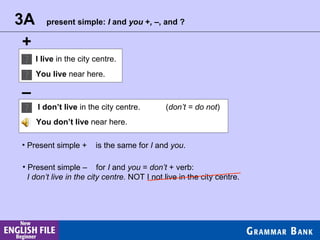
3A present simple:  I  and  you  + ,  –, and ? +   – Present simple +  is the same for  I  and  you . I live  in the city centre. You live  near here. I don’t live  in the city centre. ( don’t = do not ) You don’t live  near here. Present simple –  for  I  and  you  =  don’t  + verb: I don’t live in the city centre.  NOT I not live in the city centre.
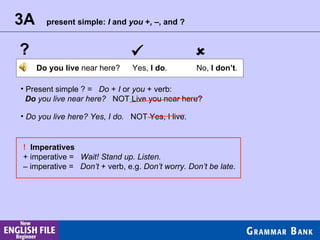
?   3A present simple:  I  and  you  + ,  –, and ? Do you live  near here? Yes,  I do . No,  I don’t . Present simple ? =  Do  +  I  or  you  + verb: Do  you live near here?   NOT Live you near here? Do you live here? Yes, I do.   NOT Yes, I live. !  Imperatives + imperative =  Wait! Stand up. Listen. –  imperative =  Don’t  + verb, e.g.  Don’t worry. Don’t be late.
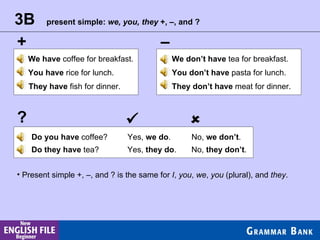
3B present simple:  we, you, they  +, –, and ? +   – ?   Present simple +, –, and ? is the same for  I ,  you ,  we ,  you  (plural), and  they . We have  coffee for breakfast. You have  rice for lunch. They have  fish for dinner. We don’t have  tea for breakfast. You don’t have  pasta for lunch. They don’t have  meat for dinner. Do you have  coffee? Yes,  we do . No,  we don’t . Do they have  tea? Yes,  they do . No,  they don’t .
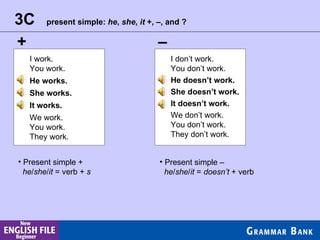
3C present simple:  he ,  she ,  it  +, –, and ? +   – I work. You work. We work. You work. They work. I don’t work. You don’t work. We don’t work. You don’t work. They don’t work. Present simple + he / she / it  = verb +  s Present simple – he / she / it  =  doesn’t  + verb He works. She works. It works. He doesn’t work. She doesn’t work. It doesn’t work.
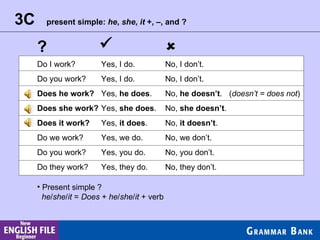
?   3C present simple:  he ,  she ,  it  +, –, and ? Do I work? Yes, I do. No, I don’t. Do you work? Yes, I do. No, I don’t. Do we work? Yes, we do. No, we don’t. Do you work? Yes, you do. No, you don’t. Do they work? Yes, they do. No, they don’t. Present simple ? he / she / it  =  Does  +  he / she / it  + verb Does he work? Yes,  he does . No,  he doesn’t . ( doesn’t = does not ) Does she work? Yes,  she does . No,  she doesn’t . Does it work? Yes,  it does . No,  it doesn’t .
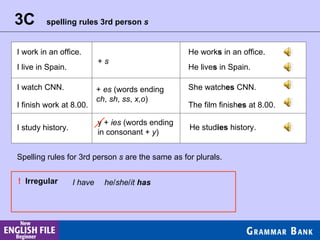
3C spelling rules 3rd person  s I work in an office. I live in Spain. I watch CNN. I finish work at 8.00. I study history. +  s +  es  (words ending ch ,  sh ,  ss ,  x,o ) Spelling rules for 3rd person  s  are the same as for plurals. He live s  in Spain. He work s  in an office. The film finish es  at 8.00. She watch es  CNN. He stud ies  history. !  Irregular I have he / she / it   has y +  ies  (words ending in consonant +  y )

Present simple

  • 1.
  • 2.
    3A present simple: I and you + , –, and ? + – Present simple + is the same for I and you . I live in the city centre. You live near here. I don’t live in the city centre. ( don’t = do not ) You don’t live near here. Present simple – for I and you = don’t + verb: I don’t live in the city centre. NOT I not live in the city centre.
  • 3.
    ?  3A present simple: I and you + , –, and ? Do you live near here? Yes, I do . No, I don’t . Present simple ? = Do + I or you + verb: Do you live near here? NOT Live you near here? Do you live here? Yes, I do. NOT Yes, I live. ! Imperatives + imperative = Wait! Stand up. Listen. – imperative = Don’t + verb, e.g. Don’t worry. Don’t be late.
  • 4.
    3B present simple: we, you, they +, –, and ? + – ?   Present simple +, –, and ? is the same for I , you , we , you (plural), and they . We have coffee for breakfast. You have rice for lunch. They have fish for dinner. We don’t have tea for breakfast. You don’t have pasta for lunch. They don’t have meat for dinner. Do you have coffee? Yes, we do . No, we don’t . Do they have tea? Yes, they do . No, they don’t .
  • 5.
    3C present simple: he , she , it +, –, and ? + – I work. You work. We work. You work. They work. I don’t work. You don’t work. We don’t work. You don’t work. They don’t work. Present simple + he / she / it = verb + s Present simple – he / she / it = doesn’t + verb He works. She works. It works. He doesn’t work. She doesn’t work. It doesn’t work.
  • 6.
    ?  3C present simple: he , she , it +, –, and ? Do I work? Yes, I do. No, I don’t. Do you work? Yes, I do. No, I don’t. Do we work? Yes, we do. No, we don’t. Do you work? Yes, you do. No, you don’t. Do they work? Yes, they do. No, they don’t. Present simple ? he / she / it = Does + he / she / it + verb Does he work? Yes, he does . No, he doesn’t . ( doesn’t = does not ) Does she work? Yes, she does . No, she doesn’t . Does it work? Yes, it does . No, it doesn’t .
  • 7.
    3C spelling rules3rd person s I work in an office. I live in Spain. I watch CNN. I finish work at 8.00. I study history. + s + es (words ending ch , sh , ss , x,o ) Spelling rules for 3rd person s are the same as for plurals. He live s in Spain. He work s in an office. The film finish es at 8.00. She watch es CNN. He stud ies history. ! Irregular I have he / she / it has y + ies (words ending in consonant + y )