GERUNDS AND INFINITIVES

 Learning how to use gerunds
 and infinitives is one of the
 most challenging aspects of
 learning English. Here is a brief
 review of the differences
 between gerunds and infinitives.
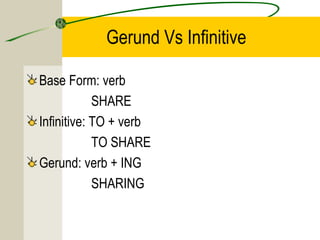
Gerund Vs Infinitive

Base Form: verb
            SHARE
Infinitive: TO + verb
            TO SHARE
Gerund: verb + ING
            SHARING
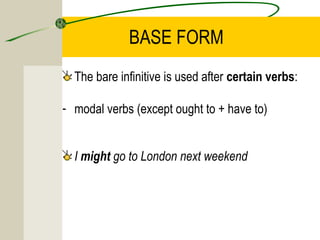
BASE FORM
  The bare infinitive is used after certain verbs:

- modal verbs (except ought to + have to)


  I might go to London next weekend
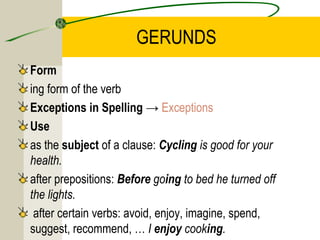
GERUNDS
Form
ing form of the verb
Exceptions in Spelling → Exceptions
Use
as the subject of a clause: Cycling is good for your
health.
after prepositions: Before going to bed he turned off
the lights.
 after certain verbs: avoid, enjoy, imagine, spend,
suggest, recommend, … I enjoy cooking.
INFINITIVES
Form
To + verb
Use
After verbs not followed by gerund: He wants to
swim.
 after interrogatives (infinitive constructions):
They don’t know how to swim.
 after adjectives : Nice to meet you.
after nouns : We made a promise to swim.
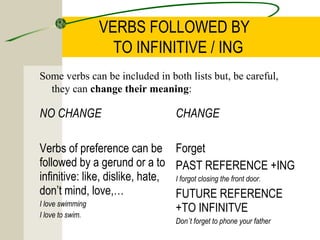
VERBS FOLLOWED BY
                 TO INFINITIVE / ING
Some verbs can be included in both lists but, be careful,
  they can change their meaning:

NO CHANGE                         CHANGE

Verbs of preference can be Forget
followed by a gerund or a to PAST REFERENCE +ING
infinitive: like, dislike, hate, I forgot closing the front door.
don’t mind, love,…               FUTURE REFERENCE
I love swimming
I love to swim.
                                 +TO INFINITVE
                                  Don´t forget to phone your father
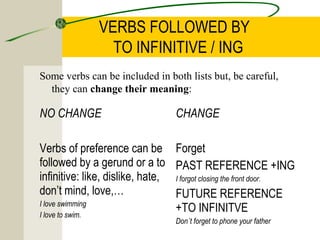
VERBS FOLLOWED BY
                 TO INFINITIVE / ING
Some verbs can be included in both lists but, be careful,
  they can change their meaning:

NO CHANGE                         CHANGE

Verbs of preference can be Forget
followed by a gerund or a to PAST REFERENCE +ING
infinitive: like, dislike, hate, I forgot closing the front door.
don’t mind, love,…               FUTURE REFERENCE
I love swimming
I love to swim.
                                 +TO INFINITVE
                                  Don´t forget to phone your father

Gerundsandinfinitives

  • 1.
    GERUNDS AND INFINITIVES Learning how to use gerunds and infinitives is one of the most challenging aspects of learning English. Here is a brief review of the differences between gerunds and infinitives.
  • 2.
    Gerund Vs Infinitive BaseForm: verb SHARE Infinitive: TO + verb TO SHARE Gerund: verb + ING SHARING
  • 3.
    BASE FORM The bare infinitive is used after certain verbs: - modal verbs (except ought to + have to) I might go to London next weekend
  • 4.
    GERUNDS Form ing form ofthe verb Exceptions in Spelling → Exceptions Use as the subject of a clause: Cycling is good for your health. after prepositions: Before going to bed he turned off the lights. after certain verbs: avoid, enjoy, imagine, spend, suggest, recommend, … I enjoy cooking.
  • 5.
    INFINITIVES Form To + verb Use Afterverbs not followed by gerund: He wants to swim. after interrogatives (infinitive constructions): They don’t know how to swim. after adjectives : Nice to meet you. after nouns : We made a promise to swim.
  • 6.
    VERBS FOLLOWED BY TO INFINITIVE / ING Some verbs can be included in both lists but, be careful, they can change their meaning: NO CHANGE CHANGE Verbs of preference can be Forget followed by a gerund or a to PAST REFERENCE +ING infinitive: like, dislike, hate, I forgot closing the front door. don’t mind, love,… FUTURE REFERENCE I love swimming I love to swim. +TO INFINITVE Don´t forget to phone your father
  • 7.
    VERBS FOLLOWED BY TO INFINITIVE / ING Some verbs can be included in both lists but, be careful, they can change their meaning: NO CHANGE CHANGE Verbs of preference can be Forget followed by a gerund or a to PAST REFERENCE +ING infinitive: like, dislike, hate, I forgot closing the front door. don’t mind, love,… FUTURE REFERENCE I love swimming I love to swim. +TO INFINITVE Don´t forget to phone your father