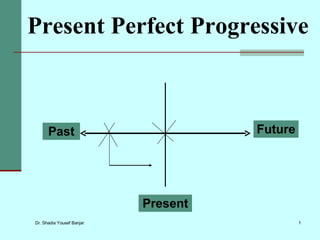
Present Perfect Progressive Present Past Future
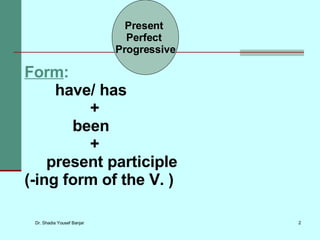
Present  Perfect  Progressive Form : have/ has +  been  +  present participle (-ing form of the V. )
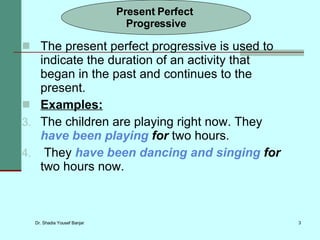
The present perfect progressive is used to indicate the duration of an activity that began in the past and continues to the present.  Examples: The children are playing right now. They  have been playing  for   two hours. They  have been dancing and singing   for   two hours now. Present Perfect  Progressive
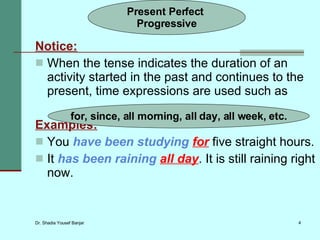
Notice: When the tense indicates the duration of an activity started in the past and continues to the present, time expressions are used such as Examples: You  have been studying   for  five straight hours. It  has been raining   all day . It is still raining right now. Present Perfect  Progressive for, since, all morning, all day, all week, etc.
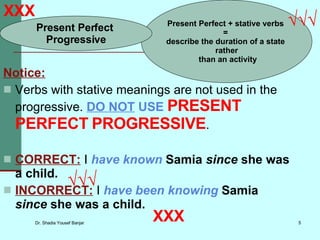
Notice: Verbs with stative meanings are not used in the progressive.  DO NOT  USE  PRESENT   PERFECT   PROGRESSIVE . CORRECT:  I  have known  Samia   since  she was a child. INCORRECT:  I  have been knowing  Samia   since  she was a child. XXX XXX √√√ Present Perfect + stative verbs  =  describe the duration of a state  rather than an activity Present Perfect  Progressive √√√
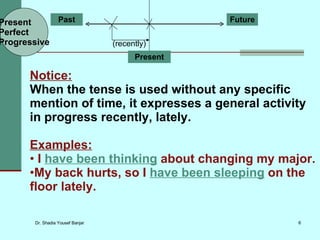
Future Past Present (recently) Present  Perfect  Progressive Notice:   When the tense is used without any specific mention of time, it expresses a general activity in progress recently, lately. Examples: I  have been thinking  about changing my major. My back hurts, so I  have been sleeping  on the floor lately.
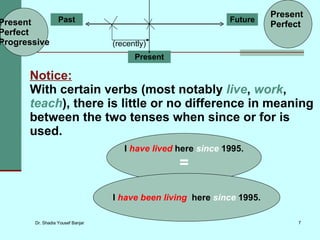
Future Past Present (recently) Present  Perfect  Progressive Notice:   With certain verbs (most notably  live ,  work ,  teach ), there is little or no difference in meaning between the two tenses when since or for is used. Present  Perfect  I  have lived  here  since  1995. = I  have been living   here  since  1995.
THANK YOU!

Present Perfect Progressive

  • 1.
    Present Perfect ProgressivePresent Past Future
  • 2.
    Present Perfect Progressive Form : have/ has + been + present participle (-ing form of the V. )
  • 3.
    The present perfectprogressive is used to indicate the duration of an activity that began in the past and continues to the present. Examples: The children are playing right now. They have been playing for two hours. They have been dancing and singing for two hours now. Present Perfect Progressive
  • 4.
    Notice: When thetense indicates the duration of an activity started in the past and continues to the present, time expressions are used such as Examples: You have been studying for five straight hours. It has been raining all day . It is still raining right now. Present Perfect Progressive for, since, all morning, all day, all week, etc.
  • 5.
    Notice: Verbs withstative meanings are not used in the progressive. DO NOT USE PRESENT PERFECT PROGRESSIVE . CORRECT: I have known Samia since she was a child. INCORRECT: I have been knowing Samia since she was a child. XXX XXX √√√ Present Perfect + stative verbs = describe the duration of a state rather than an activity Present Perfect Progressive √√√
  • 6.
    Future Past Present(recently) Present Perfect Progressive Notice: When the tense is used without any specific mention of time, it expresses a general activity in progress recently, lately. Examples: I have been thinking about changing my major. My back hurts, so I have been sleeping on the floor lately.
  • 7.
    Future Past Present(recently) Present Perfect Progressive Notice: With certain verbs (most notably live , work , teach ), there is little or no difference in meaning between the two tenses when since or for is used. Present Perfect I have lived here since 1995. = I have been living here since 1995.
  • 8.