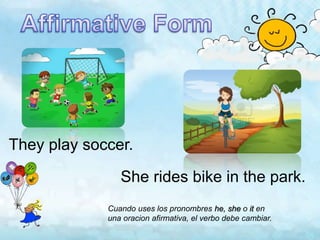
They play soccer.
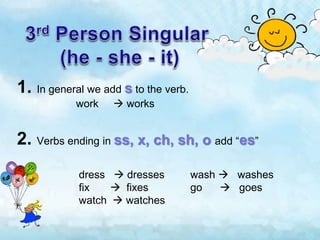
She rides bike in the park.
Cuando uses los pronombres he, she o it en
una oracion afirmativa, el verbo debe cambiar.
1. In general we add s to the verb.
work  works
2. Verbs ending in ss, x, ch, sh, o add “es”
dress  dresses
fix  fixes
watch  watches
wash  washes
go  goes
3. Verbs ending in consonant + y, changes
the y to “ies”
cry  cries
But verbs ending in vowel + y, just add “s”
play  plays
She does not run in the park.
She doesn’t run in the park.
They do not swim.
They don’t swim.do not = don’t
does not = doesn’t
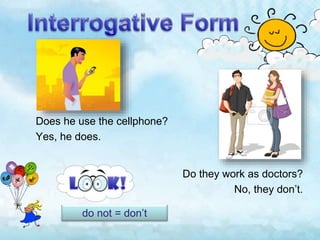
Does he use the cellphone?
Yes, he does.
Do they work as doctors?
No, they don’t.
do not = don’t
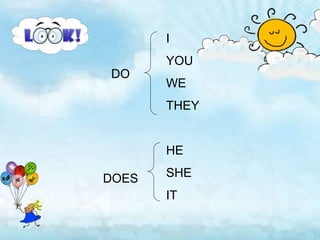
DO
DOES
I
YOU
WE
THEY
HE
SHE
IT
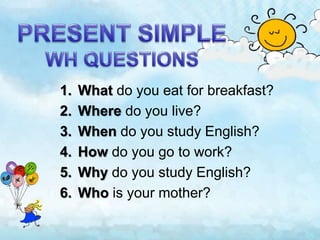
1. What do you eat for breakfast?
2. Where do you live?
3. When do you study English?
4. How do you go to work?
5. Why do you study English?
6. Who is your mother?
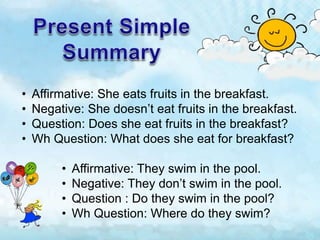
• Affirmative: She eats fruits in the breakfast.
• Negative: She doesn’t eat fruits in the breakfast.
• Question: Does she eat fruits in the breakfast?
• Wh Question: What does she eat for breakfast?
• Affirmative: They swim in the pool.
• Negative: They don’t swim in the pool.
• Question : Do they swim in the pool?
• Wh Question: Where do they swim?

The present simple tense

  • 2.
    They play soccer. Sherides bike in the park. Cuando uses los pronombres he, she o it en una oracion afirmativa, el verbo debe cambiar.
  • 3.
    1. In generalwe add s to the verb. work  works 2. Verbs ending in ss, x, ch, sh, o add “es” dress  dresses fix  fixes watch  watches wash  washes go  goes
  • 4.
    3. Verbs endingin consonant + y, changes the y to “ies” cry  cries But verbs ending in vowel + y, just add “s” play  plays
  • 5.
    She does notrun in the park. She doesn’t run in the park. They do not swim. They don’t swim.do not = don’t does not = doesn’t
  • 6.
    Does he usethe cellphone? Yes, he does. Do they work as doctors? No, they don’t. do not = don’t
  • 7.
  • 8.
    1. What doyou eat for breakfast? 2. Where do you live? 3. When do you study English? 4. How do you go to work? 5. Why do you study English? 6. Who is your mother?
  • 9.
    • Affirmative: Sheeats fruits in the breakfast. • Negative: She doesn’t eat fruits in the breakfast. • Question: Does she eat fruits in the breakfast? • Wh Question: What does she eat for breakfast? • Affirmative: They swim in the pool. • Negative: They don’t swim in the pool. • Question : Do they swim in the pool? • Wh Question: Where do they swim?