6A simple present : he, she, it +, –, and ?
+ –
I work.
You work.
We work.
You work.
They work.
I don’t work.
You don’t work.
We don’t work.
You don’t work.
They don’t work.
• Simple present +
he/she/it = verb + s
• Simple present –
he/she/it = doesn’t + verb
He works.
She works.
It works.
He doesn’t work.
She doesn’t work.
It doesn’t work.
?  
6A simple present : he, she, it +, –, and ?
Do I work? Yes, I do. No, I don’t.
Do you work? Yes, I do. No, I don’t.
Do we work? Yes, we do. No, we don’t.
Do you work? Yes, you do. No, you don’t.
Do they work? Yes, they do. No, they don’t.
• Simple present ?
he/she/it = Does + he/she/it + verb
Does he work? Yes, he does. No, he doesn’t. (doesn’t = does not)
Does she work? Yes, she does. No, she doesn’t.
Does it work? Yes, it does. No, it doesn’t.
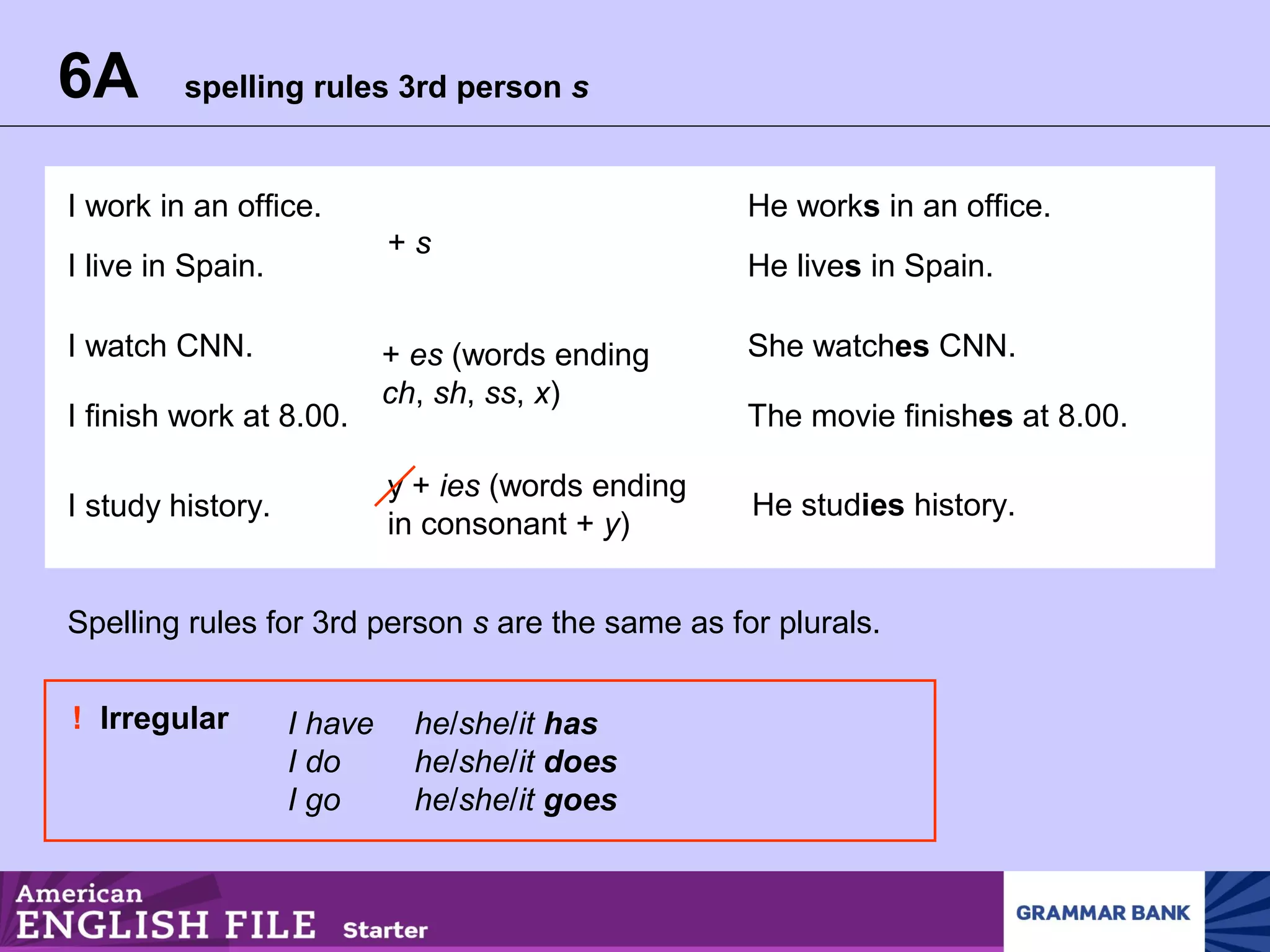
6A spelling rules 3rd person s
I work in an office.
I live in Spain.
I watch CNN.
I finish work at 8.00.
I study history.
+ s
+ es (words ending
ch, sh, ss, x)
Spelling rules for 3rd person s are the same as for plurals.
! Irregular I have he/she/it has
I do he/she/it does
I go he/she/it goes
y + ies (words ending
in consonant + y)
He lives in Spain.
He works in an office.
The movie finishes at 8.00.
She watches CNN.
He studies history.

6A - Simple Present

  • 1.
    6A simple present: he, she, it +, –, and ? + – I work. You work. We work. You work. They work. I don’t work. You don’t work. We don’t work. You don’t work. They don’t work. • Simple present + he/she/it = verb + s • Simple present – he/she/it = doesn’t + verb He works. She works. It works. He doesn’t work. She doesn’t work. It doesn’t work.
  • 2.
    ?   6Asimple present : he, she, it +, –, and ? Do I work? Yes, I do. No, I don’t. Do you work? Yes, I do. No, I don’t. Do we work? Yes, we do. No, we don’t. Do you work? Yes, you do. No, you don’t. Do they work? Yes, they do. No, they don’t. • Simple present ? he/she/it = Does + he/she/it + verb Does he work? Yes, he does. No, he doesn’t. (doesn’t = does not) Does she work? Yes, she does. No, she doesn’t. Does it work? Yes, it does. No, it doesn’t.
  • 3.
    6A spelling rules3rd person s I work in an office. I live in Spain. I watch CNN. I finish work at 8.00. I study history. + s + es (words ending ch, sh, ss, x) Spelling rules for 3rd person s are the same as for plurals. ! Irregular I have he/she/it has I do he/she/it does I go he/she/it goes y + ies (words ending in consonant + y) He lives in Spain. He works in an office. The movie finishes at 8.00. She watches CNN. He studies history.