HARAMAYA UNIVERSITY
COLLEGE OF HEALTH AND MEDICAL SCIENCES
SCHOOL OF GRADUATE STUDIES
Feb, 2021
Harar, Ethiopia
2/11/2021
1
SET BY:
ID. NO.
1. Sintayehu worku…… Sgs070/13
2. Shefena G/yesus…. .. Sgs069/13 2/11/2021
2
 Introduction
 Risk factors
 Classification
 Clinical features
 Pathophysiology
 complications
2/11/2021 3
 Preeclampsia is a multisystem disorder of characterized by
development of hypertension to the extent of 140/90 mm Hg,
and proteinuria after the 20th week in a previously
normotensive woman.
Eclampsia
 Refers to the occurrence of grand mal seizure in a pregnant
woman with preeclampsia, and is one of the most serious
complications of the disease.
2/11/2021 4
The exact cause of preeclampsia remains unknown, but there is a
constant concern with identifying risk factors like:-
 Nulliparity
 Multifetal gestations
 Maternal age extremities
 Preeclampsia in a previous pregnancy
 Chronic hypertension
 DM
2/11/2021 5
The clinical classification of preeclampsia is arbitrary and is
principally classified as mild and severe based on the level of
blood pressure and proteinuria for management purpose.
A. Mild is sustained rise of blood pressure of more than 140/90
mm Hg but less than 160 mm Hg systolic or 110 mm Hg
diastolic without significant proteinuria.
2/11/2021 6
A. Severe is when blood pressure rises to ≥ 160
mmHg SBP∕110 mmHg DPB and proteinuria
≥ +3 on dipstick or 3 gm/24 hr.
But recent updates stated that, all preeclamptic
women should be treated as sever preeclampsia
as worsening of mild preeclampsia have a great
extent and conservative management is
associated with serious maternal complications
(von Dadelszen et al., 2007)
2/11/2021 7
HTN
Proteinuria
Oliguria (<300 ml/24 hr.)
HELLP syndrome
Cerebral and visual disturbances
Persistent severe epigastric pain
Retinal hemorrhages
2/11/2021 8
facial edema
Pulmonary edema due to capillary leak and low oncotic
pressure.
Abdominal examination may reveal evidences of chronic
placental insufficiency, such as scanty liquor or growth
retardation of the fetus.
Severe headache
2/11/2021 9
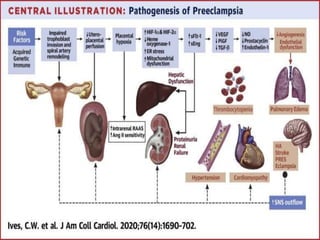
PATHOPHYSIOLOGY OF
PREECLAMPSIA
In normal pregnancy
Invasion of the endovascular trophoblasts into the walls of the spiral
arterioles of the uteroplacental bed.
In the first trimester it invades up to decidual segments
In the second trimester it invades upto the myometrial segments
spiral arterioles become distended
This physiological change transforms the spiral arterioles into a low
resistance, low pressure, high flow system
Increased PGI2
Increased nitric oxide(NO)
2/11/2021 10
In Preeclampsia
There is failure of the second wave of endovascular trophoblast
migration and here is reduction of blood supply to the fetoplacental unit
There is an imbalance in different components of prostaglandins
prostaglandin (PGI2) decreased
increased synthesis of thromboxane (TXA2)
increased vascular sensitivity to the pressor agent angiotensin-II
Angiotensinase activity is depressed, following elimination proteinuria
Nitric oxide (NO) is decreased then, contributes to the development of
hypertension.
2/11/2021 11
 Increased endothelial cells dysfunction lead to
vasoconstriction
Activated leukocytes cause endothelial injury due to
inflammatory mediators cytokines imbalance
Increased reactive oxygen species
Decreased nitric oxide lead to endothelial cell damage
2/11/2021 12
2/11/2021 13
2/11/2021 14
Acute renal failure
Pulmonary edema
Abruptio placenta
DIC
IUGR
Preterm delivery
Still birth
Mortality
2/11/2021 15
 Brodie, H., & Malinow, A. (1999). Anesthetic management of
preeclampsia/eclampsia. International journal of obstetric anesthesia, 8(2), 110-
124.
 Gul, A., Cebeci, A., Aslan, H., Polat, I., Ozdemir, A., & Ceylan, Y. (2005).
Perinatal outcomes in severe preeclampsia-eclampsia with and without HELLP
syndrome. Gynecologic and obstetric investigation, 59(2), 113-118.
 Sanjay, G., & Girija, W. (2014). Preeclampsia–eclampsia. The Journal of
Obstetrics and Gynecology of India, 64(1), 4-13.
 Sibai, B. M. (1990). Magnesium sulfate is the ideal anticonvulsant
inpreeclampsia-eclampsia. American journal of obstetrics and gynecology,
162(5), 1141-1145.
 Sibai, B. M. (2005). Diagnosis, prevention, and management of eclampsia.
Obstetrics & Gynecology, 105(2), 402-410.
 von Dadelszen, P., Menzies, J., Gilgoff, S., Xie, F., Douglas, M. J., Sawchuck,
D., & Magee, L. A. (2007). Evidence-based management for preeclampsia.
Front Biosci, 12(5), 2876-2889.
2/11/2021 16
2/11/2021 17

preeclampsia.pptx

  • 1.
    HARAMAYA UNIVERSITY COLLEGE OFHEALTH AND MEDICAL SCIENCES SCHOOL OF GRADUATE STUDIES Feb, 2021 Harar, Ethiopia 2/11/2021 1
  • 2.
    SET BY: ID. NO. 1.Sintayehu worku…… Sgs070/13 2. Shefena G/yesus…. .. Sgs069/13 2/11/2021 2
  • 3.
     Introduction  Riskfactors  Classification  Clinical features  Pathophysiology  complications 2/11/2021 3
  • 4.
     Preeclampsia isa multisystem disorder of characterized by development of hypertension to the extent of 140/90 mm Hg, and proteinuria after the 20th week in a previously normotensive woman. Eclampsia  Refers to the occurrence of grand mal seizure in a pregnant woman with preeclampsia, and is one of the most serious complications of the disease. 2/11/2021 4
  • 5.
    The exact causeof preeclampsia remains unknown, but there is a constant concern with identifying risk factors like:-  Nulliparity  Multifetal gestations  Maternal age extremities  Preeclampsia in a previous pregnancy  Chronic hypertension  DM 2/11/2021 5
  • 6.
    The clinical classificationof preeclampsia is arbitrary and is principally classified as mild and severe based on the level of blood pressure and proteinuria for management purpose. A. Mild is sustained rise of blood pressure of more than 140/90 mm Hg but less than 160 mm Hg systolic or 110 mm Hg diastolic without significant proteinuria. 2/11/2021 6
  • 7.
    A. Severe iswhen blood pressure rises to ≥ 160 mmHg SBP∕110 mmHg DPB and proteinuria ≥ +3 on dipstick or 3 gm/24 hr. But recent updates stated that, all preeclamptic women should be treated as sever preeclampsia as worsening of mild preeclampsia have a great extent and conservative management is associated with serious maternal complications (von Dadelszen et al., 2007) 2/11/2021 7
  • 8.
    HTN Proteinuria Oliguria (<300 ml/24hr.) HELLP syndrome Cerebral and visual disturbances Persistent severe epigastric pain Retinal hemorrhages 2/11/2021 8
  • 9.
    facial edema Pulmonary edemadue to capillary leak and low oncotic pressure. Abdominal examination may reveal evidences of chronic placental insufficiency, such as scanty liquor or growth retardation of the fetus. Severe headache 2/11/2021 9
  • 10.
    PATHOPHYSIOLOGY OF PREECLAMPSIA In normalpregnancy Invasion of the endovascular trophoblasts into the walls of the spiral arterioles of the uteroplacental bed. In the first trimester it invades up to decidual segments In the second trimester it invades upto the myometrial segments spiral arterioles become distended This physiological change transforms the spiral arterioles into a low resistance, low pressure, high flow system Increased PGI2 Increased nitric oxide(NO) 2/11/2021 10
  • 11.
    In Preeclampsia There isfailure of the second wave of endovascular trophoblast migration and here is reduction of blood supply to the fetoplacental unit There is an imbalance in different components of prostaglandins prostaglandin (PGI2) decreased increased synthesis of thromboxane (TXA2) increased vascular sensitivity to the pressor agent angiotensin-II Angiotensinase activity is depressed, following elimination proteinuria Nitric oxide (NO) is decreased then, contributes to the development of hypertension. 2/11/2021 11
  • 12.
     Increased endothelialcells dysfunction lead to vasoconstriction Activated leukocytes cause endothelial injury due to inflammatory mediators cytokines imbalance Increased reactive oxygen species Decreased nitric oxide lead to endothelial cell damage 2/11/2021 12
  • 13.
  • 14.
  • 15.
    Acute renal failure Pulmonaryedema Abruptio placenta DIC IUGR Preterm delivery Still birth Mortality 2/11/2021 15
  • 16.
     Brodie, H.,& Malinow, A. (1999). Anesthetic management of preeclampsia/eclampsia. International journal of obstetric anesthesia, 8(2), 110- 124.  Gul, A., Cebeci, A., Aslan, H., Polat, I., Ozdemir, A., & Ceylan, Y. (2005). Perinatal outcomes in severe preeclampsia-eclampsia with and without HELLP syndrome. Gynecologic and obstetric investigation, 59(2), 113-118.  Sanjay, G., & Girija, W. (2014). Preeclampsia–eclampsia. The Journal of Obstetrics and Gynecology of India, 64(1), 4-13.  Sibai, B. M. (1990). Magnesium sulfate is the ideal anticonvulsant inpreeclampsia-eclampsia. American journal of obstetrics and gynecology, 162(5), 1141-1145.  Sibai, B. M. (2005). Diagnosis, prevention, and management of eclampsia. Obstetrics & Gynecology, 105(2), 402-410.  von Dadelszen, P., Menzies, J., Gilgoff, S., Xie, F., Douglas, M. J., Sawchuck, D., & Magee, L. A. (2007). Evidence-based management for preeclampsia. Front Biosci, 12(5), 2876-2889. 2/11/2021 16
  • 17.