Breech Presentation
Dr. Ramya Pathiraja
Senior Lecturer
Department of Obstetrics and Gynecology
Faculty of Medical Sciences
University of Sri Jayewardenepura
Sri Lanka
In breech presentation fetus lies
longitudinally with the buttocks or feet
closest to the cervix.
This is the most common malpresentation.
More common at earlier gestations.
Perinatal mortality is increased by 2-4 folds
with breech presentation.
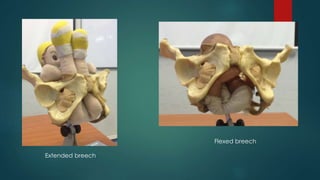
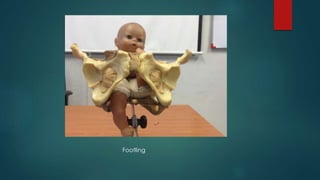
Three types of breech
1.extended (most common)
2.flexed/complete
3.footling
Extended breech
Flexed breech
Footling
Predisposing factors
-Maternal
Fibroids
Congenital uterine anomalies
Uterine Surgery
-Fetal
Multiple gestation
Prematurity
Placenta previa
Fetal abnormality eg.anencephaly
Oligohydroamnios
Polyhydroamnios
Fetal neuronal problems
No clinical significance before 37 weeks of gestation
unless in preterm labour.
Should be confirmed by USS, documenting,
fetal biometry
amniotic fluid volume
placental site
anomalies
Three management options available
1.ECV
2.Vaginal delivery
3.Elective caesarean section
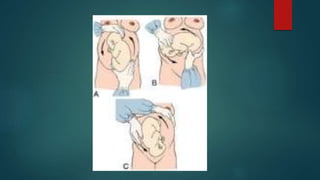
ECV
reduces the incidence of LSCS.
Success rate depends on operator and higher
in multiparity women.
Performed at 37 completed weeks.
Should not lasts more than 10 minutes, Perform
with a tocolytic.
Perform CTG before and after the procedure.
Administer Anti-D to Rh negative mothers.
Contraindication for ECV
Fetal anomaly (hydrocephalus)
Placenta praevia
Oligohydroamnios/ polyhydroamnios
History of APH
Multiple gestation
Pre eclampsia/HT
Previous caesarean/myomectomy scar
Risks of ECV
Placental abruption
Premature rupture of membranes
Cord accidents
Trans placental haemorrhages
fetal bradycardia
Vaginal delivery of breech
Only the extended or flexed presentations can be
delivered vaginally.
There should be no evidence of hydrocephalus
and/or hyperflexion of head.
Adequate feto-pelvic proportions should be
needed.
During labour
Fetal well being should be carefully monitored.
Experienced health professional should be present.
Minimal intervention
episiotomy
Delivery of the buttocks with minimal
assistance
Delivery of legs
If legs are flexed deliver spontaneously.
if extended use Pinard’s manoeuver.
Delivery of shoulders
When anterior shoulder is in the anterior-
posterior diameter spine and scapula
becomes visible. Then deliver arms by
Loveset’s manoeuvre (not needed routinely).
Delivery of head
Using Mauriceau-smellie veit manoeuvre or
Burns-Marshall technique or by long handle
forceps
Complications
cord prolapse (particularly in footling or flexed
breech) can cause rapid severe hypoxia in the
fetus.
Increased risk of CTG abnormalities as cord
compression is common.
Foot prolapse(in footling breech).
Mechanical difficulties can damage visceral
organs or brachial plexus can get damaged if
traction is exerted.
In larger fetuses delay in delivery of head can
lead to prolonged compression of cord and
asphyxia.
In smaller fetuses uncontrolled rapid delivery
can cause tentorial tears and intracranial
bleeding.
Majority of breeches are delivered by LSCS to
avoid these risks.
Maneuvers for cesarean delivery are similar to
those for vaginal breech delivery.
Still, an entrapped head is a possible outcome
during cesarean delivery as the uterus
contracts after delivery of the body.

Breech presentation

  • 1.
    Breech Presentation Dr. RamyaPathiraja Senior Lecturer Department of Obstetrics and Gynecology Faculty of Medical Sciences University of Sri Jayewardenepura Sri Lanka
  • 2.
    In breech presentationfetus lies longitudinally with the buttocks or feet closest to the cervix. This is the most common malpresentation. More common at earlier gestations. Perinatal mortality is increased by 2-4 folds with breech presentation.
  • 3.
    Three types ofbreech 1.extended (most common) 2.flexed/complete 3.footling
  • 4.
  • 5.
  • 6.
    Predisposing factors -Maternal Fibroids Congenital uterineanomalies Uterine Surgery -Fetal Multiple gestation Prematurity Placenta previa
  • 7.
  • 8.
    No clinical significancebefore 37 weeks of gestation unless in preterm labour. Should be confirmed by USS, documenting, fetal biometry amniotic fluid volume placental site anomalies
  • 9.
    Three management optionsavailable 1.ECV 2.Vaginal delivery 3.Elective caesarean section
  • 10.
    ECV reduces the incidenceof LSCS. Success rate depends on operator and higher in multiparity women. Performed at 37 completed weeks.
  • 11.
    Should not lastsmore than 10 minutes, Perform with a tocolytic. Perform CTG before and after the procedure. Administer Anti-D to Rh negative mothers.
  • 13.
    Contraindication for ECV Fetalanomaly (hydrocephalus) Placenta praevia Oligohydroamnios/ polyhydroamnios History of APH Multiple gestation Pre eclampsia/HT Previous caesarean/myomectomy scar
  • 14.
    Risks of ECV Placentalabruption Premature rupture of membranes Cord accidents Trans placental haemorrhages fetal bradycardia
  • 15.
    Vaginal delivery ofbreech Only the extended or flexed presentations can be delivered vaginally. There should be no evidence of hydrocephalus and/or hyperflexion of head. Adequate feto-pelvic proportions should be needed. During labour Fetal well being should be carefully monitored. Experienced health professional should be present.
  • 16.
    Minimal intervention episiotomy Delivery ofthe buttocks with minimal assistance Delivery of legs If legs are flexed deliver spontaneously. if extended use Pinard’s manoeuver.
  • 17.
    Delivery of shoulders Whenanterior shoulder is in the anterior- posterior diameter spine and scapula becomes visible. Then deliver arms by Loveset’s manoeuvre (not needed routinely). Delivery of head Using Mauriceau-smellie veit manoeuvre or Burns-Marshall technique or by long handle forceps
  • 18.
    Complications cord prolapse (particularlyin footling or flexed breech) can cause rapid severe hypoxia in the fetus. Increased risk of CTG abnormalities as cord compression is common.
  • 19.
    Foot prolapse(in footlingbreech). Mechanical difficulties can damage visceral organs or brachial plexus can get damaged if traction is exerted. In larger fetuses delay in delivery of head can lead to prolonged compression of cord and asphyxia. In smaller fetuses uncontrolled rapid delivery can cause tentorial tears and intracranial bleeding.
  • 20.
    Majority of breechesare delivered by LSCS to avoid these risks. Maneuvers for cesarean delivery are similar to those for vaginal breech delivery. Still, an entrapped head is a possible outcome during cesarean delivery as the uterus contracts after delivery of the body.