Precipitation Prepared by: Lori Petty
Instructions The themes in this module are organized in the main menu with links to each theme. The navigational buttons will appear on the bottom of each slide. Next slide Previous slide Back to Home Page
Objectives After finishing this module, the students:  Recognize the different types of precipitation. Understand that some types of weather can be very dangerous. Define the different types of precipitation.
Main Menu Objectives Instructions Forms of Precipitation a.  Rain b.  Snow c.   Sleet d.  Freezing Rain e.  Hail Post test References
Precipitation There are several types of precipitation.  After water vapor is condensed into ice crystals or water droplets, it can fall upon the ground in several different forms of precipitation.   1/2
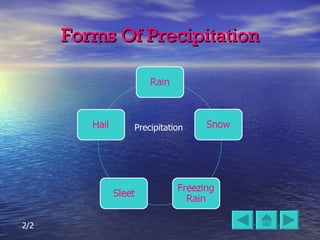
Forms Of Precipitation Precipitation 2/2
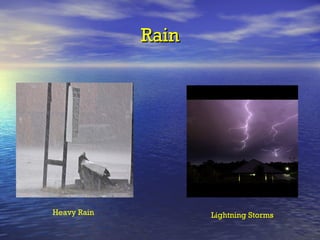
Rain Heavy Rain Lightning Storms
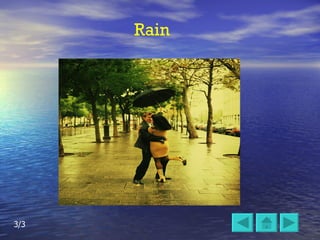
Rain Rain is the most common type of precipitation.  Rain is when drops of water fall on the Earth.  Rain usually takes on one or two forms: showers or drizzles.  1/3
Rain A shower lasts a short period of time, and is made up of large heavy drops. A drizzle lasts a lot longer and are made of small fine droplets of water. 2/3
Rain 3/3
Snow
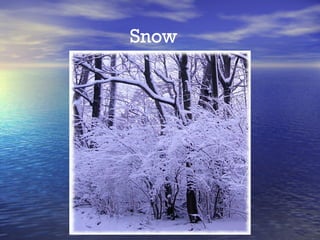
Snow Snow is formed when water vapor turns directly into ice.  Snow can be formed as ice pellets or snow flakes.  1/3
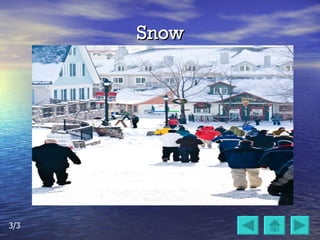
Snow Often the warm surface of Earth melts the freshly fallen snow. However, if the Earth’s surface is cold, the snow can accumulate on the ground. 2/3
Snow 3/3
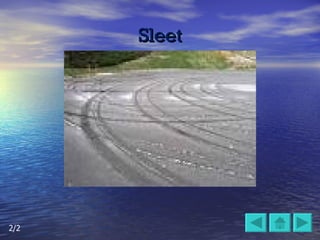
Sleet Sleet is a mixture of rain and snow. The raindrops are a liquid before freezing.  This is why sleet is different than snow.  Sleet is not fluffy like snowflakes. 1/2
Sleet 2/2
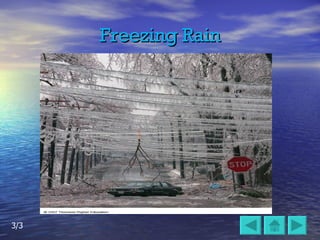
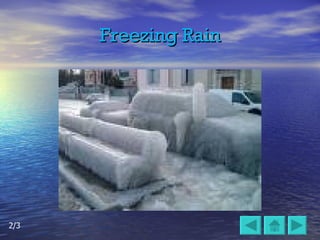
Freezing Rain Freezing rain is when water droplets become super-chilled.  The droplets do not freeze in the air.  They freeze instantly when they hit the road, car, or other object. Roads become very slippery and dangerous. 1/3
Freezing Rain 3/3
Freezing Rain 2/3
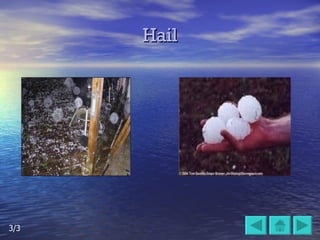
Hail Hail is ice crystals that begin to fall towards the Earth’s surface.  Then the strong winds pick up the ice crystals and push them back up into the clouds. 1/3
Hail When they start to fall again they grow in size.  This process may be repeated several times or until the hail becomes too heavy for the wind to carry. 2/3
Hail 3/3
Post test Please read and answer the following questions.
A shower lasts longer than a drizzle. False True 1/10
Rain can take on 1 or 2 forms. False True 2/10
Snow can be formed as ice pellets or snowflakes. False True 3/10
If Earth’s surface is warm, snow can accumulate. False True 4/10
Sleet is a mixture of rain and snow. False True 5/10
Freezing rain occurs When ice falls from the clouds. When rain droplets become super chilled. When rain drizzles. 6/10
Hail is when ice crystals  fall to the ground. when droplets are heavy and big. when rain instantly freezes. 7/10
What creates large pieces of hail? Strong winds and rain Big droplets of water Ice crystals and strong winds 8/10
Sleet is different than snow because Sleet is fluffy. The rain drops are liquid before freezing. The rain drops are solid in form. 9/10
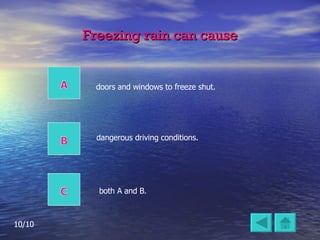
Freezing rain can cause dangerous driving conditions. doors and windows to freeze shut. both A and B. 10/10
Try Again
Great Answer! A
References Scott Foresman: A Closer Look, First Grade Textbook 2008 http:www.gregnilsen.com/blogcfc/index.cfm/soo8/12/11/If-You-Can’t-DR. http:lipstick-diaries.blogspot.com/2009/03/dear-winter.html Apollo./sc.vsc.edu/classes/met130/notes/chapter7/frain.html http:stormgasm.com/storm%20store/photos/hail/hail.html

Precipation Lori

  • 1.
  • 2.
    Instructions The themesin this module are organized in the main menu with links to each theme. The navigational buttons will appear on the bottom of each slide. Next slide Previous slide Back to Home Page
  • 3.
    Objectives After finishingthis module, the students: Recognize the different types of precipitation. Understand that some types of weather can be very dangerous. Define the different types of precipitation.
  • 4.
    Main Menu ObjectivesInstructions Forms of Precipitation a. Rain b. Snow c. Sleet d. Freezing Rain e. Hail Post test References
  • 5.
    Precipitation There areseveral types of precipitation. After water vapor is condensed into ice crystals or water droplets, it can fall upon the ground in several different forms of precipitation. 1/2
  • 6.
    Forms Of PrecipitationPrecipitation 2/2
  • 7.
    Rain Heavy RainLightning Storms
  • 8.
    Rain Rain isthe most common type of precipitation. Rain is when drops of water fall on the Earth. Rain usually takes on one or two forms: showers or drizzles. 1/3
  • 9.
    Rain A showerlasts a short period of time, and is made up of large heavy drops. A drizzle lasts a lot longer and are made of small fine droplets of water. 2/3
  • 10.
  • 11.
  • 12.
    Snow Snow isformed when water vapor turns directly into ice. Snow can be formed as ice pellets or snow flakes. 1/3
  • 13.
    Snow Often thewarm surface of Earth melts the freshly fallen snow. However, if the Earth’s surface is cold, the snow can accumulate on the ground. 2/3
  • 14.
  • 15.
    Sleet Sleet isa mixture of rain and snow. The raindrops are a liquid before freezing. This is why sleet is different than snow. Sleet is not fluffy like snowflakes. 1/2
  • 16.
  • 17.
    Freezing Rain Freezingrain is when water droplets become super-chilled. The droplets do not freeze in the air. They freeze instantly when they hit the road, car, or other object. Roads become very slippery and dangerous. 1/3
  • 18.
  • 19.
  • 20.
    Hail Hail isice crystals that begin to fall towards the Earth’s surface. Then the strong winds pick up the ice crystals and push them back up into the clouds. 1/3
  • 21.
    Hail When theystart to fall again they grow in size. This process may be repeated several times or until the hail becomes too heavy for the wind to carry. 2/3
  • 22.
  • 23.
    Post test Pleaseread and answer the following questions.
  • 24.
    A shower lastslonger than a drizzle. False True 1/10
  • 25.
    Rain can takeon 1 or 2 forms. False True 2/10
  • 26.
    Snow can beformed as ice pellets or snowflakes. False True 3/10
  • 27.
    If Earth’s surfaceis warm, snow can accumulate. False True 4/10
  • 28.
    Sleet is amixture of rain and snow. False True 5/10
  • 29.
    Freezing rain occursWhen ice falls from the clouds. When rain droplets become super chilled. When rain drizzles. 6/10
  • 30.
    Hail is whenice crystals fall to the ground. when droplets are heavy and big. when rain instantly freezes. 7/10
  • 31.
    What creates largepieces of hail? Strong winds and rain Big droplets of water Ice crystals and strong winds 8/10
  • 32.
    Sleet is differentthan snow because Sleet is fluffy. The rain drops are liquid before freezing. The rain drops are solid in form. 9/10
  • 33.
    Freezing rain cancause dangerous driving conditions. doors and windows to freeze shut. both A and B. 10/10
  • 34.
  • 35.
  • 36.
    References Scott Foresman:A Closer Look, First Grade Textbook 2008 http:www.gregnilsen.com/blogcfc/index.cfm/soo8/12/11/If-You-Can’t-DR. http:lipstick-diaries.blogspot.com/2009/03/dear-winter.html Apollo./sc.vsc.edu/classes/met130/notes/chapter7/frain.html http:stormgasm.com/storm%20store/photos/hail/hail.html